


Lets Talk: Hey everybody, welcome back to Let's Talk a podcast by men for men. We're so glad to have you with us today. I'm with my good friends Brad and Coit. And we are excited today. We are in part two of a show series called Built for Influence. Coit, what do you got for us today? We're gonna talk about blind spots today. nice. Ooh, yeah. Nice. the the tagline we came up with for this one. What you can't see can hurt you, in fact. And and this is a concept we've kind of talked about a little bit on the show before, that idea of you can't see the back of your own head. If you stand in front of a mirror, you can see a whole lot of yourself, but there's there's some spots back there you can't get an eyeball on. And so that's kind of what we're gonna look at today. What are the blind spots in our lives? let's jump in What are some moments, maybe something humorous in our lives, where we had an obvious blind spot that everyone else was seeing but maybe we weren't? And they've got this maze out there. They built, you know, a a a maze for kids and and adults to go through and have fun and it's pretty good. You know, it's pretty challenging. Yeah, it's good size. Well, we pay and get the kids in there, so they're in the maze and I've got to go to the bathroom and it just hits me. And it's just one of those times where it's like I need a bathroom. So I take off and I go back through the pavilion. I go back to the public restroom, which you know, it is what it is. So I go to put toilet paper down on the toilet seat so that I can take care of my business. And the fantastic thing about this is I finish up and I'm feeling great and I'm ready to go back to being husband and dad. And I come out of the bathroom and I walk through the entire pavilion and I cross the street and I'm looking for Natal And I get across where the maze is. I can't find Natalie and I turn around and I see her sitting down and she's dying. And I'm like, what in the world is she laughing about? And sh and she says, Look behind you. I had Toilet paper had stuck to my rear end and was hanging all the way out of my shorts. And I had walked all the way out of that pavilion across the street in front of hundreds of people and restaurants and patios. And my wife is dying. That is a time when I couldn't see what I needed to see and someone else had to tell me what I needed to hear. I need to clarify the mental so was it stuck to your shorts or it was stuck to like bare cheek. No, no, bro. It was It was stuck to bare cheek. Coming up out of the top. Hanging out of the top of my shorts as I'm that's awesome. It was awesome. Yeah, it was fantastic. And I owned it like a champion. I mean, like it is what it is. You can't stop me. You're probably being internet famous right now. Somebody's got video. I might be. Was this before cell phones and were just it was years? That's great. Yeah. That's great. Here comes this balding overweight Italian with toilet paper hang on it. Brad's got us kicked off in show two with a great one. That's a humdinger, Brad. Thank you. Thank you. Fabulous examples You need somebody that's supposed to be helping you though, not laughing at you. she dude. Maybe a little of both. Today we still laugh about that one. That's that's pretty good. Yeah. That's pretty good. That's great. man. No, that is good. and right, blind spots can be really funny sometimes until they start having negative impact on us, impacting our marriages, our lives, our our character even sometimes. so let's talk through why why well not why men have blind spots. I think that's just a human thing. Why do men find it difficult to acknowledge their blind spots? Well I think that presupposes they know about them. Yeah. So and that's probably an important piece to this is hopefully we have people in our lives that will help us acknowledge our blind spots. I I gotta say the family that I grew up in, we're pretty merciless. Like everyone knew their blinds. Like you you were gonna get called out on it. If you were wearing it and it didn't look good, if your hair was not good, if you're and I think a lot of people looking in would have said, Man, you guys are mean, you're r I it's create it's created in our family a lot of I I would say a fair amount of self awareness. Like we're aware of of that because we would get called out incessantly. So we we kinda would would just pay more attention is really what a lot of it is. Not that we still don't have blind spots, we do, but we were kind of brutal to each other. and so keeps you humble. It does, it does. It th and so that I think is where I was going with that. It's we don't like to humble ourselves to own our problems. Mm-hmm. I heard somebody say once, I wanna get the quote right, I heard it just this week I think it was in a book somebody was telling me by Andrew Murray, if you're familiar with him, but he said humility is the seedbed for all other virtues. Yeah. I thought that was very powerful. That if you don't have humility, the other virtues that you need in your life to fix your blind spots, to grow, to mature. I mean, that's what we've been talking about, building for influence. If you don't have a certain level of humility, you're not gonna know your blind spots and if you do, you're not even really gonna respond to them because you're you just think you th there's there's a certain man matter of arrogance there. Yeah. That's what that can be a an issue. Yeah, and y you know, ultimately we've got to have a value for for personal growth. But the only way that I can really experience growth is if I am getting good feedback. It that's either from the Holy Spirit or I'm getting it from you guys, or I'm getting it from my wife, or I'm getting it from people I trust. I've got to be willing to see what they see. Yeah. And if if I don't have that heart posture, then that creates other issues, right? So now defensiveness and pride and ego and all the things I need to be right. You know, excuse me, or I need to be I I I've got it together. I want to create an image that says I've got it together. When in reality is that's a blind spot. Well, and it can be in real time. So for instance, as a preacher, you know, you guys can relate to this 'cause you've preached sermons and my wife sometimes will be like, That was that was a little boring. You know, that's kinda her thing. That was a little so I'm always and and I love I love her feedback, but I'll tell you it's hard to receive because I've been preaching like thirty years. And when somebody you love and respect and she's heard thousands of sermons in her life, when she says something about the sermon or that that wasn't funny, quit doing this, or it's man, the ego, man, it just I I do I get defensive, but then I know okay, I do trust her voice, so she's right, and then by second Service. I'm like, all right, I processed through denial, you know, the anger, the seven steps. The seven seven steps of grief. I went through seven and I was just totally humiliated by the end of it. Just wanted wanted to quit the ministry. And five steps of grief. You know, you reminded me there's a there's a time we're dry I'm driving with some buddies and we're going out to Oklahoma going hunting, and there's four of In the truck, and I'm in the back right seat. And and they're all older than me, but they're big, you know, just tough everybody's tough guys, right? And I go, Hey, let's all go around the truck and say one thing that we appreciate about each other. I'll start. And so I start naming them and saying what I appreciate. Then the next guy goes, and we finish this exercise, and one of the guys in the back left, he goes, Now let's go around and say one thing we don't appreciate. My buddy in the front right, my buddy in the front right seat goes, I don't want to play this guy. I don't like this game anymore. That that game turned into not fun. Yeah. Real quick. man. That's so true though. Like I will say, as as a pastor preaching, it is kind of hard to get honest, authentic feedback. I struggle, dude. I struggle with it. I and I it's gotta be pride. I I struggle with feedback. I hate to admit this. I struggle with feedback on any level. part of it is I take a little bit of pride that I'm kinda hard on myself and that I can self correct, but that doesn't take account for the blind spots what we're talking about. And but no I I do, I do. So there's there's gotta be some pride in there for sure. So basically there's one area where you could grow, it's receiving feedback. It's not all about me here. We're trying to do something for the audience. Let's move Moving on. There's a source. You see, there's a problem. The problem's at the source. We're going all in. That's awesome. Now I'm feeling taken advantage of for our masses of followers. And if you have a hard Sunday with old Janet, you call me. I'll tell you. Brett says I'm valuable. Brett says I matter. You know, no, this actually happened, and this kind of sounds arrogant, but one guy this pastor. Past weekend said, Pastor, and it was David and Goliath I did this weekend. So it's it's an epic story. Yeah, yeah. And he said, I've heard thousands of messages. This is the best message I've ever heard. And I told my wife that. She's like, really? So I'm way up here. And then it's like All right. Okay. She brought me low. Nice. Nice. You know what So my ego with Janet and God love her I don't get and in my family in general, like my ego, 'cause you know, it it stays it stays pretty low with the abuse I take. Exactly, exactly. That's Natalie. Yeah. Keeps you honest. Yeah. No yeah. We yeah, we're we married correct. Yeah. Good we need that we need people at That's vital. Yeah. So let's talk about identifying our blind spots now. most often We do not identify our own blind spots. Most often they're revealed to us through people around us, through interactions, through failures. Many times we Well it be it would be impossible because they're blind spots. and you kind of touched on this earlier, something that I think is really important when we think about constructive criticism and feedback and compliment sandwiches and all these different tactics and strategies that we have to tell people about blind spots, essentially, right? like these all exist because people are awful at receiving criticism and feedback and not getting butthurt for lack of a better way to phrase it, right? it's so I I Who have you given permission to tell you truth, to speak truth over you? because having people around you that are willing to tell you true things is really important. And that's part A, but part B is: are you willing to receive truth? When someone tells you, if you surrounded people and you've given them the authority to speak truth over you, and we talk about that a lot on the show. Are you then willing to receive the truth that they speak over you and not get defensive and not get flustered and bluster up to them? Yeah, you know, I I had a I had a pastor leader that I work for for a number of years and he he would give timely specific feedback. Mm-hmm. And I I think that's really a powerful plan Of coaching because it could it it works in family and parenting and it works in leadership culture. If if I do something that I don't see because I'm it's a blind spot I need somebody in my life that's gonna give me timely specific feedback to say, hey, when you did this, this is the way it made me feel, or this is the reaction you got, or this is the situation that you created. If I have somebody that can give me timely, specific feedback in real-time coaching and say, hey. This is something I want you to pay attention to. This is something I want you to see. You may not be aware, but this is the thing that's going on when you do this. This is what people feel or this is what people experience. I think that stuff is healthy. Yeah. You know, and and Natalie, it's simple at home. It's not what you say, it's how you say it. You know, I can quote her all day. But the reality is it there's an experience there that I need to know. Hey, when I when I use this or when I act this way or when I behave this way. and you can't always see that because when you when the pressure's on, when you're under when you're in the cooker and the pressure's turned up. You know, we can kind of slip out sideways and we react or, you know, we do things in a in a way that the pressure, you know, puts on us. And maybe that's an area where God wants to push in and help us grow and be more aware and help us see. Because that's the maturity process. Yeah. But you know, the thing is, like I've got to have an open heart. And by the way, not everybody gets access to me. Period. Right. Not everybody gets access. But people that I trust I know are for me, they have a heart for me, they pray for me, they care for me. They're involved in my life. They know my calling, they know my destination, they know what God's hand is on my life and where I'm going and where I'm supposed to go. Those are the guys and gals that need to have permission to say, hey, you're missing it right here. Yeah. Yeah, I think the proximity piece that you're talking about is really important. when I get feedback from someone like that, they know me, they know my heart, they they've got some history with me. Much easier to receive than the random, you know, person that's hey, let me give you, you know, l let me just make this comment or whatever, you know. and so I I take that I do consider the source, and I do think that's important when you're getting feedback. I've been accused of things that okay, it's obvious you just don't know me. You know, you don't know my heart. Yeah. And so I I I've I've had to be careful though because I'll get real dismissive because who who are you? You know, but I've also learned that sometimes people will bring something to you and they'll do it just in the totally wrong way, but they're actually right about the issue. For sure. They'll be they'll be a jerk, they'll be super rude. And but if you're humble enough, you know what? Ten percent of that might be true. Truth is truth. And and I'm gonna have to I I need to pray about that. I need to consider that. You know, when you said you know I I shared something you know, man, this was months ago and I was I was on the subject of abortion and and you know, the show probably knows my my view on that. I'm I'm against it. As all as all Christians should be. but with that said, I I you know, and I wasn't I wasn't aggressive, I wasn't rude, I wasn't mean about it, but what I didn't what I and Brad, you might have said something somebody said something to me that when we talk about that issue recognizing that there are people in the room that have had abortions and that God forgives and God loves and you're not going to hell. You know, and I I I took that as a learning moment that when I talk about controversial things to make sure that I'm seasoning it with God's grace and his forgiveness and all that. And that that that was just a piece of feedback. I'll never talk about that issue alone. without that second piece. Yeah. Is and so I learned I learned. I learned and I'm like I hurt people that I love probably because I did not take the time to fully articulate that in a way that was truthful, you know, grace and truth, which is what Jesus was. So th those are some times where I like, okay, I'm right on the issue. that needed to be said. That needs to be taught. the gr the grace piece was not developed in a way that that it should have been and and I kinda blew up. Felt like I missed it there. Yeah. so that's that's that's a really good transition. How and so having people around you that you've stewarded and curated, that you've allowed access, that you've empowered to speak truth over you. doesn't always make it easy to receive. how what are how do y'all navigate that? When you receive something that that hurts or that's incredibly convicting, how do y'all navigate not feeling like your value's been diminished, not feeling like you're being attacked, not feeling like you need to respond and defend? How do y'all navigate that? I think as men a a natural reaction is I d I don't want to be told I was wrong. Yeah. I don't want to be told I missed it. But I think, you know, if we have a heart posture that says I'm open, right? We've got I want people around me to feel they're safe to say something. and then if if they feel safe, then I'm more likely to get honest feedback. But then I would say that I'm gonna process that number one with the Lord, but I'm gonna also process that with people I trust in my life. Yeah. Hey, here's some feedback I got on, you know, ABC. And I get to work through that. But ultimately that's pushing on something in me that God may want to mature. Yeah, absolutely. You know, that's an area of my heart God may want to grow. and so I I think the heart posture is key. Yeah, I agree. Well and that's the title of our our talk today, you know, growth. Spiritual growth, you know, personal growth. And if we truly want to be better, this has to be a part of that process. We can work on what we know, we can't work on what we don't know. And if we're gonna be the best that we wanna be, and that's a stewardship thing for our lives. We wanna be the best that we can be. We need people that, you know, you can call it feedback, you can call it criticism, you can call it whatever We we need we need a measure of that. And when we get it If we get so defensive, if we get so push back, people will stop giving it and we have to be really careful about that. Well, the other thing we talked about last week, leadership and influence. You start losing influence when you can't apply it or you're defensive and unreasonable, people are not gonna wanna get behind you. Right. I can't talk to this guy. Yeah. Yeah, it just it it it creates a culture. And that culture ultimately it starts eliminating people out of your life and before you know it you're a leader with a title taking a walk and nobody's behind you. Yeah. Yeah. Out for a walk alone, yeah. Yeah. that's that's really good. 'cause I think that's that's a part guys struggle with. they know there's issues, they they hear the criticism. They struggle with the appropriate response to it, not feeling like they're less than or beat down after they receive the criticism. So I think that's that's some valuable instruction there. what has learning that piece, how has that helped y'all? What what has kind of learning that that piece of receiving and accepting the accountability and the truth when it's spoken over you, how has that changed y'all for the better? Well, it just brings awareness to areas you need to grow in. Mm-hmm. You know, it's kinda like when I've done premarital counseling, there's this test that they go through and it it kinda tells you you're not on the same page here. You know, you you've got some growth. You may be excellent in this this area of of life, but this area maybe it's finances or maybe it's communication. And so if we if we know what the weakness is, we can start trying to address that in a way that's makes us better met. Yep. And that's vital, right? Like when we're thinking about becoming better. That's that's the whole reason we're talking about this. It's not just to keep us humble. That's that's kind of a fruit of it, but it's so that we can grow and become better and be better leaders, be better servants, be better husbands, be better parents. And I would rather have that version of support for growth than learning through pain. Oof. No kidding. Good point. It's it's the better of the two options. Yeah, no doubt. And that probably is the inevitability of not getting feedback, not receiving it. Okay. that's gonna cost you through pain, mistakes, failures, broken relationships. and that's that's a good point. There is a consequence to that that's actually worse than the embarrassment or the short term pain or the I got called out. it's it's no, it's this you screwed up a relationship. You lost money 'cause you are not nice to people or you know, you you know you you broke somebody's heart because you're you're rude. You know, those are those are things that really can weigh on you and and harm your your long term success. Yeah. Yeah. Absolutely. The it reminded me of a story we had men's group last night and one of the guys was telling a story He's been navigating some like anger kind of self control type of stuff. And he was out fishing and had a a really nice like thirty dollar jointed swim bait he was out there throwing and got it caught on a rock and was just working real hard to not lose his thirty dollar lure. And The person who had come to pick him up honked their horn, like, hey, it's time to go. And just the combination of all of these things just kind of sent him over the edge. Jerked that thing real hard, snapped the line, lost his lure, picked up all his stuff, threw it in the back of the car, said some unkind things when he got in the car, hurt some feelings there. Drive back to the house, gets out, still upset, still angry, throws all the fish and stuff across the yard, breaks a pole, gets a hook stuck in his finger. And so it's just this like cascade of natural consequences. And we're just like, and he's like, I know, I know. I I could see it happening and I couldn't stop it as it was happening. And it just kept getting worse and getting worse and getting worse. and so I I guess we're closing out today. Thinking about blind spots, as they're revealed to us, once we become aware of the blind spots and they continue to be an issue and people continue to call them out, that can start to wear on us heavily. what are some tools? What are some strategies for the guys out there listening? Man, I'm I'm struggling with anger. I'm struggling with this thing. I know it's a problem. It's not blind anymore. I'm still struggling with it. People are still calling it out. Like I don't see it happening. What can I do? How do I how can I navigate that? Would I'm fighting? Well, in the words of Bob Newhart, stop it. Bob Just always stop it. Stop it. Stop it. No, I I I I don't wanna leave it, you know, there, but but seriously stop it. No I I I think we've gotta have accountability. You know, because the more I confess, the more something will lose its power. Yeah. So a lie, if it's put in the light, it loses power. It's the same thing. If there's an area of my life where there's weakness or I'm causing harm or hurting someone, I've gotta repent. I need to I need to confess. And I've gotta do it with the Lord and I've gotta do it with community and relationships because the more I see it, that revelation brings transformation. All throughout scripture you see guys when they come face to face with the Lord, they're like, I'm the one that needs to change here. And so I think i the first step is and I'm not being funny, but the first step is admitting I have a problem. Yeah. And and being open to that, being willing to receive that. When you can't fix what you can't name. Yeah. If you don't know what it is, you you're not gonna be able to fix it. I I'll go a step further i with the accountability. Yes That might be a friend, it might be a spouse. I I think counseling sometimes is very appropriate. Counselors ha they're they're especially professional counselors. They know how to put things in ways that you can understand, that you can recognize when you're about to, you know, lose it after fishing. They they they can help you know how to think about it and talk about it in ways that maybe your average Joe can't. And they may be even a Christian, you know, but they Th there's there's dynamics here that that maybe the average Joe doesn't know how to get to. The the issue may not be I I lost a thirty dollar lure. It may be my dad doesn't love me. Yeah. You know, that's and and so there may be things that just chronically they've made us angry. It's that's the thing that triggered it, but it's there's it's a lot deeper than that. Yeah. And so I am an advocate, man, get some counseling. understand your problem, that's what a counselor will help you do, and then they'll give you some some steps to help work on it. Yeah, 'cause you're talking about blind spots, like the anger issue's probably not the blind spot. It's the root that the anger's coming out of it's the blind spot. Right. There you you're blaming your wife, you're blaming your boss, you're blaming the guy that honked his horn and rushing you. No, it's it's it's something else mm-hmm you know, to blame. Yeah, there's something deeper hiding there. That's a good one, guys. when we're receiving criticism, when we're hearing things that are hard, we have to strive to not be defensive. D defensiveness is a defense mechanism. And if you're Defense mechanisms are kicking off when someone's telling you something, it's probably because there's something there. So if you find yourself getting defensive in moments where people are speaking truth over you, even if you maybe don't recognize it as truth yet, let that be an indicator to you that there's probably something there I need to get in front of the mirror and start to do some work on. thanks guys, riding with us for another show. Thank you to the team behind the cameras. Carl Lawrence making us look good, making us sound good. Brad, lead us out with a charge, man. You know, guys, I was thinking, it's not about who's right, it's what's right. And Psalm 139, verse 23 and 24, it says, Search me, O God, and know my heart. Try me and know my anxieties, and see if there is any wicked way in me, and lead me in the way of everlasting. David prayed this prayer because he knew I can't even see my own heart. I need God to weigh in on the condition of my heart so that I can honor him with my life. I would say this week, be challenged a little bit. Find somebody you know and trust who can speak in your life and say, hey, what do you see that maybe I don't see? An area of my heart where I can grow or something I do, behavior or whatever, that you want to push on and let God grow and mature. We sure love you guys and we'll see you next time.
OM DENNE EPISODE
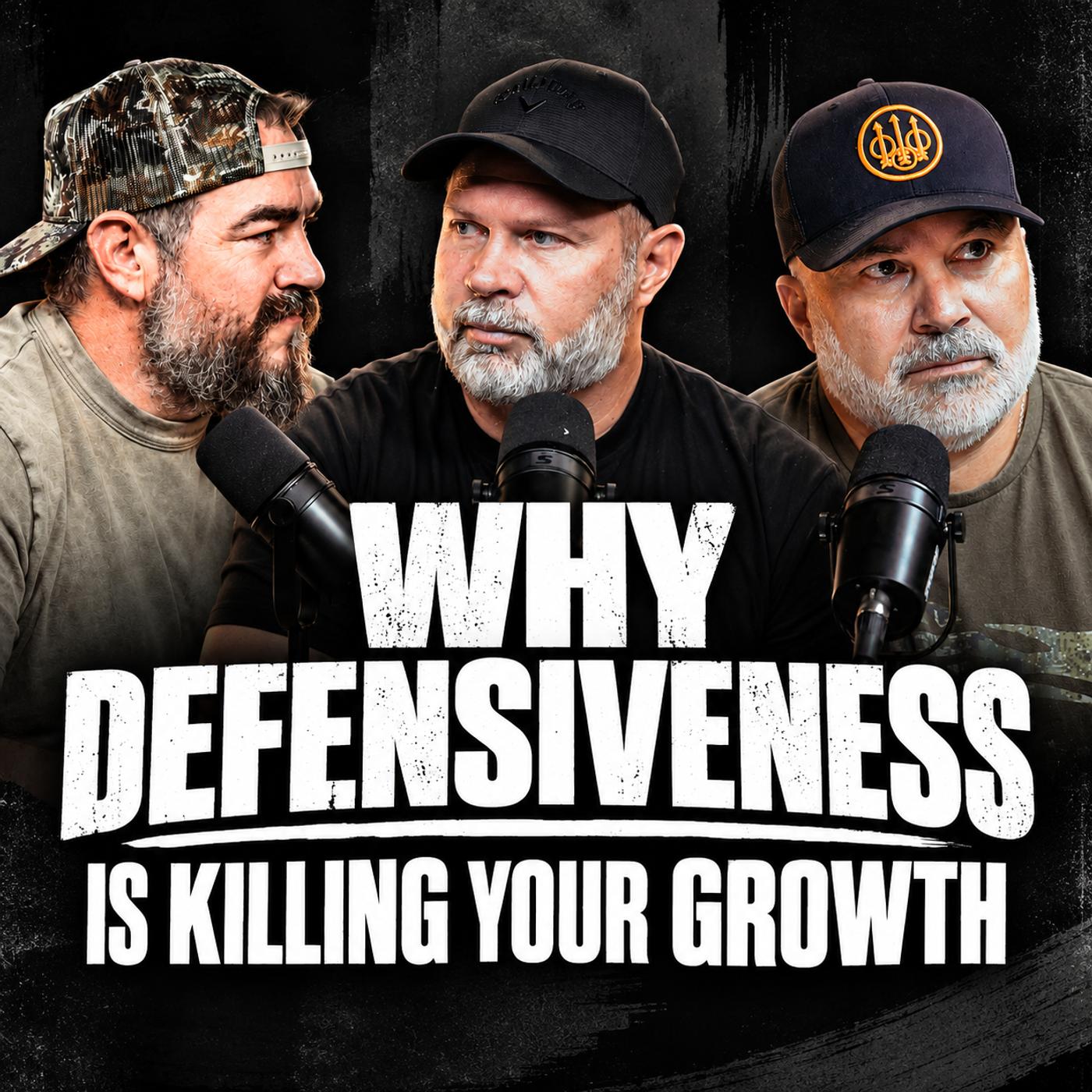
In this episode, the guys continue the "Built for Influence" series by talking about blind spots — those hidden areas in our lives that we often can’t see ourselves, but that others notice right away. The conversation moves from funny real-life examples into a deeper discussion about humility, feedback, accountability, and growth.
Key Topics Covered- What blind spots are and why everyone has them
- A hilarious story about not noticing toilet paper stuck to the back of your shorts
- Why humility is essential for personal growth
- How feedback from trusted people can reveal what we miss
- The difference between helpful correction and defensive reactions
- Why timely, specific feedback matters in marriage, parenting, and leadership
- How blind spots can affect influence, relationships, and long-term success
- Why anger and defensiveness often point to deeper issues
- The role of confession, repentance, community, and counseling in growth
- A funny story about walking across a public area with toilet paper hanging out of a pair of shorts
- The reminder that “what you can’t see can hurt you”
- The idea that humility is the “seedbed for all other virtues”
- The reflection that truth is still truth, even when it comes from someone rude
- The closing challenge from Psalm 139:23–24
- We usually don’t identify our own blind spots on our own
- Trusted people help us see what we cannot
- Growth requires humility, openness, and a willingness to receive correction
- Defensiveness often protects the very issue we need to address
- The goal is not just to be right, but to be transformed
- Psalm 139:23–24: “Search me, O God, and know my heart...”
- Brad shared a memorable and funny blind-spot story
- The discussion emphasized the value of trusted accountability
- The episode closed with a practical challenge to invite honest feedback
Find someone you trust and ask them: “What do you see in me that I may not see?”
Engelsk
USA
UDSKRIFT 🔗
SØG BLANDT TIDLIGERE EPISODER
Søg efter gamle afsnit af LET’S TALK WITH BEN, BRAD & COIT.
Ansvarsfraskrivelse: Podcasten og kunstværket, der er indlejret på denne side, er fra LET'S TALK, som tilhører dens ejer og ikke er tilknyttet eller godkendt af Listen Notes, Inc.
REDIG
Tak fordi du hjælper med at holde podcast-databasen opdateret.
