
OM DENNE EPISODE
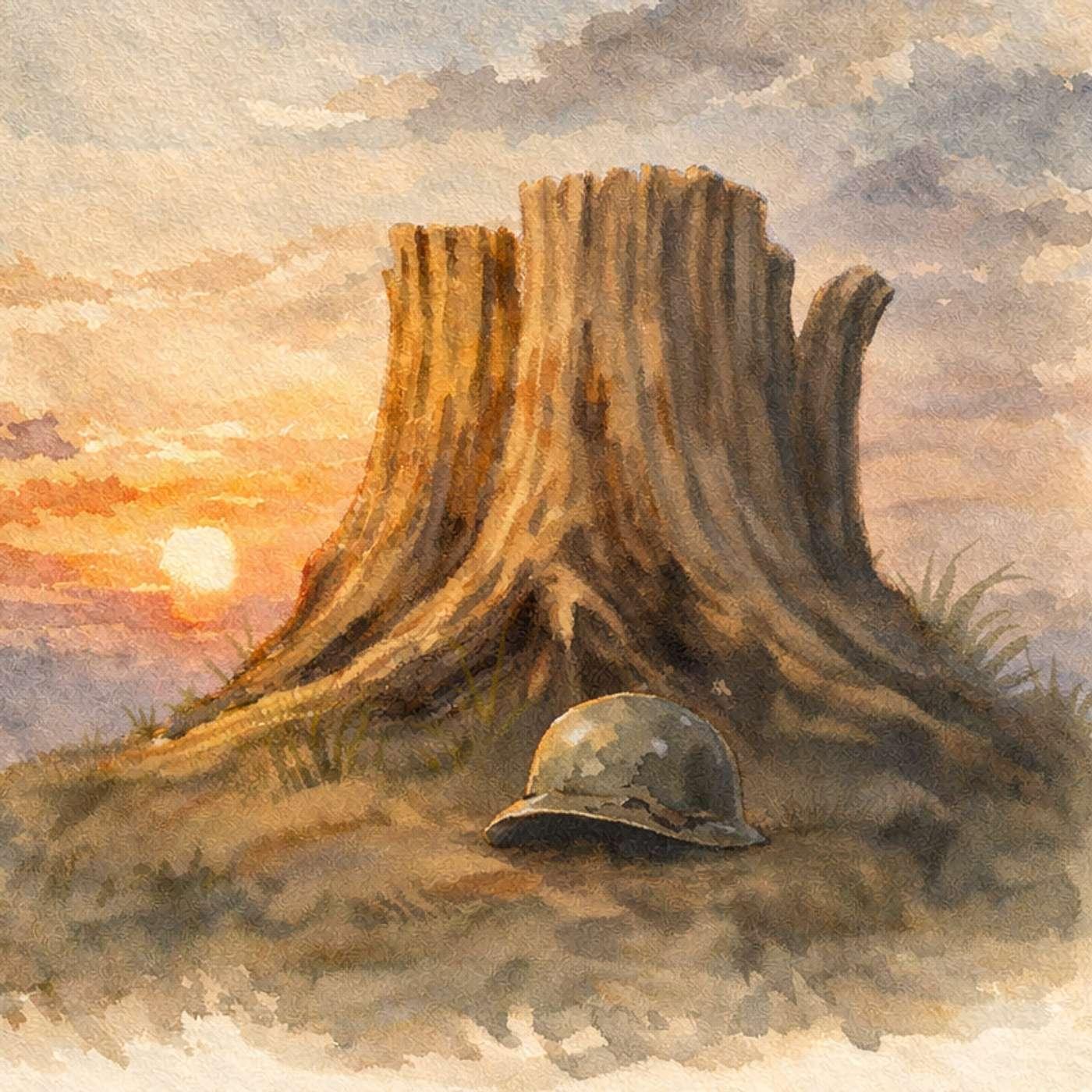
"Pyimma Ngote Toe (ပျဉ်းမငုတ်တို)" by Min Thu Wun (1909 to 2004), written in the four-syllable rhyme scheme typical of classic Burmese poetry, is an ode to a tree stump, the surviving fragment of a pyimma tree standing on a mound. The common name for this specimen in English is Queen's Crape Myrtle or Queen's Flower, giving off the unavoidable stench of colonialism. The original Burmese name pyimma, however, is quite different. It invokes the image of a sturdy, leafy tree offering refuge from Southeast Asia's cruel midday Sun. (With a lack of standardized Romanization for Burmese, pyima, pyinma, or pyimma can serve as an approximation of the Burmese name ပျဉ်းမ.)
The opening line, "ဖုထစ်ရွတ်တွ၊ ငှက်ဠင်းတသို့" is strung together with textured, aspirated, plosive words, allowing us to feel the bumps, ridges, knurls, and knots of the trunk as we pronounce them. The simile that follows compares the stump to a vulture, associated with burial grounds and death.
Written with stacked rhymes in the fourth, third, and second syllables of subsequent lines (the 4-3-2 pattern), the poem describes how the old pyimma has endured the termite's swarm, the sun's flames, the wind's wrath, and even warfare. The final stanza gives us hope and inspiration, depicting how the stump "ရွက်ဟောင်းညှာကြွေ၊ ရွက်သစ်ဝေ (sheds old stems and springs new leaves)" with the return of summer.
In this episode of Bite-Size Burmese (more a bowl than a bite, due to its length), I break down the first stanza of the poem, explain the rhyme scheme, and the post-independence sociopolitical climate of 1949 that gave birth to the poem. (Image: AI-generated in ChatGPT; Music: "Sunshine Dreams" by Kaazoom, Pixabay)
ပျဉ်းမငုတ်တို (မင်းသုဝဏ်)
"The Pyimma Stump" by Min Thu Wun (translated by Kenneth Wong)
ဖုထစ်ရွတ်တွ၊ ငှက်ဠင်းတသို့
ပျဉ်းမငုတ်တို၊ သက်ကြားအိုသည်
ကုန်းမိုထက်တွင် တပင်တည်း။
Gnarled, knotted, with humps and ridges,
Like a vulture on a mound
Stood the lonely pyimma stump.
ခွဆုံအကွေး၊ သစ်ခေါင်းဆွေးလည်း
အဖေးတက်လှာ၊ အိုင်းအမာသို့
ကျယ်စွာဟက်ပက် ခြအိမ်ပျက်။
The bending bough at the split
Is a hollowed, rotten termite shelter,
A scab-encrusted gaping wound.
ကုန်းမိုကမ်းပါး၊ မြေပတ်ကြားတွင်
စစ်သားခမောက်၊ ပိန်ခြောက်ခြောက်လည်း
စစ်ရောက်စခန်း လက်ပြညွှန်း။
A soldier’s shriveled war helmet,
Resting on the mound’s edge,
Points to a battle’s reach.
ထိုပင်ငုတ်တို၊ ပျဉ်းမအိုသည်
စစ်ကိုလည်းကြုံ၊ ခြအုံလည်းဖြစ်
ဓားထစ်လည်းခံ၊ နေလျှံလည်းတိုက်
လေပြင်းခိုက်လျက်၊ မငိုက်ဦးခေါင်း
နွေသစ်လောင်းသော်
ရွက်ဟောင်းညှာကြွေ၊ ရွက်သစ်ဝေ၍
လေပြေထဲတွင်၊ ငယ်ရုပ်ဆင်သည်
အသင် ယောက်ျားကောင်းတကား။
This severed trunk, aged and withered,
Has faced warfare, endured termites,
The sword’s hack, the sun’s flames,
And the gale’s wrath, and yet,
It stands with its head held high.
When summer returns,
It sheds old stems and springs new leaves,
Youthful again in the breeze—
A mighty gallant man is he!
More on the poet Min Thu Wun here.
Have a question about a Burmese word or phrase you heard here? Send us a message.