


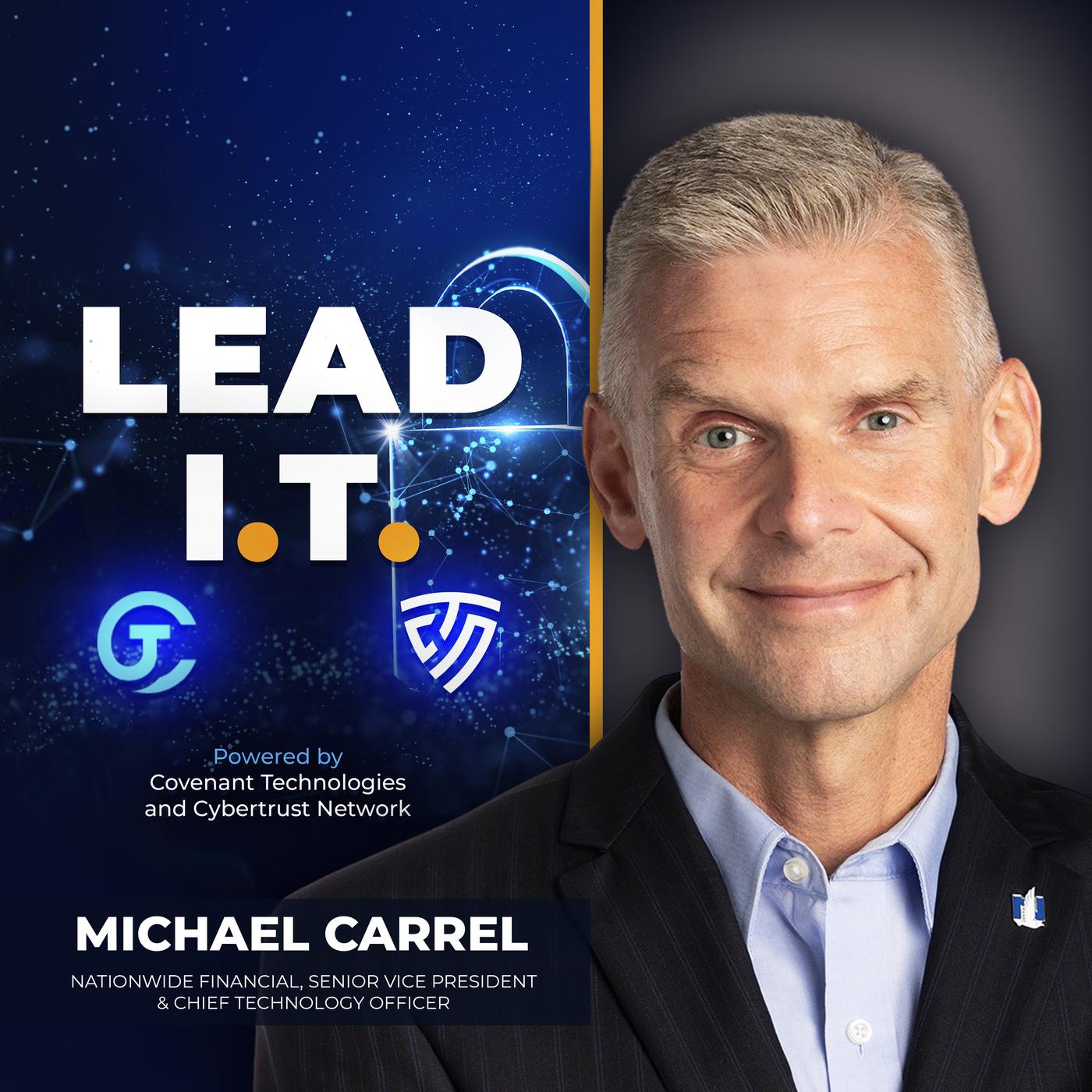
Michael Carroll
00:00:00
I want to be the leader that others want to follow, not someone that they have to follow.
Michael Carroll
00:00:04
So I will admit mistakes.
Michael Carroll
00:00:06
I will ask questions about things that will help us build a better path forward and effective leadership.
Michael Carroll
00:00:12
It's not just about achieving our goals, but it's also about showing empathy, compassion, and also resilience in challenging situations.
Speaker B
00:00:23
Welcome to leed it, where the greatest minds in technology and security share their hard earned lessons, insights, and stories.
Speaker B
00:00:30
These are the transformation champions in tech.
Speaker B
00:00:34
You'll discover the keys to success for leading innovation, growth, and change within your organization.
Speaker B
00:00:40
This podcast is powered by Covenant Technologies and Cybertrust Network, providing the best cybersecurity and it solutions for your business.
Speaker B
00:00:50
Here's your host, CEO, Casey Marquette.
Speaker B
00:00:54
Let's go.
Casey Marquette
00:00:55
Hey there.
Casey Marquette
00:00:56
Lead it nation.
Casey Marquette
00:00:57
Today I have for you Michael Carroll.
Casey Marquette
00:01:00
With close to 30 years of experience in the technology field, Michael is the senior vice president and chief technology officer of Nationwide Financial, where he is responsible for all technology solutions supporting the financial services businesses at nationwide with over 40 billion in annual revenue.
Casey Marquette
00:01:22
Michael is also the author of a great piece in Boss magazine, mastering the Art of Change in the digital domain.
Casey Marquette
00:01:31
There's a lot in store for you in this episode, and you definitely don't want to miss it.
Casey Marquette
00:01:35
But before we dive in, congratulations, Michael, on such an illustrious and remarkable career.
Michael Carroll
00:01:42
Thank you, Casey.
Michael Carroll
00:01:42
It's a privilege to be here today.
Casey Marquette
00:01:44
Great.
Casey Marquette
00:01:45
Thank you.
Casey Marquette
00:01:46
Let's kick this off with a leadership story.
Casey Marquette
00:01:49
Michael, has anyone ever expressed gratitude for your leadership in a way that surprised or moved you?
Michael Carroll
00:01:57
That is a great question, and one of the most memorable moments of gratitude that I've experienced came from a completely unexpected source, which is actually my wife.
Michael Carroll
00:02:07
I was part of a technology leadership class, and many people, my boss, people that I work with, were asked to describe a time when they saw you at your best as a leader.
Michael Carroll
00:02:18
And my wife recalled a night when one of our children was ill, and I stayed up all night allowing her to get some rest.
Michael Carroll
00:02:23
And the simple act meant a ton to her because it demonstrated genuine love and concern for others.
Michael Carroll
00:02:30
Just almost an unwavering commitment to the things that matter most to me, and just the ability to kind of remain calm and focus under pressure.
Michael Carroll
00:02:39
And to me, I remember thinking in this leadership development program, it was just a great reminder that effective leadership, it's not just about achieving our goals, but it's also about showing empathy, compassion, and also resilience and challenging situations.
Michael Carroll
00:02:54
And so I remember reading that, and I'll tell you, Casey, this was like seven years later after this had happened.
Michael Carroll
00:03:00
She had never shared that with me our entire life.
Michael Carroll
00:03:03
But to hear that that made such a great impact on her, of personal leadership, that really.
Michael Carroll
00:03:09
Amen.
Michael Carroll
00:03:09
A ton to me.
Casey Marquette
00:03:11
I love that you actually highlighted a personal situation.
Casey Marquette
00:03:16
That's the first time I've heard that, but I think that's awesome, especially your level.
Casey Marquette
00:03:20
You know, you become a workaholic.
Casey Marquette
00:03:21
A lot of us, you know, you tend to focus on work, not family.
Casey Marquette
00:03:25
So what an amazing story that.
Casey Marquette
00:03:27
That's awesome.
Casey Marquette
00:03:28
Michael, next question.
Casey Marquette
00:03:30
What's the worst leadership advice you've heard?
Michael Carroll
00:03:33
This was easy.
Michael Carroll
00:03:34
Very early in my career, I remember someone telling me never to show vulnerability.
Michael Carroll
00:03:42
It'll make you look weak.
Michael Carroll
00:03:43
It'll make you never make sure that you know the answers to everything.
Michael Carroll
00:03:48
Don't ever kind of show any sort of weakness.
Michael Carroll
00:03:51
And, you know, and I had at the time, I remember experiencing situations where leaders were afraid to express their emotions or admit their weaknesses, and that really creates a toxic work environment.
Michael Carroll
00:04:02
So I was quick to.
Michael Carroll
00:04:04
To dismiss this despite their passion around the feedback, you know, and I think through my career, you know, it's really clear I'm a huge Lencioni fan.
Michael Carroll
00:04:11
Right.
Michael Carroll
00:04:11
Vulnerability can build trust.
Michael Carroll
00:04:13
It can foster empathy.
Michael Carroll
00:04:15
It can help leaders really truly connect with their teams at a deeper level.
Michael Carroll
00:04:19
And I lead this.
Michael Carroll
00:04:20
I live that every day inside and outside of work.
Michael Carroll
00:04:23
And I'm going to tell you it makes a difference.
Michael Carroll
00:04:25
So, you know, in fact, I tell people that I want to be the leader that others want to follow, not someone that they have to follow.
Michael Carroll
00:04:32
So I will admit mistakes.
Michael Carroll
00:04:34
I will ask questions about things that will help us build a better path forward.
Michael Carroll
00:04:38
So that was probably the worst advice I've ever received.
Casey Marquette
00:04:42
Wow, that's a great answer.
Casey Marquette
00:04:44
You know, looking back on my career, I think I probably struggled with that early on.
Casey Marquette
00:04:49
You know, I didn't want to appear weak, but I don't know if it's, you know, I always loved reading leadership books, and I.
Casey Marquette
00:04:56
I was always more passionate about leadership than technology.
Casey Marquette
00:04:59
And along the way, I mean, being vulnerable, it's so important to your point, to connect and trust.
Casey Marquette
00:05:04
But I think early on, you know, you're taught in sports, you know, don't be weak.
Casey Marquette
00:05:08
And so I think that's something personally I struggle with early in my career.
Michael Carroll
00:05:12
I'm a huge student of leadership, and you mentioned, you know, kind of like, the purpose of connection.
Michael Carroll
00:05:19
And, you know, like John, a huge John Maxwell fan.
Michael Carroll
00:05:21
John Max wrote a book, everyone communicates if you connect.
Michael Carroll
00:05:26
Right.
Michael Carroll
00:05:26
And I think being vulnerable really helps you connect with people.
Michael Carroll
00:05:32
They can sense the heartbeat like other leader.
Michael Carroll
00:05:34
And there's a lot of things.
Michael Carroll
00:05:35
It's a great book.
Michael Carroll
00:05:36
Kind of goes into a lot of great practices as a leader.
Michael Carroll
00:05:39
How do you truly connect and not just communicate?
Michael Carroll
00:05:42
So I'm right there with you.
Casey Marquette
00:05:45
Love it.
Casey Marquette
00:05:46
Next question.
Casey Marquette
00:05:47
What advice would you give your younger self today or something?
Casey Marquette
00:05:52
You tell them to try.
Michael Carroll
00:05:54
You know, I love this question, and I have to recommend a book, and it's called halftime.
Michael Carroll
00:05:59
Moving from success to significance by Bob Buford.
Michael Carroll
00:06:03
I remember I was in my mid twenties when I read this book.
Michael Carroll
00:06:07
And it was actually written from a perspective of someone who was kind of like halfway through their life.
Michael Carroll
00:06:12
And what advice would they give to their younger self based upon what they learned?
Michael Carroll
00:06:16
And the most impactful thing that I learned through that book, and I'm so glad that I read it, actually, when I was in my mid twenties, is how do you make sure that you build a life of significance, that it's not just based on short term success?
Michael Carroll
00:06:31
Early in my career, I focused on acquiring my degrees.
Michael Carroll
00:06:34
Where would my next opportunity come from?
Michael Carroll
00:06:37
Achieving everything that I could, mainly in the workplace.
Michael Carroll
00:06:40
But I'll tell you what, through that book and even learning from some more experienced leaders, I learned the discipline of defining significance for my life, what it means to me, setting goals in all areas of my life, whether that's work, that's home, that's faith, that's community, and then also the discipline of reflection to continually assess, am I headed in the right path?
Michael Carroll
00:07:02
So I would tell my younger self probably, to read that book earlier, about ten years before I did, and circle yourself with strong leaders who live a life of significance that can actually mentor you and coach you early in your career.
Michael Carroll
00:07:17
There's way too many people that I've had the opportunity to be friends with that realize the importance of significance in your life too late, because they've chased success to the point where work, for instance, becomes everything versus just a part of yourself.
Michael Carroll
00:07:37
And so the greatest gift, I would say, is a set of leaders I had when I was in my mid twenties.
Michael Carroll
00:07:42
It was part of a leadership development program that I was in that just, like, really, like, invested in me to help me get that perspective.
Michael Carroll
00:07:50
So you don't kind of wake up that halfway through your life and realize that, you know, you're not the kind of husband or dad you wanted to be or not making the level of impact you want in your community.
Michael Carroll
00:08:02
And so very thankful for that.
Michael Carroll
00:08:04
If I could have read it when I was, in fact, like I've given, we have a high schooler or two in college, which everybody knows when they graduate from high school, they get a copy of that book and encourage them to read it, because I think it's really the art of leading yourself.
Michael Carroll
00:08:17
Well, I tell people all the time, until you can learn to lead yourself, well, you shouldn't be leading others.
Michael Carroll
00:08:23
And it starts with kind of books like halftime that Bob and Buford wrote to kind of really help put perspective in place to lead yourself well.
Casey Marquette
00:08:33
And just so you know, we love books on this show.
Casey Marquette
00:08:37
So.
Casey Marquette
00:08:37
So one of my favorite books I read long time ago was called 100 Success Principles, and it was, Jack Canfield was the author.
Casey Marquette
00:08:43
But one of those principles was, whatever you want to be good at, good at in life, read about it.
Casey Marquette
00:08:50
Somebody's already done it and written about it.
Casey Marquette
00:08:52
So.
Casey Marquette
00:08:53
So it sounds like that's what I've done.
Casey Marquette
00:08:55
I don't think I was born a leader.
Casey Marquette
00:08:56
I don't think I was, you know, anything other than I just read and just reinforced things.
Casey Marquette
00:09:01
Yeah.
Casey Marquette
00:09:02
And then the other thing I really love is it made me think of, you know, some people work so much, they.
Casey Marquette
00:09:09
They don't take care of their family.
Casey Marquette
00:09:11
And so we're.
Casey Marquette
00:09:12
I'm taking the team to Tony Robbins in November in New Jersey.
Casey Marquette
00:09:16
But one of the things he says, you know, he deals with these billionaires, and they're miserable.
Michael Carroll
00:09:21
Yes.
Casey Marquette
00:09:22
So he talks about wealth, and wealth isn't just money.
Casey Marquette
00:09:25
Right.
Casey Marquette
00:09:26
Spiritual.
Casey Marquette
00:09:26
And most, you know, there's so many different aspects of being wealthy, and so being successful but also being happy is so important.
Michael Carroll
00:09:37
I agree more.
Casey Marquette
00:09:38
Great.
Casey Marquette
00:09:39
Next question.
Casey Marquette
00:09:40
What's the one trait you wish you could instill in every employee, and why do you think it's important?
Michael Carroll
00:09:45
Why like one?
Michael Carroll
00:09:47
Just choosing one is so hard for me, though.
Michael Carroll
00:09:50
If I had to choose one, I would really say passion.
Michael Carroll
00:09:54
I would love to have every associate be passionate about what they do.
Michael Carroll
00:10:00
We spend so much of our time and energy at work, and I see the best performance and satisfaction coming from those who are passionate about what they do.
Michael Carroll
00:10:08
To me, it's a crucial trait to instill in every associate because I think it increases motivation.
Michael Carroll
00:10:14
When you're passionate about what you do, to your point about learning, Casey, you surround yourself.
Michael Carroll
00:10:20
You're motivated to succeed in that, learn as much as you can to be excellent at what you do.
Michael Carroll
00:10:27
I find those that have passion wealthy, they're more creative.
Michael Carroll
00:10:30
New ideas emerge.
Michael Carroll
00:10:31
They surround themselves by people who are good stewards of the profession that they're in.
Michael Carroll
00:10:39
They have higher engagement.
Michael Carroll
00:10:40
They inspire others.
Michael Carroll
00:10:41
All of us want to be around people who get up every day and are excited about what they do.
Michael Carroll
00:10:47
And so they just, they're more engaged in their work, and we see them being better coaches, even for other people, and they just create that culture.
Casey Marquette
00:10:56
Right.
Michael Carroll
00:10:56
That's energetic and that's positive.
Michael Carroll
00:10:59
And so, you know, life is just too short, and to do it with things that you're not passionate about is just sad.
Michael Carroll
00:11:06
Saddens me, actually.
Michael Carroll
00:11:08
So what I try to do as a leader, to create a work environment is really to have a work environment that supports their interests and their goals.
Michael Carroll
00:11:15
You know, I try to provide opportunities for professional development.
Michael Carroll
00:11:18
Like Lerner, you mentioned, you know, Casey, just kind of reading a ton, like, for strength finders, I'm sure you probably have done strength finders, you know, before as well.
Michael Carroll
00:11:25
Like, you know, learner is my number one, so I'm constantly looking for new opportunities.
Michael Carroll
00:11:30
I read a ton on leadership.
Michael Carroll
00:11:32
I'm so happy with this that you kind of invited me for the session because, like leadership, I'm a huge student of it.
Michael Carroll
00:11:38
Always believe, trying to get better.
Michael Carroll
00:11:40
I read a ton of surround yourself with really good leaders, and so providing professional opportunities for professional development, encouraging creativity, and recognizing rewards and contributions.
Michael Carroll
00:11:53
People also, when they feel like their passions are making a difference for the business that you're in, for, how they add value to those around.
Michael Carroll
00:12:04
I find that focusing on the motivation, too, around that can help them also kind of feed their.
Michael Carroll
00:12:10
Feed their passions.
Michael Carroll
00:12:11
So if it were me, I just want everyone, one trait, have passion for what you do.
Casey Marquette
00:12:18
And I'm not just saying this, I could not agree more.
Casey Marquette
00:12:21
So owning a staffing company, right.
Casey Marquette
00:12:23
That's one of my challenges with the recruiting staff, is how do you determine in an interview somebody's passionate?
Casey Marquette
00:12:31
But what we struggle with is so many leaders, when we ask them what's most important, it's not passion.
Casey Marquette
00:12:37
It's 20 years of this.
Casey Marquette
00:12:39
And I've seen so many amazing employees because they have the passion, they just figure it out.
Casey Marquette
00:12:46
And so I wish more people would hire on passion as opposed to, you got to have 20 years of this and 20 years of that.
Michael Carroll
00:12:53
I agree, Casey.
Michael Carroll
00:12:54
One thing I do is that I've coached on a lot of leadership development programs like here at nationwide.
Michael Carroll
00:12:59
And one of the things I do is tell people, like, the power of having a life mission statement, right.
Michael Carroll
00:13:04
And, you know, I've got a life mission statement, and I think it's got to be your why, you know, and you gotta be really clear on your why.
Michael Carroll
00:13:11
And that means all elements of your life and spending time thinking about it, stating it, writing it down is so foundational to good leadership.
Michael Carroll
00:13:20
I tell people all the time, just as an organization, you have to have vision, mission, strategy, goals, objectives.
Michael Carroll
00:13:24
Right.
Michael Carroll
00:13:25
Just everything reporter would tell you to do, you have to do that same thing for yourself.
Michael Carroll
00:13:30
What's your vision statement?
Michael Carroll
00:13:31
What's your mission statement?
Michael Carroll
00:13:32
Right.
Michael Carroll
00:13:32
What goals do you have inside and outside of work?
Michael Carroll
00:13:35
What's your timeframe to get there?
Michael Carroll
00:13:37
That's incredibly powerful.
Casey Marquette
00:13:39
Yes.
Casey Marquette
00:13:40
And I love, you mentioned the gratitude piece.
Casey Marquette
00:13:43
I remember, it's been a long time ago, but I remember reading the article, whatever book I was reading, where they had a list of what leaders think motivates employees.
Casey Marquette
00:13:54
And on one side was like, you know, money was number one.
Casey Marquette
00:13:58
But then you flipped over to what the, you know, what, what truly motivates people.
Casey Marquette
00:14:04
And one of the top ones was just thanking them.
Michael Carroll
00:14:08
Yeah.
Casey Marquette
00:14:08
I always tell people that's free.
Casey Marquette
00:14:10
Don't just say thank you, though.
Casey Marquette
00:14:11
Really think about it.
Casey Marquette
00:14:12
Take time.
Casey Marquette
00:14:13
So I literally have an hour of gratitude on my calendar every week.
Casey Marquette
00:14:18
And honestly, that may be a family member, it may be a vendor, it may be an employee.
Casey Marquette
00:14:22
Just to really think about who should I really take time.
Casey Marquette
00:14:26
And the other thing we do, Michael, is, and we track this as our leadership metrics.
Casey Marquette
00:14:31
We literally have a metric of four handwritten notes sent in the mail every month.
Michael Carroll
00:14:37
That's great.
Casey Marquette
00:14:38
And again, that could be an employee, that could be a client, it could be a candidate, whoever it may be.
Casey Marquette
00:14:44
And so we literally track that and make sure it happens.
Michael Carroll
00:14:46
And in this day and age, like with digital, like handwritten notes makes a big.
Michael Carroll
00:14:50
Because it's unexpected.
Michael Carroll
00:14:52
Right?
Michael Carroll
00:14:52
Yeah.
Michael Carroll
00:14:53
Everyone's expecting the email or the text message.
Michael Carroll
00:14:55
So it's funny how now that, what was the expected.
Michael Carroll
00:14:58
Right.
Michael Carroll
00:14:59
Kind of like the medium now is they, it means a ton because it's extra effort.
Michael Carroll
00:15:04
Right.
Michael Carroll
00:15:04
It takes time, but it means that you care.
Michael Carroll
00:15:07
So that's great.
Michael Carroll
00:15:08
Yeah.
Casey Marquette
00:15:08
And it's almost, I mean, it's crazy to say, but it's almost innovative.
Casey Marquette
00:15:12
Just like, I travel the country and just meet with people in person and that's, that's kind of rare anymore as well.
Casey Marquette
00:15:19
So there's, anyway, great answer.
Casey Marquette
00:15:22
Let me find, let's see here.
Casey Marquette
00:15:23
Okay.
Casey Marquette
00:15:23
Over the years, what was your biggest source of inspiration and why?
Casey Marquette
00:15:28
What's a challenging time?
Casey Marquette
00:15:29
It got you through.
Michael Carroll
00:15:30
Yeah.
Michael Carroll
00:15:31
So this will be a little bit personal as well.
Michael Carroll
00:15:34
I'll tell you, it may sound awkward, but my biggest source of inspiration has also probably been my biggest tragedy.
Michael Carroll
00:15:41
You know, many people will ask you I've heard this, like, Michael, what makes you the leader you are today?
Michael Carroll
00:15:47
I really.
Michael Carroll
00:15:48
I tell them all the time.
Michael Carroll
00:15:48
It's a product of our experiences, but most importantly, how we leverage them to become a better version of ourselves.
Michael Carroll
00:15:55
So my wife and I have experienced a loss of two children.
Michael Carroll
00:15:58
We had a stillbirth, and then we also lost one of our premature twins about 36 hours after she was born.
Michael Carroll
00:16:06
And I'll tell you, it was a tragic time for the both of us.
Michael Carroll
00:16:09
And while I wish we had an experience that I can say that we are both better and stronger because of it.
Michael Carroll
00:16:15
In fact, I remember reading a book, you know, Leader's legacy, and it stated that, like, the mastery of the art of leadership comes from the mastery of the self.
Michael Carroll
00:16:24
So and so developing leadership is a process of developing the self.
Michael Carroll
00:16:28
And for me, there are a couple of things that I would say that, you know, I learned through that process.
Michael Carroll
00:16:34
One of this, perseverance and resiliency.
Michael Carroll
00:16:36
You know, I think resilience is critical to leaders and to learning.
Michael Carroll
00:16:39
And if you really want something bad enough, be willing to persevere and see something through.
Michael Carroll
00:16:44
I remember after a stillbirth and then, you know, losing a twin.
Michael Carroll
00:16:50
And I'll tell you, the other twin, she's our oldest daughter.
Michael Carroll
00:16:54
She is 22, and she is healthy and happy and wonderful.
Michael Carroll
00:16:57
And then we've had two outstanding brothers since then.
Michael Carroll
00:17:00
And I remember people telling my wife and I, you should stop.
Michael Carroll
00:17:05
Right?
Michael Carroll
00:17:05
You've had to two disappointments.
Michael Carroll
00:17:08
Now you have your daughter.
Michael Carroll
00:17:09
You should just kind of be happy.
Michael Carroll
00:17:10
And I remember my wife felt like, no, we, you know, we love kids, and we're like, no.
Michael Carroll
00:17:16
Like, yes, it's been difficult for us, but, you know, went through.
Michael Carroll
00:17:19
Now we have a wonderful three children.
Michael Carroll
00:17:22
The second thing is that, you know, patience, but realizing the good that comes from the difficult times.
Michael Carroll
00:17:26
You know, I am a firm believer that everything happens for a reason.
Michael Carroll
00:17:30
And it's so important for us when we have times in our lives where we have disappointment, where we have a setback, right.
Michael Carroll
00:17:40
That we use those experiences to become better and learn from those.
Michael Carroll
00:17:46
And so I was able, I know, to use those experiences to help and inspire others.
Michael Carroll
00:17:49
And, you know, it forced me to grow into areas where I needed to grow.
Michael Carroll
00:17:53
And so it's hard to be thankful.
Michael Carroll
00:17:55
There's a saying about, like, being thankful for the reign in life because it leads to the greatest growth.
Michael Carroll
00:18:01
And those are two things I learned from that.
Michael Carroll
00:18:03
And, you know, how I apply that to work is that I've been part of many difficult, challenging transformation effort, technology transformations here at nationwide.
Michael Carroll
00:18:11
You know, I have been in technology for 30 years.
Michael Carroll
00:18:15
This is my third CTO role here at nationwide.
Michael Carroll
00:18:17
I had been part of transforming technology, you know, for a large portion of my career.
Michael Carroll
00:18:22
And it comes with a lot, a lot of risk and a lot of reward.
Michael Carroll
00:18:25
And there was one initiative in particular that had challenges like growth and estimates, partnership issues with an external vendor, low associate morale.
Casey Marquette
00:18:33
Right.
Michael Carroll
00:18:33
Everyone, especially when, you know, you're not achieving intended outcomes.
Michael Carroll
00:18:36
And what I try to do is put all the challenges in perspective, right.
Michael Carroll
00:18:40
And first of all, show up as a leader in control with perspective and guidance to really help chart a path through.
Michael Carroll
00:18:47
And people need to see a path through challenges, and they need to see a reason to persevere, focusing on the value, the outcomes.
Michael Carroll
00:18:54
And I remember telling people, nothing with great value in my life or my career has ever been easy.
Michael Carroll
00:19:01
If I look back on the most impactful moments that make me who I am today, they were the ones that were difficult.
Michael Carroll
00:19:08
They were hard.
Michael Carroll
00:19:09
They were hairy and scary and difficult.
Michael Carroll
00:19:14
They were never the easy ones.
Michael Carroll
00:19:16
I think for me, nothing can rival the challenges that I mentioned that my wife and I had to deal with outside of work.
Michael Carroll
00:19:23
I tell people, like, well, I wish it never happened.
Michael Carroll
00:19:25
I'll tell you what, there is little that can happen, even at work, that can rival kind of like, what you've been able to learn from and grow from and have a level of resiliency that you need to kind of, like, deal with, with difficult times.
Michael Carroll
00:19:39
So.
Michael Carroll
00:19:40
And I remember reminding people on these efforts, right.
Michael Carroll
00:19:44
Many times, especially for associates mid, you know, kind of like mid level in the organization.
Michael Carroll
00:19:50
They may only be part of one of these transformation projects once in their career.
Michael Carroll
00:19:55
Right.
Michael Carroll
00:19:56
These are like core modern platforms that they're not, you know, you're not changing them, like every five years.
Michael Carroll
00:20:01
Right.
Michael Carroll
00:20:01
They'll exist for, you know, 1520 years.
Michael Carroll
00:20:05
Right.
Michael Carroll
00:20:05
Like business, you know, these are platforms you're building your business on.
Michael Carroll
00:20:08
And so I like to try to get people excited, right, about the opportunity that getting into something scary and hairy that you don't know, you know, it's going to be difficult can actually help much how much more fulfilling, you know, that can actually make you so.
Michael Carroll
00:20:23
So for me, like, through all.
Michael Carroll
00:20:24
But I tell people, like, again, learn to lead yourself really well.
Michael Carroll
00:20:28
And then it's amazing what you can accomplish when you're, when you're leading an organization, if you can apply those lessons.
Casey Marquette
00:20:35
Yeah.
Casey Marquette
00:20:35
Wow.
Casey Marquette
00:20:36
Well, first off, sorry, that's a, I can't even imagine.
Casey Marquette
00:20:39
But, but also, yeah, putting things into perspective.
Michael Carroll
00:20:42
You.
Casey Marquette
00:20:44
Years ago, I actually ran the global command center for Johnson.
Casey Marquette
00:20:47
And Johnson.
Casey Marquette
00:20:49
We had business critical, impacting incidents.
Casey Marquette
00:20:53
We had 240 operating companies.
Casey Marquette
00:20:55
So it was a chaotic job.
Casey Marquette
00:20:57
You know, everybody, we were losing lots of money every minute we were down.
Casey Marquette
00:21:02
So I ran those command centers all over the world.
Michael Carroll
00:21:05
Wow.
Casey Marquette
00:21:06
And just.
Casey Marquette
00:21:06
But to your point, you know, as a leader, staying calm, and basically, you know, somebody calls from the team, they're all worked up, nobody's dying.
Casey Marquette
00:21:19
You know, let's rely, let's really think through this.
Casey Marquette
00:21:21
So I don't know what to say to that other than sorry.
Casey Marquette
00:21:25
That's a, that must have been very tough.
Casey Marquette
00:21:27
Very tough to go through.
Casey Marquette
00:21:31
Last question.
Casey Marquette
00:21:32
When's Wednesday?
Casey Marquette
00:21:33
When's a time you had an unexpected twist or failure in your career?
Casey Marquette
00:21:38
How did it lead to growth or success down the road?
Michael Carroll
00:21:42
I have a great story around this one.
Michael Carroll
00:21:44
So at the time, I was like, first level executive at Nationwide, working in a part of our property and casualty organization.
Michael Carroll
00:21:52
And I was two levels kind of removed from our enterprise CIO.
Michael Carroll
00:21:57
But our enterprise CIO at the time, he would get all the officers in technology together, like, four times a year.
Michael Carroll
00:22:04
And oftentimes he would give you the opportunity to respond after these meetings to strategic issues in technology, and he would let every officer, didn't matter if you were officer, ABP VP, senior vice president, or he was the executive vice president, he would give all officers an opportunity to respond to him.
Michael Carroll
00:22:22
And a couple of pages around how you would respond to maybe a strategic issue he was responding to.
Michael Carroll
00:22:27
So if you can imagine, he's getting probably, like 100 of these with our officer group.
Michael Carroll
00:22:32
And so for several years, I would submit.
Michael Carroll
00:22:36
I would submit kind of like my perspective.
Michael Carroll
00:22:38
I love the assignment, actually.
Michael Carroll
00:22:39
Right?
Michael Carroll
00:22:40
It's kind of being opportunity to think even bigger and broader.
Michael Carroll
00:22:43
And so I remember one day, I get this invite for lunch, an hour and a half lunch with the enterprise CIO, right?
Michael Carroll
00:22:50
And I remember thinking to myself, oh, no, like, what did I do wrong?
Michael Carroll
00:22:55
Like, why is he, for an hour and a half lunch, I remember talking to, like, two levels above me, just even where the our property and casualty CIO at the time, like, hey, I got this really weird invite for lunche.
Michael Carroll
00:23:07
Do you know anything about it?
Michael Carroll
00:23:09
Like, everything okay?
Michael Carroll
00:23:10
Should I be worried?
Michael Carroll
00:23:12
And he's like, oh, no.
Michael Carroll
00:23:13
He's like, this is good.
Michael Carroll
00:23:14
He's like, he has something to share with you.
Michael Carroll
00:23:16
Just go out to lunch.
Michael Carroll
00:23:18
So went out to lunch, and he said, michael, he's like, for years, a couple years now, you've been submitting these responses to strategic technology issues.
Michael Carroll
00:23:30
And he's like, I really like the way you think.
Michael Carroll
00:23:33
And he's like, I would like for you to be my chief of staff to come into the CIO council at the time, right.
Michael Carroll
00:23:39
And be his chief of staff and to help him was, you know, run, run the council.
Michael Carroll
00:23:44
And that time it was a set of, like, five or six the CIO's, that would be business unit.
Michael Carroll
00:23:49
And then, you know, your.
Michael Carroll
00:23:51
Your infrastructure shared services type CIO's.
Michael Carroll
00:23:54
But he's like, you know, but at the time, it was a lateral, or at the time, my property and casualty.
Michael Carroll
00:24:00
Property casualty, they were offering me a promotion to take on a bigger role, doing more of what I was doing.
Michael Carroll
00:24:08
I remember thinking to myself, so I've got these two options, work for the enterprise CIO as a lateral, or take a promotion and be able to work for the property and casualty CIO.
Michael Carroll
00:24:21
I remember when our enterprise CIO at the time, he's like, michael, he's like, you can rationalize either path, but the only advice I have to you is, anytime you think about your next role, make sure you're thinking about one or two roles after that.
Michael Carroll
00:24:37
And is it preparing you for what your longer term career path is?
Michael Carroll
00:24:42
And I remember going home, talking to my wife, and, like, you know, like, you know, part of me really wants the promotion, right?
Michael Carroll
00:24:49
More money, right.
Michael Carroll
00:24:51
More responsibility.
Michael Carroll
00:24:52
I said, but this.
Michael Carroll
00:24:53
If I do this job really well, right, I have an opportunity to work for the people who are going to hire you.
Michael Carroll
00:24:59
Prepare me for a CIO job in the future.
Michael Carroll
00:25:02
And so I took the lateral, and I can tell you, I wouldn't be.
Michael Carroll
00:25:06
I did a good job.
Michael Carroll
00:25:07
I told my wife, like, if I do this job really well, it could be really good for me.
Michael Carroll
00:25:12
If I don't, it could be really bad.
Michael Carroll
00:25:14
This kind of a risk and a reward.
Michael Carroll
00:25:15
It went really well, luckily.
Michael Carroll
00:25:17
And I would tell you, I don't think I would be where I am right now without that unexpected twist in my career.
Michael Carroll
00:25:24
By taking on that role, that was completely unexpected for me.
Michael Carroll
00:25:29
The learning was incredible.
Michael Carroll
00:25:30
I was able to work with the CEO members of the cabinet.
Michael Carroll
00:25:35
This is pretty early.
Michael Carroll
00:25:36
This is my first officer assignment in technology.
Michael Carroll
00:25:41
And then got the credibility of all the CIO's that reported to the enterprise CIO that then were just waiting.
Michael Carroll
00:25:48
Then I'm willing to take you on for, like, the next role after being chief of staff or Enterprise CIO.
Michael Carroll
00:25:54
So that's.
Michael Carroll
00:25:55
And I do it all over again.
Michael Carroll
00:25:57
It was a great experience.
Michael Carroll
00:25:59
Yeah.
Casey Marquette
00:25:59
You know what stood out to me on that answer was, you said, luckily, you know, you succeeded.
Casey Marquette
00:26:05
I always tell the teams, I've got a sign on my wall in the office that says, the harder I work, the luckier I get.
Casey Marquette
00:26:12
So I'm certain even from this short conversation, it wasn't luck.
Casey Marquette
00:26:17
I tell you, Michael, the thing I've been very impressed with is clearly you've studied leadership.
Casey Marquette
00:26:22
I can just tell in this short call.
Casey Marquette
00:26:24
And then also, you bring up family a lot, which I'm sure your team really respects, and talk about connecting with people.
Casey Marquette
00:26:31
I mean, it's not just all work.
Casey Marquette
00:26:32
So absolutely awesome.
Casey Marquette
00:26:35
So I think we should wrap it up here.
Casey Marquette
00:26:37
It seems like a good point to conclude.
Casey Marquette
00:26:39
And, Michael, I just want to say to you, thanks for coming on the show, my friend.
Casey Marquette
00:26:43
For everyone out there, have a great day.
Michael Carroll
00:26:45
Thank you, Casey.
Speaker B
00:26:46
Thanks for listening to lead it.
Speaker B
00:26:49
This podcast is powered by covenant technologies and Cybertrust Network, providing the best cybersecurity and it solutions for your business.
Speaker B
00:26:57
Make sure to subscribe to the show where you listen to your podcast so you're notified when a new episode is released.
