WEBVTT
00:00:00.320 -->
00:00:06.639Get Real is recorded on the unceded lands of the Boonerong and Warunjury peoples of the Kulan Nation.
00:00:06.639 -->
00:00:11.279We acknowledge and pay our respects to their elders, past and present.
00:00:11.279 -->
00:00:24.719We also acknowledge that the first peoples of Australia are the first storytellers, the first artists, and the first creators of culture, and we celebrate their enduring connections to country, knowledge, and stories.
00:00:28.079 -->
00:00:31.679Welcome to Get Real, Talking Mental Health and Disability.
00:00:31.679 -->
00:00:34.240Brought to you by the team at Erma 365.
00:00:34.719 -->
00:00:44.880Join our hosts Emily Webb and Karenza Louis Smith as we have frank and fearless conversations with special guests about all things mental health and complexity.
00:00:48.640 -->
00:00:55.359We recognise people with lived experience of mental ill health and disability, as well as their families and carers.
00:00:55.359 -->
00:01:07.519We recognise their strength, courage, and unique perspective as a vital contribution to this podcast so we can learn, grow and achieve better outcomes together.
00:01:12.879 -->
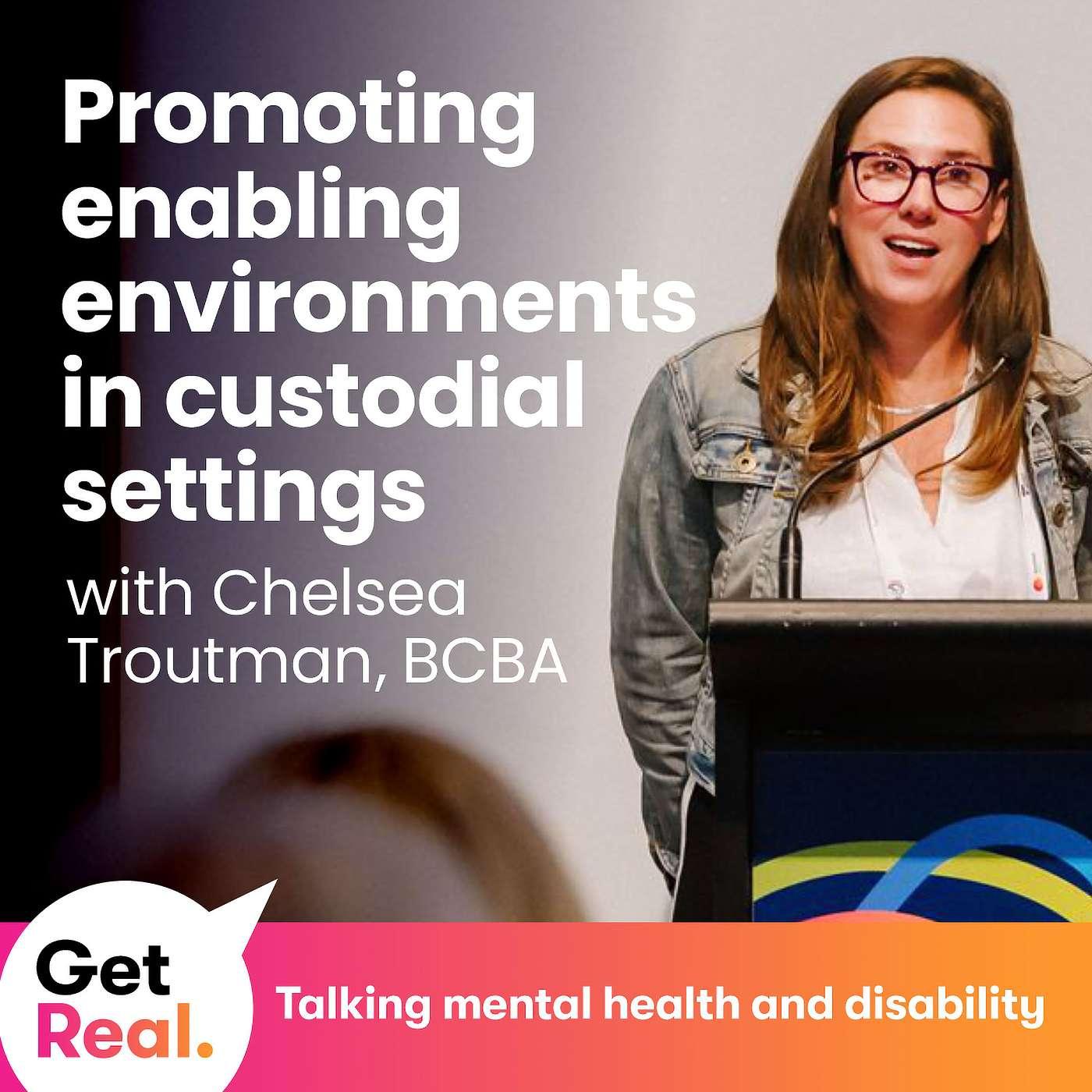
00:01:24.480Chelsea Troutman is a board-certified behaviour analyst and clinical supervisor, and she's also director of a behaviour support practice, Elements ABC.
00:01:24.480 -->
00:01:38.400She presented at the Complex Needs Conference last year on the topic promoting enabling environments in restrictive settings to progress treatment and meaningful outcomes for all.
00:01:38.400 -->
00:01:58.159Enabling environments are defined as places where good relationships are upheld and they facilitate well-being for all participants, staff and service users alike, and where new ways of relating can be learned through mutual respect and recognition, nurturing a sense of belonging.
00:01:58.159 -->
00:02:10.319This definition comes from the United Kingdom's Guide to Psychologically Informed Planned Environments, and it's co-authored by the National Offender Management Service and Department of Health.
00:02:10.319 -->
00:02:24.400Kerenza Louis Smith caught up with Chelsea after the presentation, and the pair spoke more about this, particularly in the context of custodial settings like prisons and youth justice centres, and why it is so important.
00:02:24.400 -->
00:02:25.120Here's
00:02:25.120 -->
00:02:26.719Kerenza and Chelsea.
00:02:27.840 -->
00:02:39.199So we're live at the 2025 Complex Needs Conference, and I'm joined by Chelsea Trampman, who has just presented the context of environments in shaping behavior and rehabilitation.
00:02:39.199 -->
00:02:44.639So, Chelsea, tell us a bit about you, you know, what you do, your work in this field.
00:02:45.360 -->
00:02:50.960So I'm a behavior analyst, and I say that purely because I love the science of behavior.
00:02:50.960 -->
00:02:58.479I love everything about behavior and I love people and relationships and everything that impacts behavior because we're just humans.
00:02:58.479 -->
00:02:59.680We're all just humans.
00:02:59.680 -->
00:03:10.159So I'm asked to go into a situation and try to manage behavior, teach new behaviors, shape new behaviors, manage high-risk scenarios, manage high-risk behaviors.
00:03:10.159 -->
00:03:18.400But at the end of the day, I'm just really going in and working with the person and trying to figure out their purpose in life, how they have a sense of meaning in their life.
00:03:18.400 -->
00:03:20.960And so my job is a behavior support practitioner.
00:03:20.960 -->
00:03:21.680That's what I do.
00:03:21.680 -->
00:03:23.759I'm a behavior analyst, so I love data.
00:03:23.759 -->
00:03:26.240I love understanding patterns and behavior.
00:03:26.240 -->
00:03:33.520But I think what's really important is I understand the patterns within an environment that either trigger the occurrence or non-occurrence of behavior.
00:03:33.520 -->
00:03:38.560So effectively, we can invoke stress in someone, or we can create an environment where they thrive.
00:03:38.560 -->
00:03:40.240And you see it a lot in classrooms.
00:03:40.240 -->
00:03:49.520For example, you see it a lot with young students, and you see an environment where the teacher just loves them and engages with them and they feel a sense of belonging and they thrive.
00:03:49.520 -->
00:03:50.639They have the best year.
00:03:50.639 -->
00:04:01.840And then they go to another teacher who doesn't make any connection with them, who doesn't pay attention to their needs, who kind of disregards what they do need, and then they they struggle, right?
00:04:01.840 -->
00:04:11.039So my job is to go in and essentially understand behavior within the context of the environment and understand the behavior with what the person needs and essentially what's meaningful to them.
00:04:11.439 -->
00:04:13.439So who do you work with then, Chelsea?
00:04:13.840 -->
00:04:18.639I own a practice and we we work across the community and across various settings.
00:04:18.639 -->
00:04:22.639I personally have always worked with high-risk youth and forensic disabilities.
00:04:22.639 -->
00:04:31.680So more in secure settings, custodial environments, some schools, but it's mostly when they're excluded from schools or they're struggling to engage with schools.
00:04:31.680 -->
00:04:33.279I've always worked in that environment.
00:04:33.680 -->
00:04:35.839And so tell us a bit about your presentation today.
00:04:35.839 -->
00:04:39.199So the context of environments and shaping behavior.
00:04:39.199 -->
00:04:44.959So different environments, especially in high-risk settings, like a jail, for example.
00:04:45.920 -->
00:04:49.839So corrections by nature is it's about managing risk, right?
00:04:49.839 -->
00:04:54.240So we know it's about managing risk, but the name corrections speaks to correcting behavior.
00:04:54.240 -->
00:04:56.800It speaks to this idea of rehabilitation.
00:04:56.800 -->
00:05:05.600But prison is such a tricky space because by nature you remove all identity, you remove the client's opportunity to make choices, self-direction, routines.
00:05:05.600 -->
00:05:10.560You take away these primary skills, and clients become quite institutionalized in this environment.
00:05:10.560 -->
00:05:15.519And so what happens is they're meant to comply and align to this risk management approach.
00:05:15.519 -->
00:05:23.199And my presentation spoke to the pendulum of moving when it's solely focused on management, the risk is you have no focus on treatment.
00:05:23.199 -->
00:05:31.839And in a really compliance-driven environment where you remove all of these skills and opportunities to practice a skill, the skills regress.
00:05:31.839 -->
00:05:36.240But if you think about offense management when they go into the community, what do we need?
00:05:36.240 -->
00:05:37.759We need to be able to problem solve.
00:05:37.759 -->
00:05:39.120We need conflict resolution.
00:05:39.120 -->
00:05:42.000We need to feel confident in how to set up a routine for the day.
00:05:42.000 -->
00:05:46.720We need to have self-initiation and we need to know we have something meaningful to do that day.
00:05:46.720 -->
00:05:48.240We need to have a sense of purpose.
00:05:48.240 -->
00:05:50.079We need to have relationships.
00:05:50.079 -->
00:06:00.000And relationships are tricky because we need to make sure that our family, our protective factors, our key people in our life want to come into the environment and see me.
00:06:00.000 -->
00:06:10.720And if the environment doesn't set up a therapeutic space where they feel safe, the actual relationships, the family coming in, if they don't feel safe enough to come in, there's a poor quality engagement, right?
00:06:10.720 -->
00:06:12.879So it can rupture those relationships.
00:06:12.879 -->
00:06:20.000So everything I spoke about was how do we actually look at the environment to actually create a rehabilitative culture?
00:06:20.000 -->
00:06:23.600And this is not just around opportunities for skill development.
00:06:23.600 -->
00:06:25.439This is around looking at the environment.
00:06:25.439 -->
00:06:28.800And as a culture, how are we promoting rehabilitation?
00:06:28.800 -->
00:06:36.079So how are we actually protecting our staff to show up every day and say, you belong here, I have a sense of hope.
00:06:36.079 -->
00:06:37.519I'm gonna look after you.
00:06:37.519 -->
00:06:38.800We're on the same team.
00:06:38.800 -->
00:06:42.480And when I say staff, I don't just mean the custodial staff or the clinical staff.
00:06:42.480 -->
00:06:45.519I mean the janitor and the admin staff.
00:06:45.519 -->
00:06:50.560So when families come to the front, someone's smiling at them and saying, You're welcome here.
00:06:50.560 -->
00:06:51.759You belong here.
00:06:51.759 -->
00:06:55.439We're gonna help you stay connected to your family member.
00:06:55.439 -->
00:06:58.959You have the janitor who says, I know this is a really important place.
00:06:58.959 -->
00:07:01.360I'm gonna make sure it's safe and clean for everyone.
00:07:01.360 -->
00:07:15.519So a lot of what I spoke about was looking at these environments that naturally restrict individuals, focus primarily on management, remove opportunities for skill development, and also potentially increase risk because they're re-traumatizing.
00:07:15.519 -->
00:07:24.000Whereas if we flip the switch, we flip it on its head, we create an environment that's quite enabling, we're more likely to actually give opportunities to practice the skills.
00:07:24.000 -->
00:07:31.199We're actually giving staff the opportunity to feel this empowering agency, and then they're more likely to give this sense of hope to the client.
00:07:31.199 -->
00:07:32.959So everyone's working on the same team.
00:07:32.959 -->
00:07:35.439And it's really about that culture of rehabilitation.
00:07:35.439 -->
00:07:38.959We're trying to move more towards everyone's equal.
00:07:38.959 -->
00:07:41.199Staff, the participant, everyone.
00:07:41.199 -->
00:07:45.360We talk a lot about person-centered practice, and it's all about the client.
00:07:45.360 -->
00:07:52.879Obviously, I'm focused on the client, but you can't actually facilitate access to skill development.
00:07:52.879 -->
00:08:01.279You can't facilitate access to opportunities for rehabilitation or treatment programs unless the people delivering them know why they're there.
00:08:01.279 -->
00:08:03.360They feel a sense of value to be there.
00:08:03.360 -->
00:08:08.000They're empowered to actually provide the sense of hope and optimism for the person.
00:08:08.000 -->
00:08:20.879And unless they show up with that mentality, and unless the environment facilitates that for the staff, you run a risk of it just what I call treatment paralysis or really a focus on management more than treatment.
00:08:20.879 -->
00:08:35.679And essentially what happens is clients leave prison, go into the community, are missing those prerequisite skills, and they're missing the actual foundational features that actually facilitate the rehabilitation or offense management.
00:08:36.159 -->
00:08:42.080So the community often says, well, hang on a minute, you've done bad things, lock you up, save your time, that's gonna fix you.
00:08:42.080 -->
00:08:50.320You know, we're gonna we're gonna lock you away for eight years, ten years, and suddenly you're magically gonna change overnight and you're gonna come out in the community and that's all gonna be sorted.
00:08:50.320 -->
00:08:52.320And I'm that that doesn't work, right?
00:08:52.639 -->
00:09:02.320No, it doesn't, because so you say they're in prison for five years, and during those five years, they've lost all those basic skills to function in daily life, to function in the community.
00:09:02.320 -->
00:09:05.519So our expectation is they're naturally just gonna get those skills back.
00:09:05.519 -->
00:09:07.120No, they're terrified.
00:09:07.120 -->
00:09:14.559I had a client tell me one time, he had come out, he was out for a week, he sent me a message and just said, I can't do this anymore, it's really hard.
00:09:14.559 -->
00:09:16.320And I said, What's going on?
00:09:16.320 -->
00:09:18.799And he said, It's just really noisy out here.
00:09:18.799 -->
00:09:22.879And he said, and I have no idea how to make my breakfast.
00:09:22.879 -->
00:09:26.639And I'm like, that's quite important, right?
00:09:26.639 -->
00:09:28.639And this was in context of a number of things.
00:09:28.639 -->
00:09:30.799I didn't know who was coming to see me that day.
00:09:30.799 -->
00:09:34.240I don't feel like I can get up and I'm used to just this routine.
00:09:34.240 -->
00:09:36.480And he really just wanted to go back to his routine.
00:09:36.480 -->
00:09:55.519But it's really important to think if you do not practice your skills every day, and if you are not promoted to practice and you're not empowered to focus on hope for a better future, and if you can't see opportunities to actually practice this, the thing is opportunities to practice leads to opportunities to feel successful, and then you see the possibilities.
00:09:55.519 -->
00:09:58.960Then you see hope and you can see a path forward.
00:09:58.960 -->
00:10:05.200And if you don't have that opportunity to practice, it's really hard to move forward.
00:10:05.200 -->
00:10:07.919So entering the community, it's really terrifying.
00:10:07.919 -->
00:10:10.879And we can't expect people to use skills that we haven't practiced.
00:10:11.360 -->
00:10:11.919We've taken away.
00:10:11.919 -->
00:10:12.639Yeah, we have.
00:10:12.639 -->
00:10:18.480It was when you were kind of locked up, I guess, even something like in five years, like you know, Myki might have been introduced.
00:10:18.960 -->
00:10:19.519That's right.
00:10:19.519 -->
00:10:20.799Your phone.
00:10:20.799 -->
00:10:23.759But it's even just basic problem solving.
00:10:23.759 -->
00:10:28.080We miss those prerequisite skill sets that are required for offense management.
00:10:28.080 -->
00:10:29.440So problem solving.
00:10:29.440 -->
00:10:33.679Who are my safe people that I can still contact when I'm not doing okay?
00:10:33.679 -->
00:10:37.120Or even just when I need to say hello to someone to know I'm not alone.
00:10:37.120 -->
00:10:44.879All this basic conflict resolution, I'm gonna walk out and I'm gonna feel quite judged in the community because I've been inside the last period of time.
00:10:45.039 -->
00:10:45.279Yeah.
00:10:45.440 -->
00:10:47.039How do I manage that?
00:10:47.440 -->
00:10:49.440So rehabilitation's important then, isn't it?
00:10:49.440 -->
00:10:53.120It's about actually supporting people so that things do change.
00:10:54.240 -->
00:10:59.440Rehabilitation, I find I look at behavior change as two things, habilitation and rehabilitation.
00:10:59.440 -->
00:11:06.320And habilitation is effectively teaching all the functional skills that promote someone's independence.
00:11:06.320 -->
00:11:14.879Those are really, really important to practice across different contexts and settings, particularly in prison or custodial environments and the community.
00:11:14.879 -->
00:11:21.600Rehabilitation speaks to reframing behaviors to make the offending behavior unnecessary.
00:11:21.600 -->
00:11:23.919So it's two parts to it.
00:11:23.919 -->
00:11:32.879If we neglect one, it means we're solely focused on the reframing of the offending behavior, but we forget they need to live a quality life.
00:11:32.879 -->
00:11:34.399They need to have purpose and meaning.
00:11:34.399 -->
00:11:42.000So if they don't have the skills to function in the community, they're more likely to default to old patterns that actually promote the offending behavior.
00:11:42.320 -->
00:11:46.320So we're not, I mean, obviously, we're talking a lot about complexity at the Complex Needs Conference.
00:11:46.320 -->
00:11:52.399And then when I think about complexity, I think a lot about things like trauma, things that have happened to people as well.
00:11:52.399 -->
00:12:01.200How do we manage then environments that you know help individuals feel safe and supported when you know you've had such a history of trauma?
00:12:02.240 -->
00:12:04.480That often leads to distrust, doesn't it?
00:12:04.480 -->
00:12:08.639So they have a learning history where people have let me down, it's me against the world.
00:12:08.639 -->
00:12:17.519I'm gonna engage in behavior that's most likely driven by fear, but it presents as avoidance in a custodial environment, it presents as protesting or oppositional.
00:12:17.519 -->
00:12:25.679It can present as patterns in personality and attachment styles, and it can lead to really high-risk behavior effectively.
00:12:25.679 -->
00:12:33.679So when someone doesn't feel safe, you're more likely to experience these high-risk behaviors, quite impulsive, reactive behaviors.
00:12:33.679 -->
00:12:42.639And if we don't set up the environment where someone feels safe, then it actually impacts the staff's safety, it impacts the person's safety and they stagnate.
00:12:42.639 -->
00:12:49.919So we need to think about trauma in the context of not just how it impacts the immediate situation, we need to think about every environment.
00:12:49.919 -->
00:12:52.639Is it going to re-traumatize the individual?
00:12:52.639 -->
00:12:57.120That's gonna drastically impact their ability to rehabilitate and reintegrate.
00:12:57.120 -->
00:13:00.320And what I often say is just re-engagement in the community.
00:13:00.320 -->
00:13:06.159We talk about reintegration, but it's actually engaging with the community is really tough.
00:13:06.159 -->
00:13:09.600How do we actually take that first step to go outside?
00:13:09.919 -->
00:13:16.639And and also as well, I think when we think about stigma and discrimination, so the minute you say someone's been to jail, like that's like, whoa, alert.
00:13:16.639 -->
00:13:17.279That's right.
00:13:17.279 -->
00:13:20.399You know, all of those kind of things come up, don't they?
00:13:20.720 -->
00:13:23.840And trauma sits in, it sits in every aspect of you.
00:13:23.840 -->
00:13:26.960It sits in your learning history, so your expectation of staff.
00:13:26.960 -->
00:13:28.159You don't trust people.
00:13:28.159 -->
00:13:30.159You assume they're gonna let you down.
00:13:30.159 -->
00:13:32.720It changes the way your brain functions.
00:13:32.720 -->
00:13:39.120In a prison environment, your stress levels are probably a bit higher because you're on natural alert all the time, and that's your survival instinct.
00:13:39.120 -->
00:13:43.840So you're more likely to engage in those maladapted behaviors that kept you safe and surviving.
00:13:43.840 -->
00:13:49.039But also, if you think about it, your stress levels go up, your cognitive processing goes down.
00:13:49.039 -->
00:13:55.279So your capacity to communicate, to listen, to remember things drastically reduces.
00:13:55.279 -->
00:14:03.039So it can feel quite terrifying to be in this environment and think, I don't have memory, I can't remember what to do, I don't know what this is for.
00:14:03.039 -->
00:14:07.360They tell me I need to take medication, I don't trust who's given it to me, I don't know who the doctor is.
00:14:07.360 -->
00:14:14.159You're in this constant state of fear and distrust, which means you are constantly sitting in this hyper-vigilant state.
00:14:14.159 -->
00:14:18.240So it drastically impacts your ability to engage in treatment effectively.
00:14:18.240 -->
00:14:36.320Whereas what I was trying to say in the presentation was if we create these enabling environments, and in the UK, they've demonstrated they've created 10 standards out of the Royal College of Psychiatrists, and it's 10 standards that demonstrate an enabling environment, and it really focuses on this therapeutic environment.
00:14:36.320 -->
00:14:39.679And everyone's equal staff, the participant, everyone is equal.
00:14:40.000 -->
00:14:41.519That's quite a radical concept, isn't it?
00:14:41.519 -->
00:14:43.679You just pause for a second, so everyone's equal.
00:14:43.679 -->
00:14:45.600Because a lot of people would say actually, no, they're not.
00:14:45.600 -->
00:14:50.639Like, hello, sorry, I'm a prison guard, I am not equal to a prisoner in this space.
00:14:51.200 -->
00:14:54.159I think that the important part is the value base.
00:14:54.159 -->
00:14:56.159It's creating a culture of rehabilitation.
00:14:56.159 -->
00:15:10.000So it's actually from the outset, if you put all these 10 standards in place through various routines, effectively you're creating a culture that everyone feels optimistic, hopeful, and they can see rehabilitation is the focus.
00:15:10.000 -->
00:15:17.840So you absolutely have to hold that value base that has to be strong within the entire setting in order for it to work.
00:15:18.799 -->
00:15:19.440Wow.
00:15:19.440 -->
00:15:20.960And so they've done that in the UK.
00:15:20.960 -->
00:15:27.039They've actually put that in place and it's accepted as part of this is how we do stuff.
00:15:27.360 -->
00:15:34.240There's quite a number of studies that are on the Royal College of Psychiatrists where they present the outcomes of enabling environments.
00:15:34.240 -->
00:15:37.840And there's a number of prisons who have embraced this idea.
00:15:37.840 -->
00:15:46.480And the outcomes are great: staff safety, staff well-being, prisoner safety, prisoner engagement and treatment, which is all any of us want, right?
00:15:46.480 -->
00:15:48.639We want to go to work and we want to feel safe.
00:15:48.639 -->
00:15:53.600And we all know working with this population, there is significant risk of harm across the board, right?
00:15:53.600 -->
00:15:57.919We're managing risk of harm to the individual, the community, and ourselves and our staff.
00:15:57.919 -->
00:16:02.080So everyone wants to just go feeling psychologically and physically safe.
00:16:02.080 -->
00:16:09.679So creating a culture where that is paramount is everyone's psychological and physical safety as your foundation.
00:16:09.679 -->
00:16:16.639It means you're tapping into that trauma-informed practice, but then you're essentially demonstrating the escalation of what that means.
00:16:16.639 -->
00:16:19.279So you're creating a culture that builds upon one another.
00:16:19.279 -->
00:16:23.759It's a sense of belonging, agency, communication needs are met across the board.
00:16:23.759 -->
00:16:28.720So it's all that universal design to set up an environment where people can thrive.
00:16:28.720 -->
00:16:34.639It's an enabling space and it actually facilitates access to opportunities for rehabilitation.
00:16:34.639 -->
00:16:38.799You can't assume you can just rehabilitate in in a broken system.
00:16:38.799 -->
00:16:41.679You don't thrive in an environment that naturally disables you.
00:16:42.000 -->
00:16:42.559No, you don't.
00:16:42.559 -->
00:16:44.559No one does, you're right.
00:16:44.559 -->
00:16:49.519And your analogy of the school teacher to school teachers is a really, really powerful one.
00:16:49.519 -->
00:16:58.000And I don't think anybody would argue and say that if prison was doing a really good job, we would be rehabilitating people that are in jail.
00:16:58.000 -->
00:17:03.919And yet we also have this discourse that's like, oh, you can't give people in jail hello, no, no, no, no, they're they're here because they're bad.
00:17:03.919 -->
00:17:07.759We can't give those things, and then what happens is we get this kind of revolving door, right?
00:17:07.759 -->
00:17:11.519And people just go in and out and in and out, and we don't change anything.
00:17:12.559 -->
00:17:18.000And then clients often feel like no one cares what's the point.
00:17:18.240 -->
00:17:18.480Yeah.
00:17:18.720 -->
00:17:26.400And we're asking them to put all this effort into treatment, and we're asking them to comply with certain procedures and meetings and attendance.
00:17:26.400 -->
00:17:32.319I'm not asking for compliance, I'm asking for engagement because someone can show up and it means nothing.
00:17:32.319 -->
00:17:43.680Someone can participate and we can participate together, and we can say, we're in this together, we're on this journey together, we can do this and it's going to be tough, but we we're here and we can do it together.
00:17:43.680 -->
00:17:46.799That creates possibility, that creates hope.
00:17:46.799 -->
00:17:53.359And unless you feel like you have people in your corner, it's kind of no point in putting the effort in to engage in the treatment.
00:17:54.319 -->
00:17:59.839And do you see, I mean, in the Australian context, any kind of work like that happening here?
00:18:00.559 -->
00:18:09.359I think there's lots of good work happening, and especially when you look at specialist units with forensic disability, I think there is lots of really good work happening.
00:18:09.359 -->
00:18:12.559I would love to see more universal design.
00:18:12.559 -->
00:18:19.440I would love to see that within a prison setting, for example, we know there's high levels of communication deficits.
00:18:19.440 -->
00:18:24.240So why wouldn't we address the communication needs of the general population?
00:18:24.240 -->
00:18:30.799And having visual aids and having different opportunities of ways to be told information in advance.
00:18:30.799 -->
00:18:38.319Having, you know, a routine board, for example, is something to promote someone's ability to engage in routines.
00:18:38.319 -->
00:18:44.240Having opportunity for choices in their routine as they progress to maybe next stages of treatment.
00:18:44.240 -->
00:18:50.799That's an opportunity that you're practicing those skills, but at the same time, you're utilizing those universal systems of effective communication.
00:18:50.799 -->
00:18:54.559That's not just with the specialist units, that's across the board.
00:18:54.559 -->
00:19:01.759Doing that with staff is really important because the more we do it with our staff, the more they're more likely to model these behaviors into our clients.
00:19:01.759 -->
00:19:14.880So you you do see good practice across the board in SnippBits, but I don't think there's a real universal design or a universal narrative saying, actually, we need to create a therapeutic culture that focuses on rehabilitation.
00:19:14.880 -->
00:19:18.079And it's every point of contact can be therapeutic.
00:19:18.079 -->
00:19:22.240From when you walk in the front door and see your admin staff, that is therapeutic.
00:19:22.240 -->
00:19:27.279How we engage with our person, we're going to prepare them to show up to their supervision meetings.
00:19:27.279 -->
00:19:31.759We're going to give them information in advance about what the medical appointment would look like.
00:19:31.759 -->
00:19:34.240And these are the questions you can ask about treatment.
00:19:34.240 -->
00:19:40.319So you don't just say no to treatment, you actually are able to make a concerted decision based on it.
00:19:40.319 -->
00:19:42.319And so you're empowered in that discussion.
00:19:42.319 -->
00:19:47.519And it's a much more harmonization approach, and you're able to think through what your all your options are.
00:19:47.519 -->
00:19:50.480I don't see that collectively across the board.
00:19:50.480 -->
00:19:54.160I don't think it's the same energy that's put towards it.
00:19:54.160 -->
00:20:04.799And I don't know if there's enough around the actual culture of a prison setting or a custodial setting, or just even within disability services restrictive settings.
00:20:05.759 -->
00:20:22.559I think with high-risk individuals, we tend to see if we don't have a solid culture that's based in the same value base around reintegration, rehabilitation, pro-social behavior change that's built around hope and compassion and empowerment.
00:20:22.559 -->
00:20:25.920If we don't have that in place, we tend to see more restrictions.
00:20:25.920 -->
00:20:30.799And we see the pendulum focus more on management than treatment.
00:20:31.680 -->
00:20:39.039And I guess your argument is that management only manages a situation, but treatment changes it.
00:20:39.440 -->
00:20:39.920That's right.
00:20:39.920 -->
00:20:41.279And there's a balance.
00:20:41.279 -->
00:20:42.559You need a balance.
00:20:42.559 -->
00:20:45.599You need the management to facilitate the treatment.
00:20:45.599 -->
00:20:49.359But management doesn't have to be coercive and fear-based.
00:20:49.359 -->
00:20:56.160Management can be boundaries and can be clear with clear expectations, clear policies in place.
00:20:56.160 -->
00:21:03.759But if you have a culture that is focused on rehabilitation, the way you engage in the management, it will create safety for everyone.
00:21:04.319 -->
00:21:09.200We've been asking everyone that we've been talking to on GetReal here at the 2025 Complex Needs Conference.
00:21:09.200 -->
00:21:18.799If you had a magic wand that's been given to you and you can make radical change, what is it that you would use it to do?
00:21:20.079 -->
00:21:22.640I would change the youth justice system.
00:21:22.640 -->
00:21:25.200So nothing, nothing too big then, Chelsea.
00:21:25.200 -->
00:21:26.240Nothing too big.
00:21:26.799 -->
00:21:37.680I would absolutely advocate to keep young people away from a prison custodian environment and look more on therapeutic communities and providing them a safe home.
00:21:37.680 -->
00:21:42.319We don't want to manage the absconding behavior that leads to high risk behavior.
00:21:42.319 -->
00:21:44.720We want kids to want to stay home.
00:21:44.720 -->
00:21:50.640We want kids to have a home or have a care setting they want to participate in, they want to be with.
00:21:50.640 -->
00:21:54.079We want kids to have a number of safe places they can access.
00:21:54.079 -->
00:21:59.599So I would much prefer to see young people, particularly given their trauma histories.
00:21:59.599 -->
00:22:14.240And their complex relationships, I would much prefer seeing them access a therapeutic community environment that could actually focus on habilitation and rehabilitation more than tough on crime, adult crime.
00:22:14.640 -->
00:22:20.160Which is a big conversation happening, I think, in all all across Australia, actually, not just here in Victoria where we are today.
00:22:20.160 -->
00:22:25.200But you know, you look at Alice Springs, some of the conversations up in the top end, you know, up in Queensland.
00:22:25.200 -->
00:22:26.640It's a hot topic, isn't it?
00:22:26.640 -->
00:22:32.319Youth and youth gangs and youth crime and let's get tough on crime and lock them up.
00:22:32.319 -->
00:22:35.119And and I'm hearing you say, well, that's going to change nothing.
00:22:35.119 -->
00:22:39.519We're just going to lock people up where you're going to give them an apprenticeship to be to offend further in life, right?
00:22:39.519 -->
00:22:41.279This is the best place you're going to go and learn.
00:22:41.279 -->
00:22:44.240So we need to think and do things differently.
00:22:44.559 -->
00:22:45.519Yeah, that's right.
00:22:46.079 -->
00:23:06.960So just my kind of last comment, really question for you, is if people listening, you know, who who are in in situations where they can actually make these changes, what environmental changes do you think make the most significant diff difference when it I guess it comes to promoting that really positive pro-social behavior?
00:23:06.960 -->
00:23:15.839Like two or three, if there were two or three things, like the secret herbs and spices, that people did it, it would make the biggest difference.
00:23:17.119 -->
00:23:23.759If we treat people with respect, then they know that's expectation and they will feel a sense of worth.
00:23:23.759 -->
00:23:29.279And so what I said in my presentation is learning is a social process.
00:23:29.279 -->
00:23:35.839And so those key ingredients will be if we would like to see behavior change, we must act it first.
00:23:35.839 -->
00:23:43.519We must model it first, and we must provide multiple opportunities to feel it's possible, to feel hope, and to practice.
00:23:43.519 -->
00:23:51.119And they need to experience if it fails and they have a hiccup, bump them the road, that someone's going to be there because they give a shit.
00:23:51.440 -->
00:23:51.920Yeah.
00:23:51.920 -->
00:23:52.799That's huge.
00:23:52.799 -->
00:23:57.359So, Chelsea, if people listening, if they want to know more about your work or get in contact, is that easy to do?
00:23:57.920 -->
00:23:58.160Yes.
00:23:58.160 -->
00:24:01.440So I own a practice called Elements ABC.
00:24:01.440 -->
00:24:06.400And my email is ctroutman at elementsabc.com.
00:24:06.400 -->
00:24:07.359We're easy to find.
00:24:07.359 -->
00:24:08.240We're on the website.
00:24:08.240 -->
00:24:09.759Just look up Elements ABC.
00:24:09.759 -->
00:24:19.440We have a video that kind of speaks to this value base and speaks to how to look after the most marginalized group of our society and so that everyone knows they matter.
00:24:19.839 -->
00:24:24.400And finally, are there any closing comments or things that you'd like to say?
00:24:25.440 -->
00:24:27.519I love the science of behavior.
00:24:27.519 -->
00:24:32.319I will absolutely promote teaching skills, meeting people's personal needs.
00:24:32.319 -->
00:24:36.960But we cannot only look at the through a lens that focuses on the client.
00:24:36.960 -->
00:24:40.559We have to look at the entire setting the client is functioning within.
00:24:40.559 -->
00:24:46.079We need to look at the context, we're expecting this, and we need to think what we're expecting from our clients.
00:24:46.079 -->
00:24:53.839Have we put in the same energy to our staff to ensure that they show up that day and they can actually facilitate this treatment in the most effective way?
00:24:53.839 -->
00:24:55.519We need to look at the whole system.
00:24:55.519 -->
00:24:58.240And this is representative of our community, to be fair.
00:24:58.240 -->
00:25:02.559We're a very fragile community, and we need to look at the health and well-being of all of us.
00:25:02.559 -->
00:25:14.000And we need to look at all those dimensions of an enabling environment to ensure everyone's psychologically safe, everyone's empowered, everyone has an opportunity to show up to work and say, Oh, I matter, I belong.
00:25:14.000 -->
00:25:19.279And they will deliver the best rehabilitation and optimism for our clients that they need.
00:25:19.519 -->
00:25:23.920I love it, and I love the sense of hope, Chelsea, that you give in this conversation.
00:25:23.920 -->
00:25:32.000So thank you so much for joining us on this very special edition of Get Real live from the 2025 Complex Needs Conference in Melbourne.
00:25:32.400 -->
00:25:32.880Thank you.
00:25:32.880 -->
00:25:33.920Thank you.
00:25:36.720 -->
00:25:42.559You've been listening to Get Real, talking mental health and disability brought to you by the team at Irma365.
00:25:42.559 -->
00:25:48.400Get Real is produced and presented by Emily Webb with Karenza Louis Smith and special guests.
00:25:48.400 -->
00:25:51.039Thanks for listening, and we'll see you next time.