WEBVTT
00:00:03.457 -->
00:00:08.297Welcome back to Demystifying Genetics. I'm your host, Dr. Matt Burgess.
00:00:08.517 -->
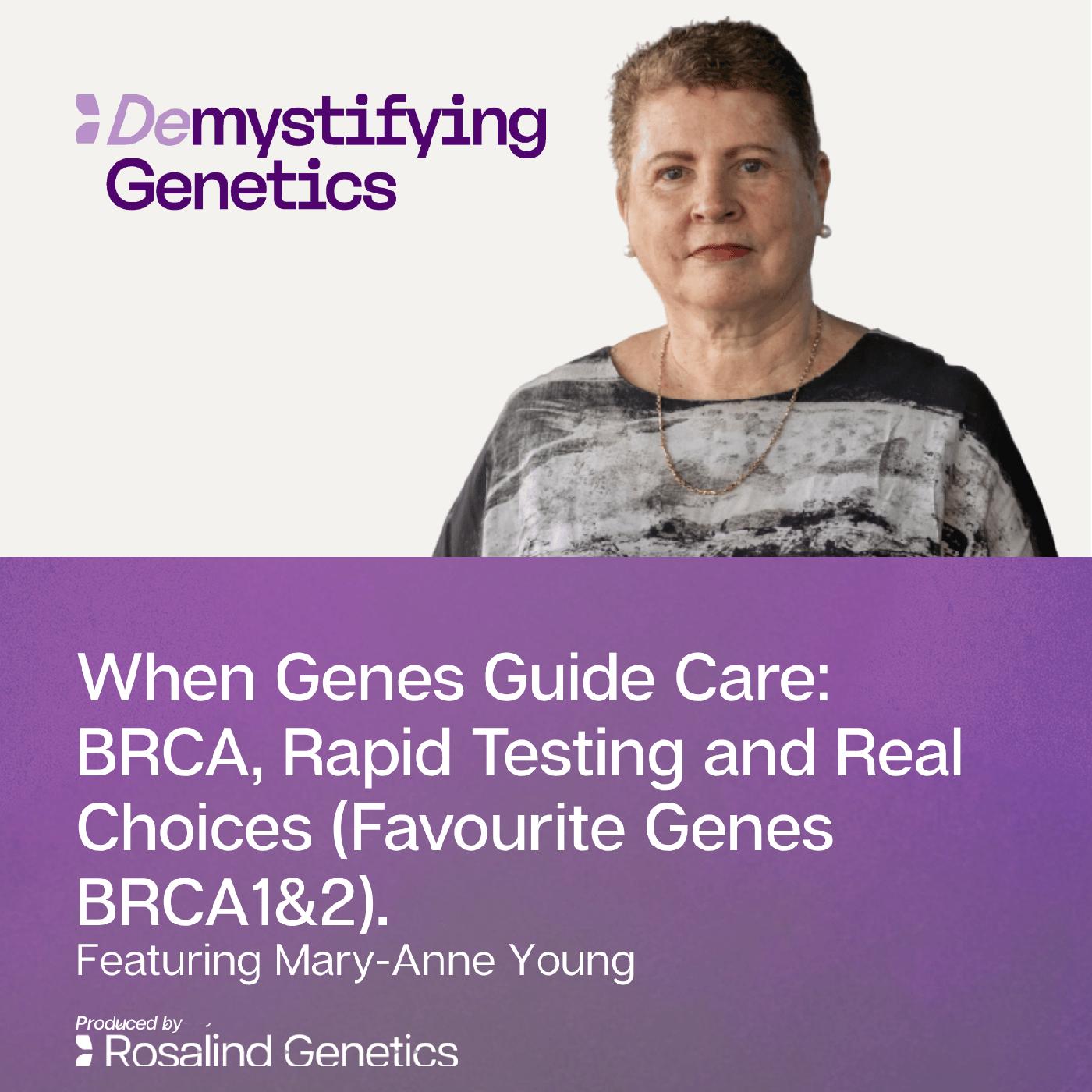
00:00:13.797Today I'm joined by Mary-Anne Young from the Garvin Institute of Medical Research
00:00:13.797 -->
00:00:17.677in Sydney, a leader in clinical genomics and genetic counselling.
00:00:18.117 -->
00:00:22.357Mary-Anne has been at the forefront of bringing genomics into everyday healthcare,
00:00:22.357 -->
00:00:26.917and she's played a key role in shaping how clinicians and patients navigate
00:00:26.917 -->
00:00:28.757this rapidly evolving space.
00:00:29.377 -->
00:00:33.017We'll be talking about how genomics is transforming healthcare delivery,
00:00:33.377 -->
00:00:37.577the ethical and practical challenges that come with that, and what the future
00:00:37.577 -->
00:00:40.017might look like for the genetic counselling profession.
00:00:44.777 -->
00:00:49.157Hello, Marianne. Hello, Matthew. How are you? Good. How's it going?
00:00:49.657 -->
00:00:53.537Very well. Thank you. Now, I must admit, I am a little bit envious.
00:00:53.537 -->
00:00:57.537Jess, I mean, I think I live in a beautiful city in the world,
00:00:57.537 -->
00:01:04.857but you now live close to the ocean in like a really beautiful part of the world.
00:01:05.157 -->
00:01:10.357How has that been for you? It's really lovely, actually, in the sense that I
00:01:10.357 -->
00:01:15.357get to have a really lovely lifestyle as well as being able to work from home.
00:01:15.517 -->
00:01:20.917I live in the bush close to the ocean and I'm able to enjoy all those sort of
00:01:20.917 -->
00:01:24.857opportunities around lifestyle that those things bring.
00:01:25.137 -->
00:01:28.457Like, you know, I'm part of a swimming group that we swim.
00:01:29.107 -->
00:01:31.887365 days of the year we just
00:01:31.887 -->
00:01:35.127all get in the ocean and have a bit of a laugh and so I
00:01:35.127 -->
00:01:39.867get to my lifestyle is far more balanced with my work than it's ever been before
00:01:39.867 -->
00:01:45.847which is really important I mean I think especially in Victoria with the lockdowns
00:01:45.847 -->
00:01:51.407with COVID that didn't sound good at all but I think one of the benefits that
00:01:51.407 -->
00:01:55.027have come from that is sort of just the accessibility of
00:01:55.107 -->
00:02:00.327work with Zoom and, you know, it sounds like you have like a really lovely work-life balance.
00:02:00.327 -->
00:02:04.027You've got this great job that's sort of based in, you know,
00:02:04.287 -->
00:02:09.407in Sydney, the big city, but you have all of the sort of advantages of living
00:02:09.407 -->
00:02:11.427in a beautiful country town.
00:02:11.787 -->
00:02:17.487I do. And I also, the other great things is I get to go to Sydney every about
00:02:17.487 -->
00:02:24.507six weeks. So, I go up to Sydney, I, you know, I hang out in my old stomping
00:02:24.507 -->
00:02:25.727ground where I used to live.
00:02:25.887 -->
00:02:29.947I catch up with my team. I see all my colleagues at Garvin.
00:02:30.187 -->
00:02:34.607I have a week of that and then I come home exhausted and recover and get back to work.
00:02:34.787 -->
00:02:40.447So I really have a beautiful blend of lifestyles, yeah. Well done.
00:02:41.887 -->
00:02:47.607So when I asked you what your favourite genes were or what your favourite conditions
00:02:47.607 -->
00:02:51.107were, you very quickly said BRCA1 and BRCA2.
00:02:51.647 -->
00:02:56.327Now, I think people that know you as a genetic counsellor know that you have
00:02:56.327 -->
00:02:59.847been working in the hereditary cancer space for a long time.
00:03:00.027 -->
00:03:03.547But yeah, let's have a talk about BRCA1 and 2.
00:03:03.927 -->
00:03:07.387Why are they your favourites?
00:03:07.687 -->
00:03:13.307They're my favourites because they were the first two genes that really propelled
00:03:13.307 -->
00:03:18.287cancer genetics into genetic counselling and actually that genetic counsellors
00:03:18.287 -->
00:03:24.127could add a lot of value in the cancer genetic space and also for patients,
00:03:24.247 -->
00:03:25.527from a patient perspective,
00:03:26.127 -->
00:03:30.607they provided more certainty. Being able to identify those genes in families
00:03:30.607 -->
00:03:36.547provided a lot more certainty and explanation for families and that was pleasing
00:03:36.547 -->
00:03:39.947to see because they wanted that certainty.
00:03:40.087 -->
00:03:44.927They wanted to understand why this had been happening to their family and so
00:03:44.927 -->
00:03:49.107rather than just saying we think it's likely there's a journey in your family
00:03:49.107 -->
00:03:50.867and everyone should have screening.
00:03:51.613 -->
00:03:55.733We were then able to test, this was in the mid-1990s, which was a very long
00:03:55.733 -->
00:04:00.933time ago, but we were then able to test various people and the results,
00:04:01.273 -->
00:04:06.513you know, I look back now and I think, God, the results took 18 months to come through from testing.
00:04:06.933 -->
00:04:13.493But, you know, it was really the beginning of a whole new era in genetic counselling and also,
00:04:13.673 -->
00:04:18.173as I said, the benefits for patients in regards to being able to give them an
00:04:18.173 -->
00:04:22.113explanation and provide more accurate risk information for them and their families
00:04:22.113 -->
00:04:27.993and then from there there's been this whole evolution I think about BRCA1 and 2,
00:04:28.173 -->
00:04:33.873the evolution about more evidence-based risk management practices for people,
00:04:34.513 -->
00:04:38.753the introduction of a Medicare item number for women to access breast MRI.
00:04:39.793 -->
00:04:43.753So there's been a whole not just the finding of the genes but the evolution
00:04:43.753 -->
00:04:50.073of the whole system that happens when women have a BRCA1 or 2 gene.
00:04:50.613 -->
00:04:54.113And there's also, you know, now there's an Inherited Cancer Connect,
00:04:54.493 -->
00:04:59.253you know, a support group, an advocacy group for people, particularly women
00:04:59.253 -->
00:05:05.393with BRCA1 mutations in regards to advocacy, consumer engagement.
00:05:05.733 -->
00:05:11.933So, yeah, it's just been, over time, incredible to see the development of the
00:05:11.933 -->
00:05:17.113whole system around BRCA1 and 2 that really benefits patients, actually.
00:05:17.593 -->
00:05:22.293And, you know, obviously in, you know, that was probably 30 years ago now when
00:05:22.293 -->
00:05:26.133these genes were identified and we could start offering testing.
00:05:26.353 -->
00:05:30.133And you said that it would take 18 months to get a result.
00:05:30.153 -->
00:05:37.113And we know that, you know, there's sort of ultra rapid genetic testing now, which can take,
00:05:37.615 -->
00:05:42.635you know, a matter of hours sometimes. Do you think there's like a sweet spot?
00:05:42.855 -->
00:05:44.575Like is faster always better?
00:05:44.915 -->
00:05:52.415I mean, I'm guessing 18 months is too long, but do you think like less than a day is too short or?
00:05:52.895 -->
00:05:58.315I think if you're in a critical situation, particularly if you think about the
00:05:58.315 -->
00:06:05.535work that's come from the NICU and PICU in the rapid genomic testing for newborns or young children.
00:06:05.855 -->
00:06:09.815Or if you think about hereditary breast and iverine cancer with BRCA1 and 2,
00:06:10.075 -->
00:06:13.595women who are diagnosed with breast cancer and having to make decisions about
00:06:13.595 -->
00:06:18.155treatment or people who have a diagnosis and they want to use that genetic information
00:06:18.155 -->
00:06:19.755in their treatment decisions.
00:06:20.495 -->
00:06:23.475Rapid is really important. I think it's really, really important.
00:06:23.755 -->
00:06:27.775I think that weeks is fine to wait for a genetic test result,
00:06:27.895 -->
00:06:30.415but 18 months is just crazy. Yeah.
00:06:32.175 -->
00:06:36.595It's really interesting. I mean, something that I've seen in my sort of career,
00:06:36.615 -->
00:06:43.595and I'm guessing that you probably would have seen it as well, is that idea of,
00:06:44.035 -->
00:06:47.575you know, when I first started, it was kind of like genetics was like an afterthought.
00:06:47.735 -->
00:06:51.835Like, let's get your treatment done. Like, let's, you know, we'll do the operation,
00:06:52.075 -->
00:06:55.355like we'll get everything done and then you can kind of think about genetics.
00:06:55.595 -->
00:06:59.695And that was kind of like, yes, it's important, but let's just put it on the back burner.
00:07:00.535 -->
00:07:03.955Whereas now it's almost, I mean, it is opposite.
00:07:04.195 -->
00:07:09.495You know, a lot of the times it's kind of like, okay, genetics is the first thing we want you to do.
00:07:10.195 -->
00:07:15.415How have you seen that sort of evolve? And like, you know, was that a surprise
00:07:15.415 -->
00:07:20.595as someone who sort of have been working in this space for a long time?
00:07:20.795 -->
00:07:25.295I don't think it was a surprise and I think it's just, it's a good example of
00:07:25.295 -->
00:07:26.955the evolution of genetics
00:07:27.235 -->
00:07:30.115people's concerns around genetic information and how
00:07:30.115 -->
00:07:33.635it can harm people I mean you know I think back to when we
00:07:33.635 -->
00:07:36.575first started and we used to make people
00:07:36.575 -->
00:07:39.235come in it was just ridiculous we used to ask people to come in
00:07:39.235 -->
00:07:41.915for two pre-test appointments and and then
00:07:41.915 -->
00:07:45.695we'd give them their results and we wondered why there were
00:07:45.695 -->
00:07:51.035there seemed to be that the women didn't want to engage with us in a more therapeutic
00:07:51.035 -->
00:07:56.555way that they really felt that they had to prove that they were competent both
00:07:56.555 -->
00:08:02.155psychologically and in other ways to be granted the test where it actually wasn't like that.
00:08:02.884 -->
00:08:08.384And so I then actually did my master's by research in looking at how women made
00:08:08.384 -->
00:08:12.764decisions about genetic testing for BRCA1 and 2 and found that they'd already
00:08:12.764 -->
00:08:15.144made their decision before they came to the clinic.
00:08:15.624 -->
00:08:19.944And really what we were doing by having two appointments was just actually delaying
00:08:19.944 -->
00:08:23.064something that they'd already decided they wanted to do.
00:08:23.324 -->
00:08:26.504And so we dropped it to one and then I think
00:08:26.504 -->
00:08:30.044what we've seen is just more of a streamlining of
00:08:30.044 -->
00:08:33.304the process and we know that genetic information
00:08:33.304 -->
00:08:36.924is not harmful psychologically and
00:08:36.924 -->
00:08:39.864we know that across the board with genetic information and part
00:08:39.864 -->
00:08:45.164of that has actually been around retraining our brains as genetic healthcare
00:08:45.164 -->
00:08:54.444professionals to understand the value of genetic information and it is distressing
00:08:54.444 -->
00:08:57.944but it's less distressing than being told you've got metastatic cancer.
00:08:58.204 -->
00:09:01.104So putting it into some sort of context has been
00:09:01.104 -->
00:09:04.684really important and then the evidence that it's
00:09:04.684 -->
00:09:07.664been generated not only about the fact that there's no long-term
00:09:07.664 -->
00:09:10.664psychological harm but the evidence that's been
00:09:10.664 -->
00:09:16.004generated around the benefits of being able to use genetic information for treatment
00:09:16.004 -->
00:09:20.444and that's particularly happened with you know like the PARP inhibitors for
00:09:20.444 -->
00:09:24.804ovarian cancer that they can actually prolong women's lives which is really
00:09:24.804 -->
00:09:30.064important and also thinking about you know mastectomy if a woman has a diagnosis.
00:09:30.484 -->
00:09:34.004You know, thinking about a contralateral mastectomy as well.
00:09:34.164 -->
00:09:38.764So I think there's just much more evidence that's been able to inform our practice.
00:09:38.824 -->
00:09:44.084And I think the other thing is that, you know, the genetics has actually moved into oncology.
00:09:44.364 -->
00:09:49.684And there's a partnership now with oncology and genetics. It's not just genetics
00:09:49.684 -->
00:09:51.804coming in as a specialty.
00:09:52.124 -->
00:09:56.624It's much more, you know, oncologists can manage genetic information as well.
00:09:57.114 -->
00:10:00.254You know, I think our domain is much more in the after.
00:10:00.494 -->
00:10:04.974It's the helping people adjust to the genetic information and particularly around
00:10:04.974 -->
00:10:07.414family communication, very much so.
00:10:07.634 -->
00:10:09.174The genetic counsellors that
00:10:09.174 -->
00:10:13.694work a lot in oncology, we do a lot of predictive testing appointments.
00:10:13.694 -->
00:10:18.114So when pathogenic or a disease-causing variant has already been identified
00:10:18.114 -->
00:10:22.974in a family and we can offer people a test to see whether they've inherited that or not.
00:10:23.434 -->
00:10:28.314And really, I think as genetic counsellors, we think that we're going to have
00:10:28.314 -->
00:10:32.794this, you know, facilitated discussion with them about the pros and cons of testing.
00:10:32.934 -->
00:10:37.174But I think you're right. Like probably more than 90% of the people that had
00:10:37.174 -->
00:10:41.114these appointments have already made their decision whether they want testing or not.
00:10:41.474 -->
00:10:46.154I mean, I would love to have appointments with more people that are really uncertain
00:10:46.154 -->
00:10:51.074about whether they want testing or not. But yeah, and I'm not surprised.
00:10:51.634 -->
00:10:54.994I think it sort of brings up this idea of gatekeeping like
00:10:54.994 -->
00:10:58.034you know when the people they feel
00:10:58.034 -->
00:11:01.194like they need to say the right thing to
00:11:01.194 -->
00:11:04.554be approved for a test like we as the
00:11:04.554 -->
00:11:07.474you know the test orderers are going to
00:11:07.474 -->
00:11:10.574approve or disapprove someone depending on what they say
00:11:10.574 -->
00:11:13.734and I saw that in sort of Huntington disease sometimes
00:11:13.734 -->
00:11:16.794like for pre-symptomatic testing it was like
00:11:16.794 -->
00:11:19.774some of the people sort of coached each
00:11:19.774 -->
00:11:22.774other on what to say like you know oh they
00:11:22.774 -->
00:11:25.834really want to hear that you've thought about it so make sure you say this
00:11:25.834 -->
00:11:29.294but yeah I don't know it's interesting like I
00:11:29.294 -->
00:11:31.994would be very happy to have like a conversation about that but
00:11:31.994 -->
00:11:37.834it really feels like our our role has sort of evolved to you know more that
00:11:37.834 -->
00:11:43.174post test counselling sort of area yeah and look I think Huntington's disease
00:11:43.174 -->
00:11:46.654is quite different and those neurological diseases are actually very different
00:11:46.654 -->
00:11:50.814in a way but with familial cancer I I do think it's a lot more straightforward.
00:11:51.214 -->
00:11:54.894And I think thinking about future sort of service delivery models,
00:11:55.054 -->
00:11:59.494thinking about how can we streamline the 90% of patients that you talk about
00:11:59.494 -->
00:12:01.534that know they want the test.
00:12:02.056 -->
00:12:05.036Let's just do the test and then help them.
00:12:05.056 -->
00:12:09.696It's the result that's the most important thing and how that result is adjusted
00:12:09.696 -->
00:12:15.676to, communicated to their family, be positive or negative, and then longer term,
00:12:15.996 -->
00:12:19.596how we help them keep up with all that complicated risk management stuff.
00:12:19.916 -->
00:12:23.996So, you know, following people up every year to see how they're getting on with
00:12:23.996 -->
00:12:27.756their risk management and how is the communication in their family going?
00:12:27.996 -->
00:12:31.196Are there more people who want to come forward for predictive testing?
00:12:31.196 -->
00:12:35.536Because I think that's where our skill set lies as genetic counsellors.
00:12:35.796 -->
00:12:41.776You know, I think we have that really great ability to talk with people about
00:12:41.776 -->
00:12:45.976family communication and help people make decisions about whether they want
00:12:45.976 -->
00:12:48.556to have genetic testing, predictive testing or not.
00:12:49.816 -->
00:12:54.776So you've been involved with some really interesting research in lots of different
00:12:54.776 -->
00:12:58.536sort of psychosocial and ethical areas in genetics.
00:12:58.536 -->
00:13:00.956And you said that, you know, you did
00:13:00.956 -->
00:13:06.076your master's looking at sort of decision-making for women with cancer.
00:13:06.316 -->
00:13:08.796Like, have you been involved with.
00:13:09.618 -->
00:13:14.578Integrating that stuff from research into clinical practice?
00:13:14.718 -->
00:13:20.598I know that sort of can take a long time sometimes, but, you know, let's talk about that.
00:13:20.718 -->
00:13:24.998Like, have you been successful in being able to initiate change?
00:13:25.438 -->
00:13:30.798It's a really good question. And I really, I really agree with you that that's
00:13:30.798 -->
00:13:33.238actually the hardest part of the equation of all of this.
00:13:33.398 -->
00:13:37.818I think my research when I did my master's actually led to change in regards
00:13:37.818 -->
00:13:40.518to the fact that we dropped two appointments to one.
00:13:41.278 -->
00:13:45.558But I think that was also something that people just knew as well.
00:13:45.638 -->
00:13:47.138It was just like common sense.
00:13:47.398 -->
00:13:51.218But I suppose one of the things that I'm working on at the moment with people
00:13:51.218 -->
00:13:55.578at the Familiar Cancer Centre in Parkville is using polygenic risk information
00:13:55.578 -->
00:14:00.458to think about personalised genomic risk information for women who are having
00:14:00.458 -->
00:14:02.478predictive testing for BRCA1 and 2.
00:14:03.078 -->
00:14:07.598And so we're now at the stage where we got some pilot data, then we've run a
00:14:07.598 -->
00:14:13.618clinical trial, and now thinking about that implementation side of things.
00:14:13.898 -->
00:14:19.918And in answer to your question, no, I haven't been involved significantly,
00:14:19.918 -->
00:14:25.778but am now involved in how we think about polygenic risk information being used
00:14:25.778 -->
00:14:28.298in penetrance, in disease penetrance.
00:14:28.438 -->
00:14:32.038And it's incredibly complicated, really complicated.
00:14:32.758 -->
00:14:36.438You know, you've got to think about all the, not just the psychosocial aspects,
00:14:36.738 -->
00:14:39.398but there's all the change management aspects.
00:14:39.438 -->
00:14:43.858There's the regulation aspects. There's the funding aspects.
00:14:44.158 -->
00:14:48.418There's the, you know, it's a whole of system change. It's really complex.
00:14:49.058 -->
00:14:54.798And do you think that our patients are okay with, you know, when we're,
00:14:54.998 -->
00:14:58.478you know, genetic counselors are really good at taking complex information and
00:14:58.478 -->
00:15:01.578explaining it in a way that makes sense.
00:15:02.038 -->
00:15:06.438But all of a sudden, you know, like we used to be talking about these monogenic
00:15:06.438 -->
00:15:08.458changes, which, you know...
00:15:09.070 -->
00:15:14.210Big changes or big mutations in one gene that causes like a massive effect.
00:15:14.390 -->
00:15:19.130And now with polygenic risk testing, we're talking about, you know,
00:15:19.710 -->
00:15:25.050hundreds or, you know, scores of these little changes that individually don't
00:15:25.050 -->
00:15:29.430really do anything, but when we sort of group them together has an effect.
00:15:29.670 -->
00:15:34.450I don't know, like, I don't know if it's a bit sort of patronizing or paternalistic,
00:15:34.450 -->
00:15:38.530but I know like some of the worries have been like, oh, people won't understand
00:15:38.530 -->
00:15:41.230and, you know, like it's too difficult.
00:15:41.590 -->
00:15:47.190Have you had sort of experience in how people are understanding polygenic risk score?
00:15:47.650 -->
00:15:52.590So, the first study that we did was where we looked at people who were,
00:15:52.750 -->
00:15:56.750women who were BRCA negative, and we found that polygenic,
00:15:57.304 -->
00:16:01.344information explained their breast cancer and also explained their family history.
00:16:01.504 -->
00:16:05.644So they had high polygenic risk scores and found that women understood it.
00:16:05.764 -->
00:16:11.164They were really pleased because it explained why they had a diagnosis of breast
00:16:11.164 -->
00:16:12.584cancer and their family history.
00:16:12.844 -->
00:16:17.504And it also gave some really beneficial information in the sense that it's not
00:16:17.504 -->
00:16:20.984associated with ovarian cancer like BRCA1 and 2 are.
00:16:21.184 -->
00:16:24.544So then we've moved on to the clinical trial and I'm just about to submit a.
00:16:27.304 -->
00:16:32.344Again, women understand this information and it's personalised genomic risk
00:16:32.344 -->
00:16:33.784information that they understand.
00:16:34.244 -->
00:16:38.164I think the question we have to ask ourselves as healthcare professionals is
00:16:38.164 -->
00:16:40.744what level of understanding do we want people to have?
00:16:40.944 -->
00:16:43.524And we don't need them to be genetic experts.
00:16:43.964 -->
00:16:48.644They get it. They get the gist of it. So we talk about in this paper the gist,
00:16:48.704 -->
00:16:50.844that people get the bottom line meaning of it,
00:16:51.084 -->
00:16:55.324that they've got this gene in their family that has a big effect and there are
00:16:55.324 -->
00:16:58.204other lots of little genes that can influence that big effect,
00:16:58.384 -->
00:16:59.384and that's what we're measuring.
00:16:59.644 -->
00:17:03.564And I think, you know, I think the question that I've started to ask myself
00:17:03.564 -->
00:17:08.804now is, what is it that we think is important for people to leave the room with
00:17:08.804 -->
00:17:10.524when they walk out to understand?
00:17:11.004 -->
00:17:16.424Because, yeah, I think sometimes we can give a lot of information to people,
00:17:16.644 -->
00:17:20.364and that can be helpful for some people very much.
00:17:20.364 -->
00:17:22.984Some people want a lot of information, but there's a lot of
00:17:22.984 -->
00:17:25.784people who really just want the bottom line of what it is that
00:17:25.784 -->
00:17:28.824we're talking about yeah yeah and for these
00:17:28.824 -->
00:17:31.724people they really wanted to know what's my risk
00:17:31.724 -->
00:17:34.524i just wanted the number what is my risk and what
00:17:34.524 -->
00:17:40.324can i do about it rather than my risk is constructed by this this this this
00:17:40.324 -->
00:17:45.244and this and it's put into an algorithm and then we do this and then we do that
00:17:45.244 -->
00:17:49.724and extract the dna and then we do this and you know they just want to know
00:17:49.724 -->
00:17:53.744what's the number that got spat out and what am i going to do about it And that's it.
00:17:54.144 -->
00:17:58.504Yeah, I get it. It's something that I've been working with my students about
00:17:58.504 -->
00:18:01.384actually, because it's kind of like...
00:18:01.922 -->
00:18:08.102On the first level, we understand the information and we want to share that
00:18:08.102 -->
00:18:12.222information. So, we've got to be good genetic counsellors and that means we
00:18:12.222 -->
00:18:15.002have to explain everything because we understand it.
00:18:15.102 -->
00:18:20.022But I think sort of that next level is what's actually important here.
00:18:20.522 -->
00:18:25.482You know, our job isn't to give people like an in-depth genetics lesson.
00:18:25.482 -->
00:18:28.602It's kind of to talk about, yeah maybe just
00:18:28.602 -->
00:18:31.322what the gist is or what's important and like I
00:18:31.322 -->
00:18:34.742see you know like a lot of other medical specialties do
00:18:34.742 -->
00:18:37.962that like you know I'm sure that my GP is like
00:18:37.962 -->
00:18:42.062thinking of a hundred different things when she asks like a certain question
00:18:42.062 -->
00:18:46.862and I don't think I need to kind of understand it all I don't know I yeah I
00:18:46.862 -->
00:18:51.322feel like the pendulum is swinging like we don't want to be sort of not giving
00:18:51.322 -->
00:18:52.682any information and just telling
00:18:52.682 -->
00:18:56.222people we need to give people enough information to make a decision,
00:18:56.462 -->
00:19:00.642but it's about what information do they want and what is it.
00:19:00.802 -->
00:19:05.442And I'm not criticising genetic councils. I just think it's an evolution of where we're going.
00:19:06.342 -->
00:19:13.082Yeah. Yeah. No, I agree. Things are evolving and it's really cool to kind of think about,
00:19:13.222 -->
00:19:16.342you know, we have all of this information and
00:19:16.342 -->
00:19:19.222we're getting all of these data points from lots of
00:19:19.222 -->
00:19:22.802different sort of experiments or different scientific
00:19:22.802 -->
00:19:25.902techniques and you know what's
00:19:25.902 -->
00:19:31.382important for us to share and you know you don't kind of need to talk about
00:19:31.382 -->
00:19:34.982the technique but it kind of was like you know what does that mean to you like
00:19:34.982 -->
00:19:41.662how do you feel about that or how is that going to change what you yeah how
00:19:41.662 -->
00:19:44.202you pick things and yeah I think that that's really exciting,
00:19:45.522 -->
00:19:49.902And I mean, you have to think one of the reasons we went into this profession
00:19:49.902 -->
00:19:52.582is that we're interested in the technology.
00:19:52.942 -->
00:19:57.462I find the technology at times quite, I use the word tantalising, I think it's amazing.
00:19:58.222 -->
00:20:02.682But do my patients really need to know all of that? I think that's the thing.
00:20:03.282 -->
00:20:07.122I mean, I think they need to know some of it. But sometimes I remember when
00:20:07.122 -->
00:20:10.642I first started practicing, you know, which was a very long time ago,
00:20:10.722 -->
00:20:14.862but we used to teach people how many chromosomes there were and how many genes on the chromosomes.
00:20:16.862 -->
00:20:20.862And, you know, that was what we thought was helpful for people to understand,
00:20:20.862 -->
00:20:23.622whereas we know that things have changed and moved.
00:20:23.822 -->
00:20:28.002And it's good to see that that's really not what people want to know.
00:20:28.222 -->
00:20:35.542Now, one thing I've been really excited to talk to you about is family therapy.
00:20:36.102 -->
00:20:40.142And I know that you've sort of done some extra training.
00:20:40.462 -->
00:20:43.942I don't know. I keep saying everything's interesting. But, you know,
00:20:44.042 -->
00:20:48.462as genetic counsellors, I think, you know, we meet with our clients.
00:20:49.362 -->
00:20:55.182And it's fascinating, this relationship, because we really are having a relationship
00:20:55.182 -->
00:20:56.702with the person in front of us.
00:20:57.202 -->
00:21:01.822But unlike other areas of medicine, we're talking about the family or we're
00:21:01.822 -->
00:21:03.782talking about things that affect the family.
00:21:04.042 -->
00:21:07.962So, even if you don't like your brother or your sister or you don't talk to
00:21:07.962 -->
00:21:10.902them, you still have these sort of genetic issues.
00:21:11.267 -->
00:21:13.947Like elements in common that can sort of
00:21:13.947 -->
00:21:16.807affect things and I just
00:21:16.807 -->
00:21:19.887find like you know like we do have good
00:21:19.887 -->
00:21:23.527training in counselling and communication but like
00:21:23.527 -->
00:21:26.767kind of this family therapy or family
00:21:26.767 -->
00:21:29.687systems I you know it's not something that
00:21:29.687 -->
00:21:32.567a lot of genetic counsellors sort of deal with
00:21:32.567 -->
00:21:36.007what drew you to that area
00:21:36.007 -->
00:21:39.647so it was a very long time ago and my supervisor like
00:21:39.647 -->
00:21:42.487my counselling supervisor she was actually a
00:21:42.487 -->
00:21:46.107social worker and a family therapist and she
00:21:46.107 -->
00:21:49.067was doing the predictive testing or she
00:21:49.067 -->
00:21:52.087did the Huntington's disease program and so
00:21:52.087 -->
00:21:57.187through my relationship with her as my supervisor I became really interested
00:21:57.187 -->
00:22:03.487in family systems theory and I thought it was of direct relevance to my practice
00:22:03.487 -->
00:22:09.487and I wanted to I don't know I wanted to deepen my counselling abilities.
00:22:09.847 -->
00:22:16.047So I went and did a family therapy training. I did a graduate diploma in family therapy.
00:22:16.447 -->
00:22:21.927And through that, I learned so much about family systems theory,
00:22:22.127 -->
00:22:25.887which I not only use in my genetic counselling practice, but I use it in my
00:22:25.887 -->
00:22:29.967management sort of as well and leadership roles in the sense of,
00:22:30.007 -->
00:22:32.787you know, any organisation is like one big system,
00:22:32.967 -->
00:22:37.787like a family system, but in my practice, I use it all the time,
00:22:37.867 -->
00:22:41.867all the time, and not just thinking about families as systems,
00:22:42.127 -->
00:22:47.827but also there are specific interventions or questions I might ask from a family system's perspective.
00:22:48.653 -->
00:22:52.973Particularly when talking about how to talk to your family or roles in your
00:22:52.973 -->
00:22:56.933family when trying to communicate genetic information and how that might go.
00:22:57.153 -->
00:23:00.193I'll never forget when I was doing my family therapy training,
00:23:00.353 -->
00:23:04.173we used to have tutorial groups and I was sitting there one day telling them
00:23:04.173 -->
00:23:07.693about, I was running the predictive testing program for FAP.
00:23:08.173 -->
00:23:12.853So I was meeting with these adolescents and they wouldn't talk to me and I'd
00:23:12.853 -->
00:23:16.753ask them questions and they'd just look at me like,
00:23:16.753 -->
00:23:20.953you know I was an alien from another planet anyway these
00:23:20.953 -->
00:23:23.993child and adolescent family therapists they
00:23:23.993 -->
00:23:26.773said to me so what are you doing you know tell me
00:23:26.773 -->
00:23:29.433what happened so I said oh we go and get from the waiting room and
00:23:29.433 -->
00:23:32.173then we bring them into the appointment room and then we sit down and we
00:23:32.173 -->
00:23:36.393talk and they said they won't do that there's no way they're going to talk to
00:23:36.393 -->
00:23:43.873you like that they said go for a walk so I changed my practice and so what used
00:23:43.873 -->
00:23:48.953to happen was they'd arrive and we had a path and rather than taking them in,
00:23:49.073 -->
00:23:50.433I'd say, come on, let's go for a walk.
00:23:50.553 -->
00:23:53.013And we'd walk around the park and we'd talk.
00:23:53.213 -->
00:23:58.753And we'd talk about basketball, we'd talk about football, we talked about 50,000
00:23:58.753 -->
00:24:00.253things other than genetics.
00:24:00.453 -->
00:24:05.633And then every so often we'd talk about genetics and it worked. It really worked.
00:24:05.733 -->
00:24:11.393And I had to adjust my practice to think differently around the way that we did this.
00:24:11.553 -->
00:24:14.413And I got that from my family therapy training that, you know,
00:24:14.593 -->
00:24:17.893when you work with adolescents, they're not going to sit in a room and talk
00:24:17.893 -->
00:24:19.793to you. They want to do something different.
00:24:20.260 -->
00:24:24.420And, I mean, especially talking about FAP where you're talking about,
00:24:24.420 -->
00:24:30.320you know, bowels and poops, operations and, like, you know, that's difficult.
00:24:31.440 -->
00:24:35.020Colonoscopies, yeah. That's difficult at the best of times. So,
00:24:35.020 -->
00:24:38.040that's a brilliant intervention.
00:24:38.520 -->
00:24:42.540And, like, I know with family systems, like, they talk about boundaries.
00:24:43.440 -->
00:24:48.380Like, did you have any sort of issues coming up with parents,
00:24:48.700 -->
00:24:53.840like taking kids for a walk around the park and being able to talk about that?
00:24:54.400 -->
00:25:00.800I had one particular family I remember who rang me up and asked me if I could just take the blood.
00:25:01.040 -->
00:25:03.600They could have their kids come in for the blood test and we could tell them
00:25:03.600 -->
00:25:07.080it was a vitamin test. They needed to have the vitamins checked.
00:25:07.420 -->
00:25:12.580And I know where that was coming from. I know exactly that they were terrified,
00:25:12.940 -->
00:25:16.160actually, that one of their kids was going to turn out to have the gene.
00:25:16.260 -->
00:25:17.460They were absolutely terrified.
00:25:18.060 -->
00:25:23.860And it was a matter of being able to talk to them about that and the way they
00:25:23.860 -->
00:25:29.540parented and all that sort of stuff to help them understand that really it was
00:25:29.540 -->
00:25:32.740better for their kids to have a little bit of knowledge about this.
00:25:32.860 -->
00:25:36.780It doesn't have to be terribly in-depth, but knowledge about what was going on.
00:25:38.200 -->
00:25:41.360And when i think of family systems theory i
00:25:41.360 -->
00:25:44.240kind of think about you know they talk about
00:25:44.240 -->
00:25:49.420how the different members of the family are sort of interrelated and that families
00:25:49.420 -->
00:25:54.160or systems work well when they go back into equilibrium like they're always
00:25:54.160 -->
00:25:58.440trying to find sort of a right balance i mean i don't know if that's right but
00:25:58.440 -->
00:26:02.620that's sort of my understanding when we meet with families,
00:26:02.720 -->
00:26:08.440usually we are meeting to discuss something that is huge,
00:26:08.660 -->
00:26:11.600facilitating a test that could
00:26:11.600 -->
00:26:18.540literally change the rest of their lives or decisions or what they do.
00:26:19.342 -->
00:26:23.542Do you find, like from thinking about it from like a family systems point of view,
00:26:24.002 -->
00:26:29.622when a family is diagnosed or like a condition is diagnosed in a family or if
00:26:29.622 -->
00:26:34.362people test positive, do you find that they do go back to sort of equilibrium
00:26:34.362 -->
00:26:36.262and everything sort of calms down?
00:26:36.642 -->
00:26:40.922No, I think what happens is that they all, there's disequilibrium.
00:26:41.614 -->
00:26:45.994While they adjust to that information. I think that's where genetic counsellors
00:26:45.994 -->
00:26:50.894can really be of value because they can help families with that disequilibrium.
00:26:51.394 -->
00:26:55.974But I think what happens is that people often revert to their usual roles.
00:26:56.214 -->
00:27:01.334And it's funny, I often say to students, think about your own family and think
00:27:01.334 -->
00:27:03.994about your role in your family.
00:27:04.394 -->
00:27:11.154What is your role in your family? We all have roles. We all have ways of doing things.
00:27:11.614 -->
00:27:16.214And what would it be like if there was a genetic diagnosis in your family? How would that be?
00:27:16.554 -->
00:27:20.634And who would be the person who maybe wanted to tell everybody or,
00:27:20.674 -->
00:27:23.934you know, are there some people you don't get on with in your family?
00:27:24.254 -->
00:27:28.234And our families are no different from the families that we work with.
00:27:28.454 -->
00:27:32.774You know, some of us also might have an experience of a genetic diagnosis in our family as well.
00:27:33.194 -->
00:27:37.774Yeah, I think they do get thrown into disequilibrium and our role is to help
00:27:37.774 -->
00:27:42.554them understand that and then go back to that equilibrium and that's the adjustment.
00:27:42.674 -->
00:27:47.554It could be a different equilibrium, but it is back to sort of settling with
00:27:47.554 -->
00:27:51.754that news and adjusting to that news and going forward with that news.
00:27:51.954 -->
00:27:57.534One of the big themes in healthcare at the moment is this idea of diversity
00:27:57.534 -->
00:28:03.114and there has been some positive sort of discussion about it and also negative
00:28:03.114 -->
00:28:05.474kind of discussion about it.
00:28:05.634 -->
00:28:11.014Just when you were talking then, I was kind of thinking, It would be an advantage
00:28:11.014 -->
00:28:17.294to have a good diversity of genetic counsellors.
00:28:17.474 -->
00:28:25.034What I wanted to ask you was what do you think are the advantages of diversity
00:28:25.034 -->
00:28:27.294in genetic counselling?
00:28:27.694 -->
00:28:33.214I think it would make genetic counselling and genetic services more.
00:28:33.539 -->
00:28:36.459More available to people who it's not available to now.
00:28:36.639 -->
00:28:40.899I think it would bring about equity of access because I think there's a lot
00:28:40.899 -->
00:28:44.919of people out there that we're not accessing, who are not coming to our services.
00:28:45.519 -->
00:28:50.539And I'm not saying that if you had a genetic counsellor from their background
00:28:50.539 -->
00:28:52.099that that would be the panacea.
00:28:52.259 -->
00:28:57.079There's lots of things that influence why we're not seeing a lot of diversity,
00:28:57.079 -->
00:29:02.479but I think that having diverse genetic counsellors would be one one way to think about that.
00:29:02.899 -->
00:29:06.159It's funny, talking about diversity, I was at a presentation
00:29:06.159 -->
00:29:11.999at the HGSA where they were talking about genetic counselling in Malaysia and
00:29:11.999 -->
00:29:23.599how different it is and how the male often makes the decisions in those situations about what happens.
00:29:23.779 -->
00:29:26.519And of course, I get on my feminist high horse and think, well,
00:29:26.739 -->
00:29:28.979that's not how it should be.
00:29:29.039 -->
00:29:33.399And then I listened more and more and more and I thought, gee,
00:29:33.499 -->
00:29:35.539it must be hard to work in a –.
00:29:37.149 -->
00:29:43.969A country where, you know, you have so many different influences into the decision
00:29:43.969 -->
00:29:48.949around what's often sort of, I'm going to sound old-fashioned here,
00:29:49.029 -->
00:29:50.369but women's business, you know.
00:29:50.989 -->
00:29:55.929But yeah, I was really struck with actually taking a step back and saying actually,
00:29:56.589 -->
00:29:59.829your feminist ideology doesn't work in that setting.
00:29:59.849 -->
00:30:04.549You need to actually think differently about the setting that these genetic
00:30:04.549 -->
00:30:05.829counsellors are working in.
00:30:06.049 -->
00:30:10.349And I learned an awful lot from those presentations. And I think,
00:30:10.429 -->
00:30:16.069you know, it does help to have a diversity in genetic counselling from practitioners
00:30:16.069 -->
00:30:19.249in regards to working with specific populations.
00:30:19.589 -->
00:30:22.849Yeah, that's a huge advantage to sort of have an understanding.
00:30:23.209 -->
00:30:28.589Like it's a very cultural thing. And, you know, sometimes it's hard to learn
00:30:28.589 -->
00:30:32.749like academically about that. But if you are from the same culture,
00:30:32.929 -->
00:30:34.289you do have like an understanding.
00:30:34.669 -->
00:30:39.149Yeah. And I wonder if there's also greater acceptance. I don't know.
00:30:39.269 -->
00:30:43.549But I assume there's greater acceptance for the communities themselves.
00:30:43.989 -->
00:30:49.109Like, you know, I'm working in some clinical trials, stuff at the moment around diversity and equity.
00:30:49.449 -->
00:30:54.929And bilingual health navigators are very successful because patients feel more
00:30:54.929 -->
00:30:57.789comfortable. They're more accepting of...
00:30:58.737 -->
00:31:04.057The bilingual health navigators who are helping them traverse that really complex health system.
00:31:04.617 -->
00:31:08.157Yeah, so I think hats off to more diverse genetic counsellors.
00:31:08.337 -->
00:31:14.117I just spent a couple of weeks in Japan and it was an amazing experience.
00:31:14.357 -->
00:31:22.517And I was lucky enough to spend some time with a family where I met multiple
00:31:22.517 -->
00:31:24.557people in multiple generations.
00:31:24.557 -->
00:31:35.817And what I sort of learnt was how important this sort of the patriarchy in this family,
00:31:35.977 -->
00:31:43.977like, you know, the grandfather really was in charge of the family and he had a number of children.
00:31:44.377 -->
00:31:50.397Both males and females and it was interesting to kind of just see that they
00:31:50.397 -->
00:31:56.297kind from a very young age knew, oh, okay, I'm the eldest son, so this is what it means.
00:31:56.297 -->
00:32:00.037And I'm the second son, and then this is what it means.
00:32:00.137 -->
00:32:06.497And I kind of was thinking, I don't know if everyone's happy or anyone's happy,
00:32:06.697 -->
00:32:09.757but that's kind of just accepted.
00:32:09.937 -->
00:32:13.697And I don't know if it's a long bow, but I was kind of thinking,
00:32:13.697 -->
00:32:16.937oh, from a genetic counseling point of view, you know, if families like that
00:32:16.937 -->
00:32:22.817where the structure is already so set, then they come in and we kind of are
00:32:22.817 -->
00:32:24.697like, okay, well, this is how it's going to be.
00:32:24.837 -->
00:32:28.737Like, I'm not surprised that it can rub people the wrong way or it just doesn't
00:32:28.737 -->
00:32:32.677work. It's like, yeah, we're using two different systems and they're sort of
00:32:32.677 -->
00:32:34.157clashing with each other.
00:32:34.677 -->
00:32:38.617And I mean, when you think about it, I often say genetics is a really Western concept.
00:32:38.997 -->
00:32:44.597I think that when we work with families, I mean, each family has its own individual culture.
00:32:45.097 -->
00:32:49.957But I think that when you come up with cultures that are very different from your own.
00:32:50.887 -->
00:32:56.747You really have to be respectful and curious about the culture in their family,
00:32:56.947 -->
00:32:59.267be it a patriarchal system or whatever.
00:32:59.707 -->
00:33:03.647Yeah. And they're not coming to us with a broken family system.
00:33:03.907 -->
00:33:07.127They're coming to us to get genetic information.
00:33:07.487 -->
00:33:11.927What we know is that genetic information will disrupt that family system for
00:33:11.927 -->
00:33:15.387a period of time, and our job is to help them traverse that,
00:33:15.547 -->
00:33:17.787actually, and adjust to that information.
00:33:18.927 -->
00:33:22.267Like i know like sort of when i was younger in sort
00:33:22.267 -->
00:33:25.307of families where yeah maybe the
00:33:25.307 -->
00:33:28.307male was making a decision or like it was one person
00:33:28.307 -->
00:33:31.167i always felt like that was so unfair and it
00:33:31.167 -->
00:33:36.287was so unjust and we needed to sort of call like you know counsel and then it's
00:33:36.287 -->
00:33:42.667kind of like a lot of the time they are making decisions that are the best for
00:33:42.667 -->
00:33:47.087the whole family and they really have thought about it and maybe there's something
00:33:47.087 -->
00:33:50.147in it that I, you know, didn't really appreciate.
00:33:50.847 -->
00:33:54.447Yeah, and I think that the thing is from a family systems perspective,
00:33:54.447 -->
00:33:58.767the question I might think about asking in that situation, is this how your
00:33:58.767 -->
00:34:04.387family usually makes decisions that you defer to the grandfather or whatever?
00:34:04.387 -->
00:34:08.327And if they say yes and everyone, you know, says that's fine,
00:34:08.507 -->
00:34:10.067then And that's the way they work.
00:34:10.327 -->
00:34:15.127You know, we might think that we might work differently, but that's how it is.
00:34:15.147 -->
00:34:19.707And they haven't come to us saying, I don't want my grandfather to make this decision.
00:34:19.867 -->
00:34:23.847They've come to us saying, we've got this information and we need to make a decision about it.
00:34:24.087 -->
00:34:26.867Can you help us work through that? Absolutely.
00:34:27.589 -->
00:34:34.869Now, you mentioned leadership and management, and one of the things that I know
00:34:34.869 -->
00:34:40.069that you're interested in is sort of the advancement of genetic counsellors in our industry.
00:34:40.369 -->
00:34:45.129And over the time that you've been a genetic counsellor, I'm sure that you've
00:34:45.129 -->
00:34:49.649seen things sort of evolve and change and sort of different opportunities.
00:34:49.949 -->
00:34:55.649But I wanted to ask you about leadership in our organisation.
00:34:55.649 -->
00:34:59.849Like you were the president and yeah
00:34:59.849 -->
00:35:03.129how was that experience it was fabulous
00:35:03.129 -->
00:35:08.789I was the president of the HGSA and I remember when they rang me up to ask me
00:35:08.789 -->
00:35:12.269if I would consider being you have to be the vice president for two years the
00:35:12.269 -->
00:35:15.529president for two years and then the past president for two years so it was
00:35:15.529 -->
00:35:20.529a six-year term and it was voluntary so I said to them well before I say yes,
00:35:20.709 -->
00:35:24.189I need to ask my family and my work.
00:35:25.169 -->
00:35:29.689So I spoke to my family and, of course, they're all just, you know, go for it, go for it.
00:35:30.029 -->
00:35:34.689And I spoke to my employer at the time and they were really supportive.
00:35:34.689 -->
00:35:40.509And I said to them, because, you know, this will take time for me at work to do.
00:35:41.249 -->
00:35:44.409But I loved it. I loved the people I worked with.
00:35:44.649 -->
00:35:49.969Everybody was on the same track, sort of pulling together to advance the organisation.
00:35:50.229 -->
00:35:54.849There were challenges there were difficulties like any sort of organization
00:35:54.849 -->
00:36:01.629but yeah I really really loved it and I learned a lot about strategy about.
00:36:02.716 -->
00:36:07.256More about leadership, you know, communication. Yeah, I really,
00:36:07.416 -->
00:36:10.456really loved it. And now we've had other genetic counsellors.
00:36:10.616 -->
00:36:16.536You know, Alison McEwen has just been the president. So it's paved the way in
00:36:16.536 -->
00:36:22.436the HGSA for genetic counsellors to actually be, you know, the president of the organisation.
00:36:23.436 -->
00:36:25.816Which is an incredible step.
00:36:26.556 -->
00:36:30.256When I first started, if someone asked me, I would have said,
00:36:30.256 -->
00:36:35.716oh, no, you have to be a medical doctor or you need to be like a scientist with a PhD.
00:36:36.336 -->
00:36:39.156And then it's like, okay, well, that's not true at all.
00:36:39.456 -->
00:36:44.856Like, you know, genetic counsellors have these, you know, wonderful skills that
00:36:44.856 -->
00:36:47.116we can use in leadership as well.
00:36:47.256 -->
00:36:51.256And I think that you did a great job of being able to show us that.
00:36:52.016 -->
00:36:56.896Thank you. Someone else I'd mention who has incredible leadership skills is
00:36:56.896 -->
00:37:02.876Clara Gaff. You know, you think about the work that she's achieved with Melbourne Genomics.
00:37:03.036 -->
00:37:08.036That is phenomenal, absolutely phenomenal, the work that she and her team have
00:37:08.036 -->
00:37:10.436led there and really changed.
00:37:10.636 -->
00:37:15.476They brought a lot of change in regards to how genomics is integrated into clinical practice.
00:37:15.756 -->
00:37:19.496So, yeah, there are lots of really talented genetic counsellors.
00:37:19.656 -->
00:37:24.136And I suppose the thing for me is to think about, you know, Claire and I.
00:37:24.934 -->
00:37:29.214Thinking of retirement in the next however long, is to actually think about
00:37:29.214 -->
00:37:34.254who are the next emerging leaders and to actually mentor them as leaders as well.
00:37:34.694 -->
00:37:41.814Yeah, I mean, mentorship, that's really important. And I think that it's beautiful
00:37:41.814 -->
00:37:47.074to be able to sort of pass that knowledge on to the next generation and to be
00:37:47.074 -->
00:37:48.294able to kind of share that.
00:37:48.494 -->
00:37:54.694So, yeah, good luck with that. It doesn't sound like an easy kind of short-term thing.
00:37:55.334 -->
00:37:57.974No, it wasn't short-term at all.
00:38:00.294 -->
00:38:06.314And maybe, I mean, another thing that I wanted to ask you about is I remember
00:38:06.314 -->
00:38:12.014it was probably a HGSA meeting a couple of years ago where, you know, I knew that you had,
00:38:12.194 -->
00:38:16.974you know, maybe changed focus from like a work point of view,
00:38:16.974 -->
00:38:19.574but I didn't really understand what you were doing.
00:38:19.574 -->
00:38:26.454And then you were talking about how you were involved with research and like,
00:38:26.534 -->
00:38:29.614cause I think a lot of medical research that's happening,
00:38:30.114 -->
00:38:36.094you know, in every area of medicine kind of includes a genetic component and
00:38:36.094 -->
00:38:43.814your involvement is sort of helping these researchers give back these genetic results.
00:38:43.814 -->
00:38:48.314And a lot of the times it's these, what we call like secondary findings.
00:38:48.314 -->
00:38:51.254I would love to talk to you about that.
00:38:51.494 -->
00:38:56.754How do you explain to lay people what secondary findings are?
00:38:57.540 -->
00:39:00.460Really by saying to them so again it's about
00:39:00.460 -->
00:39:03.260putting it into the context of I always
00:39:03.260 -->
00:39:06.340think when you have a discussion with someone in genetic counselling it's important
00:39:06.340 -->
00:39:09.480to think about the likelihood that the outcome will eventuate
00:39:09.480 -->
00:39:14.920so if you think about secondary findings it's only between one and six percent
00:39:14.920 -->
00:39:20.600of people who have a secondary finding so the majority of people don't so in
00:39:20.600 -->
00:39:24.960framing that conversation it's really important to say only a small proportion
00:39:24.960 -->
00:39:29.060of people will be identified to have one of these findings.
00:39:29.540 -->
00:39:36.780So put it in context to say it's more likely you won't have one than you will. Although if you do...
00:39:37.744 -->
00:39:41.724These are the types of things that people find.
00:39:42.024 -->
00:39:46.444They are conditions where you can actually take action, clinical action,
00:39:46.484 -->
00:39:50.744to either reduce the risk of the condition occurring or you can,
00:39:50.864 -->
00:39:54.464there are early therapeutic, I wouldn't use language like that, but interventions.
00:39:54.884 -->
00:39:59.164Some people wish to know about this information and I would say most people
00:39:59.164 -->
00:40:02.384wish to know about this information because that's what the evidence shows.
00:40:02.404 -->
00:40:05.804I'm not trying to sway them, I'm just giving them what the evidence shows,
00:40:05.884 -->
00:40:08.824although there are some people who don't and some
00:40:08.824 -->
00:40:11.624of the concerns that people have and then
00:40:11.624 -->
00:40:14.884say you know is this something you've ever thought about before
00:40:14.884 -->
00:40:17.564and do you think that this is something you'd want to
00:40:17.564 -->
00:40:20.404know well 99.9% of people just say yes
00:40:20.404 -->
00:40:24.024I want to know most people don't have a great dilemma
00:40:24.024 -->
00:40:27.004about whether I want to know or not it's like yeah I want
00:40:27.004 -->
00:40:30.144to know and so what we do now is there's
00:40:30.144 -->
00:40:33.524a group of genetic counselors and we've set up a platform where
00:40:33.524 -->
00:40:36.624we buddy up with researchers and we provide
00:40:36.624 -->
00:40:39.704the genetic counselling expertise to help give those results
00:40:39.704 -->
00:40:46.384back to people who are positive and so we work with researchers all over Australia
00:40:46.384 -->
00:40:52.024and we help them notify the research participants and then we have a like a
00:40:52.024 -->
00:40:56.584call center it's tiny with a 1-800 number and the research participant rings
00:40:56.584 -->
00:40:59.504us and we talk to them about you know.
00:41:00.196 -->
00:41:01.736When you signed up for the research,
00:41:01.796 -->
00:41:04.056you might not remember this because a lot of them don't remember.
00:41:04.396 -->
00:41:07.816They would have spoken to you about there's a possibility of finding something
00:41:07.816 -->
00:41:09.736and it's possible that that's happened.
00:41:10.376 -->
00:41:14.476Is that something you'd still like to know? So you sort of reconsent them.
00:41:14.896 -->
00:41:19.896Well, of course, 99.9% say yes. And then we tell them what that result is.
00:41:20.256 -->
00:41:26.056But we don't just leave it there. We talk to them about what they can do.
00:41:26.356 -->
00:41:30.476We refer them to a clinical genetic service and make sure that they actually
00:41:30.476 -->
00:41:33.576get there because a lot of people fall off during the way.
00:41:34.336 -->
00:41:38.316We talk to them about family communication, who they might talk to immediately
00:41:38.316 -->
00:41:41.436about it, what will happen when they go to a genetics clinic,
00:41:41.456 -->
00:41:43.036all those sorts of things.
00:41:43.296 -->
00:41:46.776And then we keep in touch with them until they get to the genetics clinic.
00:41:46.976 -->
00:41:52.296And then we hand them over to the genetics clinic. Yeah. And we also work with the researchers.
00:41:53.183 -->
00:41:56.083Just to help them write what's called an ethically defensible plan.
00:41:56.083 -->
00:42:02.063We do consent forms and we do research to evaluate what we're doing from a psychosocial
00:42:02.063 -->
00:42:04.763perspective and a program evaluation perspective as well.
00:42:05.483 -->
00:42:10.503Maybe some of these researchers or maybe a lot of these researchers have never
00:42:10.503 -->
00:42:16.683worked with genetic counsellors before or even kind of thought about this kind
00:42:16.683 -->
00:42:21.563of idea of informed consent or talking about the giving of results.
00:42:21.563 -->
00:42:27.663Like, were they sort of, you know, welcoming you with open arms or were they
00:42:27.663 -->
00:42:31.783worried that maybe you would sort of interfere with their research and,
00:42:31.783 -->
00:42:33.803like, sort of block things or?
00:42:34.603 -->
00:42:38.443Both. You get some who are just so grateful.
00:42:38.743 -->
00:42:43.943It's like, oh, thank God you're here. Like, you know, I know nothing about this.
00:42:44.163 -->
00:42:50.043And can you help me understand? And so, yeah, work with people like that right
00:42:50.043 -->
00:42:56.463through to others who, I wouldn't use the word obstructive, but they're very cautious, I suppose.
00:42:56.763 -->
00:43:00.943Cautious would be the word and their caution can get in the way,
00:43:01.283 -->
00:43:03.203actually, of us doing our job.
00:43:03.283 -->
00:43:09.003But that's okay. We just have to, you know, work with them to show them that
00:43:09.003 -->
00:43:11.903people do adjust to this information.
00:43:11.903 -->
00:43:17.983They want this information and it's helpful for most people and work with them
00:43:17.983 -->
00:43:20.023and support them to do that.
00:43:20.863 -->
00:43:26.043Just going back to that thing about diversity, we're working with a large Indigenous
00:43:26.043 -->
00:43:30.963research group at the moment and we're not giving the results back.
00:43:30.983 -->
00:43:34.703We're going to work with the Indigenous health workers for them to give the results back.
00:43:36.350 -->
00:43:40.990It doesn't have to be us, but we can support other people to give that information
00:43:40.990 -->
00:43:43.310back to the patients, just as long as it gets there.
00:43:43.470 -->
00:43:46.950It doesn't matter who gives it, as long as it gets there and they get followed up.
00:43:47.490 -->
00:43:52.790Yeah, no, that sounds really good. I know in my private practice a number of years ago,
00:43:52.790 -->
00:43:56.390I was contacted by some researchers that they
00:43:56.390 -->
00:43:59.510were doing a clinical trial where
00:43:59.510 -->
00:44:03.590people were living in
00:44:03.590 -->
00:44:06.750the lab basically for like 10 days and they were giving blood
00:44:06.750 -->
00:44:10.090and they were having lots of different things sort of investigated but
00:44:10.090 -->
00:44:13.330one of them was looking at APOE like so
00:44:13.330 -->
00:44:20.610looking at their propensity to develop dementia and they said to the participants
00:44:20.610 -->
00:44:26.030we're doing this test but if you know do you want to know the results and when
00:44:26.030 -->
00:44:30.930they gave that plan to the ethics committee that it was actually the ethics
00:44:30.930 -->
00:44:32.130committee that said, no,
00:44:32.550 -->
00:44:35.150these people need genetic counselling.
00:44:35.450 -->
00:44:40.670So I was really happy that the ethics committees were saying,
00:44:40.670 -->
00:44:46.670you know, that these people need genetic counselling and sort of encouraging
00:44:46.670 -->
00:44:49.710that sort of, you know, dialogue.
00:44:50.150 -->
00:44:55.450And, yeah, I thought that was a good thing. And really a very multidisciplinary approach as well.
00:44:55.450 -->
00:45:01.430I think the other thing too, just to add to our discussion, is that genetic
00:45:01.430 -->
00:45:05.730counselling as a profession is becoming more broadly known.
00:45:06.966 -->
00:45:10.446So there's an acceptance and a greater knowledge of what genetic counselors
00:45:10.446 -->
00:45:15.586actually bring to the table as well and the benefits of what they do.
00:45:16.386 -->
00:45:21.986Beautiful. Well, I think that might be a good place to finish up.
00:45:22.386 -->
00:45:24.586I've really enjoyed this conversation. Thank you.
00:45:25.566 -->
00:45:28.606That was genetic counselor Mary-Anne Young.
00:45:28.766 -->
00:45:33.466Such a thoughtful discussion about where genomics is headed and how we can make
00:45:33.466 -->
00:45:35.926it work better for patients and clinicians alike.
00:45:35.926 -->
00:45:40.746If you enjoyed this episode please don't forget to follow Demystifying Genetics
00:45:40.746 -->
00:45:45.446wherever you get your podcasts a big thank you as always to my editor Nick for
00:45:45.446 -->
00:45:49.926putting it all together I'm Matt thanks for listening and I'll catch you next time.