


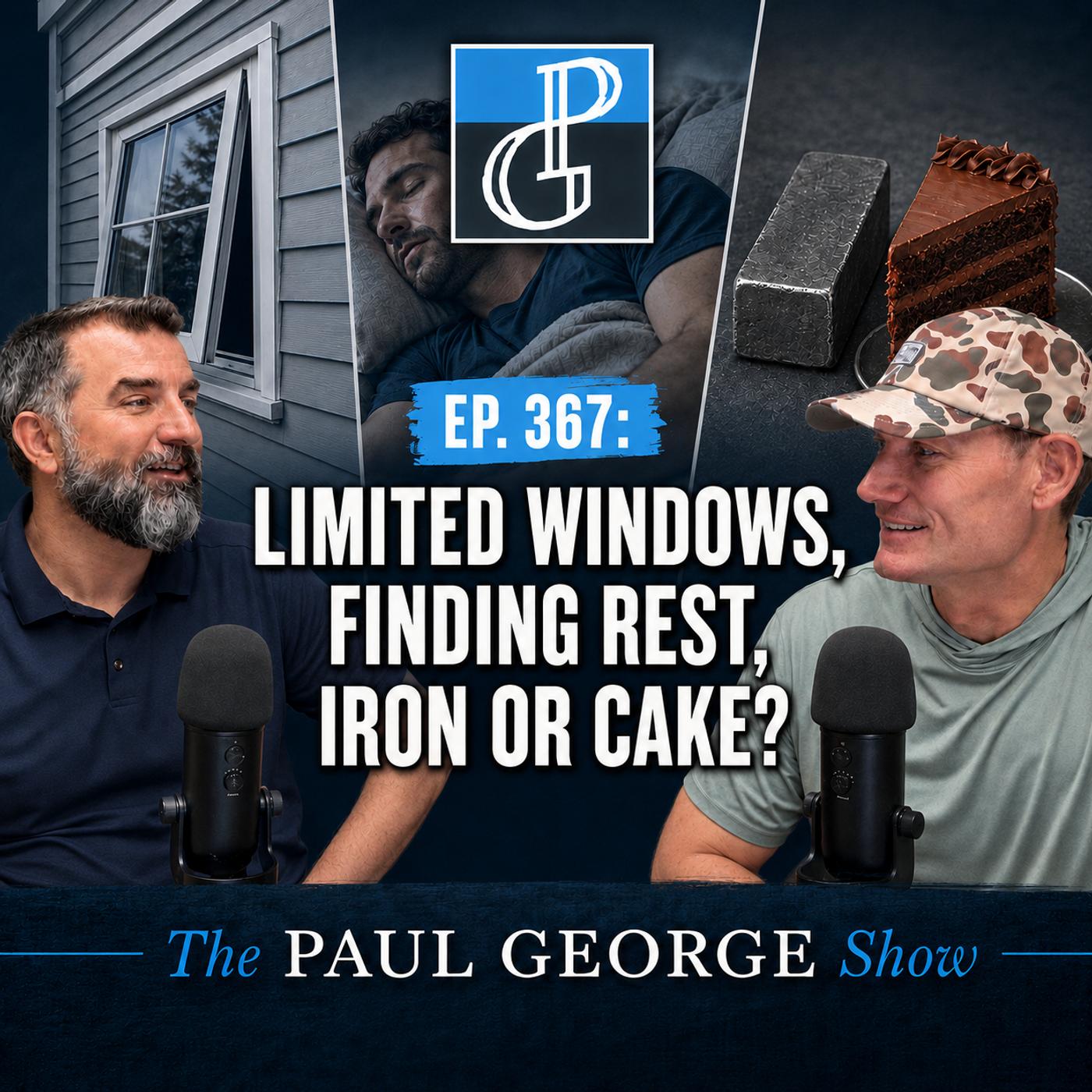
speaker-0: show great to be with you Paul George Deacon Adam Conk in studio what's up
speaker-1: Hey, hey, hey. Great to be here with you, sir.
speaker-0: Is it ever not great to be with me?
speaker-1: Honestly no. I mean it's sometimes different than other times, but it's always good. Yeah. Because I know for a fact that you know how they do those ⁓ fundraise gayler dinners and they auction off certain items?
speaker-0: Yeah, I've been actually been to a couple lately, which is random.
speaker-1: So you know what I'm talking about. Yeah. So if somebody auctioned off ten years of meeting weekly with Paul George, it would go for like a lot. Right. But I I get to do it. You're so that's what I'm living, dude.
speaker-0: Yeah.
speaker-1: Pretty good. Pretty good. A lot of lots of stuff with the parish going on and ⁓ yeah, how about you? What you been up to?
speaker-0: so a lot of times at our dinner table we'll do we'll go around and do high lows. And we've been ⁓ having a full house lately. and so we we've been going around doing high lows lately. So what would be like a
speaker-1: Uh-huh.
speaker-0: Like a high low of your week so far.
speaker-1: ⁓ might be the same event. I want to give away too much, but at the parish there was a pretty heavy moment, let's say. ⁓ so it was high in that it's such a blessing to be present with people in any in a situation like that. But it was also low in the sense of the heaviness of it. You know, like it was a it was kind of the same same moment. High and low, I would say.
speaker-0: Yeah, I guess I mean that obviously that could be it's not often that your high is a low. Yeah. And your lows could be a high.
speaker-1: Yeah. Yeah.
speaker-0: You know. Yeah. I mean I I don't know, like my high this week, I'm trying to be grateful. Okay. And I'm having a hard time with it. So my high is is like the gratitude for just the the the little things in life that we often take for granted. People, family, relationships. Things are just you can't you can't buy, you know. My low this week is a friend of mine for years and years is going through a divorce. ⁓ and I met with him this week and you know, we've we kept in touch over the years and stuff, but ⁓ just just carrying that ⁓ that heaviness and that burden you know, with him and and walking with him. And you know, we were talk we were talking and and ⁓ you know it's
speaker-1: Mm.
speaker-0: Not necessarily there I don't want to get into the the situation, but it is n not necessarily in it in in his control. But you know, often in life I I think about this even in my own life, but in in tough big decisions in life that ⁓ like the pain of regret is worse or harder than the pain of discipline. So the so the the the pain of discipline is like the hard work that you gotta do. And it and that really is hard and and it stinks, you know? and so often like we don't want to like dig into like the hard things in our life because they're it's difficult. The like the pain of discipline there is a pain to it. And and you can take any discipline of your life where you're where you feel like something's out of control or really hard, right? ⁓ And that could be work or health or, you know, relationships or anything like that. ⁓ but what what we don't realize in the moment, because we want to give up because it's hard, is that the the actual hardest pain is the pain of regret we feel for not doing the hard work. So it your problems don't leave you when you give up. You like so you trade in your suffering for another suffering, basically. Does that make sense?
speaker-1: Yeah, and there is a limited window that we have to muster up the discipline and the pain and the suffering of resolving a situation. There's a limited window. There is a point where nothing can be done anymore. You only have the r the regret. Now you can always rebuild. I mean that God has never abandoned us and he's never condemned us. Like none of us are condemned to a miserable life ever. But there is a window where if we're gonna resolve an issue. That window can close.
speaker-0: No, God doesn't abandon us or give up on us. The beautiful thing about ⁓ a friend's testimony is that like he is leaning into the grace of God during this hard time. but but the truth is though, even with our own choices, God's with us and doesn't abandon us. But the consequences of our choices are still there. Like we we still carry the the consequences of our choices anyway. You know what I'm saying? So like the the pain of of this, you know, separation will will be hard no matter what. You're right. Like so and a lot of times I think we don't feel the pain of regret till we get older and we look back on our life and be like, man, you know, that decision led to this one, which is where I'm at now. Yes, is God with me, but our Our choices and our and the consequences of those choices stay with us. And and and some of those consequences don't last as long as others. Some we have to live with a little bit longer. And those are the tough things about life, man. Like when you realize that you can't really avoid a run from your problems or your issues or your or things like that. And I was listening to this this guy ⁓ give a little talk this week and he had gone through a lot in his life. And ⁓ he had an accident where he was handicapped forever. And ⁓ so I was like really intrigued about what he was saying. It was kind of a motivational talk that he he was given. And you know, he made an interesting point, which is hard to it's hard to grab my attention. I I know you know that about me.
speaker-1: Which is why I I I try to be very shock and awe.
speaker-0: It's hard to grab my attention. but he did. And ⁓ he he basically, you know, he's in a wheelchair, he's giving this talk to to a bunch of you know young people, which is which is cool. We use this analogy, you know, we all have we all have sufferings. We all have problems, right? like all of us. You look around the room. He's now let me ask you a question. If we all put our sufferings and our pain
speaker-1: Mm-hmm.
speaker-0: ⁓ our problems in a hat. Would you choose to keep yours or pick someone else?
speaker-1: Wow, okay.
speaker-0: And that I'm it really got I mean, you could see everyone in the room think differently now on how they would answer that question. And so you went around the room, you know, and I was actually tuning in, like, well, how would I answer that question? And everybody, at least in in that specific situation, everyone when he would call on somebody would say, I I would just choose to keep mine.
speaker-1: Mm-hmm. Mm-hmm. Mm-hmm.
speaker-0: Because you don't know what you would pick out of that hat and what other people are carrying or what they have, right? Yep. And so we all have that those pains and sufferings, those disappointments. You know, life's not easy or perfect. And the reality is is if we if we can in in peace and grace choose to carry what God has allowed us carry that he'll he's with us he's with us in it no matter what that situation is he'll he won't abandon us but there's no avoiding the sufferings in life like you can't you can't just leave them here and then you just think ⁓ this won't catch up with me it'll eventually all of it is follows us
speaker-1: And there is such a thing as missed opportunities. And my Lord taught this ⁓ in particular I'm thinking of the parable of the the wedding guests, you know, so ⁓ a king throws a a wedding banquet for his son and all these people are invited, but there's a lot of excuses, you know. I can't make it, I just started a business or just got married or my father in law's sick or whatever. And he goes to the banquet and it's just it's just kinda empty. And it's like, well this this can't be, you know, we can't have a lame party for my son. So he sends his servants, just go into the roads and find whoever you find. Bring ⁓ in because we need to fill this place, right? And there is such a thing as missed opportunities. The Lord loves us anyway. Yeah. Right. We can always repent. But we don't get the same invitations in life over and over and over again. If we if we don't cooperate with God, we might not ever be able to fix that specific situation. The great news is, as Saint Augustine taught us, is that God can always bring a greater good when we come back to him than if we would have accepted every invitation. So if we would have said yes every time, our life would be a certain way. But we can't fall into the trap to say, well, that's it. I can never go back. I can never be a great husband, my marriage is over. I can't I can't be a great father if my kids hate me. Like I we can't fall into that trap and say, like it's over. Right. Because the reality is coming to God, only He can do this. He can make a greater good out of my life now. Yeah. than if I would have said yes to the all those invitations.
speaker-0: Yeah, and that's the grace, you know, that we have and in in our relationship with the Lord is that God can take all of our crooked lines and make sense of in our life. And if you're listening, he can in yours. But we can't run it all at the same time, like we can't just avoid the and run from the consequences of our choice. We can we have to surrender those and give ⁓ to the Lord and say, Lord, you draw something with my crooked lines. You make sense of it, you know. So
speaker-1: We could just keep making a mess of our life.
speaker-0: That's right. Surrender. And I just feel like I've been at a place in my life lately that Eric there there's like at least one moment a day lately where I'm just like, Lord, I just surrender, dude. Like I cannot I can't do this on my own. I can't carry this. You know, I can't think about this anymore or whatever. So okay, I know we just jumped into the show right like boom.
speaker-1: Yeah. Yeah.
speaker-0: So thanks everyone for listening to the show and being a part of the show. KLFT Radio, the podcast, wherever you are. Okay. Do you have ⁓ have you seen?
speaker-1: What did you say? That is so interesting. Alright, I try to avoid this situation, but I'm just embracing it today. We're going out of the country with animals, okay?
speaker-0: Are you for real though? Tha that's like what you do all the time.
speaker-1: No no no. Maybe one tenth of the time now. Used to be
speaker-0: Okay. Okay, out of the country with animals.
speaker-1: But we're not going far. This is in Canada. Okay. You've been to Canada. Yeah. But this is in Alberta. All right. Where a baseball team, an Alberta baseball team, recently ⁓ conducted a world record with its fans to try to draw people to the game. Okay. And it apparently worked. ⁓ but the world record involves an Australian shepherd, a dog, jumping ⁓ in backflips on the backs of people. So like flipping backwards on people's backs, like hunched over, you know? Okay. Which is a strange world record, but it drew the crowd and that dog did backflips on the back of fifty six people consecutively without stopping. So I guess on the fifty seventh he like fell or something. I don't know. I'm sure he's fine. ⁓ but the Edmonton Riverhawks, which is the team, ⁓ they did it. They're now on the Guinness Booker World Records, ⁓ thanks to the June fourteenth game. And the dog's name is Chardonnay. Chardonnay. A four
speaker-0: ⁓ nice. He's got a French name. He's an Australian dog living in Canada. I mean what a ⁓ what a Renaissance dog.
speaker-1: It's one of those stories. Yeah, would look at that dog and say there's no future for Chardonnay. He's too confused. But Chardonnay is a world record holder now. I'm just saying. And at four years old, still so young.
speaker-0: So if you could hold a w world record for anything, what would it be?
speaker-1: Right now, today, it would be the world's longest nap. So I would choose if you asked me to nap and never woke up. Three days later.
speaker-0: You usually have really long naps when you go on retreat. Yeah. You just thought about it. You just dreamed about it.
speaker-1: Went back to my last retreat and I was like, That was so nice.
speaker-0: Now you're talking to somebody who doesn't nap, like I don't nap. What do you it's just not part of my ⁓ toolbox? Should I be a napper?
speaker-1: I just So my son's like this. He's Dad, I can't nap. I'm like, what are talking about? I think I have a gift for napping. I might have asked, you know, if you we had the hat thing, if you want to keep your gift or get someone else's, I might choose someone else's. I feel about napping? ⁓ You gotta let that go, dude. He doesn't need you right there.
speaker-0: ⁓ Yeah. Like I the world you know, I could be doing something or accomplishing something. No, I think I just identified it. I think I I feel maybe there's a wound there.
speaker-1: Let that go, dude. Mm-hmm. Like a nap world. Honestly, and ⁓ we're kinda kidding, but it's kind of serious. I think the way a family handles naps says a lot about that family. So like I grew up in a family where people actually napped. I know that sounds crazy. By the way, most of the world does this, especially in Europe. You can go and see like they're gonna nap every day. Right. ⁓ but like I grew up in a family where like if if you're tired, lay down and take a nap. That was a family I grew up in.
speaker-0: I think you're scraping a a deep wound in my life.
speaker-1: My wife didn't grow up in a family like that. And so when we got married and I was ready to take a nap, she's like She starts banging the cabinets and the pots like
speaker-0: What are you? I'd walk into a room of nappers and be like, what are you guys doing? Like so much more we could be doing with our life than napping. But you know, the advantage of napping is you wake up and you're refreshed. And so then you maybe can take it. I mean, I'm I'm not gonna like go against it. I'm just saying maybe.
speaker-1: Exactly. There's something to it, and I'll tell you this. This past Saturday, I was blessed to be able to ⁓ do some training for some deacons and deacon candidates and chant, you know, sacred music chant. And I didn't say too many profound things. But one lesson I've learned through music is I said, you know what the hardest thing to do in in good chant is rest. It's really hard to do nothing, like to not make a sound. And let but the benefit of that rest is the congregation gets to pray. You give ⁓ a moment, they can pray. And so I actually showed them here's the difference between resting well and not resting well. ⁓ so I chanted something really quickly without the rest, then I did the rest well.
speaker-0: So resting in the music, like less people
speaker-1: Pray. Yeah. Because it gives you the space. It's just like in speaking, you know this when you pause and let it sit out there, people can think about it. And I said the hardest thing to do in music is rest, but that's where the prayer is. It's just like life. The hardest thing to do in life is to rest, but that's where the prayer is. Okay. That's where God's gonna carry. I think
speaker-0: you just unearthed a a deep scar in me. Okay, let's take a quick break and ⁓ we'll be right back. Welcome back to the show. Great to be with you, Paul George, Deacon Adam Conk in studio. Here we are, over 350 shows in.
speaker-1: Three sixty seven.
speaker-0: There you go. Isn't that something? You know, Jesus does say specifically, Come to me, all you who labor and are burdened, and I will give you rest. So he does talk about rest. And I don't think there's anybody who hears that passage in that scripture and thinks, I don't want rest. I don't want to breathe. I don't want to be eased of my burdens, you know. What is it about us that we obviously you're an expert at resting. You rest in music, you rest in your naps. What what is it about us that we don't rest well? At the same time, you look tired. Well and you did say if you could set a world record in anything, it would be a nap.
speaker-1: Well to say it in the pod Well, the reason is because at two AM this morning I woke up with a migraine, which I do get from time to time. And ⁓ took the medicine and I haven't been able to go back to sleep since. That's why today today would be rough. And I am not a morning person. So every every time the alarm goes off, I am furious. I'm furious every time. But I get up, do my reading, do my prayer, wake the kids up. Every morning I'm furious that I have to wake up. It's just a daily thing. ⁓ But I would say it in a positive, the person who can rest has to be secure in their own identity. Has to.
speaker-0: So you're saying I'm not
speaker-1: No, what I'm saying is in the positive, resting means
speaker-0: The world could be truth to that though. Like there I think there could be a part of my identity that needs healing. Like there's a part of me that doesn't allow myself to rest. There's a part of my identity that maybe feels like I need to be more productive or working or accomplishing something. I think we do live in a in a in a society where we value so much doing and accomplishing and success. And look, I'm I'm all about valuing hard work and stuff. Like I'm I'm I'm a victim of of all that. ⁓ and and I think there's a lot of virtue in that. So so but at the same time, I can acknowledge that I don't often give myself permission or allow myself to rest. You know, yeah, do I pray and do do I spend some time reflect all those things? But I do like if I were to lay down on a couch and say I'm gonna take a nap, I feel real guilty about it. So I know a lot of people who who feel the same way. Yeah. You know.
speaker-1: Most of us Americans, probably.
speaker-0: Whereas like in Europe like they go home from work. Take a siesta and then go back to work. Like it's just part of like everybody just napped in the middle of the day. It's almost like they would shame someone for not napping. Like, you don't nap?
speaker-1: Who do you think you are?
speaker-0: You should live in Europe. I mean I know you've been talking about it forever, but like you should do that.
speaker-1: Well I'll just make the conk house a little European sanctuary, that's all. 'Cause I mean to rest you have to admit that the world doesn't need me right now.
speaker-0: Or anybody else. And you got a lot of people who need you.
speaker-1: And then then you have to be able to shut off your mind in the sense of the issues of the day, the problems of the day. I I it's not like a discipline. I think it's more like a a trust, for me at least, is like it will be there when I wake up but there's nothing I can do about it right now.
speaker-0: That's that's right. I mean that there are certain worries that that we can't accomplish or figure out right now. We gotta s just surrender ⁓ and put ⁓ in the hands of the Lord. Like
speaker-1: And he can work on it when I'm not.
speaker-0: Well, and that's very true. But I would say today for someone who grew up in a time where there was no internet, no technology, like you know, bunny years on a TV, like that was you know what I'm saying? Yeah. That it was easier then to just disconnect and like take a nap. Totally. There's nothing I could do right now. Yeah. There's nothing like do you find that with
speaker-1: Uh-huh.
speaker-0: technology and just having smartphones. Like I I you know, I was telling, you know, Gretchen last night, I was like, I can always work. I can always work. There's never a time I cannot work. I have the ability to work all the time because of my phone. Email, messages, calls, like it's ne like I have to be so conscious about turning it off, putting it away, that it's it's it's harder to just put everything away and say, No one or nothing needs me right now and I'm just gonna nap.
speaker-1: Yeah, I agree. I I think You should teach
speaker-0: napping classes. You think? I mean you teach Gregorian chant or chant. I say Gregorian 'cause ⁓ we are celebrating Saint Gregory this same guy. ⁓ who's a pope by the way? Pope.
speaker-1: That's right, same guy. And was deacon when he was elected Pope too. So a little feathering the deacon cap there. Which is
speaker-0: Crazy. But so you teach those classes, you teach some theology classes, you you you teach OCIA classes, you teach marriage classes. I think you should teach napping 101. And it could be all about
speaker-1: Not a bad idea.
speaker-0: Coaching people to disconnect for a time that they have no control.
speaker-1: Well and look, there's a theological connection between rest and prayer because for example, we we say this all the time, liturgy means what? A public work. It does. It does. But Benedict the Sixteenth would talk about this, how liturgy is definitely a work. But life has this balance to it of work and leisure or work and rest. And liturgy is the summit where those two things actually combined to where the work is leisurely. The prayer is An action, the action is a rest, right? And that's God. God is pure act, but he's also eternal rest. Think about that. Like he's always acting, but he's also always at rest. He never changes. So liturgy. But we we as Americans, we hear public work, liturgy, great, it's a thing we do. It's also s the place where we rest. And anyway, prayer is a resting of the soul in God.
speaker-0: Yeah, I mean This is why the church says that we should pray throughout the day different times. Like I wake up in the morning and I pray, but I was just resting, now I'm resting, and then I get on with my day and I'm busy all day, right? And then I have the evening prayer or whatever. I should find more times in my day to just sit and rest and breathe and be with the Lord, hand over my burdens, my worries, you know, things like that. Cause when Jesus says, you know, come to me, all you who labor and are heavy burdened, and I will give you rest, like Like he says what he means. And that's what I say when you read the like he he says what he means, you know, like even the hard things. Because those things he knows will set us free and give us ⁓ you know, the the true meaning a and purpose that we're looking for, right?
speaker-1: Yeah. So and I do think it's true, just like in music, the hardest thing to do in life is rest well. because working for the kingdom makes sense to us. Lord, you want me to just white knuckle it and just work and work and work and work? That makes sense to us, you know? That's the Martha. And work is good. Activity is good. It's also the least spiritual thing we do because we're working with our ourselves, like we are at work. But the rest side, the Mary side, the side to to be with Jesus in such a way that he's working in me and I can rest in him while he's at work, that's much harder. It's much harder to bring myself into a trust in him where I can literally rest in him. And that's why it's difficult to be a saint. It's not because it's difficult to do hard things, although it is. It's more difficult To love Jesus to such an extent that I trust my whole self to him. That's difficult.
speaker-0: I mean, if I were to tell someone or you tell someone like you could Walk into a church and a chapel and Jesus was really there. And you could see him and rest in his presence. You had that option. Would you do it? Yeah. So I I think e most people would even if they don't know the Lord and be like, You're pretty tired. Like you got a lot going on, right? And they're like, Yeah, you work you work, you wake up, you you know, life's life's not easy. Yeah, everyone would agree to that, right? And if I I were to say, like, but you you have an option. You you could walk into that church or chapel and what if I told you Jesus was there, you could be in Jesus' presence and you could just rest for a while. Would you do it? Most people would say, Yeah. You know? Well, I mean, we b we believe that in every church
speaker-1: Mm-hmm.
speaker-0: And in every Catholic chapel, there's there's a tabernacle and Jesus is really present in there, like present. And we could be in his presence and rest. Like just rest. Like prayer doesn't have to be work. It could be just resting in the presence of Jesus. It could be just sitting in the arms or at the feet of Jesus, like Mary did with Martha. Like just rest, breathe, be knowing that not everything can be solved. But we can still be comforted and in the arms of Jesus. Would you do that? Why we have that option. How you know what I'm saying? Like that. Okay, speaking of resting, do you have a a weird Catholic
speaker-1: Yeah, we clean that up. Catholic stuff. Yes, so in a few days on September sixth, we f celebrate on some calendars, not the universal one, but some calendars, the feast of Saint Magnus of Fusen.
speaker-0: Fusen. Foosen. Where's Foosen?
speaker-1: I'm guessing Switzerland. Yep, Switzerland. Modern day Switzerland. At the time it wasn't Switzerland. ⁓ Saint Magnus died about the year seven fifty. And talk about Bazaar.
speaker-0: Buzz or Magnus.
speaker-1: Well, first of all, that's a cool name.
speaker-0: Yeah. I would go with Magnus as a name.
speaker-1: I would too, but I don't know any Magnus's. Do you notice?
speaker-0: ⁓ no.
speaker-1: You think it's the same name as Max? It is. It's a great one in Maximilian, Max
speaker-0: Well, If you take but it's also if you take the ⁓ away, it's Agnes. It's true. So
speaker-1: I don't know. ⁓
speaker-0: Was Magnus a a guy or a girl? A guy. Okay.
speaker-1: Yep. ⁓ he became a priest and he's got s you know, he's one of those lives where it's like, is it did this really happen the way it did, you know? ⁓ but so here's some some wild stuff about St. Magnus. So what Well, ⁓ it often involved animals, I'm sorry. But in Kempton, he dispersed a plague of snakes. There were snakes biting the town. Okay. And he just
speaker-0: Weird about him.
speaker-1: Disperse them. Get out of here, you snakes. You would like that. Snakes in a town. Yep. ⁓
speaker-0: Like snakes on a plane, but but snakes in a town. That would be my worst nightmare. And if I was him, I would be like, get away.
speaker-1: At Fusen where he was from, he forced a dragon to leave the monastery. Now now we we heard about dragons with Saint George. That's right. I don't know what it I don't know what it is. I I haven't researched it too much. I don't know what they called a dragon. I don't I can't but he did it. He
speaker-0: I mean could it be like ⁓ I mean what are the possibilities that a they could mistake a dragon for what?
speaker-1: I really don't know. Like a huge lizard, ⁓ you know, like a Komodo dragon, but is this this isn't the island of wherever those are. Kimoto dragons would f death. Yeah. So I don't know, man. But anyway he got rid of a ⁓ of a dragon. And this is the one that I want to focus on. his situation with a bear. Okay. So he's walking in the woods near the monastery, you know, as you you might do.
speaker-0: Yeah, this is switch. Freeze to death. Okay.
speaker-1: If you're a monk, I would imagine, you go for a walk, contemplating, and boom, there's a bear. Okay? Just a bear in the woods, which is also imaginable, right? Well, we encountered this bear. he befriended it. Well, first of all, he showed him ⁓ some kind of iron thing he had with him, like to intimidate him. And then he gave him some cake that he had with him and made friends with the bear.
speaker-0: Boom, there's a bear.
speaker-1: And then the bear followed Magnus back to the abbey. The bear then led him to other sources of iron in the woods that he knew about, the bear, so that the monks could make more iron tools, like the one Magnus showed him. Okay. ⁓ in the mountains. And to this day, that area, ⁓ the industry that's most lucrative there is iron ore. Like they found where the bear showed them the iron was, it's still like being mined and shipped and Brought them a lot of wealth. All the iron and the mountains. Wow. So
speaker-0: Wonder if the bear was like actually an angel.
speaker-1: You know. If he is, he was barely one.
speaker-0: I mean it's pretty weird.
speaker-1: That is a weird story, yeah.
speaker-0: I mean, there are stories of like God, you know, people having visions or dreams and then like a miracle happens. Right? So I mean he could have had a vision or dream that a bear led him there and then found all the iron. It could have been a real bear. It could have fought off a dragon. I I don't know.
speaker-1: Mm-hmm. Mm-hmm. Yeah. Well if the things they called dragons were something, I wonder what they called bears. But no matter what animal it was, the fact that it led them to more iron is kinda wild. So it's a miracle.
speaker-0: It is a miracle. So w what's he as a patron saint of?
speaker-1: Well We didn't talk about this story, but I find it hilarious. He's one of the patron saints of ⁓ or his patronages is against caterpillars.
speaker-0: ⁓ okay. Just in case.
speaker-1: Not just of Kata, like against Kata.
speaker-0: Against Well, there are poisonous caterpillars. I mean, I think the best part about him is one, it's crazy 'cause we can hear about saints we've never heard of. Yes. I've never heard of Saint Magnus before. You know. but we do celebrate some pretty cool saints this week, actually. So Saint Mother Teresa of Calcutta is this week. That's huge, dude. And then Saint Gregory.
speaker-1: Wait. Now yeah. Big one. Yeah.
speaker-0: ⁓ who we know from, you know, Gregorian chant. But when you read about him, it's like almost the least of what he did as a pope. Like he wrote all these letters and did all these pretty amazing things. And then they're like, ⁓ yeah, and he did, you know, music or whatever, chant or, you know.
speaker-1: Yeah, I mean, we call those men who are fathers of the church the ones that in the earliest years of the church gave shape to what the church would look like forever in certain ways, right? So for example, Saint Benedict, we call him the father of Western monasticism, but he's a f he's the father of what all monks do. Mm-hmm. Like he gave shape to that. Until Jesus comes back again, every monk is gonna look something like Saint Benedict, right?
speaker-0: Yeah, their impact is forever. You know, the way that they shaped our or the church and what they did, you know.
speaker-1: Pope St. Gregory in a lot of ways did that to the papacy in that he he really took the universal scope of the papacy to like a a new place. I mean Saint Peter is obviously the big the big Pope. Like he's the one, he's the Tom Brady. Or no, who that's a bad example. Gregory would be the Tom Brady, who was like the first big quarterback. I mean analogy, but it is well Peter's like the original, the OG. Yeah, I mean yeah. Sure.
speaker-0: I it's a horrible announcement.
speaker-1: But Gregory took that universal what is it what does it look like to be Shepherd of the World to kind of a place that we know it today? It was he and liturgy is one of those. So he he took all the music being sung in the monasteries and churches all over the world and he said, Well, look, we're gonna make this universal. He collected it into an actual book. And that's what Gregory chant is. It's simply the the collection of all the music that was being sung for Mass and for Divine Office. throughout the world made into like a universal
speaker-0: We celebrate him today. You actually told me something I I did not know, which was that he became Pope as a deacon. There's hope for you.
speaker-1: You can be Pope. Hope to be Pope.
speaker-0: So he was a deacon, he got elected pope and then got ordained priest, ⁓ bishop.
speaker-1: Yeah, and theoretically that could happen today. I mean the cardinals could elect any man who's baptized. They could be elected. So you could be Pope as much as I can. But
speaker-0: Can you then be Pope and not a priest?
speaker-1: No, so what would happen is and what's happened in Gregory's case is when you're elected and accept, okay, great, but but you're you're not the bishop of Rome yet. When you become the bishop of Rome, you're the Pope. You know what I mean? Right. And you can't be the Bishop of Rome until you're a bishop.
speaker-0: the bishop ⁓ the pope is the bishop of Rome.
speaker-1: Right. So y as a deacon you can't be a bishop 'cause you're not a bishop, right? So they ordained him a priest, they didn't skip that step, and then a bishop. So they might do it right after each other, like just to be pope.
speaker-0: There's hope. There's hope. So does the Pope have a auxiliary bishop of Rome? Because he's so busy?
speaker-1: ⁓ yeah, yeah, yeah. There's yeah. His vicar general is ⁓ important. I know exactly important to him. Well there's tons of bishops that are part of that curia. Yeah. But ⁓ to help run Rome. But yeah, it's a lot.
speaker-0: Now we also celebrate ⁓ Saint Mother Teresa of Calcutta, who probably and Pope John Paul II are two of the greatest contemporary saints of our lifetime, right?
speaker-1: Hmm. Yeah, I mean ⁓ people it'd be hard to match them. Yeah.
speaker-0: Yeah, be hard to match them. What would be like your favorite Mother Teresa image or story or quote? D like the first thing that that comes to mind.
speaker-1: The first thing that comes to mind is the amazing documentary that if people don't know it exists, in the nineties before she died, I don't know who produced it, but I'll I'll watch it annually, like I'll watch it Saturday. They produced a documentary about her while she was still alive and interviewed her and asked her questions, and that's all in the documentary. So I mean how many saints can we say you can watch an interview style interview of?
speaker-0: Where where's the documentary?
speaker-1: You just look it up on YouTube, ⁓ Mother Teresa documentary. ⁓ it'll show up. I think it was called Come Be My Light, something like that, which is also a book. But when I think of Mother Teresa, I think of that interview, and you could literally just listen to her wisdom, her saintly like a saint talking to you. That's never been available before. So ⁓ look that up. But I mean, look, I love her ⁓ trust in the Lord. I mean, she she knew what God wanted from her. Other people did not, and there was no support for her to do it. Zero. Like
speaker-0: I think because it was so radical. And you know, she was a saint that would change the world in the way that the world would see poverty in the way the world would see Christ in humans. Her ability to continuously ⁓ teach that
speaker-1: Mm-hmm.
speaker-0: The face of Jesus, Jesus was in the human person, you know? and so she lived that out in such a radical way, with ministering to the to the poor, the dying, the suffering, the orphans in one of the poorest places in the world, right? I I think it was so counter-cultural. It's what people loved about her, and at the same time what people couldn't understand because They they couldn't live that same life. You know, it wasn't for everyone and it's not, right? But so she has s some of the most powerful quotes and stories about her. There are a lot of miracles that happened while she was alive. Like healing miracles, ⁓ you know, just crazy stuff.
speaker-1: Uh-huh. Mm-hmm. One happened in that documentary. If you go watch it. So they follow her to Beirut, and she was going there with her sisters because of the terrible bombings and conflict there. She wants to minister the poor that were dying. And this is liter you can watch it on film. So ⁓ she wants to go into the war zone. She's like, We're not close enough. Like she got really close, like hearing bombs, whatever, but she wanted to go like where people are dying. And nobody would let her. The cops would you know, the the military wouldn't let her whatever her okay. So she said, Well we need it we need the bombing to stop so we can go. So she prays and her sister prays. The next day there was a ceasefire of all attacks that they couldn't like why how did this happen? And it was just for a day, but her and her sisters went in, took care of some dying people, and they came out. You could watch it on ⁓ film. Like she just started praying and all of a sudden there's a ceasefire in the middle of a conflict. Yeah. Which doesn't happen easily, by the way.
speaker-0: Yeah. Yeah. No, there's tons of stories like that. Yeah. I mean this is why I don't know the exact timeline of from the time she died to the time she was canonized a saint, but it wasn't super long. You know, like some saints are like years and years. Even some like hundreds of years later, right? but hers was like, you know
speaker-1: No, not Mm-hmm. Died in ninety seven, she was canonized maybe ⁓ five or not long.
speaker-0: Yeah, yeah. Yeah, yeah. That's wrong. Okay, let's take a quick break and we'll be right back. Welcome back to the show. Great to be with you, Paul George, Deakin, Adam Calkin Studio. Thanks everyone for listening to the show, being a part of it on radio podcast. You taking your nap?
speaker-1: Yeah, man. Doze off there. How's your better I mean medicine helps. It does. It's like ⁓
speaker-0: Migrant. The one day I did not have coffee for you, I think in the last what, five years.
speaker-1: Well, I've drinking so much coffee this morning I would have I would have said water please, which is what I did anyway. 'Cause I was kinda about to provide don't f see, there you go, buddy. Your value is more than what you do.
speaker-0: I'm not saying I I wanna be I wanna be hospitable. ⁓ That's true. Yeah, I w I wanna I wanna be
speaker-1: ⁓ that's true. You wanna be hospitable. That's You are a hospitable person. I don't know if you know that. No. You are. You can cook, you know how to make people feel welcome. All the all the basics. You you kno you knock ⁓ out of the park.
speaker-0: No, I don't know that. I don't know. So if you could ⁓ set a Guinness book of world records and some would be a nap. The longest nap.
speaker-1: What about you? What would you do? Today, not all just today. What would be the best choice today? For me it's the nap.
speaker-0: Today ⁓ a Guinness Book of World Records.
speaker-1: Mm-hmm. ⁓ well now just hit the spot.
speaker-0: I ⁓ I don't know, man. Like I don't know if there's any I think it would be the longest ⁓ time spent in silence in the middle of nowhere. Yeah. Cabin in the woods.
speaker-1: That would hit the spot. Yeah. Mm hmm. The longest time spent in the middle of nowhere. How long you think that is? Like thirty years? People live like their whole life. Right. But with their family, of course.
speaker-0: Wanna leave my family for that long. Maybe I'd have to add to it to get me there faster, like silence, like no I would eat. You'd have to kill what you you ate. ⁓ Yeah. You you'd have to canoe there. So I'd add some things that would make it shorter, but
speaker-1: Okay. Yeah, I think
speaker-0: Take a truck through the mud, then a then a a P ro, which is like a canoe. Through the swamp to the cabin, you would have to kill your dinner, cook it, eat it, and then come home. So all those things would make the Guinness book.
speaker-1: Must have been fun playing horse with you. Yeah.
speaker-0: I was always figuring it out. Okay. Speaking of horse, why don't we do a six pack of questions? Question.
speaker-1: Question number one. So you mentioned how you and your family like to do like high lows. What's what's the highlight? What's the low point? ⁓ what have you learned with working with people, especially in struggling marriages, but all people, that we might take for granted, maybe? maybe some people don't, but little little communication points like that. Like that's a good one. But what are some other like things that maybe a lot of people aren't aware of that are just kind of little communication points with family or friends or people that are important to you that might be a game changer. Like this might make a huge difference in your relationship. If just little communication points.
speaker-0: well, I think consistency is key in any relationship. But let's just take marriage, for example. ⁓ building consistent patterns of communication that build a strong relationship, that that deal with all those things, the good, the bad, the conflicts. And what I find with people who don't have that, what what ends up happening is that inconsistency. builds more momentum in separating the two people, you know. And then what happens is, you know, I would add to that is the inability or unawareness or whether it be intentionally or unintentionally, to deal with what hinders you from communicating with your spouse. Like this these deeper maybe issues or unhealed wounds are really ultimately The deal breakers in relationships.
speaker-1: Well we've got to have a follow up question too on that. So ⁓ Hmm. Alright, so what do you think are kind of the common wound like maybe the question two, elaborate more on how a wound could keep us from communicating well? How are those connected?
speaker-0: Like an un like unhealed wounds cause behavior. There's certain behaviors that that come out of those things. But but un you know, when I have a lot of conversations with a friend, Dr. Bob Schutz, he would say that narcissism really is the result of unhealed wounds. So what happens is unhealed beh wounds cause behavior. We turn inward. Allows us to turn in on ourselves. Even the catechism talks about that. says the worship of the one God sets man free from turning in on himself. This is this idea of narcissism me, you know. You can't have an authentic, good, growing, loving, unified, covenantal relationship when all you do is think about yourself. Because true love is is the good of the other, not the good of the self.
speaker-1: Hmm. Okay. Question number three. We talked about ⁓ the world record of the dogs jumping on the backs of people. Just kind of wild. At a baseball record. Yeah. And I wanna ask you about kind of
speaker-0: A new world record.
speaker-1: Magnanimity, let's say. So to aspire for greatness, even little things, seems to be something Christians ought to do. Right. So like if we're gonna do this whole dog back jumping thing, we're gonna do it right. You know what I'm saying? We're gonna go all the way. All the way. tell me about that when it comes to like the spiritual life, this this place of letting ourselves be inspired to greatness with God, to do great things for God. and related question, it's part of it. Do you find that people struggle to think that way about their life, that they could do great things for the Lord?
speaker-0: I don't I don't know. I I mean magnanimity, you know, means big soul.
speaker-1: Mm-hmm. Right. Yeah.
speaker-0: You were talking about John Paul II, Mother Teresa. But you could see is it's like the the soul was expanded beyond the body. There's a certain glow about them. You know, I think that's what attracted us to their life. Even people who were non Christian people could tell you stories about those two saints, right? ⁓ people quote Mother Teresa all the time. is there's certain
speaker-1: Mm.
speaker-0: you know, glow about her life. ⁓ so it is possible, right? I think all of us in our journey of life is should be working more on our soul than anything else because that is the thing that will live forever. So to do great things, it it's almost like just surrendering our life that God would do great things through us instead of us trying to achieve great things on our own.
speaker-1: Question number four, we talked about rest. can you elaborate on ⁓ let's say methods of learning how to pray in such a way that's restful? Like what does that mean? And ⁓ how do we know the difference between resting with God and just kind of staying busy spiritually? You know what I mean?
speaker-0: Yeah, I was talking to a friend about ⁓ how I love to go on silent retreats, and he was saying, Well, I'd rather go on a retreat where it's more busy. You know. And he's like, Maybe I maybe I just don't know how to have silence. And I said, you know, it's a good point. I mean, you still get something out of the retreat that's busy, and you know, there's activities and and talks and small groups and whatever. I said, but to learn the art of contemplation and silence, it does take practice. You know, you have to you have to expand and grow into that. It's like working out. So, like if you just were to never done silent prayer and all of a sudden went on a five-day silent retreat, you'd probably feel super uncomfortable, wouldn't know what to do with the time. So it's it's something that we should pray for the desire of you know deeper contemplation and silence, because that is where our souls hear God. That's where we recognize the voice of God, you know, and where our souls rest. Our souls have a more difficult time resting when e our prayer's busy and active, you know. So question five. Yeah. Throw you off guard here. since you are a professional napper and a professional rester, what advice would you give me?
speaker-1: Yeah.
speaker-0: And other people who struggle with giving themselves permission to rest. Not so much prayer, but just in general life. What would you say?
speaker-1: I would say that There's a good chance if I if I feel guilty about resting, there's a really good chance that I overestimate people's dependence on me. There's really good chance of that. That like if I don't do X, the world will crumble, people will crumble. Or that people will not appreciate, love me, whatever. Right. I have an over exaggerated idea about how much the world needs me.
speaker-0: Wow. And I mean you come from somebody who has eleven kids too.
speaker-1: I would not be here today if I thought they really depended on me and not on God. I will tell you that.
speaker-0: No, I know, but I'm just saying like the the amount of responsibility. So like for you to like surrender that that and let go of that, that's a good lesson. I think, you know, it's something that I could I can learn from.
speaker-1: Well, the way to learn it, honestly, I think if if rest is really hard, I don't think you just lay down and say, Go to sleep, go to sleep, go to sleep. I think you just start having more fun. Because fun is a type of rest. Rest isn't just sleep. Right. Fun is a type of rest. Because to really play and have fun in a situation, it's really the same disposition. It's like, okay, I'm the world can go on without me for a bit. I'm just gonna have fun. Yeah. And I would say the same people who struggle to rest also struggle to have fun. ⁓ fun in their own context. I think a lot of dads, for example, okay, well, I can have fun with my kids or fun with my family, that's great. Sure, it is, and you that's fun. ⁓ but like what do you find fun? And do you ever do that? You can do it with your kids or your spouse, but like, are you doing what they find fun? Or are you doing what you find fun with them? And ⁓ anyway, so having fun is the same thing. And I would say it's easier to work on having fun first than like resting first sleeping first. You know what I mean? Have some fun. All right, question number six. ⁓ we talked about Saint Magnus and he used cake to befriend a bear.
speaker-0: Yeah. Smart guy.
speaker-1: And born from that was a whole industry for a a city.
speaker-0: Before he knew honey would have would have done the trick. Cake. Suppose he just walking through the forest with cake?
speaker-1: I wanna ask you about dealing with our own weaknesses and shortcomings. Cause if we're if we're not willing to do that, like we're not gonna get very far into spiritual life. We have to learn to deal with our own mess. But what's the value of using cake when dealing with the bear of our own issues? You know what I'm saying? Like being merciful with ourselves and and like not just beating ourselves up, but building ourselves up. Like what's the Tell me about the value of that, this kind of self talk where we give ourselves cake instead of just beating ourselves with an iron rod. Because Magnus could have beat the bear with that rod, you know, but he didn't. He used the cake. And look what happened.
speaker-0: Well, I think the c the cake was his only out. I think if he would have used the rod, the bear would have won. Just that's what I'm thinking. That's a good point. I think the cake was his only option. You know. ⁓ I mean there's so many ways to go with your question. I think it goes a a little bit with the with the leisure part. Like not everyone struggles with being hard on themselves, but a lot of people do.
speaker-1: Uh-huh.
speaker-0: And so some people probably need to be more disciplined and hard on themselves to deal with things. And some people need to be less hard on themselves and give themselves permission and time and rest and breathe a little bit. Cause not everything's going to be done or accomplished today. And so the it's sort of the art of self awareness. ⁓ I always say that the beginning of a journey and real depth and healing and growth and spiritual life and in relationships is the journey of self awareness, self-discovery. Who am I? What what's in me? Where where am I brokenness, my wounds? Where do I need to grow and heal? ⁓ and that self awareness begins a process of us beginning to really be able to pray about navigating ourselves forward. So sometimes we do need to just treat ourselves and And let ourselves at rest and have leisure. You're someone like me is like, man, maybe I should just splurge and have dessert. That'd be good for me. Right. And someone else is like, I always have dessert. I'm always treating myself and I don't have any discipline. You know, like depending on who you are, and we can we can probably wherever we are all grow in that area of you know. Self-discovery and moving ourselves to a place where we can rest in a way that's healthy. You know, because you could be napping when the house is on fire, you know, and I can be putting, you know, I could be not resting when there's nothing to do and I can make up stuff to do. You know? So anyway, ⁓ great show. thanks for being a part of the show and for listening on the podcast or on the radio, wherever you are. ⁓
speaker-1: Yeah. So
speaker-0: It's great to be with you. We'll be back next week. God bless.
