

1
00:00:00,360 --> 00:00:49,170
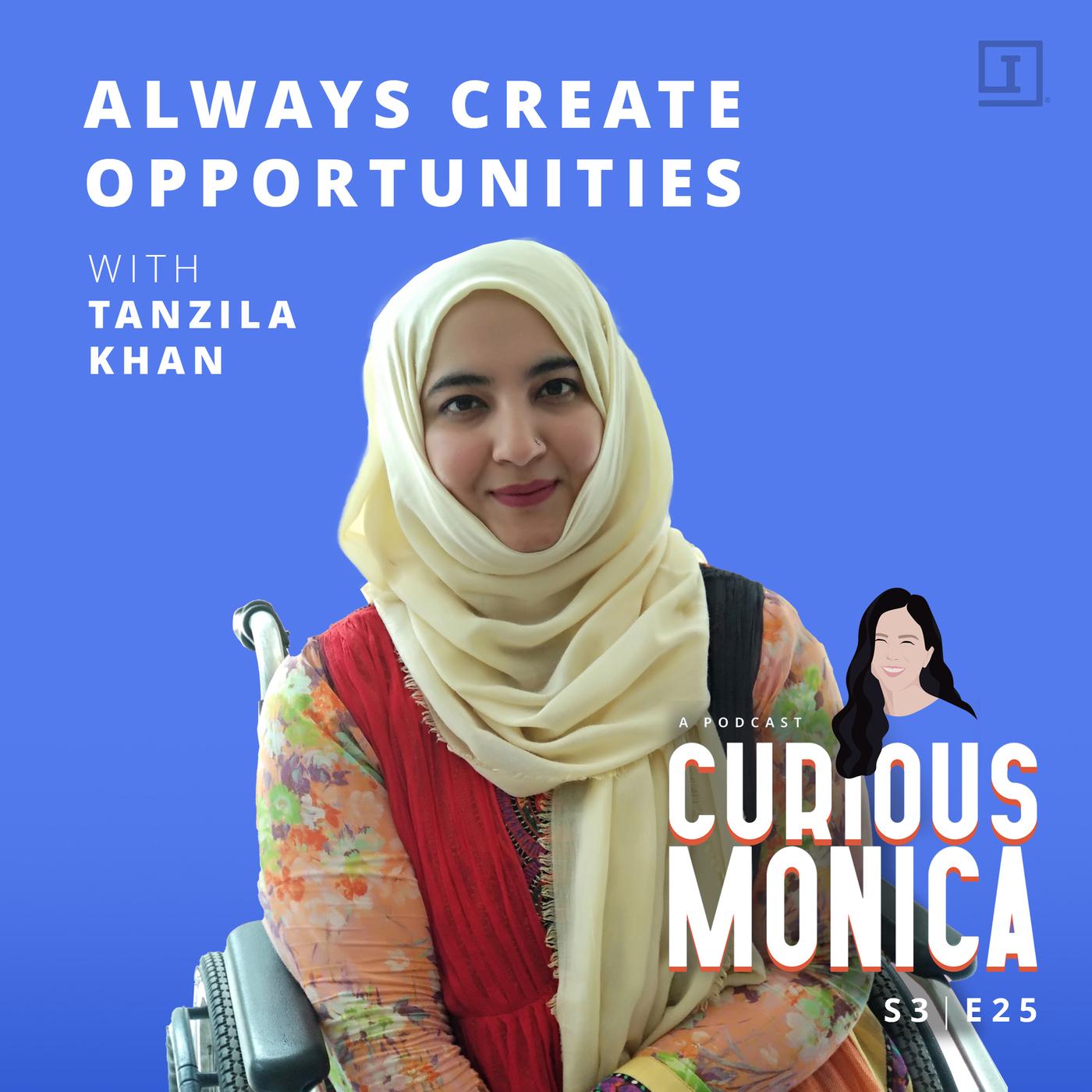
Monica H. Kang: How is life like if you're born with disability since birth? Well, today's guest is excited to help debunk what that experience is like because she has, and she's about to share how she can continue to live thriving life and how you can help others in a more meaningful way to be a better ally for disabilities. Welcome to Curious Monica I'm Monica Kangana and today I'm so excited to have my friend Tanzila Khan joining in from Sweden, Stockholm today. She is a pakistani award winning entrepreneur, activist and public speaker on the mission to empower youth and communities to rethink disability rights. She is an innovative doer, always finding new ways to empower her community with creative solutions.
2
00:00:49,510 --> 00:01:42,316
Monica H. Kang: She also recently launched her game Whoopi Town, which she's going to explain a little bit more, how she is rethinking disability education with the game and she is not stopping as a speaker. She has spoken at about 19 plus countries, a serial entrepreneur, founding several companies like the Girly Things, which delivers urgent ministry kits in Pakistan, a non profit creative alley that empowers community through events and a company. I wish to create sustainable solutions to achieve the sdgs. She also wrote several books to fund community projects in the field of disability, women empowerment, education and environment. And of course, as I mentioned, she has launched a board game to sensitize disability called Whoopi Town in a recognition of the innovative activism work.
3
00:01:42,388 --> 00:02:32,440
Monica H. Kang: She has received numerous awards and recognition, including the Amal Kaluni Womens Empowerment Award by the Prince of Wales in London in May 2022, young connectors of the Future by the Swedish Institute and the Asia Leadership Development Fellowship from the Asia foundation in 2023. In fact, that is how I met Tanzila. Ive been a trainer and instructor with the Asia Foundations and for the Asia Leadership Development Fellowship few years where I had the honor of meeting Tanzila and many other asian innovators around the world. The story with Tanzila was inspiring. Just learning about how shes navigating all the travels and not letting that stop her. So with further ado, meet Tanzila and how she is rethinking disability activism.
4
00:02:34,580 --> 00:03:14,270
Monica H. Kang: So very excited to have my friend Tanzila here all the way from Sweden. Thank you so much for tuning in and joining us. Ten Sigil has so many things to dive into. It's so important we get a chance to continue to educate and learn and empower those voices of leaders around the world. I think the number one thing that I want to dive into first is just how it all began bringing us back to your childhood. What was your upbringing like? I understand for you have disability from birth. I assume that wouldn't have been an easy journey at the beginning, but also hence a lot of learning opportunities that you gain over time. Tell me a little bit more how your upbringing was.
5
00:03:14,970 --> 00:03:17,202
Tanzila Khan: Thank you, Monica, for having me and.
6
00:03:17,266 --> 00:04:03,558
Tanzila Khan: This wonderful conversation to begin with and going back to my childhood. I grew up in Lahore, which is a very nice, fascinating city. And we are Punjabis, so we have a certain culture of enjoying our lives, such as food, dancing and a very hospitable attitude as well. So I grew up in those circumstances, but my life was a little different from other children because I had a disability by birth. And the whole experience was to understand myself and then understand my own circumstances, build relationships that was beyond the disability. But it's always different because you're relying on the society in a very different way from the start. And with that, sometimes you develop certain complexes, which is normal. I think we all have gone in that phase.
7
00:04:03,694 --> 00:04:13,768
Tanzila Khan: So I do had to struggle a little bit growing up, but then eventually I did find my voice and I found my own beating in which I want to dance and tap.
8
00:04:13,904 --> 00:04:16,260
Tanzila Khan: And then I think life becomes easy and better.
9
00:04:16,959 --> 00:04:47,766
Monica H. Kang: And of course, later on you have done so much and continue to do so much, which is so inspiring to hear your innovation, how you've found innovative ways to tap into not only being, advocating for disability and accessibility, but just innovation and creativity in general. And so we'll get to it. But I think I want to still visit the young Tanzilla. Growing up, what did you wanted to do later on in the future and what type of jobs were you interested?
10
00:04:47,918 --> 00:04:55,238
Tanzila Khan: I was always very sure about being very entrepreneurial. And I remember my first memory of.
11
00:04:55,294 --> 00:05:00,662
Tanzila Khan: Entrepreneurship was when were visiting my village. All my cousins were there, and there.
12
00:05:00,686 --> 00:05:02,214
Tanzila Khan: Was a little bit of shortage of.
13
00:05:02,262 --> 00:05:05,310
Tanzila Khan: Soap because we lived in a household.
14
00:05:05,350 --> 00:05:06,406
Tanzila Khan: Where there were a lot of rooms.
15
00:05:06,438 --> 00:05:20,464
Tanzila Khan: But there was just one bathroom. And for some reason it was always vacant. I mean, none of us had any trouble having it always occupied. So my cousins needed extra soap and I had some extra. So my mother wanted me to just.
16
00:05:20,512 --> 00:05:21,184
Tanzila Khan: Give it to them.
17
00:05:21,232 --> 00:05:32,888
Tanzila Khan: I said, no, I'm going to sell it to you. And I became notorious overnight. I was someone who wanted. Who should have been kicked off from the family because you're.
18
00:05:32,944 --> 00:05:34,360
Tanzila Khan: You're bringing a bad name.
19
00:05:34,440 --> 00:05:57,444
Tanzila Khan: Do you need money, for God's sake? So I had to face all these things, but I stick to the plot and I said, I'm going to sell you this bar of soap if you need it. And eventually, I think that's when I found out that you have a choice. You can monetize your resources and skills. And for me, then, I eventually discovered that my creativity and problem solving were like two infinite resources that were available.
20
00:05:57,532 --> 00:05:59,852
Tanzila Khan: To me to solve my own problems.
21
00:05:59,996 --> 00:06:19,792
Tanzila Khan: Which was accessibility and inclusion, and also to create solutions for everyone around me. So that was the first memory. The second memory was me making friendship bands in school, and all my friends thought I had brought them to give it to them because they're my friends. And again, I said, I'm gonna sell it to you. And I met with a lot of.
22
00:06:19,816 --> 00:06:23,464
Tanzila Khan: Criticism that you don't sell a friendship band to friends.
23
00:06:23,552 --> 00:06:26,232
Tanzila Khan: You tie the friendship band to friends.
24
00:06:26,296 --> 00:06:28,640
Tanzila Khan: I said, yes, but this is for sale.
25
00:06:28,760 --> 00:07:06,318
Tanzila Khan: And once I was past the criticism phase and they realized that my product was really good, they started purchasing those bands. And eventually I made enough money that I started giving out loans. Other girls would come and borrow some money from me if they had forgotten their lunch money. And I also realized that's how I made more friends, because I started giving discounts and created this entire Ayaki and monopoly around me. I was in fifth grade at that time, and that's when I realized that entrepreneurship can be so empowering for someone like me. I instantly found customers, became someone who was empowering other girls, and I was also making friends.
26
00:07:06,494 --> 00:07:31,168
Monica H. Kang: That's incredible. I mean, like, I have the joy of having Tezeela also, because I know her personally, but I also did not know about this fun story. I mean, what helped you decide on those decisions? I mean, those are really business strategy decisions that you've had in fifth grade and even when you were younger. Like, I'm curious what inspired you to know? Like, those are the type of approaches you can do or want to do. Like, what inspired you?
27
00:07:31,294 --> 00:07:33,628
Tanzila Khan: I think at some point you realize.
28
00:07:33,684 --> 00:08:06,876
Tanzila Khan: That you can monetize what you're creating. And I spent the summer creating these friendship plans. And by the end of the day, you also need money to sustain yourselves. And when you're young, you're always looking for those extra ways to create more resources for yourself. And I really wanted to empower myself financially at a young age. So a friendship bands was something that was very natural because I learned to make them with my friends, with my cousins, and with my friends. So it was something that came together very organically. But one has to have the eye.
29
00:08:06,908 --> 00:08:08,340
Tanzila Khan: And vision to look for the right.
30
00:08:08,380 --> 00:08:10,000
Tanzila Khan: Ideas and the right market.
31
00:08:10,460 --> 00:08:49,486
Tanzila Khan: Sometimes you have to take this route, create value, provide a service, and actually gain value in terms of community, in terms of connection, innovation. And then one more thing. There were some other girls who started doing the same thing, and that did not threaten me because were always exchanging ideas. And it was fantastic, Monica, because that was, that's exactly what entrepreneurship is, that you inspire and you pass on the lamp. And, and that was one big example. But again, I was highly discouraged throughout the process. Some point actually gave up and started focusing on my studies like my teachers wanted to. But that has to be my first memory of entrepreneurship. And we touched base again once I was an adult.
32
00:08:49,678 --> 00:09:06,130
Monica H. Kang: How do you stay creative and not burned out? I feel like you are always on the go and traveling with and on your own as well, which we'll talk about in a little bit. But how do you stay creative and not burn out? Because you're constantly creating.
33
00:09:06,430 --> 00:09:59,024
Tanzila Khan: It's pretty much like a muscle. It's a muscle that you have to develop. It's a skill set, it's a way of thinking, it's a mindset, it's a lens, and it's actually a very human element in all of us. It is something that helps us survive. Our problem solving skills actually come from creativity. Our survival instinct comes from creativity. You have to find solutions immediately. And my survival as a woman with a disability definitely relied a lot on creativity because I landed in situations. For example, if I'm locked in a room, the lock is too up. It's too up high, and I can't open it. So how do I solve that? I'm locked in. So creativity comes into play, and you bring all these ideas together. You immediately have a mindset that's of abundance, because you need to create something.
34
00:09:59,072 --> 00:10:39,030
Tanzila Khan: You need something, and it's not out of thin air. The abundance is from ideas, from inspiration, from memories, from experiences. And you put them together and you're like, okay, I've got this. I've got this little hanger. Let me put it together and use it. So burning out would be of something that is of not use to you. So you're burning out because you're not doing it the right way. But if you're doing things in the right way, you will not burn out of it, will only give back to you more. So I see creativity as a gift and something that only helps me or others around me. So it's always like a pleasure to be in company of creativity. It's always a pleasure to be in that mindset. You just forget the world, and you're focused on something while creating.
35
00:10:39,070 --> 00:10:41,250
Tanzila Khan: So it's a gift for sure.
36
00:10:41,830 --> 00:10:51,364
Monica H. Kang: Tell me a little bit more about your latest. One of your latest projects, Whoopi town. What is it and why did you wanted to create it?
37
00:10:51,462 --> 00:11:39,956
Tanzila Khan: Well, definitely one of the products of my creativity has been the response to the conversation on accessibility. So the whole world should be accessible for people with disabilities and people who are without any particular physical disability. And at the same time, I feel the conversation is more harsh. It's like literally around the charitable mindset. And if you don't come out of it, we will not be creating substantial, impactful solutions. So the board game happened, which I have right over here, which I'm going to show you. Whoopi town. So this is a board game that is not just entertaining, but it's a gamified concept of what are the benefits of when you become more accessible. How does the community look like? And it's not hypothetical, because these are real examples. For example, there are four players.
38
00:11:40,028 --> 00:12:22,892
Tanzila Khan: Each one of them have a disability, and they compete to create a city, which is the whoopi town, more accessible. And we can just see right in the game that if a hospital or a cafe or a cinema or any property, even a house, is accessible, what kind of benefits can you get? Yes, there could be monetary benefits, but there could also be the benefits of connection and community coming together at the same time. On the parallel system, what are the consequences of not being accessible? So that's where the legal system comes into play. And I've not seen a lot of countries use the legal system to create the narrative on accessibility that there could be penalties. So in this board game, you roll the dice, you land on properties, you make them accessible for each other.
39
00:12:22,996 --> 00:12:53,730
Tanzila Khan: So if I land on your property and you're catering to my disability, which could be a ramp, or if I'm hearing impaired, the sign language, then I give you business, I give you money, I come to your property, I enjoy it. But if it's not, then I sue you and I take you to the court, Monica, which I'm sure is never going to happen because you are a Darlingenhenne. But in the game, we all tend to get ruthless a little bit. So that's the kind of competition I want to trigger, and it's inspiring. So I hope we get to play this game soon with each other.
40
00:12:54,070 --> 00:13:31,580
Monica H. Kang: And as a professional speaker and an entrepreneur now traveling, you travel quite a bit, and I assume it's not easy also with your wheelchair and just even taxing as you know, for any individual. Tell me a little bit more. What your travel schedule usually looks like and what your experience has been traveling alone or with somebody. What is it like, and what are things that you wish other people understood? Fun fact, folks. You do have to check out her travel blogs and her videos where she's documenting some of these insights. But we're going to hear firsthand from Tanzilla herself. Tell us more.
41
00:13:32,160 --> 00:14:06,712
Tanzila Khan: I think my traveling came from the whole idea when I was told that I cannot move an inch, because sometimes when you have a disability, you're constantly fed this narrative that we're going to do everything for you. You're completely dependent on us. We could feed you, or we could starve you. That could happen as well. The world can be a malicious place as well sometimes. But my whole idea of traveling came that, yes, I can move an inch, thank you very much. But look, I can move an inch, an inch. And now I'm going to continue moving until I've seen the whole world.
42
00:14:06,816 --> 00:14:50,522
Tanzila Khan: So it literally starts from an inch that when you're in your own house and you realize there's a bigger world out there, and you need to have the desire to engage with it, to experience it, the world is out there for you. Why else is the world there? So that mindset that go out there, connect with people, show them your gifts, accept their gifts, and build these relationships, I think it came from a thought, and that's exactly what happened. Vanika. I literally started traveling in terms of first for work, I was being invited to different places as speaker, but then I took it up as a proper exercise of traveling to a place. And I've also noticed that when I plan my traveling, it's like an amalgamation of not planning anything, but planning the mindset.
43
00:14:50,626 --> 00:15:36,878
Tanzila Khan: So rather than me picking places that I have to see this museum or I have to see this place because all the tourists are going there, I actually plan the mindset that I'm walking into this country with the intention of meeting people, looking into their eyes, talking to them, asking about what inspires them. And the world has never failed me. You come across people, you don't speak a word of their language, and you build these connections. Sometimes I've seen people come and hug me, and we've cried for, like, two minutes. Yes. I mean, we would just cry because there's something that we both are feeling. It could be our own traumas, but the connection is so real, and I'm thinking of this girl at the airport that just wanted to hug me, and then she just started crying and I couldn't stop myself.
44
00:15:36,934 --> 00:16:11,760
Tanzila Khan: And I know she must be feeling something, but this is the power of traveling. So when I plan my traveling, I mostly focus on this. Initially I would travel with my mother, who was a fantastic companion, but moms are moms, so she was a mom in the house and mom on the airport and mom everywhere. But that entire experience was more comforting. Then I started traveling by myself, and when I'm traveling by myself, I am a bit more conscious, but I'm also more hopeful and relying on the community that nothing would go wrong. And hopefully, like, things are good so far, I'm sure they're going to stay great in the future as well.
45
00:16:12,100 --> 00:16:37,880
Tanzila Khan: But when I travel with my friends, even then, I'm the one who's taking more charge because of my accessibility needs and also because of my own intuition of what could be good, what could be a hidden gem. So all these adventures are still amazing today. And as we dive more into the world of AI and more virtual reality, I want to gather as much as memories as I can of the real world before everything just gets uploaded.
46
00:16:38,640 --> 00:17:02,900
Monica H. Kang: I want to go back to also your professional chapters as well. Tell me a little bit more how you've been able to navigate these different journeys, your studies. You went to London as well. Tell me a little bit more how that was like. And you started all these different ventures. What helped you? How do you tap into these different opportunities? Because also it's in itself a journey and a task.
47
00:17:03,490 --> 00:17:49,040
Tanzila Khan: Well, yeah, a slight correction over there. I actually never went to London because at that time I was not given the permission from my parents, my father particularly, and he said that, no, I think you should stay here and do whatever you want to do. So I actually got my University of London degree through a correspondence program. But it was a great experience even in that sense, because being very entrepreneurial, I got to choose my own way of studying, and that was also very helpful. And I traveling to all these places, mashed with whatever I've learned, sitting in the lounge of my own home just amplifies the whole experience. But then I came to Sweden for my master's degree and I decided to stay back and enjoy the access that I have, which is across Europe.
48
00:17:49,120 --> 00:18:10,100
Tanzila Khan: So the whole idea of my work is to expand. So I've had a very good run in Pakistan and South Asia, in Asia particularly. And now it's time to expand the thought, expand the work, build better collaborations, bigger collaborations within these two regions. So that's why I decided to stay back and my master's in entrepreneurship definitely was a good kickstarter.
49
00:18:11,800 --> 00:19:02,750
Monica H. Kang: Of course you'll be remiss if we don't get a chance to talk about how do we be a better ally, empathize and understand. Make the world more accessible. Tell me a little bit more about your experience with disability space itself. I think one of the things that I was really empowered and eye opened when I was first better educating myself in this space was just like simple things as like, you know, please do not, you know, touch somebody's wheelchair without their permission because it's taking away their mobility freedom. I guess I understand for abled people, they feel like they want to help, so they feel doing that instantly, but without the permission of the person who is disabled, that's taking away their mobility freedom. And so tell me a little bit more. I know there are situations.
50
00:19:02,790 --> 00:19:14,970
Monica H. Kang: Sometimes you do appreciate having that help because it's needed, but sometimes you're like, no, that's, what are you doing? Like you're a complete stranger. I didn't ask for your help. So what has moment like that been for you?
51
00:19:15,550 --> 00:20:02,740
Tanzila Khan: I think intersectionality is definitely one word that comes to my mind because within the disability movement, there is so diversity. And if you match that up with different cultures, languages, region, gender, I think it all amplifies and it becomes beautiful because there's so much conversation around it and we haven't even started that conversation. We are still limited to diversity at workplace, but what about diversity in our social circles? What about diversity in our shopping experiences and our adventure experiences and marriage? And there is so much to diversity and inclusion, and we are limited to workplace inclusion. But that's not it. Not everybody goes to work, definitely not me. I work from home. But I have to experience the world in an inclusive way as much as anyone else who goes to work.
52
00:20:03,320 --> 00:20:51,884
Tanzila Khan: But in terms of my own experience as a self employed person, I would say that it comes from the mindset. If you have an inclusive mindset, you will be a friend who's inclusive. You will not be a friend, you will not be anybody who would even question excluding somebody because it's all up here. So I think, just like creativity, inclusive mindset is also something that has to be developed and understood. And the board game also addresses that because in some way it helps you see the benefits and what a big role one can play. One person can literally play that role in creating that space that is inclusive and safe and gives that psychological safety to everyone else. In my experience, I have felt that you are at a disadvantage.
53
00:20:51,932 --> 00:21:42,418
Tanzila Khan: Sometimes you do land up in situations where you have to probably agree with someone that you're dependent on and not have the liberty of expressing your own opinion. In households, that happens a lot. In marriages, that happens a lot if one of them is disabled and dependent, so the other person would slightly have more influence or power over them. And that is like an imbalance of a relationship, and that is because of the disability element. So I was encouraged that in any partnership, your partner should not be your attendant, you should have someone else to do that job, and your partner should be your partner, so that the dynamics of all relationships are clear and nobody gets to cross boundaries, and everybody feels safer and is able to do their job and enjoy the relationship as much as they can.
54
00:21:42,544 --> 00:22:23,088
Tanzila Khan: In my case, I avoided being dependent on anyone. Like, I would go ahead and do my own work, I would throw my own trash as much as I can. If I need help and I'm really down, then I would ask someone to help me. Otherwise, I'll try to stay independent as much as I can, which is also not healthy in some ways, because then you. You literally wear out yourself. Your body is not meant to do all this work. It's not physically built that way. And at the same time, I also feel that sometimes that's also a trigger for better creativity, because if you want to be independent, you have to come up with better solutions. So this is. I've just taken you inside the mind of someone with a disability of how they operate and how they see the world.
55
00:22:23,224 --> 00:22:56,910
Tanzila Khan: And sometimes a very simple situation could. Could appear very threatening, a simple disagreement could appear really threatening. So it's a slippery slope, but we have to address a, with conversation, we have to address it with more activities. And I'm glad that the board game is playing a role in that, but at the same time, it has to match up with the efforts and initiatives of other areas as well. So, yeah, being a person with disability is definitely a unique experience in this world, and there's a lot of room for development, and creativity plays a huge role in getting us ahead.
56
00:22:57,290 --> 00:23:16,950
Monica H. Kang: And of course, I would assume that all of this is taxing. You have passion and talent in many other places. Beyond educating others about disability and accessibility, what are other things that you want to do, and how do you make sure that you continue to stay passionate but don't get burned out?
57
00:23:17,930 --> 00:23:50,206
Tanzila Khan: I think it's always a struggle when you're a creative person because there are so many ideas in your mind. And if you're a perfectionist in your own head. You want to take time with each one of them. Not each one of them is going to land up with any monetary benefit. It's not going to help you pay your bills, it's not going to get you any recognition on an audience. But when you're someone who is more interested in the process than the actual product, I think it's great. But then you have bills to pay and then you have other responsibilities that you have to focus on.
58
00:23:50,238 --> 00:24:30,540
Tanzila Khan: So I think there are a lot of things that I want to do, but now in this time, I've become a bit more selective with my time and energy and really focus on high value, high quality projects that I am sure it's going to give me the pleasure of creating. And when I was younger, maybe I had that time and energy to be crazy and not worry about anything. But one thing I make sure, Monica is the reason for our burnout is less than what we do and more about the consumption of unnecessary. You can call it social media or any unnecessary way of just getting dopamine kick because, you know, eventually we would get like a bigger dopamine rush when we have completed something, that kind of happiness.
59
00:24:30,660 --> 00:25:05,160
Tanzila Khan: But if we're getting those cheap shots of just looking at social media, scrolling through, then it actually kills the whole idea of doing something substantial. And most of us are procrastinating because we feel satisfied without even having to move anything. We're just like moving our fingers on social media and that's it. So I think burning out, one major reason for feeling burned out is because of our unnecessary over consumption of social media. And I read a report recently that it's going to get worse for everyone. But I hope not. We're aware of it. We should try to curb it as much as we can.
60
00:25:05,740 --> 00:25:47,790
Monica H. Kang: Of course, also, being global, you're currently in Sweden, you're from Pakistan, you travel around the world speaking about accessibility, innovation, leadership, woman empowerment and all that you do. What has your experience been about how disability, intersexuality and the just that whole experience of it being mixed? I feel like at times it's a little hard to know what is the right way to be a better ally, what is the right way to create an innovative solution that is good for accessibility and to advocate for person with disability. And I understand that you have some thoughts on that as well.
61
00:25:49,130 --> 00:26:39,490
Tanzila Khan: Okay, so, I mean, there are problems everywhere, but there could be solutions, similar solutions in different places. I got a chance to grow up in Pakistan and then travel the world, see it from a lens, a particular lens within the disability movement. Sometimes not everyone agrees with each other. Some of us actually want to be put on a sofa and fed. That's true. Some of us don't want to move, some of us don't want to take the responsibility if they have a disability. They want to completely rely on the society. And they do, and they do get benefit of it. There are. Because in Pakistan, for instance, there are two mindsets. One mindset is, oh my God, you have a disability, you must be so blessed and so pure and you're remarkable. The other mindset is that you're a curse.
62
00:26:39,650 --> 00:27:19,712
Tanzila Khan: So there's no in between. So the ones who are treated like a divine being are regarded a lot and they have certain influence and they are given charity, they are given a lot of benefits from society, but the other ones actually bear the brunt of it. They don't have any rights, they don't have civil rights, they can't move around, they can't even go to vote if they have a problem, they can't even go to the court to file a case. So they have no rights and they hardly get any education, sustainance, job out of the window. So these are two different mindsets. And in Sweden, for instance, there's a very social mindset that is that you have to.
63
00:27:19,816 --> 00:27:56,892
Tanzila Khan: You've given, you've been given all the benefits, the environment has been made accessible for you as much as we can, but now don't come and talk to us like, don't engage with the community. In Pakistan you can still engage with the community, but here you cannot engage. So that's the challenge. People end up being more lonely. They still are struggling with the stigma in a very different way. So the stigma is pretty much everywhere, but in a very different quantity and way. So the problems are out there. And I would feel that we all need to have some sort of initiatives going on to address these challenges and everyone should be active in addressing them.
64
00:27:57,076 --> 00:28:27,890
Tanzila Khan: So in my case, I do what I can, I use my creativity, I use all these ideas, and then I try to create the space where we all can come and experiment. I also feel that disability is not an area that we can be allowed to be offended about because it is such a. It is not addressed at all. So if we are afraid offending the other person more than doing something for them, then we're not going anywhere. So I also feel that the conversation has to go on and it has to be uncensored to really get somewhere.
65
00:28:29,670 --> 00:28:43,090
Monica H. Kang: I understand sometimes, you know, managing also your team, it's not easy. As a leader. How do you navigate challenges like that as a leader? And what do you do when your team gets stuck or when you get stuck working with different people?
66
00:28:43,950 --> 00:29:30,944
Tanzila Khan: In terms of managing my team, I've had multiple rounds of having different teams. For instance, when I was running in NGO in Pakistan Creative valley, I had a different team and we would work on ground because were working through theater. And then now for my entrepreneurial ventures, whether it's Phupitown or whether it's so girly things, which is my menstrual healthcare startup, my team is on ground but also very much virtually available and we work together and they're spread out in different parts of the world. So that is a very remarkable experience because you get to have these input that is coming from various places and inspiration. So for me, my whole idea is that I'm very entrepreneurial. If I'm not a nine to five job person, I should not expect my team to be the same.
67
00:29:31,032 --> 00:30:06,304
Tanzila Khan: So I give them the space to be entrepreneurial as well. Yes, the task is there, but they have to know why we're doing it. So one thing I make sure is that if I'm passing on a task, I'm very articulate about why we're doing it. This is the impact it's going to have. This is how we're going to use it to make this difference. So they're on board and they get a chance to be entrepreneurial around it as well. There are no deadlines. There's always a lot of creative space to achieve it in whatever way you want. And I have liked that because I get very good results that way. So giving breathing spaces to my team and letting them be creative in their own way, I've seen great results with that.
68
00:30:06,352 --> 00:30:10,336
Tanzila Khan: And because I am like that, I would want to have my team to have the same liberty.
69
00:30:10,528 --> 00:30:36,062
Monica H. Kang: You've also worked with several organizations, won a lot of awards, congratulations and done a lot of creative projects. I'm curious about your time management skills. How do you navigate doing what, remembering who you've done with, where? Because I feel like even for me, managing like all these different projects that times like take a toll on me. So what's kind of your strategy? Because you've done a lot and you're continuing to do so much, which is so inspiring.
70
00:30:36,206 --> 00:31:22,444
Tanzila Khan: First of all, I am super impressed with your innovations and the way you carry a concept and the way you're presenting it to the world. I think it's very remarkable and maybe I really needed to see it from that angle as well, because we take creativity for granted, but you really created a space where we could come and just play around with it. So I'm really impressed with that. And I like how youre a entrepreneurial journey is also coming forth. I really look up to that. And for me, I think I can probably say that for both of us, it's like passion. It's our passion for developing something valuable and presenting it the world and for all the benefits that it brings. For example, it could bring the community together. It could help you connect.
71
00:31:22,572 --> 00:31:52,930
Tanzila Khan: It takes me back to actually my fifth grade because the business didn't happen. The desire for friendship and connection happened, and that led to a business. So I think here also it's more passion for connection and to bring together and there is no other way out. I think for the world to survive together and be in it for each other, we have to create more connections. And the business just happens to because it's rewarding. I think the business is the reward, but the passion is the fuel. So for me, definitely it's the passion.
72
00:31:53,620 --> 00:32:08,080
Monica H. Kang: I'm curious, what helped you find your voice, especially as a speaker? How do you navigate doing that? Because it's not easy. How do you find your niche? And I'm sure all the speakers out there would appreciate learning about that, too.
73
00:32:08,420 --> 00:32:55,548
Tanzila Khan: I think public speaking was also the first proper job that I gave to myself because I had to earn some money. So I became a public speaker in Pakistan. Then I started training other people to become good public speakers. And there's just one way, one tip that I give to everybody that works like magic. Public speaking is actually hospitality. And every time you're speaking to a crowd, you have to forget that you're in an auditorium with 10,000 people or 500 people. You just have to go back to your own lounge and pretend that all these people have come to meet you. They're sitting in your lounge, you've just served them tea, and now you're sitting down to entertain them. That's it. That's the mindset. So if I'm even walking to an auditorium, I'm like, this is my own lounge.
74
00:32:55,684 --> 00:33:33,490
Tanzila Khan: These are all my guests and I'm going to give my best to entertain them. I'm going to tell them stories that is going to stay with them, it's going to inspire them, it's going to solve their problems. That's it. So that comfort level of being in your own home is actually carried all the way to the stage. And once you're looking at the. At the auditorium, you are still in charge because it's your own home. And when you look at people, you have this certain care for them. They're not strangers because they're your guests and they're actually sipping your tea. So of course they love you because they're having your tea. And now it's your moment to make them love you even more. So this is the craps of public speaking.
75
00:33:33,570 --> 00:34:11,949
Tanzila Khan: And if you're sincere, the content is also very obvious, are very clear, the stories come together very nicely, and there is no sense of discomfort, even to yourself. And you conclude all those talks with a lot of comfort and a lot of satisfaction. So that is one tip that I give, and I've been a public speaker for a while, and that's the only thing I carry with myself, is the sincerity of my heart of what I want to give to my audience. And I think public speaking is a good byproduct of the work that we do, because that way we get to tell stories that we have encountered and we've come across, and it only creates a better way of connecting with everyone else.
76
00:34:12,290 --> 00:34:23,550
Monica H. Kang: One other thing that I'm super curious is just your insight in how we can continue to be a better ally for a disabled disability and person with disability.
77
00:34:24,130 --> 00:35:08,300
Tanzila Khan: I think definitely keeping the conversation on disability going through various means, whether it's filmmaking. I also made a short film, fruit chart, which is available on YouTube. Please do have a look. I'll send you the link for sure. And that whole film was about creating conversation. It was a comedy film on disability. We don't see these two genres come together. Disability, which is so stigmatized, with comedy, which is a very lighthearted but sometimes dark method of presenting a story. So when you merge them together. So we created a short film using that, and I think it was remarkable because we got to trigger some very interesting conversations around it. So I would highly encourage that we keep the conversation going on disability. It should never end.
78
00:35:09,400 --> 00:35:31,960
Monica H. Kang: Thank you so much for sharing all these insights. I really appreciate it. And I know our fans and listeners are appreciating it, too. As part of this story, we are, of course, wanting to expand our learning. Who are three people that you want to shout out, who are innovators, who happen to be a person with disability or working in accessibility that we should learn more about.
79
00:35:32,580 --> 00:36:14,246
Tanzila Khan: Okay, so there are three people I would like you all to look up on the Internet and actually follow. The first one is Stella Young. She was an australian activist and she was actually a comedian as well. Unfortunately, she passed away. We lost her a couple of years ago. But her legacy continues. She was actually the one to coin the term inspirational porn, which means that you gotta fight somebody just because they have a disability and then they actually lose merit and they cannot fall on the merit of doing something. Rather, they're just there as tokens. I really like that. She was super funny. You have to check out her TED talk. It's online. Please go ahead and do that. The other person I would really like you to follow is me, Sum Zayed, who's also a stand up artist.
80
00:36:14,278 --> 00:36:59,042
Tanzila Khan: I mean, what is with us? I mean, all people with disabilities tend to be so funny and inspiring. So may soon. Zayd is also startup artist. She's actually from Palestine and she's super funny, super talented, super articulate with her own mindset. And please go check out her as well online. The third person is doctor Khalid Jameel. He's actually a doctor from Pakistan and we call him big brother over there. But I would like you all to check him out as well. Most of his interviews are in Urdu, but if you check out the subtitles, you will find so much inspiration. He's someone who lost his legs, but the doctors told him, you'll never be able to walk, you'll never be able to drive, and you'll never be able to get married or have children. Well, guess what?
81
00:36:59,186 --> 00:37:12,594
Tanzila Khan: All of those things happened and in a remarkable way and many more other things. So I think we need to look up to people like these who just defy society's narratives and come forth with their own stronger narrative. So I encourage you all to follow all of them.
82
00:37:12,682 --> 00:37:34,440
Monica H. Kang: And folks, again, we're gonna get the names as well so we can continue the learning. You know the drill. Find our blog@curiousmonica.com there's a link to the blog page so you can learn more about Tanzilla and the transcript, as well as these three guests and more. You've already created so much. Is there anything else that you are looking to do? What can we expect from future Tenzilla?
83
00:37:34,940 --> 00:38:19,860
Tanzila Khan: I would like to continue the conversation through storytelling, through the different creative ventures. Now I'm in the process of creating a web series on disability. It's again a comedy web series because I think comedy should be the language of life. And apart from that, I'm also writing a travelogue. I've completed a couple of trips, and I think I have some interesting stories that the world would like to know and feel inspired by. So I'm compiling all of that, and the board game is going to be like my main child for this entire year, so I'm hoping to take this across the world. The board game is doing pretty well and I would love to see it being played in different schools, organizations, cafes. So that's the plan. And I hope things go well in that direction.
84
00:38:20,200 --> 00:38:38,500
Monica H. Kang: I can't believe how fast time has gone by. Thank you so much, Tanzila, for joining us, sharing your wisdom journey with us. Last two questions as we wrap up. What's the final word of wisdom you want to share with our innovators out here, no matter where they are in their journey and how they can be a better innovator wherever they are?
85
00:38:38,880 --> 00:39:21,806
Tanzila Khan: Well, my message would be that keep going, be messy. You don't have to appear prepared in any situation. You can just show up unprepared. Just keep going, go for it. If you have an idea, don't wait for the right circumstances. There is no right time for anything other than just now. So if you have an idea, well, that baby is dying to be born right now. So just push that baby out of and you have to be focused on getting things done rather than focused on when I'm going to do this. I don't have this. I don't have that. I started my projects with literally no money, nothing. And once you get going, miraculously, people show up who do the job for you and money is not even required.
86
00:39:21,958 --> 00:39:27,210
Tanzila Khan: So my message to everyone would be that, please, if you have an idea, just go for it.
87
00:39:27,670 --> 00:39:33,510
Monica H. Kang: Love it. So important. Final question, of course, is like, what's the best way we can stay in touch with you?
88
00:39:33,850 --> 00:39:48,122
Tanzila Khan: If you want to see a more sober version of me that talks about entrepreneurship, creativity, disability and traveling, please follow me on LinkedIn. But if you want to see a more crazy version of me, please follow me on Instagram or my own blog, tanzilakhan.com.
89
00:39:48,306 --> 00:40:16,230
Monica H. Kang: And folks, again, that was Tanzila Khan joining us from Sweden, originally from Pakistan. We are so grateful that we are here. I'm so glad. I had a personal pleasure of getting to know her face. Shout out to Asia foundation, which is how we met. And folks, again, continue the learning and connect with her as well. Thank you again to Zila for joining us. And folks, we'll be back again. Thanks for tuning in today and we will see you soon. See you later.
90
00:40:18,850 --> 00:41:01,678
Monica H. Kang: I love that she knew early on entrepreneurship innovation was something she loved. And if you had noticed in some of the videos, the artwork and the little glimpse of it is all her original work. She is fueling her days with creativity and wants to help others tap into that and not letting the physical disability stop her and in fact be the very source to help amplify her unique voice. It is also important, of course, as she has pointed out, for us to look at other people with disability. And activists, beyond just the activism work they do, they care about a lot of other things. They're people who love and have passion in many other fields.
91
00:41:01,774 --> 00:41:18,100
Monica H. Kang: And so, Tanzila, we can't wait to see what else you produce and do, and I hope you join me in advocating and continuing the learning and how we can be a better ally and support for all diverse innovators around the world. This is Monica Kang. I'll see you soon.
92
00:41:28,840 --> 00:41:58,670
Sam Lehmart: Thanks so much for joining us. As we bring season three to a close, we hope you'll connect with us online. Please visit us at innovatorsbox.com for more tips and resources and stay tuned. We'll be back with new episodes of Curious Monica where we explore how innovative people thrive at work, no matter their industry, title or age. Till next time, we hope that you'll continue to find inspiration through the power of curiosity. Take care.
93
00:42:04,180 --> 00:43:02,470
Monica H. Kang: Thanks so much for tuning into today's episode. It was so great having you. I hope this has inspired you and empowered you to know that your voice and stories matter. This is your host, Monica Kang, founder and CEO of InnovatorsBox, and a little shout out to the wonderful team who made this possible today. Audio Engineering and producing by Sam Lehmart, Audio Engineering support by Ravi Lad, website and marketing support by Kree Pandey, Graphic Support by Lea Orsini, Christine Eribal, Original music by InnovatorsBox Studios, which you can also check out in any music platform and executive producing, writing, hosting and interviewing by me, Monica Kang, founder and CEO of InnovatorsBox. Please give us feedback, questions, thoughts? We want to hear from you. Send a hello@curiousmonica.com have a wonderful day and we'll see you soon. Thank you.
00:00:00,360 --> 00:00:49,170
Monica H. Kang: How is life like if you're born with disability since birth? Well, today's guest is excited to help debunk what that experience is like because she has, and she's about to share how she can continue to live thriving life and how you can help others in a more meaningful way to be a better ally for disabilities. Welcome to Curious Monica I'm Monica Kangana and today I'm so excited to have my friend Tanzila Khan joining in from Sweden, Stockholm today. She is a pakistani award winning entrepreneur, activist and public speaker on the mission to empower youth and communities to rethink disability rights. She is an innovative doer, always finding new ways to empower her community with creative solutions.
2
00:00:49,510 --> 00:01:42,316
Monica H. Kang: She also recently launched her game Whoopi Town, which she's going to explain a little bit more, how she is rethinking disability education with the game and she is not stopping as a speaker. She has spoken at about 19 plus countries, a serial entrepreneur, founding several companies like the Girly Things, which delivers urgent ministry kits in Pakistan, a non profit creative alley that empowers community through events and a company. I wish to create sustainable solutions to achieve the sdgs. She also wrote several books to fund community projects in the field of disability, women empowerment, education and environment. And of course, as I mentioned, she has launched a board game to sensitize disability called Whoopi Town in a recognition of the innovative activism work.
3
00:01:42,388 --> 00:02:32,440
Monica H. Kang: She has received numerous awards and recognition, including the Amal Kaluni Womens Empowerment Award by the Prince of Wales in London in May 2022, young connectors of the Future by the Swedish Institute and the Asia Leadership Development Fellowship from the Asia foundation in 2023. In fact, that is how I met Tanzila. Ive been a trainer and instructor with the Asia Foundations and for the Asia Leadership Development Fellowship few years where I had the honor of meeting Tanzila and many other asian innovators around the world. The story with Tanzila was inspiring. Just learning about how shes navigating all the travels and not letting that stop her. So with further ado, meet Tanzila and how she is rethinking disability activism.
4
00:02:34,580 --> 00:03:14,270
Monica H. Kang: So very excited to have my friend Tanzila here all the way from Sweden. Thank you so much for tuning in and joining us. Ten Sigil has so many things to dive into. It's so important we get a chance to continue to educate and learn and empower those voices of leaders around the world. I think the number one thing that I want to dive into first is just how it all began bringing us back to your childhood. What was your upbringing like? I understand for you have disability from birth. I assume that wouldn't have been an easy journey at the beginning, but also hence a lot of learning opportunities that you gain over time. Tell me a little bit more how your upbringing was.
5
00:03:14,970 --> 00:03:17,202
Tanzila Khan: Thank you, Monica, for having me and.
6
00:03:17,266 --> 00:04:03,558
Tanzila Khan: This wonderful conversation to begin with and going back to my childhood. I grew up in Lahore, which is a very nice, fascinating city. And we are Punjabis, so we have a certain culture of enjoying our lives, such as food, dancing and a very hospitable attitude as well. So I grew up in those circumstances, but my life was a little different from other children because I had a disability by birth. And the whole experience was to understand myself and then understand my own circumstances, build relationships that was beyond the disability. But it's always different because you're relying on the society in a very different way from the start. And with that, sometimes you develop certain complexes, which is normal. I think we all have gone in that phase.
7
00:04:03,694 --> 00:04:13,768
Tanzila Khan: So I do had to struggle a little bit growing up, but then eventually I did find my voice and I found my own beating in which I want to dance and tap.
8
00:04:13,904 --> 00:04:16,260
Tanzila Khan: And then I think life becomes easy and better.
9
00:04:16,959 --> 00:04:47,766
Monica H. Kang: And of course, later on you have done so much and continue to do so much, which is so inspiring to hear your innovation, how you've found innovative ways to tap into not only being, advocating for disability and accessibility, but just innovation and creativity in general. And so we'll get to it. But I think I want to still visit the young Tanzilla. Growing up, what did you wanted to do later on in the future and what type of jobs were you interested?
10
00:04:47,918 --> 00:04:55,238
Tanzila Khan: I was always very sure about being very entrepreneurial. And I remember my first memory of.
11
00:04:55,294 --> 00:05:00,662
Tanzila Khan: Entrepreneurship was when were visiting my village. All my cousins were there, and there.
12
00:05:00,686 --> 00:05:02,214
Tanzila Khan: Was a little bit of shortage of.
13
00:05:02,262 --> 00:05:05,310
Tanzila Khan: Soap because we lived in a household.
14
00:05:05,350 --> 00:05:06,406
Tanzila Khan: Where there were a lot of rooms.
15
00:05:06,438 --> 00:05:20,464
Tanzila Khan: But there was just one bathroom. And for some reason it was always vacant. I mean, none of us had any trouble having it always occupied. So my cousins needed extra soap and I had some extra. So my mother wanted me to just.
16
00:05:20,512 --> 00:05:21,184
Tanzila Khan: Give it to them.
17
00:05:21,232 --> 00:05:32,888
Tanzila Khan: I said, no, I'm going to sell it to you. And I became notorious overnight. I was someone who wanted. Who should have been kicked off from the family because you're.
18
00:05:32,944 --> 00:05:34,360
Tanzila Khan: You're bringing a bad name.
19
00:05:34,440 --> 00:05:57,444
Tanzila Khan: Do you need money, for God's sake? So I had to face all these things, but I stick to the plot and I said, I'm going to sell you this bar of soap if you need it. And eventually, I think that's when I found out that you have a choice. You can monetize your resources and skills. And for me, then, I eventually discovered that my creativity and problem solving were like two infinite resources that were available.
20
00:05:57,532 --> 00:05:59,852
Tanzila Khan: To me to solve my own problems.
21
00:05:59,996 --> 00:06:19,792
Tanzila Khan: Which was accessibility and inclusion, and also to create solutions for everyone around me. So that was the first memory. The second memory was me making friendship bands in school, and all my friends thought I had brought them to give it to them because they're my friends. And again, I said, I'm gonna sell it to you. And I met with a lot of.
22
00:06:19,816 --> 00:06:23,464
Tanzila Khan: Criticism that you don't sell a friendship band to friends.
23
00:06:23,552 --> 00:06:26,232
Tanzila Khan: You tie the friendship band to friends.
24
00:06:26,296 --> 00:06:28,640
Tanzila Khan: I said, yes, but this is for sale.
25
00:06:28,760 --> 00:07:06,318
Tanzila Khan: And once I was past the criticism phase and they realized that my product was really good, they started purchasing those bands. And eventually I made enough money that I started giving out loans. Other girls would come and borrow some money from me if they had forgotten their lunch money. And I also realized that's how I made more friends, because I started giving discounts and created this entire Ayaki and monopoly around me. I was in fifth grade at that time, and that's when I realized that entrepreneurship can be so empowering for someone like me. I instantly found customers, became someone who was empowering other girls, and I was also making friends.
26
00:07:06,494 --> 00:07:31,168
Monica H. Kang: That's incredible. I mean, like, I have the joy of having Tezeela also, because I know her personally, but I also did not know about this fun story. I mean, what helped you decide on those decisions? I mean, those are really business strategy decisions that you've had in fifth grade and even when you were younger. Like, I'm curious what inspired you to know? Like, those are the type of approaches you can do or want to do. Like, what inspired you?
27
00:07:31,294 --> 00:07:33,628
Tanzila Khan: I think at some point you realize.
28
00:07:33,684 --> 00:08:06,876
Tanzila Khan: That you can monetize what you're creating. And I spent the summer creating these friendship plans. And by the end of the day, you also need money to sustain yourselves. And when you're young, you're always looking for those extra ways to create more resources for yourself. And I really wanted to empower myself financially at a young age. So a friendship bands was something that was very natural because I learned to make them with my friends, with my cousins, and with my friends. So it was something that came together very organically. But one has to have the eye.
29
00:08:06,908 --> 00:08:08,340
Tanzila Khan: And vision to look for the right.
30
00:08:08,380 --> 00:08:10,000
Tanzila Khan: Ideas and the right market.
31
00:08:10,460 --> 00:08:49,486
Tanzila Khan: Sometimes you have to take this route, create value, provide a service, and actually gain value in terms of community, in terms of connection, innovation. And then one more thing. There were some other girls who started doing the same thing, and that did not threaten me because were always exchanging ideas. And it was fantastic, Monica, because that was, that's exactly what entrepreneurship is, that you inspire and you pass on the lamp. And, and that was one big example. But again, I was highly discouraged throughout the process. Some point actually gave up and started focusing on my studies like my teachers wanted to. But that has to be my first memory of entrepreneurship. And we touched base again once I was an adult.
32
00:08:49,678 --> 00:09:06,130
Monica H. Kang: How do you stay creative and not burned out? I feel like you are always on the go and traveling with and on your own as well, which we'll talk about in a little bit. But how do you stay creative and not burn out? Because you're constantly creating.
33
00:09:06,430 --> 00:09:59,024
Tanzila Khan: It's pretty much like a muscle. It's a muscle that you have to develop. It's a skill set, it's a way of thinking, it's a mindset, it's a lens, and it's actually a very human element in all of us. It is something that helps us survive. Our problem solving skills actually come from creativity. Our survival instinct comes from creativity. You have to find solutions immediately. And my survival as a woman with a disability definitely relied a lot on creativity because I landed in situations. For example, if I'm locked in a room, the lock is too up. It's too up high, and I can't open it. So how do I solve that? I'm locked in. So creativity comes into play, and you bring all these ideas together. You immediately have a mindset that's of abundance, because you need to create something.
34
00:09:59,072 --> 00:10:39,030
Tanzila Khan: You need something, and it's not out of thin air. The abundance is from ideas, from inspiration, from memories, from experiences. And you put them together and you're like, okay, I've got this. I've got this little hanger. Let me put it together and use it. So burning out would be of something that is of not use to you. So you're burning out because you're not doing it the right way. But if you're doing things in the right way, you will not burn out of it, will only give back to you more. So I see creativity as a gift and something that only helps me or others around me. So it's always like a pleasure to be in company of creativity. It's always a pleasure to be in that mindset. You just forget the world, and you're focused on something while creating.
35
00:10:39,070 --> 00:10:41,250
Tanzila Khan: So it's a gift for sure.
36
00:10:41,830 --> 00:10:51,364
Monica H. Kang: Tell me a little bit more about your latest. One of your latest projects, Whoopi town. What is it and why did you wanted to create it?
37
00:10:51,462 --> 00:11:39,956
Tanzila Khan: Well, definitely one of the products of my creativity has been the response to the conversation on accessibility. So the whole world should be accessible for people with disabilities and people who are without any particular physical disability. And at the same time, I feel the conversation is more harsh. It's like literally around the charitable mindset. And if you don't come out of it, we will not be creating substantial, impactful solutions. So the board game happened, which I have right over here, which I'm going to show you. Whoopi town. So this is a board game that is not just entertaining, but it's a gamified concept of what are the benefits of when you become more accessible. How does the community look like? And it's not hypothetical, because these are real examples. For example, there are four players.
38
00:11:40,028 --> 00:12:22,892
Tanzila Khan: Each one of them have a disability, and they compete to create a city, which is the whoopi town, more accessible. And we can just see right in the game that if a hospital or a cafe or a cinema or any property, even a house, is accessible, what kind of benefits can you get? Yes, there could be monetary benefits, but there could also be the benefits of connection and community coming together at the same time. On the parallel system, what are the consequences of not being accessible? So that's where the legal system comes into play. And I've not seen a lot of countries use the legal system to create the narrative on accessibility that there could be penalties. So in this board game, you roll the dice, you land on properties, you make them accessible for each other.
39
00:12:22,996 --> 00:12:53,730
Tanzila Khan: So if I land on your property and you're catering to my disability, which could be a ramp, or if I'm hearing impaired, the sign language, then I give you business, I give you money, I come to your property, I enjoy it. But if it's not, then I sue you and I take you to the court, Monica, which I'm sure is never going to happen because you are a Darlingenhenne. But in the game, we all tend to get ruthless a little bit. So that's the kind of competition I want to trigger, and it's inspiring. So I hope we get to play this game soon with each other.
40
00:12:54,070 --> 00:13:31,580
Monica H. Kang: And as a professional speaker and an entrepreneur now traveling, you travel quite a bit, and I assume it's not easy also with your wheelchair and just even taxing as you know, for any individual. Tell me a little bit more. What your travel schedule usually looks like and what your experience has been traveling alone or with somebody. What is it like, and what are things that you wish other people understood? Fun fact, folks. You do have to check out her travel blogs and her videos where she's documenting some of these insights. But we're going to hear firsthand from Tanzilla herself. Tell us more.
41
00:13:32,160 --> 00:14:06,712
Tanzila Khan: I think my traveling came from the whole idea when I was told that I cannot move an inch, because sometimes when you have a disability, you're constantly fed this narrative that we're going to do everything for you. You're completely dependent on us. We could feed you, or we could starve you. That could happen as well. The world can be a malicious place as well sometimes. But my whole idea of traveling came that, yes, I can move an inch, thank you very much. But look, I can move an inch, an inch. And now I'm going to continue moving until I've seen the whole world.
42
00:14:06,816 --> 00:14:50,522
Tanzila Khan: So it literally starts from an inch that when you're in your own house and you realize there's a bigger world out there, and you need to have the desire to engage with it, to experience it, the world is out there for you. Why else is the world there? So that mindset that go out there, connect with people, show them your gifts, accept their gifts, and build these relationships, I think it came from a thought, and that's exactly what happened. Vanika. I literally started traveling in terms of first for work, I was being invited to different places as speaker, but then I took it up as a proper exercise of traveling to a place. And I've also noticed that when I plan my traveling, it's like an amalgamation of not planning anything, but planning the mindset.
43
00:14:50,626 --> 00:15:36,878
Tanzila Khan: So rather than me picking places that I have to see this museum or I have to see this place because all the tourists are going there, I actually plan the mindset that I'm walking into this country with the intention of meeting people, looking into their eyes, talking to them, asking about what inspires them. And the world has never failed me. You come across people, you don't speak a word of their language, and you build these connections. Sometimes I've seen people come and hug me, and we've cried for, like, two minutes. Yes. I mean, we would just cry because there's something that we both are feeling. It could be our own traumas, but the connection is so real, and I'm thinking of this girl at the airport that just wanted to hug me, and then she just started crying and I couldn't stop myself.
44
00:15:36,934 --> 00:16:11,760
Tanzila Khan: And I know she must be feeling something, but this is the power of traveling. So when I plan my traveling, I mostly focus on this. Initially I would travel with my mother, who was a fantastic companion, but moms are moms, so she was a mom in the house and mom on the airport and mom everywhere. But that entire experience was more comforting. Then I started traveling by myself, and when I'm traveling by myself, I am a bit more conscious, but I'm also more hopeful and relying on the community that nothing would go wrong. And hopefully, like, things are good so far, I'm sure they're going to stay great in the future as well.
45
00:16:12,100 --> 00:16:37,880
Tanzila Khan: But when I travel with my friends, even then, I'm the one who's taking more charge because of my accessibility needs and also because of my own intuition of what could be good, what could be a hidden gem. So all these adventures are still amazing today. And as we dive more into the world of AI and more virtual reality, I want to gather as much as memories as I can of the real world before everything just gets uploaded.
46
00:16:38,640 --> 00:17:02,900
Monica H. Kang: I want to go back to also your professional chapters as well. Tell me a little bit more how you've been able to navigate these different journeys, your studies. You went to London as well. Tell me a little bit more how that was like. And you started all these different ventures. What helped you? How do you tap into these different opportunities? Because also it's in itself a journey and a task.
47
00:17:03,490 --> 00:17:49,040
Tanzila Khan: Well, yeah, a slight correction over there. I actually never went to London because at that time I was not given the permission from my parents, my father particularly, and he said that, no, I think you should stay here and do whatever you want to do. So I actually got my University of London degree through a correspondence program. But it was a great experience even in that sense, because being very entrepreneurial, I got to choose my own way of studying, and that was also very helpful. And I traveling to all these places, mashed with whatever I've learned, sitting in the lounge of my own home just amplifies the whole experience. But then I came to Sweden for my master's degree and I decided to stay back and enjoy the access that I have, which is across Europe.
48
00:17:49,120 --> 00:18:10,100
Tanzila Khan: So the whole idea of my work is to expand. So I've had a very good run in Pakistan and South Asia, in Asia particularly. And now it's time to expand the thought, expand the work, build better collaborations, bigger collaborations within these two regions. So that's why I decided to stay back and my master's in entrepreneurship definitely was a good kickstarter.
49
00:18:11,800 --> 00:19:02,750
Monica H. Kang: Of course you'll be remiss if we don't get a chance to talk about how do we be a better ally, empathize and understand. Make the world more accessible. Tell me a little bit more about your experience with disability space itself. I think one of the things that I was really empowered and eye opened when I was first better educating myself in this space was just like simple things as like, you know, please do not, you know, touch somebody's wheelchair without their permission because it's taking away their mobility freedom. I guess I understand for abled people, they feel like they want to help, so they feel doing that instantly, but without the permission of the person who is disabled, that's taking away their mobility freedom. And so tell me a little bit more. I know there are situations.
50
00:19:02,790 --> 00:19:14,970
Monica H. Kang: Sometimes you do appreciate having that help because it's needed, but sometimes you're like, no, that's, what are you doing? Like you're a complete stranger. I didn't ask for your help. So what has moment like that been for you?
51
00:19:15,550 --> 00:20:02,740
Tanzila Khan: I think intersectionality is definitely one word that comes to my mind because within the disability movement, there is so diversity. And if you match that up with different cultures, languages, region, gender, I think it all amplifies and it becomes beautiful because there's so much conversation around it and we haven't even started that conversation. We are still limited to diversity at workplace, but what about diversity in our social circles? What about diversity in our shopping experiences and our adventure experiences and marriage? And there is so much to diversity and inclusion, and we are limited to workplace inclusion. But that's not it. Not everybody goes to work, definitely not me. I work from home. But I have to experience the world in an inclusive way as much as anyone else who goes to work.
52
00:20:03,320 --> 00:20:51,884
Tanzila Khan: But in terms of my own experience as a self employed person, I would say that it comes from the mindset. If you have an inclusive mindset, you will be a friend who's inclusive. You will not be a friend, you will not be anybody who would even question excluding somebody because it's all up here. So I think, just like creativity, inclusive mindset is also something that has to be developed and understood. And the board game also addresses that because in some way it helps you see the benefits and what a big role one can play. One person can literally play that role in creating that space that is inclusive and safe and gives that psychological safety to everyone else. In my experience, I have felt that you are at a disadvantage.
53
00:20:51,932 --> 00:21:42,418
Tanzila Khan: Sometimes you do land up in situations where you have to probably agree with someone that you're dependent on and not have the liberty of expressing your own opinion. In households, that happens a lot. In marriages, that happens a lot if one of them is disabled and dependent, so the other person would slightly have more influence or power over them. And that is like an imbalance of a relationship, and that is because of the disability element. So I was encouraged that in any partnership, your partner should not be your attendant, you should have someone else to do that job, and your partner should be your partner, so that the dynamics of all relationships are clear and nobody gets to cross boundaries, and everybody feels safer and is able to do their job and enjoy the relationship as much as they can.
54
00:21:42,544 --> 00:22:23,088
Tanzila Khan: In my case, I avoided being dependent on anyone. Like, I would go ahead and do my own work, I would throw my own trash as much as I can. If I need help and I'm really down, then I would ask someone to help me. Otherwise, I'll try to stay independent as much as I can, which is also not healthy in some ways, because then you. You literally wear out yourself. Your body is not meant to do all this work. It's not physically built that way. And at the same time, I also feel that sometimes that's also a trigger for better creativity, because if you want to be independent, you have to come up with better solutions. So this is. I've just taken you inside the mind of someone with a disability of how they operate and how they see the world.
55
00:22:23,224 --> 00:22:56,910
Tanzila Khan: And sometimes a very simple situation could. Could appear very threatening, a simple disagreement could appear really threatening. So it's a slippery slope, but we have to address a, with conversation, we have to address it with more activities. And I'm glad that the board game is playing a role in that, but at the same time, it has to match up with the efforts and initiatives of other areas as well. So, yeah, being a person with disability is definitely a unique experience in this world, and there's a lot of room for development, and creativity plays a huge role in getting us ahead.
56
00:22:57,290 --> 00:23:16,950
Monica H. Kang: And of course, I would assume that all of this is taxing. You have passion and talent in many other places. Beyond educating others about disability and accessibility, what are other things that you want to do, and how do you make sure that you continue to stay passionate but don't get burned out?
57
00:23:17,930 --> 00:23:50,206
Tanzila Khan: I think it's always a struggle when you're a creative person because there are so many ideas in your mind. And if you're a perfectionist in your own head. You want to take time with each one of them. Not each one of them is going to land up with any monetary benefit. It's not going to help you pay your bills, it's not going to get you any recognition on an audience. But when you're someone who is more interested in the process than the actual product, I think it's great. But then you have bills to pay and then you have other responsibilities that you have to focus on.
58
00:23:50,238 --> 00:24:30,540
Tanzila Khan: So I think there are a lot of things that I want to do, but now in this time, I've become a bit more selective with my time and energy and really focus on high value, high quality projects that I am sure it's going to give me the pleasure of creating. And when I was younger, maybe I had that time and energy to be crazy and not worry about anything. But one thing I make sure, Monica is the reason for our burnout is less than what we do and more about the consumption of unnecessary. You can call it social media or any unnecessary way of just getting dopamine kick because, you know, eventually we would get like a bigger dopamine rush when we have completed something, that kind of happiness.
59
00:24:30,660 --> 00:25:05,160
Tanzila Khan: But if we're getting those cheap shots of just looking at social media, scrolling through, then it actually kills the whole idea of doing something substantial. And most of us are procrastinating because we feel satisfied without even having to move anything. We're just like moving our fingers on social media and that's it. So I think burning out, one major reason for feeling burned out is because of our unnecessary over consumption of social media. And I read a report recently that it's going to get worse for everyone. But I hope not. We're aware of it. We should try to curb it as much as we can.
60
00:25:05,740 --> 00:25:47,790
Monica H. Kang: Of course, also, being global, you're currently in Sweden, you're from Pakistan, you travel around the world speaking about accessibility, innovation, leadership, woman empowerment and all that you do. What has your experience been about how disability, intersexuality and the just that whole experience of it being mixed? I feel like at times it's a little hard to know what is the right way to be a better ally, what is the right way to create an innovative solution that is good for accessibility and to advocate for person with disability. And I understand that you have some thoughts on that as well.
61
00:25:49,130 --> 00:26:39,490
Tanzila Khan: Okay, so, I mean, there are problems everywhere, but there could be solutions, similar solutions in different places. I got a chance to grow up in Pakistan and then travel the world, see it from a lens, a particular lens within the disability movement. Sometimes not everyone agrees with each other. Some of us actually want to be put on a sofa and fed. That's true. Some of us don't want to move, some of us don't want to take the responsibility if they have a disability. They want to completely rely on the society. And they do, and they do get benefit of it. There are. Because in Pakistan, for instance, there are two mindsets. One mindset is, oh my God, you have a disability, you must be so blessed and so pure and you're remarkable. The other mindset is that you're a curse.
62
00:26:39,650 --> 00:27:19,712
Tanzila Khan: So there's no in between. So the ones who are treated like a divine being are regarded a lot and they have certain influence and they are given charity, they are given a lot of benefits from society, but the other ones actually bear the brunt of it. They don't have any rights, they don't have civil rights, they can't move around, they can't even go to vote if they have a problem, they can't even go to the court to file a case. So they have no rights and they hardly get any education, sustainance, job out of the window. So these are two different mindsets. And in Sweden, for instance, there's a very social mindset that is that you have to.
63
00:27:19,816 --> 00:27:56,892
Tanzila Khan: You've given, you've been given all the benefits, the environment has been made accessible for you as much as we can, but now don't come and talk to us like, don't engage with the community. In Pakistan you can still engage with the community, but here you cannot engage. So that's the challenge. People end up being more lonely. They still are struggling with the stigma in a very different way. So the stigma is pretty much everywhere, but in a very different quantity and way. So the problems are out there. And I would feel that we all need to have some sort of initiatives going on to address these challenges and everyone should be active in addressing them.
64
00:27:57,076 --> 00:28:27,890
Tanzila Khan: So in my case, I do what I can, I use my creativity, I use all these ideas, and then I try to create the space where we all can come and experiment. I also feel that disability is not an area that we can be allowed to be offended about because it is such a. It is not addressed at all. So if we are afraid offending the other person more than doing something for them, then we're not going anywhere. So I also feel that the conversation has to go on and it has to be uncensored to really get somewhere.
65
00:28:29,670 --> 00:28:43,090
Monica H. Kang: I understand sometimes, you know, managing also your team, it's not easy. As a leader. How do you navigate challenges like that as a leader? And what do you do when your team gets stuck or when you get stuck working with different people?
66
00:28:43,950 --> 00:29:30,944
Tanzila Khan: In terms of managing my team, I've had multiple rounds of having different teams. For instance, when I was running in NGO in Pakistan Creative valley, I had a different team and we would work on ground because were working through theater. And then now for my entrepreneurial ventures, whether it's Phupitown or whether it's so girly things, which is my menstrual healthcare startup, my team is on ground but also very much virtually available and we work together and they're spread out in different parts of the world. So that is a very remarkable experience because you get to have these input that is coming from various places and inspiration. So for me, my whole idea is that I'm very entrepreneurial. If I'm not a nine to five job person, I should not expect my team to be the same.
67
00:29:31,032 --> 00:30:06,304
Tanzila Khan: So I give them the space to be entrepreneurial as well. Yes, the task is there, but they have to know why we're doing it. So one thing I make sure is that if I'm passing on a task, I'm very articulate about why we're doing it. This is the impact it's going to have. This is how we're going to use it to make this difference. So they're on board and they get a chance to be entrepreneurial around it as well. There are no deadlines. There's always a lot of creative space to achieve it in whatever way you want. And I have liked that because I get very good results that way. So giving breathing spaces to my team and letting them be creative in their own way, I've seen great results with that.
68
00:30:06,352 --> 00:30:10,336
Tanzila Khan: And because I am like that, I would want to have my team to have the same liberty.
69
00:30:10,528 --> 00:30:36,062
Monica H. Kang: You've also worked with several organizations, won a lot of awards, congratulations and done a lot of creative projects. I'm curious about your time management skills. How do you navigate doing what, remembering who you've done with, where? Because I feel like even for me, managing like all these different projects that times like take a toll on me. So what's kind of your strategy? Because you've done a lot and you're continuing to do so much, which is so inspiring.
70
00:30:36,206 --> 00:31:22,444
Tanzila Khan: First of all, I am super impressed with your innovations and the way you carry a concept and the way you're presenting it to the world. I think it's very remarkable and maybe I really needed to see it from that angle as well, because we take creativity for granted, but you really created a space where we could come and just play around with it. So I'm really impressed with that. And I like how youre a entrepreneurial journey is also coming forth. I really look up to that. And for me, I think I can probably say that for both of us, it's like passion. It's our passion for developing something valuable and presenting it the world and for all the benefits that it brings. For example, it could bring the community together. It could help you connect.
71
00:31:22,572 --> 00:31:52,930
Tanzila Khan: It takes me back to actually my fifth grade because the business didn't happen. The desire for friendship and connection happened, and that led to a business. So I think here also it's more passion for connection and to bring together and there is no other way out. I think for the world to survive together and be in it for each other, we have to create more connections. And the business just happens to because it's rewarding. I think the business is the reward, but the passion is the fuel. So for me, definitely it's the passion.
72
00:31:53,620 --> 00:32:08,080
Monica H. Kang: I'm curious, what helped you find your voice, especially as a speaker? How do you navigate doing that? Because it's not easy. How do you find your niche? And I'm sure all the speakers out there would appreciate learning about that, too.
73
00:32:08,420 --> 00:32:55,548
Tanzila Khan: I think public speaking was also the first proper job that I gave to myself because I had to earn some money. So I became a public speaker in Pakistan. Then I started training other people to become good public speakers. And there's just one way, one tip that I give to everybody that works like magic. Public speaking is actually hospitality. And every time you're speaking to a crowd, you have to forget that you're in an auditorium with 10,000 people or 500 people. You just have to go back to your own lounge and pretend that all these people have come to meet you. They're sitting in your lounge, you've just served them tea, and now you're sitting down to entertain them. That's it. That's the mindset. So if I'm even walking to an auditorium, I'm like, this is my own lounge.
74
00:32:55,684 --> 00:33:33,490
Tanzila Khan: These are all my guests and I'm going to give my best to entertain them. I'm going to tell them stories that is going to stay with them, it's going to inspire them, it's going to solve their problems. That's it. So that comfort level of being in your own home is actually carried all the way to the stage. And once you're looking at the. At the auditorium, you are still in charge because it's your own home. And when you look at people, you have this certain care for them. They're not strangers because they're your guests and they're actually sipping your tea. So of course they love you because they're having your tea. And now it's your moment to make them love you even more. So this is the craps of public speaking.
75
00:33:33,570 --> 00:34:11,949
Tanzila Khan: And if you're sincere, the content is also very obvious, are very clear, the stories come together very nicely, and there is no sense of discomfort, even to yourself. And you conclude all those talks with a lot of comfort and a lot of satisfaction. So that is one tip that I give, and I've been a public speaker for a while, and that's the only thing I carry with myself, is the sincerity of my heart of what I want to give to my audience. And I think public speaking is a good byproduct of the work that we do, because that way we get to tell stories that we have encountered and we've come across, and it only creates a better way of connecting with everyone else.
76
00:34:12,290 --> 00:34:23,550
Monica H. Kang: One other thing that I'm super curious is just your insight in how we can continue to be a better ally for a disabled disability and person with disability.
77
00:34:24,130 --> 00:35:08,300
Tanzila Khan: I think definitely keeping the conversation on disability going through various means, whether it's filmmaking. I also made a short film, fruit chart, which is available on YouTube. Please do have a look. I'll send you the link for sure. And that whole film was about creating conversation. It was a comedy film on disability. We don't see these two genres come together. Disability, which is so stigmatized, with comedy, which is a very lighthearted but sometimes dark method of presenting a story. So when you merge them together. So we created a short film using that, and I think it was remarkable because we got to trigger some very interesting conversations around it. So I would highly encourage that we keep the conversation going on disability. It should never end.
78
00:35:09,400 --> 00:35:31,960
Monica H. Kang: Thank you so much for sharing all these insights. I really appreciate it. And I know our fans and listeners are appreciating it, too. As part of this story, we are, of course, wanting to expand our learning. Who are three people that you want to shout out, who are innovators, who happen to be a person with disability or working in accessibility that we should learn more about.
79
00:35:32,580 --> 00:36:14,246
Tanzila Khan: Okay, so there are three people I would like you all to look up on the Internet and actually follow. The first one is Stella Young. She was an australian activist and she was actually a comedian as well. Unfortunately, she passed away. We lost her a couple of years ago. But her legacy continues. She was actually the one to coin the term inspirational porn, which means that you gotta fight somebody just because they have a disability and then they actually lose merit and they cannot fall on the merit of doing something. Rather, they're just there as tokens. I really like that. She was super funny. You have to check out her TED talk. It's online. Please go ahead and do that. The other person I would really like you to follow is me, Sum Zayed, who's also a stand up artist.
80
00:36:14,278 --> 00:36:59,042
Tanzila Khan: I mean, what is with us? I mean, all people with disabilities tend to be so funny and inspiring. So may soon. Zayd is also startup artist. She's actually from Palestine and she's super funny, super talented, super articulate with her own mindset. And please go check out her as well online. The third person is doctor Khalid Jameel. He's actually a doctor from Pakistan and we call him big brother over there. But I would like you all to check him out as well. Most of his interviews are in Urdu, but if you check out the subtitles, you will find so much inspiration. He's someone who lost his legs, but the doctors told him, you'll never be able to walk, you'll never be able to drive, and you'll never be able to get married or have children. Well, guess what?
81
00:36:59,186 --> 00:37:12,594
Tanzila Khan: All of those things happened and in a remarkable way and many more other things. So I think we need to look up to people like these who just defy society's narratives and come forth with their own stronger narrative. So I encourage you all to follow all of them.
82
00:37:12,682 --> 00:37:34,440
Monica H. Kang: And folks, again, we're gonna get the names as well so we can continue the learning. You know the drill. Find our blog@curiousmonica.com there's a link to the blog page so you can learn more about Tanzilla and the transcript, as well as these three guests and more. You've already created so much. Is there anything else that you are looking to do? What can we expect from future Tenzilla?
83
00:37:34,940 --> 00:38:19,860
Tanzila Khan: I would like to continue the conversation through storytelling, through the different creative ventures. Now I'm in the process of creating a web series on disability. It's again a comedy web series because I think comedy should be the language of life. And apart from that, I'm also writing a travelogue. I've completed a couple of trips, and I think I have some interesting stories that the world would like to know and feel inspired by. So I'm compiling all of that, and the board game is going to be like my main child for this entire year, so I'm hoping to take this across the world. The board game is doing pretty well and I would love to see it being played in different schools, organizations, cafes. So that's the plan. And I hope things go well in that direction.
84
00:38:20,200 --> 00:38:38,500
Monica H. Kang: I can't believe how fast time has gone by. Thank you so much, Tanzila, for joining us, sharing your wisdom journey with us. Last two questions as we wrap up. What's the final word of wisdom you want to share with our innovators out here, no matter where they are in their journey and how they can be a better innovator wherever they are?
85
00:38:38,880 --> 00:39:21,806
Tanzila Khan: Well, my message would be that keep going, be messy. You don't have to appear prepared in any situation. You can just show up unprepared. Just keep going, go for it. If you have an idea, don't wait for the right circumstances. There is no right time for anything other than just now. So if you have an idea, well, that baby is dying to be born right now. So just push that baby out of and you have to be focused on getting things done rather than focused on when I'm going to do this. I don't have this. I don't have that. I started my projects with literally no money, nothing. And once you get going, miraculously, people show up who do the job for you and money is not even required.
86
00:39:21,958 --> 00:39:27,210
Tanzila Khan: So my message to everyone would be that, please, if you have an idea, just go for it.
87
00:39:27,670 --> 00:39:33,510
Monica H. Kang: Love it. So important. Final question, of course, is like, what's the best way we can stay in touch with you?
88
00:39:33,850 --> 00:39:48,122
Tanzila Khan: If you want to see a more sober version of me that talks about entrepreneurship, creativity, disability and traveling, please follow me on LinkedIn. But if you want to see a more crazy version of me, please follow me on Instagram or my own blog, tanzilakhan.com.
89
00:39:48,306 --> 00:40:16,230
Monica H. Kang: And folks, again, that was Tanzila Khan joining us from Sweden, originally from Pakistan. We are so grateful that we are here. I'm so glad. I had a personal pleasure of getting to know her face. Shout out to Asia foundation, which is how we met. And folks, again, continue the learning and connect with her as well. Thank you again to Zila for joining us. And folks, we'll be back again. Thanks for tuning in today and we will see you soon. See you later.
90
00:40:18,850 --> 00:41:01,678
Monica H. Kang: I love that she knew early on entrepreneurship innovation was something she loved. And if you had noticed in some of the videos, the artwork and the little glimpse of it is all her original work. She is fueling her days with creativity and wants to help others tap into that and not letting the physical disability stop her and in fact be the very source to help amplify her unique voice. It is also important, of course, as she has pointed out, for us to look at other people with disability. And activists, beyond just the activism work they do, they care about a lot of other things. They're people who love and have passion in many other fields.
91
00:41:01,774 --> 00:41:18,100
Monica H. Kang: And so, Tanzila, we can't wait to see what else you produce and do, and I hope you join me in advocating and continuing the learning and how we can be a better ally and support for all diverse innovators around the world. This is Monica Kang. I'll see you soon.
92
00:41:28,840 --> 00:41:58,670
Sam Lehmart: Thanks so much for joining us. As we bring season three to a close, we hope you'll connect with us online. Please visit us at innovatorsbox.com for more tips and resources and stay tuned. We'll be back with new episodes of Curious Monica where we explore how innovative people thrive at work, no matter their industry, title or age. Till next time, we hope that you'll continue to find inspiration through the power of curiosity. Take care.
93
00:42:04,180 --> 00:43:02,470
Monica H. Kang: Thanks so much for tuning into today's episode. It was so great having you. I hope this has inspired you and empowered you to know that your voice and stories matter. This is your host, Monica Kang, founder and CEO of InnovatorsBox, and a little shout out to the wonderful team who made this possible today. Audio Engineering and producing by Sam Lehmart, Audio Engineering support by Ravi Lad, website and marketing support by Kree Pandey, Graphic Support by Lea Orsini, Christine Eribal, Original music by InnovatorsBox Studios, which you can also check out in any music platform and executive producing, writing, hosting and interviewing by me, Monica Kang, founder and CEO of InnovatorsBox. Please give us feedback, questions, thoughts? We want to hear from you. Send a hello@curiousmonica.com have a wonderful day and we'll see you soon. Thank you.
