

Cuba Analysis: Welcome to Cuba Analysis podcast and we are really pleased to welcome Isaac Sainey today to the next episode. Isaac Sainey is a Black Studies and Cuba Specialist, historian and professor at the Dalhousie University. Isaac is also a community activist involved in anti-racist and anti-imperialist movements. He makes leading contribution to Cuba solidarity movement in Canada and internationally. He's the author of Cuba, a revolution in motion, which was published in 2004 and Cuba, Africa and apartheid's end Africa's children return, which was published in 2022. So Isaac also provides very important ongoing analysis of developments underway in Cuba, often posted on his social media, which are then widely circulated, republished, and really appreciated for explaining and contextualizing what is happening. Isaac and I often speak in webinars and other events together. And Isaac recently taught on the University of Havana Summer School course, which I coordinated with a team of international scholars alongside our Cuban colleagues. And that was really great. So we've planned to have Isaac on Cuba Analysis podcast since last year. And initially we intended to focus on his research on Cuba. and in particular Cuba's contribution to African liberation and on his political activism and solidarity. However, recent developments in Washington's war on Cuba demand our immediate attention. So Isaac has been an executive member and a spokesperson for the Canadian Network on Cuba, which is a group that has just been... targeted among many others in a US State Department report titled Cuba, the capital of 21st century communism. So we're going to start the interview, Isaac, if it's okay with you, by starting with a focus on that. Okay, I'm going to give an introduction about the State Department report because it's... literally just been published and many of our readers might not have had time to look at it and understand it, digest it. is 100 pages long. So let me start first by explaining the context in which it's published. US Secretary of State and National Security Advisor Marco Rubio is focused on presenting Cuba as a threat. to the whole of the Western Hemisphere warning of Cuban involvement in leftist groups across the Americas, in the United States and globally. This intense campaign appears to be the harbinger of a new McCarthyism. Maybe we should call it Marco-artheism. Anyway, it has global implications. On the 16th of July, Rubio convened government officials from more than 60 countries for what he called a ministerial conference on the resurgence of political terrorism. The meeting took place in Washington and the outcome was a set of coordinated policy and operational steps focused on what the US frames as a transnational quote far left political terrorism threat. And the outcomes of that meeting announced included the following new visa restrictions on far left terrorist networks, a commitment to deepen intelligence and law enforcement cooperation, a focus on dismantling funding networks, supporting these groups to target what they call economic sabotage linked to far left extremism and a movement towards possible foreign terrorist organization designations for groups. The US counterinsurgency strategy now addresses what it calls three major types of terror groups. These are narco traffickers, Islamic or jihadi terrorists, and far left terrorists. So four days after this ⁓ meeting on the 20th of July, the US State Department published its Cuba, the capital of the 21st century communism report, which I already mentioned. The first sentence states, for nearly seven decades, the Cuban regime has waged a sustained campaign of subversion against the United States. And this hundred page document has sections on the revolutionary state, the birth of a new left, exporting revolution. and espionage empire, revolutionary tourism, racial revolution, front groups, fellow travelers, and the so-called anti-American international. What's curious is that for many years, the United States have labeled Cuba as a failed state. And yet here in this document, they accused Cuba of controlling the left. in the Western Hemisphere over nearly seven decades, outsmarting the United States, a nuclear military superpower. So this contradiction is actually acknowledged in the report. It says, in contrast to every other aspect of Cuba's failed state, this model has yielded remarkable success. For over half a century, this small island nation with a chronically failing economy has operated at the centre of a vast, hemispheric network. So, Isaac, thankfully you've read the reports at least once. Can you start by summarising the report and say something about the content, the purpose and the timing? Well, the report, and I think you summarised it quite well, I mean the report is 99 pages. of attempting to basically establish that Cuba has been since the 60s behind an incredibly orchestrated campaign to undermine and subvert the United States. It's a regurgitation of all the Cold War tropes, that there's an external enemy orchestrating all sorts of discontent in the United States. And there's a particular focus in the report, not just on a solidarity movement with various organizations and some people are named, but also on the African-American struggle. for their rights and for their liberation, right? It's as if African Americans have no agency, have no critical thinking of their own, and as if things are, to use an old cliched phrase, hunky-dory, and it's only the Cubans stirring up those different things, right? So there's that discursive analysis within it, right? Denying the agency of the oppressed in the United States and so forth. But then by establishing that Cuba is this malign influence within the United States, by basically saying, that anyone who opposes the US blockade is therefore involved in ⁓ terrorist activities, or planning some sort of attempt to overthrow the internal order of the United States. Anybody who ⁓ exposes an affinity for socialism or for what Cuba's accomplished, all are rendered illegitimate. But I think what this is laying out, and I think in conjunction with the July 16 ⁓ ministerial meeting that you mentioned, but also, There was this ⁓ Munich Security Council, Security Conference meeting that happened in February of this year, where Rubio explicitly not only spoke about how the anti-colonial movement, decolonization itself, was not only something that was illegitimate and something that was bad, but it represented civilizational erasure. So I think it has to be seen in that spectrum as part and parcel. of the United States imperialism retrenching itself, right? But it's not just retrenching US imperialism, it's also retrenching white supremacy and preparing for massive dissent. ⁓ It's a report full of innuendo, no declassified documents are brought forward, right? You know, no real evidence is presented except, you know, these people said this, these people did that, reports from Fox News and so forth. It's really lacking in any kind of evidentiary basis. but it's ideologically driven by the idea that Cuba represents this massive threat. And we know that the Pentagon has begun already preparing ⁓ plans for various military aggressions against Cuba. So in a sense, this is a document, ⁓ I would call it a fascist white supremacist manifesto. And it's a document specifically aimed at Cuba to justify the economic war against Cuba, this genocidal siege that's unfolding and potential military aggression. But it's also preparing the groundwork for further, shall we say, oppression and suppression of dissent within the United States. There's so many strikes that are ongoing. Young people have gone into motion in the United States. And we know that socialism and communism are no longer the boogie words. that scare people and so forth. So in a sense, this document itself is full of these things. It's developed into various different chapters, know, exporting revolution. It talks about espionage, right, you know, where various people who I think have within the US security apparatus have been so appalled at the immorality of the United States that, you know, they've come forward to assist. and challenge this kind of immoral policy against Cuba by providing information, revolutionary tourism. There's attack on a national network on Cuba. There's an attack on all of these brigades that go down to Cuba. They even name ⁓ brigades that come from the US, come from Germany, and even ⁓ one organized by the organization, I'm an executive of the Canadian Network in Cuba. But particularly really egregious, I find, is this chapter racial revolution. Every single African American struggle in the 60s and the 70s, right? that challenges structure, any kind of resistance to oppression in the United States, right? Whether it's unions fighting against austerity, whether it's African-Americans challenging racism, whether it's people opposing ICE, all of these things, even the Black Lives Movement, a trace to what's considered Cuba's malign influence. at the bottom of page 98, there's this paragraph, and I just want to read it in its entirety. Today, Cuban agents and operatives maintain a foothold in hundreds of front groups. activist organizations, solidarity centers, and ideological NGOs and nonprofit networks. These groups collectively represent one of the single largest, most sophisticated and dangerous vectors for hostile foreign influence in modern American history. And the kicker is this, many of the most significant upheavals in recent American political history, from the George Floyd riots to the rise of Antifa to the explosion of pro-terrorism or to terrorist activism on American college campuses, that's the encampments, that's the support for the Palestinians, can be linked in some way, shape or form to Cuban influence. And you know, it's really a bizarre conspiracy theory, right? It's really constructed on, you know, very thin evidentiary measures because people necessarily rise up against oppression. So there's no endogenous reasons why people have organized. People don't have any sort of critical agency to engage in their own organization, but it's a replication in some ways, as I said, of these Cold War thoughts of an external enemy disturbing the inner peace. But I think it's also important. And last point I'd make, because I've been having conversations with a lot of my friends and comrades that you and I share, Helen, in and of course Nina as well, in the United States, what concerns about what does this mean for them, right? And we know this is directed at justifying the crushing of dissent. Perhaps the last point I'd make as well is that, you know, any one of us who's been involved in progressive movements or on the left, right, organizing, ⁓ it presents a unity, okay, of both purpose, idea and thinking on the left that we know doesn't exist, right? And so on. So it's just fantasy, but it's a dangerous fantasy, right? ⁓ ⁓ And I think it's a harbinger of preparing further aggression against Cuba, further aggression in the region, but also for domestic repression within the United States. And in Canada, we have asked, as a member of the Canadian National Coup, we are asking Canadian officials, will they protect any of us, right, who eventually become targeted by the United States? Because, you know, the Canadian government has remained notoriously quiet. quiescent and inactive in enacting its own laws against the blockade here in Canada, but also ⁓ in terms of satisfying Canadian public opinion by meaningfully opposing the US economic war on Cuba. Isaac, since 1980s, the US government has classified Cuba as state sponsors of terrorism. But this report goes further by linking multiple progressive organisations and causes, including in the United States. the accusation of terrorism. So it's broad, you know, that it criminalizes humanitarian aid, peace activists, religious representatives, and civil rights campaigners alongside, as you said, black revolutionaries, radical lawyers, and so on. So what do you think are the implications, excuse me, implications or impact of this report for the left? Well, I think one thing is going to embolden them to continue their activities. I think people are going to recognize what this is, that the lines have clearly been drawn. We can't function as solidarity movements in the old conditions. The US imperialism is in decline. And in this sense, there used to be this famous quote that the US imperialism is a paper tiger. People often forget the quote by Mao Tse-Tung included. it's also a real tiger. So even if it's a paper tiger and it's vulnerable, it's a real tiger that can do tremendous damage. So I think this will have significant repercussions in terms of legal. I know the National Lawyers Guild was signaled out in this, right? The National Network on Cuba, Code Pink, all these people were described as a chapter called fellow travelers, right? Okay. And who are seen as operatives, right? Who are seen specifically of orchestrating not only activism within the United States against the so-called a legitimate American order, right? But also, you know, intellectually subversive, the universities are singled out as well and so on. So I think this will mean a significant attempt to once again curtail, you know, academic freedom on university campuses, but a series of perhaps charges and perhaps harassment of activists and so forth, right? And I think that is what's coming. And I know that Code Pink is under investigation, right? Okay. And by the state itself, by various US state agencies, that's incredible harassment and so forth. And I think this is what this means, greater repression, right? By a desperate city. In one level, it can be seen as an act of desperation. Cuba hasn't collapsed. Okay. I think it's important to understand that. And I think all of us have made the point that no country could withstand what Cuba's with. which can which the Cuba's had to withstand, right? I remember in January when when when the fuel blockade was announced and so on, we're all talking about this. What more can they do? And Cuba's withstood for more than six months with only one tanker coming in. Right. So they've demonstrated a resilience within Cuba to ⁓ muster what limited resources it has in as equitable a way as possible to survive. So that's frustrated them. The collapse hasn't come, which they predicted a massive up. up-turnal uprising despite the pressures on the people. And also, Cuba has gathered significant international support. I cannot praise the Cuban diplomatic staff more than I can find words for it. They kind of worked with them. And we just had that recent defeat in the United Nations over the vote over the debate, 136 to 9, despite intense U.S. coercion and pressure and so on. So in a sense, there is this incredible frustration that has happened. And I think this is what's driven this report as well. But it's also part of a broad attempt to reshape the United States, to reshape these so-called liberal bourgeois democratic institutions in sort of a fascist conception, right? I mean, Obama himself is actually named in the report for a short paragraph, right? As being somehow either tied to or deeply influenced almost as a mole of these various revolutionary movements, right? So this is really a fascist moment. It's a fascist document, right? And I think this is the danger that they face. They're facing increasing opposition. Now the election of Mamdani, whatever we may on the debates on the left, is he a real socialist? Is he not a real socialist? Is he simply going to be somebody who's constrained by the capitalist state structure? This is for me what I think is a main point, is that the word socialism and communism, the very idea of thinking of anti-capitalism is no longer anathema to a significant amount of young Americans, right? And so this is an intervention to prepare the groundwork for mass repression. What it means for the left is they have to prepare for this repression, but they also, I think, have to have a certain level of unity to bring these organizations together to fight for this. And I remember a few years ago when ⁓ Omali Yeshetali, who is a leader of the African People's Socialist Party. and the Uhuru movement, right? It's an African-American movement and all sorts of people have debates over, you know, African-American organizations, you know, over what ideology and strategy should guide them, particularly from, I should say, a white left, right? That seeks to dictate to them, And the important point was he was targeted, and people remember the trial happened in, you know, it was in Florida and so forth, as Russian agents, right? And this was a few years ago. I remember pointing out to people who were deep in essay, this is something we have to rally around. This is not an isolated case. This is a hard binger for things to come. So I'm hoping the left will unify, will not be defensive, but will be offensive on this case and will defend their right to organize and their right to engage in the kind of discourse and criticism of US imperialism, both internally and externally, that is so necessary for shaping people's consciousness. Yeah, I mean, it's really interesting you made this point about how this sort of puts under one board suite, know, all these disparate groups that are vaguely broadly described as progressive, that aren't actually united. you know, the response will be we hope to see that those organizations and movements will have to unite. Because, you know, the United States government has made it clear that they're seen as a common enemy. This is also an interesting thing, because I was going to ask you about, you know, comparing like the campaign of persecution against the left, which clearly Rubio has announced, comparing it with the 1950s McCarthyism, lot of people have already mentioned that, but also maybe even we could go so far as to think about the 1970s in South America in the Southern Cone, Operation Condor, where the United States worked with the military regimes of ⁓ those countries, the Southern Cone countries, in a sort of anti-left. ⁓ brutal repression, led to the disappearances of tens of thousands of people. I terrible, know, torture, murder, and so on. But then I was thinking about the common factor of those is they had the bogeyman of the Soviet Union that existed, right? And it became a great pretext for them to just turn aggressively on their own enemies, domestic enemies. I mean, you talked about even protesters against George Floyd's ⁓ brutal murder ⁓ are being in this document accused of being organized through Cuba as if the murder itself wasn't, the racist murder itself wasn't enough to get people to mobilize and oppose. So the interesting thing is now the bogeyman clearly has to be Cuba. And in a sense, that's what this is about. This is, I think you're right. This is about getting control over domestic opposition, the threat of domestic repression against anything we've been vaguely that sniffs of the left. And we're talking, as you say, I'm very, you know, very kind of flexible terminology about what socialism and communism is. But to allow them to implement this repression that, you know, to have absolute control for their policies. But there's an interesting thing in this, and I'm sure lot of academics and other scholars will go through this. is that they've come up with a really interesting take on what they call Cuban communism, right? So it's in a sense that Moscow's communism and there's a whole thing that Cuba, they now acknowledge that Cuba had differences with the Soviet Union, right? And the Soviet Union was more interested in real politic and in undetoned and China's interested in economics. But Cuba represents this sort of rogue kind of communism, right? Just completely ideological, nothing to do with class struggle, right? and is driven by a profound anti-Americanism. So it begins the report with that famous letter that Fidel wrote to Celia Sanchez, right? Okay. Which kind of echoes Marty's last letter that he wrote, right? You when Marty's writing in his last letter, he writes in 1895 before he dies, listen, know what I mean? To paraphrase that I see, you know, he's basically saying, I see that Cuba's independence is to serve as a shield to stop the United States from using the force, the extra strength it gains from conquering Cuba by falling. on the rest of Latin America. So he says that in 1895, which is incredibly prescient about what the United States is when in terms of a threat to Latin American independence. And then Fidel C. de Sanchez speaks about like, see that I'm gonna have to wage the struggle against US imperialism. I mean, it's obvious, right? And so they begin with that quote. That's what the report begins with that quote. So there's always been this kind of malign, Cuba is the new devil, right? And in a sense, you can say Rubio himself is desperate. He's tied himself to Trump's, court tales, right? You know, Trump will always be willing to throw somebody under the bus, jettison them, right? To preserve his own so-called immaculate idea of somebody who never makes mistakes. And so here's Rubio, who's been at this for months now trying to destroy Cuba, right? And so he generates this document. This is one argument you can have. don't know how much more. That basically paints Cuba not as his devil, that's completely abandoned. any kind of typical socialist Marxist Leninist ideology and is solely focused on its hatred for the United States and so forth. And so that runs right through this. So there's Chinese communism and there was Soviet Union communism. That was a different kind of communism we could live with. And now there's this Cuba, right? And for example, know, Cuba's role in the liberation of Africa, right? Okay. And particularly in the South African liberation struggles. Well, those are now, you know, Obviously with the US Trump administration supporting this ridiculous concept of white genocide, Cuba now becomes the center point of all of these things that are centered around Western civilizational erasure and so forth. It's this bizarre, malign, but incredibly dangerous document. Yeah. We have questions about some of the issues that you've raised later on, but I just want to go back to this question. I mean, the broader context, these documents happen in the midst of an absolutely brutal economic warfare against Cuba. mean, we know that the economic warfare was launched back in 1960, 6th of April, 1960. You have Lester Mallory's memorandum saying our objective is to, you know, to foster hunger, desperation and overthrow of government. But, yeah, and since 2026, since the start of this year, this has... the maximum pressure strategy pursued under the first Trump administration or less left in place under Biden and then taken back up by the second Trump administration. Now with ⁓ Rubio in a more powerful position, we'll talk about Marco Rubio later. We've had two executive orders, so the 29th of January, which imposed effectively an oil siege on Cuba. And as you said, only one oil tanker has entered the country. since December last year. And then you had a second executive order on the 1st of May, which effectively extended sanctions so, so, you know, thoroughly extra-territorially to terrify anyone from trading with Cuba and engaging, scaring off all of Cuba's international partners. And then there's been sets of sanctions announced since quite regularly. And the last set that I'm aware of was on the 13th of July. when 10 Cuban entities were added to the list. This included the Ministry of Tourism. This is to finish the effort to wipe out Cuba's tourism industry, which was already well on the way with the sanctioning of Gaiusar, the company that's linked to the Cuban military that was running some hotels and so on. sanctions against Gmail, which controls Cuba's port infrastructure, freight ships, maritime logistics operations, which will completely, has already completely scared international shipping companies away from stopping in Cuba. So we're hearing about huge shipments of medical aid from Britain that were in the dock in Havana where the material aid was being, medicine was being unloaded when this sanctions came in and then the boat, the ship sailed away with the remainder of the cargo, right? And it's been dumped somewhere. And there's another shipment, I think it's from MediCuba Europa, which is just for the same reason being dumped in Jamaica. And, you know, this is just incredible. These are ships carrying food and medicine and they are very rapidly dropping out of... of deliveries to Cuba. So is it fair to describe the US policy as genocidal, given the impact on preventing a population of 10 million people from receiving the essentials that they need to survive? I think, I mean, it's without doubt genocidal. It's clear it's genocidal. Anyone who reads the Convention on the Prevention of Genocide from 1947, you know, there's a number of elements that makes genocide and one of them is causing harm in part or in whole to a people. And it's clear, anyone who, this is genocide. No one can deny it. P.J. Patterson, the former prime minister of Jamaica from 1992 to 2006, I met with him at his institute in University of West Indies at Longwood a couple of the colleagues a few weeks ago, and he described it as a slow genocide. And he was clear. And I asked him, I said, can I quote you in that? He says, you can quote me on that, right? Okay. So it is a genocide. They're determined to destroy Cuba. And I think it's important here. It's, know, Opposing this genocidal attack on Cuba is not only defending Cuba, right? But it's actually something that I think the left missed when the Gaza genocide began. It was not only an assault on the Palestinian people, which it was, right? It was not only defending the settler colonial project and all this sort of stuff, but more importantly, it was normalizing and routinizing openly genocide as a foreign policy instrument of Western imperialism. It's no longer beyond the pale, right? It's no longer stuff you have to hide and cover up, right? This is now what they can carry on. And we also see what's happening in the DRC and in the Sudan. So this is a genocide against the Cuban people. ⁓ It's Cuba, the unforgivable example, the unforgivable revolution that must be crushed as an example and so on. And also, I think the US rulers, and it's interesting, the US rulers sit in fear of revolution. I think this is also a document that articulates the fear of revolution. Now in this doc, in the document that he released that we're talking about this, you know, Cuba, the capital of 21st century communism, there's a section on tri continental conference, right? Okay. And, know, what the tri at the tri continental conference was a central moment, right? It was a major conference in Cuba. As some of your listeners may know happened in January of 1966, gathering revolutionaries from across the world and the largest collection of revolutionary and progressive, you know, activists, thinkers and activists in one place, I think historically. And When you actually go back and you read declassified US documents at that time period, right? Okay, they were terrified, right? Now we can argue whether revolution was imminent or not. The ruling class was terrified, particularly in the US, of a revolutionary transformation because that would destroy their status quo, that would destroy the system of inequality, inequity, and oppression, and class inequality that they're built on. There's that same fear that runs right through this document. And there's the same fear of Cuba. Cuba's example, right? So in many ways, this document, when you read through it with all of its conspiracy theory, lack of adventury, basis malign thinking, also establishes in a very bizarre way, the framework of why Cuba matters, right? Because of what it stands for and so forth, right? And so yes, it's a genocide against Cuba and it's a genocide with very specific political end goals to destroy, I would think, this powerful example that it's possible to build a society that's very different than the kind of doggy doggy society that exists. in the United States. And it's hard not to get emotive about this when children are denied medicines, right? ⁓ Media, Benjamin just put up a TikTok or Instagram, just, I think it was yesterday, right? Well, she talks about this. They're penalizing people who are delivering medicines to children and women, right? To the elderly and so forth, right? And in Jamaica, the government in Jamaica has completely been craven, okay? And I should make this point. While the Jamaican government has caved into US imperial designs, it's important to understand the vast majority of Jamaicans are opposed and particularly ⁓ ashamed of what has happened in terms of Jamaica's relationship with Cuba. And there's a big demonstration, I think, taking place in the next couple of days in which Cuba will be raised as a major issue. So we have these things sitting there. We have no planes coming from Canada to Cuba. We have no ships coming from Canada to Cuba. You know, we have people who are donating all sorts of medical equipment and medicines, right? Who want to give us money to buy it here in Canada, right? But we have no means of actually shipping it to Cuba because the Canadian government has caved in to US pressures and so forth. So it's all of these different things. It's a genocide. It's clear it's a genocide. And standing up for Cuba is also standing up in order for humanity by preventing genocide becoming the norm. For many years, almost all the world's governments have voted in the UN General Assembly to oppose the US blockade of Cuba. The majority supporting is decreasing and the US applies unprecedented pressure on third world countries, using threats and incentives to get countries to vote against Cuba. So on the last 7th of July, the UN General Assembly held an urgent debate over Cuba's right to bring its annual resolution denouncing the US blockade at the autumn session of the UN. Five days before, on the 2nd of July, the nation published a diplomatic cable signed by Marco Rubio instructing the US embassies to lobby governments to vote against Cuba. In the face of aggression, diplomatic pressures from Washington 136 nations voted in favor of Cuba, 30 abstained and nine voted against. Canada and 15 EU nations abstained, reversing their historic opposition to the US blockade. So first question, how do you interpret this result and more generally the passivity of the world in the face of the US genocidal policies? Well, first I interpret it as a tremendous victory for Cuba. When I think of the pressures Cuba is under ⁓ and the incredible work of the diplomatic staff, which I cannot praise enough, this was a tremendous victory. But it also speaks to two things, how egregious what the United States is doing. This war against Cuba has lasted for over 60 years. It's a longest standing ⁓ architecture of economic sanctions against one single country. And then the recent escalation beyond. ⁓ my gosh, beyond ways that we could not have envisioned in the solidarity movement. theoretically, but they actually see it both, is a demonstration of one that in many of these countries eyes, this is completely unacceptable. And secondly, the idea that if it's Cuba, who will be next? But I think it speaks to the power of Cuba's example and the power of the world. And it's amazing when I think of Cuba, I just want to up on a second, even as they're facing this genocidal siege, they're fighting for their right to development. They're fighting, you know, generally speaking, for issues, not just for Cuba itself, that will benefit the entire global south and all of humanity. So Cuba's example shines through. This was a tremendous victory, right? And when it came to Canada, Canada abstained. Canada has always voted ⁓ against when the resolution has come up ⁓ in support of the blockade, in support of the resolution against the blockade, right? They've always done that. So when they abstained, the executive of the Canadian Accord on Cuba, two of its members had a meeting with an official from the Ministry of Foreign Affairs and asked them why. And it was interesting. He said, listen, we abstained, but I asserted that Canada will still be supporting the resolution in October. And I think the abstention was a mistake. That's what he said, right? And we know within the Canadian ruling party, the Liberal Party, even though they appear unified and of course, The prime minister, you know, just as in the British system and in the Irish system, they have a significant amount of control, right? There's dissent because people are deeply upset, disturbed, and in fact, I would say ashamed, ⁓ not just in the general population, but within all of the parties about how Canada is handling the US economic war against Cuba, right? So we'll see what happens on that front, right? The issue though is we have this vote and you mentioned the passivity. And so how do we translate this into meaningful action? That becomes a major issue, right? Now, Helen had mentioned one of the comments about, you know, the sanctions that had come down and the ship leaving with the medicines. in fact, have the sanctions are now affecting shipments from France. It just recently came out, So where people are condemning the blockade, they're doing this vote. How do you transform these symbolic actions into concrete? ⁓ developments that benefit Cuba. We have had some meetings through another group that I'm a member of the Global African Congress and through the Cuban Solidarity Network with members of the African Union, right? ⁓ And also with ambassadors and so forth. They say, listen, this is the opportunity to stand up, right? To basically break the blockade, right? Okay, to translate, right? To convert your powerful and wonderfully written statements. into meaningful action as Cuba, which has done so much for the world, right, is now needing your assistance and so forth. So these are the discussions we've been having and so forth. The passivity, obviously, is the fear of the United States. Economically, it's been excluded from the largest market in the world, right? And the economic consequences that brings. We know, for example, that at a height when a special period in the 1990s emerged, the US would go on and in much more clandestine and subtle methods put pressure on countries and companies. I remember there was this one case where Cuba basically was looking to buy ingredients to make soap and they were going to import it from a Mexican company. The US ambassador goes to the Mexican company and listen, you can import all your stuff to Cuba that you want, but let me know that if you do that, you will not have access to the US markets. But that's done subtly behind closed doors. And then you find out about it later. And Fidel would say that, you know, we'd be doing all these business things, but we have to do it under cover simply because the US goes on sabotaging it. Now it's so open and so clear cut, right? Okay. That, you know, this is the fear they have been excluded from that market. And then there's the fear if you're particularly from the Caribbean and from these countries, the global south being denied visas, right? So many people have family members in the United States, right? Okay. And so you could be cut off from your family members, right? And of course, there's always the fear of military aggression, right? United States has demonstrated that, particularly in the Caribbean, by blowing up these fishermen on both sides of the Americas, right? In both the Atlantic and the Pacific Ocean. We've seen the military aggression ⁓ against Venezuela and so forth, under all sorts of pretexts. And apparently, I should say, as in a parathentical comment here, apparently there's a now declassified CIA document that's come out that basically says there's no evidence of voter fraud from 2004. to 2020, but we leave that aside, right? Okay, they kind of pretext they will use and lies they will use to justify intervention. So there's that fear as well. So there's passivity. But I also think there is sort of like a hedging of the bets as well, right? We have a lot of talk about a shift tectonically in geopolitics, right? The Westerns decline, particularly US imperialism, And you know, you have a number of... Scholars are coming on right who are saying the US isn't declined the Empire is on its last legs so to speak But last legs can last years or several decades, right? And it's easy for us as scholars to say that but people are hedging their bets to see how things will unfold right? So I think many of them are looking at and they may think there's a change going on But they don't want to take that risk, right? But all it takes is one two or three countries to challenge this blockade, right? Okay to challenge this economic war and it could come down like a house of cards, right? People believe in the power of the United States, right? It's the hegemon, it's dollars, the global reserve, it is the massive military dominant power in the world. And so there's this tremendous fear as well. And I think the US is well aware of this, which is why in Rubio's malign document that he came out with, right, on Cuba, there's actually a major attack on the flotilla, okay? And they make it very clear. bringing the goods it's bringing and so forth. So this passivity is a result of a fair US imperialism, but also people waiting to see how the cards will unfold, right? Okay. In terms of what's happening in terms of this slow disillusion of US power and so forth. But it's time that this rhetoric be translated. 136 countries spoke quite powerfully. I listened to the debates, right? They not only condemned what the US was doing as illegal, criminal and immoral, but they also spoke about Cuba's example, right? Quite often from the African countries, when we listen to these debates, right? So how we translate this into concrete actions is something that some of us who are ⁓ basically engaged in discussions with these diplomats to see if they can actually get real ships, real aid to go to Cuba to defy US laws. I remember the last point I'll make on this, a few years ago I was at an international ⁓ conference, a continental solidarity wide conference in South Africa across the African continent. And the main issue that was made there was we must break the blockade. We must defy this criminal, illegal ⁓ US economic war on Cuba by concretely sending aid. basically, a sense, know, saying we don't care what the US will do to us. The US is in decline. A new order is emerging. It may be being born very painfully, but emerging, right? Okay. And within that new order, cannot tolerate genocide. Right. And in Canada, was the polls that have come out with the majority of Canadians, right. Okay. Not only support Cuba, not only condemn the economic war, but say that Canada should provide concrete military assistance, including fuel and oil despite and regardless of what the United States will do. And that's a powerful sentiment of the peoples that can be translated into concrete action. So the passivity upsets me. It angers me. Cuba's done so much, but I think things are in motion behind the scenes. And of course, China has done a lot. And we don't know what's actually going on behind the scenes as well. And so forth. So there may be things unfolding that we don't know about. that combined, that assistance that's coming to Cuba, as difficult as it may with this US economic war against it, together with Cuba's resilience, Ingenuity, creativity and innovation is something that's time it at least to this point, US imperialism. And as you know, so many other countries benefit from Cuba and you've studied Cuba's internationalism. What impacts is this having on them, on other countries? Well, I think it's one of shame, okay, in a sense, right? Okay. But let's before we get at it, in terms of Jamaica, right? I think the impact it's had on Jamaica is these doctors who have left, okay, have left communities of Jamaicans who will not have access to healthcare. That's why there were marches in the streets protesting it. That's why there are petitions in Jamaica about this. That's why the majority of Jamaicans are ashamed. So I was just in Jamaica a few weeks ago for the 50th annual conference of the Caribbean Studies Association. And I remember, you you'd be taking taxis around, right? And you'd be talking about this. And the vast majority, almost every single one, without exception, were upset over two things. One, that the doctors had left. One, that Jamaica had betrayed Cuba and they said, Cuba is family to us, right? And then when I was at this conference, which was the first week of June, the USS Nimitz, an aircraft carrier, came and very conspicuously sat in the Jamaica Harbor and they were disgusted at this, right? Okay. So Jamaicans are extremely upset because this is having a very significant impact. on access to healthcare, more because these doctors and nurses and other developed professions made it possible for people who had never had regular access, if access at all to healthcare, have now lost it completely and so on, right? And of course, Jamaica just had that horrible hurricane that went right through it, Melissa, that did so much damage, right? There is also tremendous shame and a groundswell, right, that we have betrayed our sisters and brothers in Cuba, right? Okay. that we have betrayed Caribbean independence, right? That we have become in many ways puppets of US imperialism and so forth. So it's had that one significant impact as well. It also weakens countries because international law is really one of the, as weak as it is, as symbolic as it may be, it's one of the most important shields that the global South and smaller countries have against imperialism, right? And I think it's important to understand if we look at it in a broader historical context, As anti-colonialism, and I think this is where Rubio swept through and global south began asserting itself, in the 60s and the 70s, they took international law, which is primarily a Western Eurocentric construction, and they were able to imbue it with liberatory and emancipatory content to a certain extent. We had basically declarations against. and laws around ⁓ colonization and occupation and the right to resistance. We had the right to development. We had the movement for the new international economic order, which is about transforming all of these international orders and so forth. It's been a very important shield, imperfect, very permeable and so forth, right, imperialism, right? But it was a very important shield and it incorporated some very fundamental things, such as the sovereignty. such as right of self-determination, ideas such as access to healthcare education, right, and the right to development and so forth. We can't let this dissolve, because if it dissolves, what is left but the rule of Mike makes right, and a rules-based order that the US talks about in which they make the rules and they can violate them, ignore them, and they can do whatever they want, right? So I think this is one of the important things that people are recognizing as well, right? And also, We want people talk about living in a multipolar world. And many people say, what do want to live in? It's a multilateral world where people engage in discussion as equals, right? OK, where we don't have hegemons dictating what's unfolding, right? But ⁓ unfortunately, or fortunately, we happen to live in this flux time, right? How things will unfold, I don't know, right? OK, but we know people are rising up, right? We know there are movements, right? And I think one of the things that we had mentioned, there was this gathering of these ministers of 60 countries, right? They know that particularly in Latin America, many of these countries, they may have elected right wing governments, but their hold on power is tenuous. Look what's happening, what happened in Bolivia, right? Look at the opposition to Milly, right? And I have to say, I don't mean to bring sports into this, right? Okay, but sports is political, right? Okay, and Argentina victory, I would have argued, would have strengthened Milly, okay? ⁓ sports carries that and you can see FIFA was so incredibly corrupt. They gave Trump this ridiculous grotesque peace prize, right? And they allowed him to intervene, right? In decision making and so forth. So all of this becomes incredibly political. They know that it's potential that, you know, they're sitting on a powder keg, right? Whether that powder keg will explode depends on how people are organized. And a whole number of factors that nobody can really predict, right? And so when we look at this document here that he presented, this malign document, it's one, ⁓ a point to repression, okay, within United States against Cuba, and for regional, a new regional operation, which will be even worse because now genocide has been institutionalized as a legitimate form of policy, but it's also a document of fear. It's a document of fear. And the ruling classes have always feared the oppressed and they exploited, right? And so, you know, that's where I think where we stand. Yeah, you talked about the part of the document, which I have actually looked at the, when he talks about the Tri-Continental, when representatives of revolutionary and post-colonial governments went to Cuba. It also talks about when Cuba went outside, right? It's internationalism. And so I'm going to read you one small quote from the report. It says, outside of Cuba itself, Cuban advisors and intelligence agents ran terrorist camps across the globe from the Middle East to Southern Africa. Despite being a small island state, Cuba's outsized and remarkably effective security apparatus dispatched instructors, advisors, intelligence officers, and conventional soldiers and weapons across Africa and the Middle East. Declassified CIA reporting from 1966 had already identified Havana as playing a substantial role in training and advising a number of African extremist organizations and assisting radical African governments. We pass on a few sentences and then in total, by Cuban state media's own official accounts, some 385,908 Cuban combatants took part in internationalist third world struggles in Africa. Now, what's interesting is, of course, it doesn't mention what the hell they were doing out there, right? And it completely omits Cuba's contribution to defending Angola from invasion by apartheid South Africa and in the process helping Namibia's liberation and contributing to the end of apartheid. So this was the perfect segue for me because I didn't want to pass up the podcast without inviting you to talk about your book. And this is of course what you detail in your book, Cuba, Africa and Apartheid's End. So tell us a bit about that and what is the quiet part, the important part that the State Department has left out about Cuba's contribution to Africa? Well, mean, the clear part is that, you basically, you know, the defeat of racist rule in South Africa, which Cuba played a central role in, and also defeating the South African. They want to talk about terrorism, the South African apartheid state which US supported. Okay, and in fact, at one point, George Shultz, who was Secretary of State under Ronald Reagan, described the racist South African state as an outpost of Western civilization. And, know, from 1975 to 1988, Africa, in order to preserve its existence, intervened to control the rest of Southern Africa and waged a war that cost millions of people's lives, right, and billions of dollars worth in damage. One figure, like from 1981 to 1988, it's estimated 1.5 million. women, children, and elderly people and others, right, died as a direct or indirect result of South African military aggression or the various terrorist groups that they sponsored. And so what the US calls terrorism is really the liberation of people from racist oppression, right? Okay. And that's one of the things that comes out in this document in other places is this white supremacist idea that black oppression is legitimate. That's what's hidden in this, right, as well, right? Now, I encourage people is actually when you read these declassified US documents, There is a memoir from John Stockwell called In Search of Enemies. He was the CIA, ⁓ well, he was the head of the CIA station in Southern Africa, And he puts out this memoir and he talks about all the atrocities that the CIA mercenaries or groups they were part were carrying on. that not one, and that the Cubans, when they presented this up, propaganda about Cuba doing this and that, they were all lies and so on. But I encourage people to read it in search of enemies and so on. So Cuba waged the struggle against colonialism. if you believe, as Rubio has articulated in many ways, that colonialism, the subjugation of indigenous people, racist oppression, white supremacy, and goods in and of themselves are legitimate, what Cuba has done in his eyes is something that's completely unacceptable. Helping our people liberate themselves. And as you have ⁓ written and spoken about and others have documented, ⁓ this idea of Cuba seeing its liberation, its emancipation, its struggle to create a better society, not just limited in geographical boundaries, but part of a continental white struggle as Jose Marti envisioned. And then as Fidel Castro comes to power, they amplify it in the state policy as part of aiding other experienced oppressed people. Africa became a privileged center of Cuba's focus. And Cuba's always said that because of the transatlantic slave trade, the European transatlantic slave trade, which millions of Africans were ripped from Africa, and which was then followed by disruption of African society because of transatlantic slave trade, tore asunder the social and economic fabric, particularly of Western African parts of Central Africa. And then colonization, that Cuba felt it had a debt. And Cuba sent doctors first into Algeria. ⁓ in 1960s, and then they began to provide advice to the African liberation struggles that launched basically an armed struggle to overturn, particularly in the Portuguese colonies, these brutal colonial regimes. And I should make the point too that this only happened, armed struggle was only launched by these various groups after all the attempts at peaceful change had failed. Presenting petitions. pleading with the colonial regimes, going internationally. And that's when arms struggle, because their peaceful demonstrations, their peaceful protestations were met with tremendous violence. Even Nelson Mandela himself says that, right? The icon that people have raised on the world stage now, where he's now become completely evacuated of any revolutionary content, right? And so what happens is Cuba begins to support these liberation movements. But it has a particular relationship with Southern Africa, right? And particularly with Angola, the MPLA. And as Angola was becoming independent and the South African racist regime was very concerned about an independent black country that was obviously going to be a post apartheid to racist oppression emerging on the boundaries of Namibia, which it occupied illegally. Okay. You know, it invaded Angola and the Cubans from 1975 to 1991 initiated what was called Operation Carlotta, or close to over 400,000 Cubans served not only as soldiers. but as doctors, as civil engineers, as educators, played a significant role, not only defeating the white racist army, but accelerating the end of apartheid. Which is why Nelson Mandela, when he was released from prison, chose Cuba as one of the places to visit, right? And actually said that, that I would not be free today if it wasn't for the selfless sacrifice of the Cubans, right? And the Cubans, you know, went to Africa and came away with nothing. As one African saying goes, nothing but the coffins of its sons and daughters who shed their blood in liberation of Africa. No diamonds, no resources. And they also had teachers and doctors, right, who helped in the social development of Angola and so forth. So they played this incredibly central role, which has been ignored. Defeating South Africa, the racist South African states, war of apartheid, a war of terror in the region that cost so many lives, but also liberating South Africa from apartheid itself by accelerating its demise. And even after that, even after the Cold War comes to an end, the dissolution of the Soviet Union, Cuba sent so many doctors, right? Thousands of doctors, right? ⁓ Going to all these African countries and in the parts where those doctors worked, the infant mortality rates and the maternal mortality rates plummeted, right? And I think, and you can actually measure it, right? I mean, I have some of the stats for some of these areas, right? Where they worked, okay? Also establishing medical schools. and also educating doctors in Cuba itself, right? So it's been a tremendous contribution for African liberation, for anti-colonialism, which I think is a good in and of itself. But if you're a white supremacist like Rubio, black oppression, black servitude, black enslavement are goods in and of themselves. That's why they rehabilitate the Confederacy and so forth. And colonialism is the natural state of the peoples of the global South. All the non-white peoples should be simply satraps. of US imperialism and the Western world. He believes in that. So obviously Cuba is demonized for that. he doesn't, but obviously he doesn't mention these things. He doesn't mention the numerous massacres that the South African state carried on. What the Portuguese carried on when they used napalm in Angola and Mozambique, right? So it's a horrific rewriting of history. It's a horrific justification of what cannot be justified. And in many ways, if they can rewrite history in such horrific ways, what are they planning for the future of humanity? And think that's an important point to draw to point. And of course, Cuba providing the selfless medical assistance and other assistance to other countries runs counter to the imperial idea that ⁓ relations between countries can only be based on subordination and profit making, right? It can't be based on selfless solidarity. It can't be based on extending social love. So, you know, it's truly bizarre. And I remember reading that section and laughing to myself, but also, being terrified that this is what these guys intend, right? That liberation from racist oppression is an evil in and of itself. And, you know, in a sense, they should be seen as the devil, not Cuba. Cuba is an angel. I used to use the analogy that Cuba is a dream catcher with all its medical internationalist brigades. A dream catcher is meant to catch the pesadillas, the nightmares, right? Okay. That come in and the Cuban doctors have been, the educators have been a dream catcher, a block. against disease, against suffering, against illiteracy, which then empowers people to live truly human lives. Yeah. you know, when you start to speak about Cuba's internationalism and the more you learn, it truly moves you. you think, God, what would it be like if more countries were like Cuba? Like what world would we have? It would be, you know, and you've summed it up so well. Bye, Isaac. Thank you. It's a frightening world to live in. You I know as a father of a young child, I worry what kind of world we're going to grow up in, right? And in fact, you know, you know, when you think of what they're trying to destroy with Cuba, it's not only this historical record and continuing record of incredible selfless solidarity, it's what Cuba is doing domestically. So, you know, in Canada, for example, we have wildfires in the West, right? OK, we have these heat waves, right? OK, we have all of these things unfolding. It's climate change, right? It's the ecological catastrophe unfolding over all of us. And Cuba has this incredible plan to 2100, right? Okay. That the world could learn from. Every country has its unique circumstances. There's no doubt about that, right? But it's something you can learn from that it's possible to engage in activities to, a sense, you know, save the, save the ecology we're living in, right? And so on. I mean, Cuba at one point was voted the only country that had sustainable development. Considered the only country that had sustainable development. Then within Cuba, You you have the family code, which has, you know, basically advanced the rights and meaning of what it means to be a human, right? What and so forth, right? We also have this huge attempt to uproot ⁓ racism and racial discrimination within Cuban society. And we can think of numerous other initiatives that many cases are going to be constrained, right? Okay. If not made impossible in some ways by the economic limitation, material limitations that the US economic war is actually imposing on Cuba. much less, I think, important the way Cuba has people participate in decision making and setting forth the strategic direction on various aspects of the country, right? Because part of the US economic war against Cuba is to make governance as possible for Cuba because you need material goods, you know, if you're going to actually accomplish certain things. So Cuba is trying to decentralize and have more decision making with municipalities. But that means nothing if you don't have the resources to actually transform conditions and so forth. So there's all of these things that Cuba is doing, right? Okay. That could be so much ⁓ in terms of, could do so much for advancing humanity as an example, that it's possible to organize a society, however limited resources are new ways, right? Especially as we face this ecological crisis that the U.S. is intent on destroying because they believe, as they believe they can actually shelter away in their bunkers, because people like Peter. You have runaway to Argentina. You have all these other billionaires building the bunkers. You have people like Elon Musk believing they will fly off in some sort of psychic ship into exoplanets somewhere else. They believe they can survive it, this world, right? And they are more than willing to burn it down and rule over its ashes, then allow humanity to be able to have the full flowered creativity and beauty that humanity is, right? And Cuba is one of these flowers, right? And right now I'd say the most important flower in the world, what you can do. and they're attempting to starve it to death to destroy it. think you have so much to we'll have to have you back on to speak again. But right now, I'm going to just go back to Marco Rubio with his right wing governance. So while Marco Rubio was meeting with right wing governments to launch the new campaign for international persecution of the left, Trump told Fox News, maybe things are going to happen in Cuba in the next few, two months maybe. But I don't see it becoming like Venezuela. A few days later, he was reported saying that Cuba is ready to fall and that he would act in short time if US intelligence confirmed that Cuba has Iranian drones. So what do you think are the prospects are for US military action against Cuba? And do you believe that the Cubans will defend their sovereignty to the last drop of blood, as the Cuban leadership has stated repeatedly. Well, first of all, mean, first of all, Cuba has its right to acquire any kind of weapons, arms, it needs to defend its sovereignty. That's a fundamental right of any state, right? And especially when you face something like in the United States that has demonstrated that it's willing to violate international law, right, left and center, even the so-called law of war, right? Okay. and so forth. it's within Cuba's rights. Now Trump has been saying for a long time that Cuba is ready to fall, right? And he's ready to intervene. And we know the Pentagon has been drawing up, according to reports, various strategies and so forth, right? The issue is this, he attack? I don't know. I'm not in those circles. People have been predicting this. ⁓ know, some people have said, well, he's not going to attack while he's waging war against Iran. And they've relaunched that war against Iran. Can they do this? Do they have the capacity? One of the things that has been revealed recently is their limits to US imperial power, know, militarily and economically, right? I mean, some of these soldiers, I mean, these ships, despite the AI revolution are run by soldiers, Run by sailors. And they've been at sea for months at ends, right? And there even suspicions that Abraham Lincoln, if I remember correctly, the one that had to return because remember, it was one of the aircraft carriers whose lavatory system had failed, right? Okay. And so what it some people suggested and it's called that as actually soldiers who had been on In the field for so long they were getting frustrated that they were taking their shirts and sticking them down the toilets Right to create this crisis, So this has come from different people So, you know, you there's all sorts of people who come on, you know former members of the US military In a security establishment you find themselves on all sorts of podcasts who give all of these prognostications, right? Okay I don't know, right? Okay. Can the U.S. launch an attack against Cuba while the original war against Iran? Okay. We'd have the assets. They like to use the word the assets there. Can they do that? And some people say no, they won't be able to do that. Then other people say, well, no, because he has failed in the Persian Gulf, he has to have some sort of victory. And that makes an attack against Cuba that much more imminent. What they do know, and I think the U.S. military does know, is that Cuba will be a different nut to crack than Venezuela, right? Okay. They know that these 32 Cubans who died among the other Cubans who are fighting put up as fierce resistance, right? While they were taken by surprise, there's some evidence that there was a betrayal that had taken place within Venezuela and that they were overwhelmed in terms of ⁓ the material and technology. And they still put up a terrific fight, okay? And there were more US casualties than the US wanted to put on too. In fact, they said there were no US casualties. It wasn't as, you know, a ⁓ simple surgical operation as they pointed out. So they know there's going to be significant resistance in Cuba. And what Cuba has demonstrated over the six months is an incredible resilience of the people. Yes, they are strange. I mean, I don't know how I would survive under those kind of privations, right? But there seems to be a commitment to develop the revolutionary project that runs through the history of the Cuban Revolution, but also as part of Cuban history as well. And I have no doubt the Cubans would resist. I have no doubt that even if the US were to occupy the island, it would ignite the next stage of US nationalism, US rebellions, Cuba's rebellions for freedom and so forth. That would be reignited. But I think the Cubans are going to resist. And this is one thing that US imperialism knows. And I think they will fight very doggedly because they're fighting for the homeland. They're fighting for principles. They're fighting to defend however the gains of the revolution may have been compromised by this economic war. They're fighting to defend these things, right? And also within this, the Cuban government hasn't just beaten them. Yes, they've been in a sense survival mode, but they've also been incredibly innovative when they released these 176 different measures, right? And you hear the speeches given by the different leadership, right? And you see the debates going on within the Cuban, by different sectors. It's a demonstration that the Cubans, as they were doing in the 1990s, are also incredibly creative and proactive as well, right? So I think there will be significant resistance. I think the US imperialism knows this, but I just as in a sense, you know, whether the aggression is going to be determined by, you know, Trump's personality, Trump's whim at one particular day, this change or this policy, I think we also have to look at the broader structural contradictions of imperialism. War by its very nature is a product of imperialism. Okay. To abolish war, have to abolish imperialism, right? And I think there things that have driven US imperialism to this particular state, right? Are they inevitably being driven to an aggression against Cuba? These are some of the arguments we can have in a debate and so forth. But there will be significant resistance in Cuba. There'll be significant resistance in the United States itself. There'll be an international outcry and so on, right? I'm hoping there's no military aggression against Cuba. I'm hoping that... the votes against United Nations. I'm hoping that we can, the organization of the solidarity movement within the United States and internationally, all of this can give some sort of sharp pause to what the US would like to do. And we know that Trump, you know, wants cakewalks. He's not gonna be a cakewalk in Cuba, okay? There's going to be significant consequences and so forth for the US imperialism. They can only take so many losses. They can only take so much of a setback and so on. So I've been talking to my Cuban friends, talking to some of them who are living without electricity for two days, 50 hours, they are committed revolutionaries. Committed revolutionaries. And when you think back to the Vietnamese, how they resisted, ⁓ bombed so-called back into the storage by Curtis LeMay, was the general at the time running the Air Force. He burned them back in the stormage. think it was courtesy to me. He'd also been involved in running the strategic bombing during World War II. I mean, the Vietnamese resistance, I think there'll be resistance in Cuba, right? Definitely. And I think the resistance will be something that the US military is well aware of, that's something that will not be the cakewalk that they expect to have. So I hope that kind of answers your question. It works for me because I have friends in Cuba. I have people I care about, and I care about people as a whole because... You know, when war takes place, it bothers me that we can live in such a horrific world, that you can genocidedly siege a country, attempting to deliberately starve them, right, to death. And you're willing to launch all sorts of military action against them simply to preserve your particular individual position in the political apparatus, but as part of serving this imperial monster. The US administration has declared that Cuba is a threat to US national security and foreign policy. This is clearly absurd in any material sense, whether it's economic or military. However, this report that we've been discussing in this episode essentially acknowledges that what US imperialism fears is the enduring ideas that Cuba represents. Respect for sovereignty, resistance to imperialism and neoliberalism, and the possibility of an alternative development model based on social needs, universal healthcare, education, democratisation of access to culture, art, sport and so on. The investment in science and technology, not for private profit but for social benefit, social development and international solidarity which continues to inspire people around the world. What do you think the global reaction to this report will be and what should it be? First of all, think it's, when we think of this report, and I just told me, we also have to look at the national security strategy that the US put out in 2025, right? Which was about what people refer to as the Dunro doctrine, right? You the US complete hegemony of Latin America, the complete evisceration of sovereignty, the right of the United States to intervene and determine who should be governing in these particular countries, right? So in many ways, this represents sort of like a natural outcome of that report, right? Okay. In the sense that now they've identified who they see as, know, in their fantasy, their main threat. Right. So in terms of that, think what is document also, it's very interesting, right. And in a sense is that, you know, you mentioned, you know, Cuba's biotech all this stuff. You know, when you listen to how the Cubans describe the leadership on all levels, talk about what they're doing, these measures are taking, right. Okay. And there's no guarantee, right. That, you know, these measures themselves, right. will be the panacea to all of these different things. They do it scientifically and rationally. They try and explain it to the Cuba population, right? Okay. Now you can disagree, but they're incredibly detailed when you listen to Miguel's and Al's speeches, right? In detail and trying to explain them, the discussions on mesa redonda and all this sort of stuff, the round tables they have, right? Okay. When you listen to the discourse in the United States, it's idealism, okay? It's complete. mysticism, right? When you listen to RFK and some of these individuals, right? Okay, no evidentiary basis whatsoever. So in a sense, you know, what you see is, and that's why I call it a fascist documentary, not just because of its document, not because of its politics, but because of the philosophical underlying ideas of it, Which is you spin these ideas that have no connection whatsoever to reality, right? And so I think the international response to this, and the Cubans have already responded, and I always love how quickly the Cubans respond, cogent, and coherent responses and so forth. I think the response is for many countries, there will be some condemnation of this, but I think some of them will read it, have the internal discussions. And given the passivity we spoke about in response to the fact that 136 nations voted in support of the debate on the resolutions, i.e. in support of Cuba, that nothing concrete has emerged. And I think they will, in a sense, either see it as a typical result of the aberration of US thinking. ⁓ or they will not want to engage in United States. And then there's those 60s countries that came together, Who perhaps buy into this in one ideological way or not, right? The response should simply be to oppose, right, this report, to defend Cuba, to defend sovereignty, to defend the fundamental rights enshrined in international law, particularly in the UN Charter and other components. The right of Cuba to self-determination, to determine its own political, economic, social, and economic structures. and framework without external interference. It should be one not only to condemn the United States, to condemn any possible aggression against Cuba, but to concretely begin to challenge this economic warfare by challenging these sanctions, by ignoring these sanctions, by sending ships to Cuba to provide the medicine that they need, to provide the food that they need, to particularly provide the fuel that they need, and so on. I know various international civil society organizations and coming up now would have written their condemnations of this, written their analysis of this. know various scholars will come forward and give their nuanced take on what's unfolding here, right? But the international community has to see this as laying the ideological blueprint, the justification for aggression against Cuba, right? And of course, when you look at the United States, the economic crisis is in, right? The price, you know, Trump said he would lower all sorts of prices. They've gone up, right? Okay. We see, you know, it's, the US is a failed state. I mean, Cuba is not a failed state. Cuba is a besieged state, right? It's the US that's a failed state, that's not besieged, has this incredible wealth, yet has this incredible inequalities, inequities, poverty, and immiseration, right? And in the face of that, people will be responding to those objective material conditions on the ground, engage in organizing themselves. I mean, there's a record number of strikes that are taking place in the US, workplace actions and so forth, movements are developing and so forth. Communism and socialism, we mentioned before, are no longer the boogeyman words, the words of the devil and so forth. So I think, you know, what this document represents is the preparation for, as I said, repression at home, but aggression against Cuba. And the international community needs to call this out for what it is. Okay? A complete malign distortion of reality. And more importantly, I think many countries, and who knows what will happen at the debate in October. So the, I think the vote, or the debate on the annual Cuban resolution condemning the US economic warfare, is against the commercial, economic, and financial sanctions embargo against Cuba will take place the end of October. I think October 31st, right? I think that's when the vote's taking place. But that will be preceded by a series of debates. And I'm sure that many countries, right, particularly the most brave one, will hold this report up and say, no, you say Cuba represents this, this is what Cuba represents. It represents healing. It represents ⁓ bombs for the lacerations of poverty, lacerations of underdevelopment. And they will challenge that report by showing the incredibly positive role Cuba has played in their countries. But above all, as we've said previously in our discussions here, what we need the international community to do is to go beyond just simply rhetoric and fine words, but to begin to provide concrete actions in terms of providing this material aid for Cuba. Thank you, Isaac. think we have come to the end. Unless you have any more questions, Helen, or do you have anything you'd like to add, Isaac? I just said that people need to come forward, right? Okay. In terms of joining the movement. think ⁓ obviously we expect actions to take place on the state level, because these governments, I we live in the real world. These governments are going to be here today, next week, next month. They're the ones who can carry on the kind of actions. they can help alleviate the siege of Cuba, but they can be pushed from the grassroots, from the movement, from the masses of people, right? And we're about to launch a campaign here in Canada, a mass campaign, okay, involving all sorts of signage, all sorts of stuff, no war on Cuba, stop the genocide, right? And that's to basically mobilize public opinion, because at least here in Canada, I know that the Canadian government, know, whatever Carney's ideological ⁓ predispositions as a former... governor of the Bank of Britain or Bank in England, Central Bank in Canada, right? You know, he's not ideologically, you know, has any affinity towards Cuba whatsoever. Okay, so he doesn't care if it collapses, right? Okay, okay, it's a threat in his eyes. But he knows that Canadian public opinion is very strong in Cuba. And they might actually, and there's problems in his own party, they might actually have to act on this, right? Okay, in fact, two of the pitiful shiploads of aid they sent to Cuba. was a direct result of political pressure from the ground up. And so we're trying to build this public pressure. And obviously, he goes to the FIFA World Cup final, hobnobs with Trump, tries to get a little meeting with him to talk about tariffs and so forth. And, we're not going to talk about tariffs. Comes back and Trump slaps 50 % tariffs on Canadian goods when he comes back. So obviously, we've said defending Cuba is defending Canada, because defending Cuban sovereignty is defending Canadian sovereignty. So I know I've gone a bit above what I wanted to say there, but it's just like, have to organize throughout the entire society because this genocidal siege against Cuba not only cost the Cubans, it cost all of humanity. Thank you so much. Yeah, Isaac, it's been really fantastic to have you. As we predicted, we've had a really lively discussion which probably could have gone on. at least twice as long. So we will definitely have to have you back. But it was so good to have you talking to us so quickly about this new report, a 100 page report, Cuba and 21st century communism or whatever it's called. We really needed to dissect it to help our listeners and viewers to understand. what it's about, where it's coming from, what it's direct about, what its objective is and how we should respond to it. So you've done a great job of breaking it down for us. Thank you so much and we look forward to seeing you soon. Yeah, well thank you. It was a pleasure and I enjoyed the discussion, the dialogue we had and the struggle continues.
OM DENNE EPISODE
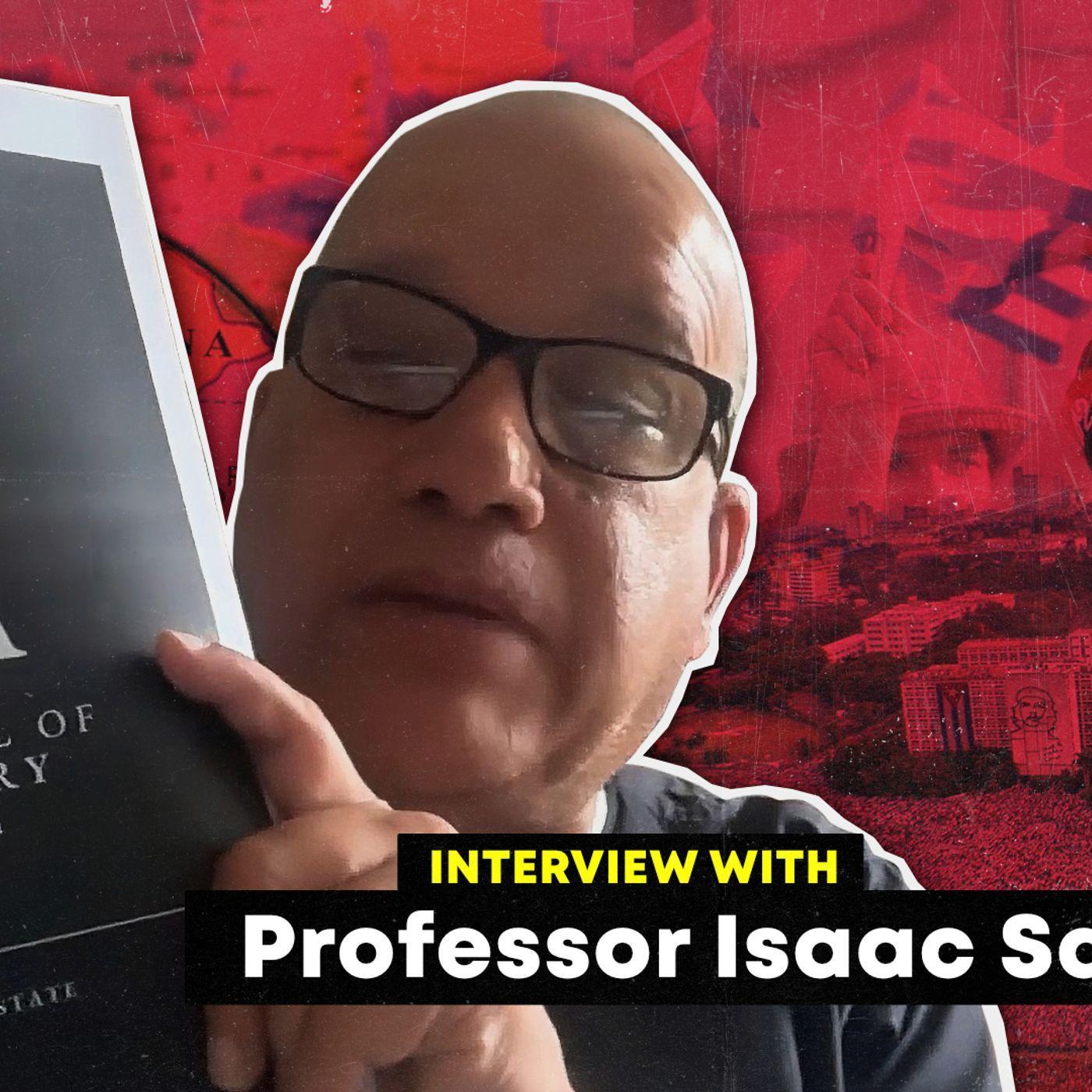
Interview with Professor Isaac Saney on the US State Department's anti-Cuba report and its implications.
In this episode of the Cuba Analysis Podcast, co-hosts Helen Yaffe and Nina Blodau speak with Professor Isaac Saney, a Black Studies and Cuba specialist, historian, professor at Dalhousie University, author of two books about Cuba, and spokesperson for the Canadian Network on Cuba, which is among many groups named in the new US State Department report ‘Cuba: The Capital of 21st Century Communism’.
Professor Saney breaks down the 100-page report which, despite lacking evidence, depicts Cuba as a global subversive force guiding the US and international left over decades. Saney explains that the objectives of this McCarthyite document are to justify the genocidal US blockade and lay the groundwork for future military aggression, as well as to revive Cold War-era repression of the left domestically and beyond.
We discuss the suffocating US sanctions imposed in 2026, their impact on Cuba’s economy and the population’s access to essential goods, and the muted international response. Professor Saney points out that 136 countries voted against the US blockade at the UN, despite US pressure, although Canada and several EU countries shamefully abstained.
We also talk about Cuba’s historic contribution to African liberation struggles, with a focus on Cuba’s support of the struggle for Angolan independence and the defeat of the invading South African army, which contributed to the end of Apartheid – the focus of Isaac’s book, Cuba, Africa, and Apartheid's End. This historic contribution is ignored in the State Department report, which Saney describes as a white supremacist.
Saney concludes by calling for more concrete international solidarity with Cuba, arguing that defending Cuban sovereignty, self-determination and socialist development, is also a defence of international law, opposition to normalisation of genocide and resistance to imperialism.
Youtube: https://www.youtube.com/watch?v=sQG8E8_UsDo
Engelsk
USA
UDSKRIFT 🔗
SØG BLANDT TIDLIGERE EPISODER
Søg efter gamle afsnit af Cuba Analysis.
Ansvarsfraskrivelse: Podcasten og kunstværket, der er indlejret på denne side, er fra Cuba Analysis, som tilhører dens ejer og ikke er tilknyttet eller godkendt af Listen Notes, Inc.
REDIG
Tak fordi du hjælper med at holde podcast-databasen opdateret.
