

OM DENNE EPISODE

Summary
In this conversation, Charles R. Landry discusses the concept of creative cities, emphasizing the importance of imagination, psychology, and human-centered design in urban planning. He explores how cities develop identities, the psychological complexities they face, and the impact of gentrification on urban evolution. Landry highlights the need for spaces that foster connection and the role of curiosity in understanding urban dynamics. He concludes with thoughts on the future of cities and the importance of simplifying complex ideas without losing their essence.
Takeaways
- The creative city concept focuses on imagination in urban planning.
- Psychology plays a crucial role in how we perceive cities.
- Cities can have inferiority complexes affecting their identity.
- Gentrification can evolve neighborhoods positively or negatively.
- Human-centered design is essential for livable cities.
- Connection and interaction are vital for urban life.
- Curiosity drives exploration and understanding of cities.
- Cities should facilitate encounters between diverse groups.
- Urban growth presents challenges that require innovative solutions.
- Simplifying complex urban issues can lead to clearer priorities.
Chapters
- 00:00 Introduction to Creative Cities
- 02:10 The Role of Psychology in Urban Planning
- 06:22 City Stereotypes and Psychological Complexes
- 10:33 The Dynamics of City Identity and Confidence
- 13:07 Gentrification and Urban Evolution
- 19:05 The Challenges of Urban Growth and Gentrification
- 23:01 The Importance of Human-Centered Design
- 30:01 The Future of Cities and Connection
- 35:06 Curating Spaces for Connection
- 41:20 The Magic Wand for Cities
- 55:07 Closing Thoughts on Urban Innovation
Engelsk
USA
UDSKRIFT 🔗
Are you the producer of this podcast?
Add a podcast transcript
Need Audio-to-Text?
Transcribe with Listen411 in Just 60 Seconds
SØG BLANDT TIDLIGERE EPISODER
Søg efter gamle afsnit af Challenger Cities.
ANDRE EPISODE I DENNE PODCAST
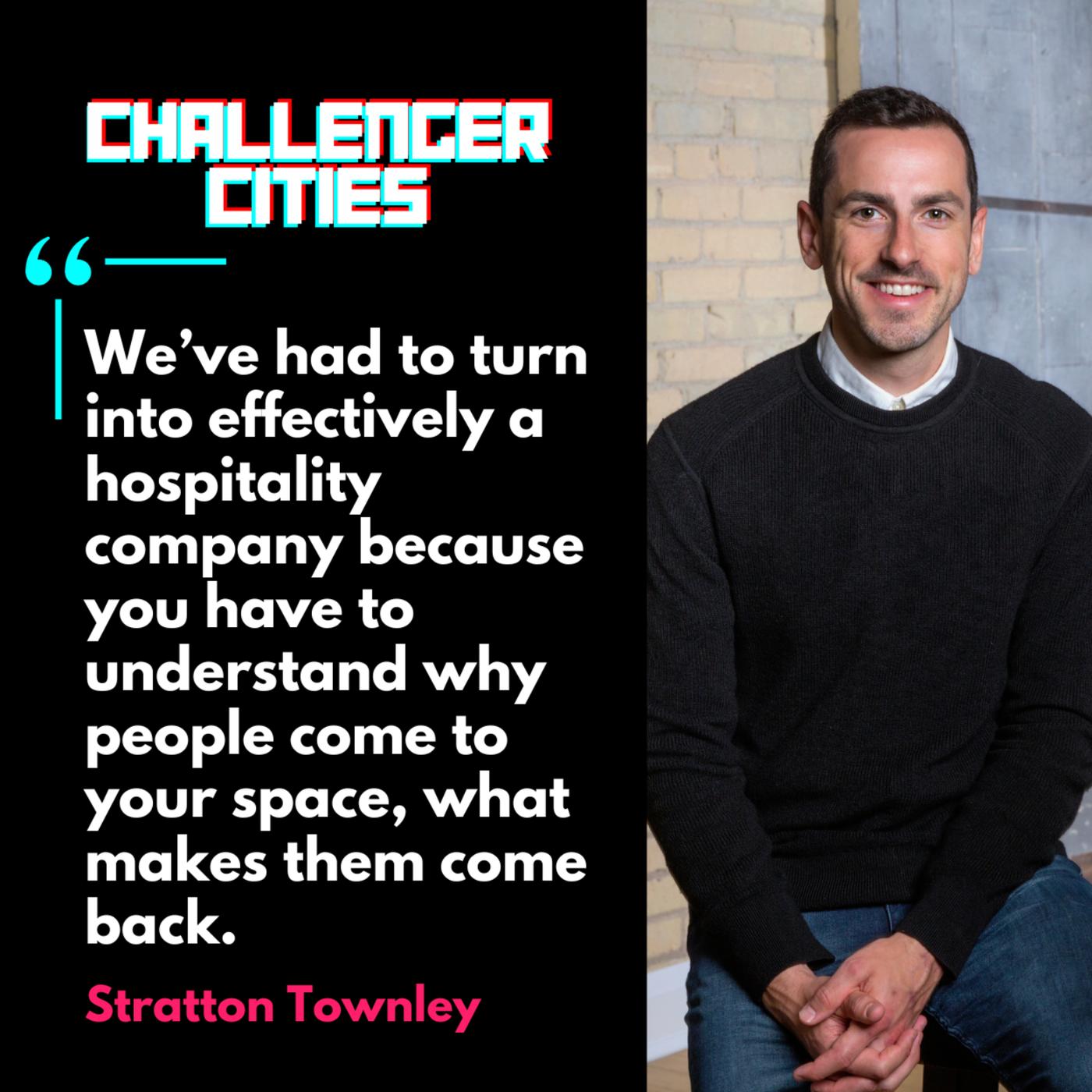
I met Stratton Townley at the Waterworks Food Hall in Toronto, a couple of hours before it opens, with ten or twelve people sat about with coffees and nobody hovering to work out whether they intended to spend anything.
Stratton is at Woodcliffe Landmark Properties, a small, private, family-run dev…
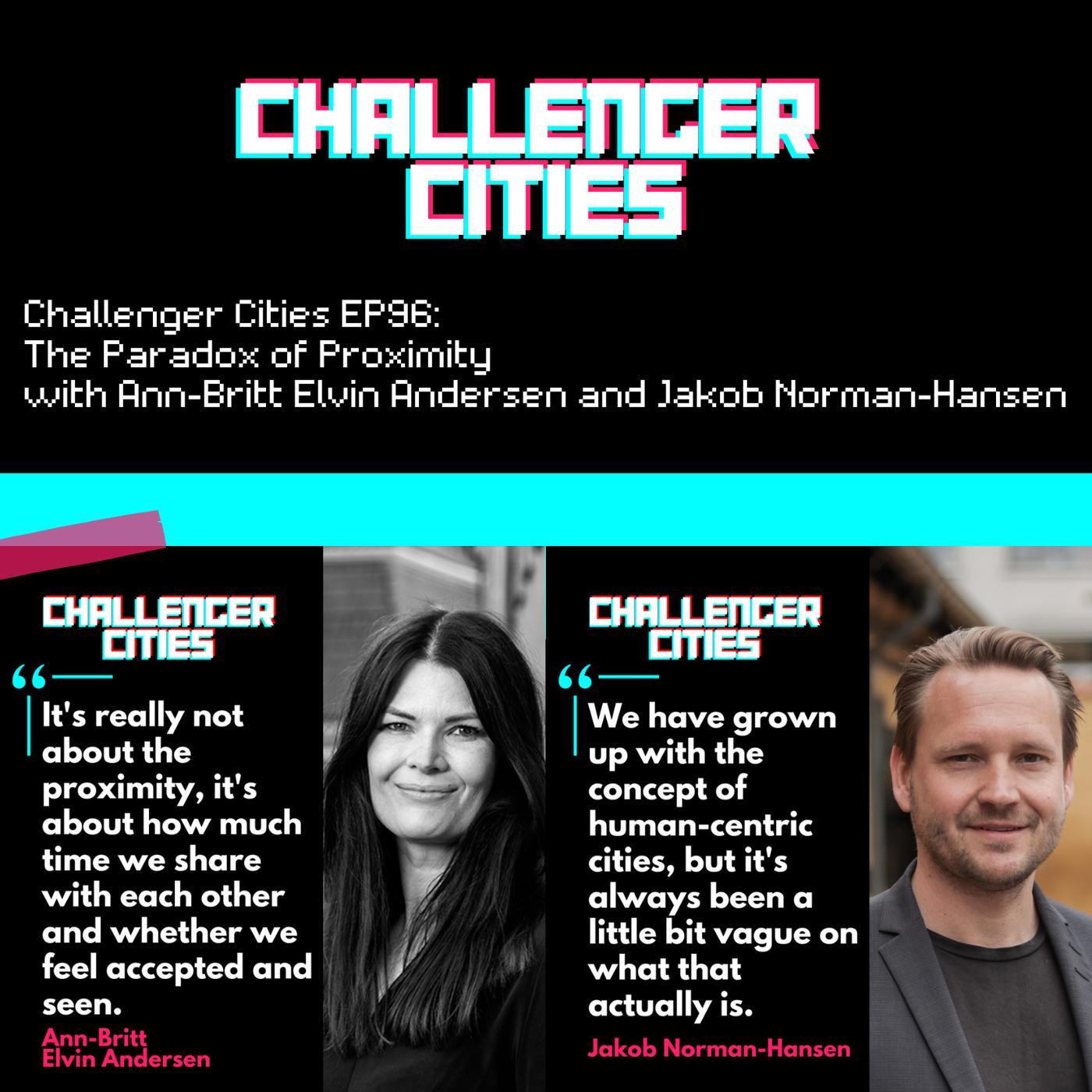
Copenhagen is Jan Gehl's city. So it's a bit of a jolt to hear someone who lives and works there admit that nobody has ever really been able to say what a "human-centric city" actually is.
That's Jakob Norman-Hansen. Along with Ann-Britt Elvin Andersen, he's spent about a decade at BLOXHUB explaini…
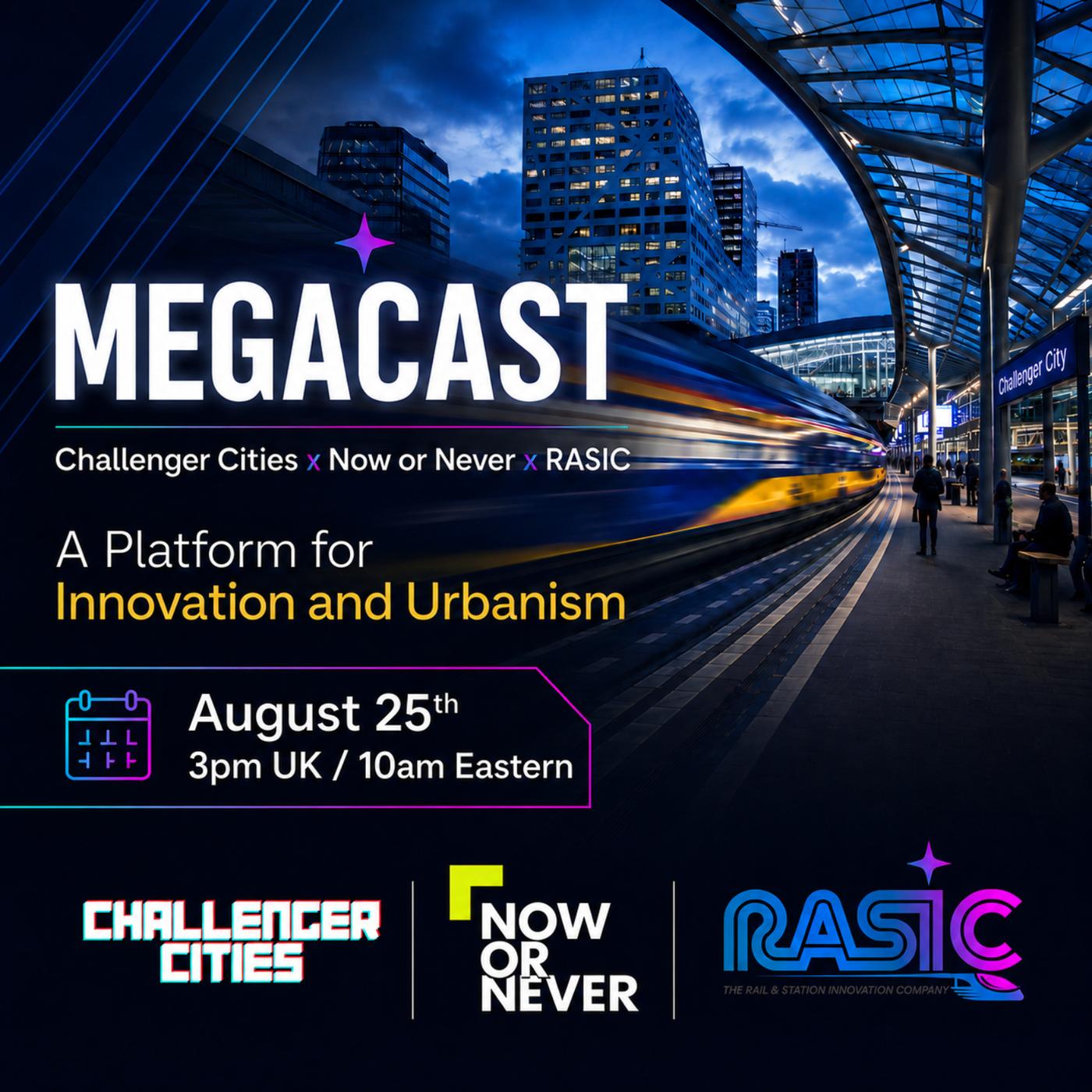
Most episodes of Challenger Cities are a conversation with a guest. This one isn't. Shortly after publishing our whitepaper The Welcome Mat, a few listeners joined a live session to stress test the thinking and bring their own — which is a rather Challenger way of doing it, and only really possible…
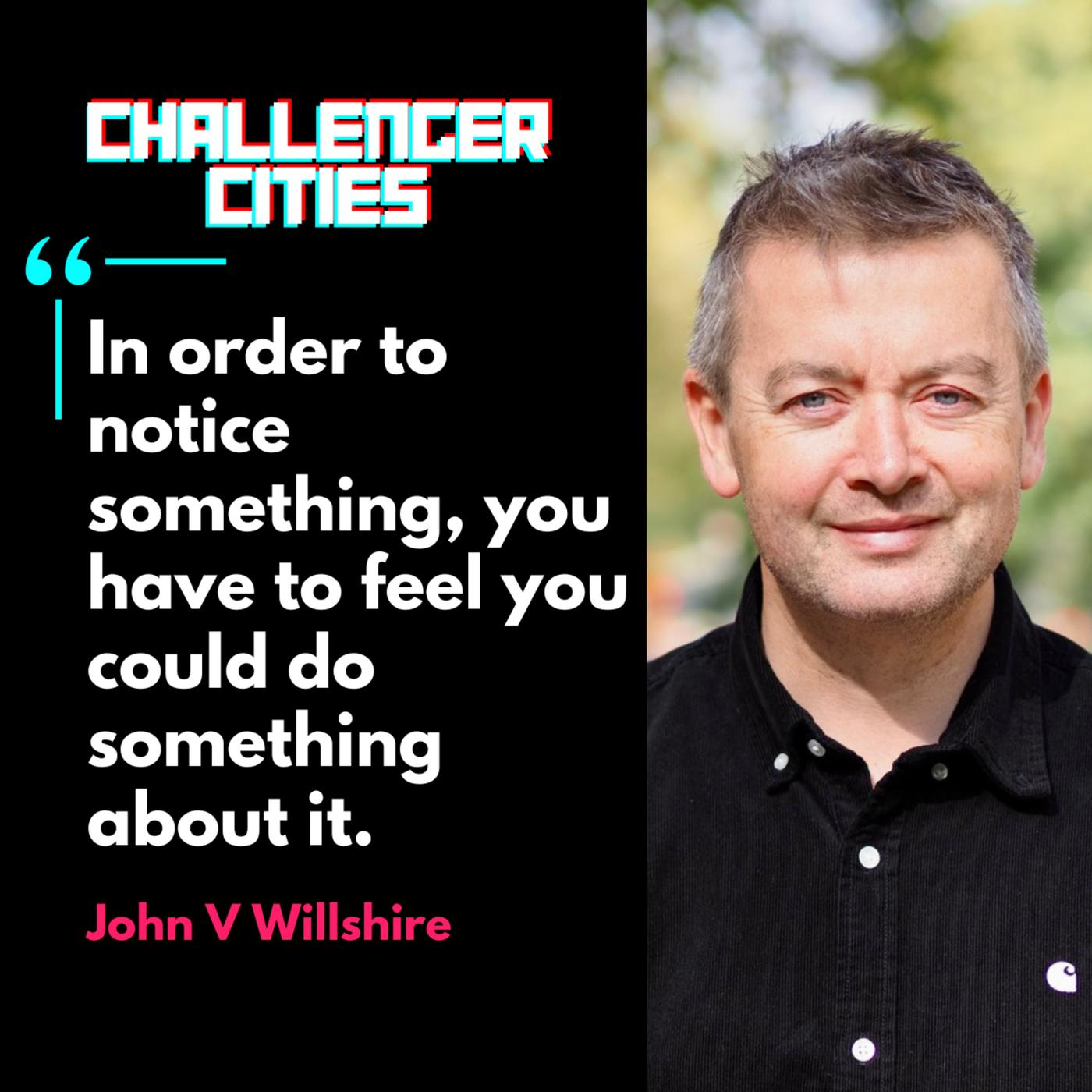
John V Willshire is the third corner of a loose triptych of British innovation-strategy types I can never quite give a single job title. He runs Smithery, carries a little yellow card called an obliquoscope for teaching himself to notice things, and has a gift for the metaphor that reframes everyth…
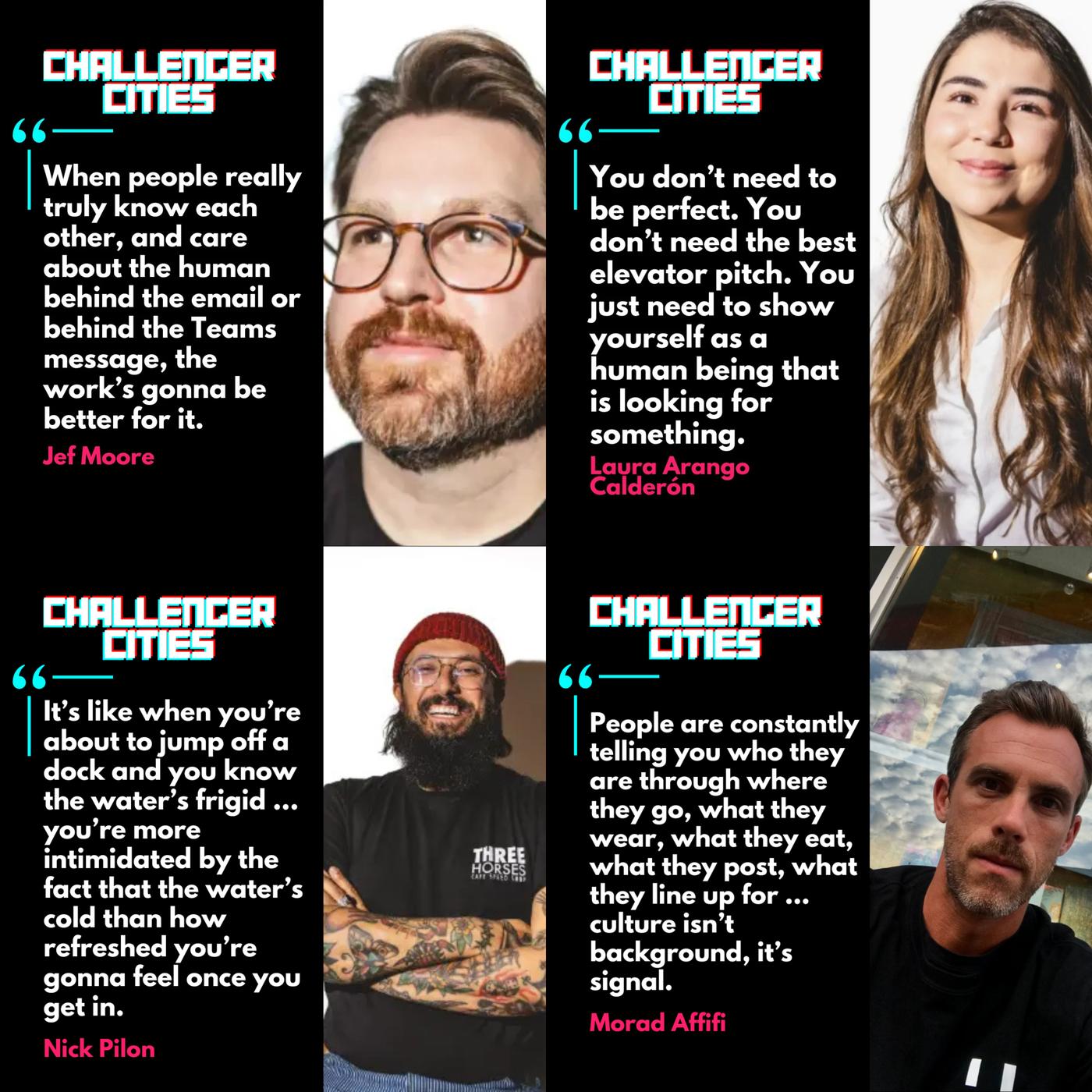
This is a bumper episode where we bring you 4 guests that share the privilege of working for an awesome agency called Mosaic. And while yes, Mosaic did pay me to speak at their team offsite at a Cineplex earlier in the year, that's not why we're making this podcast.
We're doing it because I loved …
Ansvarsfraskrivelse: Podcasten og kunstværket, der er indlejret på denne side, er fra Iain Montgomery, som tilhører dens ejer og ikke er tilknyttet eller godkendt af Listen Notes, Inc.
REDIG
Tak fordi du hjælper med at holde podcast-databasen opdateret.
