

WEBVTT
00:00:00.400 --> 00:00:06.879
I've always been interested in um telling stories that highlight issues that affect the vulnerable community.
00:00:07.040 --> 00:00:11.519
So when I went deep, there was one there was one story that stayed with me.
00:00:11.679 --> 00:00:23.839
This was a young boy who was living uh with HIV and he was dying before the safe spaces actually were brought on board.
00:00:24.000 --> 00:00:31.280
Uh he was deep down uh in the community, he was fearing to come and actually get this help because he feared judgment and stigma.
00:00:31.440 --> 00:00:59.439
But when he joined this this sex space, he started getting each like the ARVs, and um his viral uh elevated and he became one of the peer educators and he started bringing other positive children from the community to come and access these services from the sex space because it was really a safe one for them, and no one was able to judge them, or they were not facing any stigma.
00:00:59.520 --> 00:01:05.280
So, this was one of the stories that stood out for me because he became one of the champions in the community.
00:01:23.519 --> 00:01:40.799
This is the just conversation of Catfind where we try to understand basically the stories behind this tool and how I create opening around different issues, different health, and different development issues across the continent.
00:01:40.959 --> 00:01:42.799
And the whole idea is to learn, right?
00:01:42.959 --> 00:02:06.400
Of course, it's an opportunity to learn because you know you can read the report, you know, what's coming out from these other countries, but also believe it's important to also engage with the journalists who are on the ground, you know, who understand the local realities, who are engaging with communities and reporting these stories.
00:02:06.879 --> 00:02:16.719
At the end of the day, we believe that you know what we need to make our continent work is not just in a place, right?
00:02:16.879 --> 00:02:25.599
There are things we can learn from Nigeria, from Kenya, from Uganda, Rwanda, Cameroon, just name it, right?
00:02:25.680 --> 00:02:29.199
The whole idea is to be deliberate about learning.
00:02:29.280 --> 00:02:42.159
And of course, there are so many ways we can do this, but we also um believe that with the journalists who who are on the ground, that is one useful way to get insights.
00:02:42.319 --> 00:02:49.599
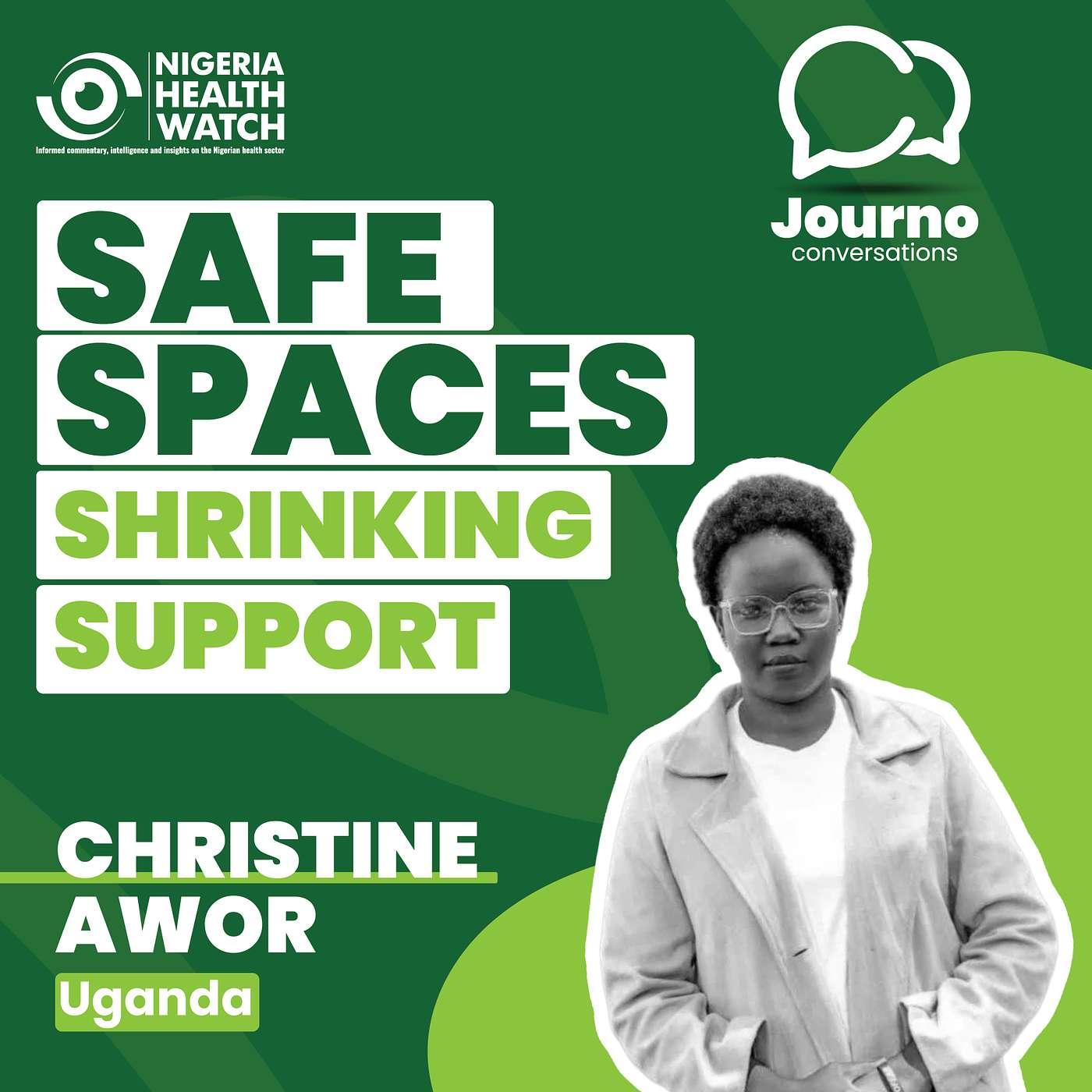
So that's journal conversation, and I am Chibi K Alawoso, and I'm glad to be hosting today's edition.
00:02:49.759 --> 00:02:54.159
So, yeah, welcome to this episode of the Journal Conversation, Christine.
00:02:54.400 --> 00:02:56.319
Thank you for having me here.
00:02:56.639 --> 00:02:58.639
And my name is Christina War.
00:02:58.879 --> 00:03:01.840
I'm an award-winning multimedia journalist.
00:03:02.159 --> 00:03:11.520
I serve uh as the national correspondent and the director of innovation and digital growth at the Northern Dunist Uganda.
00:03:12.000 --> 00:03:20.879
And at the same time, I serve as the Project Communications and Advocacy Officer at the Macero University School of Public Health.
00:03:21.199 --> 00:03:32.639
And my work focuses on strategic health communication, advocacy, and using evidence-based storytelling to promote better health outcomes.
00:03:32.800 --> 00:03:41.120
And I'm also uh particularly passionate about adolescent health and um this uh issues to do with the youth.
00:03:41.280 --> 00:03:44.560
Uh, mostly that is where my beat is always.
00:03:44.719 --> 00:03:54.159
I always report around health, around adolescent issues, around youth issues, and I'm really pleased to join this very vital and timely conversation.
00:03:54.400 --> 00:03:55.280
Thank you.
00:03:55.919 --> 00:03:57.039
Thank you so much, Chris.
00:03:57.360 --> 00:04:01.759
That's really um interesting and brilliant work that you're doing.
00:04:01.919 --> 00:04:06.800
I'm just curious, how long have you been doing it and how did you get there?
00:04:06.960 --> 00:04:09.520
And you know, combining all of those roles.
00:04:09.840 --> 00:04:15.680
Okay, uh, how I actually do it, um, I've been doing this for close to five years.
00:04:15.840 --> 00:04:26.480
Uh, ever since uh I graduated from the university, I just uh transitioned into uh this uh because I I had uh much experience uh from school.
00:04:26.720 --> 00:04:49.519
So um I really find it easy to juggle through because my role at Makero University mainly has to do with mostly it's an online role, so uh it doesn't um hinder me so much in doing my journalistic work uh where I am because our office is based in Kampala, so I don't have to travel to go there.
00:04:49.680 --> 00:04:57.920
Uh because uh the project I handle uh it's uh a malaria project that spans around uh nine African countries.
00:04:58.079 --> 00:05:03.839
Nigeria actually is one of them, one of um uh our consumer countries.
00:05:03.920 --> 00:05:10.319
So like it's not really hard for me because the advocacy part and communication is mostly online.
00:05:10.800 --> 00:05:17.920
I handle the most of the tasks online since I have to deal with a variety of uh of um stakeholders across the board.
00:05:18.160 --> 00:05:25.600
But when it comes to the journalistic work I'm on the ground, uh I think that is uh how I am able to really juggle this through.
00:05:25.680 --> 00:05:28.399
And it's not of any inconvenience to me.
00:05:28.480 --> 00:05:32.639
And um I've really been able to handle this quite well.
00:05:33.680 --> 00:05:36.720
Wow, that's um that's really interesting.
00:05:36.879 --> 00:05:41.600
How you're able to put all of this together and you know do it very well.
00:05:41.759 --> 00:05:48.560
I'm really glad to have you joining us from Uganda today for this edition of the Journal Conversation podcast.
00:05:48.720 --> 00:06:03.920
Um, as I explained earlier, it's an opportunity or a platform we created at Nigeria Health Watch as part of our again um advocacy and communication work to deliberately ask the question what is working right across the continent?
00:06:04.079 --> 00:06:05.839
What can we learn from others?
00:06:06.079 --> 00:06:07.040
What are they doing?
00:06:07.120 --> 00:06:34.480
And of course, there are so many ways to do this, but coming from that media communications background, we figured it would be useful to you know have these conversations with journalists who are on the ground, who are reporting these issues, because that way we are we are not just going to learn from the stories, which of course you can get from reading the stories being published, but by doing this, we're able to hear and learn from stories behind the story, right?
00:06:34.639 --> 00:06:35.680
What's inspiring it?
00:06:35.839 --> 00:06:44.000
What are the lessons, you know, and other ongoing conversations too that maybe not even were not captured in the story.
00:06:44.160 --> 00:06:55.199
So really excited to have you today as we you know talk about young people, and um interesting that also aligns with the work that you do, you know, things that you're passionate about.
00:06:55.519 --> 00:07:30.959
But specifically, I'm sure you've done a couple of stories, but we picked out this one because it's an area that is also of interest to us, young people, issues around their health, their sexually productive health, but importantly, how you know funding is affecting safe spaces because it's always a conversation around there's always a conversation around how can young people assess care without judgment, you know, care that is inclusive, that speaks to their needs, and all of this requires funding.
00:07:31.199 --> 00:07:34.240
So just curious, what are you sensing?
00:07:34.399 --> 00:07:42.720
What is the feel like in in Uganda or maybe the the community or part of Uganda where you are based currently?
00:07:45.920 --> 00:07:58.720
Okay, uh thank you so much um uh for that, and I really uh appreciate uh your effort in also trying to bring us on board to share this experience.
00:07:59.519 --> 00:08:20.240
Um actually when we talk about these safe spaces, I think we all understand that um uh these are dedicated uh spaces or environments where youth can access uh health services that are really confidential, that are respectful, and that are free from from judgment.
00:08:20.800 --> 00:08:22.560
That are free from judgment.
00:08:22.800 --> 00:08:37.600
And um what this means, uh what this funding gap really means is that many young people really risk losing this access to services, to service these services that they depend on for their health and well-being.
00:08:37.679 --> 00:09:22.000
And uh, for many adolescents, um youth-friendly spaces are where they really used to receive confidential counseling, HIV testing, family planning, and a lot of a lot of a lot of um those confidential help were like because in before these spaces came, they used to shy away and they used to stay back in the community because first of all, you're going, you are younger, you're going to say, like, I need a I need I need a condom or I need or I need appeal, and like maybe you meet your mother, you meet your godmother, they're like they fear judgment, and most of them used to stay back in the community, and this really is part a lot of let me say uh issues to do with uh adolescent uh pregnancy, teenage pregnancy.
00:09:22.159 --> 00:09:36.000
But when the youth-friendly corners came, this really decreased because the reason why I picked or took a district is one of the districts with the highest number of um teenage pregnancies, and a lot of those issues, it's remote, quite remote.
00:09:36.320 --> 00:09:44.399
So when uh funding like this uh really decreases, uh, these services often become really less available.
00:09:44.559 --> 00:09:51.840
And I saw when I went to the ground, most of these health centers were really reintegrating back.
00:09:52.320 --> 00:09:55.120
They were doing what they call integration of services.
00:09:55.360 --> 00:10:11.039
Integration means this youth were supposed to go back to the initial culture of going to access services together with other, like the mothers, their elders, and it would still take them back to the stigma.
00:10:11.360 --> 00:10:11.919
Interesting.
00:10:12.000 --> 00:10:33.679
Um, I'm I mean, glad that you went from the background, sort of giving a layout of what it looks like in the community uh where you did the story to you know exploring the other bigger pictures like how funding, the current funding cuts that you know that has been experienced in the development space is affecting all of that.
00:10:34.000 --> 00:10:44.399
Um, but yeah, just taking it back a bit because you know, when we do this, we try to also focus on a story that uh the journalists that we are having the conversation with has done around the issue.
00:10:44.879 --> 00:11:03.840
And you know, we are focusing on the one you did um for your platform, the youth and adolescent corners and how they transform lives in O2K, but also exploring how donor exit is sparking fears for the future in terms of sustainability and sort of how you set it up, right?
00:11:04.159 --> 00:11:33.919
The youth and all the adolescent, you know, all the adolescent-friendly corners, you know, operating across 15 facilities, and you know, again, like you mentioned, how the the different services that they offer HIV testing, um, STI, tested that sexually transmitted infections, so cancelling, family planning, attendant care for young mothers in so such setting that is designed to make them feel safe, right?
00:11:34.080 --> 00:11:44.480
And of course, they put in a lot of things, games, peer educators who don't dress you know very formal, so that they are also approachable, right?
00:11:44.639 --> 00:11:56.720
But then all of these things are now threatened by um and mostly all of course, um, we all know most of these are funded through through grants and and a lot coming from USAID.
00:11:57.360 --> 00:12:03.919
And um so I think you mentioned the specific program in in dial report, the joint clinical research center.
00:12:04.559 --> 00:12:17.120
But again, after the whole funding phase that happened in you know Q1 of 2025, and how all of those typings that the peer educators get, you know, the whole issues it it caused.
00:12:17.360 --> 00:12:40.240
So that's sort of the the setting that you that you put through and how it's now because sometimes we we focus on the numbers, but I think you went deeper into the human faces behind all of those so young people's stories and how it anchors you know the impact of all of these funding um withdrawals.
00:12:40.320 --> 00:12:50.799
So I'm just curious to know of all the people that you spoke to in the AutoCare community, is there any of the story that um any of the stories that really stayed with you?
00:12:53.919 --> 00:12:56.399
Uh yeah, uh sure.
00:12:56.559 --> 00:13:14.799
Um when actually I went um really beyond uh uh the reporting, because first of all, uh what really motivated me, I've always been interested in um telling stories that highlight issues that affect the vulnerable community.
00:13:14.960 --> 00:13:19.600
So when I I went deep, there was one there was one story that stayed with me.
00:13:19.919 --> 00:13:32.559
Um when I approached the counselor of a joint clinical research um center, uh she was able to actually link me up to one of uh my sources.
00:13:32.720 --> 00:13:56.639
Um I I don't want to mention the name, but uh this was a young boy who was living uh with HIV and um he was dying because of the stigma, because of the fear to go and actually get um this ARVs from the facility before the um the safe spaces actually were brought on board.
00:13:56.799 --> 00:14:04.159
Uh he was deep down uh in the community, he was fearing to come and actually get this help because he feared judgment and stigma.
00:14:04.320 --> 00:14:06.240
What will my elders say?
00:14:06.559 --> 00:14:11.120
But remember, this was a boy who was actually just born with this condition.
00:14:11.440 --> 00:14:17.039
Uh it is he was just actually handicapped in this, it was not his making, he was born with it.
00:14:17.200 --> 00:14:24.720
So, like when I went to have a conversation with it, when these safe spaces came, he was able actually to go to the art clinic.
00:14:24.879 --> 00:14:29.759
Art clinic is where they always get this HIV counseling, where they actually get to bring them on board.
00:14:29.840 --> 00:14:34.240
It is okay, you can take your medication, you can come back on such and such a day.
00:14:34.399 --> 00:14:35.600
Because actually he was dying.
00:14:35.679 --> 00:14:40.639
So when they picked him and brought him back, he joined this safe space, he became very active.
00:14:40.799 --> 00:15:10.879
His viral load was so low, but when he joined this safe space, he started getting each like the ARVs, and um his viral load uh elevated, and he became one of the peer educators, and he started bringing other positive children from the community to come and access these services from the safe space because it was really a safe one for them, and no one was able to judge them, or they were not facing any stigma.
00:15:10.960 --> 00:15:26.080
So, this was one of the stories that stood out with me because he became one of the champions in the community by bringing other children who were actually going through whatever he was going through before this space was up to come and access these services through the safe space.
00:15:26.159 --> 00:15:36.879
So I don't know where this actually leaves these children now that the funding gap is actually shrinking back to the initial space that they had.
00:15:37.120 --> 00:15:42.240
Yeah, I think that was the story that stood out for me when I was doing this.
00:15:43.039 --> 00:15:59.120
Oh wow, that's that's quite profound, you know, from being a beneficiary to now being able to become a peer educator and pull others together um to to benefit from the youth friendly centers as well.
00:15:59.360 --> 00:16:11.679
So but I'm also curious, you know, what do you think from you know your learning um you know while doing that report and also from working in that space and seeing other youth friendly centers?
00:16:11.840 --> 00:16:16.879
Um I know of course you can't report on all of them, so you picked on that particular one.
00:16:17.279 --> 00:16:20.000
Um but what do you think makes them work?
00:16:20.559 --> 00:16:21.039
Right?
00:16:21.759 --> 00:16:29.039
Um the services they get or something about the environment, you know, how how how those spaces are created.
00:16:30.240 --> 00:16:31.759
What are your thoughts?
00:16:32.320 --> 00:16:40.639
Okay, I think what makes it actually work, because first of all, uh there is an enabling environment.
00:16:40.879 --> 00:16:51.360
Uh even you, let me say, if you are to go to some space, let me say if you go to to let me say also a country or something, the way they welcome you, the first impression.
00:16:51.600 --> 00:17:03.519
So when actually I reach the health center, they have very many activities that keep this youth um that keep them actually coming, that keep them wanting.
00:17:03.679 --> 00:17:12.240
First of all, is because of the experience up here educators, uh, health educators that are on ground, they are actually youth like them.
00:17:12.400 --> 00:17:19.279
They didn't put, let me say, elders or let me say people who are not youth, the health educators are actually youth like them.
00:17:19.599 --> 00:17:34.079
And also um there are very many, there are very many healthy corners at the facility where they actually go, they interact, they play games, they have ludos, they have actually a football pitch where actually they go and play and they interact together.
00:17:34.240 --> 00:17:39.039
I think what makes it work is the fact that the there is an enabling environment.
00:17:39.359 --> 00:17:48.319
There's also a welcoming environment at the health center where they can they have that specific room where they go and sit, they play games, they interact, they share stories.
00:17:48.480 --> 00:18:04.079
They also have uh fireplaces where they come uh, let me say in the evenings and they tell these stories and they get to interact and they get to to get familiar with their peer educators, with their fellow, uh, with their fellow youth um at the center.
00:18:04.240 --> 00:18:20.160
So I think this is what actually makes it really work there because the environment alone is welcoming and and there are small curriculum activities that they do that attract them more actually there because they even have clubs at the center.
00:18:21.039 --> 00:18:21.680
Interesting.
00:18:21.839 --> 00:18:29.440
I mean, going back to the your response earlier about the you know the story you said was one of those that um stuck with you.
00:18:29.680 --> 00:18:31.519
I was actually going to ask this follow-up.
00:18:31.680 --> 00:18:37.359
So who do you think is more this is just a um a what I say fun question?
00:18:37.519 --> 00:18:41.680
You know, who do you think is more influential, right?
00:18:42.000 --> 00:18:43.440
Or plays a bigger role?
00:18:43.519 --> 00:18:46.400
Is it the peer educators or the clinical staff?
00:18:46.559 --> 00:18:50.319
I believe, of course, um the clinicals they have to receive the care.
00:18:50.400 --> 00:18:56.319
But I'm just curious who you think you know young people are connect with more.
00:18:56.400 --> 00:19:01.839
Is it the peer educators or the clinical staff who actually delivered the the care?
00:19:03.279 --> 00:19:19.440
Actually, um there's a delicate balance when it comes to that because um the health educator uh is um actually one of the people who they interact with most.
00:19:19.680 --> 00:19:41.440
So how they get it, they actually make sure that they get uh a person who is very friendly to them, who actually goes more to the community because they do community outreaches, so they get uh a person who can easily interact with the community, like getting to meet them halfway, a youth like them, um, someone who understands uh their situation.
00:19:41.599 --> 00:20:05.039
So like uh they are more familiar with the the health educator because actually, even me just interacting with him, I felt very interested about um the entire stuff because like he was very friendly, he makes you understand, like there's a way he doesn't uh stigmatize, he brings you to board and makes you understand these issues quite well.
00:20:05.200 --> 00:20:21.839
So I think the fact that he's very knowledgeable in whatever things that he does, um it makes it easy because, first of all, the health educator who has been employed there uh was also one of the beneficiaries of the um the friendly corners.
00:20:21.920 --> 00:20:27.680
So when when he got employed there, they just made him to actually continue with this role.
00:20:27.839 --> 00:20:37.599
So it gives him that rapport with um this youth actually much better when it compares to let me say their peer educators.
00:20:38.079 --> 00:20:39.039
Awesome, thanks.
00:20:39.119 --> 00:20:42.400
Um how are those um these youth-friendly spaces?
00:20:42.559 --> 00:20:43.759
How are they deployed?
00:20:44.000 --> 00:20:50.640
Is it in communities, in schools, or clinics, or a mix of all of this?
00:20:50.960 --> 00:20:55.440
Uh actually, uh there is um it's actually at the health center.
00:20:55.759 --> 00:21:01.759
It's at the health center, but they do um community outreaches also.
00:21:02.240 --> 00:21:08.400
But it is actually it's it's it's it's actually a building at the health center that is dedicated to the youth.
00:21:08.640 --> 00:21:21.119
They just get uh one building where actually uh it's only the counselor and the health educator that can access and give them the services, AREs, uh family planning uh services.
00:21:21.279 --> 00:21:30.960
So it's actually at the health center, mostly it's based at the health center because this is where the counselor for JC RSC, that is Joint Clinical Research Center, is also based.
00:21:32.079 --> 00:21:32.720
Yeah.
00:21:33.359 --> 00:21:34.240
Interesting.
00:21:34.480 --> 00:21:46.880
So now that's you know, speaking of the funding now, because of course all of this requires um funding, someone has to pay for it, even if those young people are assessing the care for free, someone is paying for it.
00:21:46.960 --> 00:21:51.359
And in this case, mostly through grants um, you know, that we mentioned earlier.
00:21:51.599 --> 00:21:55.359
So, what is the what are local communities doing?
00:21:55.440 --> 00:22:03.200
How are they able to sustain this now that there is all of This funding cuts or everything is now on standstill.
00:22:03.359 --> 00:22:12.799
I know you know the title of your your story is around these pieces are important, but then with the funding code, there is fear that they will be discontinued.
00:22:12.960 --> 00:22:14.079
What is the pulse?
00:22:14.160 --> 00:22:23.519
What are you sensing around you know Adea efforts to take it up and take ownership and invest by the government and local communities?
00:22:25.039 --> 00:22:25.359
Okay.
00:22:26.079 --> 00:23:03.440
Actually, when I had a conversation with uh most of the community, the community leaders, their fear is that first of all, these corners have been helping their their children to because, first of all, this is a remote community that most of the parents don't have the time, they don't have the time to put their children down and tell them get you are you are now an adolescent, you have to do this, do that, you have to understand this, you need to understand that your body trans transitions from this and that, like they don't have that that time, so these corners were actually helping a lot.
00:23:03.680 --> 00:23:26.000
So, what the fear is is that with the with the funding gap, with the funding uh actually phrase, they feel um this this actually uh these corners will actually vanish, and once these corners have vanished, they will go back to the drawing board, they will get back to zero because they don't have any plans.
00:23:26.079 --> 00:23:47.519
They don't because first of all, US um US funding was really doing a lot in these corners because they were funding everything, paying, paying like for these corners, uh sending, let me say, those family planning services and paying the counselors, so the community do not really have the capacity to build to actually continue from here.
00:23:47.680 --> 00:24:12.079
What they're doing is they're actually appealing to the government, they're pilling to the government to actually come and fill this gap, but um, looking at the um the conversations that are actually going around, looks like uh government still does not anyway have any plans to pick up these corners because initially government was trying to doubt uh will these corners actually work?
00:24:12.240 --> 00:24:13.119
Will they work out?
00:24:13.200 --> 00:24:19.359
How will they be able to actually cut down um some of this?
00:24:19.440 --> 00:24:25.119
Uh let me say rate of HIV and a lot of other issues that come with this.
00:24:25.279 --> 00:24:30.160
So, when government was doubting, some of these donors came in to fill that gap for the government.
00:24:30.240 --> 00:24:35.680
They came in and they were like, look, this is how we do it, and this is how it's going to work, you don't have to doubt it.
00:24:35.839 --> 00:24:38.000
And like they were really doing it well.
00:24:38.160 --> 00:24:40.640
So it takes us back to the drawing board.
00:24:40.799 --> 00:24:46.880
I don't know if the government is going to pick this up since um initially they were really doubting it.
00:24:46.960 --> 00:24:48.240
That will it really work?
00:24:48.319 --> 00:24:51.200
How does like how does it actually work out?
00:24:51.440 --> 00:24:56.799
But when these donors came in, they were trying to show the government that look, this is how these things work.
00:24:56.960 --> 00:24:59.680
If you invest in this, this is how it's going to work.
00:24:59.920 --> 00:25:12.559
But now the community is calling upon government to come in and take over, but they have not yet actually given their stand about how they plan to really come in and continue with this.
00:25:12.640 --> 00:25:14.640
Because, first of all, the counselors have left.
00:25:14.720 --> 00:25:23.839
The one iPhone was actually having a week to go, they are actually leaving the facility and they have that fear that they cannot continue because who is going to pay their salary?
00:25:24.319 --> 00:25:29.680
Yeah, so everything is just in a dilemma, and yeah.
00:25:31.359 --> 00:25:31.680
Wow.
00:25:31.839 --> 00:25:46.960
I mean, speaking of government call and um the call for government to take more ownership, I uh understand Uganda, I can't remember when this happened, but Uganda's prime minister talked about mobilizing additional funds for HIV programming.
00:25:47.279 --> 00:25:50.240
So is any of that happening yet?
00:25:50.400 --> 00:26:03.599
Are you hearing anything about actual releases, not just um, you know, the call the call for or announcing that there will be there will be uh more funds released.
00:26:03.759 --> 00:26:04.640
Is that happening?
00:26:04.720 --> 00:26:17.119
And because again, if if we know if it's happening, then we can even talk about whether whether some of those will reach young people or services specific to young people.
00:26:19.440 --> 00:26:36.160
Okay, um, first of all, uh there has been um a reshuffle recently, and the health minister has been reshuffled, and uh every and this is a new financial year, um everything is just uh trying to okay.
00:26:36.319 --> 00:26:41.039
Government is also having a lot when it comes to issues to do with health.
00:26:41.200 --> 00:26:50.960
Sometimes, uh, yes, it is easier said than done, but when it comes to implementation, uh it's it will not reach the last mile.
00:26:51.279 --> 00:27:01.119
Because, first of all, when I talk of the last mile, like that community, deep, deep, deep in the like me say the local government, by the time it reaches there, when will it actually reach?
00:27:01.359 --> 00:27:05.440
Will they also they might just let me say focus on on HIV?
00:27:05.519 --> 00:27:20.559
Yes, but when it comes to youth-friendly corners, it has a lot of things to do with let me say family planning, when let me say um mental health issues, but this is where government is just looking at let me say the rate of HIV.
00:27:20.960 --> 00:27:23.519
But what about other aspects?
00:27:23.759 --> 00:27:30.079
Because actually, there's still nothing happening on the ground anyway, there is still no plan, everything is still on paper.
00:27:30.240 --> 00:27:39.680
When you go to the ground, actually, it's just getting to the only thing that the health uh center interges are doing is the integration of services.
00:27:39.839 --> 00:27:45.839
They have to integrate the services back to let everyone get services at once, one serving point.
00:27:46.000 --> 00:27:58.400
Nothing like a friendly corner, nothing like a special corner, because they're trying to like look at how we can actually m minimize this and make sure that the the little health budget that we have covers this.
00:27:58.559 --> 00:28:03.440
Not they don't have a a program, uh I mean like a plan for the youth friendly corners.
00:28:03.680 --> 00:28:05.599
Some of these things they okay.
00:28:05.680 --> 00:28:14.160
I'm sorry to say that uh they are easier said, but when it comes to implementation, uh you cannot easily see it.
00:28:14.319 --> 00:28:19.039
It's still the way it is at the health centers because I keep interacting with them.
00:28:19.279 --> 00:28:20.960
Actually, most of them have left.
00:28:21.119 --> 00:28:22.880
The counsellors have left.
00:28:24.480 --> 00:28:25.440
Interesting.
00:28:25.759 --> 00:28:30.960
So, I mean, as we wrap up, this has been quite um illuminating conversation.
00:28:31.039 --> 00:28:43.200
Um, and like she recalled, the whole idea of this is to learn, hear what you know, what colleagues are seeing and how they are reporting and a bit of the story behind the story that they are reporting.
00:28:43.440 --> 00:28:57.519
Um so if journalists, uh you know, other journalists in the continent who are covering um or reporting on you know different donor-funded health interventions, what do you think they should be looking out for?
00:28:57.680 --> 00:29:14.160
Um especially if they are covering if they're trying to keep an eye on the impact of the funding cuts, what should they be looking out for in terms of programs that are quietly um disappearing, like you also you saw in your in your in your reports?
00:29:16.559 --> 00:29:33.599
Okay, I I think uh actually looking at um the the budget, the budget that has been uh read uh recently, you find that um government of Uganda allocated 5.23 trillion to the health sector.
00:29:34.240 --> 00:29:42.240
But when you look at uh the the the the last financial year 2025-2026, it was 5.87 trillion.
00:29:42.480 --> 00:29:45.039
So that is um already a reduction.
00:29:45.359 --> 00:29:54.799
But let me say when we when I'm okay, let me say the issues that journalists can actually focus more on trying to is trying to push, trying to push for this.
00:29:54.960 --> 00:29:57.519
What how is okay with the funding gap?
00:29:57.759 --> 00:29:59.839
What is the government planning to do?
00:30:00.079 --> 00:30:01.119
What's next now?
00:30:01.279 --> 00:30:01.920
What is next?
00:30:02.000 --> 00:30:03.039
What is government trying to do?
00:30:03.119 --> 00:30:05.039
Are they trying to take over these corners?
00:30:05.279 --> 00:30:16.799
What are some of the um uh uh the initiatives or strategies that they're trying to lay down to pick up from this, apart from just consolidate or getting back to to what they say?
00:30:17.119 --> 00:30:22.640
Um uh how integrating, integrating all the services together.
00:30:22.799 --> 00:30:24.319
What's beyond the integration?
00:30:24.480 --> 00:30:26.559
What plans do they have for the youth?
00:30:26.640 --> 00:30:28.400
Do they plan to continue with this youth-friendly?
00:30:28.720 --> 00:30:33.200
I think these are some of the questions that journalists ought actually to ask the government.
00:30:33.440 --> 00:30:34.319
What is next?
00:30:34.480 --> 00:30:41.440
How do they plan to come in and step in uh in the gaps that um the donors have left?
00:30:41.759 --> 00:30:49.279
Yeah, I think that is uh some of the one of the the the the areas that journalists can interest themselves in.
00:30:50.720 --> 00:30:52.240
Right, thank you for that.
00:30:52.400 --> 00:31:00.640
And on the other side, so if a policymaker is listening to this, right, what is one thing that you hope um they can take away?
00:31:00.799 --> 00:31:20.640
A policymaker or even a regular listener, what is one thing you can they can take away from you know the reporting that you did, the experiences that you saw on the ground and how things are things are changing since since the past um one year or so.
00:31:23.680 --> 00:31:38.240
Okay, one thing um that a policymaker can take away from this is that funding may change, but the health needs of uh young people do not.
00:31:38.799 --> 00:31:54.960
We must really see a way of building a sustainable system that ensures that every adolescent continues to access this care, this information, and the support that they need, behind every budget is a young person's life.
00:31:55.279 --> 00:32:06.720
So protecting these youth-friendly corners or services means really protecting their health, protecting their education, and also um hope for the next generation.
00:32:06.960 --> 00:32:20.559
To any other regular listener, if there is one thing that I would like to take away from this, is that uh investing in the youth or in these youth spaces is not an expense.
00:32:20.720 --> 00:32:24.319
It's really uh just an investment in the country.
00:32:24.559 --> 00:32:34.960
So every young person deserves this access to the confidential, respectful, and quality healthcare regardless of the change in the donor funding.
00:32:35.119 --> 00:32:40.799
We don't need to look at just like like the donors have gone, so we are vulnerable.
00:32:40.880 --> 00:32:52.400
No, we need to pick up from here and see that we continue to invest in these youth-friendly corners by offering support in one way or the other.
00:32:52.640 --> 00:32:54.880
Yeah, I think that's what I have to say.
00:32:55.039 --> 00:32:56.880
It's my takeaway from this.
00:32:57.599 --> 00:32:59.599
Wow, thank you so much, Christine.
00:32:59.680 --> 00:33:00.799
That is quite profound.
00:33:00.960 --> 00:33:20.960
I think one um one thing you said that uh you know that really hits me the fact that even though funding change will change, the health needs, those will never change, they will still be there, and those budgets, they're not just figures, you know, they impact real lives on the ground.
00:33:21.119 --> 00:33:24.960
Thank you so much for those um strong calls.
00:33:25.119 --> 00:33:33.680
I'm hoping as we you know put this out, those will be strong messages that you know listeners and people will take away.
00:33:33.920 --> 00:33:38.640
Not just you know, listeners in Nigeria but from Uganda, different parts of the continent.
00:33:38.799 --> 00:33:43.359
Like I said, this the whole idea for this is cross-learning.
00:33:43.440 --> 00:33:45.039
How do we learn from each other?
00:33:45.200 --> 00:33:56.000
How do we you know give insights to each other to continue addressing our problems, our needs as a country, as a people, as a continent.
00:33:56.240 --> 00:34:08.639
Really appreciate your time and um sharing your thoughts on the work you're doing, the story you wrote about on this episode of Um Journal Conversations podcast by Nigeria Health Watch.
00:34:08.880 --> 00:34:10.000
Really appreciate it.
00:34:10.239 --> 00:34:11.039
Thank you so much.
00:34:11.199 --> 00:34:31.920
I also appreciate your initiatives, I appreciate the strategies you've come up with uh to give us the platform to share these experiences, go beyond the headlines, go beyond statistics, and get to really share our experiences and get a solution on what works, what does not work, and the way forward.
00:34:32.400 --> 00:34:35.440
Thank you so much, and I really appreciate your time.
00:34:35.599 --> 00:34:38.159
I appreciate you giving me this platform.
00:34:38.320 --> 00:34:43.440
Yeah, I've really had I've learned, I've relearned, I've unlearned a lot from this.
00:34:43.599 --> 00:34:44.239
Thank you.
00:34:44.480 --> 00:34:45.840
Thank you so much, Christine.
00:34:45.920 --> 00:34:46.159
Thank you.
00:34:46.320 --> 00:34:48.800
Really appreciate your time too and your time awards.
00:34:49.039 --> 00:34:54.239
Um, this has been made for by Nigeria outwatch journal conversations podcasteries.
00:34:54.639 --> 00:34:57.280
You can get us anywhere you get your podcast.
00:34:57.599 --> 00:35:24.239
And please do reach out if you have any thoughts, any contribution, any solution really that would be um that you want us to talk about or something that is walking around you, or even not walking because you believe if people don't know about the issues to talk about them, we don't shy away from talking about them, but the composition now becomes if the you know if the problems are out there and now start asking what's walking.
00:35:24.480 --> 00:35:26.079
Do we know enough of what's walking?
00:35:26.239 --> 00:35:35.840
So all that kind of so you can reach out to us to any help or journey.com podcast at Nigeria.
00:35:38.239 --> 00:35:43.199
I it's been a pleasure of hosting this episode and my neighbor that you care about.
00:35:44.159 --> 00:35:44.719
Thank you.
