
ABOUT THIS PODCAST 🔗
The way work gets done is changing.
The AI Transformation Lab Podcast explores the shift from generative AI to agentic AI — where intelligent systems move beyond responding to prompts and begin executing real work.
Hosted by Chris Bradley, Chief Marketing Officer at Veritiv, this show is built for leaders, builders, and operators who want more than better AI responses — they want measurable outcomes and competitive leverage.
Each episode breaks down the inflection point happening in AI right now:
The move from prompt-response tools to outcome-driven systems
What agentic AI means for productivity, strategy, and scale
How to direct intelligent systems responsibly and effectively
The mindset shift required to operate at the next level
This isn’t about hype or surface-level trends.
It’s about capability.
If you want to understand where AI is actually heading — and how to lead in that future — start here.
Hosts:
Update frequency:
biweekly
Average audio length:
23 minutes
English
United States
20 episodes
since Feb. 19, 2026
episodic
LATEST EPISODE 🔗

This episode starts with a spacecraft lost to a unit of measure. Two competent teams, two different standards, and a seam between them that nobody owned.
A few episodes ago, I promised an episode on governing a fleet of agents. Today our Lab runs about a dozen of them in production, with coding age…
SEARCH PAST EPISODES
Search past episodes of AI Transformation Lab.
PREVIOUS EPISODES 🔗

When GM's Fremont plant reopened as a joint venture with Toyota in 1984, it had largely the same workforce that had made it one of GM's worst plants. Within a few years its quality ranked among GM's best. The people hadn't changed. The system around them had — starting with a cord any worker could …

This episode starts in a supermarket. In 1956, Taiichi Ohno saw shelves that were never piled high — restocked only as customers took what they needed. The customer pulled. The store replaced. That became just-in-time, the second pillar of the Toyota Production System.
A few episodes ago, we buil…
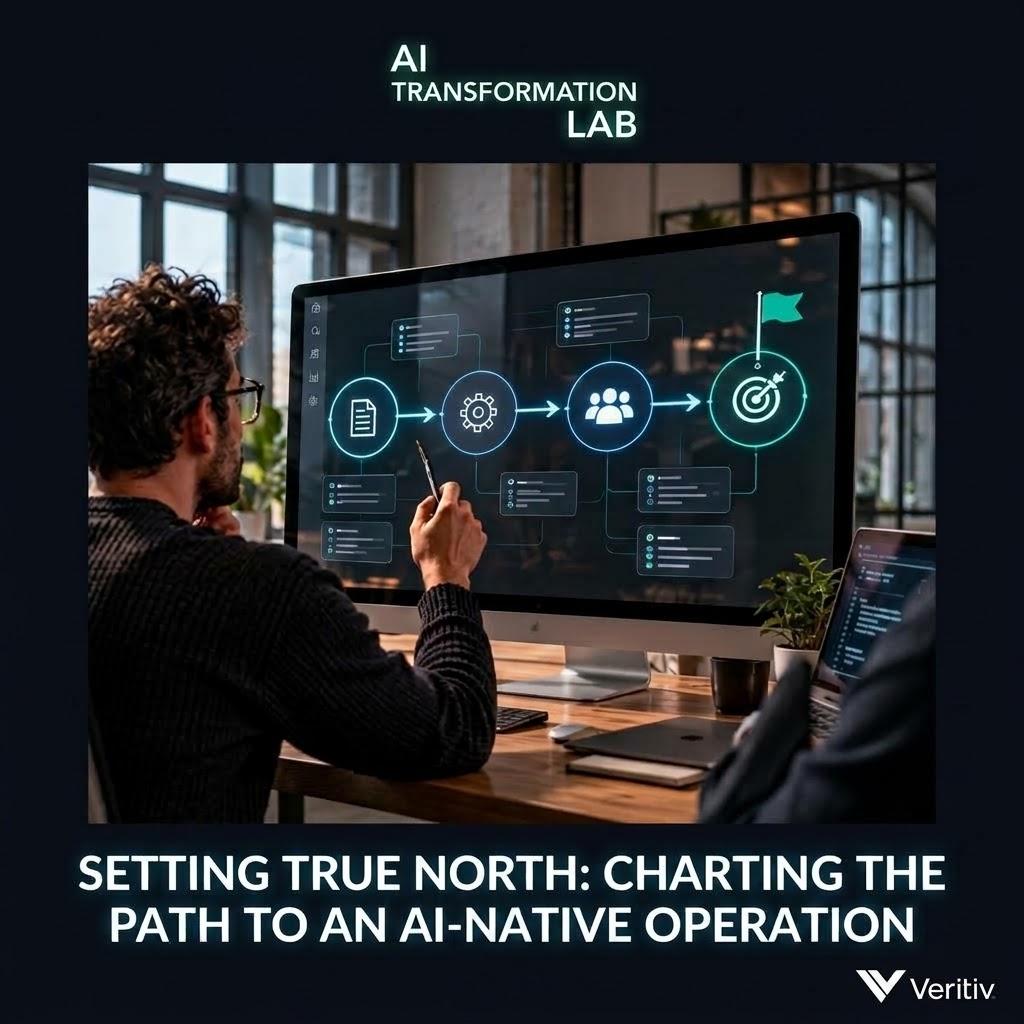
Most companies are experimenting with agents. Few can say where it's going. Chris Bradley argues that the missing piece isn't better technology — it's direction, and a method for drawing the road from the work itself.
The episode opens on hoshin kanri, the Japanese practice documented by Bridgeston…
Taiichi Ohno posted standard work sheets at every workstation, in the open, written by the operators themselves. He wasn't interested in whether people followed them. He was interested in how often they changed — because a standard that sat untouched meant the improvement engine had stopped. Freder…

Sakichi Toyoda's breakthrough was not a loom that could handle a broken thread. It was a loom that noticed the thread had broken and stopped itself — which meant one operator could run dozens of machines instead of standing guard over one. That principle became jidoka, and Chris Bradley argues it i…
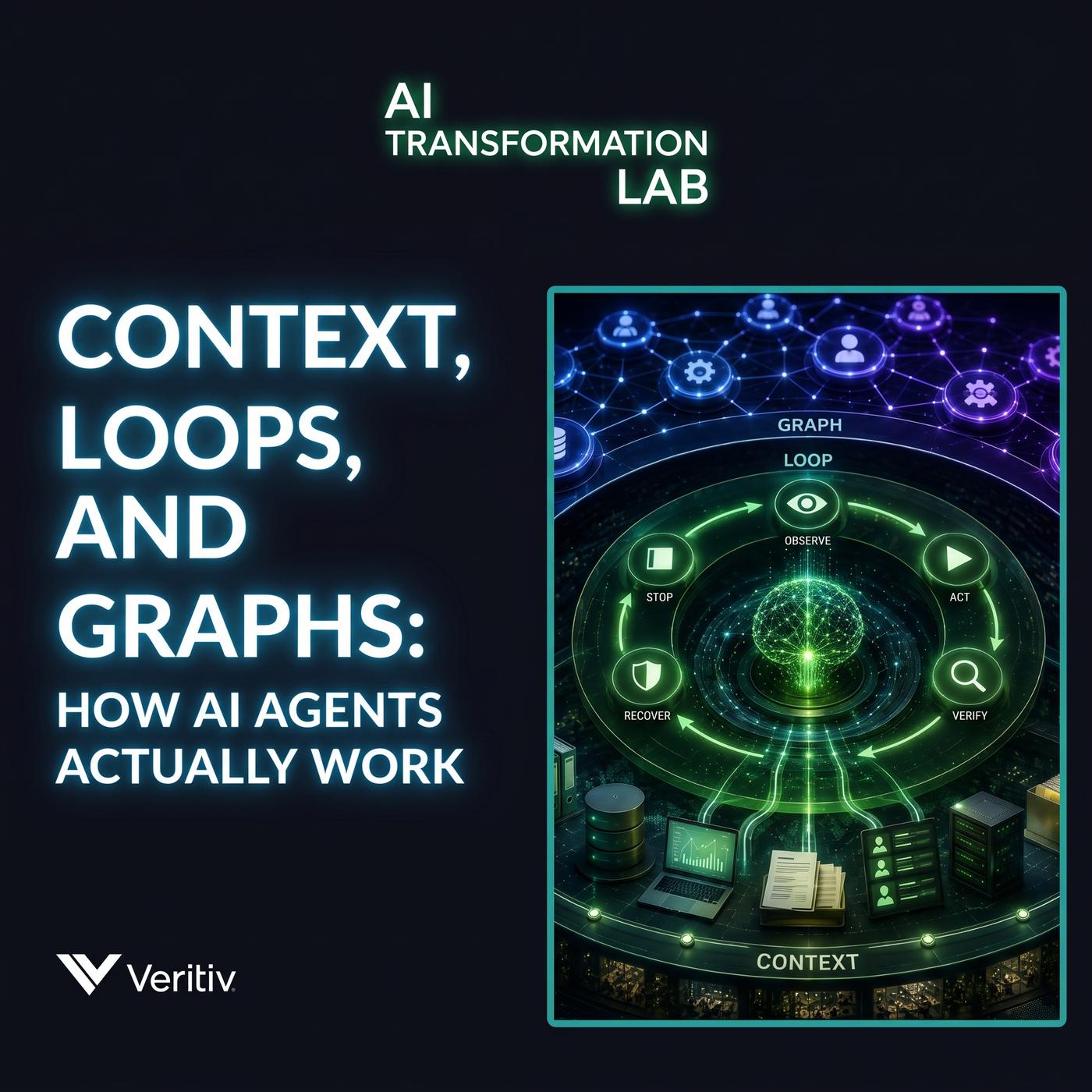
The vocabulary of agentic AI has turned over five times in about eighteen months — prompt engineering, context engineering, harness engineering, loop engineering, and now graph engineering. For a business leader, the reasonable reaction is to tune it out.
Chris Bradley argues the churn is hiding so…

Most AI programs cannot prove they paid off. That is the trap this episode is built to help you avoid — a portfolio of pilots that all demo well, and nothing you can defend when the budget review comes.
Chris Bradley takes on the number that reset the enterprise AI conversation — a widely-cited MIT…
The cheapest AI model is often the most expensive. That is the trap this episode is built to help you avoid: sending routine work to a frontier model, or cheap work to a model that fails and hands the mess to a person, and paying for both mistakes on every run.
In this episode, Chris Bradley makes …

For thirty years, build versus buy had a comfortable default: you bought. Agentic coding broke it. Building got cheap — a first version that took a quarter now takes days — while every vendor started baking AI into the products you already pay for. Both sides of the decision shifted at once, and th…
Disclaimer: The podcast and artwork embedded on this page are from Veritiv, which is the property of its owner and not affiliated with or endorsed by Listen Notes, Inc.
PODCAST SEARCH ENGINE
You can use our website to search 3,836,427 podcasts and 197,655,119 episodes by people, places, or topics.

If I have seen further than others, it is by listening to podcasts and standing upon the shoulders of
giants.
‐ Isaac "Llamacorn" Newton
SEARCH PAST EPISODES
Search past episodes of AI Transformation Lab.
CLAIM THIS PODCAST
Why to claim podcasts?
If you are a podcaster, the best way to manage your podcasts on Listen Notes is by claiming your Listen Notes
podcast pages.
It is a great, free way to engage the podcast community and increase the visibility of your podcasts.
After claiming your Listen Notes podcast pages, you will be able to:
✓
Manually refresh the RSS feed to sync up
✓
Get a verified badge (
✓
) alongside with your podcast name on Listen Notes
✓
Post classified ads for sponsorship,
guests, co-hosts,
cross-promotion...
✓
Respond to listener comments on Listen Notes
✓
Use speech-to-text techniques to transcribe your show and
edit transcripts
✓
Improve the presence of your podcasts, e.g., self-service
podcaster interview...
✓
If you share your Listen Notes page and at-mention @ListenNotes
on X (formerly Twitter),
our official X (formerly Twitter) account will retweet to promote
your show to our followers.
Coming soon:
◯ Self-service promotion on Listen Notes
◯ Track your podcast stats on Listen
Notes, e.g., listens, page
views...
◯ Manage episodes
EDIT
Thank you for helping to keep the podcast database up to date.
