ABOUT THIS PODCAST 🔗
Welcome to "Making a Great America," a podcast dedicated to exploring the meticulous thought and effort that went into the design of the Constitution of the United States.
This series is intended as a non-partisan historical review, aimed at enlightening listeners of all political persuasions about the foundational principles of our government. Our goal is to share the rich history behind the Constitution and the reasons why understanding this history is crucial for the survival of our republic.
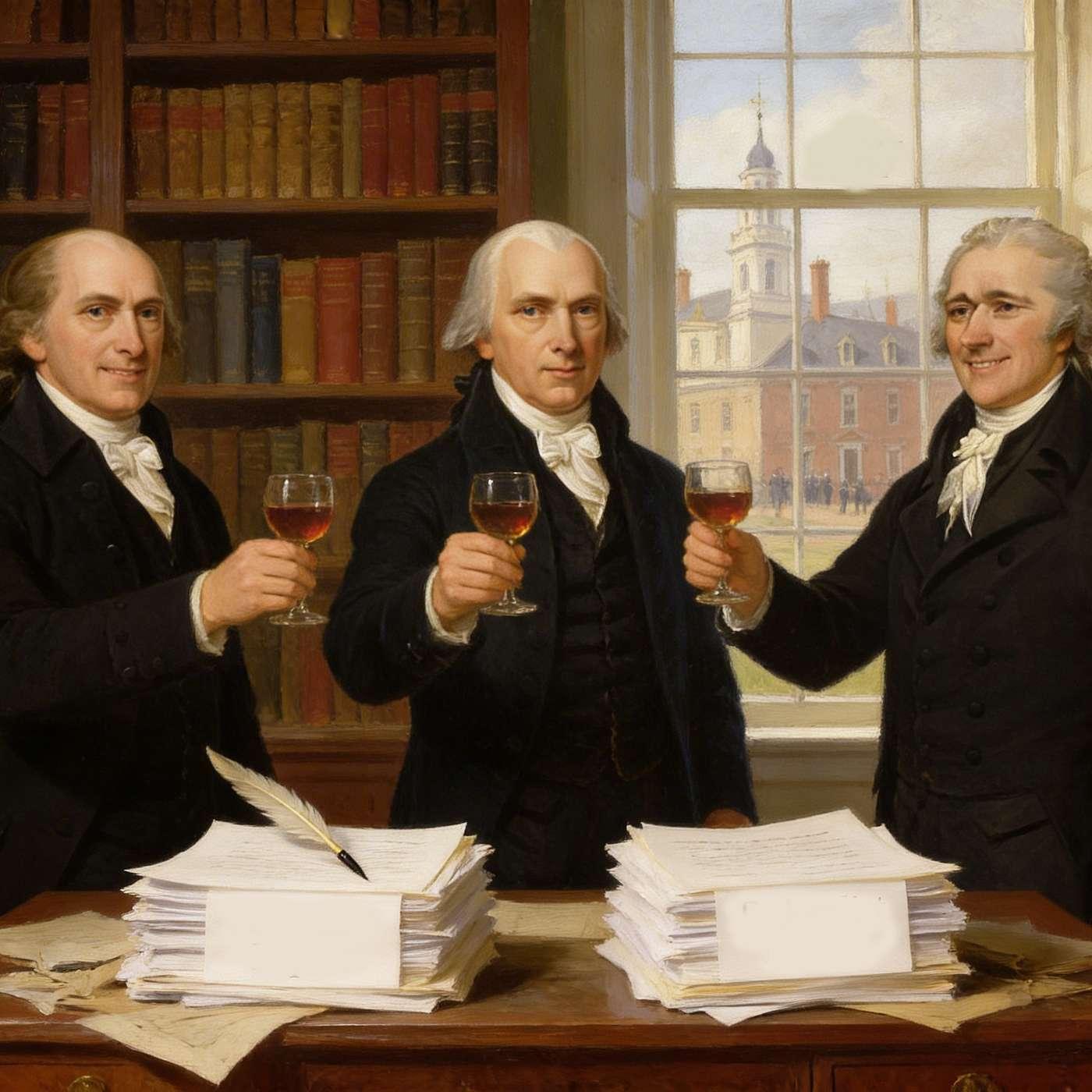
During the fall of 1787 and the spring of 1788, three remarkable men—John Jay, Alexander Hamilton, and James Madison—worked tirelessly to write a series of essays known as the Federalist Papers. These essays were crafted to convince the citizens of the newly independent states to ratify the Constitution, establishing a constitutional republic that balanced power and safeguarded liberties. Their efforts were instrumental in shaping the framework of the government we know today.
In "Making a Great America," we do not argue for or against any political position.
Instead, we aim to report history accurately, informatively, and with easy listening.
By delving into the writings and ideas of the Founding Fathers, we provide listeners with a deeper understanding of the Constitution's origins and the profound care taken to ensure a balanced and fair government. Our episodes are designed to be engaging and accessible, making complex historical concepts easy to grasp.
We believe that knowledge of our government and its creation is essential to its continued survival. As such, we encourage you to subscribe to our podcast and share it widely with friends, family, and colleagues. Together, let's foster a greater appreciation for the history that continues to shape our nation.
Benjamin Franklin explained to a curious woman after the continental congress finished about what kind of government was created.
His response: "A Republic . . . . IF you can keep it!"
IN THIS PODCAST 🔗
OLDEST EPISODE 🔗
SEARCH PAST EPISODES
PREVIOUS EPISODES 🔗