

ABOUT THIS PODCAST 🔗
Machine learning and artificial intelligence are dramatically changing the way businesses operate and people live. The TWIML AI Podcast brings the top minds and ideas from the world of ML and AI to a broad and influential community of ML/AI researchers, data scientists, engineers and tech-savvy business and IT leaders. Hosted by Sam Charrington, a sought after industry analyst, speaker, commentator and thought leader. Technologies covered include machine learning, artificial intelligence, deep learning, natural language processing, neural networks, analytics, computer science, data science and more.
Hosts:
Update frequency:
every 12 days
Average audio length:
46 minutes
Guest interviews
Video podcast
English
United States
798 episodes
since May 21, 2016
episodic
AUDIENCE OF THIS PODCAST 🔗
~49.30% of listeners are from United States.
🇺🇸
US
49.30%
🇵🇰
PK
17.08%
🇮🇳
IN
9.96%
🇵🇭
PH
3.77%
🇬🇧
GB
2.78%
🇨🇦
CA
1.65%
🇧🇷
BR
1.63%
🇩🇪
DE
1.32%
🇳🇱
NL
1.30%
🇵🇱
PL
1.02%
🇸🇬
SG
0.91%
🇩🇰
DK
0.80%
🇷🇴
RO
0.56%
🇸🇪
SE
0.45%
🇫🇷
FR
0.39%
🇺🇦
UA
0.37%
🇳🇿
NZ
0.37%
🇧🇪
BE
0.34%
🇹🇼
TW
0.32%
🇦🇺
AU
0.32%
🇭🇰
HK
0.30%
🇫🇮
FI
0.30%
🇺🇾
UY
0.30%
🇪🇬
EG
0.30%
🇧🇭
BH
0.30%
🇨🇱
CL
0.28%
🇨🇭
CH
0.26%
🇪🇸
ES
0.26%
🇳🇴
NO
0.23%
🇧🇩
BD
0.19%
🇽🇰
XK
0.19%
🇦🇹
AT
0.17%
🇯🇵
JP
0.15%
🇨🇿
CZ
0.13%
🇮🇪
IE
0.13%
🇮🇹
IT
0.13%
🇹🇿
TZ
0.10%
🇵🇹
PT
0.10%
🇻🇳
VN
0.10%
Others
1.44%
* Data source: directly measured on Listen Notes. real-time
LATEST EPISODE 🔗

In this episode, Zoe Weil, co-founder and CEO of Sequen, joins us to discuss how ranking systems can use live behavioral signals to optimize for purchases rather than clicks or search relevance alone. Zoe explains why approaches developed at data-rich social platforms don’t necessarily translate to…
SEARCH PAST EPISODES
Search past episodes of The TWIML AI Podcast (formerly This Week in Machine Learning & Artificial Intelligence).
PREVIOUS EPISODES 🔗

In this episode, Diogo Almeida, co-founder and CEO of TypeSafe, joins us to discuss Jev, TypeSafe’s recently released model for bringing fast, reliable intelligence directly into software. We explore the idea of “machine-native intelligence” and why Diogo believes models optimized for generating te…
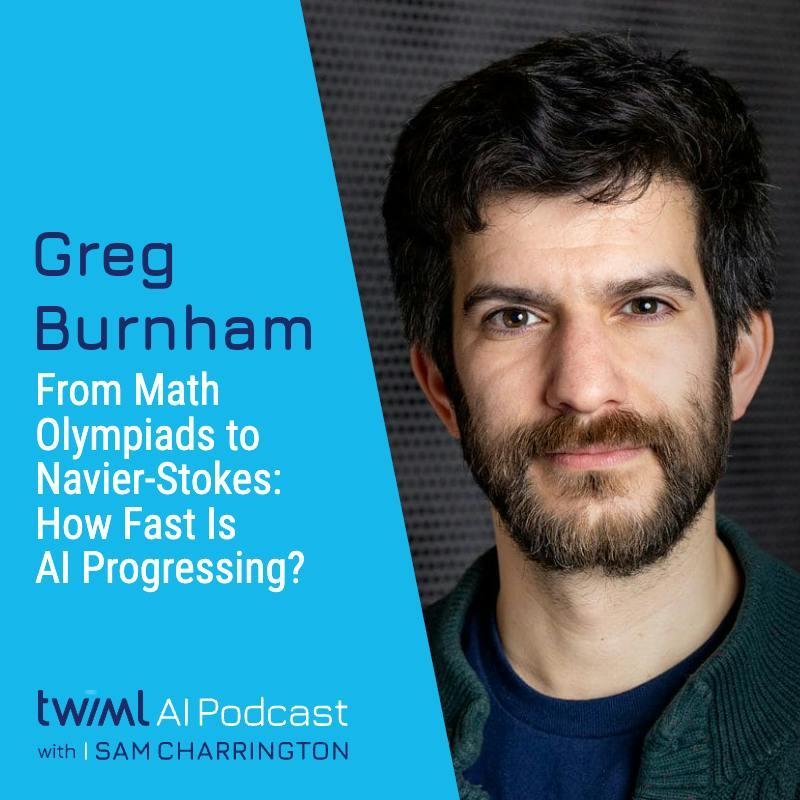
AI systems have gone from struggling with grade-school math to helping solve research problems that have resisted mathematicians for decades, including Navier-Stokes.
In this episode, Greg Burnham, who leads AI capabilities research at Epoch AI, joins us to examine what that progress says about wh…

Voice AI has gotten remarkably good, but natural conversation remains a high bar. Small delays, awkward interruptions, or the wrong tone can quickly break the illusion—and adding vision and visual presence only raises the stakes.
In this episode, Alex Smola, co-founder and CEO of Boson AI, explore…

As reasoning models consume more tokens and AI systems become more expensive to run, understanding what those tokens actually buy is becoming increasingly important. In this episode, Stanford professor and Big Spin co-founder Chris Potts joins us to discuss AI tokenomics and his research into “toke…

In this episode, Justin Johnson, co-founder of World Labs, joins us to discuss world models and the emerging field of spatial AI. We explore why many researchers see capabilities beyond language as an important frontier for AI, and what it means to build models that can understand, generate, and si…

The conventional wisdom in AI is that the next breakthrough will come from more compute, more data, and larger models. But what if the next leap comes from somewhere else?
In this episode, Max Welling—co-founder and CTO of CuspAI and professor at the University of Amsterdam—argues that physics may…

Text-to-image models have become remarkably good at producing realistic images. But realism isn’t the same as correctness. Ask for several distinct people, a specific composition, or a high-resolution image generated locally, and today’s models still struggle in surprising ways.
In this episode, F…
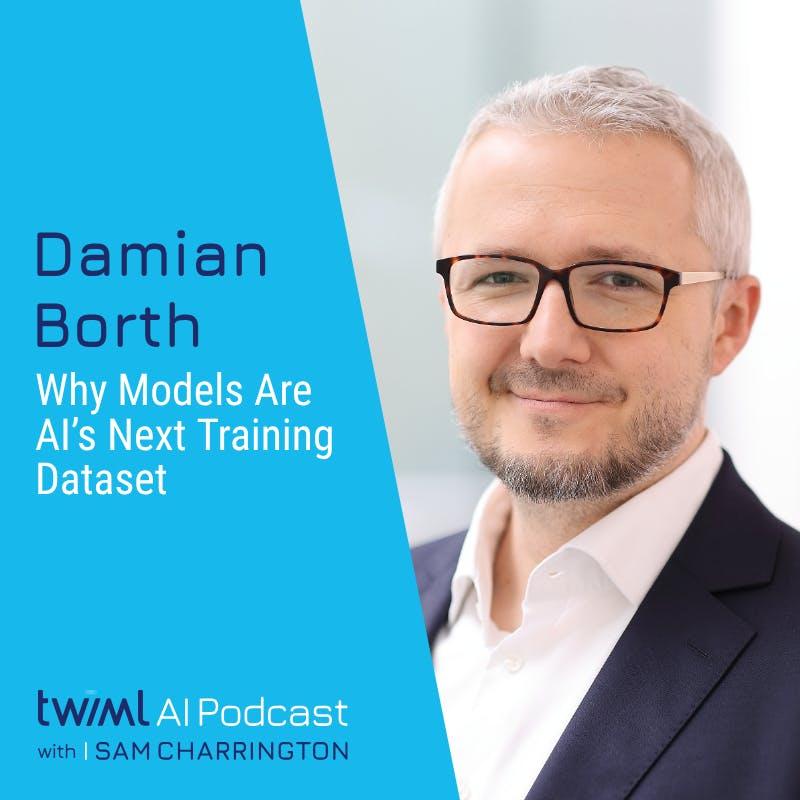
For more than a decade, AI has advanced by training ever-larger models on ever-larger datasets. But as high-quality training data becomes harder to find and pretraining grows increasingly expensive, researchers are looking for new ways to keep foundation models improving.
In this episode, Damian B…

In this episode, Alex Wiltschko, founder and CEO of Osmo, joins the show to discuss his goal of giving computers a sense of smell and what it takes to build olfactory intelligence.
We explore the science behind smell, from the hundreds of olfactory receptors in the human nose to the challenge of m…
Disclaimer: The podcast and artwork embedded on this page are from Sam Charrington, which is the property of its owner and not affiliated with or endorsed by Listen Notes, Inc.
PODCAST SEARCH ENGINE
You can use our website to search 3,825,434 podcasts and 195,918,212 episodes by people, places, or topics.

An investment in knowledge pays the best interest, so I listen to podcasts.
‐ Benjamin "Llamacorn" Franklin
SEARCH PAST EPISODES
Search past episodes of The TWIML AI Podcast (formerly This Week in Machine Learning & Artificial Intelligence).
CLAIM THIS PODCAST
Why to claim podcasts?
If you are a podcaster, the best way to manage your podcasts on Listen Notes is by claiming your Listen Notes
podcast pages.
It is a great, free way to engage the podcast community and increase the visibility of your podcasts.
After claiming your Listen Notes podcast pages, you will be able to:
✓
Manually refresh the RSS feed to sync up
✓
Get a verified badge (
✓
) alongside with your podcast name on Listen Notes
✓
Post classified ads for sponsorship,
guests, co-hosts,
cross-promotion...
✓
Respond to listener comments on Listen Notes
✓
Use speech-to-text techniques to transcribe your show and
edit transcripts
✓
Improve the presence of your podcasts, e.g., self-service
podcaster interview...
✓
If you share your Listen Notes page and at-mention @ListenNotes
on X (formerly Twitter),
our official X (formerly Twitter) account will retweet to promote
your show to our followers.
Coming soon:
◯ Self-service promotion on Listen Notes
◯ Track your podcast stats on Listen
Notes, e.g., listens, page
views...
◯ Manage episodes
EDIT
Thank you for helping to keep the podcast database up to date.
