

ABOUT THIS PODCAST 🔗
Teaching Python is a podcast about Python programming, computer science education, AI literacy, software development, cloud computing, cybersecurity, data, and how people learn technical skills. Hosted by Kelly Schuster-Paredes, Sean Tibor, and Julian Sequeira, the show is for educators, developers, technology leaders, and lifelong learners who want to better understand how Python connects to the wider world of computing. Episodes explore not only how people learn to code, but also how they build technical judgment, understand systems, evaluate AI-generated code, work with data, think about security, and move from beginner programming into real-world software development. About the Hosts Kelly Schuster-Paredes is a teacher who codes whose work has expanded from classroom computer science into AI strategy, curriculum design, professional learning, educational technology, and responsible technology adoption. Her background in Python and computer science education shapes her focus on learning, AI literacy, computational thinking, and what people need to understand in an AI-shaped world. Sean Tibor is Vice President of Infrastructure and Cloud at Pfizer and a former computer science teacher. He brings expertise in cloud computing, infrastructure, engineering operations, and technical leadership, connecting what people learn about computing with how large-scale systems are actually built, operated, secured, and maintained. Julian Sequiera is a technologist, Fractional CTO, and Senior Program Manager with more than 20 years of experience in infrastructure, cloud, engineering operations, and large-scale technology programs. He is also the co-founder of PyBites, a Python learning platform and community that has helped thousands of developers improve their Python and software development skills. What We Cover Python Programming and Computer Science Education: Learning Python, teaching programming, computational thinking, debugging, code literacy, and helping beginners build strong mental models. AI and AI Literacy: AI-assisted programming, evaluating AI-generated code, responsible AI use, human judgment, and what learners still need to understand when AI can produce code. Cloud, Infrastructure, and Cybersecurity: Systems, networks, deployment, security, reliability, architecture, and the operational side of software. Data and Software Engineering: APIs, databases, testing, maintainability, version control, software design, and moving from simple scripts to real-world applications. Learning and Technical Growth: How people learn difficult technical concepts, get unstuck, build confidence, and develop the judgment needed to use technology well. Expert Interviews: Conversations with educators, developers, engineers, researchers, technology leaders, and others shaping the future of computing and technical education. Teaching Python remains grounded in Python, but the conversation extends beyond syntax. The podcast explores the knowledge, skills, systems, and judgment people need to learn, build, and make responsible decisions with technology.
Update frequency:
every 25 days
Average audio length:
47 minutes
Guest interviews
English
United States
166 episodes
since Dec. 5, 2018
episodic
AUDIENCE OF THIS PODCAST 🔗
~95.59% of listeners are from United States.
🇺🇸
US
95.59%
🇨🇦
CA
1.56%
🇺🇦
UA
0.56%
🇽🇰
XK
0.42%
🇩🇪
DE
0.28%
🇳🇬
NG
0.28%
🇪🇸
ES
0.28%
🇦🇺
AU
0.28%
🇧🇷
BR
0.14%
🇨🇾
CY
0.14%
🇮🇱
IL
0.14%
🇻🇳
VN
0.14%
🇬🇧
GB
0.14%
Others
0.05%
* Data source: directly measured on Listen Notes. real-time
LATEST EPISODE 🔗

How is AI changing job boundaries? AI is making it easier for people to take on tasks that once went to a developer, analyst, or other specialist. In its July 2026 analysis of U.S. ChatGPT use, OpenAI found that 43.5% of messages about occupation-specific work concerned tasks associated with a diff…
PREVIOUS EPISODES 🔗

How much of what we learn do we actually remember? And what if one of the most effective ways to learn is to regularly challenge ourselves to recall what we already know?
In episode 164 of Teaching Python, Kelly Schuster-Paredes and Julian Sequeira welcome Python educator and Python Morsels creat…
How do you keep learning when there never seems to be enough time?
The answer may be less about finding more time and more about building learning into the way you already work, solve problems, use AI, and connect with other people.
In Episode 163 of the Teaching Python Podcast, Sean Tibor, Kel…
What does teaching Python mean in 2026, when AI can generate code and programming sits inside a much larger computing landscape? Teaching Python started as a podcast about teaching programming in the classroom, but both the hosts and the world around Python have changed.
In this episode, Kelly an…
In this episode of Teaching Python, Kelly and Julian welcome IBM Distinguished Engineer Jeff Crume to talk about teaching hard things simply.
The conversation begins with Jeff’s short, visually driven videos and the studio setup behind them, including the lightboard format, the editing process, …
In this episode, Kelly Schuster-Paredes speaks with Mahmoud Harding about his work in data science education and the way he thinks about teaching Python, R, and statistics. Mahmoud explains that he is the instructional design director at Data Science for Everyone, where the goal is to make data sci…
What can small language models teach us that the largest AI models cannot?
Kelly and Julian are joined by Microsoft Cloud Advocate Gwyneth Peña-Sigüenza to explore why working with small language models (SLMs) may be one of the best ways to understand AI. Rather than relying on increasingly capab…
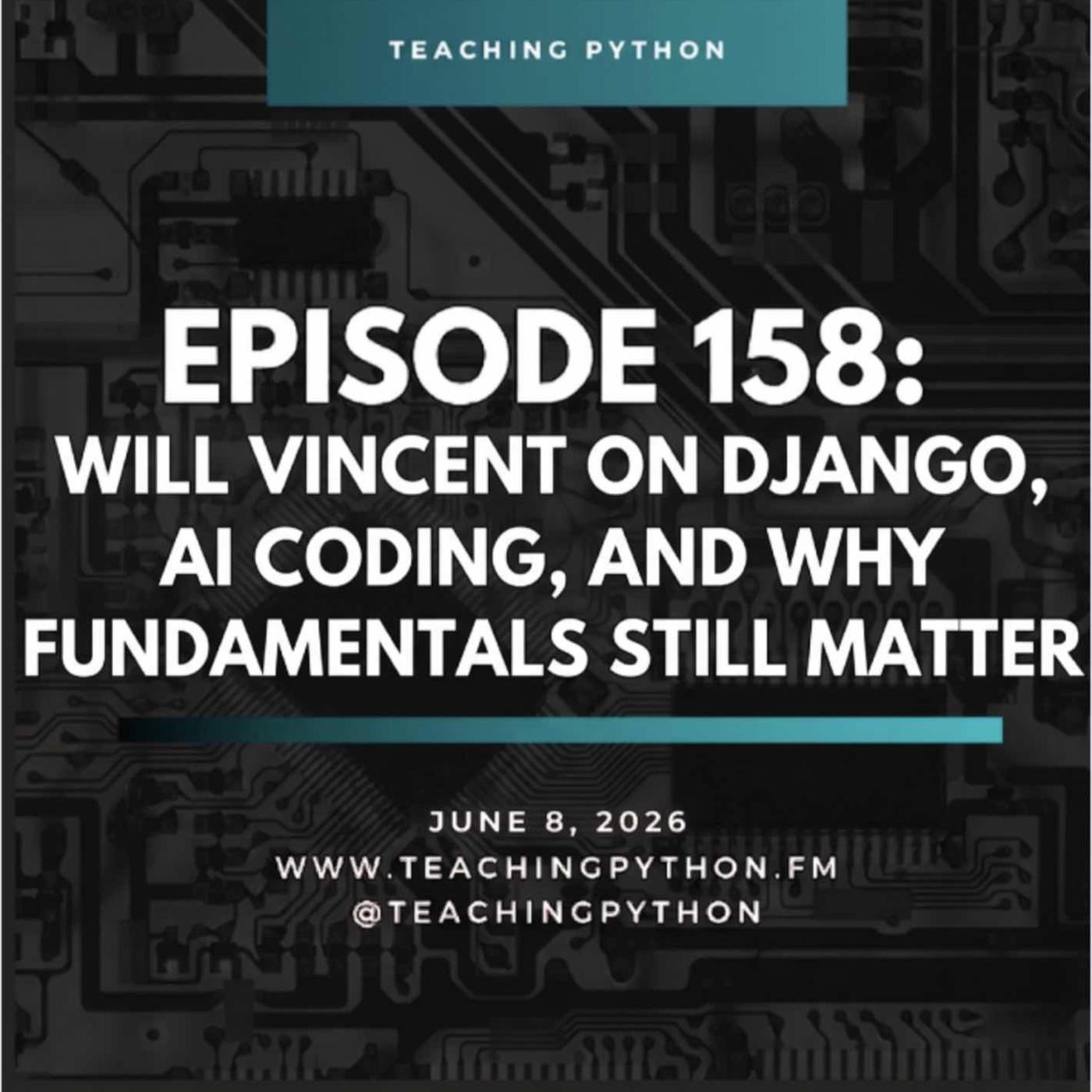
In this episode, Python Developer Advocate and author Will Vincent joins the hosts to discuss the lasting appeal of Django, changes in how people learn web development, and the ways AI is reshaping software engineering. While modern AI tools can generate working code in seconds, Django's opinionate…
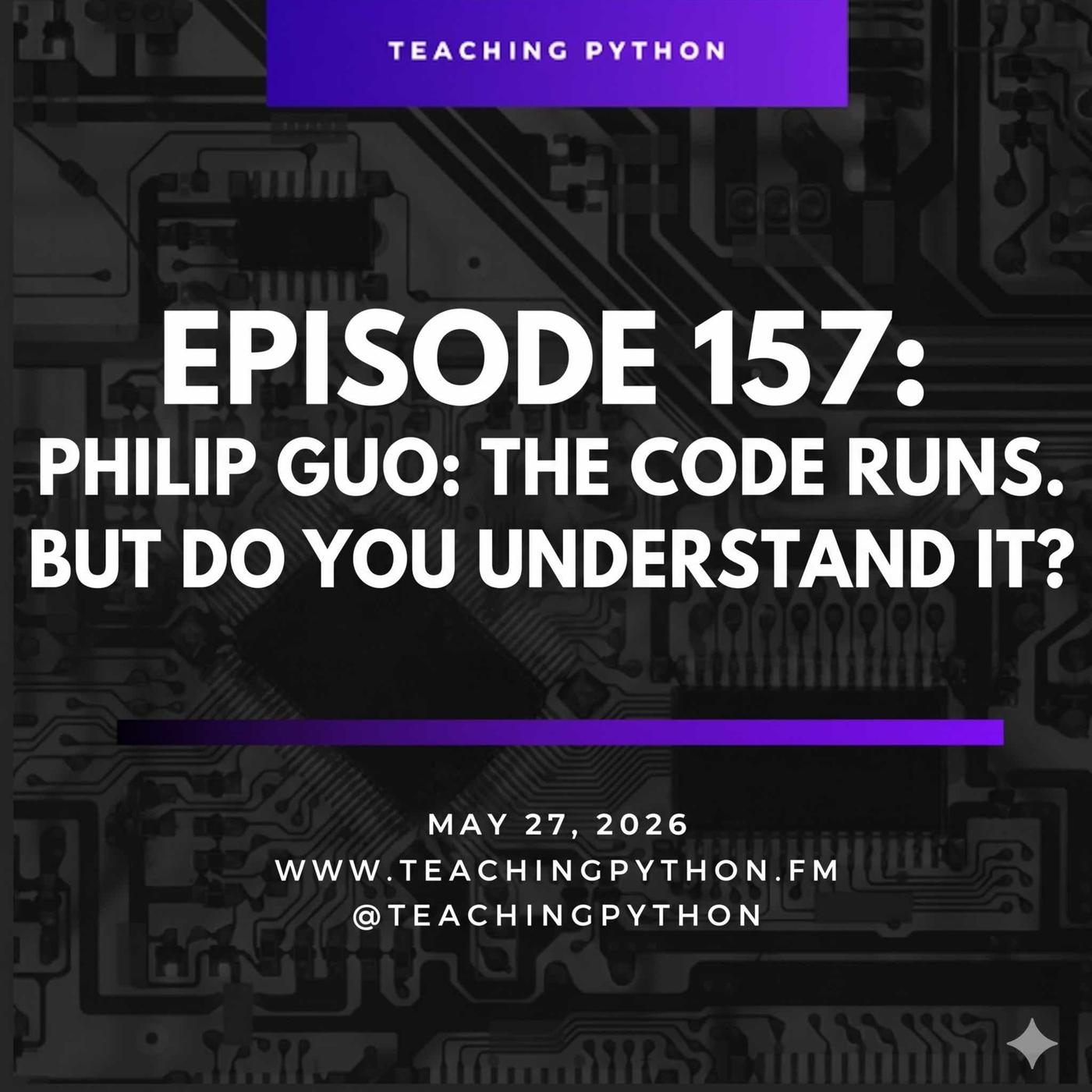
Kelly talks with Philip Guo, creator of Python Tutor, about how the tool helps students trace code and understand programming basics. They also discuss the challenges AI-generated code creates in the classroom and possible ways to support student learning.
*Wins of the Week
*
Philip: Hiring a sec…
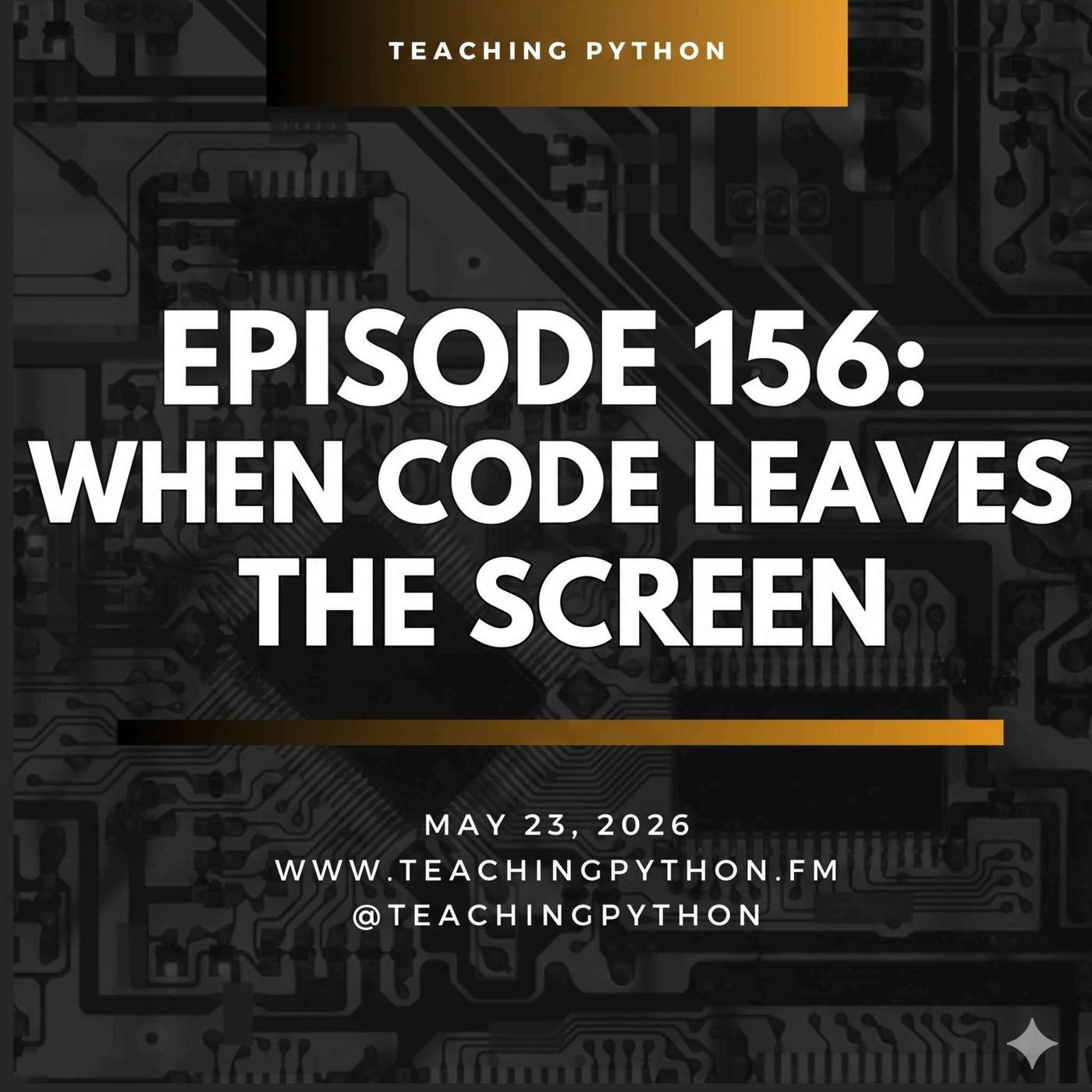
In this episode of Teaching Python, Kelly Schuster-Paredes and Julian Sequeira are joined by engineer and maker Todd Kurt to discuss what happens when code leaves the screen and starts interacting with the physical world. The conversation centers on CircuitPython, MicroPython, and physical computin…
Disclaimer: The podcast and artwork embedded on this page are from Sean Tibor and Kelly Paredes, which is the property of its owner and not affiliated with or endorsed by Listen Notes, Inc.
PODCAST SEARCH ENGINE
You can use our website to search 3,839,030 podcasts and 198,337,894 episodes by people, places, or topics.

If I have seen further than others, it is by listening to podcasts and standing upon the shoulders of
giants.
‐ Isaac "Llamacorn" Newton
CLAIM THIS PODCAST
Why to claim podcasts?
If you are a podcaster, the best way to manage your podcasts on Listen Notes is by claiming your Listen Notes
podcast pages.
It is a great, free way to engage the podcast community and increase the visibility of your podcasts.
After claiming your Listen Notes podcast pages, you will be able to:
✓
Manually refresh the RSS feed to sync up
✓
Get a verified badge (
✓
) alongside with your podcast name on Listen Notes
✓
Post classified ads for sponsorship,
guests, co-hosts,
cross-promotion...
✓
Respond to listener comments on Listen Notes
✓
Use speech-to-text techniques to transcribe your show and
edit transcripts
✓
Improve the presence of your podcasts, e.g., self-service
podcaster interview...
✓
If you share your Listen Notes page and at-mention @ListenNotes
on X (formerly Twitter),
our official X (formerly Twitter) account will retweet to promote
your show to our followers.
Coming soon:
◯ Self-service promotion on Listen Notes
◯ Track your podcast stats on Listen
Notes, e.g., listens, page
views...
◯ Manage episodes
EDIT
Thank you for helping to keep the podcast database up to date.
