ABOUT THIS PODCAST 🔗
Your podcasting resource for answering the questions you have about teaching, offering inspiration for you to question more of what you've been taught, and pushing you to lean into your continuing education.
Each week, I bring you the questions and concerns that live just beneath the surface of your teaching, along with real answers, tools, and strategies you can use in your very next class.
This is not a typical yoga teacher podcast.
I teach science-backed, currently researched strategies drawn from years of continuing education, and I will invite you to question some of what you were taught.
Whether you are a new teacher looking for support or you've been teaching for years, but you still have questions, you're in the perfect place!
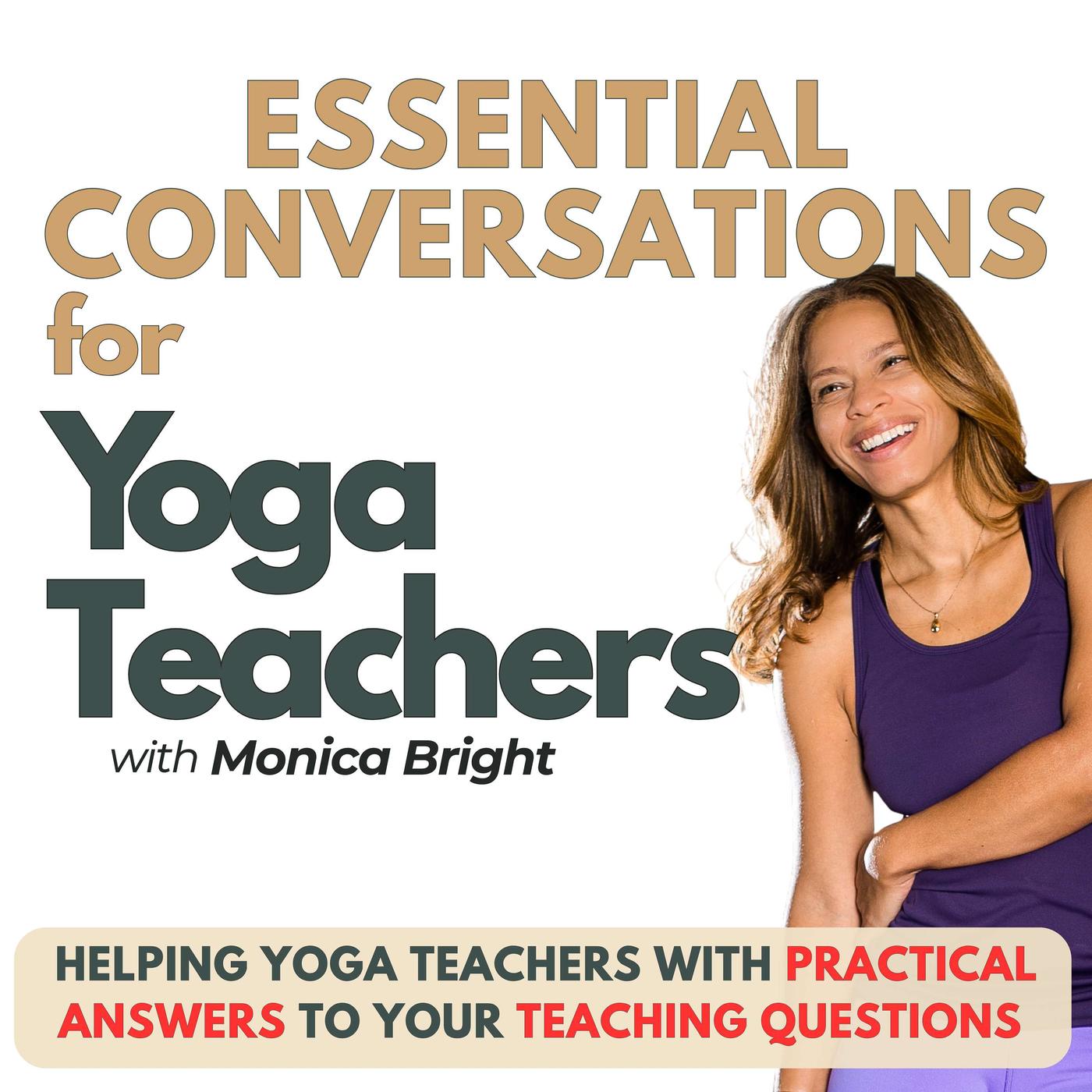
About the host: I'm Monica, I've been in the yoga world since 1993 and teaching for more than 14 years, with over 2000 hours of training focused exactly where teachers need it: anatomy, sequencing, injuries, pain science, the nervous system, and the movement modalities that support them. Before yoga, I spent my career in education, traveling the country mentoring school teachers in Illinois, Florida, Texas, and New Jersey, and that background shapes how I teach teachers now. I've also worked through my own injuries from my practice, and collaborate with Physical Therapists, which is a large part of why I do this work. Today I teach students and private clients who are living with pain, I lead corporate classes tailored to specific populations, and I founded the Teaching Students with Injuries mentorship, where teachers learn to serve the students who need them most and are already coming to their classes.
Subscribe and I'll share the experiences, the best tips, the strategies that work for teaching the actual students who come to your classes.
This podcast is for you if you find yourself asking questions like:
Why is sequencing important in yoga?
How does my sequencing affect the students in my classes?
How can I use props intelligently to enhance my student's practice?
Can I incorporate different movement modalities into my classes, and why would I want to?
How important is it to learn and understand anatomy and human movement?
Why is it important to learn about anatomy and physiology?
What are the benefits of studying human anatomy?
How do I remember anatomy without memorizing every muscle?
How do I explain anatomy to students without sounding clinical?
What's the fastest way to learn what I missed in my 200 hour training?
Why should I understand my student's experience when they have pain and injuries?
Can I have a positive effect on a student who is in chronic pain, and how?
How do nervous system states appear in my students, and what should I understand beyond the sympathetic and parasympathetic states?
How do I regulate nervous systems?
Can trauma cause chronic physical pain?
How does trauma affect students in yoga?
What do I do when a student says their wrists hurt in yoga?
Should students with shoulder pain do chaturanga?
Is pigeon pose bad for the hips?
What poses should I avoid with sciatica?
How do I know if it's SI joint pain or something else?
Is my student's back pain from a disc issue, and does that matter in class?
What's the difference between a strain, a sprain, and a tear?
Is teaching students with injuries outside my scope of practice?
What can I legally say to a student about their injury?
When should I refer a student to a physical therapist?
How do I work with a student's physical therapist?
Do I need special insurance or a waiver to teach injured students?
Host name: Monica Bright, M.Ed., E-RYT - 2000hrs
LATEST EPISODE 🔗

SEARCH PAST EPISODES
PREVIOUS EPISODES 🔗