

WEBVTT
00:00:00.160 --> 00:00:06.959
Welcome to the Thriving with Addiction Podcast, where we explore how recovery is not just about surviving, but about truly living.
00:00:07.200 --> 00:00:15.679
Each week we'll dive into the science, stories, and strategies that help people and families heal from addiction and build healthier, more resilient lives.
00:00:15.839 --> 00:00:16.800
I'm your host, Dr.
00:00:16.879 --> 00:00:17.760
John Avery.
00:00:18.079 --> 00:00:19.359
Let's get started.
00:00:25.280 --> 00:00:28.559
I'm John Avery and welcome back to Thriving with Addiction.
00:00:28.719 --> 00:00:29.920
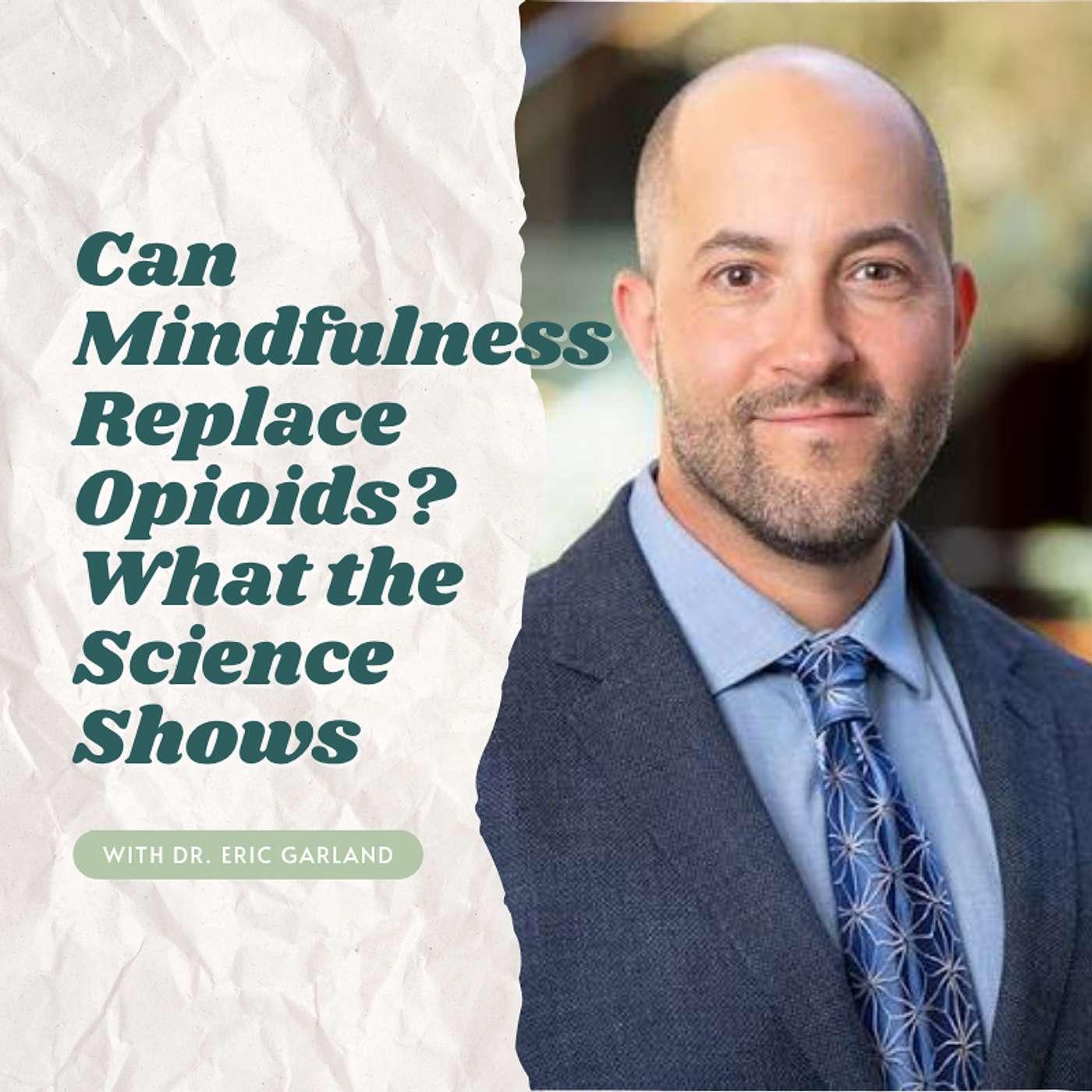
Today we're joined by Dr.
00:00:30.000 --> 00:00:31.039
Eric Garland.
00:00:31.199 --> 00:00:43.840
Eric is an endowed professor in health sciences at the Sanford Institute for Empathy and Compassion and a professor of psychiatry at the University of California, San Diego, where he directs UCSD One Mind.
00:00:44.159 --> 00:00:56.799
A leading figure in mindfulness science and addiction treatment, he developed mindfulness-oriented recovery enhancement, or more, an innovative intervention grounded in cognitive, effective, and neurobiological research.
00:00:57.039 --> 00:01:08.239
With over 280 scientific publications, he has been identified as one of the most prolific mindfulness researchers globally, and his work has been widely featured in major media outlets.
00:01:08.480 --> 00:01:13.040
A licensed psychotherapist, as well, with more than two decades of clinical experience, Dr.
00:01:13.120 --> 00:01:27.359
Garland integrates mindfulness-based therapy, cognitive behavioral therapy, and clinical hypnosis in treating addiction, trauma, and chronic pain, and is widely regarded as a leading expert on mind-body interventions for opium misuse.
00:01:27.599 --> 00:01:28.799
Eric, welcome.
00:01:29.280 --> 00:01:30.799
Thanks for having me, Jonathan.
00:01:31.120 --> 00:01:31.519
Of course.
00:01:31.680 --> 00:01:34.480
I'll mention also 90 million in federal research grants.
00:01:34.560 --> 00:01:36.239
You're not fooling around, Eric.
00:01:36.719 --> 00:01:37.599
I've been busy.
00:01:37.680 --> 00:01:38.400
Let's put it that way.
00:01:38.719 --> 00:01:40.879
Walk me through how you ended up in this interesting area.
00:01:41.200 --> 00:01:45.599
I came to this uh through my own personal practice of mindfulness.
00:01:45.760 --> 00:01:54.480
I've been practicing mindfulness meditation now for uh over 30 years as a personal uh spiritual pursuit.
00:01:54.560 --> 00:01:58.480
That was really what motivated my initial interest in mindfulness.
00:01:58.719 --> 00:02:04.159
Um and then later discovered that it also happened to be good for well-being.
00:02:04.319 --> 00:02:08.719
Um, but that really wasn't my initial motivation in in getting into mindfulness.
00:02:09.360 --> 00:02:30.560
Um and then uh I I I first started my professional life as a psychotherapist, um, and I was working with with uh people who were struggling with substance use issues as well as uh mood disorders and um conduct problems.
00:02:30.719 --> 00:02:34.879
This was actually with at-risk teenagers um in in wilderness therapy.
00:02:34.960 --> 00:02:37.199
That was where I launched my career.
00:02:37.520 --> 00:03:11.199
Um then I moved into working in the primary care environment in integrated behavioral health uh settings, where I was working alongside physicians and nurses, and I was the head shrinker guy, and my job was to treat some of their most complex patients, the patients uh that had these uh really challenging, intersecting, comorbid issues of psychiatric disorders, uh addiction, and also psychosomatic and chronic pain conditions, just people that they really had no idea what to do with.
00:03:11.280 --> 00:03:19.759
Um and that in that clinical work was where I started developing what would become the more therapy approach.
00:03:20.000 --> 00:03:44.080
And my clinical practice really was the living laboratory where I tried out different techniques and learned how to hone them uh to make them more effective, and then um got into uh mindfulness research around the same time, and uh and initially that was to do work in uh mindfulness as a treatment for chronic pain.
00:03:44.319 --> 00:04:08.560
But um, but I had my one of my mentors was a leading figure in addiction science, and so I ended up doing the first study of more as a treatment for alcoholism, alcohol use disorder, um, in in an inner city um therapeutic community for people in recovery for addiction, um, and that and that launched that whole part of my career.
00:04:08.800 --> 00:04:16.639
Um so there's lots of cool synchronicities and stuff along the way, but I think that that pates the beginning of my path.
00:04:17.040 --> 00:04:18.560
Yeah, and you you never looked back.
00:04:18.720 --> 00:04:21.360
What was it for you personally that drew you to mindfulness?
00:04:21.759 --> 00:04:34.240
From the very moment I sat down for the first time and closed my eyes and focused on my breath in in a basic mindful breathing meditation, uh for some reason I just knew that it was going to be one of the most important parts of my life.
00:04:34.399 --> 00:04:37.600
Um I just took to it immediately.
00:04:37.920 --> 00:05:05.519
And early on I had some pretty profound um spiritual experiences that uh that that my philosophy was really a deep part of in terms of feeling a sense of interconnectedness with all things or a oneness with all things, and that type of mystical experience, if you will, uh really shaped my entire life.
00:05:05.680 --> 00:05:14.480
Um I wanted to not only to understand it scientifically, but also to harness the power in those states as a healing tool.
00:05:14.639 --> 00:05:34.079
And I and we'll I'm sure we'll talk about this later on, but I uh I I've done some, I think, important research in in this area showing that having those types of self-transcendent experiences where you connect with something greater than yourself has really powerful impacts on addiction recovery.
00:05:34.399 --> 00:05:34.879
Mm-hmm.
00:05:35.279 --> 00:05:44.319
And for a lot of us that do meditate or involved in mindfulness practices, like myself, we really appreciate the benefit and can understand those experiences.
00:05:44.560 --> 00:05:51.839
But sometimes people in psychology or medicine or addiction treatment sort of poo-poo those interventions.
00:05:51.920 --> 00:05:57.360
Were were people accepting of your push in that direction right away, or what was that process like for you?
00:05:57.680 --> 00:05:58.560
No, definitely not.
00:05:58.720 --> 00:06:13.680
I mean, what when I got into actually one of the one of the key reasons why I developed mindfulness-oriented recovery enhancement or more was because at that time there were no evidence-based mindfulness treatments for addiction whatsoever.
00:06:14.000 --> 00:06:18.079
And uh and mindfulness, you know, nowadays it's it's everywhere, right?
00:06:18.160 --> 00:06:22.319
I mean, it's it's on magazines at the checkout stand in the supermarket.
00:06:22.480 --> 00:06:36.879
Uh, but it in the early 2000s it it was still not an accepted part of modern society, certainly not in accepted in healthcare, in medicine or psychology.
00:06:37.279 --> 00:06:48.639
So I really um I I I caught the the I caught the beginning of the wave of uh of of mindfulness into society.
00:06:48.879 --> 00:07:09.920
And I um the way that the field dealt with this uh need to integrate into standard psychotherapy, medicine, healthcare was to tackle the problems of mindfulness using the tools of neuroscience and cognitive science and to demystify the entire thing.
00:07:10.079 --> 00:07:32.079
Um if we could if we could operationalize the concepts of mindfulness and actually measure them in a rigorous, hard kind of way, using the same degree of rigor and standards that are used all throughout uh health science and neuroscience, then uh that would help to increase the uptake of these interventions.
00:07:32.160 --> 00:07:35.120
And so that's what we did, and it worked.
00:07:35.360 --> 00:07:39.600
And, you know, fast forward 20 years later, now mindfulness is everywhere.
00:07:39.759 --> 00:07:45.279
Every major medical center in the country is providing some sort of mindfulness somewhere.
00:07:45.439 --> 00:07:58.399
Um and in terms of addictions treatment, mindfulness is also pretty ubiquitous, although I would argue that a lot of what's done in many addiction treatment settings is this really kind of squishy, non-evidence-based approach.
00:07:58.560 --> 00:08:16.560
And so my big push now, my my true passion is to take this mindfulness-oriented recovery enhancement therapy that I've developed and tested over 20 years of research and development uh and get it out there as part of the standard of care and addictions treatment.
00:08:17.120 --> 00:08:19.519
Now you've made it non-squishy for sure.
00:08:19.680 --> 00:08:24.240
I was looking at different presentations that I had given on mindfulness here or that my fellows had given.
00:08:24.399 --> 00:08:27.920
And Garland, your last name's all over those references.
00:08:28.079 --> 00:08:31.360
You've really helped to make it uh an evidence-based practice.
00:08:31.519 --> 00:08:33.440
And so let's talk about what it is.
00:08:33.600 --> 00:08:39.519
I mean, tell me your how you define mindfulness, or or how you've defined it, at least in your interventions.
00:08:40.000 --> 00:08:40.960
Uh sure.
00:08:41.279 --> 00:09:00.240
So mindfulness is the practice of cultivating awareness and acceptance of your thoughts, emotions, body sensations, and perceptions in the present moment, and observing these experiences as if you were an objective observer, as if you were a witness.
00:09:00.399 --> 00:09:08.720
And that that witnessing aspect of mindfulness is is really, I think, central to the therapeutic power of mindfulness.
00:09:09.039 --> 00:09:11.200
Um, so that's it in a nutshell.
00:09:11.279 --> 00:09:12.320
That that's the concept.
00:09:12.480 --> 00:09:15.600
The practice of mindfulness is is incredibly simple.
00:09:15.759 --> 00:09:21.759
Uh, the way we would the way we describe it in more is we describe it as a loop of mindfulness.
00:09:21.840 --> 00:09:25.360
And so it begins by focusing your attention on an object.
00:09:25.519 --> 00:09:30.399
And it really could be any object, but the object that we typically focus on in the beginning is the breath.
00:09:30.639 --> 00:09:34.559
So focusing on the sensation of the breath moving into your nostrils.
00:09:34.720 --> 00:09:53.679
And then if you're anything like most people, after you know, 10 or 20 seconds, your mind's gonna start to wander, and then all you do is you just notice where the mind has wandered off to, and then you acknowledge and accept that thought or feeling or distraction, and then you let it go and you bring your attention right back to the breath.
00:09:53.759 --> 00:10:13.200
And so now you've done one loop of mindfulness, but what the practice of mindfulness is really continuing to loop through this cycle of focusing on the object, the mind wandering, noticing the mind is wandering, acknowledging, acknowledging and accepting that experience and then letting it go.
00:10:13.360 --> 00:10:23.279
And with each iteration of this loop, you're strengthening your mind's capacity for what is known as meta awareness, the awareness of awareness.
00:10:23.440 --> 00:10:27.759
And that I think is really the key therapeutic driver in mindfulness.
00:10:28.000 --> 00:10:33.200
Most people think mindfulness is only the first step in that process, which is the focusing.
00:10:33.600 --> 00:10:44.320
And so that that makes them get very disappointed because it they people commonly believe that mindfulness is just this intense attentional focus.
00:10:44.480 --> 00:10:52.720
You're just focusing on something, but then when your mind wanders, they think that they're doing it wrong and that the mindfulness is, quote, not working.
00:10:53.360 --> 00:10:59.919
But it's really important to recognize that the entire loop is the practice of mindfulness.
00:11:00.000 --> 00:11:14.159
It's not just the focusing, it's also the mind wandering and noticing when the mind wanders, and then acknowledging and accepting wherever the mind is wandering off to, and then grabbing a hold of your mind and bringing it right back to the point of focus.
00:11:14.320 --> 00:11:17.360
So that entire loop is the practice of mindfulness.
00:11:17.440 --> 00:11:23.679
And so we tell patients in more it it doesn't really matter if your mind wanders a lot.
00:11:23.759 --> 00:11:30.399
In fact, if your mind wanders a thousand times, that's a thousand times you get to practice mindfulness.
00:11:32.000 --> 00:11:40.320
And so when you reframe the practice like this, it really it's really powerful because then people start to feel like, hey, I can actually do this thing.
00:11:40.399 --> 00:11:48.240
It's not that I'm doing it wrong, but actually I am doing it and uh and I'm I'm my mind is growing stronger from this practice.
00:11:49.519 --> 00:12:02.080
And when patients express an interest in mindfulness, I think it's normal for people to just sort of point them to a YouTube video or an app that does meditation or you know, a different local center that does meditation.
00:12:02.399 --> 00:12:05.360
Like how do all these different forms of mindfulness differ?
00:12:05.519 --> 00:12:10.240
How did you decide specifically how to teach it for your intervention?
00:12:11.120 --> 00:12:11.519
Yes.
00:12:11.759 --> 00:12:59.919
I mean, uh my response to your question is that um, you know, those those approaches uh have their value, but really when we're talking about using mindfulness as a therapeutic tool in a clinical setting, I think it's really important to be working with a with a well-trained um therapist who knows how to teach this skill and and and even more importantly, who knows how to investigate your own experience with the skill to help you to identify moments of success, to provide positive reinforcement, um, to and to to um to help you to recognize how you can apply the the learnings that happen during mindfulness to alleviating your symptoms in everyday life.
00:13:00.000 --> 00:13:01.440
And so that's what we do in more.
00:13:01.919 --> 00:13:36.720
There's a really intense focus on uh I I have a really intense focus when I'm training therapists in Moore on learning how to uh process the patient's experience during mindfulness so that they can begin to recognize their moments of success, they can begin to recognize uh uh therapeutic moments, healing moments, to r and to to recognize how they're actually engaging in the practice of mindfulness, and then you know what what that practice means for improving their lives.
00:13:36.799 --> 00:13:41.440
And so that kind of that's a conversation that happens between the therapist and the patient.
00:13:41.759 --> 00:13:46.240
And I think it's critically important and and it and it in terms of more's efficacy.
00:13:46.320 --> 00:13:49.600
I mean it it's what it's the me it's the secret sauce behind more.
00:13:50.240 --> 00:13:58.399
Um, because we have many patients who come to us and they say, you know, I tried to meditate and it doesn't work for me.
00:13:58.720 --> 00:14:02.240
It doesn't work for me, um, I'm no good at it.
00:14:02.879 --> 00:14:09.440
And then they come to the Moore program and they and now they feel successful with it.
00:14:09.600 --> 00:14:13.440
And they they do learn mindfulness successfully, and it does work for them.
00:14:13.600 --> 00:14:21.360
And I think a lot of that is has to do with the conver the therapeutic conversations that we that therapists have with patients during the more program.
00:14:21.679 --> 00:14:24.000
I mean, more is is more than mindfulness.
00:14:24.159 --> 00:14:29.440
There are two other important components to the more therapy that we should talk about as well.
00:14:29.759 --> 00:14:33.519
Yeah, but just to to highlight that, I mean, I think that's so important.
00:14:33.600 --> 00:14:37.919
I mean, even the studies on exercise, the people that do best are the ones with the trainers.
00:14:38.159 --> 00:14:46.960
And, you know, big uh part of therapeutic action of CBT or any type of therapy is is having that relationship with a trained, sophisticated therapist.
00:14:47.039 --> 00:14:54.080
So it makes sense that you can improve your mindfulness and meditation skills with uh someone who's actively in it with you.
00:14:54.240 --> 00:14:57.200
But I don't think we often think of meditation in that way for some reason.
00:14:57.600 --> 00:14:58.639
No, we don't.
00:14:58.879 --> 00:15:16.879
And and uh and and also I think a lot of the the more common mindfulness-based therapies that are out there don't take this type of targeted, directive uh approach to processing patients' mindfulness experience like we do in Moore.
00:15:17.039 --> 00:15:30.320
I mean, what we're doing in Moore is I think is very unique among other mindfulness therapies, and I would argue it it probably uh probably more effective than other mindfulness-based therapies uh because of that.
00:15:30.720 --> 00:15:32.399
But I don't have data to support that.
00:15:32.559 --> 00:15:34.320
That's just a that's just a notion of mine.
00:15:34.720 --> 00:15:37.120
So tell me exactly what it is and some of the other components.
00:15:37.519 --> 00:15:59.679
Yeah, so more is really an evidence-based neuroscience-informed mind-body therapy that unites mindfulness training, techniques from cognitive behavioral therapy, and principles from positive psychology into a treatment that can simultaneously address addiction, emotional distress, and chronic pain.
00:16:00.320 --> 00:16:09.519
And more, I think I think more has really the strongest evidence base of any therapy for co-occurring addiction and chronic pain in the literature.
00:16:09.600 --> 00:16:13.519
And that I'm not just talking about psychological therapies, I'm talking about medicines as well.
00:16:13.679 --> 00:16:26.320
I think if you if you look at that particular subset of people with chronic pain who also have addiction, primarily uh opioid addiction, I think more has has one of the strongest evidence bases out there.
00:16:26.559 --> 00:16:34.879
Um so Moore weaves together three uh powerful therapeutic techniques mindfulness, reappraisal, and savoring.
00:16:35.120 --> 00:16:52.559
And mindfulness, we we just touched on um mindfulness in more is used to strengthen the mind, strengthen self-awareness, uh create awareness of automatic habits, which is really important in addiction.
00:16:52.879 --> 00:17:02.720
And then once you become aware of the arising of automatic habits through mindfulness, mindfulness gives you the power to actually interrupt automatic habits and transform them.
00:17:03.600 --> 00:17:13.759
Mindfulness also has effects on deconstructing craving and how and helping patients to uh relieve craving, and we can talk more about that.
00:17:14.000 --> 00:17:17.440
And then mindfulness also has direct analgesic effects.
00:17:17.519 --> 00:17:20.160
So it's just pain relieving in and of itself.
00:17:20.400 --> 00:17:25.599
So uh and we use unique mindfulness techniques to help patients to reduce physical pain.
00:17:25.759 --> 00:17:30.079
Uh so that's the mind that's the a high-level overview of the mindfulness part of more.
00:17:30.480 --> 00:17:32.160
Second part of more is reappraisal.
00:17:32.319 --> 00:17:47.440
Reappraisal is the is the practice of challenging and changing negative thought patterns to reframe stressors as uh opportunities for personal growth and an opportunity to find meaning in the face of adversity.
00:17:47.759 --> 00:18:09.119
And that's that that that uh technique is really a cornerstone of cognitive behavioral therapy, but in more we kind of tweak it a little and uh we inject some mindfulness into the process and kind of push the whole process towards meaning making um and uh yeah, meaning making, quite frankly.
00:18:09.279 --> 00:18:13.759
Uh and then and then the the the last component of more is savoring.
00:18:13.839 --> 00:18:32.640
And savoring is the practice of mindfully focusing attention on pleasant everyday events and appreciating and amplifying the positive emotions and pleasurable body sensations that arise as you encounter these pleasant everyday events.
00:18:32.960 --> 00:18:51.759
So not just ex not just experiencing some something positive in your life, but really focusing all of the mind's intensity on that pleasurable experience as a way to kind of turn up the volume on natural, healthy reward, pleasure, joy, and and to boost meaning.
00:18:52.000 --> 00:19:02.960
And so Moore uses these three techniques, weaves them together into uh an eight-session treatment that can that's typically delivered as a group therapy.
00:19:03.119 --> 00:19:06.000
So it's a nice fit for a lot of addiction treatment settings.
00:19:06.160 --> 00:19:18.720
It can be delivered as an individual therapy, uh, and these eight sessions can be done once a week for eight weeks, or they can be done twice a week for four weeks, so that fits more into the traditional 30-day addiction treatment program.
00:19:19.200 --> 00:19:27.519
Uh, and we've studied more in over 16 randomized controlled trials to date involving more than 2,500 patients.
00:19:27.680 --> 00:19:29.839
So we have a lot of data on this therapy.
00:19:29.920 --> 00:19:32.400
And bottom line is it it works.
00:19:33.599 --> 00:19:33.839
Right.
00:19:34.000 --> 00:19:38.160
And it works for, as you said, for addiction, which we'll dive into a second.
00:19:38.319 --> 00:19:41.599
But I'm especially interested in how it helps for chronic pain.
00:19:41.680 --> 00:19:45.839
Because if you go to a lecture or talk on chronic pain, it's just all about the things you shouldn't be doing.
00:19:46.079 --> 00:19:49.680
But this is a real thoughtful way to address chronic pain.
00:19:49.759 --> 00:19:55.200
And you have a great video on your website of of helping uh uh, I think he was a motorcycle rider.
00:19:55.599 --> 00:20:09.039
Yes, more is is really uh specifically designed to alleviate pain, both the the actual intensity of the pain, but also helping people with chronic pain to function better in their lives in spite of pain.
00:20:09.279 --> 00:20:17.759
And the way we do this is through uh through a uh a mindfulness technique, a mindfulness of pain technique.
00:20:18.000 --> 00:20:21.920
And um, I think to contextualize it, you know, think about it like this.
00:20:22.079 --> 00:20:27.839
So when we experience chronic pain, you know, that's different from an acute pain that comes and goes quickly.
00:20:28.079 --> 00:20:40.720
When you experience chronic pain, uh chronic pain is typically perceived as this emotionally anguishing, monolithic, solid, and unremitting experience.
00:20:40.799 --> 00:20:44.480
It's just this terrible, awful thing that always seems to be there.
00:20:44.720 --> 00:20:47.599
And on top of that, people overlay a layer of suffering.
00:20:47.680 --> 00:20:49.599
So they say to themselves, why me?
00:20:49.759 --> 00:20:50.720
This isn't fair.
00:20:50.880 --> 00:20:54.160
This pain is screwing up my life, it's stolen so much from me.
00:20:54.240 --> 00:20:57.440
I can't I can't do the things I used to be able to do.
00:20:57.599 --> 00:21:02.880
Um and and that sort of emotional anguish actually amplifies pain in the brain.
00:21:02.960 --> 00:21:07.279
It actually turns up the volume of pain and makes pain hurt worse.
00:21:07.599 --> 00:21:22.160
Um so, but in more, what we're doing is we teach this mindfulness of pain technique to remove this emotional overlay and then to decompose the pain experience into its subcomponent sensations.
00:21:22.400 --> 00:21:50.160
So rather than focusing on some terrible, awful anguish in your in your body, we teach patients to use mindfulness to zoom into the experience of pain and to break it down into sensations of heat or tightness or tingling, as well as to notice the spaces in between those sensations where there's either no sensation at all, or and this kind of sounds crazy, but there might even be pleasant sensations right next to the painful ones that the that the patient isn't noticing.
00:21:51.279 --> 00:21:59.680
So imagine imagine as if your attention could be like a microscope and you could just use it to zoom into the experiences.
00:22:00.160 --> 00:22:15.839
the pain and to see what see uh what makes it up, see what it's made up of, see the the molecules of sensation, so to speak, um, and see the spaces in between those uh sensations.
00:22:16.000 --> 00:22:30.240
And and what many patients discover, and I know this sounds kind of strange, but um I part of my day job is to listen to tapes of therapists delivering the more intervention to make sure they're doing a good job, make sure they're keeping fidelity to the model.
00:22:30.319 --> 00:22:39.119
So I've listened to I can couldn't tell you how many how many hundreds of hours of tapes and heard time and time again patients say something like this.
00:22:40.000 --> 00:22:46.079
I focused on the pain and you told me to notice did the sensations have a center.
00:22:47.680 --> 00:22:50.640
And I couldn't really find the center.
00:22:51.039 --> 00:22:56.240
And then you told me to notice the edges to the sensation.
00:22:56.880 --> 00:23:01.200
And I looked for the edge and it was kind of fuzzy.
00:23:01.279 --> 00:23:02.880
I couldn't find a definite edge.
00:23:03.680 --> 00:23:08.400
But I was looking for the edge I couldn't really find it and then I couldn't find my pain.
00:23:10.079 --> 00:23:12.240
My pain was temporarily gone.
00:23:13.359 --> 00:23:17.039
And that that kind of experience gets reported a lot.
00:23:17.279 --> 00:23:23.359
And so what we know from a from a data perspective that more reduces chronic pain by about 25%.
00:23:24.559 --> 00:23:29.599
And that those effects last nine months after the end of this eight session treatment.
00:23:29.759 --> 00:23:36.559
And 25% pain reduction is about as much pain reduction as you get from 10 milligrams of oxycontin.
00:23:37.440 --> 00:23:43.200
So but here we're not giving somebody a pill they're teaching them how to use the power of their own mind to reduce pain.
00:23:43.440 --> 00:23:44.960
So it's really pretty remarkable.
00:23:45.359 --> 00:23:55.039
No and I imagine for the people doing the treatment that almost feels like a that spiritual transcendent experience to suddenly not be able to to feel their pain in that way.
00:23:55.440 --> 00:24:10.640
Well it's funny you mentioned that because the people what when people do have moments of self-transcendence where their normal sense of their self starts to fade away or they feel the sense of interconnectedness with the world around them or the universe around them.
00:24:12.079 --> 00:24:16.480
In that moment itself, there's often no pain at all.
00:24:17.119 --> 00:24:24.880
And that's pretty profound for for for these patients because many of the patients we're working with they they've been in pain for 15 plus years.
00:24:25.039 --> 00:24:36.559
Their pain levels are five or six out of ten every day and then to have this moment where the pain is completely gone it can be really really profound for them.
00:24:36.799 --> 00:24:42.559
Now just to be clear you know that doesn't last forever that kind of relief doesn't last forever.
00:24:42.799 --> 00:24:51.359
Um and eventually the person's pain comes back but uh the remedy there is to practice mindfulness again.
00:24:51.440 --> 00:25:52.400
And and really if you think about it it's no different than what you would do if you were taking uh a a pain relieving medication you know you in pain you take some ibuprofen the effect lasts a couple hours you know three four hours you take your next dose and get and you get more more relief same thing with meditation so that's what that's what we're finding but the difference the difference between uh pain relieving medication is you know there's there is there is can be tolerance that occurs especially with opioids right so that the more you take it the less pain relief you're getting over time whereas with meditation it's the opposite there's actually sensitization the more you practice it the more pain relief you get over time right and do you find patients and practitioners accepting of it I I think sometimes people with chronic pain who are on opiates view non-opiad interventions as sort of not taking their pain seriously or an effort to move away from meds.
00:25:52.559 --> 00:25:53.839
What's been your experience there?
00:25:54.160 --> 00:26:12.160
Yeah that's that's a really important topic so we address that head on in the very first session of Moore uh we talk about we we provide a neuroscientific explanation for pain and that is the groundwork for providing the rationale for why the patient should bother to even learn mindfulness.
00:26:12.480 --> 00:27:06.640
So we talk about how all pain is generated in the brain it doesn't matter whether the pain is from you know stubbing your toe or whether it's from arthritis in your knee or whether it's from a herniated disc in your back or whether it's a a chronic headache all pain what what happens is when there's an injured injured injury in the body the nerves carry the signal of damage up the spinal cord and into the brain into a part of the brain called the thalamus and the thalamus is like a gatekeeper or a relay station and it relays that signal of damage out to the higher order thinking and feeling parts of the brain so prefrontal cortex, amygdala, insula, etc and it's it's there when the signal of damage is relayed to the thinking and feeling parts of the brain that the conscious experience of pain is constructed.
00:27:07.599 --> 00:27:15.440
And so it's it's a truism to say that all pain is generated in the brain pain is not in the body it's in the brain.
00:27:16.079 --> 00:27:24.000
And so therefore if you can change the way your mind functions you can change the way your brain functions and therefore you can change your pain.
00:27:24.079 --> 00:27:25.920
And we we've seen that in really dramatic ways.
00:27:26.000 --> 00:27:52.240
So you mentioned uh the video on my website of Dan Kruger uh Dan is an international champion motorcycle athlete he uh he's one of these crazy intense guys who drives around a track 200 miles an hour with his knee like a quarter inch above the the pavement and as you might imagine and he's a world champion he's one of the best in the world but as you might imagine you get in a lot of accidents doing that.
00:27:52.400 --> 00:28:43.039
And so Dan's Dan had taken opioids for more than 30 years um to deal with a lifetime of accidents and surgeries uh and chronic pain his body's been really beat up and uh he was able to completely come off of opioids using the Moore program which is which is amazing and actually since coming off of opioids he had several accidents motorcycle accidents racing and he went through surgery without opioids uh just using mindfulness which is incredible uh obviously not everybody can do that he's kind of uh I mean he's he's a remarkable human being but I think it does demonstrate the power of the mind over pain we need more and more for for chronic pain and and pain conditions uh for for sure and then what about for addiction?
00:28:43.119 --> 00:28:44.240
How does it work there?
00:28:45.039 --> 00:29:15.119
Yeah so uh key I think um really the key notion in more is something I call my restructuring reward hypothesis and it's this idea that as a person goes deeper and deeper into addiction there are changes that happen in the brain such that the brain becomes more sensitive to drug related cues and less sensitive to natural healthy pleasure meaning and joy.
00:29:15.279 --> 00:29:57.680
As the brain's reward system becomes hijacked by the drug and learns that hey what really gives you good feelings is this drug it's it's not the relationships you had it's not um the hobbies that you had it it's this drug that matters the most and so there's this shift that happens in the brain and this has been demonstrated for decades in in neuroscience um and it is mediated by dopamine systems in the brain but the the notion in more is that we can use my mindfulness reapraisal and savoring techniques to help the patient to shift back from valuing drugs back to valuing natural healthy rewards.
00:29:57.839 --> 00:30:33.599
And if we can do that then this is going to reduce their craving and their addictive behavior and we've shown that time and time again in across many neuroscientific studies of more that patients going through the more program we teach them how to mindfully savor natural healthy pleasure and then their brains and bodies become more sensitive to natural healthy pleasure and the more sensitive that the brain and the body become to natural healthy pleasure the less they crave the drug and the less they the less drug use or substance misuse they engage in.
00:30:33.759 --> 00:30:57.039
We've shown this with EEG we've shown this with heart rate variability we now have a new fMRI paper measuring blood flow in the brain showing the same phenomenon so i it's it's a really key idea and I think it's one of the things that makes more super unique as an addiction treatment because to my knowledge there's no addiction treatments that that can do this.
00:30:58.160 --> 00:31:18.960
So we're just essentially we're teaching people how to experience joy again in their lives from the thing from the people the activities and the values that they once cared about helping them to reclaim that sense of value and meaning and enjoyment of those activities through mindfulness and savoring and that reduces the pull of the drug.
00:31:19.119 --> 00:31:21.759
So that's that's that's a key unique feature of Moore.
00:31:21.839 --> 00:31:39.519
And at the same time is also teaching skills to help patients to uh to regulate craving to decrease craving to contemplate the negative consequences of drug use so we're sort of we're we're kind of knocking down the drug if you will and we're building up the natural healthy reward.
00:31:39.599 --> 00:31:45.279
So we're reshifting that balance and that uh that's producing the remarkable outcomes that we've seen.
00:31:45.440 --> 00:31:49.519
So I guess I I'll just spit out some data for for your listeners.
00:31:51.279 --> 00:32:07.680
So we've shown in NIH funded research that adding more to standard addictions treatment with uh medications for opioid use disorder reduces addiction treatment treatment dropout by 59% more than standard addictions care.
00:32:07.920 --> 00:32:14.640
We've also shown that when you add more standard addictions care it reduces drug relapse by 42% more than standard care.
00:32:14.799 --> 00:32:20.240
So we published that in the top journal Jamma Psychiatry two years ago.
00:32:20.480 --> 00:32:29.839
More is three times more effective than standard group therapy at reducing opioid misuse and those effects last nine months or longer.
00:32:30.000 --> 00:32:35.359
So more cuts opioid misuse by 45% at a nine month follow up.
00:32:35.440 --> 00:32:42.640
So that's just remarkably powerful we published that in in Jam Internal Medicine in 2022.
00:32:42.960 --> 00:33:04.720
More cuts opioid cravings by 50% in intensity and at the same time significantly alleviates chronic pain we already talked about that reducing pain by 25% about and more produces really robust antidepressant effects and also leads to clinically significant reductions in PTSD symptoms.
00:33:04.960 --> 00:33:14.480
So more is really helping to alleviate the physical and the emotional pain that often drives relapse and addiction and or gets people addicted in the first place.
00:33:14.880 --> 00:33:28.480
So it it's directly tackling the addic the the the addiction reducing craving increasing self-control over drug use preventing relapse and then it's it's helping to heal the forms of suffering that are driving addictive behavior.
00:33:28.799 --> 00:34:00.640
Right and and these numbers for our listeners are really strong and your work you've done is is really robust in terms of demonstrating the the benefit of this and then I'll go back to the that patient group you were talking about at the beginning our average patient has trauma anxiety depression chronic pain pain issues and some substance use and we still struggle to say where can we put that person we treat a piecemeal I think I like that this approach addresses all those things at the at the same time in some way.
00:34:00.960 --> 00:34:44.000
Yeah I thanks for bringing that up I because I think that's it's really important most other treatment approaches tackle these these problems in isolation and and they don't do it at the same time but that that that's a potential problem because emotional pain physical pain and addictive behavior are so tightly bound up with each other that if you're not tackling all of them at once then you for example you might help somebody to start to change their addictive behavior but then they're experienc start to experience some extreme stress and then they relapse or you're helping them to reduce their opioid use and they have a flare up in their pain and so they go back to using opioids.
00:34:44.159 --> 00:34:50.960
So it's it's I think it's it it's one of the powerful things about Moore is that it can simultaneously address these problems.
00:34:51.199 --> 00:35:18.239
And like you said uh this this type of complex patient with co-occurring disorders this is not the exception this is really the rule I think I think most people um have all of this stuff the data bears that out I've seen statistics showing that about 50% of patients with substance use disorders have physical pain and um and similarly high rates of psychiatric conditions.
00:35:18.400 --> 00:35:20.639
So you've got to tackle it all at once.
00:35:21.119 --> 00:35:33.440
Exactly well where do you see more in this field going next I my vision is that more becomes a central part of the standard of care and addictions treatment in this country.
00:35:33.679 --> 00:35:38.639
And so I've been working really hard to get the word out and disseminate this therapy.
00:35:39.440 --> 00:35:52.719
In March of 2024 I was invited to Capitol Hill to brief Congress on more that was a really key moment in in this program of work that I've been doing for 20 years.
00:35:53.440 --> 00:36:08.400
Now we're trying to to connect with health systems with with administrators and leaders of health systems and treatment centers to try to help them to understand the value of more and get them to train their workforce.
00:36:08.559 --> 00:36:14.320
And so we've done a pretty good job I mean in the I've trained about a thousand clinicians from around the U.S.
00:36:14.480 --> 00:36:22.719
and internationally and more but that's just a drop in the bucket you know given how how enormous the the addiction crisis is in this country.
00:36:22.960 --> 00:36:50.079
But we're we we're training social workers counselors psychologists nurses physicians we've even trained physical therapists and chaplains we're really trying to train at any frontline uh healthcare workers who are who are working with patients like the ones we've been talking about and and my vision is really to make more a standard part of the way that we we assist people struggling with addiction and emotional distress and chronic pain.
00:36:50.320 --> 00:37:00.079
We now have a new online asynchronous on-demand training platform to train clinicians so it makes it really easy to get trained.
00:37:00.480 --> 00:37:16.400
It used to be that somebody would have to take two days off of work and go to an intensive live workshop to get trained in Moore but now they can do the training in their own time they don't have to cancel a bunch of sessions or take a lot of time off their clinic they can they can do the training in small chunks.
00:37:16.559 --> 00:37:44.800
It takes about seven to ten hours to complete the training the basic training and that involves demonstration of the techniques of Moore illustrating uh clinical common clinical scenarios and how do you handle it talks about the theory behind more and how to implement the program successfully and the nice part about more is that it's a manualized treatment which means it's all very the protocol is all very structured and laid out for you step by step.
00:37:45.039 --> 00:37:55.519
So um it's it's not as difficult to to get a high level of effectiveness because you just kind of follow the recipe step by step to deliver it.
00:37:56.079 --> 00:38:24.719
We also have we're about to launch a an app, a companion app to support clients going through more providing education on the principles of more to clients so that it can really extend the work between sessions with a therapist and that that's also a really nice resource for patients because it contains all the guided mind-body exercises and more and a lot of the educational material too.
00:38:25.760 --> 00:38:31.760
Well Eric I appreciate you sharing this all with us today I really admire you and and the rigor with which you you do this work.
00:38:31.920 --> 00:38:37.039
I I do concur that we need more everywhere so I appreciate you sharing this intervention with us.
00:38:37.280 --> 00:38:40.320
Thank you so much Jonathan it's great great to talk with you about this.
00:38:40.719 --> 00:38:43.280
Thanks for listening to the Thriving with Addiction podcast.
00:38:43.440 --> 00:38:56.719
If you found today's episode helpful please follow and subscribe wherever you listen to your podcast and share it with someone who might benefit you can also connect with me on Instagram, LinkedIn and YouTube or visit thrivingwithadiction.com to learn more.
00:38:56.960 --> 00:39:00.880
Stay tuned for next week's episode and remember Thriving is podcast.
00:00:00.160 --> 00:00:06.959
Welcome to the Thriving with Addiction Podcast, where we explore how recovery is not just about surviving, but about truly living.
00:00:07.200 --> 00:00:15.679
Each week we'll dive into the science, stories, and strategies that help people and families heal from addiction and build healthier, more resilient lives.
00:00:15.839 --> 00:00:16.800
I'm your host, Dr.
00:00:16.879 --> 00:00:17.760
John Avery.
00:00:18.079 --> 00:00:19.359
Let's get started.
00:00:25.280 --> 00:00:28.559
I'm John Avery and welcome back to Thriving with Addiction.
00:00:28.719 --> 00:00:29.920
Today we're joined by Dr.
00:00:30.000 --> 00:00:31.039
Eric Garland.
00:00:31.199 --> 00:00:43.840
Eric is an endowed professor in health sciences at the Sanford Institute for Empathy and Compassion and a professor of psychiatry at the University of California, San Diego, where he directs UCSD One Mind.
00:00:44.159 --> 00:00:56.799
A leading figure in mindfulness science and addiction treatment, he developed mindfulness-oriented recovery enhancement, or more, an innovative intervention grounded in cognitive, effective, and neurobiological research.
00:00:57.039 --> 00:01:08.239
With over 280 scientific publications, he has been identified as one of the most prolific mindfulness researchers globally, and his work has been widely featured in major media outlets.
00:01:08.480 --> 00:01:13.040
A licensed psychotherapist, as well, with more than two decades of clinical experience, Dr.
00:01:13.120 --> 00:01:27.359
Garland integrates mindfulness-based therapy, cognitive behavioral therapy, and clinical hypnosis in treating addiction, trauma, and chronic pain, and is widely regarded as a leading expert on mind-body interventions for opium misuse.
00:01:27.599 --> 00:01:28.799
Eric, welcome.
00:01:29.280 --> 00:01:30.799
Thanks for having me, Jonathan.
00:01:31.120 --> 00:01:31.519
Of course.
00:01:31.680 --> 00:01:34.480
I'll mention also 90 million in federal research grants.
00:01:34.560 --> 00:01:36.239
You're not fooling around, Eric.
00:01:36.719 --> 00:01:37.599
I've been busy.
00:01:37.680 --> 00:01:38.400
Let's put it that way.
00:01:38.719 --> 00:01:40.879
Walk me through how you ended up in this interesting area.
00:01:41.200 --> 00:01:45.599
I came to this uh through my own personal practice of mindfulness.
00:01:45.760 --> 00:01:54.480
I've been practicing mindfulness meditation now for uh over 30 years as a personal uh spiritual pursuit.
00:01:54.560 --> 00:01:58.480
That was really what motivated my initial interest in mindfulness.
00:01:58.719 --> 00:02:04.159
Um and then later discovered that it also happened to be good for well-being.
00:02:04.319 --> 00:02:08.719
Um, but that really wasn't my initial motivation in in getting into mindfulness.
00:02:09.360 --> 00:02:30.560
Um and then uh I I I first started my professional life as a psychotherapist, um, and I was working with with uh people who were struggling with substance use issues as well as uh mood disorders and um conduct problems.
00:02:30.719 --> 00:02:34.879
This was actually with at-risk teenagers um in in wilderness therapy.
00:02:34.960 --> 00:02:37.199
That was where I launched my career.
00:02:37.520 --> 00:03:11.199
Um then I moved into working in the primary care environment in integrated behavioral health uh settings, where I was working alongside physicians and nurses, and I was the head shrinker guy, and my job was to treat some of their most complex patients, the patients uh that had these uh really challenging, intersecting, comorbid issues of psychiatric disorders, uh addiction, and also psychosomatic and chronic pain conditions, just people that they really had no idea what to do with.
00:03:11.280 --> 00:03:19.759
Um and that in that clinical work was where I started developing what would become the more therapy approach.
00:03:20.000 --> 00:03:44.080
And my clinical practice really was the living laboratory where I tried out different techniques and learned how to hone them uh to make them more effective, and then um got into uh mindfulness research around the same time, and uh and initially that was to do work in uh mindfulness as a treatment for chronic pain.
00:03:44.319 --> 00:04:08.560
But um, but I had my one of my mentors was a leading figure in addiction science, and so I ended up doing the first study of more as a treatment for alcoholism, alcohol use disorder, um, in in an inner city um therapeutic community for people in recovery for addiction, um, and that and that launched that whole part of my career.
00:04:08.800 --> 00:04:16.639
Um so there's lots of cool synchronicities and stuff along the way, but I think that that pates the beginning of my path.
00:04:17.040 --> 00:04:18.560
Yeah, and you you never looked back.
00:04:18.720 --> 00:04:21.360
What was it for you personally that drew you to mindfulness?
00:04:21.759 --> 00:04:34.240
From the very moment I sat down for the first time and closed my eyes and focused on my breath in in a basic mindful breathing meditation, uh for some reason I just knew that it was going to be one of the most important parts of my life.
00:04:34.399 --> 00:04:37.600
Um I just took to it immediately.
00:04:37.920 --> 00:05:05.519
And early on I had some pretty profound um spiritual experiences that uh that that my philosophy was really a deep part of in terms of feeling a sense of interconnectedness with all things or a oneness with all things, and that type of mystical experience, if you will, uh really shaped my entire life.
00:05:05.680 --> 00:05:14.480
Um I wanted to not only to understand it scientifically, but also to harness the power in those states as a healing tool.
00:05:14.639 --> 00:05:34.079
And I and we'll I'm sure we'll talk about this later on, but I uh I I've done some, I think, important research in in this area showing that having those types of self-transcendent experiences where you connect with something greater than yourself has really powerful impacts on addiction recovery.
00:05:34.399 --> 00:05:34.879
Mm-hmm.
00:05:35.279 --> 00:05:44.319
And for a lot of us that do meditate or involved in mindfulness practices, like myself, we really appreciate the benefit and can understand those experiences.
00:05:44.560 --> 00:05:51.839
But sometimes people in psychology or medicine or addiction treatment sort of poo-poo those interventions.
00:05:51.920 --> 00:05:57.360
Were were people accepting of your push in that direction right away, or what was that process like for you?
00:05:57.680 --> 00:05:58.560
No, definitely not.
00:05:58.720 --> 00:06:13.680
I mean, what when I got into actually one of the one of the key reasons why I developed mindfulness-oriented recovery enhancement or more was because at that time there were no evidence-based mindfulness treatments for addiction whatsoever.
00:06:14.000 --> 00:06:18.079
And uh and mindfulness, you know, nowadays it's it's everywhere, right?
00:06:18.160 --> 00:06:22.319
I mean, it's it's on magazines at the checkout stand in the supermarket.
00:06:22.480 --> 00:06:36.879
Uh, but it in the early 2000s it it was still not an accepted part of modern society, certainly not in accepted in healthcare, in medicine or psychology.
00:06:37.279 --> 00:06:48.639
So I really um I I I caught the the I caught the beginning of the wave of uh of of mindfulness into society.
00:06:48.879 --> 00:07:09.920
And I um the way that the field dealt with this uh need to integrate into standard psychotherapy, medicine, healthcare was to tackle the problems of mindfulness using the tools of neuroscience and cognitive science and to demystify the entire thing.
00:07:10.079 --> 00:07:32.079
Um if we could if we could operationalize the concepts of mindfulness and actually measure them in a rigorous, hard kind of way, using the same degree of rigor and standards that are used all throughout uh health science and neuroscience, then uh that would help to increase the uptake of these interventions.
00:07:32.160 --> 00:07:35.120
And so that's what we did, and it worked.
00:07:35.360 --> 00:07:39.600
And, you know, fast forward 20 years later, now mindfulness is everywhere.
00:07:39.759 --> 00:07:45.279
Every major medical center in the country is providing some sort of mindfulness somewhere.
00:07:45.439 --> 00:07:58.399
Um and in terms of addictions treatment, mindfulness is also pretty ubiquitous, although I would argue that a lot of what's done in many addiction treatment settings is this really kind of squishy, non-evidence-based approach.
00:07:58.560 --> 00:08:16.560
And so my big push now, my my true passion is to take this mindfulness-oriented recovery enhancement therapy that I've developed and tested over 20 years of research and development uh and get it out there as part of the standard of care and addictions treatment.
00:08:17.120 --> 00:08:19.519
Now you've made it non-squishy for sure.
00:08:19.680 --> 00:08:24.240
I was looking at different presentations that I had given on mindfulness here or that my fellows had given.
00:08:24.399 --> 00:08:27.920
And Garland, your last name's all over those references.
00:08:28.079 --> 00:08:31.360
You've really helped to make it uh an evidence-based practice.
00:08:31.519 --> 00:08:33.440
And so let's talk about what it is.
00:08:33.600 --> 00:08:39.519
I mean, tell me your how you define mindfulness, or or how you've defined it, at least in your interventions.
00:08:40.000 --> 00:08:40.960
Uh sure.
00:08:41.279 --> 00:09:00.240
So mindfulness is the practice of cultivating awareness and acceptance of your thoughts, emotions, body sensations, and perceptions in the present moment, and observing these experiences as if you were an objective observer, as if you were a witness.
00:09:00.399 --> 00:09:08.720
And that that witnessing aspect of mindfulness is is really, I think, central to the therapeutic power of mindfulness.
00:09:09.039 --> 00:09:11.200
Um, so that's it in a nutshell.
00:09:11.279 --> 00:09:12.320
That that's the concept.
00:09:12.480 --> 00:09:15.600
The practice of mindfulness is is incredibly simple.
00:09:15.759 --> 00:09:21.759
Uh, the way we would the way we describe it in more is we describe it as a loop of mindfulness.
00:09:21.840 --> 00:09:25.360
And so it begins by focusing your attention on an object.
00:09:25.519 --> 00:09:30.399
And it really could be any object, but the object that we typically focus on in the beginning is the breath.
00:09:30.639 --> 00:09:34.559
So focusing on the sensation of the breath moving into your nostrils.
00:09:34.720 --> 00:09:53.679
And then if you're anything like most people, after you know, 10 or 20 seconds, your mind's gonna start to wander, and then all you do is you just notice where the mind has wandered off to, and then you acknowledge and accept that thought or feeling or distraction, and then you let it go and you bring your attention right back to the breath.
00:09:53.759 --> 00:10:13.200
And so now you've done one loop of mindfulness, but what the practice of mindfulness is really continuing to loop through this cycle of focusing on the object, the mind wandering, noticing the mind is wandering, acknowledging, acknowledging and accepting that experience and then letting it go.
00:10:13.360 --> 00:10:23.279
And with each iteration of this loop, you're strengthening your mind's capacity for what is known as meta awareness, the awareness of awareness.
00:10:23.440 --> 00:10:27.759
And that I think is really the key therapeutic driver in mindfulness.
00:10:28.000 --> 00:10:33.200
Most people think mindfulness is only the first step in that process, which is the focusing.
00:10:33.600 --> 00:10:44.320
And so that that makes them get very disappointed because it they people commonly believe that mindfulness is just this intense attentional focus.
00:10:44.480 --> 00:10:52.720
You're just focusing on something, but then when your mind wanders, they think that they're doing it wrong and that the mindfulness is, quote, not working.
00:10:53.360 --> 00:10:59.919
But it's really important to recognize that the entire loop is the practice of mindfulness.
00:11:00.000 --> 00:11:14.159
It's not just the focusing, it's also the mind wandering and noticing when the mind wanders, and then acknowledging and accepting wherever the mind is wandering off to, and then grabbing a hold of your mind and bringing it right back to the point of focus.
00:11:14.320 --> 00:11:17.360
So that entire loop is the practice of mindfulness.
00:11:17.440 --> 00:11:23.679
And so we tell patients in more it it doesn't really matter if your mind wanders a lot.
00:11:23.759 --> 00:11:30.399
In fact, if your mind wanders a thousand times, that's a thousand times you get to practice mindfulness.
00:11:32.000 --> 00:11:40.320
And so when you reframe the practice like this, it really it's really powerful because then people start to feel like, hey, I can actually do this thing.
00:11:40.399 --> 00:11:48.240
It's not that I'm doing it wrong, but actually I am doing it and uh and I'm I'm my mind is growing stronger from this practice.
00:11:49.519 --> 00:12:02.080
And when patients express an interest in mindfulness, I think it's normal for people to just sort of point them to a YouTube video or an app that does meditation or you know, a different local center that does meditation.
00:12:02.399 --> 00:12:05.360
Like how do all these different forms of mindfulness differ?
00:12:05.519 --> 00:12:10.240
How did you decide specifically how to teach it for your intervention?
00:12:11.120 --> 00:12:11.519
Yes.
00:12:11.759 --> 00:12:59.919
I mean, uh my response to your question is that um, you know, those those approaches uh have their value, but really when we're talking about using mindfulness as a therapeutic tool in a clinical setting, I think it's really important to be working with a with a well-trained um therapist who knows how to teach this skill and and and even more importantly, who knows how to investigate your own experience with the skill to help you to identify moments of success, to provide positive reinforcement, um, to and to to um to help you to recognize how you can apply the the learnings that happen during mindfulness to alleviating your symptoms in everyday life.
00:13:00.000 --> 00:13:01.440
And so that's what we do in more.
00:13:01.919 --> 00:13:36.720
There's a really intense focus on uh I I have a really intense focus when I'm training therapists in Moore on learning how to uh process the patient's experience during mindfulness so that they can begin to recognize their moments of success, they can begin to recognize uh uh therapeutic moments, healing moments, to r and to to recognize how they're actually engaging in the practice of mindfulness, and then you know what what that practice means for improving their lives.
00:13:36.799 --> 00:13:41.440
And so that kind of that's a conversation that happens between the therapist and the patient.
00:13:41.759 --> 00:13:46.240
And I think it's critically important and and it and it in terms of more's efficacy.
00:13:46.320 --> 00:13:49.600
I mean it it's what it's the me it's the secret sauce behind more.
00:13:50.240 --> 00:13:58.399
Um, because we have many patients who come to us and they say, you know, I tried to meditate and it doesn't work for me.
00:13:58.720 --> 00:14:02.240
It doesn't work for me, um, I'm no good at it.
00:14:02.879 --> 00:14:09.440
And then they come to the Moore program and they and now they feel successful with it.
00:14:09.600 --> 00:14:13.440
And they they do learn mindfulness successfully, and it does work for them.
00:14:13.600 --> 00:14:21.360
And I think a lot of that is has to do with the conver the therapeutic conversations that we that therapists have with patients during the more program.
00:14:21.679 --> 00:14:24.000
I mean, more is is more than mindfulness.
00:14:24.159 --> 00:14:29.440
There are two other important components to the more therapy that we should talk about as well.
00:14:29.759 --> 00:14:33.519
Yeah, but just to to highlight that, I mean, I think that's so important.
00:14:33.600 --> 00:14:37.919
I mean, even the studies on exercise, the people that do best are the ones with the trainers.
00:14:38.159 --> 00:14:46.960
And, you know, big uh part of therapeutic action of CBT or any type of therapy is is having that relationship with a trained, sophisticated therapist.
00:14:47.039 --> 00:14:54.080
So it makes sense that you can improve your mindfulness and meditation skills with uh someone who's actively in it with you.
00:14:54.240 --> 00:14:57.200
But I don't think we often think of meditation in that way for some reason.
00:14:57.600 --> 00:14:58.639
No, we don't.
00:14:58.879 --> 00:15:16.879
And and uh and and also I think a lot of the the more common mindfulness-based therapies that are out there don't take this type of targeted, directive uh approach to processing patients' mindfulness experience like we do in Moore.
00:15:17.039 --> 00:15:30.320
I mean, what we're doing in Moore is I think is very unique among other mindfulness therapies, and I would argue it it probably uh probably more effective than other mindfulness-based therapies uh because of that.
00:15:30.720 --> 00:15:32.399
But I don't have data to support that.
00:15:32.559 --> 00:15:34.320
That's just a that's just a notion of mine.
00:15:34.720 --> 00:15:37.120
So tell me exactly what it is and some of the other components.
00:15:37.519 --> 00:15:59.679
Yeah, so more is really an evidence-based neuroscience-informed mind-body therapy that unites mindfulness training, techniques from cognitive behavioral therapy, and principles from positive psychology into a treatment that can simultaneously address addiction, emotional distress, and chronic pain.
00:16:00.320 --> 00:16:09.519
And more, I think I think more has really the strongest evidence base of any therapy for co-occurring addiction and chronic pain in the literature.
00:16:09.600 --> 00:16:13.519
And that I'm not just talking about psychological therapies, I'm talking about medicines as well.
00:16:13.679 --> 00:16:26.320
I think if you if you look at that particular subset of people with chronic pain who also have addiction, primarily uh opioid addiction, I think more has has one of the strongest evidence bases out there.
00:16:26.559 --> 00:16:34.879
Um so Moore weaves together three uh powerful therapeutic techniques mindfulness, reappraisal, and savoring.
00:16:35.120 --> 00:16:52.559
And mindfulness, we we just touched on um mindfulness in more is used to strengthen the mind, strengthen self-awareness, uh create awareness of automatic habits, which is really important in addiction.
00:16:52.879 --> 00:17:02.720
And then once you become aware of the arising of automatic habits through mindfulness, mindfulness gives you the power to actually interrupt automatic habits and transform them.
00:17:03.600 --> 00:17:13.759
Mindfulness also has effects on deconstructing craving and how and helping patients to uh relieve craving, and we can talk more about that.
00:17:14.000 --> 00:17:17.440
And then mindfulness also has direct analgesic effects.
00:17:17.519 --> 00:17:20.160
So it's just pain relieving in and of itself.
00:17:20.400 --> 00:17:25.599
So uh and we use unique mindfulness techniques to help patients to reduce physical pain.
00:17:25.759 --> 00:17:30.079
Uh so that's the mind that's the a high-level overview of the mindfulness part of more.
00:17:30.480 --> 00:17:32.160
Second part of more is reappraisal.
00:17:32.319 --> 00:17:47.440
Reappraisal is the is the practice of challenging and changing negative thought patterns to reframe stressors as uh opportunities for personal growth and an opportunity to find meaning in the face of adversity.
00:17:47.759 --> 00:18:09.119
And that's that that that uh technique is really a cornerstone of cognitive behavioral therapy, but in more we kind of tweak it a little and uh we inject some mindfulness into the process and kind of push the whole process towards meaning making um and uh yeah, meaning making, quite frankly.
00:18:09.279 --> 00:18:13.759
Uh and then and then the the the last component of more is savoring.
00:18:13.839 --> 00:18:32.640
And savoring is the practice of mindfully focusing attention on pleasant everyday events and appreciating and amplifying the positive emotions and pleasurable body sensations that arise as you encounter these pleasant everyday events.
00:18:32.960 --> 00:18:51.759
So not just ex not just experiencing some something positive in your life, but really focusing all of the mind's intensity on that pleasurable experience as a way to kind of turn up the volume on natural, healthy reward, pleasure, joy, and and to boost meaning.
00:18:52.000 --> 00:19:02.960
And so Moore uses these three techniques, weaves them together into uh an eight-session treatment that can that's typically delivered as a group therapy.
00:19:03.119 --> 00:19:06.000
So it's a nice fit for a lot of addiction treatment settings.
00:19:06.160 --> 00:19:18.720
It can be delivered as an individual therapy, uh, and these eight sessions can be done once a week for eight weeks, or they can be done twice a week for four weeks, so that fits more into the traditional 30-day addiction treatment program.
00:19:19.200 --> 00:19:27.519
Uh, and we've studied more in over 16 randomized controlled trials to date involving more than 2,500 patients.
00:19:27.680 --> 00:19:29.839
So we have a lot of data on this therapy.
00:19:29.920 --> 00:19:32.400
And bottom line is it it works.
00:19:33.599 --> 00:19:33.839
Right.
00:19:34.000 --> 00:19:38.160
And it works for, as you said, for addiction, which we'll dive into a second.
00:19:38.319 --> 00:19:41.599
But I'm especially interested in how it helps for chronic pain.
00:19:41.680 --> 00:19:45.839
Because if you go to a lecture or talk on chronic pain, it's just all about the things you shouldn't be doing.
00:19:46.079 --> 00:19:49.680
But this is a real thoughtful way to address chronic pain.
00:19:49.759 --> 00:19:55.200
And you have a great video on your website of of helping uh uh, I think he was a motorcycle rider.
00:19:55.599 --> 00:20:09.039
Yes, more is is really uh specifically designed to alleviate pain, both the the actual intensity of the pain, but also helping people with chronic pain to function better in their lives in spite of pain.
00:20:09.279 --> 00:20:17.759
And the way we do this is through uh through a uh a mindfulness technique, a mindfulness of pain technique.
00:20:18.000 --> 00:20:21.920
And um, I think to contextualize it, you know, think about it like this.
00:20:22.079 --> 00:20:27.839
So when we experience chronic pain, you know, that's different from an acute pain that comes and goes quickly.
00:20:28.079 --> 00:20:40.720
When you experience chronic pain, uh chronic pain is typically perceived as this emotionally anguishing, monolithic, solid, and unremitting experience.
00:20:40.799 --> 00:20:44.480
It's just this terrible, awful thing that always seems to be there.
00:20:44.720 --> 00:20:47.599
And on top of that, people overlay a layer of suffering.
00:20:47.680 --> 00:20:49.599
So they say to themselves, why me?
00:20:49.759 --> 00:20:50.720
This isn't fair.
00:20:50.880 --> 00:20:54.160
This pain is screwing up my life, it's stolen so much from me.
00:20:54.240 --> 00:20:57.440
I can't I can't do the things I used to be able to do.
00:20:57.599 --> 00:21:02.880
Um and and that sort of emotional anguish actually amplifies pain in the brain.
00:21:02.960 --> 00:21:07.279
It actually turns up the volume of pain and makes pain hurt worse.
00:21:07.599 --> 00:21:22.160
Um so, but in more, what we're doing is we teach this mindfulness of pain technique to remove this emotional overlay and then to decompose the pain experience into its subcomponent sensations.
00:21:22.400 --> 00:21:50.160
So rather than focusing on some terrible, awful anguish in your in your body, we teach patients to use mindfulness to zoom into the experience of pain and to break it down into sensations of heat or tightness or tingling, as well as to notice the spaces in between those sensations where there's either no sensation at all, or and this kind of sounds crazy, but there might even be pleasant sensations right next to the painful ones that the that the patient isn't noticing.
00:21:51.279 --> 00:21:59.680
So imagine imagine as if your attention could be like a microscope and you could just use it to zoom into the experiences.
00:22:00.160 --> 00:22:15.839
the pain and to see what see uh what makes it up, see what it's made up of, see the the molecules of sensation, so to speak, um, and see the spaces in between those uh sensations.
00:22:16.000 --> 00:22:30.240
And and what many patients discover, and I know this sounds kind of strange, but um I part of my day job is to listen to tapes of therapists delivering the more intervention to make sure they're doing a good job, make sure they're keeping fidelity to the model.
00:22:30.319 --> 00:22:39.119
So I've listened to I can couldn't tell you how many how many hundreds of hours of tapes and heard time and time again patients say something like this.
00:22:40.000 --> 00:22:46.079
I focused on the pain and you told me to notice did the sensations have a center.
00:22:47.680 --> 00:22:50.640
And I couldn't really find the center.
00:22:51.039 --> 00:22:56.240
And then you told me to notice the edges to the sensation.
00:22:56.880 --> 00:23:01.200
And I looked for the edge and it was kind of fuzzy.
00:23:01.279 --> 00:23:02.880
I couldn't find a definite edge.
00:23:03.680 --> 00:23:08.400
But I was looking for the edge I couldn't really find it and then I couldn't find my pain.
00:23:10.079 --> 00:23:12.240
My pain was temporarily gone.
00:23:13.359 --> 00:23:17.039
And that that kind of experience gets reported a lot.
00:23:17.279 --> 00:23:23.359
And so what we know from a from a data perspective that more reduces chronic pain by about 25%.
00:23:24.559 --> 00:23:29.599
And that those effects last nine months after the end of this eight session treatment.
00:23:29.759 --> 00:23:36.559
And 25% pain reduction is about as much pain reduction as you get from 10 milligrams of oxycontin.
00:23:37.440 --> 00:23:43.200
So but here we're not giving somebody a pill they're teaching them how to use the power of their own mind to reduce pain.
00:23:43.440 --> 00:23:44.960
So it's really pretty remarkable.
00:23:45.359 --> 00:23:55.039
No and I imagine for the people doing the treatment that almost feels like a that spiritual transcendent experience to suddenly not be able to to feel their pain in that way.
00:23:55.440 --> 00:24:10.640
Well it's funny you mentioned that because the people what when people do have moments of self-transcendence where their normal sense of their self starts to fade away or they feel the sense of interconnectedness with the world around them or the universe around them.
00:24:12.079 --> 00:24:16.480
In that moment itself, there's often no pain at all.
00:24:17.119 --> 00:24:24.880
And that's pretty profound for for for these patients because many of the patients we're working with they they've been in pain for 15 plus years.
00:24:25.039 --> 00:24:36.559
Their pain levels are five or six out of ten every day and then to have this moment where the pain is completely gone it can be really really profound for them.
00:24:36.799 --> 00:24:42.559
Now just to be clear you know that doesn't last forever that kind of relief doesn't last forever.
00:24:42.799 --> 00:24:51.359
Um and eventually the person's pain comes back but uh the remedy there is to practice mindfulness again.
00:24:51.440 --> 00:25:52.400
And and really if you think about it it's no different than what you would do if you were taking uh a a pain relieving medication you know you in pain you take some ibuprofen the effect lasts a couple hours you know three four hours you take your next dose and get and you get more more relief same thing with meditation so that's what that's what we're finding but the difference the difference between uh pain relieving medication is you know there's there is there is can be tolerance that occurs especially with opioids right so that the more you take it the less pain relief you're getting over time whereas with meditation it's the opposite there's actually sensitization the more you practice it the more pain relief you get over time right and do you find patients and practitioners accepting of it I I think sometimes people with chronic pain who are on opiates view non-opiad interventions as sort of not taking their pain seriously or an effort to move away from meds.
00:25:52.559 --> 00:25:53.839
What's been your experience there?
00:25:54.160 --> 00:26:12.160
Yeah that's that's a really important topic so we address that head on in the very first session of Moore uh we talk about we we provide a neuroscientific explanation for pain and that is the groundwork for providing the rationale for why the patient should bother to even learn mindfulness.
00:26:12.480 --> 00:27:06.640
So we talk about how all pain is generated in the brain it doesn't matter whether the pain is from you know stubbing your toe or whether it's from arthritis in your knee or whether it's from a herniated disc in your back or whether it's a a chronic headache all pain what what happens is when there's an injured injured injury in the body the nerves carry the signal of damage up the spinal cord and into the brain into a part of the brain called the thalamus and the thalamus is like a gatekeeper or a relay station and it relays that signal of damage out to the higher order thinking and feeling parts of the brain so prefrontal cortex, amygdala, insula, etc and it's it's there when the signal of damage is relayed to the thinking and feeling parts of the brain that the conscious experience of pain is constructed.
00:27:07.599 --> 00:27:15.440
And so it's it's a truism to say that all pain is generated in the brain pain is not in the body it's in the brain.
00:27:16.079 --> 00:27:24.000
And so therefore if you can change the way your mind functions you can change the way your brain functions and therefore you can change your pain.
00:27:24.079 --> 00:27:25.920
And we we've seen that in really dramatic ways.
00:27:26.000 --> 00:27:52.240
So you mentioned uh the video on my website of Dan Kruger uh Dan is an international champion motorcycle athlete he uh he's one of these crazy intense guys who drives around a track 200 miles an hour with his knee like a quarter inch above the the pavement and as you might imagine and he's a world champion he's one of the best in the world but as you might imagine you get in a lot of accidents doing that.
00:27:52.400 --> 00:28:43.039
And so Dan's Dan had taken opioids for more than 30 years um to deal with a lifetime of accidents and surgeries uh and chronic pain his body's been really beat up and uh he was able to completely come off of opioids using the Moore program which is which is amazing and actually since coming off of opioids he had several accidents motorcycle accidents racing and he went through surgery without opioids uh just using mindfulness which is incredible uh obviously not everybody can do that he's kind of uh I mean he's he's a remarkable human being but I think it does demonstrate the power of the mind over pain we need more and more for for chronic pain and and pain conditions uh for for sure and then what about for addiction?
00:28:43.119 --> 00:28:44.240
How does it work there?
00:28:45.039 --> 00:29:15.119
Yeah so uh key I think um really the key notion in more is something I call my restructuring reward hypothesis and it's this idea that as a person goes deeper and deeper into addiction there are changes that happen in the brain such that the brain becomes more sensitive to drug related cues and less sensitive to natural healthy pleasure meaning and joy.
00:29:15.279 --> 00:29:57.680
As the brain's reward system becomes hijacked by the drug and learns that hey what really gives you good feelings is this drug it's it's not the relationships you had it's not um the hobbies that you had it it's this drug that matters the most and so there's this shift that happens in the brain and this has been demonstrated for decades in in neuroscience um and it is mediated by dopamine systems in the brain but the the notion in more is that we can use my mindfulness reapraisal and savoring techniques to help the patient to shift back from valuing drugs back to valuing natural healthy rewards.
00:29:57.839 --> 00:30:33.599
And if we can do that then this is going to reduce their craving and their addictive behavior and we've shown that time and time again in across many neuroscientific studies of more that patients going through the more program we teach them how to mindfully savor natural healthy pleasure and then their brains and bodies become more sensitive to natural healthy pleasure and the more sensitive that the brain and the body become to natural healthy pleasure the less they crave the drug and the less they the less drug use or substance misuse they engage in.
00:30:33.759 --> 00:30:57.039
We've shown this with EEG we've shown this with heart rate variability we now have a new fMRI paper measuring blood flow in the brain showing the same phenomenon so i it's it's a really key idea and I think it's one of the things that makes more super unique as an addiction treatment because to my knowledge there's no addiction treatments that that can do this.
00:30:58.160 --> 00:31:18.960
So we're just essentially we're teaching people how to experience joy again in their lives from the thing from the people the activities and the values that they once cared about helping them to reclaim that sense of value and meaning and enjoyment of those activities through mindfulness and savoring and that reduces the pull of the drug.
00:31:19.119 --> 00:31:21.759
So that's that's that's a key unique feature of Moore.
00:31:21.839 --> 00:31:39.519
And at the same time is also teaching skills to help patients to uh to regulate craving to decrease craving to contemplate the negative consequences of drug use so we're sort of we're we're kind of knocking down the drug if you will and we're building up the natural healthy reward.
00:31:39.599 --> 00:31:45.279
So we're reshifting that balance and that uh that's producing the remarkable outcomes that we've seen.
00:31:45.440 --> 00:31:49.519
So I guess I I'll just spit out some data for for your listeners.
00:31:51.279 --> 00:32:07.680
So we've shown in NIH funded research that adding more to standard addictions treatment with uh medications for opioid use disorder reduces addiction treatment treatment dropout by 59% more than standard addictions care.
00:32:07.920 --> 00:32:14.640
We've also shown that when you add more standard addictions care it reduces drug relapse by 42% more than standard care.
00:32:14.799 --> 00:32:20.240
So we published that in the top journal Jamma Psychiatry two years ago.
00:32:20.480 --> 00:32:29.839
More is three times more effective than standard group therapy at reducing opioid misuse and those effects last nine months or longer.
00:32:30.000 --> 00:32:35.359
So more cuts opioid misuse by 45% at a nine month follow up.
00:32:35.440 --> 00:32:42.640
So that's just remarkably powerful we published that in in Jam Internal Medicine in 2022.
00:32:42.960 --> 00:33:04.720
More cuts opioid cravings by 50% in intensity and at the same time significantly alleviates chronic pain we already talked about that reducing pain by 25% about and more produces really robust antidepressant effects and also leads to clinically significant reductions in PTSD symptoms.
00:33:04.960 --> 00:33:14.480
So more is really helping to alleviate the physical and the emotional pain that often drives relapse and addiction and or gets people addicted in the first place.
00:33:14.880 --> 00:33:28.480
So it it's directly tackling the addic the the the addiction reducing craving increasing self-control over drug use preventing relapse and then it's it's helping to heal the forms of suffering that are driving addictive behavior.
00:33:28.799 --> 00:34:00.640
Right and and these numbers for our listeners are really strong and your work you've done is is really robust in terms of demonstrating the the benefit of this and then I'll go back to the that patient group you were talking about at the beginning our average patient has trauma anxiety depression chronic pain pain issues and some substance use and we still struggle to say where can we put that person we treat a piecemeal I think I like that this approach addresses all those things at the at the same time in some way.
00:34:00.960 --> 00:34:44.000
Yeah I thanks for bringing that up I because I think that's it's really important most other treatment approaches tackle these these problems in isolation and and they don't do it at the same time but that that that's a potential problem because emotional pain physical pain and addictive behavior are so tightly bound up with each other that if you're not tackling all of them at once then you for example you might help somebody to start to change their addictive behavior but then they're experienc start to experience some extreme stress and then they relapse or you're helping them to reduce their opioid use and they have a flare up in their pain and so they go back to using opioids.
00:34:44.159 --> 00:34:50.960
So it's it's I think it's it it's one of the powerful things about Moore is that it can simultaneously address these problems.
00:34:51.199 --> 00:35:18.239
And like you said uh this this type of complex patient with co-occurring disorders this is not the exception this is really the rule I think I think most people um have all of this stuff the data bears that out I've seen statistics showing that about 50% of patients with substance use disorders have physical pain and um and similarly high rates of psychiatric conditions.
00:35:18.400 --> 00:35:20.639
So you've got to tackle it all at once.
00:35:21.119 --> 00:35:33.440
Exactly well where do you see more in this field going next I my vision is that more becomes a central part of the standard of care and addictions treatment in this country.
00:35:33.679 --> 00:35:38.639
And so I've been working really hard to get the word out and disseminate this therapy.
00:35:39.440 --> 00:35:52.719
In March of 2024 I was invited to Capitol Hill to brief Congress on more that was a really key moment in in this program of work that I've been doing for 20 years.
00:35:53.440 --> 00:36:08.400
Now we're trying to to connect with health systems with with administrators and leaders of health systems and treatment centers to try to help them to understand the value of more and get them to train their workforce.
00:36:08.559 --> 00:36:14.320
And so we've done a pretty good job I mean in the I've trained about a thousand clinicians from around the U.S.
00:36:14.480 --> 00:36:22.719
and internationally and more but that's just a drop in the bucket you know given how how enormous the the addiction crisis is in this country.
00:36:22.960 --> 00:36:50.079
But we're we we're training social workers counselors psychologists nurses physicians we've even trained physical therapists and chaplains we're really trying to train at any frontline uh healthcare workers who are who are working with patients like the ones we've been talking about and and my vision is really to make more a standard part of the way that we we assist people struggling with addiction and emotional distress and chronic pain.
00:36:50.320 --> 00:37:00.079
We now have a new online asynchronous on-demand training platform to train clinicians so it makes it really easy to get trained.
00:37:00.480 --> 00:37:16.400
It used to be that somebody would have to take two days off of work and go to an intensive live workshop to get trained in Moore but now they can do the training in their own time they don't have to cancel a bunch of sessions or take a lot of time off their clinic they can they can do the training in small chunks.
00:37:16.559 --> 00:37:44.800
It takes about seven to ten hours to complete the training the basic training and that involves demonstration of the techniques of Moore illustrating uh clinical common clinical scenarios and how do you handle it talks about the theory behind more and how to implement the program successfully and the nice part about more is that it's a manualized treatment which means it's all very the protocol is all very structured and laid out for you step by step.
00:37:45.039 --> 00:37:55.519
So um it's it's not as difficult to to get a high level of effectiveness because you just kind of follow the recipe step by step to deliver it.
00:37:56.079 --> 00:38:24.719
We also have we're about to launch a an app, a companion app to support clients going through more providing education on the principles of more to clients so that it can really extend the work between sessions with a therapist and that that's also a really nice resource for patients because it contains all the guided mind-body exercises and more and a lot of the educational material too.
00:38:25.760 --> 00:38:31.760
Well Eric I appreciate you sharing this all with us today I really admire you and and the rigor with which you you do this work.
00:38:31.920 --> 00:38:37.039
I I do concur that we need more everywhere so I appreciate you sharing this intervention with us.
00:38:37.280 --> 00:38:40.320
Thank you so much Jonathan it's great great to talk with you about this.
00:38:40.719 --> 00:38:43.280
Thanks for listening to the Thriving with Addiction podcast.
00:38:43.440 --> 00:38:56.719
If you found today's episode helpful please follow and subscribe wherever you listen to your podcast and share it with someone who might benefit you can also connect with me on Instagram, LinkedIn and YouTube or visit thrivingwithadiction.com to learn more.
00:38:56.960 --> 00:39:00.880
Stay tuned for next week's episode and remember Thriving is podcast.
