


এই এপিসোড সম্বন্ধে
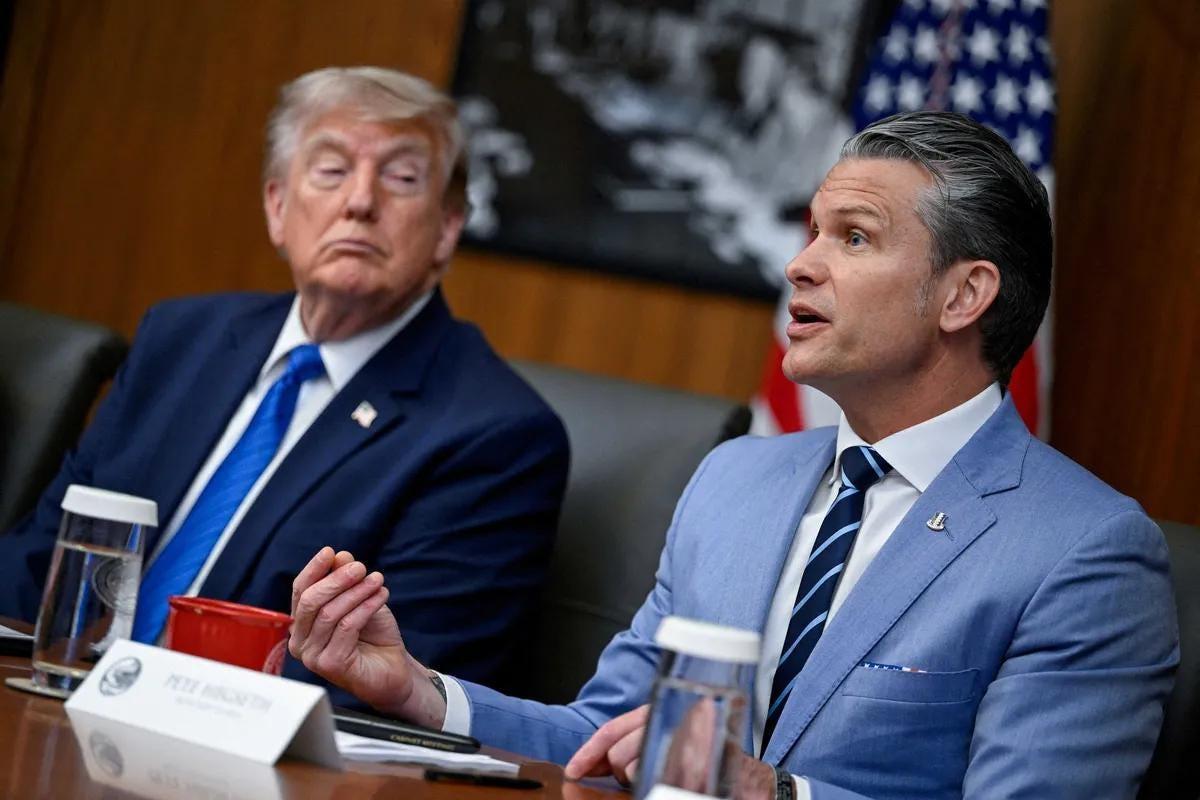
FILE PHOTO: U.S. President Donald Trump listens as Secretary of Defense Pete Hegseth speaks during a cabinet meeting at Camp David in Thurmont, Maryland, U.S., July 31, 2026. REUTERS/Daniel Heuer/File Photo
The Pentagon’s Accountability Vacuum Is a Choice
A Standoff With Names Attached
Federal News Network reports that Alex Velez-Green and Austin Dahmer, nominated by President Donald Trump in June 2025 for senior Pentagon policy posts, remain unconfirmed after testifying before the Senate Armed Services Committee that November. Committee Democrats do not support them, enough Republicans are withholding support to deny a majority, and Chairman Roger Wicker has declined to schedule votes, according to two unnamed sources. The reported dispute centers on lawmakers’ complaints that Pentagon policy chief Elbridge Colby’s office withholds information and communicates poorly with Congress.
Republicans Hold the Decisive Power
This is not a procedural mystery. Republicans control enough of the confirmation machinery to determine whether the nominations advance, but some are reportedly using inaction to express dissatisfaction with Colby. Wicker controls the committee schedule. Senators control their votes. Trump controls whether the White House continues backing nominees who cannot secure a committee majority.
Help fuel the work. Independent analysis doesn’t fund itself:☕ Buy us a coffee
No senator has reportedly placed a formal hold. That distinction matters because it exposes a quieter method of exercising power: refusing to assemble the votes, refusing to schedule the vote, and refusing to publicly claim responsibility for either decision.
The Nominees Are Leverage, Not Outsiders
Velez-Green and Dahmer are not merely bystanders stranded outside the Pentagon. Both already work inside Colby’s policy operation. Velez-Green serves as his chief of staff and was, according to the report, the principal architect of the 2026 National Defense Strategy. Dahmer is performing the duties of a deputy assistant secretary.
The Senate is therefore withholding titles while much of the underlying work continues. That weakens the confirmation process without necessarily removing the officials from influence. It creates the appearance of resistance while preserving an arrangement in which personnel who lack Senate confirmation can still help shape policy.
Congress Is Complaining About Its Own Weakness
Lawmakers from both parties have reportedly complained for months that Colby’s office does not adequately communicate or share information with Congress. Those concerns have intensified during continuing U.S. military operations against Iran.
If those complaints are accurate, the central issue is not bruised senatorial pride. It is whether Congress can perform oversight while military policy is being developed and executed. Yet the reported response is indirect: stall subordinate nominees rather than force a public accounting from the official whose conduct prompted the dispute.
That is institutional cowardice disguised as leverage. A confirmation bottleneck may inconvenience Colby, but it does not establish what information was withheld, compel its production, or tell the public how congressional oversight has been obstructed.
Ambiguity Protects Everyone in Charge
The article’s language of a “holdup” risks making deliberate institutional choices sound like administrative weather. Votes do not simply fail to occur. According to the reporting, Republican reluctance has denied the nominees sufficient support, while Wicker has chosen not to put the question before the committee.
The silence completes the structure. Wicker’s office and the White House did not respond to requests for comment. The Pentagon offered only that it looked forward to working with lawmakers. Each institution retains power; none publicly explains how it intends to use it.
Government by Unresolved Conflict
The immediate consequence is a Pentagon increasingly reliant on less-senior personnel, which the report says can slow decisions. The larger consequence is more revealing: formal offices remain vacant while acting or subordinate officials continue operating, congressional grievances remain opaque, and accountability dissolves into an indefinite personnel dispute.
This is how institutional power evades scrutiny without formally surrendering anything. The executive branch keeps its policy apparatus functioning. Senators signal displeasure without recording decisive votes. Committee leadership prevents a public reckoning. The vacancies are real, but so is the convenience of leaving responsibility vacant with them.
Thanks to Raw Story
Source: Frustrated GOP senators sending Trump’s Pentagon pointed message: report
Systemic Error is a reader-supported publication. To receive new posts and support my work, consider becoming a free or paid subscriber.
We warned them.We told them.We shouted from the rooftops.We plead.We begged.They didn’t listen.Now, we all will suffer.Y’all know what to do, right?VOTE BLUE! 💙Vote as if your life — nay, our country — depend on it.Because, this time, and every time, it does.
This is a public episode. If you'd like to discuss this with other subscribers or get access to bonus episodes, visit paulstsmith.substack.com/subscribe


