


এই এপিসোড সম্বন্ধে
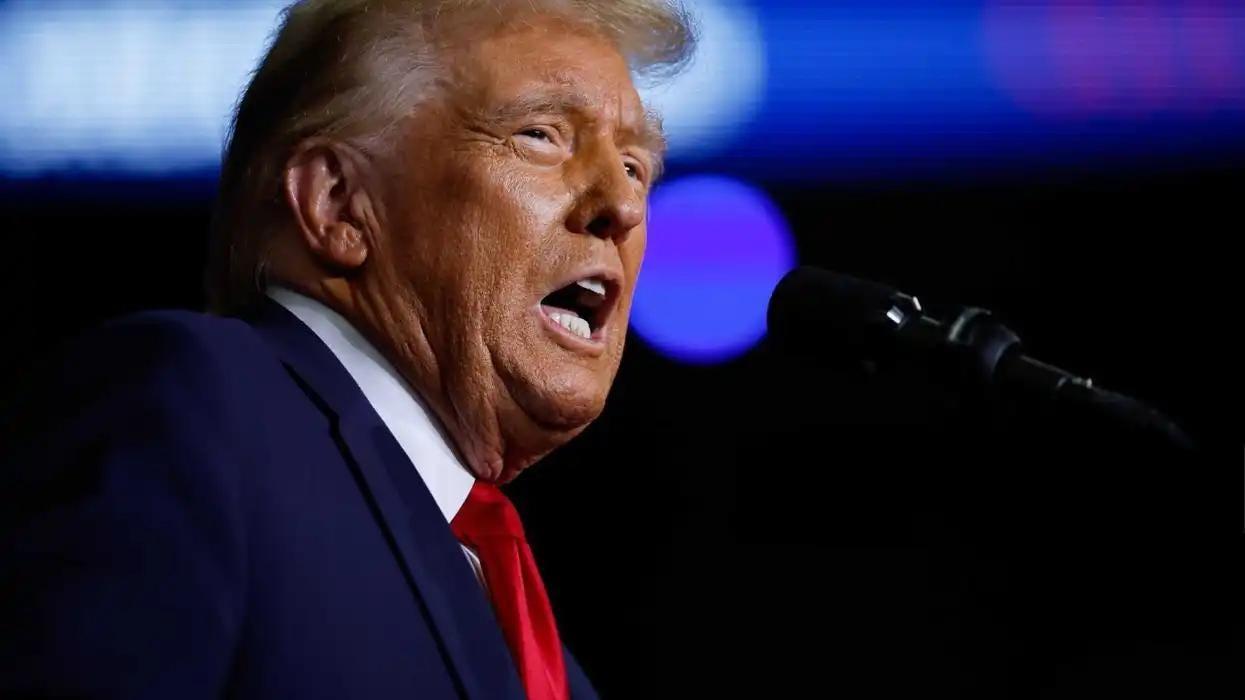
(Chip Somodevilla/Shutterstock.com)
The Smithsonian’s Real Offense Is Refusing a Sanitized America
A Museum Under Financial Siege
The fight over the Smithsonian is not an abstract dispute among historians. The Trump administration holds the executive branch, congressional Republicans control hearings and appropriations pressure, and the Smithsonian depends on the federal government for 62% of its funding—more than $1 billion annually. That is the power structure: an institution formally independent of the president but financially exposed to officials demanding ideological compliance.
President Donald Trump initiated the federal campaign with a March 2025 executive order condemning the Smithsonian’s supposed “divisive, race-centered ideology.” His administration followed with a White House report, an order for warning signs outside the National Museum of American History, and a demand that exhibits be rewritten in “unifying” language. Interior Secretary Doug Burgum then told the Smithsonian’s governing board that federal agencies could not continue supporting the institution under its existing leadership.
Help fuel the work. Independent analysis doesn’t fund itself:☕ Buy us a coffee
Calling this a debate over historical balance obscures what happened. The administration attached reputational attacks and an implicit funding threat to its preferred account of American history.
A Weak Exhibit Becomes a Useful Weapon
The administration did identify a legitimate curatorial failure. “The Electric Dr. Franklin” exhibit said Benjamin Franklin might have used enslaved people in electrical experiments while acknowledging that the evidence could not establish who assisted him. That possibility may warrant investigation, but presenting an eye-catching conjecture in an exhibition risks giving speculation the authority of institutional fact.
The White House turned that weakness into a license to prosecute the museum’s entire intellectual direction. Its report paired the Franklin language with decontextualized provocations: a child’s diary, an artifact from an exhibit on gay history and material from a staff-training document. Republican committee members then displayed the sexual artifact and demanded binary answers about its suitability for children.
This was not a serious evaluation of how an artifact functioned within an exhibit. It was culture-war staging: select the most inflammatory objects, strip away context and force museum leadership to defend itself before cameras.
“Unity” Means Government Control
The demand for a “basic consensus view” of national history sounds moderate only until the government claims the authority to define that consensus. American history contains slavery, dispossession, war, civil-rights struggles, technological achievement and democratic aspiration. Any “unifying” account must decide whose injuries can be softened so that somebody else can feel affirmed.
Former Smithsonian regent Garret Graves offered the conservative version plainly: the country committed “grave sins,” but remains “a net victory for the world.” That is a political judgment, not neutral history. It may belong in public argument, but federal officials cannot honestly impose it while accusing curators of ideology.
The reported pressure reveals the administration’s operative definition of bias: sustained attention to exclusion is political, while national celebration is merely factual. The distinction is false. Both involve selection, emphasis and interpretation.
Institutional Drift Made the Target Easier
The museum’s own failures matter because they created openings for coercion. For decades, it struggled to construct a coherent account of the country. A 2002 commission criticized its lack of organizational clarity and substantive balance. Later directors divided its holdings into thematic exhibits, but the resulting museum could still feel fragmented and disorienting.
After 2020, Smithsonian leaders explicitly elevated race, identity, inclusion and “critical conversations” as institutional priorities. The Biden White House encouraged some of that direction, including temporary displays recognizing heritage months. Conservatives on the governing board warned that the institution was becoming identified with one political camp.
Those choices deserve scrutiny. A publicly funded museum should distinguish documented history from speculation, explain its interpretive standards and avoid substituting activist vocabulary for argument. But administrative drift does not transfer curatorial authority to the White House. Institutional weakness explains vulnerability; it does not justify political capture.
Independence Without Protection Is a Fiction
The Smithsonian’s governing structure supposedly insulates it from presidential command. That protection proved thin. Trump publicly claimed to fire National Portrait Gallery director Kim Sajet despite lacking the authority to remove her. She left anyway, reportedly hoping to spare the institution. Smithsonian Secretary Lonnie Bunch later announced his departure, saying the experience had been stressful.
That is how coercion works even when formal authority is absent. Officials create personal costs, threaten institutional resources and demonstrate that resistance will prolong the punishment. The target then makes a nominally voluntary decision under conditions created by those officials.
Congressional spectacle reinforces the pressure. The hearings described in the reporting were not designed to resolve the museum’s longstanding problems of chronology, interpretation or architecture. They converted curatorial disputes into loyalty tests and treated cultural discomfort as evidence of institutional misconduct.
The State Wants a More Obedient Past
The larger pattern is not that historical institutions became political only after 2020. Museums have always made political choices about what to collect, display and omit. The change is that federal power is now being used openly to discipline those choices while calling the resulting intervention “accuracy.”
The Smithsonian should answer for unsupported conjecture and incoherent presentation. But those correctable failures are being used to rationalize something more consequential: executive officials and congressional allies leveraging money, hearings and public intimidation to narrow the range of history a national institution may present.
A government that orders warning signs outside a museum is not removing politics from history. It is marking independent interpretation as suspect—and teaching every federally dependent institution that survival may require a more obedient version of the past.
Thanks to Alter Net
Source: ‘Crotch harness’ in the Capital: How Trump just weaponized the Smithsonian
Systemic Error is a reader-supported publication. To receive new posts and support my work, consider becoming a free or paid subscriber.
We warned them.We told them.We shouted from the rooftops.We plead.We begged.They didn’t listen.Now, we all will suffer.Y’all know what to do, right?VOTE BLUE! 💙Vote as if your life — nay, our country — depend on it.Because, this time, and every time, it does.
This is a public episode. If you'd like to discuss this with other subscribers or get access to bonus episodes, visit paulstsmith.substack.com/subscribe


