


এই এপিসোড সম্বন্ধে
REUTERS/Evan Vucci
The Senate Is Not a Convalescent Home for Power
The Evidence—and Its Limits
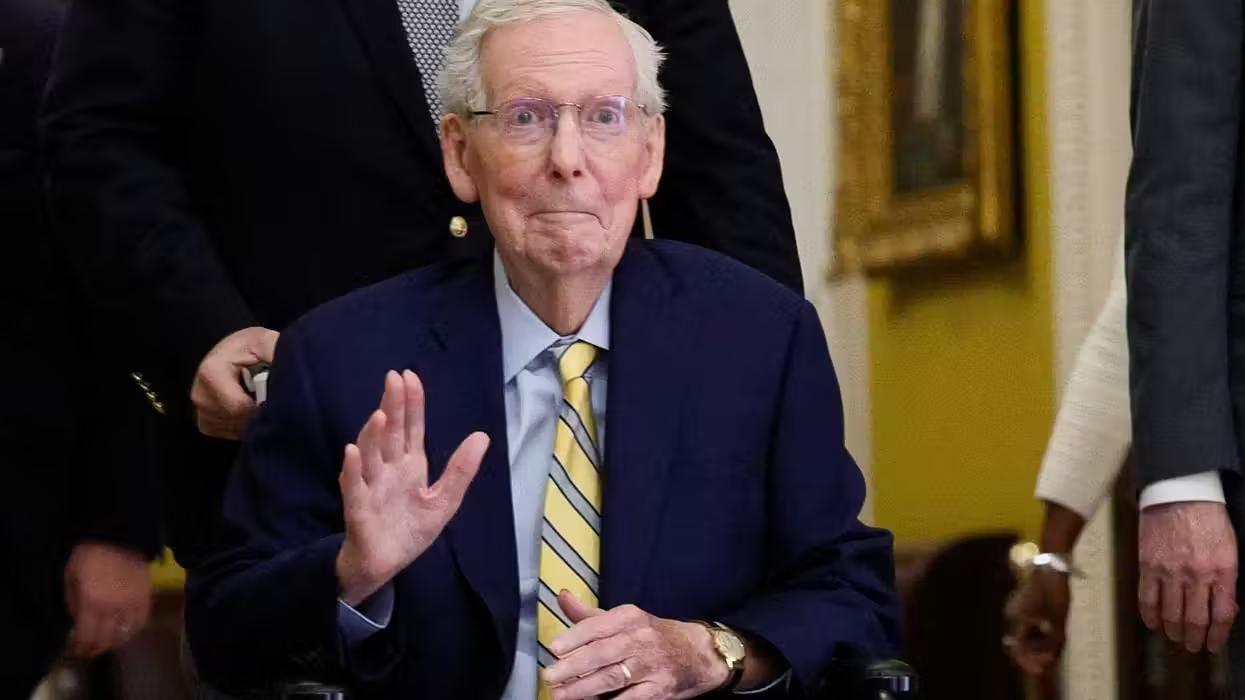
Mitch McConnell returned to the Senate after a prolonged medical absence looking visibly infirm and, in brief footage, appearing only minimally responsive. Psychologist John Garrison interpreted his expressions and interactions as possible signs of neurological impairment and questioned whether he could understand legislation. But a video clip is not a neurological examination. The reporting supplies grounds for concern, not a diagnosis.
The Wrong Expert Is at the Center
The article makes Garrison’s reading of McConnell’s smile the main event: Was it spontaneous? Did staff “train” him? Did he look confused during a handshake? That is speculation presented with the vocabulary of clinical authority.
Help fuel the work. Independent analysis doesn’t fund itself:☕ Buy us a coffee
Facial expressions cannot establish legislative capacity. Repeating “neurological” does not turn body-language commentary into medical evidence. By centering an outsider’s interpretation of footage, the article converts an institutional accountability failure into a spectacle about one elderly man’s face.
Its framing is weak because it pursues certainty where the available evidence cannot provide it—and neglects the people who possess relevant information.
Power Belongs to the Gatekeepers
McConnell’s staff controlled what the public saw. According to the source, people around him minimized the hospitalization as a matter requiring rehabilitation, released two photographs as questions mounted, and managed his eventual return to the Senate.
Those aides may have had legitimate reasons to protect private medical information. But they were also protecting a powerful officeholder’s political position. When staff ration evidence through selected photographs and choreographed appearances, they are not passive caregivers. They are political operators controlling access to facts about whether a senator can perform public duties.
The sharper question is not whether McConnell “remembered how to smile.” It is who decided that a smile, a wave, and a managed appearance were sufficient substitutes for credible disclosure.
Capacity Is an Institutional Question
A senator does not merely occupy a chair. He votes on laws, confirms officials and judges, and exercises power whose consequences fall on millions of people. If McConnell could not understand what he was voting on, the problem would extend far beyond his health. Staff, colleagues, and party officials who enabled him to remain in office would share responsibility for preserving authority without accountable judgment behind it.
The source does not prove that McConnell lacked capacity. It does show why reassurance from invested subordinates is inadequate. The Senate’s legitimacy cannot rest on aides insisting that their principal is fine while releasing carefully selected fragments of his condition.
Secrecy Creates the Spectacle
“Proof of life” rumors and amateur diagnoses flourish when institutions conceal meaningful information. That does not make the rumors responsible. It means opacity has predictable consequences.
McConnell’s circle appears to have treated disclosure as a threat to be managed rather than an obligation attached to public power. The article then follows that strategy’s logic by obsessing over visual clues instead of examining the machinery maintaining his position. The weaker actor—the visibly ill individual—becomes the entire story, while the healthier people arranging the scene recede from view.
The Office Outlives the Officeholder
This episode reveals a broader pattern: American political institutions are built to preserve incumbency more reliably than they are built to establish capacity. Parties want the seat, aides want continuity, colleagues prefer discretion, and the public receives curated images.
The result is not confusion but an incentive structure. Everyone surrounding a powerful officeholder can benefit from keeping the institution moving while refusing to say who is actually exercising judgment. The systemic error is a government willing to accept the appearance of functioning when identifying the people making decisions would be politically inconvenient.
Thanks to Alter Net
Source: ‘Brain is not working’: Psychologist ‘skeptical’ McConnell is fit to serve
Systemic Error is a reader-supported publication. To receive new posts and support my work, consider becoming a free or paid subscriber.
This is a public episode. If you'd like to discuss this with other subscribers or get access to bonus episodes, visit paulstsmith.substack.com/subscribe


