

এই এপিসোড সম্বন্ধে

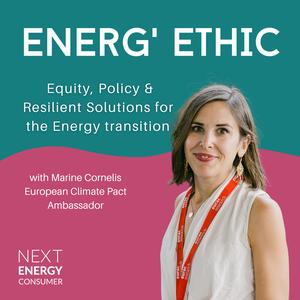
EUSEW turns 20. To mark it, Marine Cornelis sits down at the European Sustainable Energy Week with three people who have spent two decades inside EU energy policy: Thomas Nowak (heat pumps and buildings), Dušan Jakovljević (industrial energy efficiency) and Heike Winkler (offshore wind and the North Sea).
The conversation treats EUSEW as a mirror. What it foregrounds, and what it sidelines, tracks whatever the Commission has in vogue, from hydrogen to carbon capture, often at the expense of people, consumers and energy poverty.
What we get into:
Why a convening that reflects priorities struggles to set them, and how limited slots turn the agenda into a zero-sum game
Electrification as the efficient core of the system, and the "primary energy fallacy" still used against it
Re-industrialisation, green hydrogen and jobs, and where a top-down European approach might have moved faster
The single market's unfinished business, and the real cost of member-state deviations
Why EUSEW keeps talking to the already-convinced, and how to bring member states and silos into the same room
Parallel agendas, from the New European Bauhaus to energy poverty and citizen advisory hubs, and the risk of fragmentation
A stocktake of what changed, what was harder than it should have been, and what a fair, socially accepted transition still demands.
Energ'Ethic, with Marine Cornelis of Next Energy Consumer: the energy transition examined through the people it touches and the systems that govern it. If you are working on a related mandate or research question, you can reach her at contact@nextenergyconsumer.eu
Energ' Ethic goes out every other week.
Keep up to date with new episodes straight from your inbox
Reach out to Marine Cornelis via BlueSky or LinkedIn
Music: I Need You Here - Kamarius
Edition: Podcast Media Factory
Support Energ'Ethic on Patreon
© Next Energy Consumer, 2026
Hosted on Ausha. See ausha.co/privacy-policy for more information.


