WEBVTT
00:00:00.640 -->
00:00:10.720Hello, my name is Steve Brachmann, and welcome to IP Innovators, where we profile the careers of patent attorneys and explore how technology and legal practice has advanced with time.
00:00:10.720 -->
00:00:18.399This podcast is brought to you by Deep IP, the first trusted AI-powered patent assistant integrated into Microsoft Word.
00:00:18.399 -->
00:00:25.600Deep IP helps patent professionals draft better patents faster and analyze office actions to craft responses that win.
00:00:25.600 -->
00:00:33.200By handling tedious tasks, DeepIP frees you to focus on delivering higher quality work and greater value to your clients.
00:00:33.200 -->
00:00:35.679Fully customizable, it adapts to your style.
00:00:35.679 -->
00:00:38.399So it sounds like you, only quicker and sharper.
00:00:38.399 -->
00:00:42.960Trusted by top law firms and in-house teams across the US and Europe.
00:00:42.960 -->
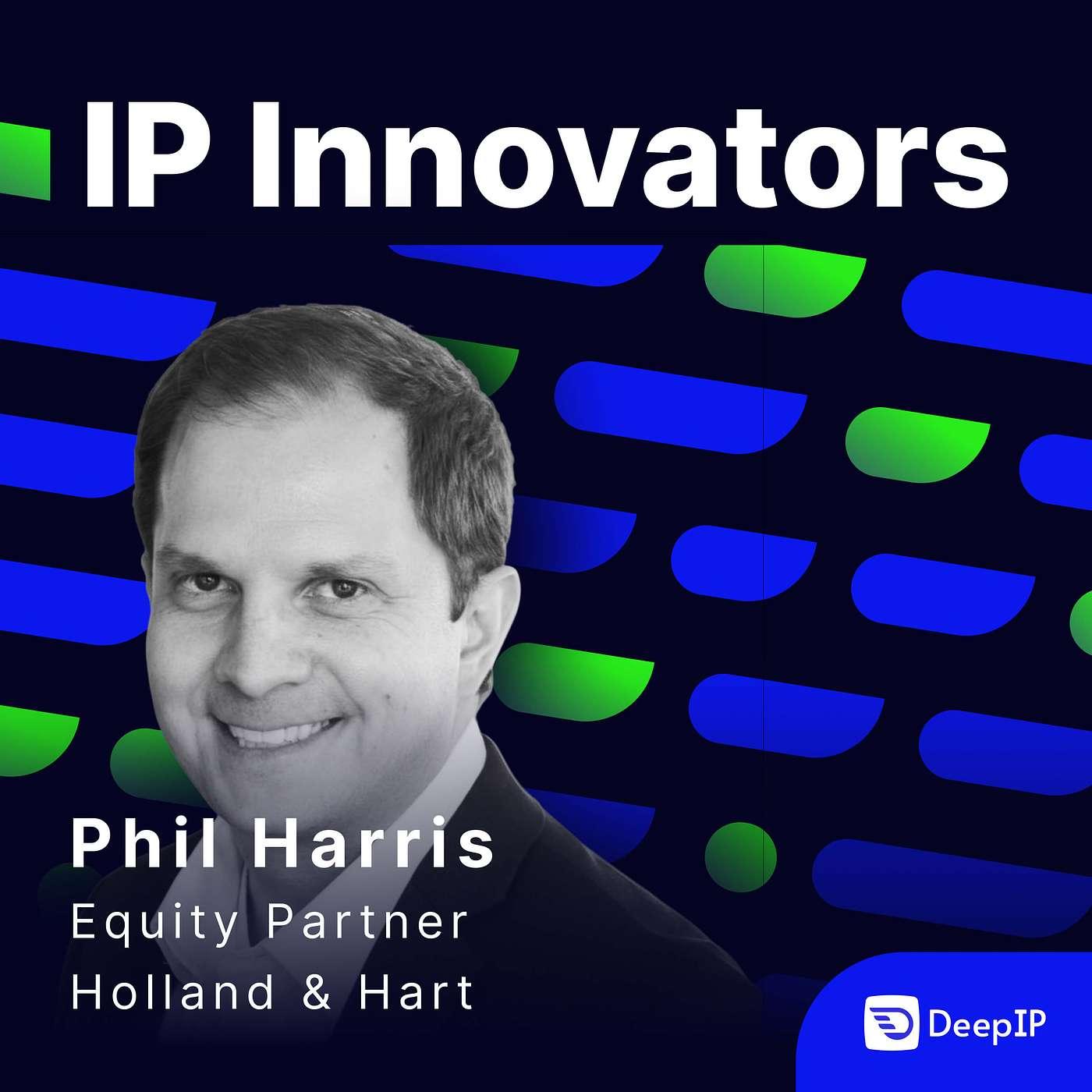
00:00:48.560Today I am joined by Phil Harris, partner and patent practice group leader at Holland & Hart.
00:00:49.039 -->
00:00:51.359Phil, thanks for the time to chat with us today.
00:00:51.679 -->
00:00:52.719Yeah, thanks, Steve.
00:00:52.719 -->
00:00:53.840Thanks for having me.
00:00:54.159 -->
00:01:03.359So if we could start by just talking about where did you first come into contact with the idea of patent law and decide that this was a career that you wanted to get into?
00:01:03.920 -->
00:01:08.719Yeah, we're gonna rewind a couple decades back to when I was a teenager.
00:01:08.719 -->
00:01:12.239Uh my dad actually is a mechanical engineer.
00:01:12.239 -->
00:01:22.239He worked building airbags for cars, testing those, then doing X-ray technology uh for various things like CT scans and stuff like that.
00:01:22.239 -->
00:01:30.480Uh and then I had a really good mentor that lived just down the street, who is also an engineer by trade, uh, but had uh explored the patent field.
00:01:30.480 -->
00:01:32.400So I talked a little bit with him.
00:01:32.400 -->
00:01:45.280And although I enjoyed you know seeing some of the things that my dad and other engineers did, I didn't know that I would be able to be the number cruncher and be able to dive that deep for that long for a couple decades.
00:01:45.280 -->
00:01:50.959So I looked closer at patent, uh the patent arena and really enjoyed that.
00:01:50.959 -->
00:02:02.640Uh, really enjoyed the problem solving aspect, some of the writing, which I also enjoyed, and decided to go that route uh as I was kind of working my way through my undergrad studying mechanical engineering.
00:02:03.519 -->
00:02:05.200So undergrad at...
00:02:06.159 -->
00:02:15.039Yeah, I went to uh BYU studying mechanical engineering with a bunch of emphasis also in electrical engineering and then a minor with, in some math.
00:02:15.039 -->
00:02:18.080So lots of fun engineering stuff going on.
00:02:18.400 -->
00:02:18.639Great.
00:02:18.639 -->
00:02:21.919And then did you follow that directly to law school?
00:02:22.319 -->
00:02:22.800I did.
00:02:22.800 -->
00:02:34.639Yeah, I was probably one of the few people because I had kind of figured out where I wanted to go, uh thought that I would go directly there as opposed to working in the industry uh as an engineer.
00:02:34.639 -->
00:02:44.080Although I did have a couple externships while I was an undergrad with some uh law practices, trying to just get my feet wet, see if that was something that I was looking at.
00:02:44.080 -->
00:02:52.400I actually interned uh with a personal injury firm uh for a couple, a little while and really enjoyed that.
00:02:52.400 -->
00:03:00.240It was fun to see some of the interesting cases there, and then jumped off to law school and ended up at George Washington University out in DC.
00:03:01.599 -->
00:03:01.919Great.
00:03:01.919 -->
00:03:04.000And then it's your time at George Washington.
00:03:04.000 -->
00:03:10.479Uh, did you intern anywhere that uh ended up sticking with you as you uh left school?
00:03:10.879 -->
00:03:12.000Yeah, yeah, for sure.
00:03:12.000 -->
00:03:15.520So my first summer actually was a really fun time.
00:03:15.520 -->
00:03:20.479I worked at the American Red Cross, uh, which is really famous for its IP, among other things.
00:03:20.639 -->
00:03:20.800Okay.
00:03:20.960 -->
00:03:27.199Uh helping enforce their IP, including medical marijuana at the time, which was kind of just getting going.
00:03:27.199 -->
00:03:34.639Um, my second summer, I worked uh with the Federal Circuit in Judge Rader's chambers, Chief Judge Rader at the time.
00:03:34.639 -->
00:03:45.840I really enjoyed that and worked through uh my second year uh into my third year with Judge Rader, and then uh ended up graduating and ended up with a firm out in DC.
00:03:45.840 -->
00:03:54.080Uh it was actually kind of a funny story because I ended up with Stern Kessler, Goldstein, and Fox uh in DC, but we ended up meeting in Chicago.
00:03:54.080 -->
00:04:02.400We both flew from DC, even though we were just a couple miles away, met in Chicago, then we both came back and ended up there uh in the long term.
00:04:02.400 -->
00:04:03.599So yeah, it was great.
00:04:03.840 -->
00:04:04.080Great.
00:04:04.080 -->
00:04:06.960And then you've been at Holland & Hart for how long now?
00:04:07.439 -->
00:04:11.599Yeah, I've been here a little over a decade, uh, about 11 or 12 years.
00:04:11.599 -->
00:04:25.279Uh I've really enjoyed it, loved my time with Stern Kessler, and uh nothing but great things to say there and really great people, but we had some family uh needs that took us, uh took us back this way out toward the west.
00:04:25.279 -->
00:04:33.600And so working with Holland & Hart, which is headquartered, our IP team at least, is headquartered in Colorado and Utah and kind of in the mountain west.
00:04:33.600 -->
00:04:47.759Uh, so working with them uh came over initially to focus and and work on some litigation, uh IP litigation, along with patent prep and pros, which I had done during my time uh at Stern Kessler as well.
00:04:47.759 -->
00:04:56.319And then also focus on uh kind of PTO litigation or post-grant work related to IPRs and PGRs and things like that.
00:04:56.959 -->
00:04:57.360Great.
00:04:57.360 -->
00:05:12.399So one thing that I'm interested in with your electrical engineering background, your study in school, did you find that what you studied in school translated directly to some of the technologies you were going to prosecute early career?
00:05:12.399 -->
00:05:16.480Or did you find yourself kind of stepping out into new territory?
00:05:17.199 -->
00:05:18.639Yeah, some of both, Steve.
00:05:18.639 -->
00:05:28.879I would say there were definitely some clients where it was helpful if you had a class in a specific area like fluid dynamics, and then you were working on engines.
00:05:28.879 -->
00:05:33.199That was one client that I started off kind of breaking, you know, cutting my teeth on.
00:05:33.199 -->
00:05:34.240That was really helpful.
00:05:34.240 -->
00:05:38.480Had I not had that class, it would have been an even steeper learning curve.
00:05:38.560 -->
00:05:38.800Yeah.
00:05:39.040 -->
00:05:45.680Um, although, you know, on the flip side, by definition, hopefully, a lot of patent law relates to new things, right?
00:05:45.680 -->
00:05:53.439So you can have a basis of the textbook that was written by the professor in a lot of cases that helps give a good foundation.
00:05:53.439 -->
00:06:04.720But a lot of times, particularly with the clients that that I've been working on at the places I've been, uh, the they're really sophisticated engineers and people that have been in the industry for decades.
00:06:04.720 -->
00:06:07.040And so they're leading their fields.
00:06:07.759 -->
00:06:14.480And so the you know, the 101 or 201 type level class may or may not give you the full background.
00:06:14.480 -->
00:06:18.800So there's always a little bit of ramp up that's needed.
00:06:18.800 -->
00:06:22.959Um, but over time that also does get better as you build your knowledge base.
00:06:23.279 -->
00:06:25.920Yeah, I'm wondering what does it look like?
00:06:25.920 -->
00:06:30.399I mean, as lawyers, we have continuing learning education requirements.
00:06:30.399 -->
00:06:38.560Uh, as someone who's working in pros, though, how important is it to continue learning about the areas that you're prosecuting in?
00:06:39.279 -->
00:06:40.879Yeah, I would say critical.
00:06:40.879 -->
00:07:06.720Uh, if you're, if you just rely on the knowledge base that you have and say, oh yeah, I know everything out there, uh, you're not gonna quite capture maybe some of the nuances or the additional scope that somebody who is on the leading edge that would ask different questions that would push the inventors to think about where are you going or where are we going in the next three to five years or even the next decade, you're not gonna ask those same questions.
00:07:06.720 -->
00:07:10.959And I think we do see that from time to time as we try to push people.
00:07:10.959 -->
00:07:20.399The you know, the inventors, the engineers respond in a little bit different way when they say, Oh, well, let me think about that, or maybe they haven't considered that.
00:07:20.399 -->
00:07:29.199Um, there is obviously on-the-job training, you know, we help make sure that people that are new get the reps that they need to help build up that knowledge base.
00:07:29.199 -->
00:07:40.000There's a lot of supervision that goes into that because somebody that's brand new to a really cutting-edge field, like we often work on, may or may not know what's going on, or they may not know what they don't know.
00:07:40.319 -->
00:07:41.279Right, right.
00:07:41.279 -->
00:07:44.000And learning curves are steep.
00:07:44.319 -->
00:07:50.399They are, they're really steep, especially for those people that might be learning new technology as well as the law.
00:07:50.399 -->
00:07:54.319There's a couple intersecting learning learning curves all at the same time.
00:07:54.319 -->
00:08:06.000And so it can become the perfect storm of learning curves quickly if you don't have the right mentorship and and training and other people helping to orient you and make sure that you're in good shape.
00:08:06.240 -->
00:08:06.399Right.
00:08:06.399 -->
00:08:13.120And depending on which area of technology you're working in, the law might be a little just hairier to deal with at certain points.
00:08:13.439 -->
00:08:13.920That's right.
00:08:13.920 -->
00:08:14.319Yeah.
00:08:14.319 -->
00:08:23.040Different technology areas have different focuses, or some of the rejections that you might see on the preparation and prosecution side are going to be more focused.
00:08:23.040 -->
00:08:27.040You know, 101 is one of those areas, patent subject matter eligibility.
00:08:27.040 -->
00:08:41.840Um, other areas don't see a lot of those, and it's more about other aspects, you know, 112 support and making sure that you're calling out lots of different, very specific alternatives uh under means plus function or various other uh options.
00:08:41.840 -->
00:08:43.120So, yeah, exactly.
00:08:43.440 -->
00:08:58.399So if we can drill down into technologies that you focused on during the course of your career, would you say that there are certain technology areas uh you focus more on in prosecution or any of your work in postgrant, would you say?
00:08:59.360 -->
00:09:01.200Yeah, there's a few different areas.
00:09:01.200 -->
00:09:08.960A lot of my work and our group's work uh we is in a few different technology areas, including some institutional clients.
00:09:08.960 -->
00:09:19.039We do a lot uh with wireless communication technology, uh memory technology, cloud computing, and kind of data processing, analytics, things like that.
00:09:19.039 -->
00:09:23.279Uh, we do a lot with AI, uh, and that's kind of grown over time.
00:09:23.279 -->
00:09:31.679Uh, we also do a lot with medical devices and diagnostic information and various things there, along with other areas.
00:09:31.679 -->
00:09:38.320I think it depends a little bit as your clients grow and as their technologies develop, as new clients come on.
00:09:38.320 -->
00:09:49.279Uh, we continue to evolve and as we continue to grow as a team and spread our kind of the areas that we're working in, then those continue to focus and be some of those areas.
00:09:49.279 -->
00:09:51.600Obviously, some are heavier than others.
00:09:51.600 -->
00:10:07.519Uh, in the post grant side, we have typically handled uh more sophisticated or complex technology, uh, just which is the same as our prosecution side, but a lot of our work has been there, uh, along with some other things on you know, wearable devices and other things like that.
00:10:07.840 -->
00:10:08.159Okay.
00:10:08.159 -->
00:10:17.919And for wireless memory or any area you might have been worked on over time, is there a particular area of technology that you've seen advance?
00:10:17.919 -->
00:10:26.399Uh not out of time, but just, you know, has become more robust than you would have expected from early career to now?
00:10:27.120 -->
00:10:28.639Yeah, I think so, Steve.
00:10:28.639 -->
00:10:30.559There's a couple things that come to mind.
00:10:30.559 -->
00:10:32.960One is is memory itself.
00:10:32.960 -->
00:10:48.399Uh, you know, I remember early in my career, and whether it was in undergrad or otherwise, you would, you know, have your jump drive that had 256 megabytes or something on it, and you would plug it in to save your documents and you're taking those over to the printer.
00:10:48.399 -->
00:10:54.399And then now, as we as in the areas that we work on, uh that's continued to evolve.
00:10:54.399 -->
00:11:02.639There's still obviously the need for memory, but you know, with with big partners out there and people that are really, really accelerating that.
00:11:02.639 -->
00:11:15.279I mean, memory that we can fit now onto the palm of our hand or even to our fingertip can hold terabytes more and gigabytes more than what we would have seen, you know, even a decade ago.
00:11:15.279 -->
00:11:18.240The pace of memory, I think, has just been astounding.
00:11:18.240 -->
00:11:22.480There's lots of different technical areas that we, you know, we could hit on a little bit.
00:11:22.480 -->
00:11:29.120Um, the other one that I think comes to mind that's just kind of complementary to that is just the wireless communication space.
00:11:29.120 -->
00:11:42.480There's so much communication going on, so many devices that we all have, whether it's a wearable, whether it's a watch, whether it's a ring, whether it's your phone, whether it's all the things out in the environment, you know, our cars.
00:11:42.480 -->
00:11:52.559Uh, there's all sorts of interactions now that even a decade or two or three ago would have just seen like the Jetsons, you know, the far distant future.
00:11:52.960 -->
00:11:59.919Yeah, and I really take to heart that bit about memory, uh, memory technologies advancing.
00:11:59.919 -->
00:12:10.240I can remember in high school, which for me was in the mid-1000s, uh, just the idea of having a flash drive to go from home to a high school computer was astounding to me at the time.
00:12:10.240 -->
00:12:12.320I'm learning what a USB port is.
00:12:12.320 -->
00:12:25.039And now, here today, 20 years later, I'm recording this podcast to uh an external hard drive that probably for a little more of the price, to be honest, this holds a terabyte.
00:12:25.039 -->
00:12:29.919And I think that old flash drive may have had like 50 megabytes.
00:12:30.480 -->
00:12:31.200Exactly.
00:12:31.200 -->
00:12:31.919Exactly.
00:12:31.919 -->
00:12:44.080It's one of those, like it's one of you know, the younger generation or those that continue to come up, and my kids just will never understand the I gotta have my flash drive with me so I can take it, take it here or there.
00:12:44.080 -->
00:12:51.440Especially even now, I mean, a lot of devices, as we're, you know, the future unfolds won't have those same ports, right?
00:12:51.440 -->
00:13:01.919Or and so much of what we do now is streaming or is just communicated that way that that's almost uh you know, continuing to evolve into the next generation.
00:13:01.919 -->
00:13:07.919Obviously, we're still going to need the memory to store that, but the interface and other things is just completely different.
00:13:08.320 -->
00:13:09.600Yeah, point well taken.
00:13:09.600 -->
00:13:14.639With a lot of streaming media now, it's you know, you don't own the DVD anymore.
00:13:14.639 -->
00:13:23.279You don't take home the video from Blockbuster, you're accessing their server, and it's a just totally different way of storing that information and accessing it.
00:13:23.840 -->
00:13:25.279Absolutely.
00:13:25.840 -->
00:13:31.919Well, I think that's a decent enough segue into looking into tech in legal practice.
00:13:31.919 -->
00:13:52.159Uh, if we've seen ways that technologies you've prosecuted have advanced, can you think about early back in your career and just the state of technology in office work or interning and any pain points you can remember dealing with just because of the state of technology versus what seems easy today?
00:13:53.440 -->
00:13:56.320Yeah, actually, I think probably two things come to mind.
00:13:56.320 -->
00:13:59.759One is a little bit of what I'll call cultural technology.
00:13:59.759 -->
00:14:04.720Um, you know, we I remember when I started out, we had the paper files, right?
00:14:04.720 -->
00:14:08.799These three trifold files where people were folding it.
00:14:08.799 -->
00:14:14.320You know, one side was for PTO correspondence, and all the other things were laid out in the file.
00:14:14.320 -->
00:14:20.879We were signing letters to the client to report things out that said, hi, client, you know, we received this document.
00:14:20.879 -->
00:14:22.000Here you go.
00:14:22.000 -->
00:14:25.200Um, now that's just seems so archaic.
00:14:25.200 -->
00:14:32.879And obviously, lots of firms, ours included, have long since moved to uh tech, you know, electronic files and other things.
00:14:32.879 -->
00:14:53.120But even the way that we work, jumping on Zoom and other things, as opposed to everybody walking themselves down to their boardroom or their conference room, even the cultural piece behind the work that we do, I think is a lot different, not only because of COVID, but it especially because of COVID, uh, just quite different from a while ago.
00:14:53.120 -->
00:15:06.960The other thing that comes to mind is just some of the tools and specific things that have been developed over time by really great innovators uh that make the work better or clients happier or the work easier.
00:15:06.960 -->
00:15:18.159Um, one of the things that came to my mind as you were talking was, you know, thinking about some tools that help us track what references we file in the US in applications.
00:15:18.159 -->
00:15:26.799So one of the things that we have to do is file certain things that we or others might be aware of for cases that matter and that are material.
00:15:26.799 -->
00:15:37.360Uh, there's all, you know, we used to do that, and some people I'm sure still do with big old spreadsheets and making sure that your little X is in the right place and everything was cross-sighted.
00:15:37.360 -->
00:15:57.039There's lots of ways now that um services or internal tools that we use uh that allow us to do that not only in a better way, but a more efficient and more effective way without relying on the person to very carefully note those little X's that can be make or break X's in a way.
00:15:57.039 -->
00:15:59.039So those are a couple that come to mind.
00:15:59.360 -->
00:16:05.759Yeah, and uh so much with patent prosecution, patent management, IP management.
00:16:05.759 -->
00:16:25.519I mean, if you're talking trademarks too, is all about tracking so many tiny details, whether that's and I are you talking specific to information disclosure statements there or yeah, that was my example, but I think there's many, many examples to your point, Steve.
00:16:25.679 -->
00:16:51.200Tiny details that still need make people to make sure that there's the right level of oversight, that you're satisfying the standards, but when it's trying to make sure is our spreadsheet or is our record accurate, something that we can leverage those tools that continue to just accelerate forward and augment uh the way that we would have done it before, or the the paralegals, um, you know, very careful double checking of all the X's.
00:16:51.200 -->
00:16:51.840Right.
00:16:51.919 -->
00:16:52.240Yeah.
00:16:52.240 -->
00:16:57.840And how much easier is it to do with uh analytics software versus Microsoft Excel today?
00:16:57.840 -->
00:17:13.920Exactly. Yeah, much less other tools that kind of uh can flag uh whether something should be filed, can be even proactive, not just the tracking piece, but can help help with some of the ticklers of the management in addition to the actual tracking.
00:17:14.160 -->
00:17:14.559Yeah.
00:17:14.559 -->
00:17:22.400So I know when we had spoken before, you had said Holland & Hart has done a lot of work to develop some internal tech tools.
00:17:22.400 -->
00:17:26.240I don't know if you're able to talk to uh some of those today.
00:17:26.720 -->
00:17:29.039Yeah, yeah, I can give a little bit on that.
00:17:29.039 -->
00:17:31.759So our our group is pretty unique.
00:17:31.759 -->
00:17:47.279Uh, and those of us that have kind of migrated here or have been homegrown uh for more than a decade, we have tried to and successfully innovated in a few different ways in patent preparation and prosecution, as well as others.
00:17:47.279 -->
00:17:55.599Uh, you know, starting over a decade ago, a bunch of different practitioners, you know, we kind of thought to ourselves, how can we do this better?
00:17:55.599 -->
00:18:04.400There's lots of things where we're steeped in technology, we're learning about other people's technology, how can we leverage some of that technology to help us?
00:18:04.400 -->
00:18:06.720And we looked for a bunch of different ways.
00:18:06.720 -->
00:18:18.319And it started out with uh different practitioners, you know, lawyers, patent agents, and others uh saying, well, let's create this little tool that helps us do this one task that's pretty repeatable.
00:18:18.319 -->
00:18:38.160You know, maybe sending a client email where we want to send the, we want to send the same five emails for this type of task almost every time across our clients or for the same client, trying to make that repeatable, uh uniform, and also predictable for the clients so that when they see that information, they know exactly what they're gonna see.
00:18:38.160 -->
00:18:39.119It's similar.
00:18:39.119 -->
00:18:42.000It also helps with uniformity across the team.
00:18:42.000 -->
00:19:08.720And so we developed a bunch of different automation, machine learning, and other tools to start out things like email, you know, email drafting, uh, generating certain shells for certain documents, trying to make sure that we're tracking things internally, and also just other tools that whether it helped on the client side or even internally, that helped our procedures and processes be efficient as we continue to grow the team and really exploded in that way.
00:19:09.119 -->
00:19:09.440Yeah.
00:19:09.440 -->
00:19:23.920Are there certain aspects of practice where the tech that Holland & Hart has developed and implemented is more automated versus other areas that might be using more artificial intelligence?
00:19:24.799 -->
00:19:25.680Yeah, there is.
00:19:25.680 -->
00:19:39.039So there are a couple areas that are more automated type tools that do tasks that a person can do by themselves, but will just take more time and more energy or and just more increase the cost.
00:19:39.039 -->
00:19:52.160One of those is having bots that will save different emails into our document management system rather than a person going and grabbing that email and saving it over and labeling it in a certain way.
00:19:52.160 -->
00:19:54.319We have automation that can help with that.
00:19:54.319 -->
00:19:58.160And there's lots of other people that uh also have similar ideas.
00:19:58.160 -->
00:20:13.359Um, that's a good example where you could have somebody do that and it would be done accurately, but having it done automatically allows our team to really free up their time to focus on was that done correctly, double check it, and then move on to the next thing.
00:20:13.359 -->
00:20:21.359We have continued to develop, and we've been using AI and machine learning, you know, as we use those terms, maybe a little bit loosely for a long time.
00:20:21.359 -->
00:20:53.839Obviously, as Gen AI has become more of the forefront, we continue to innovate in that way with having tools that help generate certain documents that are more tailored, accounting for maybe PTO or other public information, as well as allowing for practitioner type inputs that can then be uh augmented through the use of AI or other type tools in addition to the other things that practitioners will be doing for a given project, like drafting a patent application or working on an office action response, things like that.
00:20:54.079 -->
00:20:54.319Yeah.
00:20:54.319 -->
00:21:01.599And then so Holland & Hart is also working with some outside vendors, uh, as per our previous conversation.
00:21:01.599 -->
00:21:11.680How do you balance uh internally what can get developed in-house versus what you have to look for an external solution for?
00:21:12.480 -->
00:21:19.200Yeah, it's a little bit of uh case by case, depending on the application and depending on the tool.
00:21:19.200 -->
00:21:32.079Um, one of the things that we have done that's that's unique uh but no secret is uh having an internal team that helps us with developing coding tools to help us kind of develop those tools internally.
00:21:32.079 -->
00:21:40.720Um, some of the factors that we weigh to your question, Steve, are you know, is this something that will take our team what amount of time?
00:21:40.720 -->
00:21:50.160And is that something that we want to take at cost, or is it something that somebody else has already done the cost development or the product development and already has it there?
00:21:50.160 -->
00:21:51.759Um so that's one thing.
00:21:51.759 -->
00:21:57.920Uh it also depends a little bit on how bespoke the implementation should be.
00:21:57.920 -->
00:22:01.920Um, and and we also want to be really thoughtful about our clients.
00:22:01.920 -->
00:22:07.359You know, they're our our prime objective and the thing that drives our decision making the most.
00:22:07.359 -->
00:22:10.400So, you know, what do clients think about certain things?
00:22:10.400 -->
00:22:21.519Is this more of a tool that's going to help us as practitioners, like, you know, checking IDSs, or is it going to be something that is going to relate to client data and will be used in that way?
00:22:21.519 -->
00:22:24.720And we obviously want to be really thoughtful about those things.
00:22:24.720 -->
00:22:30.559Security is maybe one thing I would call out that uh a lot of the legal industry is thinking about.
00:22:30.559 -->
00:22:47.279We, of course, make sure that we're reaching out to clients, that we're careful and how that works, so that we're balancing that as we're considering new implementations or new tools that maybe there's some that we could develop in-house, some that we can also look at what's on the shelf out there.
00:22:47.279 -->
00:22:50.319Uh, I think that's another big thing that we look for.
00:22:50.319 -->
00:22:58.240The other thing I would probably call out is how flexible some of the third party or the industry tools are.
00:22:58.240 -->
00:23:06.799A lot of times the tools are great, they do the thing that they do well, but uh we may want to use it in a different or innovative way.
00:23:06.799 -->
00:23:30.559And if the way that we want to use it doesn't quite jive with the box that the tool asks you to get into, then sometimes we've passed on those tools in favor of either other more flexible tools or taking some of that in-house to say we probably do want a more flexible, bespoke solution for us or and or for the clients in a way that will yield that.
00:23:31.279 -->
00:23:31.599Okay.
00:23:31.599 -->
00:23:40.240Generally speaking, can you talk to what sort of areas of practice you have gone to third-party vendors outside solutions for?
00:23:40.960 -->
00:23:52.000Yeah, so far for us, Steve, it's been more based on tools that will help us do repeatable things that we don't think uh the time spent by our development team will be worth it.
00:23:52.000 -->
00:23:55.200So um I think IDS is one of those things.
00:23:55.200 -->
00:24:11.359We actually have some of the same capability, but there's lots of tools out there that are very quick and easy to use uh and that also just lead to the result that we're looking for in a way that plugs in with a lot of the things that we're already doing.
00:24:11.359 -->
00:24:18.079On the flip side, I think other more complicated pieces, uh, we have traditionally pulled those in-house.
00:24:18.079 -->
00:24:20.240Application drafting is one of those.
00:24:20.240 -->
00:24:25.519We have our own proprietary version of some generative AI and other things.
00:24:25.519 -->
00:24:30.240Although we have tested and we do still have the ability to use some third-party tools.
00:24:30.240 -->
00:25:04.799We're continuing to kind of you know be thoughtful about that to my earlier point about not just relying on you know the baseline that you have and still trying to look, but we've typically pulled those more in-house so that we can develop them in a way, again, that not only works perfectly for our clients, but hopefully augments the way that our team works, which is a little bit different and a little bit more collaborative, a little bit more uh innovative than maybe some others, uh, that again the box that maybe other tools want you to play in doesn't jive as well with the way that we want to go.
00:25:04.799 -->
00:25:05.359Right.
00:25:05.680 -->
00:25:14.079Specific to artificial intelligence, uh would you say more of the AI that Holland & Hart is using is developed in-house?
00:25:14.079 -->
00:25:16.480Is more coming from outside vendors?
00:25:16.480 -->
00:25:23.839And which have you um which of those processes have been easier to manage?
00:25:25.039 -->
00:25:34.400Yeah, uh more has been developed in-house, and and I think the process has been a little bit of an interesting one, probably a lot like others in the industry.
00:25:34.400 -->
00:25:36.559It's been a little bit of a winding path.
00:25:36.559 -->
00:25:41.279You know, Gen AI kind of broke onto the scene and everybody was thinking, how can we use this?
00:25:41.279 -->
00:25:46.720Um, we trying to be you know innovative and forward thinking, thought, okay, well, how can we use this?
00:25:46.720 -->
00:25:50.160And where does it make sense to plug this into our workflow?
00:25:50.160 -->
00:25:54.720But it's been a little bit, uh, and it still is a little bit of an experimentation.
00:25:54.720 -->
00:25:57.759Um, you know, we're looking and thinking, well, can we use it here?
00:25:57.759 -->
00:25:58.799Let's go try that.
00:25:58.799 -->
00:26:01.519We'll use that for a little bit, evaluate it.
00:26:01.519 -->
00:26:09.839If it didn't quite pan out or weren't seeing the gains that we hoped for, or it was only minimally better than a lot of the tools that we have already developed, right?
00:26:09.839 -->
00:26:16.079Automation, machine learning, uh, non-generative AI, as well as the generative side.
00:26:16.079 -->
00:26:28.880Um, if we didn't see the gains and it didn't seem like it was going to yield what we were looking for, then we would we've pivoted in other cases to look for other things that we think will be better and will give us the gains that we might be hoping for.
00:26:28.880 -->
00:26:33.599Um, the technology itself, just as we all know, can also continues to develop.
00:26:33.599 -->
00:27:06.880So as I mentioned, we continue to sample and have other, you know, have other collaborations with uh third parties and also internally about the tools and what that's gonna look like for so as we are developing AI expertise internally, uh including around prompt engineering and what that looks like, you know, how you're using these tools, um which we really think is a skill that's something as practitioners you know continue to uh work with different tools out there that's going to be pay dividends.
00:27:06.880 -->
00:27:12.799It's kind of all wrapped up there and is a little bit of a continually evolving process for us.
00:27:12.799 -->
00:27:13.680Right.
00:27:14.240 -->
00:27:29.279Can you put into any sort of number or quantify in any way the sort of productivity gains you've seen at Holland & Hart because of the use of uh in-house tech, AI specifically, if possible?
00:27:30.160 -->
00:27:34.160Yeah, it depends a little bit on the task that you're looking for, right?
00:27:34.160 -->
00:27:45.279So if you're asking it to do this thing or you know, help me draft uh this particular email or this type of messaging or summarize this document.
00:27:45.279 -->
00:27:47.839You know, some of those things can be really helpful.
00:27:47.839 -->
00:28:23.359So as we're thinking about uh maybe trying to summarize certain technical document, assuming that we have, of course, sign-off to do that, then that can be really helpful and can save a lot of time uh in the summarization, you know, of double digits and other things that would have taken somebody more time to kind of wade, you know, analyze it all, wade through, figure out which nuggets we're gonna pull out, put those together in a cogent way, as opposed to getting a good initial draft, even though imperfect, to be able to then you know analyze yourself and then augment that helps a lot.
00:28:23.359 -->
00:28:27.599So I think it, Steve, it depends a little bit on the task you're asking for.
00:28:27.599 -->
00:28:43.839Um, but we have typically seen on the generative AI front that smaller, more bite-sized things often lead to a little bit of help, but that still requires the architect, you know, the practitioner architect to help put all those building blocks together in a way that works well.
00:28:44.160 -->
00:28:56.799Is there a particular area of patent practice that because you've implemented a tech solution that Holland & Hart has seen, the time and effort that goes into that just slashed?
00:28:57.920 -->
00:29:00.240Yeah, I think there are a couple, Steve.
00:29:00.240 -->
00:29:33.440Um, one that I would say is a little bit more administrative, and I mentioned um IDSs or other administrative type tasks like that with assignments or even creating formal documents, you know, various tools can help augment that and really, really make a practitioner, whether that's uh more of a paralegal type person or uh a more senior type person, really be able to do those quickly and focus their attention on the things that matter, uh, and even do some comparison between certain documents, right?
00:29:33.440 -->
00:29:43.200It's a a person can check every every number and T that's crossed, but we can also look at that and double check it and then flag the ones there.
00:29:43.200 -->
00:29:44.240So that's one.
00:29:44.240 -->
00:29:56.880Um, one, another one that I would call out would be analyzing uh certain PTO documents, not just things like IDSs, but office actions and things like that, where we may be able to pull out certain pieces from that.
00:29:56.880 -->
00:29:58.400You know, what are the different rejections?
00:29:58.400 -->
00:29:59.680What is the art that's cited?
00:29:59.680 -->
00:30:28.960Can we look at those parts of the art that were cited by the patent examiner as potentially relevant and look at those and really get a leg up to help jumpstart our analysis as we're thinking about the best way for our clients to respond to those and just again kind of give us a leg up or to focus us in some areas that maybe were flagged in the office action that we want to tee up without having to spend as much time kind of dialing in on all the different pages.
00:30:28.960 -->
00:30:41.519I think the other thing that comes to mind is just as we're trying to find ways to use it in drafting and also draft drafting applications, I should say, as well as drafting other more complex documents.
00:30:41.519 -->
00:30:48.160That's an area that we continue to look at to try to leverage it in a different way than the other ones that I mentioned.
00:30:49.519 -->
00:31:06.960If you had the artificial intelligence tech developers of the world listening to you right now, and you could address uh a few cons of the current state of AI development, is there anything that you would tell them to get working on?
00:31:09.359 -->
00:31:19.920Yeah, I think one of the challenges that we find is uh is variation with trying to execute the same task but on different information.
00:31:19.920 -->
00:31:25.359So the example is I want to we'll just take summarize something, right?
00:31:25.359 -->
00:31:34.000I want to summarize something, but based on the input I give it, I could even give it the same input and the output will be slightly different, which is fine, right?
00:31:34.000 -->
00:31:35.519As long as it's within a band.
00:31:35.519 -->
00:31:55.119But if I give it a data set A or input set A that I want it to summarize, and then I give it data set B, it may do a lot better job with A over B, depending on how complex it is, the technology area, or just um the slightly different aspect of us asking in a different way.
00:31:55.119 -->
00:31:56.799Again, the prompt side of it.
00:31:56.799 -->
00:32:25.519Um obviously the tools continue to evolve in that area, but I think that repeatability is one thing that's a challenge because as we want to be able to leverage things and use that building block in some broader application or other more sophisticated document, if that building block is less reliable or you're not sure about whether it's reliable, that requires, again, uh an increased level of scrutiny compared to something that I might have drafted myself, right?
00:32:25.519 -->
00:32:30.640If I drafted it, I know I know that it's at least up to par uh to some degree.
00:32:30.640 -->
00:32:37.440And uh not knowing just requires that the gains that you're going to get will be less than if it was more reliable.
00:32:37.759 -->
00:32:38.640Right, right.
00:32:38.640 -->
00:32:40.400Point well taken.
00:32:41.519 -->
00:32:43.680So we're getting to the end of our time here today.
00:32:43.680 -->
00:32:49.920And I always like to take a minute or two at the end just to talk about, you know, the people behind the legal careers.
00:32:49.920 -->
00:33:00.000And Phil, if you want to talk about a few, any hobbies you have or anything that gives you your personal zen to go on and take on another day of patent law.
00:33:00.640 -->
00:33:02.559Yeah, I'll start with the zen piece.
00:33:02.559 -->
00:33:03.759That's probably the easiest one.
00:33:03.759 -->
00:33:20.079I think that's probably um hanging out with family and trying to find ways uh to let some of the technology and the various fun and trying to think about how we can better innovate and expand uh kind of fade away for just a little bit, which is always a little bit tricky.
00:33:20.079 -->
00:33:24.799Yeah, um, other things I enjoy are you know getting out and riding a motorcycle.
00:33:24.799 -->
00:33:27.440I have an adventure bike, so and I have a few friends.
00:33:27.440 -->
00:33:29.839We love to go try to do that where we can.
00:33:29.839 -->
00:33:46.799And then um on the more extreme side, uh, I've also had a chance to unplug and and go after some more adrenaline rush like running with the bulls over in Pamplona, Spain, which was pretty fun and something that we really enjoyed.
00:33:47.519 -->
00:33:56.640If uh if I can ask, is there a favorite uh path or roadway that you've motorcycled in your life?
00:33:56.640 -->
00:33:58.960Anything incredibly picturesque?
00:33:59.359 -->
00:33:59.759Sure.
00:33:59.759 -->
00:34:06.720Yeah, one that comes to mind is probably uh the Pacific Coast Highway, uh, all the way up the coast.
00:34:06.720 -->
00:34:11.599And then we went over and did Glacier National Park, which is in Montana, and then came down.
00:34:11.599 -->
00:34:14.480We got kind of got to see a lot of what the U.S.
00:34:14.480 -->
00:34:30.159has to offer in one trip, all the way from uh the water and some of the beauties of California and on up the coast, along with some of the mountains and other things, including Glacier, with the uh the Going to the Sun Road, which is pretty picturesque.
00:34:30.159 -->
00:34:36.400And in particular, when you have no uh no roof on the car, it makes it even better.
00:34:36.639 -->
00:34:37.280Yeah.
00:34:37.280 -->
00:34:40.320Especially in big sky country like that.
00:34:40.719 -->
00:34:41.519Absolutely.
00:34:42.239 -->
00:34:45.599Well, Phil, thanks so much for taking the time to talk with us today.
00:34:45.599 -->
00:34:47.840It was a great conversation, really appreciate it.
00:34:48.320 -->
00:34:49.760Yeah, thanks to you, Steve.
00:34:50.400 -->
00:34:51.199Sure thing.
00:34:51.199 -->
00:34:54.239Uh this has been Steve Brachmann for IP Innovators.
00:34:54.239 -->
00:34:55.280Happy Patenting.