

Speaker:
00:00:00
Welcome to Innovating Music.
Speaker:
00:00:01
This is your host, Gigi Johnson.
Speaker:
00:00:04
I'm excited.
Speaker:
00:00:05
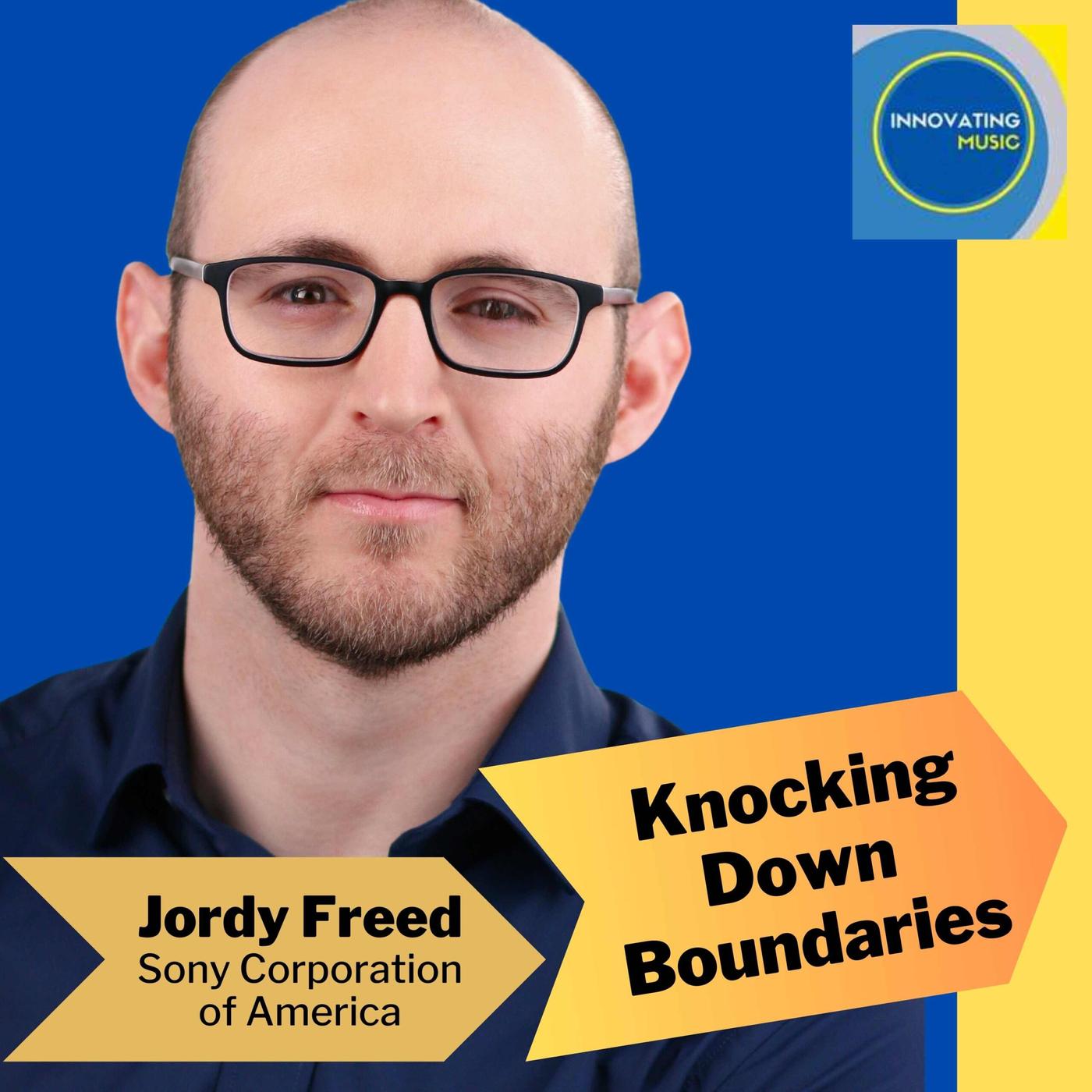
With today's episode, we have Jordy Freed, who comes to us
Speaker:
00:00:09
from the Sony Corporation of America from the Video and Sound Products
Speaker:
00:00:13
department is head of partner marketing and strategy branded Biz Dev.
Speaker:
00:00:17
He started out in saxophone and up from Philly going
Speaker:
00:00:21
into public relations and radio ended up at Blue Note,
Speaker:
00:00:26
then Gray advertising back at Blue Note, and now it's Sony
Speaker:
00:00:30
and he'll ship a bit of the journey path of how he got there.
Speaker:
00:00:33
And we'll talk toward the end about things like artificial intelligence with music.
Speaker:
00:00:37
We pledged at the end to do a second episode, but enjoy
Speaker:
00:00:40
this first episode with Jordy Freed.
Speaker:
00:00:45
I appreciate someone who has done so much in so many creative fields
Speaker:
00:00:51
and is someone myself who started in PR.
Speaker:
00:00:55
I am very happy for someone who is coming
Speaker:
00:00:58
from PR into leadership in a music tech company
Speaker:
00:01:02
and as someone who also went to USC, I'm excited for someone who is going to USC.
Speaker:
00:01:07
So we have some resonant spaces here.
Speaker:
00:01:10
So can you share because things you're doing a lot of our
Speaker:
00:01:15
our listeners won't know anything about, which always is fun for me.
Speaker:
00:01:20
Can you just start out with
Speaker:
00:01:22
what you're doing at Sony and what the product set is there?
Speaker:
00:01:27
Yeah.
Speaker:
00:01:29
So for context, obviously Sony is a very big company, right?
Speaker:
00:01:32
If we had a lot of different businesses.
Speaker:
00:01:35
So I sit within Sony Corporation of America and that's the US holding company.
Speaker:
00:01:40
So all of our different US entertainment businesses,
Speaker:
00:01:43
Sony Music, Sony Pictures,
Speaker:
00:01:46
PlayStation, they're all under Sony Corporation of America.
Speaker:
00:01:49
It's the extension of Tokyo headquarters, like the mothership
Speaker:
00:01:54
and at Sony Corporation of America.
Speaker:
00:01:56
I am director and head of Brand and Business Development
Speaker:
00:01:59
and also had a part in marketing and strategy
Speaker:
00:02:02
for our personal entertainment business.
Speaker:
00:02:04
And you're probably wondering, so so what is that?
Speaker:
00:02:07
Is everything a personal entertainment?
Speaker:
00:02:09
What is that?
Speaker:
00:02:10
That is specifically Sony's business in the audio and sound space.
Speaker:
00:02:15
So but when you look at Phil.
Speaker:
00:02:18
I mean, of course, that's not me, that's not film.
Speaker:
00:02:20
That's not.
Speaker:
00:02:21
Games.
Speaker:
00:02:22
It's so when you think about headphones,
Speaker:
00:02:27
speakers, pro audio, microphone and studio
Speaker:
00:02:33
headphones, etc., anything kind of mobile sound
Speaker:
00:02:36
related or professional sound related, that whole business
Speaker:
00:02:41
I'm leading the brand for and business development
Speaker:
00:02:44
and how we work with partners, which you know, for me is someone
Speaker:
00:02:48
growing up I always had Sony in the house through family, etc.
Speaker:
00:02:52
It's kind of an honor to have this role.
Speaker:
00:02:56
I mean, it's one of the most iconic businesses within Sony.
Speaker:
00:03:00
I mean, when you think of how Sony started, audio was one of the first.
Speaker:
00:03:04
Right.
Speaker:
00:03:06
And and it touches so many elements of creativity in the music space.
Speaker:
00:03:12
So to kind of be in a role to shape the brand as it sits today
Speaker:
00:03:17
and where we want to go and really develop that business is pretty incredible.
Speaker:
00:03:23
I'm not going to lie.
Speaker:
00:03:26
Now some people come into these spaces
Speaker:
00:03:29
and you were commenting about when you were younger,
Speaker:
00:03:31
but some people come into these spaces as tech geeks, which I was not.
Speaker:
00:03:36
I'm totally not.
Speaker:
00:03:37
I became one as an older person and some came as musicians
Speaker:
00:03:42
and some came as people
Speaker:
00:03:45
who would be playing with devices
Speaker:
00:03:49
or be building concerts for their friends.
Speaker:
00:03:52
What is the I'm a 15 year old Jordy doing with his life.
Speaker:
00:03:56
Were you any of those?
Speaker:
00:04:00
I was a cross between a tech and a musician,
Speaker:
00:04:03
so I'm totally in the right space right now. Oh.
Speaker:
00:04:06
What are you doing in music as a young person?
Speaker:
00:04:09
So I was a believe it or not, I was a really serious saxophonist
Speaker:
00:04:14
and really into jazz.
Speaker:
00:04:16
And I was gigging a lot and had a band
Speaker:
00:04:19
and, you know, I was building websites,
Speaker:
00:04:22
you know, as a 15 year old for, for myself.
Speaker:
00:04:27
And you know, so I and yeah, I mean,
Speaker:
00:04:32
I was just really into jazz at the time and I was like super into it.
Speaker:
00:04:37
This was outside of Philadelphia. Okay.
Speaker:
00:04:39
So I grew up outside of Philadelphia, born born in Philly, raised right
Speaker:
00:04:43
outside of Philly, neighboring suburb, literally 2 minutes from the
Speaker:
00:04:48
the county line of Philly County
Speaker:
00:04:51
and the first suburb.
Speaker:
00:04:54
Yeah.
Speaker:
00:04:55
So so I was a serious musician as a teenager.
Speaker:
00:04:59
And your parents, what did they do?
Speaker:
00:05:03
My mother had a couple different jobs.
Speaker:
00:05:07
She was
Speaker:
00:05:09
she was a paralegal.
Speaker:
00:05:10
At one point, she worked for Morgan Stanley at one point as an associate.
Speaker:
00:05:15
My father is a structural engineer.
Speaker:
00:05:19
Okay.
Speaker:
00:05:19
So, yeah,
Speaker:
00:05:20
some people come from creative families, but they go, Oh, yeah, it's perfect.
Speaker:
00:05:24
Go into creative work.
Speaker:
00:05:26
Your family is like saxophone playing kid
Speaker:
00:05:30
and techie building websites and thought, Our son is lost.
Speaker:
00:05:35
So I thought, our son will be going to go do so.
Speaker:
00:05:39
Okay, So
Speaker:
00:05:41
to set this up, although my dad's a structural engineer,
Speaker:
00:05:44
super creative person in his passion for music and technology,
Speaker:
00:05:49
he was obsessed with Sony, believe it or not, everything in my house is Sony.
Speaker:
00:05:54
Growing up, everything I knew.
Speaker:
00:05:57
Right from the get go.
Speaker:
00:05:58
This was I was actually really trapped.
Speaker:
00:06:00
It's super, super weird.
Speaker:
00:06:01
So, you know, I love to tell this this anecdote in interviews
Speaker:
00:06:07
that I've been doing.
Speaker:
00:06:09
So he he's an audio file.
Speaker:
00:06:12
I mean, like he would not if it wasn't pristine audio quality,
Speaker:
00:06:17
he wouldn't listen.
Speaker:
00:06:18
He was totally sworn against the MP three.
Speaker:
00:06:22
He had CDs, S-A CD player, he had Macintosh
Speaker:
00:06:26
tube amps, he had crazy five one set ups
Speaker:
00:06:30
and it's funny because some of my colleagues on the tech side
Speaker:
00:06:36
worked on the development of the CD
Speaker:
00:06:38
and my dad knew of then through like message boards and their colleagues.
Speaker:
00:06:42
And technically it's the same panel that pays me.
Speaker:
00:06:47
And, you know, he was just really aside from just Sony in general, particularly
Speaker:
00:06:52
Sony Audio, I mean, he I just grew up having
Speaker:
00:06:56
gold discs around the house that,
Speaker:
00:06:59
you know, he was into.
Speaker:
00:07:02
So average person now hasn't heard anything better than an MP3.
Speaker:
00:07:05
So it's sort of an interesting lens on where we go to as a culture.
Speaker:
00:07:10
But yeah. 100%.
Speaker:
00:07:11
So you know, it, it, it's just really funny how Well,
Speaker:
00:07:17
maybe not funny because like, yeah, you could say, okay, how did these
Speaker:
00:07:20
parents, they're not in the creative field how it is, you know,
Speaker:
00:07:24
how do I wind up doing what I was doing as a teenager? But
Speaker:
00:07:29
a lot of it was my dad, honestly,
Speaker:
00:07:31
who got me into jazz, got me into,
Speaker:
00:07:35
you know, music and
Speaker:
00:07:38
just seeing him interact with some of that technology.
Speaker:
00:07:42
I mean, he would build computers, right?
Speaker:
00:07:45
When I was a kid.
Speaker:
00:07:48
So it was always kind of around.
Speaker:
00:07:50
I was just always fascinated.
Speaker:
00:07:51
I remember going into RadioShack, his seven year old just wanting to play
Speaker:
00:07:55
with every little gadget I could find.
Speaker:
00:08:00
So I was always into technology.
Speaker:
00:08:03
Yeah.
Speaker:
00:08:03
So what did you think you were going to do with this combo? So.
Speaker:
00:08:08
So, you know, you would think, okay,
Speaker:
00:08:12
he's going to go to music school, he's going to become a musician or whatever.
Speaker:
00:08:16
That was never in the plan.
Speaker:
00:08:18
Never wanted to do that, never, never, never.
Speaker:
00:08:21
I just
Speaker:
00:08:23
I think there was more fear than anything else.
Speaker:
00:08:26
I entered colleges. Poli sci major.
Speaker:
00:08:28
Oh, that's. It. I lied.
Speaker:
00:08:29
I love I have friends who are policy majors,
Speaker:
00:08:32
but that definitely is a business is a strategically safe.
Speaker:
00:08:36
Different and different.
Speaker:
00:08:38
Yeah, because, you know, I was into the West Wing and all that, right?
Speaker:
00:08:44
So, you know, yeah.
Speaker:
00:08:47
It just really influenced so many people's lives.
Speaker:
00:08:49
I should go. And I am.
Speaker:
00:08:51
I know.
Speaker:
00:08:52
I want Aaron Sorkin to write my write my daily conversations.
Speaker:
00:08:55
He's the best. He's he's literally the best.
Speaker:
00:08:59
But maybe I did really well first semester.
Speaker:
00:09:03
But I'm, you know, one semester in,
Speaker:
00:09:06
I was like, I'm bored.
Speaker:
00:09:09
You know, this isn't exciting.
Speaker:
00:09:11
I don't want to do this.
Speaker:
00:09:15
And so I was like, okay, I want to start my career now.
Speaker:
00:09:19
I actually want to start.
Speaker:
00:09:20
I was 18. It was January 2009.
Speaker:
00:09:23
I was like, I'm ready to go.
Speaker:
00:09:25
So I found a couple of internships.
Speaker:
00:09:27
I didn't I didn't have anyone make calls for me to get into the music business
Speaker:
00:09:31
or anything like that.
Speaker:
00:09:32
I mean, I knew enough based on connections to the jazz world
Speaker:
00:09:39
where if I wanted to work in jazz specifically.
Speaker:
00:09:44
Knowing where you're going, that's a power play.
Speaker:
00:09:47
You know.
Speaker:
00:09:47
So I got
Speaker:
00:09:51
I was 18 and I got two jobs.
Speaker:
00:09:55
First was I was on the radio
Speaker:
00:09:59
at the Jazz
Speaker:
00:10:01
and classical station in Philadelphia, WRTI.
Speaker:
00:10:05
Not a student station, actual radio station.
Speaker:
00:10:07
The GM of the station had seen me play and knew that I knew jazz.
Speaker:
00:10:11
And he actually hired me to be on the air
Speaker:
00:10:15
for three m to 6 a.m. shift.
Speaker:
00:10:18
I was going to say with the kid on graveyard -- put him on the overnight.
Speaker:
00:10:22
Yeah, I was on graveyard.
Speaker:
00:10:23
Sometimes I did 12 to 3, sometimes did 3 to 6, etc.
Speaker:
00:10:27
They did like four weeks of board up training and then boom, I was on.
Speaker:
00:10:31
And then in parallel I found a PR firm,
Speaker:
00:10:35
like a national PR firm that you know, worked with.
Speaker:
00:10:40
Some of my favorite musicians
Speaker:
00:10:43
based
Speaker:
00:10:43
in the Philly area just happened to be,
Speaker:
00:10:46
ironically, this PR firm
Speaker:
00:10:50
was in a part of Philadelphia
Speaker:
00:10:52
that was literally down the street
Speaker:
00:10:55
from where my parents had been married
Speaker:
00:10:59
like 20 something years earlier, and my grandparents had a house.
Speaker:
00:11:03
So I'm Jewish.
Speaker:
00:11:05
We call that basher. Meant to be, I guess, right?
Speaker:
00:11:08
Synchronicity at the finest.
Speaker:
00:11:09
Yeah. Yeah, totally.
Speaker:
00:11:13
But you ask, right?
Speaker:
00:11:14
So you're not waiting for permission.
Speaker:
00:11:15
You're not waiting to finish college.
Speaker:
00:11:18
You're making the journey.
Speaker:
00:11:20
How did you meet the PR company?
Speaker:
00:11:21
I'm always back into how to make choices.
Speaker:
00:11:24
So to. I can film.
Speaker:
00:11:27
So I.
Speaker:
00:11:27
Okay, I was such a nerd as an 18 year old.
Speaker:
00:11:30
I would go on jazz musicians websites and look at the contact pages
Speaker:
00:11:34
and see who works with them.
Speaker:
00:11:36
And I found I kept coming across this firm and I looked at the address and, Oh
Speaker:
00:11:40
my God, it's in Bala Cynwyd, Pennsylvania, so I know exactly where that is.
Speaker:
00:11:45
The grandparents live there.
Speaker:
00:11:47
So I sent cold
Speaker:
00:11:48
emails to every single employee, Oh.
Speaker:
00:11:51
I love this. Love, love, love. Okay.
Speaker:
00:11:53
And then one of them responded, and he's like, Sure, you can come in.
Speaker:
00:11:57
We're not like looking for an intern. So. And I didn't have a car.
Speaker:
00:12:00
I didn't have a driver's license.
Speaker:
00:12:01
So I took a train like 40 minute regional rail and walked three quarters
Speaker:
00:12:06
of a mile in a blizzard for an interview.
Speaker:
00:12:10
For a job that didn't exist.
Speaker:
00:12:11
Yeah, Yeah, totally.
Speaker:
00:12:13
And I was 18 and they were like, Great.
Speaker:
00:12:17
You know, you seem to know a lot about jazz,
Speaker:
00:12:20
you know, when you can, you know, let's bring you in for the summer.
Speaker:
00:12:24
And this is January oh nine.
Speaker:
00:12:25
And then I started my summer internship February 27, 2009.
Speaker:
00:12:31
This summer, doing careers can be made there, right?
Speaker:
00:12:34
Certainly.
Speaker:
00:12:34
So a lot of people think that they're supposed to be waiting
Speaker:
00:12:37
till they're done with college and then they're waiting to apply.
Speaker:
00:12:42
And then, you know, meanwhile there's people
Speaker:
00:12:43
who just walk in the door going, Hi, I know you.
Speaker:
00:12:46
Here's all the research I've done.
Speaker:
00:12:47
Here is why I'm the right person for it. And magic happens.
Speaker:
00:12:50
Yeah, sure doesn't happen in the fifth one happens.
Speaker:
00:12:53
But yeah, yeah.
Speaker:
00:12:54
I worked for free for like
Speaker:
00:12:57
maybe 6 to 8 months and I was.
Speaker:
00:13:00
Here's a thing you might say.
Speaker:
00:13:02
Oh, well, he's privileged, you know, he had family help.
Speaker:
00:13:05
First of. I didn't have family help.
Speaker:
00:13:06
Second of all, I was actually making money from the overnight radio gig. So
Speaker:
00:13:13
I was doing the
Speaker:
00:13:13
overnight radio gig while doing the PR internship.
Speaker:
00:13:16
And and then it turned into a part time job, then full time job.
Speaker:
00:13:21
And I did that all throughout undergrad.
Speaker:
00:13:23
So I was working full time.
Speaker:
00:13:24
I would do class from 8 to 10.
Speaker:
00:13:26
I again, I didn't have a car driver's license till I was 21,
Speaker:
00:13:30
and then I would take the train and then I would work ten.
Speaker:
00:13:34
I worked like 11 to 7
Speaker:
00:13:37
every day.
Speaker:
00:13:38
And I did that all through undergrad. So.
Speaker:
00:13:42
So working with brands back then, working with creators back
Speaker:
00:13:46
then, what was marketing like then?
Speaker:
00:13:51
I mean, I, I think of my PR time
Speaker:
00:13:54
was a decade or more earlier where most of what we were doing
Speaker:
00:13:59
was emailing people, calling cold, calling
Speaker:
00:14:02
people, following up on press kits,
Speaker:
00:14:08
tracking down who
Speaker:
00:14:09
is doing would put into their marketing for events.
Speaker:
00:14:12
What was that?
Speaker:
00:14:13
What was the technology and what was what was the job?
Speaker:
00:14:17
It was so interesting at that time because it was such a weird,
Speaker:
00:14:20
awkward transition in media and also the music industry because,
Speaker:
00:14:26
you know, you were seeing the dip of, you know, regional outlets going away.
Speaker:
00:14:31
You were seeing shrinking and consolidation of,
Speaker:
00:14:35
you know, genre vertical coverage in music.
Speaker:
00:14:38
You were seeing, you know, fewer journalists,
Speaker:
00:14:42
but the journalists that they're covering a lot more.
Speaker:
00:14:46
And then you had the whole thing that was social
Speaker:
00:14:51
and blogs and message boards and,
Speaker:
00:14:54
you know, direct to consumer and guerrilla grassroots, online camp and influencers.
Speaker:
00:14:59
Facebook, it called influencers.
Speaker:
00:15:01
They weren't influencers.
Speaker:
00:15:02
They were, you know, people who were really passionate about something that,
Speaker:
00:15:06
you know, influenced other people.
Speaker:
00:15:09
Yeah.
Speaker:
00:15:10
So like, I remember in oh nine, like doing face targeted Facebook ads for shows
Speaker:
00:15:15
and doing weird promotions with, you know, landing pages that were made on like,
Speaker:
00:15:20
you know, like Max, you know,
Speaker:
00:15:24
DIY website builders and like,
Speaker:
00:15:28
I remember like doing
Speaker:
00:15:31
press releases where you would set up
Speaker:
00:15:34
like clips for like streaming and excerpts of the music,
Speaker:
00:15:39
you know, But this was before Spotify, and it.
Speaker:
00:15:43
Was a way to, in your case, to sonic.
Speaker:
00:15:45
Bids and yeah, totally.
Speaker:
00:15:47
It was a weird, awkward time.
Speaker:
00:15:49
But like I'd say,
Speaker:
00:15:51
what helped get me in the door
Speaker:
00:15:53
was a lot of transition in media and just a lot of experimentation.
Speaker:
00:15:59
No one knew anything of what they were doing
Speaker:
00:16:02
digitally because, you.
Speaker:
00:16:05
Know, we're still at this stage.
Speaker:
00:16:06
I had stopped, so I stopped because I was like, okay, I need to
Speaker:
00:16:11
I didn't want to be perceived as the person who was like, okay,
Speaker:
00:16:17
I'm going to use this job to help my playing for all the musicians
Speaker:
00:16:21
and going to get to know I was like, my dad always like, you know,
Speaker:
00:16:25
you have to like, immerse yourself and put yourself in
Speaker:
00:16:29
the way.
Speaker:
00:16:30
Like if you need to operate as a business person, yet you got to lock in.
Speaker:
00:16:34
So I, I didn't want to play anymore.
Speaker:
00:16:38
I hung that up and I dedicated myself to,
Speaker:
00:16:43
to PR and what's funny.
Speaker:
00:16:44
So I didn't know what PR was, but I was a really famous going.
Speaker:
00:16:49
You don't know it.
Speaker:
00:16:49
No, no. No one does.
Speaker:
00:16:50
But here, here's what's interesting.
Speaker:
00:16:52
So math wasn't my strongest suit growing up.
Speaker:
00:16:56
Writing was and I was the editor of my school paper.
Speaker:
00:16:59
And the qualities that you need
Speaker:
00:17:03
or needed to be in communications or a publicist,
Speaker:
00:17:07
I just by chance possessed those qualities
Speaker:
00:17:11
and I stumbled into it honestly without even knowing that.
Speaker:
00:17:16
Yeah, like as a comms major for undergrad, that's perfect for, for me.
Speaker:
00:17:23
And it's funny, so
Speaker:
00:17:24
the job actually, I wasn't a communications
Speaker:
00:17:28
major in undergrad until I started as a publicist.
Speaker:
00:17:32
I switched, but
Speaker:
00:17:36
oh, like if you look at the macro of the evolution, it really started
Speaker:
00:17:41
for a passion for jazz in music that led to a passion for PR.
Speaker:
00:17:45
And that passion for PR, really like with changing media, pushed me for a passion
Speaker:
00:17:50
for new ways of looking at integrated marketing, digital marketing, etc.
Speaker:
00:17:56
That then that led to another job that was a proper marketing job
Speaker:
00:18:00
where I really got to control a lot of true direct to consumer at scale.
Speaker:
00:18:05
So that was. Yes.
Speaker:
00:18:07
And that was that was Blue Note.
Speaker:
00:18:08
And of course, Jazz Blue Note totally makes sense.
Speaker:
00:18:11
How did you make that happen?
Speaker:
00:18:14
Did you walk in the door in saying you should hire me?
Speaker:
00:18:16
No. At that point I had relationships that I developed and, you know,
Speaker:
00:18:21
one thing led to another and got connected to the owner of Blue Note
Speaker:
00:18:27
through a friend who was working there, got a job there.
Speaker:
00:18:33
And at that point I had five years of experience.
Speaker:
00:18:37
I was, say, Sammy, known to an extent in
Speaker:
00:18:40
whatever that small jazz circle was or is.
Speaker:
00:18:45
But yeah, the blender job really allowed me to flex
Speaker:
00:18:49
marketing, you know, and real PR at scale.
Speaker:
00:18:52
I mean, it's an international brand and, and it really opened my eyes
Speaker:
00:18:56
to, you know, something truly consumer facing.
Speaker:
00:19:00
It's interesting when you're doing
Speaker:
00:19:01
I was doing artist PR right out of festival PR whatever
Speaker:
00:19:06
at the firm
Speaker:
00:19:08
you know it's not like
Speaker:
00:19:11
it's not true consumer brand like yeah
Speaker:
00:19:14
people know who artists are, but it's you know it was smaller scale.
Speaker:
00:19:18
Yeah, great jazz musicians.
Speaker:
00:19:19
But when you work for a company like the Blue Note, you know,
Speaker:
00:19:23
that's when you get into okay, like people actually know this brand.
Speaker:
00:19:27
A lot of people, even people outside of, you know, core music
Speaker:
00:19:31
because it's a destination in New York City, right?
Speaker:
00:19:35
So I really got to flex to marketing chops to be able to control,
Speaker:
00:19:40
you know, not just PR and communication strategy for that company, but,
Speaker:
00:19:45
you know, how you market to individuals,
Speaker:
00:19:49
how you leverage own touch points to, you know,
Speaker:
00:19:54
spark action among a constituency or acquire new customers.
Speaker:
00:19:58
Right.
Speaker:
00:19:59
Or listen. To customers. Right.
Speaker:
00:20:01
So yeah. Totally 100%.
Speaker:
00:20:02
You've got a long thread to pull and sort of what as the business around
Speaker:
00:20:08
you is changing and music and the tech around it
Speaker:
00:20:12
that that it's not just an individual event action
Speaker:
00:20:15
and then knowing the press for that geography it's really a longer thread.
Speaker:
00:20:20
Yeah for sure.
Speaker:
00:20:22
And I was what was really interesting is
Speaker:
00:20:26
what started really opening my eyes to that broader world that is marketing
Speaker:
00:20:32
brand development was I was involved in a lot of the company expansion.
Speaker:
00:20:37
So when, for example, the company
Speaker:
00:20:40
opened venues in Hawaii in China,
Speaker:
00:20:43
I got to lead the integrated
Speaker:
00:20:46
marketing and comms rollout for that.
Speaker:
00:20:50
Obviously different partners in those two markets and multinational
Speaker:
00:20:54
launch, you know, customers in in different markets.
Speaker:
00:20:59
And you know, that really started
Speaker:
00:21:02
getting me interested in a world outside of music, honestly,
Speaker:
00:21:08
into general kind of brand development from a global perspective.
Speaker:
00:21:12
And I'm sure you saw that I left L.A..
Speaker:
00:21:15
I was going to say for a guy who was just
Speaker:
00:21:18
jazz, just jazz music, music.
Speaker:
00:21:21
Great. Yeah, yeah.
Speaker:
00:21:23
I got really tired of it.
Speaker:
00:21:24
And there was one specific
Speaker:
00:21:27
experience that really opened my eyes to so that
Speaker:
00:21:31
that rollout for Hawaii in Napa, Hawaii in China now was wild.
Speaker:
00:21:36
But yeah.
Speaker:
00:21:37
Well, I did the blue note Napa and Brazil to say
Speaker:
00:21:41
I did all of those.
Speaker:
00:21:44
I got connected to folks at the New York Stock Exchange
Speaker:
00:21:47
because I was trying to get a closing bell,
Speaker:
00:21:50
triple, you know, and ultimately I did when I came back.
Speaker:
00:21:53
And we'll get to that.
Speaker:
00:21:54
But I remember I toured the floor
Speaker:
00:21:58
in May 2015.
Speaker:
00:22:00
I've been a couple of times, but that was the first time and I was just in all
Speaker:
00:22:05
during the floor of the stock exchange.
Speaker:
00:22:07
And that's what really got me interested
Speaker:
00:22:11
in a world outside of that small world that I was operating in.
Speaker:
00:22:15
So I went to great and I wasn't there for long.
Speaker:
00:22:19
I was working on some incredible projects, so I did the PR
Speaker:
00:22:21
for the National Park Service Centennial Campaign,
Speaker:
00:22:25
which was awesome.
Speaker:
00:22:26
I did some work with Cannon and Ron Howard,
Speaker:
00:22:31
you know, on some branded entertainment integrated
Speaker:
00:22:34
marketing campaigns and
Speaker:
00:22:38
honestly, without that experience, I wouldn't be where I am today
Speaker:
00:22:42
because I just opened my eyes to everything that I needed to connect
Speaker:
00:22:46
the dots to be able to come back to Blue Note, after which I did,
Speaker:
00:22:49
and build what I built to actually get the job that I have now
Speaker:
00:22:54
and really have the experience that I have.
Speaker:
00:22:56
No, and.
Speaker:
00:22:57
I love how you frame that because for a lot of people
Speaker:
00:22:59
they think that it's a linear, a linear pathway
Speaker:
00:23:03
and not kind of a repurposing that I keep drawing with my hands.
Speaker:
00:23:07
For the people who are not seeing this
Speaker:
00:23:08
or who are listening to it and watching it on YouTube, that
Speaker:
00:23:13
there tends to be almost a replica
Speaker:
00:23:15
or a looping back to to real sort of build skills.
Speaker:
00:23:18
So you came to Sony
Speaker:
00:23:22
with a promise for them and for you to, to do what?
Speaker:
00:23:26
What is what is kind of your joy of this right now. So
Speaker:
00:23:31
I, I had a
Speaker:
00:23:33
a long standing relationship with Sony before I started.
Speaker:
00:23:37
So when I came back to Blue Note, I built a business with In Blue
Speaker:
00:23:41
that aligned Blue Note with different brands
Speaker:
00:23:45
for business ventures and brand marketing activities.
Speaker:
00:23:48
And the biggest one that I did was a partnership between Blue Note
Speaker:
00:23:51
and Sony Corp headquarters to open a venue called Sony Hall in Times Square.
Speaker:
00:23:57
So I had this idea with Blue Note.
Speaker:
00:24:00
We were thinking about opening a venue at the time,
Speaker:
00:24:02
a new venue in New York, and I said, Well, what if we make it
Speaker:
00:24:07
because I had my PR hat on?
Speaker:
00:24:08
Okay.
Speaker:
00:24:10
But it was also from a marketing it's down perspective.
Speaker:
00:24:13
If you open a venue, what's distinctive about it?
Speaker:
00:24:15
What's the story with the connective tissue?
Speaker:
00:24:17
How how are you going to really distinguish yourself?
Speaker:
00:24:20
What's going to be different about it compared to say, okay, it's another venue
Speaker:
00:24:23
in New York and I just kept coming back to technology, right?
Speaker:
00:24:28
What where is the live experience going?
Speaker:
00:24:31
Who could we align with to tell
Speaker:
00:24:33
a unique story and offer something unique to customers?
Speaker:
00:24:37
And I got connected to Sony Corp in 2017,
Speaker:
00:24:41
and within less than a year we did a deal and opened Sony Hall.
Speaker:
00:24:45
And so I was working across the company
Speaker:
00:24:48
for almost two years
Speaker:
00:24:51
on the Blue Note side,
Speaker:
00:24:53
creating opportunities to activate and integrate within,
Speaker:
00:24:57
you know, the Blue Note ecosystem and Sony Hall four for Sony.
Speaker:
00:25:00
And they were looking for.
Speaker:
00:25:04
So this division that I work for, the sound team was looking for someone
Speaker:
00:25:08
as they were expanding their activities and they knew me and
Speaker:
00:25:14
you know, it's funny.
Speaker:
00:25:15
Yeah.
Speaker:
00:25:16
I mean it just it happened.
Speaker:
00:25:19
And they're like, Yeah, let's
Speaker:
00:25:22
do you want to work for us?
Speaker:
00:25:25
So let me just didn't exist. This job didn't exist.
Speaker:
00:25:28
It was
Speaker:
00:25:29
there was no you know, it's funny, I probably shouldn't have been saying this.
Speaker:
00:25:32
Technically, I don't think I applied.
Speaker:
00:25:35
But have you played for anything that you've done?
Speaker:
00:25:39
Gray I applied for Okay.
Speaker:
00:25:41
Yeah,
Speaker:
00:25:43
that's actually interesting deal Media.
Speaker:
00:25:46
I didn't apply for Deal Media.
Speaker:
00:25:48
I didn't apply for a Blue Note.
Speaker:
00:25:50
I didn't apply for Gray.
Speaker:
00:25:52
I applied for
Speaker:
00:25:57
and I've only applied for one job and that was great.
Speaker:
00:26:01
Well, yeah, So let's shift gears into innovation.
Speaker:
00:26:04
So yeah, so a lot of people tend to think the innovators are the creatives.
Speaker:
00:26:09
The innovators might be the
Speaker:
00:26:12
engineers creating the new product.
Speaker:
00:26:15
You been innovating around brand connections, activations,
Speaker:
00:26:19
but now you're in an innovating space also.
Speaker:
00:26:22
So what is your current lens on
Speaker:
00:26:25
innovation in personal audio
Speaker:
00:26:29
and also innovation overall as it's happening right now.
Speaker:
00:26:34
It's really the the knocking down of boundaries and limitations.
Speaker:
00:26:40
That's really what it comes back to.
Speaker:
00:26:42
And I can cite a couple different examples selfishly for some of the things
Speaker:
00:26:46
that we're working on, whether you're innovating and pushing the boundaries
Speaker:
00:26:51
of audio experience to do more in the canvas that you have as a creator.
Speaker:
00:26:56
So when you look at spatial audio, 363 Audi audio,
Speaker:
00:27:00
for example, or Atmos or whatever, to be able to expand those limitations
Speaker:
00:27:06
that existed from normal stereo to do more
Speaker:
00:27:11
with your creative canvas, I.
Speaker:
00:27:14
Wanted to share because this is an area, first of all, of my heart beat,
Speaker:
00:27:18
but also some people may know of Atmos,
Speaker:
00:27:21
they may know of of Sony 30, 63, but they possibly don't.
Speaker:
00:27:25
I think the flag goes up of spatial audio.
Speaker:
00:27:27
They don't yet get it.
Speaker:
00:27:30
So can you dig a little deeper? Sure. So
Speaker:
00:27:33
we've been listening to music in stereo for the past 40 years.
Speaker:
00:27:37
It's left channel, right channel.
Speaker:
00:27:38
Everything you've listened to for decades has been stereo.
Speaker:
00:27:43
You may not even know it, but it's pretty much been stereo
Speaker:
00:27:46
unless you've been in someone's really nice den with a bunch of speakers
Speaker:
00:27:51
that's probably not stereo, that's five one.
Speaker:
00:27:55
You hear certain things together on the left side,
Speaker:
00:27:57
certain things together on the right side, and there's no depth, there's no
Speaker:
00:28:02
element where you feel like you're
Speaker:
00:28:06
surrounded by the music spatial.
Speaker:
00:28:09
What that does is gives you, in essence, a true sense of space.
Speaker:
00:28:14
When you hear things a little bit more precisely,
Speaker:
00:28:17
you might hear certain instruments in certain locations
Speaker:
00:28:21
that you didn't hear before, so you might hear bass
Speaker:
00:28:24
in one section of your headphones and see vocals
Speaker:
00:28:28
in another section of your headphones, and you feel enveloped in the music.
Speaker:
00:28:34
That's essentially what spatial audio is.
Speaker:
00:28:37
So I'm still listening with my two ears, of course, and I'm probably listening
Speaker:
00:28:40
that devices on my two years, but there is the perception of items
Speaker:
00:28:45
within it moving in front of me behind me
Speaker:
00:28:49
by using
Speaker:
00:28:52
placement.
Speaker:
00:28:53
Yeah, exactly.
Speaker:
00:28:55
It's it's a mixing process at the end of the day.
Speaker:
00:28:58
So when music is created for those don't know,
Speaker:
00:29:01
for those of you who might not be aware,
Speaker:
00:29:04
you know, you record music, you
Speaker:
00:29:06
then need to mix it in a particular way to get the levels right and sound right,
Speaker:
00:29:11
and then you master it to refine, you know, the work.
Speaker:
00:29:15
And then that's a finished product.
Speaker:
00:29:17
So, you know, after music's recorded, you have all these different
Speaker:
00:29:21
sounds that have been recorded
Speaker:
00:29:23
that make up what is called a mix, and then you can mix that content
Speaker:
00:29:29
most mixes
Speaker:
00:29:30
have been stereo, but with spatial you can take the individual
Speaker:
00:29:33
sounds into your point and place them in different locations.
Speaker:
00:29:38
But it also is for those of us who are playing in VR and other things,
Speaker:
00:29:42
it actually could be actually placing the audio
Speaker:
00:29:45
in What then is moving objects in a VR space and air space,
Speaker:
00:29:49
a immersive theater, and that stuff's all growing like crazy.
Speaker:
00:29:54
It's not growing like crazy. It'd be nice.
Speaker:
00:29:56
It was growing like crazy, but it's in a growth mode also.
Speaker:
00:29:59
That's very similar, though.
Speaker:
00:30:00
I mean, so if you look at our software, for example,
Speaker:
00:30:04
it's a ProTools plug plugins.
Speaker:
00:30:05
A ProTools is for those of you who don't know you know what many,
Speaker:
00:30:11
many folks in recorded music use to, to record music.
Speaker:
00:30:16
Right.
Speaker:
00:30:17
And makes music and there's a plug in for that
Speaker:
00:30:21
for 360 for example where if you enable this plug
Speaker:
00:30:24
in, you see a sphere on the screen and it gives you 100
Speaker:
00:30:29
something locations to place those different sounds in the sphere.
Speaker:
00:30:33
So you are virtually placing sounds, right?
Speaker:
00:30:37
Similar to what you might do for a VR metaverse play.
Speaker:
00:30:42
But yeah, that that's essentially the process.
Speaker:
00:30:45
So, you know, back to your your question, I mean, that's one example of
Speaker:
00:30:51
of kind of breaking down some of the limitations.
Speaker:
00:30:56
Another example outside of spatial audio.
Speaker:
00:30:59
So one thing we actually just announced
Speaker:
00:31:02
literally now and last week, it's something like 360
Speaker:
00:31:06
virtual mixing environment.
Speaker:
00:31:09
And what this is, is
Speaker:
00:31:12
the idea that you can mix in a studio without being in studio.
Speaker:
00:31:18
So you can, for example, go into a studio
Speaker:
00:31:21
that you would want to mix in or normally mix in.
Speaker:
00:31:24
We would measure your listening attributes.
Speaker:
00:31:26
So we would take some measurements.
Speaker:
00:31:29
And then using software, you can literally be at home with your headphones.
Speaker:
00:31:34
And when you are mixing right as a creator,
Speaker:
00:31:37
you get the same acoustic experience and profile in the headphones at home
Speaker:
00:31:43
through the software that you would as if you were in the studio.
Speaker:
00:31:47
So mixing things in your gesture
Speaker:
00:31:51
was also are you are you measuring the piano as well
Speaker:
00:31:53
or your ear and you're shaping your ear to go with it, as well
Speaker:
00:31:58
as the acoustic representation of the actual room space?
Speaker:
00:32:02
100%. You hit the nail on the head.
Speaker:
00:32:05
So that's exactly what we're doing.
Speaker:
00:32:08
And so, for example, if you're a professional engineer
Speaker:
00:32:14
who is traveling the world in an artist calls and says, Hey,
Speaker:
00:32:18
I need a mics tonight, we're all working in the studio.
Speaker:
00:32:22
I know you can't get there. Can you do this mics?
Speaker:
00:32:24
You could actually do the mics and maintain that acoustic integrity
Speaker:
00:32:29
and authentic experience as though you're there.
Speaker:
00:32:32
Or let's say you're an aspiring DIY creator that wants to mix in, you know?
Speaker:
00:32:38
Germano hit Factory, right?
Speaker:
00:32:40
Iconic recording studio in New York City.
Speaker:
00:32:43
But you could never get in there.
Speaker:
00:32:47
There may be a way for you to actually do that.
Speaker:
00:32:49
You might need to come in and get some measurements, but
Speaker:
00:32:53
without, you know, spending hours and hours in the studio,
Speaker:
00:32:59
you might be able to
Speaker:
00:32:59
mix it all, you know, like the people you look up to.
Speaker:
00:33:03
So again, it just comes back to
Speaker:
00:33:08
really breaking down those boundaries
Speaker:
00:33:11
and expanding limits, if you will, that kind of enable
Speaker:
00:33:16
more possibilities and just it's kind of unlocking more creativity.
Speaker:
00:33:22
And just like I think without some of these things are more shackles, right?
Speaker:
00:33:27
So we're trying to take more shackles off for creators
Speaker:
00:33:30
to basically allow them to do more.
Speaker:
00:33:34
I would also say, though, and getting into what is changing workflows, right.
Speaker:
00:33:39
So so, you know,
Speaker:
00:33:42
selling B2B marketing, B2B awareness, B2B still is a crowded space
Speaker:
00:33:47
and people are rethinking all the ways they're working
Speaker:
00:33:51
all the time by who else is tapping them on the shoulder.
Speaker:
00:33:55
How are you staying with the innovators
Speaker:
00:33:58
who are also having other people tap them on the shoulder?
Speaker:
00:34:02
It's a really good question.
Speaker:
00:34:03
It's true partnership at the end of the day.
Speaker:
00:34:05
So, you know, you have to you can't do this in a vacuum, right?
Speaker:
00:34:10
You need to look at these alliances from a true collaboration perspective.
Speaker:
00:34:16
So, you know, when we're trying to scale these technologies, right,
Speaker:
00:34:19
we are working with those
Speaker:
00:34:22
at the forefront of their fields
Speaker:
00:34:26
to really better understand the application of those technologies
Speaker:
00:34:32
to what those masters do,
Speaker:
00:34:35
and then work with those masters to spread the word.
Speaker:
00:34:39
And you could say, Oh, well, isn't that a fancy word for their influencers?
Speaker:
00:34:43
No, they actually aren't, because influencers aren't
Speaker:
00:34:46
necessarily giving input on product development.
Speaker:
00:34:49
So do you have a physical lab that that that's music and audio
Speaker:
00:34:53
creators and technicians come into to work with you guys?
Speaker:
00:34:57
Is there kind of a a physical workspace or play space or tinker space or,
Speaker:
00:35:03
or are you guys going into other people's workspaces
Speaker:
00:35:06
to kind of see digital workflow and physical spaces?
Speaker:
00:35:11
Do you have anthropologists on staff kind of sit in through other people's
Speaker:
00:35:15
creative processes?
Speaker:
00:35:17
We it's a really good question.
Speaker:
00:35:20
We generally I mean, I've seen it both ways.
Speaker:
00:35:23
We have folks that come to Tokyo, right?
Speaker:
00:35:26
Everyone, I mean, who doesn't want to go to Tokyo.
Speaker:
00:35:29
So we're happy to host people and we do,
Speaker:
00:35:32
but we spend a lot of time in the field because at the end of the day,
Speaker:
00:35:36
like this is it's you're not going to have Andy Warhol come to your place.
Speaker:
00:35:40
You know, you're going to go to Andy.
Speaker:
00:35:42
With the food and alcohol is.
Speaker:
00:35:44
But that's I'm sure sure.
Speaker:
00:35:47
You're going to go to the creator, right?
Speaker:
00:35:50
You're going to go to them.
Speaker:
00:35:51
Understand their element
Speaker:
00:35:54
and understand what they need to do, what they do.
Speaker:
00:35:57
So our team spent a lot of time going to creators and
Speaker:
00:36:02
and again, keep in mind, I'm just talking about one side of the business.
Speaker:
00:36:06
I'm just talking about the pro side.
Speaker:
00:36:08
There's a whole nother side of the business
Speaker:
00:36:10
we haven't even talked about.
Speaker:
00:36:11
That's a consumer side.
Speaker:
00:36:13
So because again, what's interesting about Sony is,
Speaker:
00:36:17
especially compared to some of our competitors
Speaker:
00:36:19
and in this general category, and something I'm really proud of
Speaker:
00:36:24
is when you look at music and music experience, we are truly end to end.
Speaker:
00:36:29
You know, it's rare to find a company
Speaker:
00:36:32
where we make the gear that's used in the studio
Speaker:
00:36:36
by the creators and then provide technology for mixers, etc.,
Speaker:
00:36:41
And then have hardware that's also used by end consumers as well.
Speaker:
00:36:48
And again, that's
Speaker:
00:36:48
even separate from owning a record label, etc..
Speaker:
00:36:51
I'm just talking about the core audio business, right?
Speaker:
00:36:54
It's very rare to see that,
Speaker:
00:36:57
to have that role in the end to end creative consumption process.
Speaker:
00:37:02
Does that make the
Speaker:
00:37:02
marketing harder, though, and the and the and the thinking about innovation
Speaker:
00:37:06
because you've got the the the big Sony brand, even Sony Audio brand
Speaker:
00:37:11
where people who make it either stuck in old ways of thinking or not
Speaker:
00:37:16
see the innovations because they're buying the end consumer good
Speaker:
00:37:20
that is more mass marketed or they don't see the innovative side.
Speaker:
00:37:24
I mean is
Speaker:
00:37:26
how do you sort of and you've spent a lot of time
Speaker:
00:37:29
looking at brand points of view with other folks as well.
Speaker:
00:37:32
How do you keep a brand fresh and innovative as well as trusted?
Speaker:
00:37:37
That's an excellent question.
Speaker:
00:37:39
And something that we discuss quite a bit.
Speaker:
00:37:43
And we are taking certain actions to address that.
Speaker:
00:37:47
And it's all I mean, it is part of it is how you approached
Speaker:
00:37:51
the integrated business development side to join these things together.
Speaker:
00:37:57
And some of it is
Speaker:
00:37:58
the marketing communication side in terms of how you're telling the story.
Speaker:
00:38:02
So when you look at partnerships
Speaker:
00:38:05
as you can't think about and I'm speaking in general terms, right,
Speaker:
00:38:09
you can't you can't think of things as siloed.
Speaker:
00:38:12
You have to look at what do I have, what what chess pieces do I have
Speaker:
00:38:16
and how do these all connect?
Speaker:
00:38:17
And then when you're looking at partnerships, you know,
Speaker:
00:38:20
what is that through line and connective tissue to the various businesses
Speaker:
00:38:25
that demonstrate a true integrated partnership
Speaker:
00:38:28
to develop the brand on consumer and professional?
Speaker:
00:38:32
And then on the marketing side, same thing.
Speaker:
00:38:35
You know, what is the underlying message, right?
Speaker:
00:38:38
That carries over into and what do we represent as a brand
Speaker:
00:38:42
and what do our products represent but really as a brand, Right?
Speaker:
00:38:45
What do we stand for in this space?
Speaker:
00:38:48
And then how do we connect the dots in how we storytelling
Speaker:
00:38:52
across different touchpoints to its audiences more.
Speaker:
00:38:55
Than just like your dad was when you were growing up,
Speaker:
00:38:59
that line of their house and everything.
Speaker:
00:39:02
So that's one.
Speaker:
00:39:04
So that's here's what's interesting.
Speaker:
00:39:06
That's one segment though.
Speaker:
00:39:09
So on the consumer side,
Speaker:
00:39:12
we might need more people like my dad and other customers as well.
Speaker:
00:39:16
But we're also working later first, too.
Speaker:
00:39:20
So at the end of the day,
Speaker:
00:39:22
and I think you'll see more of this, right, in terms of what we're doing,
Speaker:
00:39:26
if you look at some of our Marcum content recently, it's so creator focused.
Speaker:
00:39:32
I mean, we are going in a market on the consumer side
Speaker:
00:39:37
with artists like Souza and Collide and Whitney Houston.
Speaker:
00:39:42
And these are the faces of what we're doing.
Speaker:
00:39:45
And it's not from a celebrity endorsement perspective at all.
Speaker:
00:39:50
We have no interest in doing that.
Speaker:
00:39:53
All of these activities are real partnerships with their respective teams,
Speaker:
00:39:57
and the artists are getting involved.
Speaker:
00:39:58
If they're alive and and if they're not alive,
Speaker:
00:40:01
the estates are getting involved in how we
Speaker:
00:40:07
elevate the music experiences for fans.
Speaker:
00:40:11
And you'll see some very interesting things this year
Speaker:
00:40:14
in terms of what we have coming down
Speaker:
00:40:15
the pike that also do represent a lot of innovation.
Speaker:
00:40:19
But it brings back to the essence of what
Speaker:
00:40:23
music experience is supposed to be.
Speaker:
00:40:27
And we're really leaning in, you know, is is a brand
Speaker:
00:40:31
that is for music
Speaker:
00:40:34
from an audio experience perspective.
Speaker:
00:40:38
So it's yeah, that we're thinking about it end to end basically.
Speaker:
00:40:41
So so you are yourself a jazz
Speaker:
00:40:45
fan, an audio file, a technical geek
Speaker:
00:40:48
separate from the adventures and innovations at Sony.
Speaker:
00:40:51
What might be a couple other things you're excited about that you're
Speaker:
00:40:55
either seeing coming up the pike or that you see need to come up the pike.
Speaker:
00:41:01
That's a man you have great questions.
Speaker:
00:41:05
I'm inspired by.
Speaker:
00:41:06
First, we feast on listening, creating great questions.
Speaker:
00:41:08
Sorry, I'm a.
Speaker:
00:41:09
Visitor is really, really, really great questions.
Speaker:
00:41:13
I want to reflect on this for a minute.
Speaker:
00:41:16
I mean, this is going to be I hope it's not
Speaker:
00:41:20
a cliché answer.
Speaker:
00:41:23
I am absolutely petrified but completely fascinated
Speaker:
00:41:29
by what's going on with A.I., and it's really, really, really scary.
Speaker:
00:41:33
So we are presently.
Speaker:
00:41:34
Recording this in April of 2023,
Speaker:
00:41:38
after the week of the weekend and Drake A.I.
Speaker:
00:41:41
then, then blew up with songs
Speaker:
00:41:45
and the question of if if UMG,
Speaker:
00:41:49
who has who has who has done takedowns on all this stuff.
Speaker:
00:41:53
But what then are the roads to stand on if you're actually having a new track
Speaker:
00:41:59
with someone who is identifying as A.I.
Speaker:
00:42:01
but represent Drake in the weekend and the Rihanna work and every
Speaker:
00:42:05
this has been a big weekend for this question.
Speaker:
00:42:07
Yeah, I mean, absolutely.
Speaker:
00:42:09
And that's just in one industry, right?
Speaker:
00:42:12
Yeah.
Speaker:
00:42:12
So, like,
Speaker:
00:42:13
you have to think about every industry and, you know, today's headline April 18,
Speaker:
00:42:18
2023 on LinkedIn was
Speaker:
00:42:21
how chat about he is analyzing stocks.
Speaker:
00:42:25
And when I was
Speaker:
00:42:26
reading a couple of days ago about how Openai one of one of their platforms
Speaker:
00:42:32
is taking databases
Speaker:
00:42:34
of clothing patterns with professional B2B side
Speaker:
00:42:38
so that literally go I want you know, this, this, this, this
Speaker:
00:42:42
and the pattern pops up at the other end and can go right to the manufacturing
Speaker:
00:42:46
and you're kind of going maybe there were people on that entire grade.
Speaker:
00:42:50
Yeah, that were the ones who created patterns and
Speaker:
00:42:54
and you know, where, where then are all those creative roles And then what
Speaker:
00:42:58
what do they need as to equipment to manifest the next stage of this stuff.
Speaker:
00:43:03
But yeah.
Speaker:
00:43:05
Yeah.
Speaker:
00:43:06
It's scary as a tactic.
Speaker:
00:43:09
I am completely astonished and fascinated by it.
Speaker:
00:43:12
And I spend every day on Bard and chat CBT in some way or another.
Speaker:
00:43:18
To be honest.
Speaker:
00:43:19
One amazing application for me has been
Speaker:
00:43:23
it's actually been a
Speaker:
00:43:24
great learning tool as I'm going through my MBA.
Speaker:
00:43:28
If there's something I don't understand fully,
Speaker:
00:43:31
you know, it doesn't always get something right.
Speaker:
00:43:34
And at the end of the day, you know, I still have to take tests myself
Speaker:
00:43:37
and you can't use it for exams, etc..
Speaker:
00:43:41
But when you're when you're studying and there's a concept you don't understand
Speaker:
00:43:45
to be able to plug in, you know, what is X
Speaker:
00:43:50
me, you know, on a balance sheet, right?
Speaker:
00:43:54
That is pretty amazing
Speaker:
00:43:56
to have it spit out right away or and look at how you sell for,
Speaker:
00:44:00
you know, a correlation coefficient in statistics course, right?
Speaker:
00:44:05
So as a learning tool, it's actually been amazing.
Speaker:
00:44:08
Well, if you have to do a competitive analysis for either job or class,
Speaker:
00:44:12
you can pre do the competitive analysis and then ask the question and then you go,
Speaker:
00:44:17
Well, there's three companies
Speaker:
00:44:18
I didn't realize and this confirms everything I already did.
Speaker:
00:44:22
I'm working right now with a group of people.
Speaker:
00:44:23
We're building a VR escape for a museum game.
Speaker:
00:44:27
Long story, but half the team is using some elements of generative
Speaker:
00:44:31
AI to supplement their work and then bringing that back to the group
Speaker:
00:44:35
saying, Here's what I got out of generative
Speaker:
00:44:37
AI that I've then added in gameplay, competitive analysis,
Speaker:
00:44:42
puzzles, whatever that.
Speaker:
00:44:44
So yeah, it you know, it's interesting thinking about the I always go
Speaker:
00:44:48
so now what's the competitor of advantage
Speaker:
00:44:51
if all of us can be playing with this stuff
Speaker:
00:44:55
and is it play well or is it replacement.
Speaker:
00:44:57
Right.
Speaker:
00:44:57
Well okay so this is something really interesting
Speaker:
00:45:01
and this comes back to some of the stuff I've worked on in my MBA
Speaker:
00:45:05
in this like analytics section that I'm in now, and it comes back to,
Speaker:
00:45:12
you know, if we all have the
Speaker:
00:45:13
same data or same tools, the differentiation is the
Speaker:
00:45:18
the human creativity, resource and capital to interpret and apply at that point.
Speaker:
00:45:23
So yeah, yeah, totally.
Speaker:
00:45:25
So it's it you know, there's always going to be a human element.
Speaker:
00:45:29
It's just where that margin of error is closed
Speaker:
00:45:33
is, is quickly diminishing
Speaker:
00:45:38
and yeah,
Speaker:
00:45:40
I mean, I'm just completely fascinated by it.
Speaker:
00:45:44
I'm just blown away and
Speaker:
00:45:46
I feel like right now there's definitely major, major
Speaker:
00:45:50
tectonic plates shifting in the Internet
Speaker:
00:45:54
as we've known it for the past 20 years.
Speaker:
00:45:58
And new people who are become creators
Speaker:
00:46:00
because they will have pieces of that puzzle under the hood,
Speaker:
00:46:03
which has been under the hood in tools for quite a while.
Speaker:
00:46:05
Right? Yeah.
Speaker:
00:46:06
I'm assuming there's some machine elements in your 360 hour product.
Speaker:
00:46:10
I'm assuming that there is, you know, pieces of the puzzle
Speaker:
00:46:13
in a lot of things people haven't seen and won't see under the hood.
Speaker:
00:46:16
But I do think it's going to open a whole new series.
Speaker:
00:46:19
Like in drug discovery.
Speaker:
00:46:21
Yeah, a whole new series of combinations of things we haven't seen yet.
Speaker:
00:46:24
We have. Talked.
Speaker:
00:46:26
For a while now.
Speaker:
00:46:27
We're at the end of our conversation.
Speaker:
00:46:28
Jordi, is there anything we haven't mentioned
Speaker:
00:46:30
that you'd want to make sure we put on the table?
Speaker:
00:46:34
I think you've covered most of it, to be honest.
Speaker:
00:46:36
I you know, I wish we had like another 2 hours to talk
Speaker:
00:46:41
because I've really, really enjoyed this particular conversation.
Speaker:
00:46:45
I wish we could do a part two.
Speaker:
00:46:47
We totally can do a particular I did sign up for a part two
Speaker:
00:46:50
and we'll look back and say, What was that generative A.I.
Speaker:
00:46:53
thing that back then or you know, what's happening.
Speaker:
00:46:57
I would love to talk internationally in many ways.
Speaker:
00:46:59
You have a nice lens into that and innovation in music.
Speaker:
00:47:04
By the time this goes live, we'll have launched actually
Speaker:
00:47:07
with one of my entities, a whole Spain innovation program.
Speaker:
00:47:11
And there's interesting things happening around the world that
Speaker:
00:47:15
we tend to talk from a
Speaker:
00:47:18
but for lack of a better term
Speaker:
00:47:20
sort of Western bias to what's happening with innovation in music.
Speaker:
00:47:24
Be great to talk about that because you guys touch all of those elements.
Speaker:
00:47:28
So that would be great to follow up on.
Speaker:
00:47:29
Jordi, do you need people to reach out to you for anything?
Speaker:
00:47:33
Who would you like to reach out and how can they reach out?
Speaker:
00:47:37
I would say LinkedIn is a great resource to be honest,
Speaker:
00:47:41
so you can type in my name j
Speaker:
00:47:43
o, r, d, y, f, or d on LinkedIn.
Speaker:
00:47:46
I should pop up hopefully.
Speaker:
00:47:49
But that may be shown that.
Speaker:
00:47:51
Maybe you need chatbots to to send you there.
Speaker:
00:47:54
I don't know.
Speaker:
00:47:55
To remind you that I talked to and tell.
Speaker:
00:47:59
But, you know, if you are fascinated by this space,
Speaker:
00:48:04
I mean, what I love about it is kind of multifaceted space I'm in.
Speaker:
00:48:09
So I always say like entertainment, music, marketing and technology is kind of
Speaker:
00:48:14
like the the trilogy for me, like the, you know, the hat trick.
Speaker:
00:48:19
So if you're interested in any of those spaces, want to talk more, great.
Speaker:
00:48:24
If you're a potential business partner, great.
Speaker:
00:48:26
If you're a creator, great.
Speaker:
00:48:29
I'm pretty open,
Speaker:
00:48:30
so I'll get back to you as soon as I can.
Speaker:
00:48:34
But that's a.
Speaker:
00:48:35
Whole other thing, because you've got a new baby coming soon.
Speaker:
00:48:37
By the time this goes live, it will have come about in the world.
Speaker:
00:48:40
So hopefully not going away.
Speaker:
00:48:42
So, yes.
Speaker:
00:48:43
Knock on wood, everything's good in the world. Yep.
Speaker:
00:48:45
Excellent journey.
Speaker:
00:48:46
Thanks for joining us.
Speaker:
00:48:47
And we will do a part two.
Speaker:
00:48:49
Yes, thank you.
