

معلومات عن هذه الحلقة
In this 4D Conversation, Henrik Pålsson shares how connectivity and renewable energy helped transform a struggling island in the Philippines into a thriving local community. What began as limited access to infrastructure became an example of how entrepreneurship, smart energy models, and digital connectivity can reshape opportunity.
It is a concrete story. But it also raises a larger question: are we witnessing the early stages of a rural renaissance?
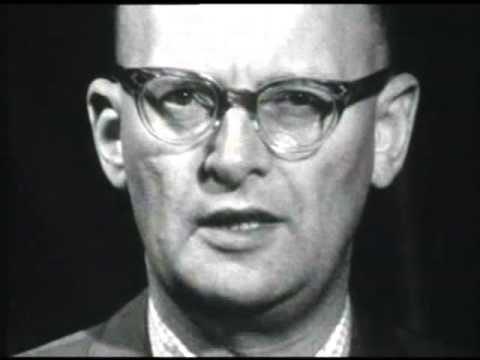
In 1964, Arthur C. Clarke described a future in which communication technology would free people from geography. He imagined a world where you could live anywhere – even in remote locations – and still be fully connected to work, knowledge, and opportunity.
You can watch the short clip here:
At the time, it sounded like science fiction.
When I joined Ericsson in 1997, I often began presentations with a striking statistic:
“Only 15% of humanity has access to telephony.85% have never heard a dial tone.”
Access to communication infrastructure was deeply unequal.
Today, we no longer speak about dial tones. We speak about mobile data, fiber networks, and global connectivity. Billions more people are connected than ever before.
The expansion has been extraordinary. And yet the deeper challenge remains.
Remote communities still lack reliable infrastructure. Energy access is still uneven.Opportunity is still shaped by connectivity. Although technology has evolved and the access gap has narrowed, it has not disappeared. And we are leaving many people behind.
During Covid, Clarke’s vision felt as if it was accelerating.
Like many others, I left the city when offices closed. I moved from my house in the city to our summer house, expecting it to be temporary. Two years passed, and I never moved back. And it was not because restrictions forced me to stay, but because I realized I didn’t want to.
Living closer to nature brought a different rhythm, a different quality of life. Work continued. Conversations continued. Participation in global networks continued. Geography had loosened its grip.
For a moment, it seemed as if Clarke’s vision was unfolding at full speed. Rural and urban no longer felt like fixed opposites.
But after the pandemic, something interesting happened. It seems to me that travel resumed. Business flights returned. And we have cities filled again, with all their traffic jams and stress.
Technology does make decentralization possible. But culture, economics, and human habits pulled many back toward concentration.
Perhaps the rural–urban tension will not be resolved quickly. Perhaps this transition will unfold over decades rather than years.
This is why the conversation with Henrik Pålsson matters.
After a successful career at Ericsson, Henrik chose to work at the margins rather than the center. He focused on transforming an island in the Philippines that struggled with access, infrastructure, and opportunity.
Through connectivity and innovative renewable energy business models, he helped enable something remarkable: a local transformation grounded in entrepreneurship rather than dependency.
Within the 4D Conversations – Dreamers, Doers, Designers and Doubters – we call these stories Little Bigs. They are concrete local initiatives that carry broader systemic implications.
Henrik’s story belongs firmly in that category.
What he is doing is, in many ways, a snapshot of technology for good. But not as a slogan. It is real, giving empowerment and transforming lives and society.
If Clarke imagined the possibility, and global telecom expansion proved it scalable, then Henrik demonstrates what it looks like when applied thoughtfully, locally, and sustainably.
This conversation raises important questions:
• Will rural revitalization remain exceptional – or become mainstream?• Does connectivity decentralize opportunity – or reinforce urban dominance?• Can renewable energy and digital infrastructure together reshape opportunity maps?
Through Little Bigs like this one, we glimpse not only responses to crisis – but a meta-opportunity hiding in plain sight.
Below you can watch the full 1.5-hour uncut conversation.
Watch if you are interested in:
• Rural vs urban futures• Connectivity gaps and opportunity• Renewable energy entrepreneurship in practice• Concrete examples of systemic change• Getting inspiration from a successful social entrepreneur
Timeline
Introduction to 4D ConversationsMeta-Crisis and Global Challenges - 1:23Henrik’s Background and Career Journey - 4:48Rural Connectivity and Innovation - 13:21Solar Power and Energy Solutions - 16:43Connectivity and Starlink Impact - 19:32FinTech and Local Economies - 20:47Empowering Rural Communities - 22:42Urban vs. Rural Dynamics - 23:11Local Ownership and Sustainabilit - 47:04Innovation and Decentralization - 60:21Geopolitical Considerations - 68:48Conclusion and Reflections - 82:59
This is a public episode. If you would like to discuss this with other subscribers or get access to bonus episodes, visit the4dcommunity.substack.com