
معلومات عن هذه الحلقة
What happened
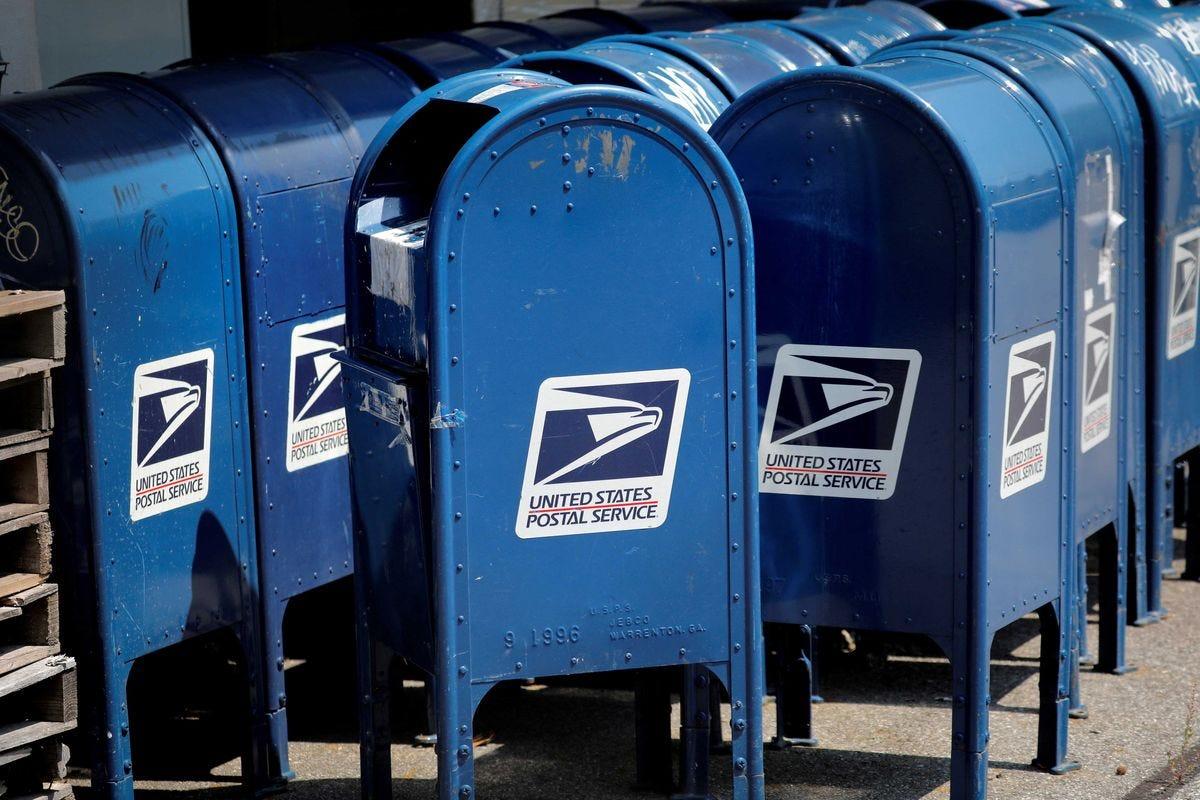
Raw Story reports that the U.S. Postal Service contracted with Prosegur to deploy nearly 1,000 armed security officers at at least 55 postal facilities, authorizing almost 40,000 hours of work each week. The contract’s value was redacted. The startled “what the hell?” came from postal contractor and researcher Claire McKean, reacting to a multinational security conglomerate assuming an armed role inside major public mail facilities.
USPS’s law-enforcement arm, the U.S. Postal Inspection Service, said the guards deter people who might harm workers or compromise the mail and denied that the deployment was election-specific. Yet internal communications and job postings reportedly conflict over whether these contractors may detain people, exercise arrest authority, or present themselves as federal law-enforcement officers.
Postal workers and union officials alleged harassment, violence, deficient supervision and retaliation connected to contract guards. Prosegur said it could not find the incidents or complaints described by Raw Story and declined to discuss the USPS account on confidentiality grounds. A 2022 inspector-general report had already found serious deficiencies in oversight of Prosegur’s unarmed personnel, while overseas the company has faced allegations of labor and human-rights abuses and was linked to a price-fixing case in Chile.
The state chose privatized force
The institution holding power here is USPS, acting through the Postal Inspection Service. It selected the contractor, determined where armed guards would operate and withheld the contract price from public view. Prosegur supplies the personnel, but the federal agency created the arrangement and retains responsibility for exposing its workforce to it.
That distinction matters because the story’s most consequential fact is not that a controversial company exists. It is that a public institution chose to purchase coercive power from that company despite documented oversight failures. The 2022 inspector-general report found that 30 percent of reviewed contractors lacked proper security clearances, that USPS inadequately measured Prosegur’s performance and that auditors could not verify required training. Those were warnings about the same basic governance problem now attached to firearms.
The agency’s stated rationale—security and deterrence—does not explain the reported scale or distribution. Postal Police Officers Association executive director Frank Albergo said deployment was based on facility headcount rather than criminal risk. If accurate, USPS is arming facilities according to workforce size without publicly demonstrating the danger those weapons are supposed to address.
Authority without accountability
USPS has produced no coherent public description of what these guards may do. Prosegur advertised positions involving “arrest control,” restraint and detention support. A September 2026 postal memo reportedly called the guards federal law-enforcement officers. Yet an August 2026 employee briefing said they would neither make arrests nor portray themselves as police.
That is not a minor communications defect. An armed person’s authority must be unmistakable to the workers subject to it. Ambiguity over detention and arrest powers expands practical coercion: employees confronting a uniformed guard cannot safely pause the encounter to resolve conflicting memos.
Training sharpens the disparity. Albergo said career postal police receive at least 1,440 hours, while Raw Story cited research finding that armed-guard requirements vary widely by state and average roughly 40 hours. USPS is therefore substituting workers with uncertain authority and uneven training for a specialized federal police workforce, while declining to answer the central question of what powers the substitutes possess.
Workers bear the risk
The article’s weakest framing is its emphasis on shock. Surprise is not the political issue. Control is.
In Charlotte, union president Miriam Bell said a worker reported being shoved and punched by a guard in April 2024, then placed on emergency status that could have led to termination. Bell also said another employee was fired after a guard interpreted a comment about someone grabbing his weapon as an actual intention to do so; the union is contesting that dismissal. These remain attributed allegations, and Prosegur said it found no corresponding incidents or complaints. But USPS’s response, as reported, was not to grant Bell’s request for trained postal police.
The foreseeable imbalance is severe. Contractors carry weapons and exercise authority inside the workplace; employees who challenge their conduct may face discipline from postal management. Whatever the final resolution of the individual allegations, the structure protects the institution and contractor more effectively than it protects the workforce.
The union issue is structural
Bell called the arrangement union busting. The reporting does not establish that as USPS’s proven motive, and Albergo’s accusation that the agency was “in cahoots” with Prosegur is likewise an allegation, not demonstrated collusion.
The underlying incentives nevertheless deserve scrutiny. Career postal police are unionized public employees with standardized training and defined institutional obligations. Contract guards place recruitment, employment and parts of supervision behind a private intermediary. A former Prosegur vice president previously testified during negotiations that the company’s personnel could perform postal-police work apart from making arrests, according to Bjork and Albergo.
USPS has found money for a large contract workforce while maintaining only 11 active bargaining-unit postal police officers across Chicago, Albergo said. One suburban facility was slated to receive 12 armed guards. Even without proof of an anti-union motive, the operational choice weakens public labor and transfers leverage to a corporation whose contract value the public is not permitted to see.
Public power, private insulation
This is a familiar political conversion: government does not eliminate coercive authority; it outsources that authority and obscures responsibility. The agency can call the guards contractors. The contractor can invoke confidentiality. Job postings, internal memos and employee briefings can contradict one another. Workers still confront the gun.
Prosegur’s international record increases the due-diligence burden rather than proving misconduct at USPS facilities. Raw Story cites a Chilean price-fixing penalty and a 2024 recommendation from Norway’s Council on Ethics to exclude the company from investment because of risks tied to serious abuses in Brazil. Those facts should have prompted exceptional transparency and oversight. The reported response was a redacted price, evasive answers about authority and an expansion to dozens of facilities.
The systemic failure is not confusion. It is an accountability design in which authority is dispersed just enough for every powerful institution to disclaim part of the outcome. USPS made the choice. Prosegur profits from it. Armed contractors exercise the resulting power. Postal workers absorb the consequences.
Thanks to Raw Story
Source: ‘What the hell?’ Shock as USPS gets armed guards from firm accused of human rights abuses
This is a public episode. If you'd like to discuss this with other subscribers or get access to bonus episodes, visit paulstsmith.substack.com/subscribe