


معلومات عن هذه الحلقة
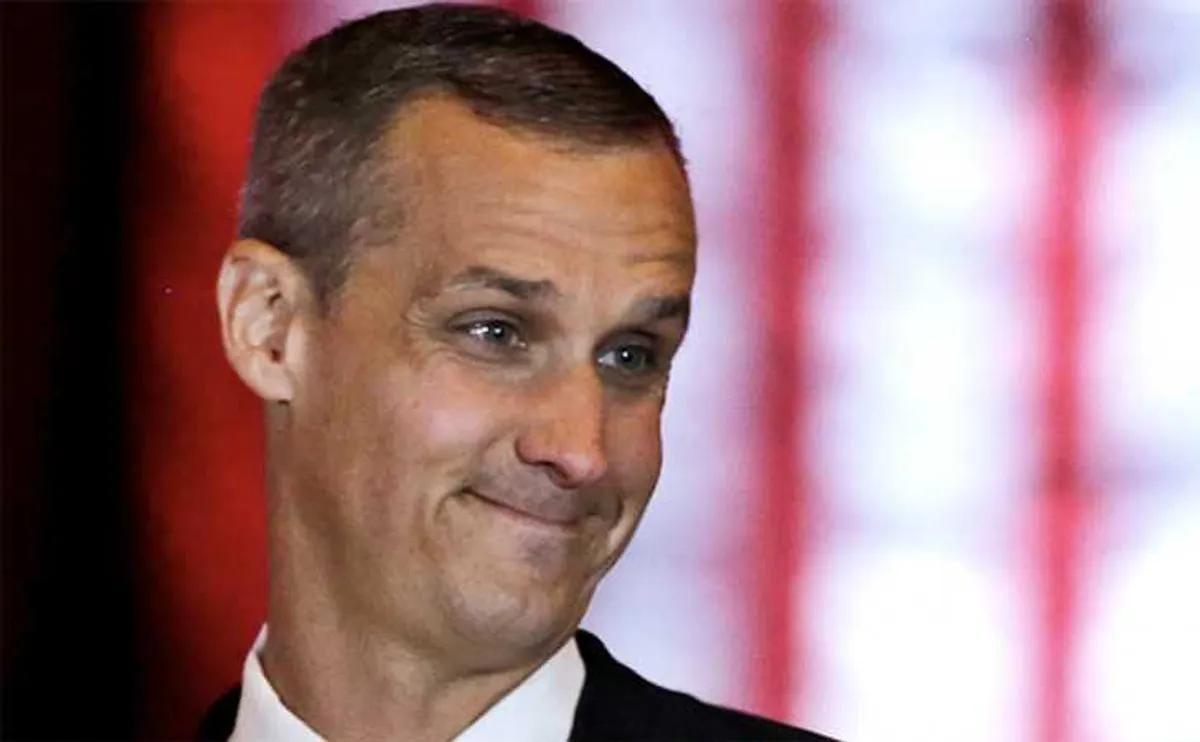
Corey Lewandowski -- (Photo by Lucas Jackson / Reuters | Credit: REUTERS)
The Shadow Government Was the Corruption
An Operative Behind the Secretary
The Wall Street Journal’s reporting describes Corey Lewandowski—who held no Senate-confirmed office—exercising influence over billions of dollars in Department of Homeland Security spending while Kristi Noem formally ran the department. It alleges that he functioned as a “shadow secretary,” sought private work from Qatari and Emirati officials, and helped cut a Palantir contract from $2.7 billion to $1 billion after the company refused him a private meeting. Lewandowski denies wrongdoing; a federal watchdog is considering a criminal referral.
Noem Held the Authority
The central political fact is not that Lewandowski was unusually pushy. It is that DHS leadership allegedly allowed an unofficial political operative to shape federal contracting.
Help fuel the work. Independent analysis doesn’t fund itself:☕ Buy us a coffee
Noem held the institutional power. If Lewandowski exercised the authority attributed to him, he did so because the secretary’s office gave him access, tolerated his intervention, or failed to stop it. Calling him a “shadow secretary” captures the spectacle but can obscure the mechanism: shadows do not control budgets unless officials let them into the room.
That arrangement would represent more than poor management. It would mean public authority had been detached from public accountability while remaining available for private leverage.
A Contract Is Not a Personal Audience Fee
The Palantir episode is the clearest illustration of the alleged abuse. According to the report, the company’s contract was reduced by $1.7 billion after it refused Lewandowski a one-on-one meeting.
A contract reduction can be legitimate. A contract reduction linked to denying personal access to an unofficial adviser is something else: an apparent demonstration that government purchasing power could be used to enforce deference. If the reported sequence reflects Lewandowski’s motive, the point was not merely to save money or renegotiate terms. It was to establish who had to be courted.
Palantir’s refusal does not make the company a civic hero. It makes the alleged demand look more conspicuous. A contractor declining a private meeting should be ordinary. The remarkable part is that refusal allegedly carried a billion-dollar consequence.
The Outrage Cycle Hides the Structure
Much of the reaction described in the source reduces the story to insults, predictions of prison, or applause for corporate resistance. That is emotionally legible and politically shallow.
Lewandowski may face investigation, charges, or nothing at all. Those outcomes matter, but “straight to jail” is not analysis. Neither is the unsupported theory that Peter Thiel engineered Lewandowski and Noem’s removal; the Journal report offered no evidence tying Thiel to their exit.
This fixation on personalities misdirects attention from the institution that made the alleged conduct possible. The scandal is not simply that one operative may have behaved corruptly. It is that a cabinet department reportedly became permeable to unofficial influence over enormous public expenditures.
A Pardon Would Complete the Arrangement
Lewandowski reportedly expects a presidential pardon if charges emerge. That expectation is revealing even though it is not proof that a pardon was promised.
A system of patronage becomes especially durable when insiders believe political loyalty can erase criminal exposure. Access enables the conduct; institutional protection sustains it; anticipated clemency weakens deterrence. Each layer tells the operative that formal rules are obstacles for outsiders, not binding constraints on people near the president.
That is how impunity works before any pardon is signed: as an expectation shaping behavior in advance.
Corruption by Design
This story points to a larger governing pattern in which authority is exercised through informal loyalists while responsibility remains scattered among official titles, personal relationships, and denials. The ambiguity is useful. Decisions still get made, contracts still change, and billions still move—but accountability dissolves into arguments over who technically held which job.
If the allegations are substantiated, this was not bureaucratic confusion. It was government power operating through deliberately blurred lines. The shadow was not outside the institution. It was the institution’s chosen method of avoiding the light.
Thanks to Raw Story
Source: ‘Straight to jail’: Explosive report on Trump DHS aide’s dealings reverberates
Systemic Error is a reader-supported publication. To receive new posts and support my work, consider becoming a free or paid subscriber.
We warned them.We told them.We shouted from the rooftops.We plead.We begged.They didn’t listen.Now, we all will suffer.Y’all know what to do, right?VOTE BLUE! 💙Vote as if your life — nay, our country — depend on it.Because, this time, and every time, it does.
This is a public episode. If you'd like to discuss this with other subscribers or get access to bonus episodes, visit paulstsmith.substack.com/subscribe


