

speaker-1: The core argument is basically
speaker-0: Bayesian statistics computational that than it is now. And we
speaker-1: We we we parcelated.
speaker-0: Basically. Tell.
speaker-1: minimum Bayesian workflow into four and we discuss how
speaker-0: stages and then how simulations can accelerate or help in this stage. So let's start
speaker-1: First we stage number one, which we call model sp
speaker-0: And ⁓
speaker-1: Everybody is familiar with th with this stage, we can call it model development, and this is where all existing Bayesian workflows recommend doing prior checks. Okay, which you can do rather informally, just running a few simulations from the model and ensuring that
speaker-0: What comes out meets a set of expectations that you have. You could do microprim.
speaker-1: We do it also very formally in a the Quebecan court style. forward checks where you you transform the outputs of your model if they're high dimension transforming them into a low dimensional, more interpretable representation, which you can then also formally check is it under or over dispersed relative to to reality or or your domain.
speaker-0: Foaming etcetera et cetera. Right? So
speaker-1: you can use this would be or what if worlds not of the simulation to basically your model before you see any data. Surprising how how many models you can simply discard by doing these types of prior
speaker-0: Validate. But it's it's accessory.
speaker-1: despite all these workflows that are sort of underutilized in in practice, from what I see at least. In a lot of basic aspect of this
speaker-0: Another aspect is ⁓ prior state.
speaker-1: Which we we may touch upon later down down the line, but w we also have another
speaker-0: have ideas on how you can translate
speaker-1: non probabilistic as expert knowledge into probabilistic knowledge into distributions also using simulation.
speaker-0: Right. And perhaps it's of course a lot of this paper is about
speaker-1: It's of course Simulation based inference, which is unsurprising given that this is our bread and butter research. But but still i it it's still it we should we should remember that Markov chain Monte Carlo methods were also termed simulation based methods.
speaker-0: Right.
speaker-1: a goal simply because using random numbers to simulate the distribution also this notion has changed a little bit. Now when you talk about simulations simulating from the model not simulating the posterior used to be called. So this is stage number one model specification. Stage number two is what what we term model verification. And this is another part of the workflow where you have to well
speaker-0: ⁓ you That's it. Now we basically want to check if your inferences are informative, if your inferences are well calibrated, to the discontains class.
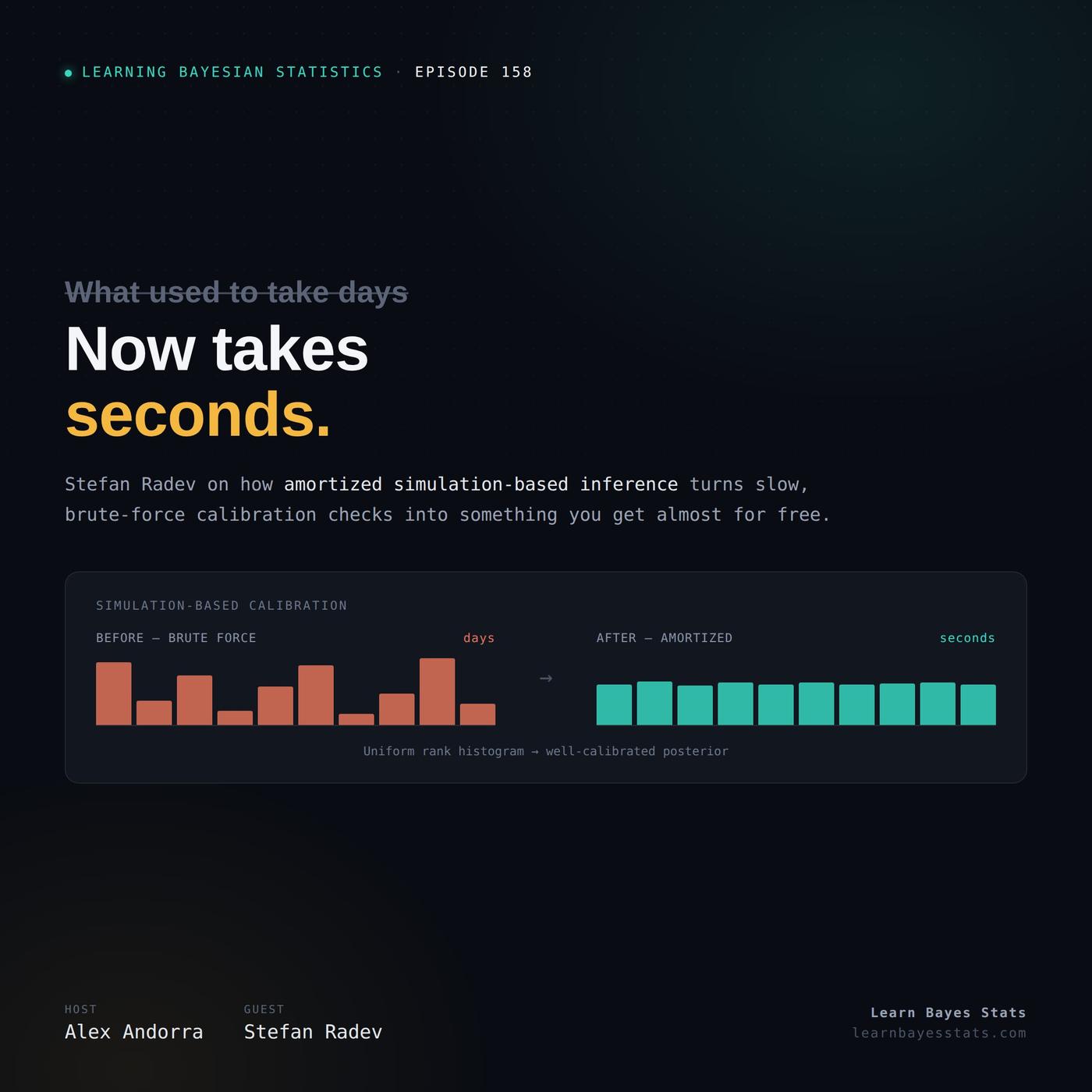
speaker-1: classical procedures like simulation basically, parameter recovery checks, all very important or traditionally associated with very high computational cost. Because these checks basically brute force. You simulate
speaker-0: sometimes thousands and you run inference on each and every any of these data sets. ⁓ and this this
speaker-1: This of course is also the reason why you also don't see all these checks. Sometimes in in research papers even even doing such a check, a parameter recovery study for a new model is a valuable contribution simply because
speaker-0: You have to pay a price.
speaker-1: certain computational price to get it. So this is also one aspect by the way, which
speaker-0: ⁓ is just greatly encompassed ⁓
speaker-1: methods and simulation based inference because all these checks for free if you're doing amortized inference. Literally a few seconds for something that
speaker-0: For obtaining millions of postulations.
speaker-1: samples for something that traditionally used to maybe take a few days, depending on your model.
