

معلومات عن هذه الحلقة
In the final programme in our Elements series, Justin Rowlatt looks at the rarest and oddest members of the periodic table.
Selenium, bismuth, molybdenum, antimony, rhenium, hafnium, zirconium, tellurium, thallium, barium. What are they? And what are they used for?
Minor metals merchant Anthony Lipmann explains how he made a fortune tracking down a stockpile of one toxic element sufficient to kill millions of people - and sold it to Japanese camera manufacturers.
We set chemistry professor Andrea Sella a musical challenge to round off his elucidation of the periodic table, going out with a pyrotechnic bang.
And cosmologist Martin Rees explains why 85% of the matter in the universe isn't made up of chemical elements at all, but instead of "dark matter", whatever that is.
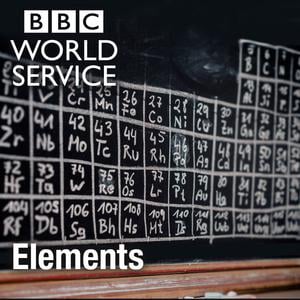
(Picture: Elements series planning board; Credit: Laurence Knight/BBC)
Selenium, bismuth, molybdenum, antimony, rhenium, hafnium, zirconium, tellurium, thallium, barium. What are they? And what are they used for?
Minor metals merchant Anthony Lipmann explains how he made a fortune tracking down a stockpile of one toxic element sufficient to kill millions of people - and sold it to Japanese camera manufacturers.
We set chemistry professor Andrea Sella a musical challenge to round off his elucidation of the periodic table, going out with a pyrotechnic bang.
And cosmologist Martin Rees explains why 85% of the matter in the universe isn't made up of chemical elements at all, but instead of "dark matter", whatever that is.
(Picture: Elements series planning board; Credit: Laurence Knight/BBC)
الإنجليزية
الولايات المتحدة
النص 🔗
Are you the producer of this podcast?
Add a podcast transcript
Need Audio-to-Text?
Transcribe with Listen411 in Just 60 Seconds
البحث في الحلقات الماضية
البحث في الحلقات السابقة من Elements.
حلقات أخرى في هذا البودكاست
Six extremely rare metals that clean your car exhaust and turbocharge industrial chemistry, but which are also the focus of a violent power struggle in South Africa.
Presenter Laurence Knight heads to Johnson Matthey, a company that pioneered the car catalytic converter in the 1970s, to find out…
Why do we value this practically useless metal so highly? And does it bring out the worst in human nature?
In a second look at this most coveted of metals, Justin Rowlatt hears both sides of the age-old argument. Swiss investor and gold enthusiast Marc Faber explains why he keeps gold bars tuck…
The macabre poison we know from crime novels and history books has some surprising modern uses.
Justin Rowlatt travels the Subcontinent - first to India's Forest Research Institute in the Himalayas where Sadhna Tripathi explains why the chemical element ends up in telegraph polls.
We then hea…
This radioactive metal holds the promise of thousands of years of energy for the world. But is it really any cleaner or safer than traditional uranium-based nuclear power?
Chemistry Professor Andrea Sella of University College London takes the helm, as he speaks to no less than three nuclear phy…
إخلاء المسؤولية: البودكاست والأعمال الفنية المضمنة في هذه الصفحة مأخوذة من BBC World Service، وهي مملوكة لمالكها وليست تابعة لشركة Listen Notes, Inc أو معتمدة منها.
تعديل
شكراً على مساعدتنا في الحفاظ على قاعدة بيانات البودكاست مُحدَّثة.
