

00:00:01
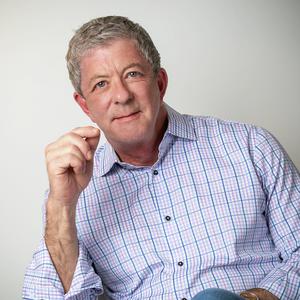
Speaker 1: Seven six on a Friday, and a very happy one to you. Something you want to do next Thursday seven o'clock is either log on or show up at the Scarlett Oaks Tampus on three hundred Scarlett Oaks Drive to hear the man who is Peter Bronson. Love Peter Bronson. I know you know who he is. He's author of all these wonderful, wonderful books, including Forbidden Fruit. I think one of the favorite ones he's written, for Bidden Fruit since it he's Underworld and The supper Club Inferno about the Beverly Hill Supper Club. Of course. He was editorial page editor for the Colmnists for the en Choir for about twenty years and under Peter Bronson, the Enquirers judged the best editorial page for four years in a road outstanding work he did. Also, he was a contributing editor and columnist for CINCINNTI magazine and currently the owner and publisher of Chili Dog Press. You can find him online chilidog press dot com offering publishing, writing, edition and consulting and among the other books that he's written. He's going to be doing this empower you seminar on Magical History Tour, Murder Mystery and Buried History. Peter Bronson, Welcome back, my friend. I always love having on the program and I love reading your books.
00:01:03
Speaker 2: Well, Brian, I always loved being with you, and it's always a good day when we start this way it is.
00:01:08
Speaker 1: And you know what I mentioned specifically, not only because I really loved Forbidden Fruit, but that had to do with the Beverly Hill Supper Club, which also had to deal with Stan Chesley, whose name comes up, and you wrote a chapter on stan Chesley in You're in this book Magical History Tour that you're gonna be talking about next week. Can we start there, because I think, not only is it a great story, and not only do I think it's great that you did it because of what Stan Chensley and others did to their clients in the fen Fen litigation, but also in the Beverly Hill supper Club litigation where he blamed aluminum wiring on something that was clearly a mob job, burned a supper club down, and killed all these people. But I bring it up because the way you wrote the chapter on the Fenfin litigation, you were you had a person in a I believe it was a coffee shop or a restaurant, listening to the conversation of two people at a different table who are talking about the facts in the litigation. And that's how you told the tale, using real information that came out about how this thing unfolded, but in a narrative that I think was created whole cloth from you. So have I got that right?
00:02:11
Speaker 2: Yeah, that is correct. I really enjoyed doing that. It was kind of a It just came up to me as a creative way to introduce that without going through the usual steps of saying, you know this anonymous source or whatever. I mean, all of that is part of the public record. I actually covered the fen Fend trial for as much as I could get to, maybe about sixty percent of it, and it was just fascinating. I think people have long forgotten this now, but this was a huge event in our local history. As you remember, stan Chesley was the master of disaster. He was one of the foremost, if not the foremost, class action litigator, not only in the US but internationally, and this was his downfall. It was the end of stan Cheslie's career because of.
00:02:57
Speaker 1: What they found, and what they found is all money from his clients didn't that really boiled down what it was.
00:03:04
Speaker 2: Well, you betman, class action settlements usually the attorneys shares maybe thirty percent, which is pretty outrageous when you think of it. Yeah, and these guys with the Kentucky attorneys that he buddied up with, they took more than two thirds, closer to seventy percent of what was intended for the victims. And then they kept dipping into it also to create these phony trusts so that they could keep paying themselves and also paid the judge who was guilty of taking bribes. Yeah, to get the right outcome. I mean, the whole thing was just it reeked. And that caused the disbarment of stan Chesley in Kentucky, which was a huge deal. And then the Ohio had reciprocity, so they disbarred him too, and that was pretty much the end of his career.
00:03:55
Speaker 1: It was the end of his career, but I don't think he suffered enough considering what he had done. Others went to prison, did they, Huh?
00:04:02
Speaker 2: Yes they did. In fact, one of the leaders was a guy named Bill Gallian, and he was a big deal at the University of Kentucky Medical School, where he was a super lawyer there, blue blood Kentucky, you know, big Kentucky basketball fan and et cetera, well known around Lexington. And he went to prison and he was pardoned by Joe Biden in those midnight pardons just before he left office.
00:04:29
Speaker 1: That it is. That's all I wanted. That's the last chapter in the book, but that's where I wanted to start it because when I read that, I was Peter Bronson, man, I'm so glad you used Chesley in this book. About the magical history to her murder mystery and buried history of the city. Another really fascinating and I know you're gonna talk about this next Thursday in greater detail. The first woman know how to be executed executing the electric chair, aka the Black Widow. That was a wild story, isn't that crazy?
00:04:57
Speaker 2: She was our first serial killer in Cincinnati. The probably killed at least a dozen, maybe fifteen sixteen people, and she cosied up mostly to elderly German immigrants, because in those days we had a German community that was really big and a lot of them were very weak on the English side. So she cosied up to these old men who were single or widowed, and pretty soon they had a new girlfriend, and they'd tell all their friends about it, and they were giving her their mortgage, they were signing over all their property and their bank accounts. And then she would come over and cook dinner for them. And that was, as you might say, their last supper.
00:05:35
Speaker 1: Yes, it was, And you described the conditions that I remember one of the guys lived. It was pretty horrific conditions folks lived in back then.
00:05:45
Speaker 2: It was and dying. She killed them with arsenic and she would salt their food with it, sometimes two or three meals, but usually as she refined her process, it just took one. She would cook a dinner for them and that was it. They died a horrible, excruciating death. Just it's really appalling when you when you look at what happens to people who die from arsenic poisoning in.
00:06:09
Speaker 1: A well told tale in your book, man, you do a great job telling a tale.
00:06:12
Speaker 2: Man, Thank you.
00:06:14
Speaker 1: How about the Shaker village, the commune that was the Whitewater Shaker Village.
00:06:20
Speaker 2: Oh yeah, if you drive out to Whitewater and look for the Shaker village there, it's They have tours of the Shaker halls and dorms and the whole property there is still preserved thanks to the friends of Whitewater Shaker Village. But if one of the places you need to stop is the cemetery, and there's a monument in the middle of this cemetery and it says this is dedicated to a celibate Christian Communists. I mean, those are three words. You just don't see art very often in these And who's gonna be Peter?
00:06:55
Speaker 1: I just figuring myself, who's gonna sign up for something like that? You voluntarily enters into celibacy in a commune, basically communist, and you got to work and nobody has any sex and man, that sounds like the worst possible plays on the planet, which maybe is why it disappeared. It's not there anymore.
00:07:14
Speaker 2: Well, exactly, you look at their cemetery and it's a big piece of property, maybe three or four acres, and there's only about ten graves, so maybe twenty graves back there. It's because celibacy. You know, if you don't have anybody born, you don't have anybody die. Yeah, so they've withered away. But a lot of people in those days went to the Shakers because there was no safety net. We didn't have welfare. We didn't have social security, We didn't have any benefits for people who lost their husbands in the Civil War or to accidents. So a lot of people that was their last place of refuge.
00:07:49
Speaker 1: So well, and again, all right, going back to the horrific conditions. If I recall correctly the disappearance of the former President William Henry Harrison's son, someone stole his remains after you passed away. You know where it ended up. You read about it in Magical History tour. This was the medical school, wasn't it, Peter?
00:08:08
Speaker 2: Yes, it was Ohio Medical School, right downtown Cincinnati. Clean supposed to wear the Cincinnati and.
00:08:14
Speaker 1: Clean, wonderful smelling place, wasn't it, Peter?
00:08:17
Speaker 2: Oh? Lord, When I researched that, I just I was so glad that I never had to be near that place. And I can't imagine what people thought when they walked by it. Oh, they had bats of body parts that vas, yes, and they would steal corpses in various stages of decomposition, and that's what the medical students worked on.
00:08:42
Speaker 1: But they just left them laying around. That was what was so gross about it. It's like they had no regard whatsoever, not only for the dignity of the cadaver, but just the the intense, nasty, decaying flesh smell that they had to be surrounded by twenty four to seven trying to become a doctor.
00:08:58
Speaker 2: Oh, it's a Paul and John Scott Harrison is unique in our American history. He was not only the son of our ninth president, he was the father of Benjamin Harrison, who's also a president. Nobody else can tick that box. And also when his family found him, he was hanging on a rope in a pit at the end of a crank that hauled cadavers and bodies up, the bodies that they'd snatched, that hauled him up four floors to the top of that room where they can dissect him.
00:09:28
Speaker 1: Just horrible it is, you know, when you read it, it comes for us so vividly in Peter's awesome writing. It'll bring bile up in the back of your throat as you're contemplating. But it is a fascinating story. And of course you're going to talk about the guy from Wilmington who played a role in naming both the city of Denver and the state of Montana. You talked to Whitewater, Shaker Village, the Black Widow, which we talked about already, the Chansley Story. There's a whole bunch of beautiful, wonderful and very interesting Cincinnati of course related stories. And Peter regularly writes about events that happened here in greater Cincinnati area, like the Promised Land, how the Midwest was one. Get his I'll get all of his books. They're just fascinating reads there. I don't want to say easy reads, but they're just so interesting and compelling. I don't think I put your book down that you're doing the seminar on magical history ory. I don't think I put it down. I read a cover to cover. I just it just got right through it and it was great so my listeners. Joe Strecker is going to add the book to the blog page fifty five cares dot com along with the information about the Empower Youth seminar. You're doing it live at the Empower You Studios. Correct.
00:10:28
Speaker 2: Correct. I always enjoy being with that group. They're great people. They've done so many great things about sharing information that's important to all of us, and I'm really looking forward to it.
00:10:38
Speaker 1: Peter, what are you writing right now, you got another one in the works. I got to ask, well, I.
00:10:44
Speaker 2: Haven't started anything yet, Brian. I'm a little behind schedule for that, but I've been very busy with book signings, going out to visit people and telling him these stories just as I'm doing and empower you. And that's keeping me pretty busy.
00:10:57
Speaker 1: So I'm happy I know you are. I just was hoping you you already had. Well, you have a concept in the back of your mind. I'm going to take away from your statement there that at least have a concept and we can anxiously await yet another book.
