

РАСШИФРОВКА 🔗
00:00:07
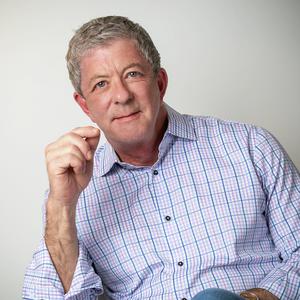
Speaker 1: Seven h six here at fifty five KRC DE talk station. I hope you're having a very happy Tuesday. Put a smile on your face. In this segment, we're gonna hear from Tom's Alastauski at the bottom of this hour matters Political and we'll get the inside scoop at bright Bart News in an hour, follow by the Daniel Davis Deep Dive at eight thirty. Typical Tuesday, but a special guest here in the fifty five KRC Morning Show. Kind of hoping it's not gonna be the only time he appears here. Greg Hand you may know him because he's the proprietor of the Cincinnati Curiosities blog. Find it where you find your blogs. Joe's put a link up on my blog page fifty five cars dot com to get his website. He writes about one thousand words every week, which he posts on Tuesday, all about a whole bunch of different topics like, for example, most recently, an escaped Oriole brought Cincinnati to distraught women and national attention. That's his most recent post. Retired from the University of Cincinnati, is the head of Public Relations office for employed with the university. He was the editor of the Western Hills Press, May at Rest in peace. In addition to the blog, he contributes regularly to CINCINNTI Magazine, presenting entertaining history, chats and bars and saloons. You heard that correctly, through a program program called stand Up History. Also the author of US Cincinnati Curiosities, which I've got a copy of in my hand, Healing Powers of the Whamsley Madstone, Nocturnal Exploits of Old Man Dead, Mazappa's Naked Ride, and more Right, that's why it's called Cincinnati Curiosities. We'll get a word or two about that. And then Tarbell Palooza another book that he kindly gave me a copy of, So great stuff. It's all Cincinnati bass and with a comedic twist. Greg Hann, Good to have you in studio. Always a pleasure. So e've been how long? Even if this is stand up comedy that relates to Cincinnati history.
00:01:47
Speaker 2: Yeah, you know. The thing is, people in Cincinnati love the history of this town. Oh yeah, and for good reason. This town, I keep telling people, is the city that just keeps on giving. Every time I find something weird, I find something weirder, and people are aware of this, but they are put off by traditional methods of learning. They don't want to get books, they don't want to sit down and take classes or be serious. But they'll go to bars and after a couple of drinks, you get somebody to stand up and talk about, for instance, seventeen weird real estate stories in Cincinnati, and they get very appreciative after that second drink.
00:02:33
Speaker 1: Oh yeah, we all know that social liver could help some multiple social situations. Especially at a comedy club. You got to get that InterVoice of reluctance and kind of shut up and so you can participate. Do you interact with the audience? I mean, oh yeah, yeah. Do you engage in the Socratic method?
00:02:51
Speaker 2: It's very informal. This really started with in the bars because
Load full transcript
of my partner in founding this, Molly Wellman, who has owned a variety of watering holes in Cincinnati. She's she's well known for that, and she just presents so so wonderfully and everybody just kind of joins in, and so we get a lot of cat calling and uh and uh, you know, and it never gets out of hand, but it's fun.
00:03:25
Speaker 1: Well, I don't want to necessarily presume what I'm what I'm thinking, but considering the venues are typically bars. Although I know you perform at the Art Museum and the u SEE Lifelong Learning Institute and you're doing an event at Union Terminal as well, you're focusing on bars. I'm suggesting though, that maybe there's a little bit of blue humor in this.
00:03:43
Speaker 2: Oh yeah, yeah, yeah. The way the way that we put it. When people call us and want to book us for something, they always go, now, how adult is this? Yes, and our response is usually it's irreverent obscene.
00:04:01
Speaker 1: I can definitely relate to that, and I'm someone who definitely appreciates a certain level of irreverence without question. So, in terms of upcoming events, what are you got going on that we can want my listeners to know about, because it sounds like something that we're all going to want to show up at at some point.
00:04:18
Speaker 2: Wednesday, January twenty first, we have a monthly residency on the third Wednesdays of each month at Meuse Cafe in Westwood. That's always a fun occasion. And then the next night, Thursday, January twenty second, we will be at the Museum Center, and that one is in a rather large auditorium, so we could have as many as two hundred and fifty people in attendance at that one that one's got myself, Molly will be there in Dean Regis, who is technically an astronomer, but we let him in because astronomy involves the space time continuum and that's close enough to history.
00:05:05
Speaker 1: Will he be speaking on matters involving the flux capacitor in generating one point twenty one gigilyottes.
00:05:11
Speaker 2: He Dean has done some amazing things, takedowns of astrology and an explanation of why Galileo's middle finger is preserved in a museum in Italy and that sort of thing. I quite often get into the history of prostitution in Cincinnati, although.
00:05:35
Speaker 1: They mostly across the River.
00:05:36
Speaker 2: No, this is the big misunderstanding that people have their memories are entirely too short. Between around eighteen seventy five and the First World War, Cincinnati had a large red light district in the West end, pretty much from Fifth Street up to Seventh Street, from Central Avenue out to Mound Street. There were as many as seventy houses of prostitution in this red light district, with perhaps six hundred to seven hundred what we'd call working girls and this is.
00:06:13
Speaker 3: The demand was that high. This was this was This was the way people thought at the time is if you did not have this, it wasn't legal. But if you did not have this accessible.
00:06:29
Speaker 2: Out let four hormonally overcharged men, they were going to be running around the city raping respectable women. And so so that was the solution was, well, we're going we're going to endure this stuff, but we're going to shove it off into the corner here.
00:06:50
Speaker 1: So it will sacrifice Victorian principles in the name of practical reality.
00:06:55
Speaker 2: Yeah. But the thing about Kentucky is and I addressed in a blog post last week, is in the nineteen twenties we got a totally different city here. Before nineteen twenty, this was one of the weirdest places on the planet, and after nineteen twenty it totally changed.
00:07:17
Speaker 1: Well, is that is a consequence of the Boss Cox administration exactly.
00:07:21
Speaker 2: There were four factors that really led to this. One was a brand new city government when the Charter Rights came in, restructured city government brought in the city manager form of government. The other was prohibition absolutely a major factor in changing the city because it basically wiped out one of the city's largest industries overnight.
00:07:46
Speaker 1: Which apparently was alcohol but also a prostitution because it might I parley into you. Is that how the mob and prostitution and gambling and liquor all ended up in northern Kentucky because the mobs came in and take it open.
00:07:58
Speaker 2: For Cincinnati by nineteen thirty five was known as the best run city in America, and they got that way by shoving all the vice that used to be a money maker for Boss Cox across the river. And so you really don't see northern Kentucky getting this reputation until after city government changed in Cincinnati.
00:08:24
Speaker 1: So it's not in my backyard, but as long as it's close enough that I can get there easily and conveniently, it's aokay for northern Kentucky.
00:08:31
Speaker 2: There you go to get the crime.
00:08:33
Speaker 1: Element in Wow, we're going to learn about some of different some additional parallels nineteen twenty six versus well twenty twenty six, and sadly some of the things haven't really changed since County You're nineteen twenty six and twenty twenty six. We're going to continue with comedian and historian Greg hand Station. It's seven eighteen. If if you have PERCD talk stations, see I'm laughing because I'm sitting in studio with a comedian and historian of unusual Cincinnati related matters. Greg Hand got a great background doing this stand up comedy related to Cincinnati history, and he's got some assistance with some of these, like Molly Wellman, for example. He mentioned Dean Riguz and I understand Michael Parina is also going to be helping you out at this stand up history at Union Terminal event Thursday, the twenty second. Tickets are available at starts at six pm. Get your tickets. Jo just put a look up at the blog page fifty five krcy dot com. I was laughing because you're always working on news stories. You mentioned doing Cincinnati curiosities. He put a
thousand words out every Thursday or Tuesday on things of this nature. We're going to be reading about rats as well as garbage collection.
00:09:44
Speaker 2: Oh my god.
00:09:45
Speaker 1: Yeah.
00:09:45
Speaker 2: People remember Cincinnati as poor Koppolis. We love our pigs. We get the flying pigs all over the place. What people don't remember about Cincinnati is the City of Cincinnati did not institute garbage collection well until after the Civil War.
00:10:00
Speaker 1: That's because we had the canal.
00:10:01
Speaker 2: It's because we had the pigs.
00:10:03
Speaker 1: I was going to say, they throw it in the canal.
00:10:05
Speaker 2: Yeah, you would just you would just throw stuff out and the pigs. Pigs took care of it. And this is remember from eighteen thirty until nineteen ten, Cincinnati was one of the ten largest cities in the United States. So after the Civil War we were the sixth largest city in the United States and had no organized garbage collection.
00:10:28
Speaker 1: Holy cow, we did have the second police department in the entire Uited of States, so we had to wait around for garbage collection. All right. You mentioned the whole Boss Cox period, and I think a lot of my listeners are familiar with the level of corruption that existed under those old Boss regimes. The Charter Right Party kicked in in nineteen twenty six and this led to a period of reform where again led to the eradication of prostitution and crime, and they sent it over to Northern Kentucky, who apparently the mob was happy to embrace the change. So cities cleaned up under the Charter Rights and we enjoyed this very successful, respected historically period of time. You said we were one of the best governing cities, and everyone said it, how long did that period of time last? Because it seems somewhere we went off the rails there.
00:11:15
Speaker 2: The Charter Committee and the Charter form of government basically came in in the early nineteen nineteen twenties, and by the mid thirties it was multiple, multiple national publications pointed to Cincinnati and said, this is it. This is the best governed city in America. There were some key factors that went into that form of government. One was a form of voting called proportional representation.
00:11:45
Speaker 1: Did you hear that? Yes, those words have come up recently in history.
00:11:50
Speaker 2: Which is a little complicated to describe it. Basically, it ensured minority voices and so it ensured that council would be filled with people represented different points of view. In the nineteen fifties, an alliance of the Democratic Party locally and the Unions locally worked to remove proportional representation and set the scene for a one party government again.
00:12:20
Speaker 1: Which means each council members expected to represent every single of the fifty two neighborhoods in the city, whereas before I guess there was some sort of gerrymandard or.
00:12:29
Speaker 2: Slic no in proportional representation. It was intentionally citywide, each in each in each councilmanic seat. Prior to proportional representation, city council had more than forty people. We had at that time twenty some odd wards in the city, and council was made up of two representatives from each ward. In that arrangement, under Boss Cox, who controlled the Republican and the Democratic party in the city, the Republicans had something like thirty five out of the forty seats. After proportional representation came in, Charter rarely had more than five seats. Oh, really, Republicans were consistently represented on council, as were Democrats.
00:13:29
Speaker 1: Well, the parallels that you draw between nineteen twenty six and twenty twenty six. I was laughing about the condition of the roads back in nineteen twenty twenty six. Apparently nothing has changed there. Also, you mentioned the rapid transit loop, which we know is the street car today. Is that the project that was being built the subway system that never did get built. What's the backstory on that one.
00:13:51
Speaker 2: So the Charter Committee came in with this new form of government totally on the message of we are going to disassemble what's left of the Cox machine. And one of the elements of the Cox machine that was still in place was the rapid transit loop that we referred to as the Cincinnati Subway. And so suddenly out of City Hall came these reports that said, oh, this was poorly designed, it couldn't possibly be used, its cost overrun going through the roof. All of this was totally made up. It was fake news. It was an attempt by the Charter government to accuse the Cox government of creating this boondoggle that could never be completed, and so they shut it down. And if they had allowed it to go forward, in fact, it was designed very well and it was under budget or not under budget.
00:14:59
Speaker 1: But on Budge, Wow, the parallels to be drawn. I'm thinking, like, well, evil Orange Man did that, so we're not going to do it, even though on paper and Carl it looks like it really will work. Make up some propaganda say it's it's connected with Boss Cox, who we all collectively agrees evil Erico. Anything he's responsible for is in and of itself evil, So just let's forget it.
00:15:20
Speaker 2: It's one of the lessons of history is that the flavor of politics changes, but it's always with us.
00:15:27
Speaker 1: Greg hann great conversation, man, what are you doing the nineteen twenty six twenty versus twenty twenty six presentation? Is that upcoming?
00:15:35
Speaker 2: Oh? It takes a while. A thousand words translates into about a seven minute presentation. And most of our most of our sets at our shows are in the twenty to twenty five minutes. Oh so a snippet, and and so I've I've When I get a topic like that, I have to get a little more to fill in my slot.
00:15:58
Speaker 1: Sure, and well, you will find him and them around town. Sin Saint Curiosity's blog. You gotta follow it. Joe Strucker's put a link up if you have carc dot com. Whereas I would say Peter Bronson covers more perhaps well known or more less comedic, elements of what happens are throughout his Cincinnati history. You're finding the really crazy stuff and I'll encourage my listeners. Joe put a link up to Cincinnati Curiosity's your book again, Healing Powers of the Whamsley Madstone, Nocturnal Exploits of Old Man Dead, Mazeppa's Naked Ride, and more. Sounds bizarre and I'm sure we're going to find the bizarre, but it's historically true. Greg Han. Real pleasure having you in here, man, and maybe we can do this again.
00:16:41
Speaker 2: Thank you. I'd love to keep up the fun.
00:16:43
Speaker 1: We all need fun these days, and I appreciate your using history as a vehicle to get us all smiling. Seven twenty six. Right now, if you have krc DE talk station, real quick words, my friend, the fasten pro best roofers around