

TRANSCRIÇÃO 🔗
[0:01] Welcome to the Empathic Edge.
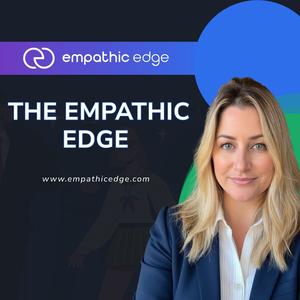
[0:07] Welcome to the Empathic Edge with Megan Smith, founder of Empathic Edge, Megan is an
[0:11] attorney and negotiation professor and dispute resolution professional focused on the future
[0:16] of human communication in an AI-driven world.
[0:19] Through negotiation strategy, emotional intelligence and high stakes, conversation and training,
[0:24] she helps professionals build confidence and perform more effectively under pressure.
[0:29] I'm Evan Magin, today we're talking about interest based negotiation and what changes once
[0:33] you start looking beyond positions, Miss Megan, nice to meet you.
[0:36] Nice to meet you as well.
[0:38] So this is interesting, what separates interest based negotiation from conversation focused
[0:43] mainly on demands, positions and fixed outcomes?
[0:47] So one of the easiest ways to explain, I take a story from the book Getting to Yes, which
[0:53] was written by some professors from Harvard's program on negotiation, is if we were to take
[0:58] a couple of individuals in a library and one wants a window to be open and the other one
[1:04] wants it to be closed and these two individuals are fighting about it.
[1:08] The librarian comes in and of course tells them to, but also works to identify what's their
[1:13] underlying interest, what is their goal, what is each of these individuals need and the librarian
[1:21] then goes to the next room over and opens a window because realizes that the individual who
[1:26] wants the window open wants a bit of a breeze, the individual who wants the window closed,
[1:32] thinks that it's drafty and so is trying to create a solution that meets both of their underlying
[1:37] interest, which is comfort.
[1:40] So even though their positions were always going to be opposite, right, like open is just
[1:44] never closed, they just don't mean the same thing.
[1:47] They're underlying motivation, right, they're why behind the thing was comfort and so they
[1:53] were able to find a resolution based on that.
[1:56] So in your opinion, why do people become attached into a specific solution, even when it's not
[2:01] addressing what matters most of them?
[2:04] I think a lot of it has to do with the fact that we tend to focus a lot on logic.
[2:09] So we kind of want to defend ourselves, right, and the way that a lot of us just naturally
[2:13] decide to do that is by coming up with facts, whether it's a timeline of an event of events
[2:20] or it's, hey, this is my strongest argument, maybe this is my weakest argument or this
[2:25] is what I think, you know, I can attack their arguments with.
[2:29] And that's all important preparation, right, knowing your justifications, knowing your own
[2:33] strengths and weaknesses, but if you're really working towards being genuinely curious
[2:40] and learning about what's important both to your side and to the other side, that's where
[2:45] we can actually create and maximize value.
[2:49] But
Load full transcript
I do think a lot of us, it's just natural, right, we just, it's easy for us to think
[2:53] less kind of about this, even the storytelling of something, right, like, hey, this story that
[2:57] I built up in my head is you want something that I don't want, and that's just oppositional
[3:02] to me versus, hey, maybe they're acting this way for a different reason that has nothing
[3:08] to do with me, right, like maybe they had a bad day, maybe their mom is now on hospice or
[3:14] they're dealing with something difficult with their teenager at home, right, there's a lot
[3:18] of the time.
[3:19] There's another reason why we're asking for a thing or we're reacting a particular way.
[3:24] So what kind of needs you pressures, fears or priorities tend to sit beneath with someone
[3:29] explicitly asked for?
[3:32] So fear, I mean, I think that's usually the main thing that is really kind of sitting, sitting
[3:37] behind, right, so if I am going into a conversation with, let's say my, my boss, I know I'm my own
[3:44] boss, but let's just assume I'm not my boss for today.
[3:47] And I want to talk about, you know, a raise and a different employment package, whether that's
[3:52] different benefits, maybe more pay time off, you know, my boss doesn't know what else is going
[3:59] on in my life.
[4:00] It may be that I'm about to have a child or I'm trying to buy my first home, right, and
[4:06] I have these fears, or maybe I have debts that I need to pay, right, coming out of law
[4:11] school, a lot of students have debts.
[4:14] And so I need to be able to meet, you know, those minimum expectations, those bills and things
[4:18] that I need to care for.
[4:21] And for my boss, you know, they may not have those same considerations, right?
[4:25] They want to make certain that I'm somebody who's committed not just to a paycheck, but
[4:29] to the company at large.
[4:32] And so a lot of the time it's, it's really just, you know, fear or honestly, just things
[4:37] that we're not willing to communicate, or just don't even think about communicating.
[4:44] And I think we need to go into conversations, being open and being genuinely curious about
[4:50] the other side, which when you are curious about the other side, I think there's a genuine
[4:55] exchange of and sharing of information that happens.
[4:59] And speaking about conversation, how does a conversation change when someone starts listening, you
[5:04] know for motivations instead of just defending their position?
[5:08] I think it opens up all of the parties, it can improve relationships.
[5:13] Even if it's a relationship that you're saying, hey, I don't need to have a continued relationship
[5:17] with this person.
[5:18] If you are negotiating with them, you at least need them to have some kind of follow through.
[5:23] So you're building that relationship, building that rapport and that trust between the parties,
[5:28] which is obviously helpful and it commits to better follow through.
[5:34] But it also helps to create, I think, better opportunities and creating value for all of the
[5:40] parties involved.
[5:41] Because if I understand that, you know, something is important to you and you prioritize it, this
[5:47] high on the list, and hey, it's lower for me, well, then hey, it's easier for me to maybe
[5:51] make a concession, meet you there.
[5:54] And maybe we also find something that we're both really passionate about.
[5:58] Let's say it's like marketing, we're like, oh, this is something we didn't even think
[6:01] about.
[6:02] And this interest, why don't we talk about that as well and create some value for ourselves
[6:08] or for our clients?
[6:10] Which questions help uncover what is driving the other side without, you know, creating
[6:15] that resistance or maybe that divisiveness?
[6:18] Definitely open ended questions.
[6:20] Usually they will start with things such as, you know, like, what, how, even why.
[6:25] A lot of people will say, hey, don't ask why questions or be careful with why questions.
[6:31] I agree.
[6:32] And that just has to do with kind of like your tone and how, how it comes across, I like
[6:37] a Y question.
[6:38] Like, you know, Evan, why is that so important to you?
[6:41] Help me understand.
[6:42] Yeah.
[6:43] Or if you want to change it, so it's not a Y, you know, what makes that so important to you?
[6:48] Can you share a negotiation story, you know, based on all your experience where the stated
[6:53] ask turned out to not be the real issue, what, what change once it became more clear?
[6:58] So I think most of the time, I think where we see it,
[7:02] often, is going to be in, let's say, like a divorce setting.
[7:06] So I actually don't practice family law, but I've, you know, seen it and involved in conversations
[7:11] and even practice negotiations with my law students.
[7:15] And so you see the times, you know, the spouses really become very positional.
[7:21] And a lot of the time it is, right, it's so what are we going to do with the house?
[7:24] What are we going to do with this property?
[7:25] But at the end of the day, a lot of the time, it comes down to wanting to feel valued,
[7:29] right?
[7:30] I did, let's say I was a stay-at-home parent.
[7:32] I want to make certain that that was also valued, right?
[7:36] Even though there's no like monetary amount that you may necessarily be able to put on it,
[7:41] I want to know that I was valued in the relationship and that somebody,
[7:45] whether it's the attorneys, the parties, can see that, hey, I created value for the family.
[7:51] I allowed these other opportunities to take place or my, you know, ability to stay home
[7:58] allowed those things to take place.
[7:59] So I think at the end of the day, we all want to make certain that we feel as though we're being heard
[8:05] and our value is being, you know, conveyed and appreciated.
[8:10] What causes people to miss important clues about what the other
side actually values?
[8:15] What do you think, why do you think that?
[8:18] I think it's because we go into most conversations with assumptions or judgments.
[8:25] And we aren't going into them being genuinely curious.
[8:29] It's a lot easier, like I mentioned earlier, you know, coming up with facts or wanting to defend ourselves.
[8:34] That's just kind of a natural state, especially if you believe that emotions will be heightened.
[8:40] So rather than asking that open and a question,
[8:44] such as, what makes that so important for you, Evan, or how would you prioritize this?
[8:49] Like, help me understand that.
[8:51] We go into it with kind of our own plan.
[8:53] We've probably prescripted what it is that we want to say.
[8:56] We probably think what we are going to say is absolutely brilliant.
[9:01] But we're not taking into consideration the fact that this is a two-way conversation
[9:05] and I should also learn from the other side.
[9:08] Megan, how do effective negotiators explore the other side's interests
[9:12] without losing sight of maybe their own priorities or priorities or their own objectives?
[9:18] So going into any negotiation or difficult conversation, I would say you need to have a plan.
[9:23] You need to know what it is that you're going into this conversation or negotiation for.
[9:29] So I need to know what my ultimate goal is or goals.
[9:33] And I also need to know what is kind of my walkaway point, right?
[9:38] So if they offer me $100,000, but I have an offer over here for $120,000,
[9:43] but I like the, you know, the environment or the culture at this company more,
[9:48] I need to go in beforehand and have done that work to know, okay, what,
[9:52] you know, what do I value? How do I prioritize my values and what do I need?
[9:57] I think buying home is a really good example.
[9:59] We've become really emotional when you're looking at homes and you decide,
[10:03] no, this is the home, but it's outside of your price range because it always is.
[10:08] And you need to really know going into that, right?
[10:12] I mean, because that's a huge purchase.
[10:13] It is very easy to go way above your budget.
[10:16] You have to have that plan beforehand.
[10:19] So you definitely need to go in again with that plan.
[10:24] I also think it's important to try to do the work and preparation beforehand
[10:28] to determine not only what your interests are,
[10:31] but see if you can at least come up with a list of what you perceive the other side's interest to be.
[10:37] You may be wrong and that's okay.
[10:39] You'll learn throughout the conversation or the negotiation.
[10:43] But I think that really effective negotiators, they stay open-minded.
[10:47] They are asking those open-ended questions
[10:50] and they're not inserting their own judgment or assumptions.
[10:54] They are really just curious about the information that they're receiving.
[10:58] When you do that, it's a lot easier to avoid becoming defensive.
[11:01] If you again say, hey, this isn't about me.
[11:04] This probably has more to do with them.
[11:06] So let's just see what information I can get and see how I can leverage whatever tools I have.
[11:13] So Megan, before we close things out,
[11:15] what becomes possible once a conversation ships away from arguing over solutions
[11:20] and toward understanding what people are actually trying to accomplish?
[11:24] Definitely greater understanding.
[11:27] Even if you can't reach a deal for some reason or another,
[11:31] the nice thing about negotiations is that they are more of a journey.
[11:35] It isn't just a one-time thing.
[11:37] So we're not just sitting across the table this one time, most of the time.
[11:42] For my students and their competitions, it is one-time.
[11:45] They get one shot at it, but it is a journey, right?
[11:48] And so things may change in the future that then do open up opportunity
[11:53] for you to, let's say, work together.
[11:56] So if you remain open and curious,
[11:58] then you get to continue that relationship,
[12:01] hopefully develop it or at least maintain it.
[12:04] And then there may be opportunities in the future,
[12:06] which can, again, create or even maximize value for everybody.
[12:12] I also think for yourself, like your own self-development,
[12:16] it makes such a big difference when you come out of a discussion or a negotiation
[12:22] or even preparing for one.
[12:24] I helped somebody earlier this week prepare for a difficult conversation with their boss.
[12:29] And it's a lot easier for me to be objective because it's not my boss and it's not my situation.
[12:36] But I got to say, here are some things that I would do, right?
[12:39] You need to have these answers.
[12:40] Do your homework, create the timeline, know the facts, but don't start with that, right?
[12:47] Start with these open and a questions, trying to figure out where did their concern really stem from?
[12:54] And is it about just this one thing or something else?
[12:57] And I think when you walk away from a conversation,
[13:00] and if you can reflect and say, hey, I did that,
[13:03] and I stood by my values and I also gained information and knowledge,
[13:10] that's just a win, no matter what.
[13:12] Absolutely, wow, that's good stuff.
[13:14] Thank you so much for your time.
[13:17] Thank you, thanks for having me.
[13:19] That's awesome.
[13:20] That's it for today's episode of The Empathic Edge.
[13:22] If you'd like to learn more about Megan Smith, Empathic Edge,
[13:25] and their work around negotiation, communication, and AI-powered practice training,
[13:30] visit EmpathicEdge.com.
[13:32] Thanks for listening and don't forget to subscribe, share, and leave a review
[13:35] so more people can discover smarter ways to handle difficult conversations.
[13:40] And we'll see you all next time.
[13:46] Thanks for watching.
[13:47] Be sure to hit that like and subscribe button and leave us a review in the comments.