

TRANSCRIPT 🔗
00:00:05
Speaker 1: Appoche production.
00:00:10
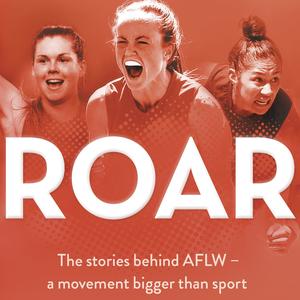
Speaker 2: I'm journalist and author Sam Lane, and this is RAW, an audio adaptation of my book detailing the game change in creation of the Australian Football League's competition for women, the AFLW. The AFLW, I say, is a movement bigger than sport. If you want to hear more about why, catch up with episode one. You'll find it ready to go wherever you found this. In this second installment of RAW, we'll hear why the AFL, Australia's richest, most popular and powerful domestic footy code, didn't see financial value in women playing Ossie rules for so long. Will hear vivid stories about the sexism and general derision experienced by raw's champions. This episode finishes at the first AFL Women's High Performance Academy match played on the NCG. It was June fourteenth, twenty ten hours before a senior AFL men's match between Melbourne and the Western Bulldogs. Speaking on the record to a young women's sports journalist from the age that day. That was me Jan Cooper, who ran women's football for the AFL at that time, predicted the future. Let's get to it from page twelve of Raw. Through the old lens. The AFL saw no vias financial value in women playing footy, chiefly because it did not run an elite competition for them. Its ironic, really, given the creation of a women's league was always in the code keeper's hands. Granted, the strategic priority of the AFL had been successfully expanding its elite male competition nationally, but in the views of many today, that does not excuse the extent to which women's footy was neglected and misunderstood as an opportunity for the league's growth and health. As much as anything, historically, women's tangible value to the AFL came through them boosting audiences, membership tallies, volunteer stocks and sales. As teachers a profession women dominate, and as mothers, they also presented unique value influencing the sporting choices of not merely boys, but entire households. It was this form of engagement that led revered AFL commissioned chairman Ron Evans in two thousand and four to target a woman in the first place and ultimately appoint Sam Mostyn.
00:03:20
Speaker 1: I think she was the most important person in the change.
00:03:23
Speaker 2: For US champion player turned sought after football administrator Debbie.
00:03:28
Speaker 1: Lee says, thank god we met Sam.
00:03:31
Speaker 2: A twenty and eleven meeting of AFL game development employees and women's state league bosses is seered in memories and still reference today by some as an indicator of how lowly the other limb of footy ranked. Not so long ago. At the National Forum, an AFL brand marketing manager presented the latest promotional campaign for increasing participation. The play AFL poster depicted the evolution of a footballer from oz kicker to league superstar. The focal image was an anonymous boy growing up into an AFL hero. The marketing boss was asked how a version of the poster targeting girls and women might be developed.
00:04:20
Speaker 3: But what's your product?
00:04:22
Speaker 2: Came the reply, what are you trying to sell? One from the room full of employees remembers I had harder days at work, but that was my most disappointing. It summed up what our experience was like for so long.
00:04:36
Speaker 3: It was offensive enough that the AFL kept us separate from core business, but they really drove home that we were just like this auxiliary unit of the AFL.
00:04:45
Speaker 2: Women football is at least being seen at this stage would have been an improvement on their advocates struggling to be heard. Shiloh Curtis joined the AFL's Victorian governing body in two thousand and seven as the second head of women's football. It put her in charge of something many of her colleagues weren't interested in.
00:05:07
Speaker 4: Mostly for me, it was about what was not said about women's football that was really powerful.
00:05:13
Speaker 2: Says Curtis, who left AFL Victoria after a decade.
00:05:17
Speaker 4: My sense when I began was that there was almost a bit of frustration about having to work with a community that Football Victoria had never worked with before, a community that the AFL didn't yet have a language for and didn't seem to have any level of comfort with.
00:05:31
Speaker 2: Curtis says she was never insulted directly at work, that felt disempowered through other means, just for starters, her brief was not considered core business in the early years. Then there were the comments, one of the most common being.
00:05:47
Speaker 4: How is women's football my responsibility?
00:05:50
Speaker 2: Elsewhere? Michelle Cowan, now Fremantle's AFLW coach, was confronting different forms of challenge. Cowen recalls one day in two thousand and four coaching men's State League footy when an angry fan began thumping the coach's box in protest at her presence and shouted.
00:06:09
Speaker 5: Get the girl out of the box.
00:06:12
Speaker 4: It was a big loss, and he clearly had a problem with my involvement in.
00:06:15
Speaker 2: That, says Cowen. Nearly a decade later, at another club, a string of losses sparked an emergency meeting of directors. A board member narrowed in on the only woman in the room and asked.
00:06:30
Speaker 4: Don't take any offense, Michelle, but why are you our midfield coach?
00:06:34
Speaker 2: Cowen tells this story as much to share the response of Paul Hazelby, the senior coach of that team.
00:06:40
Speaker 5: Paul interrupted and said, Michelle is our midfield coach because throughout my entire career, I've never had a coach who can communicate more effectively and get the best out of the playing group as she can. That's why she's our midfield coach. Next to Jenna Adam.
00:06:55
Speaker 2: Move on, please, we need more champions like Paul, Cowen says. As recently as twenty seventeen, Cowen was bailed up at a function and questioned on a topic familiar to anyone who has worked in women's football.
Load full transcript
00:07:10
Speaker 4: It was a male player I used to coach. He saw me, he ran over all excited, hugged me and introduced me to his friends, and he said, this is my old.
00:07:21
Speaker 2: Coach, Michelle.
00:07:22
Speaker 5: She's not a lesbian.
00:07:23
Speaker 4: She was my old coach, but she's not a lesbian.
00:07:27
Speaker 2: That encounter was socially staggering, but an interaction with the family of another player a few years earlier had cut deeper.
00:07:36
Speaker 4: At a presentation after a game, a player's mum wanted to introduce me to the player's dad. I extended my hand and he wouldn't shake it. He said women don't belong in football, and you don't belong at this football club. That one was her ful.
00:07:54
Speaker 2: Cowan doesn't pretend moments like that haven't tested her, but what she's finding increasingly is that messages from champions are drowning out though from detractors, like a note sent to her by Melbourne Football operations boss Josh Marney after Fremantle poach Cowen to direct their aflwteam. It said, in part, I'm annoyed at this decision.
00:08:21
Speaker 3: You make our department and club better.
00:08:25
Speaker 2: As an umpire Beck Goddard, who in twenty seventeen became the inaugural AFL W Premiership coach and the first woman to deliver an AFL club of flag. Will never forget being lashed by verbal sexual abuse. A halftime episode where she was on an uncharted path to becoming the first woman field umpire of senior men's games in the Act, caused her to consider abandoning Ossie rules altogether in her late twenties, she resolved to hang in there, determined not to be beaten. Footy has sent this trailblazer a lot of mixed messages over a lifetime, but in twenty seventeen, when Godard directed a flag, it said thank you for sticking around. The same can be said of Debbie Lee, the most decorated woman footballer of her era. One of her most vivid early playing memories is of a match in the debut season of the Sunshine YICW Spurs club, which she founded. The men's side came to watch the startup team play at Kindersmith's Reserve in Braybrook, Victoria, which sounded supportive until it happened.
00:09:46
Speaker 1: They decided to hire a spa that was set up on the back of a truck.
00:09:50
Speaker 2: Lee says they.
00:09:51
Speaker 1: Drank beers sitting in that spa throughout the course of the afternoon and as a result got louder and made fun of us as we played.
00:10:01
Speaker 2: The vilification was sexual in nature. It was all so homophobic, did Lee, as boss and captain of this nascent women's side protest.
00:10:11
Speaker 1: I was nineteen, she says. I didn't know how.
00:10:16
Speaker 2: Throughout a three hundred and four match career in the top women's league that existed before she retired and AFLW began, Lee coped with similar treatment by self anesthetizing.
00:10:27
Speaker 1: I almost got used to it, she says.
00:10:31
Speaker 2: Almost three and a half thousand kilometers from AFL house in Perth, a
former school teacher named Jan Cooper was appointed to a new role of national women's Football Development Manager in two thousand and seven. It was just a one day a week position initially, from year two it was full time. Matthews created the job and he and Dean Warren conclaimed credit for appointing Cooper to it. Reflecting now on the time it took to create a dedicated role for women's football, the Giant's boss.
00:11:06
Speaker 6: Laments an incremental approach to what was a big opportunity. Many people in the industry were indifferent. Matthews says, the reality was we had to in part fix our internal structure and approach before we could contribute to any external community progress.
00:11:22
Speaker 2: There were many in the AFL and the wider AFL club network who shared this view and said so among themselves in considerably stronger language. Still working for the AFL in twenty seventeen, and recognized more widely in the advent of AFLW as one of its vital league launch ingredients. Cooper picks her words mindfully. She is a hard wired optimist, seeing the best in every one and everything, but is also nothing if not honest. A question about how engaged she found the AFL's leaders in growing women's football draws a fact she can't disguise. After she became national head of Developing women's Football, Cooper requested more than once an audience with Demetrio when he was CEO.
00:12:16
Speaker 3: I tried a few times in emails with his assistant, but there was never a follow through meeting time set.
00:12:22
Speaker 2: She says.
00:12:23
Speaker 3: I usually have a three strike policy, so I'm thinking I emailed three times. It was reflective of a broader attitude my work colleagues in Perth, even for a very long time. Didn't want to talk about women's foot in any shape or form. You actually had to get them to a game, and then they became converted. It was just a cultural thing. It had always been about the boys. There were attitudes flying around, like why would girls want to play this game when they will lose their femininity. My retort to that would always be, what's your impression of femininity? Because mine is being confident, happy and empowered. There were times over the years when I thought I shouldn't have to put up with this, that none of the women should have had to, but we did simply because we didn't want to distract ourselves from the focus, which was working towards women and girls getting the same opportunities as boys through development pathways that would lead one day, we hoped to a national league. I was so focused on what needed to be achieved. If I had pursued sexual harassment, which was some of the rehetoric I was exposed to, it would have taken me away from my primary objective.
00:13:42
Speaker 2: Cooper had an infinitely better result with the AFL's first woman commissioner, though admittedly her introduction to Mostyn was serendipitous rather than strategic. Watching television at home late one night, she was captivated though someone Sho'd never seen or heard of, talking about sustainability and corporate responsibility on an ABC panel show. Cooper mentioned it to a friend, who informed her the panelist had recently become a historic AFL appointee. Cooper emailed Moston as soon as she tracked down an address, and at their first meeting, an entire afternoon disappeared with Cooper educating Moston about women's football, what existed and what did not. She advised Moston where to go, what to watch, and who to meet. They've not stopped talking since women have played organized games of Australian rules footy for more than one hundred years, but have endured mockery and systemic discrimination. For most of them. It went with the territory. The same applied to women administrators, umpires, volunteers, and even those who just enjoyed watching and support it. An alternative to the dominant elite men's mainstream, self sustaining silo communities that felt invisible to the AFL persevered. The AFL didn't know how to share the code with them fully, but this didn't dampen their affection for it. Laser like focus on winning equal opportunity only sharpened with the passing of time. Moston's gift to women's football was that, after coming to understand the terrain and missing links at grassroots level, largely through self initiated learning, she orchestrated the joining of crucial dots. Are the crusaders and visionaries like Cooper Lee Curtis, Nicole Graves, Julia Price, and before them, Barb Hampsen and Lisa Hardeman toiled on state based projects. But while such undertakings were tirelessly and often expertly crafted in the grand scheme of things, they amounted to patchwork squares of progress. Moston, through her relentless advocacy with key decision makers, brought a body of work together, joining the patches to make her quilt. Working in tandem with Linda Desso and agitating in day to day league operations with another mold breaking AFL executive, Dorothy his Growth. Mosten championed women's footy in meetings until she was sick of hearing herself repeat the messages. His Growth came to learn the feeling, but they pushed on what they lacked in top level support did not reflect in their levels of conviction. Moston's commission tenure expired four months before the first AFLW match, but the toughest, most game changing work had been done by them. A fifty million dollar doll a commission approved investment over six years meant wholess, bowldless commitment from the afl critical in the competition's conception, Moston sat back and watched the birth on the third of February twenty seventeen proudly. The twenty eight matches that followed the afl w's unforgettable arrival proved a self for confusion, rejection, anger, and visceral pain in an eight week opening season. Each game was cherished as a mini miracle for those who knew and lived through the struggle it took to savor just one. It seemed that with every passing day in February and March twenty
seventeen, the afl W grew in status and it factor. Its overnight popularity snowballed women's foot It was cool. Who knew suddenly? If KB said such and such, the question was whether Kevin Bartlett or Katie Brennan had spoken, If Daisy did this or that was it Dale, Daisy Thomas or Daisy Pierce? Suddenly strong was the new pretty Western Bulldogs women's team captain Brennan said the catchy line first publicly, then Bulldog's president Peter Gordon picked it up. Suddenly once the AFLW started, Big was no longer butcher, it was brilliant. Rewind to the mid two thousands, when in a parallel football universe a star named Debbie Lee continued on a mission she had begun as a teenager. A former National League basketballer, she won five Helen Lambert Medals as best player in the Victorian Women's Football League Premier Division. There was no higher Australian rules petition for women men, and Lee, the state representative fifteen times, became president of the old VWFL in two thousand and four. She held the honorary post until twenty twelve. Like Moston and Cooper, Lee's inclination is to highlight the efforts of others and deflect attention from the heavy lifting she did. But it's unlikely anyone has clocked harder physical and administrative yards in the name of bettering women's football. If Cooper's great recruit to the movement was moston Lee's was Susan Alberti, the indefatigable, generous and wealthy philanthropist who joined the Western Bulldog's board in two thousand and four. Lee's first job in an AFL club was at the Bulldogs. She was hired by the CEO of the day, Campbell Rose, who became aware of her impactful community work in Melbourne's web. Her football prowess was actually secondary to the Bulldogs at the time. She was appointed Community development manager at the club in two thousand and four. Alberti and Lee fused naturally. Lee's football baby, the VWFL nowadays the Victorian Football League governed vfl W, was in dire need of financial help. Alberti loved nothing more than assisting causes she deemed worthy. The woman who, as a matter of principle, would go on to lead a defamation lawsuit against Goliath Channel nine football media figures also loved an underdog, fond of regaling listeners with stories of what a tough rover she was. Before her policeman father told her it wasn't ladylike to play footy, Alberti saw she could single handedly make a difference. She wrote a check for twenty five thousand dollars to the amateur competition Lee presided over, which allowed the then VWFL president to actually pay someone to help run it.
00:21:16
Speaker 1: That was a tipping point. Lee says, it was probably the first time someone actually showed support for women's football through actions, and it was much more than the money. With Sue, she took it upon herself to use a platform to start advocating, which we needed. We couldn't do it on our own.
00:21:33
Speaker 2: It's no fluke that the two clubs that contested the first AFL sanctioned
women's game in Jumpers of established elite sides have Lee's fingerprints in common. She would move from the Western Bulldogs to Melbourne Football Club after the latter got winn of her expertise. The Demon's CEO back then Cameron Schwab, essentially poached her in two thousand and eight. The Bulldogs and Melbourne became the league's pilot clubs for what in twenty seventeen would launch as the AFLW. The sides played five AFL sanctioned women's exhibition games between twenty thirteen and two thousand and sixteen, a match of significance, though often forgotten in a history of incremental steps occurred well before then. On the fourteenth of June twenty ten, the first game played by the first AFL Women's High Performance Academy was staged before the men's Melbourne and Collingwood Queen's Birthday holiday fixture on the Melbourne Cricket Ground. A game of two twenty minute halves, it was the climax of a five day camp for forty hand pit players, rated as the best women's talent in Australia. The footballers were exposed to an eye opening, largely foreign world of elite facilities, coaching and advice. Their flights, food, lodgings and activities was subsidized by the AFL through its game development budget. The players received two hundred dollars each from the league to help make their way there. It was unheard of previously. Any time women and girls had traveled anywhere to play footy, expenses were almost always their responsibility. This meant future luminaries like Pirby Bentley and Chelsea Randall would rely on local communities rallying around them. The twenty ten Academy and that match on the MCG would not have happened without Cooper and AFL Community development boss Dean Warren. The game between the Green and Gold started in the morning, which meant very few people actually saw it, though there were some strategic recruits, including Andrew Demetriou, match manager. That day, Cooper watched the game's stand boundary side on a win from start to finish. She briefed a young journal as she'd invited to speak to the academy the night before. The reporter knew nothing about women's footy, apart from the fact apparently wasn't where her best professional efforts should be directed. If impact and industry respect were her aims. This glimpse into a foreign footy world and the enthused reception of the unprecedented academy in those running it, however, more than picked her interest. When the journalist rang her sports editor at Melbourne's Age newspaper mid match, she told him what she was seeing and hearing hi Alex setting a cartebonche assignment. He asked her to write what she'd just relaid. The next day, The tale of the women's game run across the middle pages of the Sunday Age Sports section, the first time women's footy had claimed that space in the publication. Quoted at length in the report, Creeper dreaming big out loud while a voice recorder rolled looked like Nostro Damis. Seven years later.
00:25:11
Speaker 3: I would imagine that Melbourne Women's football club will be running around before Melbourne played Collingwood one day, and it might even be Melbourne versus Collingwood Women. I would imagine there would be maybe four teams out of Victoria in the first instance, and one out of each of the other states and territories. I'm not quite sure how will do the northern territory bit, but we've got ten years to work that out.
00:25:37
Speaker 2: For the reporter who quoted those lines, it was a penny drop moment. She was a convert on Cooper's growing list. Seven years later, the same journalist left the Age, and, after covering the first season of a competition just like the one Cooper envisaged, spent the best part of twenty seventeen writing this book. In the next episode of War, you'll hear previously untold stories straight from the mouths of one of the AFL's longest serving club bosses, Peter Jackson from Channel seven television boss Lewis Martin from former AFL executive Dorothy Hissgrove from a very important AFLW co creator Josh Vanderloo, and more trailblazing from Jan Cooper. You'll hear how In twenty fifteen, the AFL's then new but still present CEO Gillan McLaughlin, radically upended plans by fast tracking the creation of the AFL Women's League. By June twenty sixteen, the AFL Commission decided that eight clubs would kick off a competition to become known as AFL W, signing off on a fifty million dollar investment over six years for women to have a league of their own. If you haven't subscribed to VAT yet, please do and share the podcast from wherever you're listening. This series would not have been possible without the generous philanthropic backing of Ian Darling and the Shark Island Institute. Sincere thanks to the people featured in this episode for their time, commitment and encouragement. Debbie Lee, David Matthews, Charloe Curtis, Michelle Cowan, Paul hazleby Josh Manney and Jan Cooper. This was recorded in Melbourne, Victoria with the traditional owners of the land, the will Wundry people of the cooler nation.
00:28:08
Speaker 3: This is raw beata, beata m