

TRANSCRIPT 🔗
00:00:05
Speaker 1: Approache production.
00:00:11
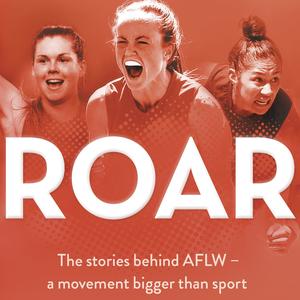
Speaker 2: This is episode three of RAW. I'm Sam Lane and RAW is the title of the book that I wrote about the game change in creation of the Australian Football League's competition for women, the AFLW. The AFLW, I say, is a movement bigger than sport. If you want to hear more about why, catch up with episodes one and two of RAW, which you'll find uploaded and ready to go wherever you're listening now. In this third installment, you'll hear why. There was some early industry inside as skepticism about Gillan McLaughlin's genuine engagement with women's football when he became the AFL CEO. Even some fellow AFL heavyweights feared that McLaughlin, an already established and long serving AFL executive, didn't have women's football on his priority list. But less than a year into his AFL CEO tenure, in May twenty fifteen, mere days before the very first match contested by women playing for AFL clubs, McLaughlin dropped a veritable AFL altering bombshell. McLaughlin's stunnder room of AFL luncheon guests when he asked why an AFL women's League couldn't be launched in twenty seventeen rather than the twenty twenty timeline the AFL had loosely committed to. That's all coming up and now from page twenty two of Raw. It seems so random at the time, but that twenty ten MCG Women's Academy game was the seed from which the AFLW sprouted. Players in the match included Daisy Pierce, Lauren Arnell, Steph Giochikara, Dannellen, Astor O'Connor, Chelsea Randall, and Kirby Bentley, all inaugural AFLW footballers and leaders. The Green and Gold match was the precursor to the pivotal exhibition game concept the AFL assigned to Melbourne and the Western Bulldogs. That experiment commenced with the first AFL Women's Draft on the sixteenth of May twenty thirteen to fill the Bulldogs and Demon's teams. Their AFL Commissioner Linda Desso open proceedings that night, framing it as.
00:03:25
Speaker 3: The first step of what I expect will woulcome normal for our daughters and granddaughters.
00:03:31
Speaker 2: It was an event sampay for several reasons, not least because it involved just two clubs picking squads for a single game, and the number one draft d cried. The Demons have thanked their lucky stars since winning a coin toss that determined which club got first pick. In that draft. A twenty four year old named Daisy Pierce was their top selection. She is now Melbourne's afl W captain, was the first afl W All Australian team skipper and is one of the biggest names in the game. Esteemed administrative veteran Peter Jackson remembers I.
00:04:09
Speaker 1: Just started as Melbourne's CEO.
00:04:11
Speaker 4: If you look back at the results on field and in the profit and loss in twenty and thirteen, we were in the blackest hole of all time. It's fair to say that before I went to that draft, I wondered if this was the most important thing the club should be worried about.
00:04:25
Speaker 2: Now and out and out convert Jackson hadn't seen even one women's footy match back then, though he was far from alone. Then AFL commissioned chairman Mike Fitzpatrick hadn't either. That changed in twenty thirteen and the football players both meant saw in their introductory match were the selections in that first women's draft. In twenty fourteen, at the AFL season launch, Andrew Dimitri acknowledged International Women's Day in a farewell speech and to meet midnight. Days earlier, it had been confirmed that he was standing down a CEO. In a long form public reflection, the outgoing boss rightly acclaimed for the unrivaled growth and commercial success the AFL achieved under his reign. Table to lament on the topic of women in football, we are getting better, but we're miles away from where we must be with more women in senior roles in the AFL and in clubs. Putting this on public record gave his successor, Gila McLoughlin, a clear steer to an area for improvement. In truth, though McLoughlin's ascension to the CEO's throne formal on the fifth of June twenty fourteen didn't exactly fill all women's football advocates with optimism, he had been a highly influential member of Demetrius's executive team, and thus his interest in and understanding of the area was prejudged by those who thought more could have been done for women's booty in the period.
00:06:05
Speaker 3: I'm thinking it's going to gain limited attention.
00:06:09
Speaker 2: Says one club AFL boss with a keen interest.
00:06:13
Speaker 3: I don't think development something that's been a natural passion, and in terms of priorities, women's footing was still a long way down the queue.
00:06:23
Speaker 2: Curtis, in contrast, felt positive about the changing of the guard.
00:06:28
Speaker 4: The fact that Gil McLaughlin had never played at IFO level was an advantage.
00:06:32
Speaker 1: His football routes were wholly in community football. I'm not sure we'd had a leader with such strong appreciation of that.
00:06:37
Speaker 2: Unquestionably, McLachlin learnt much through listening behind the scenes. Advocacy by Dorothy Hisgrove, appointed to the AFL executive team in twenty thirteen, originally as general manager of People, Customer and Community, was not always popular, but it was invaluable. Crucially, she had the ear of the new CEO, who she now describes as an initially cautious by When it came to opportunities around women playing the game, the AFL reported by now on annual repeat, that women and girls constituted the code's fastest growing participation area. Missing, however, was a clear strategy and the wholehearted intent required to make something meaningful of this fact. Only someone right at the top of AFL general management could change it. McLaughlin seized the opportunity less than a year into his tenure. Twelve days before the fourth Melbourne Bulldogs Women's exhibition game on the twelfth of May twenty fifteen, McLaughlin dropped an AFL altering bombshell. The manner in which he did it almost
Load full transcript
seemed impromptu, but he picked a fitting platform the twenty fifteen AFL Women in Football Industry Lunch. The event had developed an unfoughtunate habit of offending guests, mostly women, be it with laundry, powder, gifts, one year influential men trumpeting ideals on panels that bore no resemblance to realities for women at debt clubs or speakers who missed the mark. At this edition, however, McLaughlin's tidings brought an immense sense of purpose. There was an audible gasp in the room when the AFL chief stood at a lectern and said.
00:08:33
Speaker 3: The National Women's League is inevitable. In fact, it is come holing. The only question is time.
00:08:39
Speaker 2: On me.
00:08:40
Speaker 3: There's a view that the depth of talent required will make it twenty twenty one. I'm pushing everybody to be a bit more adventurous than that. This is come out and it will provide opportunities for talented girls, but more than that, for coaches, for administrators, for everyone who wants to pursue their lallah of this game, men or women. My exit here is to employ everyone in the room, get involved, play a role, and make sure that it's more like twenty seventeen than twenty twenty.
00:09:12
Speaker 2: In the same address, McLaughlin described Moston as the.
00:09:17
Speaker 3: First female commissioner, but then a singular force on advancing the cause of women in our game, bringing their contributions to light and making us and urging us to pursue this agenda. I don't think really people have called out what a strong and significant and extraordinary contributor she is being in this space.
00:09:41
Speaker 2: Cooper was not at the lunch. She was, in fact annoyed the AFLL had scheduled the event at the same time as the Women's National Carnival. It meant that she and many like minded others could not make it. But it didn't take long for McLaughlin's game changing newsflash to hit the Bush Telegraph and for Cooper's irritation to turn to elation. With no sense that the CEO was even contemplating bringing the start date for a women's league launch forward by three years. Cooper was stunned initially, but there was no time for that. McLoughlin's captain's call signaled an enormous undertaking, and no one was more delighted or better qualified for deployment on the ground than Cooper. The August twenty fifteen Melbourne Western Bulldogs exhibition match, twelve weeks after McLoughlin Shed's big twenty seventeen projections, was a timely flashpoint. The first women's Aussie rules match played by women ever televised in Australia drew an average audience of one hundred and seventy five thousand in Melbourne alone. More people watched that game on Channel seven than tuned in on pay television when Adelaide thump Essendon by one hundred n twelve points the previous day. The average audience for that Round twenty men's match was one hundred and fourteen thousand. Nationally, the women's exhibition, about which Melbourne won by four points, drew an average of three hundred and one thousand viewers and peaked at five hundred and one thousand. The ratings led Lewis Martin, managing director of seven Melbourne, to state publicly there was no doubt women's match telecasts had a future beyond this landmark.
00:11:41
Speaker 5: I was curious the network was supportive, Martin reflects now seven's broadcast team went to great lengths. These ratings didn't surprise. Women's footy was on, Daisy.
00:11:53
Speaker 2: You are inspiring women and girls everywhere. Thank you so much. Go and enjoy it.
00:11:57
Speaker 1: Thank you, thanks, Thanks for the coverage too. It'll make a big difference.
00:12:00
Speaker 2: His grove mused how she literally stalked Lewis Martin and drove colleagues mad to get them to agree to the broadcast that game. The AFL paid about one hundred and twenty thousand dollars for the telecast that, thanks to measurable audience appetite, elevated women's football to conversations in unfamiliar languages, commercial language, television, executive language, in short, powerful AFL language. These were the metrics that proved McLaughlin was right when he effectively said at lunch in May the same year that a twenty twenty launch for a women's league was too late. At the time of this isolated August twenty fifteen rating sensation. However, the proposed new competition for women had no name, no clubs, no rules, no fixture, no sponsors, and no drafted players. In fact, the AFL had not even formed a detailed strategic plan for achieving any of these fundamentals. It became Josh Vandalou's full time job. Correction, it became his life to put this gigantic jigsaw together. Vandalu's post post in football was as a junior development officer for the South Australian National Football League. By two thousand and seven, and at age twenty five, he had progressed to national oskick manager for the AFL. He took over the national development portfolio in twenty twelve. In four of those years, registered AFL participation numbers grew from seven hundred thousand to more than one million.
00:13:48
Speaker 1: The area that quickly became the most interesting and exciting to me, though, was around female.
00:13:53
Speaker 2: Football, says Vandaloo, now a father of four, two girls, two boys.
00:13:58
Speaker 1: There was just so much scope, so much potential.
00:14:02
Speaker 2: Vandaloo's first exposure to women's football was in two thousand and four at the National Championships played in Adelaide, then a bi annual event. Working for the sample at that time, he attended Van to Loo's next and more meaningful look did not come until two thousand and eight at another National Championships in Canberra, by then national athol oskick manager. He was not even meant to be there, but was called up last minute to cover for a senior colleague. It turned out to be his great fortune. Watching a match unfold on an old Army Barracks reserve, an eighteen year old player commanded his attention.
00:14:46
Speaker 1: That was
my penny drop moment.
00:14:48
Speaker 2: Vandaluse says, I.
00:14:49
Speaker 1: Remember walking up to someone saying there's a girl out there playing for Victoria. Who's unbelievable. I was told, oh, that's Daisy Pierce. She seemed as good as any boy playing at the same age.
00:15:01
Speaker 2: Those two thousand and eight National Championships were not even a fully fledged AFL event, but were under the direction and expert care of Jan Cooper. They were also the first attendant by an AFL commissioner. Moston had accepted Cooper's invitation to make presentations despite those dismissive responses from a sample of senior AFL managers. She'd run the.
00:15:26
Speaker 4: Idea by.
00:15:29
Speaker 2: Spall. Forward seven years and Vandaloo's job title had changed to National development Manager. His first discussion with McLaughlin about women's football was mere days before the May twenty fifteen lunch with the AFL CEO, slashed three years off the proposed new league launch. It was an entirely fatuitous initial chat in an unplanned airport path crossing. Vandalou recalls.
00:15:57
Speaker 1: I remember Gil inquiring about the level of talent that existed in female football across the country.
00:16:03
Speaker 3: Vandalou recalls, and he asked, if we were to run a national competition, how do you think it could look. How long do you think it'd take us.
00:16:10
Speaker 2: When the pair met again shortly afterwards, Vandalou told McLaughlin, we.
00:16:15
Speaker 1: Could run a national competition tomorrow if you like, but it wouldn't be very good.
00:16:19
Speaker 2: The top women players would dispersed unevenly around the country, and the national pathways to develop the next generation were limited.
00:16:27
Speaker 1: But if you give us time, none of those things are insurmountable.
00:16:30
Speaker 2: McLaughlin's interest was a clear sign that the incoming chief of the AFL had women's football front of mind. In hindsight, it was also a queue that van Dalou could self style as an in house expert on the subject at AFL headquarters. Building competitions was already his passion. Now the AFL boss had given Tacit license to take a ball and run with it. History may have said that being the go to on women's football was hardly a coveted position. That brief was crept, reflects one senior AFL figure expertly placed to comment, that is, of course, until women's footy became the thing. Vandaloo's recollection is that McLaughlin's public comments at the twenty fifteen function gave an amber signal on the enormous undertaking to come. He says, the light did not officially turn green until August twenty fifteen, after the exhibition match. Television ratings left everyone aghast. From there it was game on. A twenty seventeen AFOUR Women's League launch mission was set and the organizational task was epic budget competition. Name clubs, players, coaches, rules, sponsors, fixtures, venues, umpires, marketing plan and uniforms featured on the skeleton checklist alone. That list went on and on.
00:18:06
Speaker 1: There was no recipe on the back of the.
00:18:08
Speaker 2: Box, Vandalu says, with a quiet chuckle.
00:18:11
Speaker 1: We had to create everything from scratch.
00:18:13
Speaker 2: Simon Lethlen was by this stage the AFL executive responsible for women's football and the league's game development boss. In September twenty fifteen, he was appointed AFL Football Operations head and took women's footy to the portfolio. Following Lethleen to football operations, Vandaloo was essentially made women's league construction manager, and the pair made a very effective team until Lethleen's resignation in July twenty seventeen after the revelation of his affair with a colleague. Back in late twenty fifteen, though there was no time to waste, Vandalou was paired internally with a strategist hired by the AFL only a month earlier. Madeline Penny, in her mid thirties, like Vandaloo, British and with no background in Aussie rules, arrived from Boston consulting group with no idea she'd be co creating a new AFL competition.
00:19:15
Speaker 1: We sat down the first time and said, the only way that this is going to work is if we tap into every expert in every relevant field across the business and ask them how they would do this in their specific area.
00:19:27
Speaker 2: Vandalu says between September and December twenty fifteen, in no less than twenty one on one meetings with every in house expert they considered relevant, Vandaloo and Penny through a roadmap. They met with finance, legal, broadcast football operations, fixturing, licensing, commercial operations, and marketing heads with state leagues and AFL clubs, and eventually they had a project plan of about twenty pages that set timelines and assigned responsibilities. They presented this to the AFL executive team shortly before Christmas twenty fifteen, though it did not end as Vandaloo and Penny hope.
00:20:14
Speaker 1: That was probably the one and only roadblock we hit through the whole project. Confusion is too strong a word, but not everyone was on the same page about what we, as in the AFL, were trying to achieve. We didn't have consensus on what the overall vision and objective of this was.
00:20:31
Speaker 2: Was the AFL Women's League some kind of response to Big Vash cricket, the summer hit that was sawing in popularity. Was it presenting Ossie rules in a radical new format. Was it an opportunity tailored to weaker AFL clubs that could use supporter based building or was it more about addressing those organizational gender failings. Andrew Dimitri highlighted upon his AFL retirement, this was ground zero material. But if a new women's competition wasn't built on strong and clear folds, it risked being a house of cards. It took a half day intensive with half a dozen AFL executives to distill the guiding objectives. That was January twenty sixteen, just twelve months before the aflw's first game.
00:21:25
Speaker 1: We ultimately
resolved that there were two things we were trying to achieve.
00:21:29
Speaker 2: Van Tolou says.
00:21:31
Speaker 1: They were to provide females with an equal opportunity to play elite Australian football, and to inspire and increase female participation and interest in Australian football. Isolating those two objectives made it simple for everyone. Suddenly you're not making decisions based on competing interests. You're making decisions based on what's going to give the greatest reach to our target audience, which is young girls.
00:21:54
Speaker 2: Penny and Vandaloo outlined the more sophisticated strategy to the full complement of AFL executives with the two overarching games, they presented six steering goals for the as yet unnamed, unsponsored, unpopulated Women's League. According to the plan, long term, it would one.
00:22:17
Speaker 1: Be the sport of choice for female athletes. Two provide professional career opportunities on and off field. Three create new publicly recognizable role models for it, be an exciting and entertaining competition with mass appeal by im sure the standard and operations are elite in every aspect, and six establish a commercially successful venture.
00:22:41
Speaker 2: The next stop in terms of major presentations was a meeting with the AFL Commission in March twenty sixteen. This involved discussion about prospective member clubs, list building strategies, a proposed competition, fixture rules and venues. It concluded with a formal request to approve a club license application process. The Commission was pleased with what it saw and heard. It rubber stamped an indicative budget with a new competition to run between February and March in twenty seventeen, and authorized the licensed tender model. By June twenty sixteen, the Commission was presented cases for having six, eight and ten foundation AFLW teams Ultimately it settled on eight Come budget time, it formally signed off on a fifty million dollar AFL investment over six years for women to have a league of their own. On the next episode of Raw, the rapid and rollicking construction of an entirely new AFOL competition, everything from rules and regulations, ball size, number of players per side, match length, player pay structure, salary cap and the competition name had to be determined. And the fight for the inaugural afl W club licenses, the unveiling of those winning clubs, and an AFL launch on the fifteenth of June twenty sixteen that stunned one of the most senior and long standing advisors to the AFL's top brass. You'll hear about the AFL's marketing strategy for AFLW, the first AFLW Draft Day, and about the recreation of a famous Ossie rules.
00:24:48
Speaker 5: Ad women Kicking Balls.
00:24:51
Speaker 1: I like to see that.
00:24:53
Speaker 2: All this and more in the next episode of Raw. This was recorded in Melbourne, Victoria, where the traditional owners of the land at the war people of the Coolmer nation. I acknowledge these traditional custodians of the land and I pay my respects to a wondery Elders past and present. Sincere thanks to the people featured in this episode for their time, commitment and encouragement. Governor of Victoria, the Honorable Linda Desso, Peter Jackson, Chilo Curtis, Dorothy Hissgrove, Gilan McLaughlin, Lewis Martin, and Josh Vandaloo. This series would not have been possible without the generous philanthropic backing of Ian Darling and the Shark Island Institute.
00:25:42
Speaker 1: This is raw a