

TRANSCRIPT 🔗
00:00:05
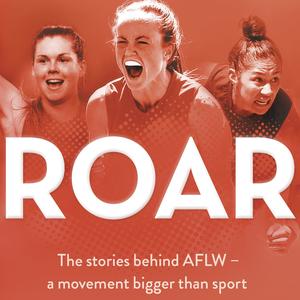
Speaker 1: Appoche production. This is episode four of Raw. I'm Sam Lane. In this installment of Raw, the exceptionally rapid and radical construction of an entirely new AFL competition. Once the AFL finally committed to creating an elite competition for women, it chose to reconsider and reset just about everything from rules and regulations, ball size, number of players per side, match length, player pay structure, salary cap and even the comp petition's name. You'll hear previously untold stories about how the AFL used Fourth Way feminism as a guiding reference when it made many crucial decisions about the competition. You'll hear about the fight for the inaugural AFL W club licenses. All this and more in this episode of Raw. In December twenty fifteen, a then twenty eight year old marketing expert Jemma Wong had been hired by the AFL. She had worked on campaigns for Sydney Opera House and Cricket Australia, but her most recent professional success was with the Australian Ballet, broadening the appeal of an art traditionally seen as feminine by avoiding two two cliches and focusing on ballet dancer's strength and athleticism. At the AFL, Wong turned the Josh Vandaloo Madeline Penny Simon Lethlen trio working in earnest On building every aspect of a women's league into an engine room of four. She had never played any sports seriously in her life, hadn't as much as picked up a footy, had never seen a women's footy game, and truth be told, had scarcely seen men play Aussie rules. Wong grew up in Western Sydney and graduated from the University of Sydney with a Bachelor of Arts in Media and Communications, majoring in Media, Gender and Cultural Studies, art history and critical theory.
00:02:41
Speaker 2: She was relentless in her pursuit to present aflw as not only being important for women in sport, but also for women in society.
00:02:49
Speaker 1: According to Vandaloo, in the strategy summary, Wang and Vandalou now present publicly on how the Women's League was born. Feminism and the new competition's relationship to it is highlighted. The paper reference as a fourth wave feminist, and this contemporary iteration is summarized by a quote unquote make it our own goal. It is presented as a progression from the guiding principle of third wave feminism, which said everything should be the same for men and women to make it our own. Axiom was instructive for warm, Vandaloo, Lethlean and Penny when issues such as reducing the size of match balls for women were raised, and in that case ratified third wave feminism. According to the summary, the AFL referenced would have said the ball should be the same size for women as it is for men, but fourth wave feminism said, we will use the ball that's best for us. The AFL had gathered research outlining unambiguously that women kick and grasp smaller footballs better. This increases the likelihood of scoring, which is an overarching AFL match aim no matter who is playing. Considering the question in that prism, the response for women's footy was a no brainer. Daisy Pierce disagreed publicly, which was an ideal for the AFL, but the size of the sharon was dropped from the men's traditional five to size four for the new competition. Another major decision in terms of rules and regulations was reducing the numbers on ground. In the end, the AFL backed its case with academic research and mandated that sixteen women would be fielded in AFL W games, two fewer than in elite men's with six on the interchange bench. It would reduce congestion and boost scoring. Quarters were cut to fifteen minutes plus time on after goals or major injuries. Men's AFL games have twenty minute terms plus time on, replicating most women's state leagues. The see what we Create tagline invented for the league was Wong's brainchild. The day she presented it to Penny and Vandaloo, they agreed on the spot it hit all the right notes.
00:05:12
Speaker 2: To the players that said, take the game, making your own. See what we.
00:05:16
Speaker 1: Create, Vandalu says to fans.
00:05:19
Speaker 2: Share in the moment, see what we create for the game. The futures evolving, there's a new style. See what we create. To young girls play now, create the future together, be the next AFLW star. See what we create. This was about empowerment and getting behind it.
00:05:38
Speaker 1: The fifth and last AFL Women's exhibition game, played on the third of September twenty sixteen in the men's by weekend before their final series, was another boom, and not only for Molina Hope who bagged six goals. The average audience for the seven Networks broadcast from Wittnoble that Saturday night eclipsed all previous men's Saturday night games that home and away season. This from just the second ever telecast of a women's match. It didn't end there. A peak of one point zero five million viewers for the women's game was the second top rating women's sports broadcast in Australia in twenty sixteen, behind the Australian Open Tennis Grand Slam Women's final. Simply put, it was another raging success.
00:06:31
Speaker 3: The vibe of Witt and Oble that night was palpable. The physical intensity of the game was like Wow.
00:06:37
Speaker 1: Seven Melbourne's boss Lewis Martin reflects.
00:06:40
Speaker 3: Seven's broadcast team went to great lengths. These ratings didn't surprise. Women's footy was on.
00:06:48
Speaker 1: In twenty sixteen. Thirteen of the AFL's eighteen clubs bid for inaugural women's team licenses. The selection process was not without controversy. Clubs were asked to address broad questions such as how will you run your women's team, how will it be financed? And who is your target audience? In summary, their job was to convince the AFL Commission that they understood the terrain, had a vision, and could and would do the job well. Submissions ranged in length from a concise thirty five page pitch from one club to a proposal close to two hundred pages. It was expected and accepted that
Load full transcript
Melbourne and the Western Bulldogs would win licenses, given their proven commitment and the head start that gave them a knowledge. No surprises then when both were approved. Carlton, conversely, was widely regarded as a surprise license winner. The Blues track record with women historically left a lot to be desired. A spate of jaded staff departures over the years, and the hierarchy's publicly stated intention to evolve from being a self disire gribe boys club was testament to the fact the Blues had no substantial past credentials to speak of in terms of developing women's football. Assisting Carlton's women's team bid, though, was Australia's Sex Discrimination Commissioner Kate Jenkins, a Blues director from October twenty fifteen. Jenkins advocated strongly behind the scenes and on her Twitter account to help make a compelling case and deepen internal reflection Collingwood, like Carlton, hit hard and early on the public relations front, shrewdly employing veterans State League footballer and lifelong Pies fan Meg Hutchins to guide its bid. This was a preemptive move the club was happy to advertise, and the story made front page news in the Age before they even gained a license to field a team. Collingwood said Hutchins would be a playing football operations boss would see her living out what as a woman she previously viewed as fantasy, not only working for the Magpies but playing for them another dream sold. The AFL Commission approved Collingwood, thereby including the code's greatest rival clubs. The league met its pledge to make the women's league national from the outset by approving Greater Western Sydney, a certainty really once the Sydney Swan said they would not pitch. Ditto in Queensland with Brisbane and the Gold Coast Sons. Adelaide's entry similarly was virtually guaranteed when it emerged that Port Adelaide was not bidding. In a disjointed setup that threatened to be dysfunctional but actually worked, the Crow's coach would have two groups of players, most Adelaide base, but the rest three thousand kilometers away in Darwin. In an unprecedented AFL arrangement that will be replicated by North mil Alburn's women's team with Tasmania in twenty nineteen, Adelaide struck a lucrative deal with the Northern Territory government. This chicked another national reach box for the AFL, proved a handsome asset to the Crows and was advantageous player wife. Lastly, Fremantle beat a disappointed West Coast Eagles with a deeper vision and pitch that impressed the AFL Commission as much, if not more than any other. The participant clubs were formally unveiled by it then commission head Mike Fitzpatrick on a winging of the MCG on the fifteenth of June twenty sixteen game. The AFL later confessed to underestimating the interest in this milestone, expecting maybe thirty media attendees but estimating that more than one hundred actually presented to cover the event. Communications advisor to the AFL's top brass death Tony Peak, later told the staff
it was the biggest most positive announcement the league had ever made I think he was right, says a smiling Fitzpatrick, AFL chairman for a decade before ex West Farmer's chief Richard Goider took over in April twenty seventeen. On the fifteenth of September twenty sixteen, the competition was given a name AFL Women's and launched in a joint promotion with social media behemoth Instagram. Three days later, a coral and white colored W logo was shared, designed by flipping the direction of a set of goalposts. This distinguished the new league from the iconic red, white and blue AFL trademark used for everything in elite men's football since the old Victorian Football League nationalized to the AFL in nineteen ninety. Philosophically, not everyone was convinced about this move. It was a clear separation from the established, strong, and instantly recognizable AFL motif to something that was well softer. The coral oca AFLW logo stepped into pink territory, which was stereotypically girly and stereotypical was the last thing the AFL W wanted to be behind. The fresh palette, however, was tested. Intelligence research showed the coral in the AFLW logo, and the shades of purple and iridescent blue also used in AFLW promotion was a more inclusive color scheme compared to the AFL's traditional look. It was also positively radical. Approval to deviate from standard AFL typefaces was sought and granted for all AFLW messaging, from posters and advertisements to press circulars. The visual reinvention in this AFL renaissance was not done by half. I'd like to see that a broader marketing strategy was largely devised by Jemma Wong and centered fundamentally on letting footballers speak and create their own story. Michelle Klein, a football communications sage, oversaw the media strategy for the AFL. It was an opportunity for us to build a more inclusive and more positive female culture across the industry, says Wong, whose work on the Mammoth task won a prestigious Umbrella Award. It was an opportunity to take all the unique cues and historic gems of our game and see what our women footballers could do with them if the game was on their terms and in their own space. It was an opportunity to think about how women should be represented in our game and represented as leaders and go down that story arc rather than follow the way we've always marketed the men's It was also Wong's job to ensure these sound philosophies translated into something that looked good, just as she had done from the outset of the venture long studied how women athletes are represented. Ultimately, her research said that for the AFLW launch chute, themes would be fresh and strong, but also playful. In the first major AFLW organized publicity call with eight big named players, the footballers were dressed in club uniforms as if match ready, complete with boots, albeit with restrained splashes of makeup. Assembled under floodlights, they looked like a fit, fun all women band, and when the images
and video were reviewed, the wannabe model look had been expertly avoided. The launch chutes showed clubs, especially those with no practice, incorporating women's footballers into any aspect of their functioning, let alone public messaging. The way Melbourne stood to be a hard marker of what the afl presented in this respect, given it had some experience the demon's highly respected marketing and Communications executive Jennifer Watt, who is moving on from football in twenty eighteen to further her administrative career, gave the AFL a huge tick. They absolutely nailed it, she says. The last piece of the marketing puzzle before the AFLW launched with games was a nod to football advertising history. Recreating the AFL is hugely successful. I'd like to see that campaign. The hit nineteen ninety four original featured international sporting stars John McEnroe, Evander Holyfield and Carl Lewis speaking in awe about the prowess of male AFL players and were spliced with spectacular highlights. So these guys use their whole body to hear each other. Yeah, I'd like to see that. I think guys can catch a roll from twelve feet to the year. I'd like to see that.
00:16:12
Speaker 2: You're telling me these guys run flat out all afternoon.
00:16:16
Speaker 1: Yeah right, I'd like to see that. The twenty seventeen AFL W version, designed by Wong and an all women creative team, was filled exclusively with women's match clips. It was fronted by Michelle Payne, the first winning woman jockey in the Melbourne Cup, women riding high I'd like to see that. And Olympic legend Katherine Freeman.
00:16:41
Speaker 3: More women making a strange morning history. Yeah, i'd like to see that.
00:16:45
Speaker 1: Could Television news reader leln Chin looked down the barrel of the camera to say, deadpan.
00:16:51
Speaker 3: Women kicking balls, I like to see that.
00:16:56
Speaker 1: The promotion ended with a pledge from Collingwood's pinup player Moana Hope.
00:17:01
Speaker 2: Women making a name themselves in Osiel's football, We'll show you that.
00:17:06
Speaker 1: Hope's line was about as close as the AFL got in the competition launch countdown to promising anything when it came to forecasting what the AFLW season would produce. See what We Create was smart because it actually didn't predict or promise anything, and yet it was enticing. Landing at the AFL when she did, and never having followed the code, Jemma one could not have known it upon her arrival. But See what We Create also said something the league rarely did. It was a humble introductory statement and suggested that in starting the AFL W, the AFL might not get everything right at first attempt. In a brave new football world. This was refreshing. Indeed, in what became a flurry of major events in milestones. The first AFL w NX National Draft was held on the twelfth of October twenty sixteen in the National Australia Bank's Melbourne Epicenter. There were three hundred and ten ds and it was live streamed on the AFL website. Vandaloo did the honors, reading the numbers and names, with no concept that he was triggering outbreaks of joyous pandemonium around Australia. One hundred and forty five women were drafted that day and it was feel good story. Central Pick sixty four, Amanda Ferutera, who would go on to be the first woman captain for Greater Western Sydney, watched from a classroom at Our Lady of Mercy College in Paramasha, Sydney. Her pupils made such a racket on her draft announcement that it caused other teachers to rush into the room fearing an emergency. Meanwhile, at a nursing home in Baseballer Melbourne, a landscape gardener named Mia Ray Clifford learnt from one of the residents that she'd been recruited by Melbourne Football Club as pick eighty nine. She was up a tree chainsawing when the great news was yelled out. Clifford's fiance, Penny Cauler Reed, who was a teenager had successfully challenged rules that discriminated against young woman footballers, was recruited to Collingwood as pick one hundred and two. The most obvious low of afl W Draft day came in the finale. A twenty year old who would shed around thirty kilograms, determined to reinvent herself in the afl W, was overlooked. Sarah Perkins attended the draft hoping a coach and club would believe in her and endorse the belief she was rebuilding gradually in herself. She left with tears streaming down her face, rejected and inconsolable. The aflw's top pick and ultimate modern poster player, Daisy Pearce, spotted the distraught figure exiting and took it upon herself to intercept. Don't give up, she told Perkins, there's still another draft. Collegiate, caring and community minded. This compassionate exchange epitomized the spirit that would pervade the afl W from day one. It also encapsulated a new phenomenon for the afl draftees, arriving as emotionally mature, experienced, and in many cases life hardened human beings developed beyond their sport of choice. Before draft day, the clubs had nominated to marquee status footballers each that would sit in the highest pay bracket for playing. The concept was designed to lure some standout players from interstate and it worked. Chelsea Randall, Sabrina Frederick Traube, Emma King, Renee Fourth and Demas Swanson were part of a mass exodus some believe too big from wa dispersing the creme de la creme across the eight AFLW clubs. On the eve of the first season, AFLW footballer pay was renegotiated by afl Players Association boss Paul Marsh, who brought valuable nous having advocated for women's cricketers. Counted as a win by all involved publicly, the truth is that it did not make a contentious deal great. It made it more palatable. Often lost in reporting is the fact that the aflw's original three tier pay model did not cap earnings for additional club employment, sponsorships and ambassadorial roles, but in season one the vast majority were paid just eight and a half thousand dollars for what was drawn up as a four month playing
and training commitment, with the last round of games finishing on the nineteenth of March twenty seventeen. It made for a seventeen week exercise for most AFLW players. Although rules specified that players should have just nine contact hours at their AFLW clubs each week for training, with additional time allocated for other requirements like games and inductions, the setup was unrealistic and not adhereed too. Players across AFLW clubs, including Marquees, say privately that their teams committed roughly double that number of contact hours in year one. Clubs had different interpretations of what counted in the nine hours allocated for training. At some clubs, strength and conditioning sessions were included but not at others. Then there was recovery time, not to mention travel for interstate games, never mind the leave players needed to take from their day job. The afl mandated nine hour weekly cap resulted in farcical situations where coaches would time check in the middle of team meetings and even match reviews, telling players when they were free to excuse themselves. Alternatively, they could stay and see vital exercises through, though it was clear this was now on voluntary time. For the bulk of players on the eight and a half thousand dollar base wage, it meant they earned about five hundred and thirty one dollars a week or seventy six dollars a day for joining the AFLW or the pro raute equivalent to an AFL male rookie wage of twenty nine dollars an hour. Second tier players called priority signings earned twelve thousand dollars for their playing contracts, but there were only thirty two of those in the competition. The sixteen marquees were the AFLWA equivalent of the Rich List, earning twenty seven thousand dollars for playing and promotion. The twenty seventeen afl W Grand finalists Adelaide and Brisbane trained and played a week longer than the other sides. Each premiership player and the winning coach at least received a dine and studded ring worth about four thousand dollars, but no financial bonuses from the AFL for their feet. The difference in scale, sponsorship, status and interest between AFL and afl W Grand finals is clearly enormous, but the contrast to what men's team earned for winning premierships, over one million dollars from the AFL with the bonus split between club and players is eyewatering. When the Players Association agreed on the AFLW payre negotiation, those who defended the model typically referenced the fact that until the AFLD, women had always had to pay to play footy, be it for registration, uniforms, travel and more. Earning anything to play, at least in the nascent days of the AFLW was a relative luxury. Admission to AFLW matches was free, save for the odd doubleheader with men's preseason games. That remains the case. In season two. There was not so much as a rogue, outspoken AFLW player moment on pay in twenty seventeen. Behind the scenes, however, nominated footballer representatives tabled concerns at meetings with the AFLPA and in other forums. A handful Psseo Hope and the season's best player Aaron Phillips included, profited from becoming household names through AFLW. All are said to have burned six bigger sums between them playing contracts and outside endorsement deals in season one. By season's end, elite basketballer Phillips had committed to a new position created by the AFL as a high performance coach. Perkins, one of the last women signed to an AFLW list, but one of the first remembered. Given her all Australian worthy effort started on the lowest player pay deal, recognizing early that they had a marketer's dream cult figure on their hands. However, Adelaide has boosted her earnings for twenty eighteen. Vesio is a shining example of how winning a playing contract could pay off with independent employment opportunities. A graphic design job at Carlton earns more than the twenty seven thousand dollars year one marquee afl W rate. Hope's profile and income meanwhile swared despite a lackluster twenty seventeen season on field. Others like Western Bulldog Tiana Ernst, sacrificed in lucrative vocations. Ernst would have earned more in twenty seventeen if she hadn't taken leave from her doctor's job to play AFLW. It was her choice, clearly, but the twenty nine year old estimates she dropped about a quarter of her usual earnings outside of football so she could train, prepare and play to her best level. Ernest went part time and used up all of her annual league during afl W preseason. She was far from alone on that front. The hot button pay issue will be debated and frankly, the AFL stands to be criticized until AFLW footballer earnings increased significantly. Fairness aside, the AFLW will not attract and will risk losing skilled athletes to other sports if remuneration does not improve and rapidly. In twenty eighteen, the wage structure and time requirements have been revamped. Pay jumps to ten and a half thousand dollars for Tier three players and to fourteen and a half thousand dollars for those categorized as Tier two. Marquee player status has been abolished, but Tier one footballers earn twenty thousand dollars for playing, and clubs can award additional ambassador contracts ranging from five thousand to ten thousand dollars, which are capped at forty thousand dollars per tem Weekly training hours in pre season are still limited, at least formally by the AFL to know more than fifteen hours per week and ten hours per week during the twenty eighteen afl W season. This is RAW Thanks to the people featured in this episode for their time, commitment and encouragement. Josh vandaloo Lewis Martin, Mike Fitzpatrick, Jemma Wong and Jennifer Watt. Daisy Pierce's quote is read by a voiceover artist. RAW in book form is published by Penguin Australia. Please grab a copy online via your favorite bookshop, Penguin, Amazon, book Toopia or from my website zumjan Lane dot com dot a U. This was recorded in Melbourne, Victoria with the traditional owners of the land of the Warundry people of the Cooler Nation, and I pay my respects to Warrundery elders past and present. This series would not have been possible without the generous philanthropic backing of Ian Darling and the Shark Island Institute