
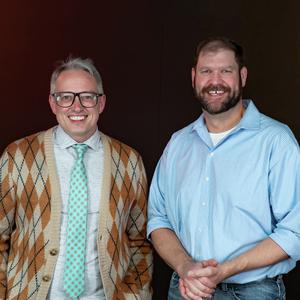

TRANSCRIPT 🔗
00:00:01
Speaker 1: This is Monks and Merrill.
00:00:03
Speaker 2: Hosted by Michael Monks and Chris Merrill. This is Monks and Merrill.
00:00:10
Speaker 1: On demand. I'm Chris Merrill. He's Michael Monks. It is the postmortem of.
00:00:17
Speaker 1: I don't remember an election being this big a swing in a very long time. I mean... We've had waves. Of course we have. Both parties have won in waves. Well, I'm thinking at 94. I'm old enough to remember 94. You're just a wee lass. But in 94... Newt Gingrich. That's when Gingrich and the New Deal... Contract with America. Yep, yep. And he came to power. And that was pretty strong. Yeah. I think what's so unique about what we saw last night was where this happened. And we talked a bit about that last hour with our guests from the Hill. And you can catch our first hour if you missed it at KFIAM640. com, the iHeartRadio app, or wherever you get your podcasts. We're talking about South Carolina. We're talking about Mississippi. We're talking about Texas and Kansas. Sending... Democratic senators to Washington. So when we take a look at the red wave that came through the last couple times, and there have been a couple, whether it was 22 or this last presidential election was really good for Republicans too, it's not as though California, Massachusetts, other, even Minnesota for that matter, it's not like a bunch of these other deep blue states suddenly started voting for Republicans. But now we've got deep red states that have started voting for Democrats. That's weird. There are purple states, as they call them, that can flip around and you can target an incumbent from either party during a wave and pick up a victory. I don't think we've ever seen anything like this specific geography getting swept up in this way. Because the number of House seats that flipped, it's big and it's consequential because it does change the power dynamics on the Hill. But It's, what, 31 seats. That's a lot of seats. That's not the most we've ever seen. We've seen bigger house waves. But it's the geography, where this happened, that is so significant. Texas went completely blue. That's the craziest thing to me. The incumbent Republican governor who had served three terms was kicked to the curb. Yeah, Ken Paxton. The Attorney General. Who survived investigations and impeachment. Impeachment brought about by his own Republican House survived the impeachment. He got reelected after his affair came to light. Still got reelected two years ago. And now he falls to the wayside. Locally, though, had a few measures. Measure one in Orange County. That's leading by about 10 points. That adds a city sales tax for 13 years. Excuse me, the city of Orange. Yeah, the city of Orange. Excuse me. They said it's going to raise $ 37 million for general city services. So you were talking about L.A. voters raising money. sales tax for the fire department yeah it's not like it's the only place what i see saint gabriel has a 12 sales tax now oh my gosh yes that's wild that's too much in orange you can look at it and think okay right now the sales tax in in the city of orange is 7.75 percent yeah This will bump it up to 8.75. Which is still lower than anything in L.A. County. Exactly. So the question is, are they going to catch the L.A. County bug? Probably not. And every couple years, you'll have another one on the ballot where suddenly you're over 11%. Like the city of Los Angeles is. I don't think so, because I think that the voters hold the politicians more accountable in these Orange County cities. And it's a smaller city, more easy to manage. I don't think they would put up with the city spending money on not the fire department like they do in Los Angeles. You said that the tax in Orange is supposed to last for 13 years. Well, here's what happens. 13 years pass by, and they come back and say, can we keep it? We're not raising taxes. Isn't that what Measure 3 was, too? That prop, Measure 3? Like, we're not raising taxes. They just... Oh, the statewide one? Yeah. They just removed the census. The tax on basically upper middle class folks.
00:04:00
Speaker 3: Yeah.
00:04:01
Speaker 1: This isn't the billionaire class. I know you can look at somebody making $ 370, 000 and think, good for you, because yeah, good for you.
00:04:07
Speaker 3: But.
00:04:08
Speaker 1: Come on. In California, you can't even rent in some neighborhoods on that salary. Santa Ana had this situation. They had Measure N last night. They were going to be doing away with the 1.5% local sales tax that was supposed to decline, that was supposed to expire. And voters said no. Yeah, 68% saying, oh, let's keep it. Let's keep it. Meanwhile, San Clemente said, yeah, we're not going to add a 1%. No, we learned how to say it. Remember when we got the people from San Clemente, right? Yeah, but no. How did he say it? Your friend who called in said, because you didn't know what he was saying, you came in and asked, like, hey, where's this place? The transcription of the call spelled it out as... Oh, South the Five. South the.
00:04:59
Speaker 1: Yeah, it was something like South Fico or something. Something weird. Something goofy. And then we said, no, he meant San Clemente. No, I hit the T too hard. Yeah, so then we got calls. It's San Clemente. And then we had a whole discussion about how we bastardized the Spanish pronunciation of just about every place in SoCal. Measure M in San Clemente. Yeah. Or San Clemente. It's losing with nearly 64% voting no. That would have added a 1% sales tax. raising as much as $ 15 million every year for beach restoration and wildfire prevention. So that is interesting to me because these are two imminent threats. You know, if we just went through what we went through with the coastal storms, what we know can happen during wildfires, this seems like one where even I'm kind of skeptical of these increasing sales tax. I would have said Yeah, if we don't have any other abs, if we've exhausted every
Load full transcript
measure to get the money to do these projects, we need to do these projects back. That beach is important. 64% said no. I did see that in Costa Mesa, they had Measure C. Now you're just being a D-word. Measure C in Costa Mesa winning about 70% is to basically raise taxes on businesses that make over half a million dollars a year. We got a close race in the Board of Supervisor District The latest returns have Republican Tim Shaw slightly ahead of Democrat Connor Trout. We're talking 50.3% to 49.7%. Trout was ahead on Tuesday night, but we got about 700 votes between them now, so we'll be watching that. That's close. Katrina Foley, who's been on our show a few times, 5th District Democratic Supervisor, is ahead of Diane Dixon. Again, a tight race. We're talking about roughly two percentage points ahead. And whichever way this goes could determine how the control of the Orange County supervisors goes. Is it going to be Republican or Democratic control? One of my favorite races here locally was for Congress, the 40th Congressional District. I loved this one. This was a rare GOP versus GOP race that had to do with that redistricting measure that we put through. This was Ken Calvert, longtime congressperson against a fellow incumbent, young Kim. They were nasty. It was hilarious in the primary. Best ads. It was like, who loves Trump the most? I love Trump the most. No, I love And then the general was like, no, she loves Trump. No, he loves Trump the most because now you need Democratic voters. I love that. I would watch TV and I'd see an ad that was like, young Kim is a communist spy. Vote for young Kim if you hate America. And then it was like, Ken Calvert is the most corrupt politician California's ever had. And I'm like, wait a minute.
00:07:35
Speaker 3: Yeah.
00:07:36
Speaker 1: It's a high bar. We've got a long history here. Come on, fella. But right now, Calvert's up 54.5% to 45.5%. I don't believe the AP has called that race yet. But that's one to watch. I think the races in Orange County are tighter than the ones in L.A. County. Well, we might find that in Orange County, one large city changes the way it elects its city leaders. You've heard of this ranked choice voting? Yeah, like Alaska has. Yeah, and Maine, I think, has it. I don't understand it. I like it. I don't like it because I don't understand it. And I don't like things I don't understand. And why educate yourself when you can just pound the table and say, no. You get me. Love that.
00:08:13
Speaker 3: Yeah.
00:08:14
Speaker 1: We'll talk about how that measure is passing because before you can change the way you vote, you got to vote on it. That's next on Monks and Merrill.
00:08:22
Speaker 2: You're listening to Monks and Merrill on demand from KFI AM 640.
00:08:27
Speaker 1: More stimulating talk. Monks and Merrill recapping the aftermath of of a big election day last night in Orange County. Oh, you want to touch on this business thing involving Elon Musk first? Let's do that. Some people are saying they're going to move their business to Canada when their party loses. How many times have we heard, I'm moving to Canada? It's not that easy to do, by the way. You can't just up and move there. You can't just move anywhere. If Trump wins, I'm moving to Canada. Other countries have immigration laws too. Apply to Americans. Well, Elon Musk is like, forget Canada, go into space. Oh, he said, data centers in space looking pretty appealing right now. He was mad about Greg Abbott losing to Hinojosa. Is that how you say your name? Hinojosa. Hinojosa. You see, in Spanish, the H is silent, but the J sounds like an H. Well, I understand that. Well, say it. Say it back to me. Hinojosa. San Clemente. San Clemente. San Clemente. I'm not great at the emphasis on the right syllable on those. The Spanish language uses accent marks to help you with that, which I wish the English language did.
00:09:37
Speaker 5: Okay.
00:09:38
Speaker 1: I can talk about that. Elon, I know you would, too. Tell me more about the small... We could use some accent marks in the English language, is all I'm saying. Is that so hard? Why wasn't that on the ballot last night? Do you know when you're supposed to say lead and lead?
00:09:49
Speaker 3: No, you don't.
00:09:50
Speaker 1: But if there were an accent mark, you would. In my America, you will know the difference. I'm not going to sugarcoat it. These past two years... have been tough. Higher prices, more wars, corruption and lawlessness. But we hung in there. Fought back. It felt like mission impossible. We knew it was mission necessary.
00:10:16
Speaker 3: Yeah.
00:10:18
Speaker 1: And tonight, sisters and brothers, because of your tireless work, we can proudly utter the inspiring battle cry of our beloved and departed sister and warrior, Dolores Huerta. Si se puede. Yes, we can. Si se puede. Yes, we can. Is that Javier Becerra? Yeah. He thought it was... Well, maybe in the primary. I guess it's fair to say that he thought his mission was impossible because he was polling at like 2%. I was leading him in the polls. He was sitting in the studio and you and I were like, when are you going to drop out? I know. I mean, I kind of regret it because he'll never come on the show now. We're like, what the hell are you doing here? We have other stuff to get to, Javier. Yeah, when are you going to get out of the way and let these winners get in here? And then what's his name? Eric Swalwell stuff all blew up and the whole race changed. So I guess that's what he meant. But as far as like the general election, I mean, it's been a foregone conclusion, which the Democrat was going to win. I got to give Steve Hilton credit because he was a Republican candidate who did not run on Trump. You know, it wasn't from the very beginning, right? He did talk about issues that affect Californians. I thought the same way Spencer Pratt, I thought did during the primaries talking about stuff that does resonate, but, Everything Becerra
said was about Trump. And Trump is so clearly unpopular across the country at this point. In California, it's even more deeply so. He's the boogeyman. You've got to find a boogeyman. Yeah, I would have liked to have heard Javier Becerra say some of the things Steve Hilton was saying. Me too. If I'm being honest. Climbing up the street, getting like people don't deserve to live on Skid.
00:11:55
Speaker 2: Row like this.
00:11:55
Speaker 1: I don't know what Javier Becerra stands for. Maybe we could have asked him when he was sitting here instead of berating him about getting out of her face. Get out of her face, loser. What are you getting out of that? You're never going to be governor of California. What are you going to stop wasting money? What are you doing? Oh, mea culpa. Irvine, by the way, it doesn't even matter if you're pulling at 5%. As long as you're one of the top four, you might make the cut. I don't understand this. Ranked choice voting is the way to go, man. Really? It seems complicated. We don't even do well with regular voting here. It takes forever.
00:12:23
Speaker 4: Okay.
00:12:24
Speaker 1: This is just the city of Irvine and only the city races. choosing mayor and choosing council. And it looks like voters in Irvine are saying, yeah, we're ranked choice curious. So let's experiment with it. Oh, that's too much like a Hilton ad. Just try it. Just try it, guys. Let's see if I can find a... Let's see if I can come up with something. Measure D, it was called in Irvine. It's currently head by... It's at 51.4% in favor, 48.6% opposed to it. So if it survives the remaining count, Irvine would move toward ranked choice voting for mayor and city council starting in January of 2028, all elections after January 1st, 2028. So instead of selecting one candidate, you would rank candidates. This is my favorite. This is my second favorite. In order of your preference. So if Deborah Mark, Chris Merrill, Michael Monks, and Jesse Blackburn were on the ballot, And I want to rank, I want Debra to win. Right, you'd say Debra won. But if it can't be Debra, I would prefer Jesse. I don't want Monks. Nobody does. But Merrill's fine. So third, and then Monks fourth. Okay.
00:13:43
Speaker 3: Right.
00:13:44
Speaker 1: And then what happens? And then we see how other people voted. Okay, and then how they tabulate that. Okay, whoever's got the fewest first place votes. Ah, okay. We say one, two, three, four, but if you were to assign them points, think of it like points. Then let's say Monks has the fewest, and so that leaves Debra, Jesse, and Meryl. So Monks would then fall off. And then they would do what? Bring all the ballots back, start all over. To see who's more highly rated. So Monks is out of there. So anybody that had Monks as their number one choice, we're going to their number two. They go to their second choice. Exactly. So my second choice being Jesse would now be a first choice for him. That would be your If somebody wrote Michael Monks as their first choice and Jesse as their second, but we just rightfully got rid of Michael Monks, then all of a sudden Jesse would pick up basically another number one, another top vote. So the idea here is that even if you don't get the person you want, you don't get stuck with the person you want the least. Let's look at it like if this had been the way that it runs in the city of Los Angeles. So in the primaries, you would have had Bass, Pratt, Rahman, and did Miller come in? Fourth or was it? He was fourth. He was fourth. Okay. So you would have had those top four. And the way that it broke down was Bass was first, Rahman was second, Pratt was third, Miller was last, and then Ray Wang was in there too. So the top two ran off. In this case, I have to assume that most Bass voters, not most, can't necessarily say that, but I think Bass voters, I don't know if they would have picked Pratt or Rahman. Probably Rahman.
00:15:20
Speaker 3: Rahman?
00:15:21
Speaker 1: Rahman voters would have picked Bass as their second choice, right? Pratt voters may have picked Bass as their second choice, or Adam Miller. What could have ended up happening with ranked choice voting is you may have ended up with a Bass-Pratt runoff with the same people voting, simply because you had a more impassioned group of Rahman voters, and yet, because she was so despised by everyone else, they would have had her last, so she may have been eliminated sooner. It all sounds very confusing. I guess we'll learn more about it as it gets closer, but this has a little bit of Weasley language in it. I mean, I guess I should say that negatively, but this is a measure that directs the city of Irvine to use ranked choice voting to the extent it is technically and financially feasible. So what does implementation look like? How much voting equipment would you need? How do you coordinate this with the county and how much will it cost? All that is allowed to be considered before the first ranked election. So you could have a politician who doesn't like ranked choice voting. We can't afford it. Can't afford it. Oh, that's garbage.
00:16:18
Speaker 3: Yeah.
00:16:18
Speaker 1: So that does change the strategy too, right? If you're running for office, you remember when we were talking with that, um, the high school girl from Culver city.
00:16:25
Speaker 3: Yeah.
00:16:25
Speaker 1: How'd that come out? Not great for her. 16 and 17 year olds would have been allowed to vote in city elections. Remember they did this before and it was like four years ago. Yeah. It was 16 vote. Very close. Very close. They tried again this year. What happened? Shut down.
00:16:38
Speaker 3: Yeah.
00:16:38
Speaker 1: Um, 56 to 54% against allowing, uh, Minors to vote. Two-thirds of Newport Beach voters voting against Measure H, which would have cut planned housing capacity.
00:16:52
Speaker 5: Hmm.
00:16:54
Speaker 1: But that could set up another fight with state housing regulators. Unbelievable. Another fight with
Sacramento over... Laguna. Measure E, term limits for local city politicians. That's passing with 62%. Orange, City of Orange, which just raised its sales tax, they have voted against Measure K, which would have changed... This is all very wonky state stuff, but it would have changed it from a general law city into a charter city, which would have provided greater local authority over certain municipal affairs. They would have had a constitution, basically.
00:17:25
Speaker 3: Yeah.
00:17:25
Speaker 1: Instead of, okay, the way they're doing it now. How fun. I'm getting confused by this stuff. I know, but let's hit something that's a little bit broader here. Because we've got millions of ballots that are still sitting in the pipeline, right? And you've got California votes that have already rewritten an awful lot. of these election night stories. We thought, oh, it's going to be a blue wave. We didn't realize it was going to be a blue beating like it was. But there were some that didn't go the way we necessarily thought they were. Does the billionaire tax still have a pulse? And since Prop 42 passed, does it even matter? That's next on Monks & Merrill.
00:18:00
Speaker 2: You're listening to Monks & Merrill On Demand. From KFI AM 640.
00:18:06
Speaker 4: Good terms, of course, did not go exactly how I would have wanted them. I think a lot of people can say that. But on the bright side, we get entertaining radio commentary from KFI for the next two to four years. You know, I guess it's kind of cool. It doesn't really make me feel any better, but, you know, it is what it is.
00:18:30
Speaker 1: For those of you that voted for Nithya Raman because you were afraid of losing entertaining radio, as professionals, let me tell you, we would have been entertaining anyway. Karen Bass has been great content. She really has. I don't want to downplay some of the damage that has happened under her watch, certainly, but some of the chaos is good. But now we're going to have to retire the phrase bass hole. I'll always be a bass hole. I never knew I was one. I was surprised. You remember my predictions yesterday. I was really good on my predictions.
00:19:01
Speaker 3: Not me.
00:19:02
Speaker 1: I got all of them wrong. Prop 40 may not pass. But remember, we're still waiting for some... This is the billionaire's tax. This is one of the weird... Is dichotomy the right word of California? Where we are typically liberal, but we've made some, I think, more common sense, less ideologically driven choices. In very recent elections, multiple times, this being the most recent example. This is a tax that would have taken about 5% of the net worth of people with a certain... net worth billionaires and the californian electorate said it's not a good idea but not only that we also said that we are in favor of the corresponding proposition, number 42, that would have repealed the billionaire's tax had the billionaire's tax passed. So even though there are still votes that are out, and billionaire tax is close, they haven't called that race yet, it could still end up passing. But it doesn't look like it's going to pass by enough to overcome what it would need to overcome in order to usurp Prop 42.
00:20:12
Speaker 3: Right.
00:20:13
Speaker 1: And Prop 42 will then have supremacy and basically say all of the provisions in Prop 40 that would have taxed billionaires, yeah, that's going away now because we're saying you can't tax people's real estate, their properties, their other stuff. I just find it interesting that this happens in a year. I didn't expect Steve Hilton to win. But again, I thought that he was speaking– the language of a struggling california and you know whether you're actually impoverished i mean that kind of struggling and it's been struggling to figure out if you should stay here because of the affordability situation he was talking about those issues gas prices housing prices and all that i expected him to lose he lost by almost thirty points at the same time the same voters said no to the billionaires tax and also double note of the billionaires tax In recent years, California voters have also passed Prop 36 to say, we're not tough enough on crime, and it's hurting the city. That's true. California voters said no to a minimum wage increase. Like, this is just too much. Yeah. You know, we've got to get our heads back in the game. Sometimes I think we have the talking heads, the politicians who like to spit fire, and what they want to do is they want to label California as the hippie protester in San Francisco. Or Nithya Raman. And we're not all like that. We have very moderate Democrats in California. We have conservatives in California. But for some reason, we get painted with this broad brush. And look, we're guilty of doing it too when we talk about Texas, which has now gone blue. We talk about Florida or we talk about some of these other very, very red states. And we kind of broad brush everything. It wasn't that long ago that Florida was a swing state. In fact, Kayla and I were just talking about this. Kayla, I told you Arizona went blue and you didn't believe me. Yeah, I had no idea. I didn't think I'd see the day. No. When they've been that way, then they're statewide races, and they actually went even further blue this time around. So I think people, we tend to stereotype and broad brush. Things can change. Yeah. Especially when all the Californians move to Texas. You gotta be careful what you wish for. You had those governors in other states bragging about all the Californians who moved there. Putting up billboards here saying, come to our state. These are the Californians that you're seeing. Californians who are liberal, but they're tired of the cost of Right. They go to Austin. It's a voter who says, give me Javier Becerra and give me no on the billionaire's tax to go.
00:22:34
Speaker 3: Yeah.
00:22:34
Speaker 1: And then they move to Texas, and Texas is like, see, our policies here
in Texas are attracting these folks. And they're like, no, you got a cheaper house for me.
00:22:42
Speaker 3: Right.
00:22:42
Speaker 1: I'm voting for Gina Hinojosa. Right, because I still want women's rights. I still want these other... There are still core values that matter to me. So when you talk about don't California my Texas, that's... I want to know... I don't know how we can get that explained, but I want to know California expats who participated in the Texas election. I would like a number on that. Can you get that to me? But that's really interesting. Cause remember Abbott was encouraging people to come on to Texas.
00:23:09
Speaker 3: Yeah.
00:23:09
Speaker 1: Oh, we'll be there. Cost him his job. Be there soon. Daddy. Daddy Abbott. Is it my turn? I believe it's you this time.
00:23:18
Speaker 5: Sorry.
00:23:19
Speaker 1: I got fired up there thinking. I know you did. Can I move to Texas? Pew pew. Seems a little hot. For months, you've heard that Californians don't trust elections and want voters to prove who they are, right? With a little voter ID. Yep. We said no to that, too.
00:23:31
Speaker 5: I know.
00:23:31
Speaker 1: That's the one. Pretty big margin. That one surprised me. Yeah, it did, too. All right, that's next.
00:23:35
Speaker 2: You're listening to Monks and Merrill.
00:23:38
Speaker 1: On demand.
00:23:39
Speaker 2: From KFI AM640.
00:23:41
Speaker 1: Available anywhere on the iHeartRadio app. It is Monks and Merrill Wednesday afternoon, the day after, what, the Bluets tsunami? I believe Wednesday afternoon is the day after the Tuesday afternoon. Indeed it is. And what happened yesterday? It was a blue nami. California voters rejected Prop 39. That would have imposed new ID requirements for those of you who vote in person and vote by mail. It also would have required more citizenship verification of the voter roll. So this result is something that loses badly when... Voters saw the actual rules, the costs, and the political campaign surrounding it. I think the general idea, voter ID, you might have more people willing to say, sure, why not? It's not that big of a deal. You know, it's kind of the point you made all along, too. Yeah, it's not that big of a deal, but they look a little more closely at it and they say, mm-mm. This is going to cost a bunch of money. It seems to be politically motivated against certain types of people. Are we setting ourselves up for a lot of post-election complaining about who voted, who didn't vote, did they do their jobs, this sort of stuff?
00:24:49
Speaker 3: Yeah.
00:24:49
Speaker 1: This is the one, by the way, that I predicted. It was another one of my predictions I got wrong. This is the prediction that I thought would break partisan trends. Sure. I thought so, too. What I did not realize is that this race was so heavily favoring the Democrats that any partisan trends that would break were not going to come from that side. It would be like Democrats voting for, what was the, they voted against Prop 41. So Prop 41 was another one of those counters to the billionaire tax. So the Democrats didn't vote for the billionaire tax, or at least it's not through there yet. But they also did not allow Prop 41, but they allowed Prop 42. That was the mishmash of partisan mingling. Prop 39 did not. Carl DeMaio was kind of behind that, the council member from San Diego. He's a state lawmaker, yeah. Yeah, been on the show for, I'm sorry, assembly member. He's been on the show many times. He's not happy about this, but He's got resolve.
00:25:48
Speaker 5: Prop 39 is absolutely what we heard voters want, which is they want a bipartisan solution to voter ID. The problem in this election is that we have we had a national wave against us. Lower Republican turnout.
00:26:06
Speaker 1: Can I just point something out? Yeah. He said they want a bipartisan bill. But then he said it was a wave against us. So what is a is it a bipartisan bill? Or does a Republican bill? He kind of tipped his hat there. He said they want a bipartisan bill.
00:26:22
Speaker 5: They want a bipartisan solution to voter ID. The problem in this election is that we had a national wave against us.
00:26:30
Speaker 1: A generous interpretation might be we were trying to cross party aisles, but the Republican brand was so toxic this election that it just wasn't feasible. That's generous. That's generous.
00:26:42
Speaker 5: Lower Republican turnout.
00:26:45
Speaker 1: And again, You wanted a bipartisan measure, but you're concerned with low Republican turnout. There wasn't lower Republican turnout.
00:26:52
Speaker 5: Lower Republican turnout.
00:26:54
Speaker 1: You said there wasn't? I don't think so.
00:26:56
Speaker 5: We had a $ 50 million smear campaign run against the initiative and a ballot title that was false and misleading. And so when an idea is important to get done, you don't back down. You don't crawl into a corner and say, well, we're not going to fix the problem. What you do is you continue to educate voters, reach them, and let them know that the politicians have manipulated yet another election.
00:27:20
Speaker 1: The ballot title, by the way, if you don't recall, was Prop 39 prohibits citizens from voting unless they present government-issued identification. So that's the part that sounds fine to me. No, that's the part he said he claims that the ballot title was telling people they couldn't vote.
00:27:37
Speaker 5: Republicans had an awful night, and it's the worst midterm election since 1974 in Watergate. And those headwinds impacted the voter ID initiative. And here in California, the voter ID initiative had a rigged ballot title instead of voter ID.
00:27:52
Speaker 1: That's so boring, Carl.
00:27:53
Speaker 5: The Democrat politicians said it was prohibiting citizens from voting.
00:27:58
Speaker 1: So I think they wanted to say voter ID act. And what it said is you can't vote unless you have ID.
00:28:05
Speaker 3: So.
00:28:06
Speaker 1: I
think it's Republicans in places like California that need to learn the lessons the fastest. And that would be true of Democrats in deep red states when Democrats get shellacked every 10 years or so. Like they did two years ago. Exactly. You have to figure out what type of messaging works specific to your region. It's the problem with nationalizing every race. Even though a race for Congress is federal. Yep. You are trying to win local votes who may feel differently than voters in other states. All politics is local.
00:28:36
Speaker 3: Yeah.
00:28:37
Speaker 1: Exactly right. Stop talking so much about the generic national issues or generic national figure. Rigged! And tell me what you're going to do for this corner of the world in which we live. I think when you're making excuses after the fact and you're claiming rigged, I think people, I think that's, it's burned. Well, you know what? It's burned. The leader of the Republican Party, President Trump, has been the biggest crybaby since last night's results. So I can't blame Carl for following his leader.
00:29:05
Speaker 5: Wow.
00:29:05
Speaker 1: I'm kidding about Philip. But it's interesting that Vice President J.D. Vance came out a little more conciliatory than his boss. J.D. Vance had some things to say that I thought made a lot of sense. I think it would make for an awkward meeting in the Oval Office. Talk a little bit more about that later on. Actually, I think I've got, yeah, Caleb pulled some audio for that, too. Just own it.
00:29:26
Speaker 4: Sometimes you lose.
00:29:27
Speaker 1: Actually, here's President Trump speaking on some of the midterm stuff here.
00:29:29
Speaker 3: You can't let Iran have a nuclear weapon.
00:29:32
Speaker 1: I do, yeah. I mean, why do you have no choice?
00:29:34
Speaker 3: I mean, I thought the oil would go up a lot more, and I did it on that basis.
00:29:39
Speaker 1: You have no choice. You have to do it. You can't let.
00:29:40
Speaker 3: Iran have a nuclear weapon or everything that you see here someday might not exist. And maybe this, but this really might be the only one that does.
00:29:51
Speaker 1: So, yeah, I think that, uh, Look, I mean, I'll get... Is he building a bunker at the White House? Is that what the ballroom is? Is that a nuclear fallout shelter? I think we know that that is... I think they've been open about including some security components. In the basement? Yeah.
00:30:05
Speaker 5: Okay.
00:30:07
Speaker 3: Look, I mean, I'll get along probably with the Democrats unless they want to be destructive. But they have the power of the veto, so if we don't like what they're doing, they've already called and they want to talk about things and that's fine. But yeah, people, the Iran thing we had to do.
00:30:22
Speaker 1: Yeah, he knows he lost.
00:30:25
Speaker 3: We have tremendous oil flowing out of the harmless right now. At the beginning, there was none.
00:30:30
Speaker 1: And none of this is true.
00:30:31
Speaker 3: Probably that's the primary reason.
00:30:34
Speaker 1: The price, not the war, the price. What do you think they're not related? That's a good question. I mean, what are you talking about? You went to war and you can't even explain it well. Whoa.
00:30:46
Speaker 2: That matters.
00:30:47
Speaker 1: I'm sorry. You just took an ass-kicking because of this failure. This war ended after five weeks, so quit calling it the war. And that's the other thing. How many times have we been lied to about when this was all going to be wrapped up? Wrapped up after five weeks. And we still haven't concluded. The Democrats keep telling you there's still a war going on, but there's not. Russia is moving oil through the Strait of Hormuz right now as we speak, Michael. You may not like waiting weeks for California to count ballots, but this year, there is a difference. It was a shellacking. Which means there may be a lot less incentive to spend millions of dollars trying to overturn some of those results. What can still be challenged, what can't, and where the real legal fights remain is next. Monks and Merrill, KFI AM 640. We're live everywhere on the iHeartRadio app. This is KFI On Demand. You've been listening to Monks and Merrill. Hear the show live weekdays from noon to 3 on KFI AM 640 and anytime On Demand on the iHeartRadio app.