

TRANSCRIPT 🔗
WEBVTT
00:00.031 --> 00:00.792
[SPEAKER_01]: I'm Mike Sugarman.
00:01.012 --> 00:01.953
[SPEAKER_01]: And I'm Janice Wright.
00:02.113 --> 00:02.573
[SPEAKER_01]: Sugarman.
00:03.154 --> 00:05.776
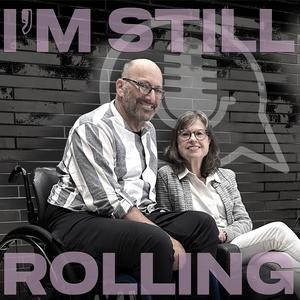
[SPEAKER_01]: And this is I'm still rolling.
00:30.472 --> 00:32.977
[SPEAKER_01]: Yes, this is, I'm still rolling.
00:33.778 --> 00:36.963
[SPEAKER_02]: Today's guest wrote a book about what it's like to go blind.
00:37.705 --> 00:39.368
[SPEAKER_02]: But it's more than that, really.
00:39.688 --> 00:44.016
[SPEAKER_02]: He's got this condition called Rentonitis Pigmentosa.
00:44.391 --> 00:47.353
[SPEAKER_00]: My teens and early 20s, I only noticed it at night.
00:47.373 --> 00:49.014
[SPEAKER_00]: He explained it in a TED talk.
00:49.054 --> 00:52.236
[SPEAKER_00]: In my early 30s, my peripheral vision started to deteriorate.
00:52.796 --> 00:57.039
[SPEAKER_00]: Right now, I have a central vision, but I'm seeing the world through a pretty narrow port hole.
00:57.459 --> 00:59.821
[SPEAKER_00]: The book is called, The Country of the Blind.
01:00.301 --> 01:06.965
[SPEAKER_01]: And it goes into the history and politics and societal biases of blindness through the years.
01:07.325 --> 01:08.326
[SPEAKER_01]: Hey, hello, Andrew.
01:08.866 --> 01:09.266
[SPEAKER_01]: Hello.
01:09.326 --> 01:10.027
[SPEAKER_01]: Andrew Laylen.
01:10.389 --> 01:11.070
[SPEAKER_01]: Hello, Andrew.
01:11.130 --> 01:12.271
[SPEAKER_01]: There's a laylander, Leland.
01:12.551 --> 01:13.152
[SPEAKER_01]: That's Leland.
01:13.352 --> 01:14.093
[SPEAKER_02]: Leland, Leland.
01:14.853 --> 01:17.436
[SPEAKER_02]: But first, let's introduce ourselves.
01:17.836 --> 01:18.897
[SPEAKER_01]: Do we really have to do this?
01:18.917 --> 01:22.361
[SPEAKER_01]: This is the, like, the 40th podcast we've done.
01:22.781 --> 01:24.543
[SPEAKER_01]: We introduce ourselves every time.
01:24.963 --> 01:25.223
[SPEAKER_01]: How do you?
01:25.243 --> 01:26.685
[SPEAKER_01]: You don't think people know by now.
01:26.865 --> 01:44.852
[SPEAKER_02]: you were such an optimist any you think everybody's listened to all four podcasts no we want to welcome you newbies once you've never heard this before once we're just checking in and saying who the heck are these people and why should I listen to them all right all right
01:45.792 --> 01:46.592
[SPEAKER_01]: All right.
01:46.832 --> 01:47.073
[SPEAKER_01]: Okay.
01:47.093 --> 01:51.574
[SPEAKER_01]: You have been on the radio for many, many, many, many years.
01:51.634 --> 01:52.954
[SPEAKER_02]: Oh, since I was a child.
01:52.974 --> 01:53.414
[SPEAKER_02]: Yes.
01:54.074 --> 01:57.495
[SPEAKER_01]: At the big, all news radio stations in San Francisco, New York.
01:58.096 --> 01:58.856
[SPEAKER_02]: That is correct.
01:59.056 --> 02:00.396
[SPEAKER_02]: And you have won what?
02:01.056 --> 02:01.236
[SPEAKER_02]: 17.
02:01.376 --> 02:01.696
[SPEAKER_02]: 17.
02:02.897 --> 02:05.898
[SPEAKER_02]: Emmys, for your work in radio and television.
02:06.018 --> 02:06.258
[SPEAKER_01]: Yes.
02:07.018 --> 02:14.500
[SPEAKER_01]: But the real reason that we are qualified to do a podcast on disability is that I'm a paraplegic.
02:15.172 --> 02:17.734
[SPEAKER_01]: It happened on February 2nd.
02:18.434 --> 02:20.716
[SPEAKER_01]: No, February 22nd.
02:21.276 --> 02:22.497
[SPEAKER_01]: I say I've never figured the day out.
02:22.557 --> 02:22.958
[SPEAKER_01]: Thank you.
02:22.978 --> 02:23.758
[SPEAKER_02]: Yeah, you just did.
02:23.838 --> 02:24.479
[SPEAKER_02]: Yeah.
02:24.679 --> 02:33.025
[SPEAKER_01]: It was February 22nd, 2022, which is 2-2-2-2-2-2-2-2-2-2-2-2-2-2-2-2-2-2-2-2-2-2-2-2-2-2-2-2-2-2-2-2-2-2-2-2-2-2-2-2-2-2-2-2-2-2-2-2-2-2-2-2-2-2-2-2-2-2-2-2-2-2-2-2-2-2-2-2-2-2-2-2-2-2-2-2-2-2-2-2-2-2-2-2
02:38.117 --> 02:43.581
[SPEAKER_01]: I have an operation on my aorta to fix a bulge, and it was successful.
02:44.362 --> 02:49.386
[SPEAKER_01]: But two days later in the ICU, I had a spinal cord stroke.
02:49.686 --> 02:50.226
[SPEAKER_01]: Very rare.
02:50.847 --> 02:51.427
[SPEAKER_01]: Very rare.
02:51.447 --> 03:00.854
[SPEAKER_01]: You know, people in the ICU had never seen it before, but it led to me being paraplegic below my breast plate when you call this.
03:01.034 --> 03:01.895
[SPEAKER_02]: That's your problem.
03:01.995 --> 03:02.575
[SPEAKER_02]: My problem.
03:04.237 --> 03:11.565
[SPEAKER_01]: And I can't move and I can't feel anything and well you can move your stomach well Yeah, okay, but nothing more.
03:11.605 --> 03:14.148
[SPEAKER_02]: I've seen that another belly dancing kind of thing.
03:14.168 --> 03:24.600
[SPEAKER_02]: All right But enough about you on to another disability blindness and our guest and on to our conversation
03:25.510 --> 03:47.870
[SPEAKER_00]: nice to see you likewise I don't really cute but can you see me I can yeah I have a couple degrees of central vision with good acuity in it so as long as you know the lighting conditions are right and things aren't moving too fast I can see all manner of things
03:48.288 --> 04:06.717
[SPEAKER_01]: why don't you explain exactly what your malady is my malady i think i think i think it's in my i don't know malady is a not a malady well malady you know you got the mal in there and it's malady
04:08.523 --> 04:13.204
[SPEAKER_00]: Indeed, and I don't know that I would call it a melody except with some like heavy irony.
04:13.505 --> 04:30.410
[SPEAKER_00]: It's called retinitis pigmentosa, and it's a melody of the eyes, and it is degenerative, and there is currently no cure, and it's progressive, which is, I guess, the same thing as saying degenerative,
04:32.510 --> 04:39.356
[SPEAKER_00]: and it goes at different speeds for different people, generally the way it goes is from the outside in.
04:40.056 --> 04:44.940
[SPEAKER_00]: So also known as a, oh man, I'm not going to get it right.
04:44.960 --> 04:52.746
[SPEAKER_00]: It's been a while since I've talked to these medical terms, but basically the the the rod
Load full transcript
cells, yeah, rod cone dystrophy.
04:53.107 --> 04:54.348
[SPEAKER_00]: So the rods go first.
04:54.808 --> 05:00.532
[SPEAKER_00]: There's two kinds of cells in the red and the rods and cones and the rods are responsible for peripheral vision and night vision.
05:01.473 --> 05:03.334
[SPEAKER_00]: and those are the ones that degenerate first.
05:03.574 --> 05:22.481
[SPEAKER_00]: And so as a result, people with RP generally, although not all of them, first start to notice night blindness, so like hanging out with the friends as teenagers and like why is it so much harder for me to walk through the woods at night being a teenager and then gradually over time,
05:24.142 --> 05:43.196
[SPEAKER_00]: It manifests as tunnel vision, so, you know, I remember playing a game of tennis, which I was never competitive at, but just like a janty, lark of a game of tennis when I was in my mid-twenties, and I just was sort of alarmed by how difficult it was.
05:44.016 --> 05:45.137
[SPEAKER_00]: Like, I just could not see that.
05:45.197 --> 05:46.218
[SPEAKER_00]: I could not track the ball.
05:46.618 --> 06:07.588
[SPEAKER_00]: And so, you know, over, you know, year by year, decade by decade, one's visual field contracts and contracts until now these days, like I said, my visual acuity in that little patch of central vision that I got is decent, but it's like down to like maybe six or eight percent of what of fully-sighted personcies.
06:08.508 --> 06:11.690
[SPEAKER_02]: Is this a rare condition or is it shared by many?
06:11.851 --> 06:25.200
[SPEAKER_00]: It's rare in terms of the number of humans who have it, but in terms of the terms of genetic causes of blindness, it's the most common or among the most common.
06:26.306 --> 06:30.389
[SPEAKER_02]: And it started, when did you, very few, you mentioned the tennis game?
06:30.749 --> 06:32.050
[SPEAKER_02]: Did you notice it before that?
06:32.910 --> 06:34.251
[SPEAKER_00]: Oh yeah, yeah.
06:34.471 --> 06:36.072
[SPEAKER_00]: Yeah, so the tennis game was mid-20s.
06:36.112 --> 06:48.100
[SPEAKER_00]: I would say, before knowing anything about what was causing it in my mid-teens, I was doing those nighttime teenage activities, you know, like going out with my friends.
06:48.140 --> 06:49.501
[SPEAKER_00]: I was living in New Mexico at the time.
06:50.421 --> 07:05.190
[SPEAKER_00]: and would just notice that I was a lot worse at navigating dark environments or the movie theater I remember was another big one like I would go out to the movies with my mom or with my friends and and like the idea of going to the bathroom in the middle of a movie just became unthinkable to me.
07:05.770 --> 07:28.042
[SPEAKER_00]: Like why would I bring that terror upon myself and and and and just also realizing like other people didn't there wasn't a big deal You know, I want to go get another soda easy-peasy and so It was this sort of gradual accumulation of of of incidents like that and then in my late teens I think I was around 19 years old finally complaining about it enough that I went and got a real diagnosis
07:28.845 --> 07:35.469
[SPEAKER_01]: Well, you'll be blind in the next decade coming years, totally.
07:35.990 --> 07:43.234
[SPEAKER_00]: Um, I guess there's two ways to answer that, or maybe you've been probably 20 ways to answer it.
07:44.055 --> 07:49.538
[SPEAKER_00]: Um, one way to answer it is that I'm legally blind now.
07:50.799 --> 07:56.663
[SPEAKER_00]: And I am doing a lot of things in my life, if not,
07:58.024 --> 08:02.047
[SPEAKER_00]: many, I'm really trying to live my life as a blind person as much as possible.
08:02.227 --> 08:09.032
[SPEAKER_00]: And there are ways where that is impossible or ridiculous to say because like I do have all this central vision.
08:09.072 --> 08:21.340
[SPEAKER_00]: So I like, when I am walking around, even though I use a white cane, I'm also like clocking, you know, if I'm in an unfamiliar city, I will be like, I'm not going to like not look at the street sign that I can see, right?
08:21.940 --> 08:32.386
[SPEAKER_00]: But I've spoken to enough people with RP who don't have any useful vision left, or usable vision left, who have said to me like, start now with that stuff.
08:32.566 --> 08:38.489
[SPEAKER_00]: And like the more you can kind of like let go of the vision you've got and not cling to it, the better off you're going to be.
08:39.269 --> 08:45.233
[SPEAKER_00]: So even though it freaks people out, it doesn't freak people out, but it kind of like it can
08:49.835 --> 08:54.279
[SPEAKER_00]: I like to identify as blind now for that reason.
08:55.380 --> 09:01.265
[SPEAKER_00]: I think what you're asking about, I know what you're asking about, is about useful vision, right?
09:01.425 --> 09:02.466
[SPEAKER_00]: Which is how people define it.
09:02.486 --> 09:09.012
[SPEAKER_00]: Because even then, this distinction seems negligible to a sighted person, who's never thought about blindness.
09:09.032 --> 09:13.116
[SPEAKER_00]: But I was spoken to enough blind people that like the difference between no light perception and
09:14.937 --> 09:20.682
[SPEAKER_00]: some light perception, but no visual acuity, which some would call no useful vision is also can also be quite significant.
09:20.762 --> 09:25.345
[SPEAKER_00]: There's a significant difference between seeing absolutely nothing and seeing shapes.
09:25.365 --> 09:28.267
[SPEAKER_00]: You can still do some stuff with that information.
09:29.609 --> 09:32.231
[SPEAKER_00]: That question that you ask me sounds very simple and straightforward.
09:32.251 --> 09:37.214
[SPEAKER_00]: I realize I'm giving you an extremely complicated answer to it, but it's actually not a simple question.
09:38.215 --> 10:03.973
[SPEAKER_00]: and and so for me like a lot of that stuff like when will I actually be blind like doesn't have to be no light perception like I have a friend who lives in town actually here who has our people who has no light perception but I
also know lots people who like you know have our people who live their whole lives and and they do end up being functionally blind but like have maybe even that little scrap of of central vision but like what is the difference?
10:04.493 --> 10:06.014
[SPEAKER_00]: And when do you get to call it blindness?
10:06.434 --> 10:28.760
[SPEAKER_00]: And so for me, like, litigating those differences is increasingly not just like an interesting or on, like, kind of counterproductive, but it's like actually actively harmful, I think for me, because it sets me back in the path that I'm on to like accepting it and be kind of like self-actualizing as a blind person.
10:28.800 --> 10:32.061
[SPEAKER_01]: Well, and you write in the book about people
10:34.654 --> 10:44.261
[SPEAKER_01]: matter you because you're reading your iPhone and yet you have a white cane and well what is this guy?
10:44.501 --> 10:47.523
[SPEAKER_01]: I mean what is he trying to get better parking spots?
10:47.843 --> 10:52.807
[SPEAKER_01]: I mean what the why is he have a white cane if he's a reading his iPhone?
10:53.882 --> 11:15.387
[SPEAKER_00]: Yeah, and you know, and that's something that I see across this ability, you know, I think like you'll see it with wheelchair users right like like somebody will be a wheelchair user, but they might have some mobility and they'll like independently move from a chair to another chair and somebody will be like faker, you know,
11:19.988 --> 11:24.289
[SPEAKER_00]: The wheelchair is still a useful tool, even if you have some mobility to move there.
11:24.329 --> 11:27.970
[SPEAKER_00]: And I think that this is the same thing with a sign language user, right?
11:27.990 --> 11:35.592
[SPEAKER_00]: Like, if somebody speaks sign language, does that mean that they have no, they're profoundly deaf with no hearing whatsoever, not necessarily.
11:35.612 --> 11:36.652
[SPEAKER_00]: They can have quite a bit of hearing.
11:36.672 --> 11:42.113
[SPEAKER_00]: But sign language is still going to be the most useful way for that person to communicate in some scenarios.
11:42.273 --> 11:49.415
[SPEAKER_00]: So yeah, people have a lot of trouble with all the different kind of spectrums that exist.
11:50.615 --> 11:58.920
[SPEAKER_02]: Well, we we've had a lot to learn in the last four years since Mike's been in his wheelchair and along those lines Quadripley jigs.
11:59.300 --> 12:01.281
[SPEAKER_02]: There are many walking quadripley jigs.
12:01.361 --> 12:08.785
[SPEAKER_02]: That's what they're called and Mike is a paraplegic Said what I mean, how does that work you know?
12:08.845 --> 12:10.686
[SPEAKER_01]: I can't walk and I'm a paraplegic
12:10.946 --> 12:26.033
[SPEAKER_02]: Yeah, his entry is actually considered less disabled than a quadriplegic and yet a quadriplegic can't use their hands necessarily, but they can walk.
12:26.053 --> 12:33.097
[SPEAKER_02]: So yeah, disabilities are complicated and what someone perceives can be way off the mark.
12:34.221 --> 12:54.296
[SPEAKER_02]: Let me ask you about those two, you mentioned your book that two young people, I think they were in Colorado who said to you, they felt, what you've gone through is harder than being suddenly blind, like they were, or perhaps being born blind, do you think that's true?
12:54.336 --> 12:55.437
[SPEAKER_02]: Was there a truth in that?
12:57.118 --> 13:20.858
[SPEAKER_00]: I mean, I think I see their point, you know, I think what they were trying to say or what they were saying was that for them, like if you become blind suddenly, if there is like a real, I think unavoidable sense of trauma and loss, that you have to grieve the loss of your sight and you have to move on and you have to like,
13:22.019 --> 13:28.713
[SPEAKER_00]: You have to sort of summon your resources and figure out how you're going to do everything differently, right?
13:29.475 --> 13:29.615
[SPEAKER_00]: And
13:31.980 --> 13:44.808
[SPEAKER_00]: And, and for somebody in my situation, where I still have this scrappy little core of central vision, it's really seductive and it really like, you know, like reading is one good example.
13:44.868 --> 13:53.633
[SPEAKER_00]: Like, if I have, like, I'm talking to you with my giant external monitor here, where I can make the text really big,
13:54.533 --> 14:22.648
[SPEAKER_00]: and I can invert the colors to reduce the glare, which is really bothersome for other related eye reasons, and I can read text, but that makes it really seductive to not want to bother with the hassle of learning how to use a screen meter where this robotic voice is chattering and babbling all of the stuff on my screen and often it will like break or not work right, but what I've learned is that I'm actually way more efficient if I use that tool.
14:23.748 --> 14:30.752
[SPEAKER_00]: And, you know, for somebody who suddenly goes blind, like they don't, they don't have all those kind of like mind games that they can play with themselves.
14:30.832 --> 14:39.116
[SPEAKER_00]: There's other mind games that can play with themselves, but I think their point is more like, okay, like they have to just sort of like, you know, it's like, it's like the immersion program, right?
14:39.156 --> 14:47.160
[SPEAKER_00]: Like, if you're trying to learn Spanish, like, I'm like forcing myself to practice for an hour a week and they are moving to Uruguay, right?
14:47.180 --> 14:48.780
[SPEAKER_00]: And it's like, that's the difference.
14:48.840 --> 14:49.581
[SPEAKER_00]: Good comparison.
14:50.621 --> 15:03.413
[SPEAKER_01]: You know, first of all, the book, and I've talked about this before, is really well written and it made me interested in a subject that I didn't really care about.
15:03.514 --> 15:11.181
[SPEAKER_01]: I mean, I didn't think about it because I'm sighted, and I have all the privileges of a sighted person.
15:11.221 --> 15:15.205
[SPEAKER_01]: But you go into so many interesting things in the book, and you,
15:16.440 -->
15:20.001
[SPEAKER_01]: I mean, it was shortlisted for a Pulitzer Prize.
15:20.041 --> 15:22.222
[SPEAKER_01]: That it's a big deal.
15:22.242 --> 15:25.723
[SPEAKER_02]: I mean, how did you find out about that?
15:25.963 --> 15:27.024
[SPEAKER_02]: You're a big deal, Andrew.
15:27.064 --> 15:28.384
[SPEAKER_02]: I don't know if you knew that or not.
15:28.804 --> 15:31.005
[SPEAKER_02]: Mike kept telling me you're getting up to this interview.
15:31.085 --> 15:31.805
[SPEAKER_02]: It's a big deal.
15:31.905 --> 15:32.646
[SPEAKER_02]: He's a big deal.
15:32.666 --> 15:33.186
[SPEAKER_02]: I did.
15:33.386 --> 15:34.386
[SPEAKER_02]: Get ready, he's a big deal.
15:36.987 --> 15:38.247
[SPEAKER_00]: Uh, thanks.
15:38.387 --> 15:39.788
[SPEAKER_00]: I, you know, I worked really hard on it.
15:39.868 --> 15:40.768
[SPEAKER_00]: So it's gratifying.
15:40.988 --> 15:42.388
[SPEAKER_00]: How did I find out about the prize?
15:42.608 --> 15:57.052
[SPEAKER_00]: I, I was in therapy where my phone was on silent and then I came out of therapy and like unmuted my phone and they're like instantly rang and it was my editor at Penguin and she was like, have you been looking at the world that all?
15:57.072 --> 15:59.372
[SPEAKER_00]: I think she said and I was like, no, what are you talking about?
15:59.672 --> 16:06.374
[SPEAKER_00]: And then, and the funny thing about the Pulitzer is that they announced the finalists at the same time that they announced the winner, which I didn't know.
16:07.074 --> 16:13.317
[SPEAKER_00]: And so I was like, oh cool, when do we find out she's like, you're just a finalist for the Pulitzer and I was like, amazing, when do we find out about the thing?
16:13.337 --> 16:15.258
[SPEAKER_00]: She's like, no, you already lost, you didn't get it.
16:15.278 --> 16:16.918
[SPEAKER_00]: It's a weird way.
16:18.079 --> 16:23.341
[SPEAKER_00]: It's kind of funny, yeah, but also like, for me, you know, it's all the same.
16:23.921 --> 16:24.641
[SPEAKER_00]: It's awesome.
16:24.762 --> 16:32.345
[SPEAKER_02]: Well, tell us about then how you built your career since this started for you beyond.
16:33.525 --> 16:42.970
[SPEAKER_02]: your condition, your malady, which is, we say, how did you build then your career as a journalist and editor and a producer and all these things?
16:42.990 --> 16:51.654
[SPEAKER_00]: Yeah, I mean, honestly, it didn't interfere at all with my career until recently.
16:53.955 --> 16:56.196
[SPEAKER_00]: And I think that's another really important distinction.
16:56.216 --> 16:57.837
[SPEAKER_00]: Like the people I know who
17:01.002 --> 17:09.711
[SPEAKER_00]: who have gone through their educations as disabled people is just such a radically different experience than being non-disabled in school.
17:10.552 --> 17:16.919
[SPEAKER_00]: And I really have to privilege of just being like a normal mainstream kid in school and in college even.
17:18.080 --> 17:19.842
[SPEAKER_00]: You know, in college like by Dan I was like,
17:21.487 --> 17:24.608
[SPEAKER_00]: You know, the night vision thing had started, but like that doesn't matter for school, right?
17:24.628 --> 17:29.469
[SPEAKER_00]: And for work, like it's not like I was, I mean, for some jobs it would, but I was always kind of in publishing.
17:29.489 --> 17:49.493
[SPEAKER_00]: I got my first job at a college working at a literary magazine called The Believer, and then I, you know, I basically worked as an editor, and then a podcast producer, and then sort of like did some teaching various universities kind of writing on my wife's coat tails, because she's an academic,
17:50.093 --> 17:59.039
[SPEAKER_00]: And then of that, like, there was never really any accommodation that I needed, never any, I didn't have to do all the things that like blind economics have to do of like negotiating access.
17:59.219 --> 18:10.947
[SPEAKER_00]: And it's really like just in the last five years or so that my vision has gone to a point where, like, for instance, if I'm going to be going to a meeting and they're going to be like handing out.
18:11.427 --> 18:31.694
[SPEAKER_00]: You know, a print out of something like I'm gonna need an accessible version of that or you know I can still usually make out the PowerPoint presentation, but like I'm much happier if I can get a copy of that in advance But like those are pretty minor things like that's not even stuff that's happening to me that much You know more now as a as a journalist, you know when I go out on a reporting trip
18:32.863 --> 18:46.985
[SPEAKER_00]: Um, I've really almost exclusively been reporting on disability and so there's kind of a sense of like it's like cool that there's a blind journalist and people are excited about it, you know, or like nobody really questions it because like the space is I tend to be reporting on our like.
18:47.982 --> 18:51.365
[SPEAKER_00]: disabled spaces in general, you know, where there's like disabled people hanging out.
18:53.206 --> 18:56.068
[SPEAKER_00]: So I haven't really encountered anything of like anybody being skeptical.
18:56.088 --> 19:05.696
[SPEAKER_00]: You know, there's maybe been like a couple of times that were totally legit where like a fact check or sort of like, and like, forgive me, but like, how do you know that?
19:05.916 --> 19:07.597
[SPEAKER_00]: Like, how did you see that, you know?
19:07.657 --> 19:09.779
[SPEAKER_00]: And it's a fair question, like, you know?
19:11.340 --> 19:12.361
[SPEAKER_00]: And I can answer it.
19:14.002 --> 19:14.803
[SPEAKER_00]: So yeah, like, like,
19:15.463 --> 19:18.944
[SPEAKER_00]: I haven't really had to think too much about that question yet.
19:19.185 --> 19:37.332
[SPEAKER_02]: And there's that one reason that you're sort of with that one reason to rehearse for as you're doing and you're preparing for for less sight of blindness so that when you go into that room and they have the handouts, you know, you're ready.
19:38.241 --> 19:52.807
[SPEAKER_00]: 100%
yeah, oh yeah, yeah, I thought about that a lot like Braille is a big one there like Braille is such a pain in the ass to learn as an adult and And like it's I've just put so many hours into getting where I am with it
19:53.547 --> 20:06.250
[SPEAKER_00]: And, you know, and it's one of those things that, like, I question myself myself all the time, along the lines of, like, our conversation earlier where I'm like, I really have a lot of vision compared to, like, most of the blind people have hung out with, like, what am I doing?
20:06.831 --> 20:15.193
[SPEAKER_00]: And then, and then, and then, honestly, like, I'll lose some vision or I'll notice, like, something will have changed over the last, you know, it's so slow that often it's just like,
20:16.133 --> 20:20.477
[SPEAKER_00]: This sort of, you know, something will kind of like the tennis example, you know, like something like that will happen.
20:20.998 --> 20:30.846
[SPEAKER_00]: And I find that like when I'm really being a good, a good boy scout about my braille, it'll just make me feel so much better about that transition.
20:31.667 --> 20:52.376
[SPEAKER_00]: and that's true of like cane skills and so yeah like I imagine myself as a blind reporter with like no useful vision and I've spoken to blind journalists who do it and it's sort of it's really reassuring and almost exciting to be able to think about what that toolkit looks like and how that workflow would work and it's there and I know I can do it.
20:52.396 --> 20:53.316
[SPEAKER_01]: There's an issue now
21:00.747 --> 21:13.991
[SPEAKER_01]: Secretary Rubio, who has changed the typeface of stuff coming out of the department of state, and that sounds like a completely minor issue.
21:14.871 --> 21:25.394
[SPEAKER_01]: But it is a big issue for blind people and limited-sided people and people with limited vision.
21:29.835 --> 21:34.476
[SPEAKER_01]: a person in your position, because I just see it as mean, spirit.
21:35.536 --> 21:42.137
[SPEAKER_01]: I don't get it, and I've been a journalist for 50 years, and I've always been the two-sided guy.
21:42.638 --> 21:47.859
[SPEAKER_01]: We got to get the other side, there's got to be some reason, there's got to be two sides of the story.
21:48.559 --> 21:54.820
[SPEAKER_01]: I don't see another side to this, this is just mean, and maybe you can talk me out of that.
21:56.402 --> 22:09.045
[SPEAKER_00]: Right, like, like, what is it costing, what is it costing the state department to like be printing their documents in the same set of fine that's better for low vision people like, yeah, it's only punitive.
22:09.085 --> 22:10.705
[SPEAKER_00]: It's only symbolic.
22:11.505 --> 22:14.126
[SPEAKER_00]: I mean, what is the argument if you're going to be the two-sided guy?
22:14.266 --> 22:18.307
[SPEAKER_00]: It's that I think it's more of the politics of cruelty and I think,
22:19.828 --> 22:23.511
[SPEAKER_00]: I don't know, Mike, I'm trying to think, like, your question is basically
like, what's up with that?
22:24.211 --> 22:24.732
[SPEAKER_00]: Yeah.
22:25.512 --> 22:26.453
[SPEAKER_01]: What's the deal?
22:26.473 --> 22:27.814
[SPEAKER_02]: What's the deal with that?
22:27.934 --> 22:29.215
[SPEAKER_00]: I mean, it's not new, right?
22:29.255 --> 22:45.788
[SPEAKER_00]: I mean, it's new in the sense that, like, like, you know, the Trump administration is doing this, like, pyrotechnical display of power and, and, like, forceful pushing back in a way that I think they would argue is, like, equal and opposite to the, like, woke over each of the,
22:46.508 --> 23:00.733
[SPEAKER_00]: of the Biden era, or, you know, and extending far earlier to that, like, you know, beginning even in like the 60s when like the environmental movement and the feminist movement and the black soul rights movement came up and like this is like, you know, all kind of like coming back around.
23:00.993 --> 23:13.777
[SPEAKER_00]: This is new, but it's also nothing new in terms of like a conservative, like this sort of, yeah, like paleo conservative reaction against what they see as, as an accommodationist culture
23:15.117 --> 23:23.581
[SPEAKER_00]: which is really a treacherous territory for the disability community which sees rightfully accommodations as a human right.
23:23.661 --> 23:24.982
[SPEAKER_00]: It's not like a payout.
23:25.022 --> 23:28.224
[SPEAKER_00]: It's not welfare that like one might or might not be entitled to.
23:28.364 --> 23:30.825
[SPEAKER_00]: It's like the cost of inclusion in society.
23:31.273 --> 23:35.516
[SPEAKER_01]: Well, in fact, I mean, in a rough case, you said DEI.
23:35.736 --> 23:42.620
[SPEAKER_01]: I, for now, it's DEI-A, with accessibility at the other end.
23:43.000 --> 23:46.962
[SPEAKER_01]: And did we describe what the State Department did well enough for people that don't know?
23:47.603 --> 23:47.803
[SPEAKER_01]: They...
23:48.003 --> 23:50.905
[SPEAKER_02]: It's kind of difficult, it has to do with types that.
23:51.045 --> 23:58.189
[SPEAKER_01]: Well, it's tight, and it seems innocuous, but maybe you know better than I do, but they
24:00.635 --> 24:05.577
[SPEAKER_01]: something that was easier to read for low-vision people to something that wasn't.
24:05.717 --> 24:06.738
[SPEAKER_02]: Now you've described it well.
24:06.878 --> 24:07.018
[SPEAKER_02]: Yeah.
24:07.178 --> 24:07.538
[SPEAKER_02]: Yeah.
24:07.658 --> 24:07.958
[SPEAKER_02]: Yeah.
24:08.339 --> 24:09.039
[SPEAKER_00]: I don't have a name.
24:09.079 --> 24:14.401
[SPEAKER_00]: And it's not even, you know, it's like, there are some, there are some equally, uh, uh,
24:16.042 --> 24:32.827
[SPEAKER_00]: bad developments that like you could at least make an economic argument right like while they're saving money here right by like laying off the entire civil rights office of the of the Department of Education that like handled like students with disabilities civil rights complaints like
24:33.107 --> 24:37.433
[SPEAKER_00]: That's a travesty, but like, I guess you're talking about salary, you know, numbers there.
24:37.754 --> 24:47.327
[SPEAKER_00]: But like, this is like truly like, probably going to cost more money to then like re-print out documents, like, you know, like recycle all throughout the binders to replace them with times in Rome.
24:48.489 --> 24:50.051
[SPEAKER_00]: They're all across the board.
24:50.672 --> 24:51.433
[SPEAKER_00]: Yeah, you're right.
24:51.493 --> 24:53.275
[SPEAKER_00]: It's not just DEIA.
24:53.815 --> 24:56.919
[SPEAKER_00]: And there's always been a sort of like quiet.
24:57.480 --> 25:05.869
[SPEAKER_00]: And sometimes I've heard, you know, in the Biden administration, I heard to say with people complaining, like there's a lot of talking about DEIA, but like what about the A, you know, and I think I think the Biden administration started to
25:07.471 --> 25:12.895
[SPEAKER_00]: Correct that in some ways and now I think there's like a flip of a reversal where people are kind of like No, it's okay.
25:12.915 --> 25:17.599
[SPEAKER_00]: Like don't talk about the A anymore because like we're fine to go into the radar But it's not going into the radar.
25:17.639 --> 25:27.828
[SPEAKER_02]: And we're seeing the Trump administration dismantling disability rights left and right on the sort of related topic But just because it interests me I read your article.
25:27.848 --> 25:29.269
[SPEAKER_02]: I think it was from 2021 about actors
25:34.038 --> 25:58.419
[SPEAKER_02]: Yeah, when you, when you, when in an observed the, the, the taping of it in the dark, the series, Mike and I have done other podcasts discussing this issue about casting, whether whether it's necessary or requirement to cast a disabled actor in the role in that particular disability role.
25:59.300 --> 26:04.608
[SPEAKER_02]: And it was really interesting, I found the article was very interesting because
26:06.220 --> 26:07.621
[SPEAKER_02]: It correct me if I'm wrong.
26:08.921 --> 26:13.504
[SPEAKER_02]: The conclusion seems to be that you have to be able to do more than portray a disability.
26:14.544 --> 26:21.887
[SPEAKER_02]: And also that there just aren't enough, in this case, blind actors.
26:22.488 --> 26:28.571
[SPEAKER_02]: In the talent pool, try as you might to cast someone and you should explain this.
26:28.651 --> 26:33.573
[SPEAKER_02]: I'm explaining what you should talk about this, what did you discover from that whole experience?
26:34.818 --> 26:41.164
[SPEAKER_00]: Yeah, so there was a show on the CW network called in the dark.
26:41.725 --> 26:51.093
[SPEAKER_00]: That was about a woman who's blind, a friend of hers is killed and she encounters his body.
26:51.814 --> 26:55.678
[SPEAKER_00]: And then she kind of takes it upon herself to investigate his murder.
26:56.098 --> 27:21.928
[SPEAKER_00]: And it's just like blind detective and it's kind of like a murder mystery, but it's also like a teen soap opera and it's like kind of a comedy and And I and it
came across my radar because the NFB the National Federation of the Blind had boycott the show and they their argument was was enough is enough like There's been you know movie after movie after TV show of sighted actors playing blind characters
27:23.068 --> 27:43.744
[SPEAKER_00]: We demand representation and you know, and I talked to the president of the NFB for the piece You know, he basically told me like yeah, like we could have done this for any number of other shows or movies But like we sort of they had the bad fortune of like this was what we decided to make a stand-up And so there were protests and you know picket lines and you know people were we're we're shouting the streets
27:44.524 --> 27:56.549
[SPEAKER_00]: And then I, yes, I wrote about that controversy and I got to go on the set with Ryan Knighten, who's a, also an RP guy, who is a writer on the show.
27:56.649 --> 28:00.030
[SPEAKER_00]: And he happened to be the writer on set for that episode.
28:00.050 --> 28:01.511
[SPEAKER_00]: I didn't know that's by the guy's a lot of TV shows.
28:01.531 --> 28:11.075
[SPEAKER_00]: They'll be like a whole writer's room, but then they'll be a lead writer for an episode in the Nat Writer off and go to the filming of the episode to sort of like be the writer on set to answer questions.
28:11.715 --> 28:22.482
[SPEAKER_00]: So I kind of shadowed Ryan on set, but then I also interviewed and hung out with the actress who was sighted, who played the blind character, which was the cause of the whole boycott.
28:23.156 --> 28:37.167
[SPEAKER_00]: I ultimately did, I think, you know, I tried, I tried in writing the piece to be really Mike Sugarman's style about it, you know, and to side it, you know, and I do, and I did see like the arguments of particularly about acting as an art form, right?
28:37.187 --> 28:49.677
[SPEAKER_00]: Like, I don't subscribe to the idea that like a writer should only ever write about their own race and their own gender and their own whatever, like the whole point of art is inhabiting other lives.
28:51.561 --> 29:02.757
[SPEAKER_02]: Well, just a side note, when I was a reporter, I went into San Quentin and watched a production of San Quentin Prison for those who watched a production of a Shakespeare production.
29:03.788 --> 29:07.910
[SPEAKER_02]: And they were murderers, and they were really good actors.
29:08.350 --> 29:13.713
[SPEAKER_02]: I think, well, especially for Shakespeare, they were very good.
29:14.013 --> 29:25.519
[SPEAKER_02]: Hey, just to refresh your memory about that 21 article, when really plugging a part about it was the reason there wasn't a bigger blind actor pool.
29:26.439 --> 29:34.286
[SPEAKER_02]: is that blind children don't grow up thinking they can do that, that that is not open to them.
29:35.147 --> 29:48.459
[SPEAKER_02]: Yeah, so there's a wonderful, there's a wonderful New York City ballet has a wonderful program for disabled children and what what it does is show them early on.
29:49.323 --> 29:58.132
[SPEAKER_02]: Yeah, you work at this, like others work at it, you know, the able population and you would have a chance, but if you don't think you have that.
29:58.172 --> 30:10.504
[SPEAKER_00]: There's a really great documentary about the Deaf actress Marley Matlin that came out last year, and there's a really terrific story in it where she was part of a Deaf feeder group in high school.
30:11.605 --> 30:37.779
[SPEAKER_00]: Henry Winkler of Happy Days, they were doing like a Happy Days press tour and he came and they were like there to do some, you know, Chicago Cubs visit but then they like came to the deaf school and visited and Matt was like super fan and was like so excited to meet him and then her mom pulls Winkler aside and she said like look we just tell her like it's hard enough to make it as an actress at all like even as a hearing person and that like as a deaf person like
30:38.219 --> 30:40.860
[SPEAKER_00]: She's just like, she's just really help and done becoming an actress.
30:40.880 --> 30:43.361
[SPEAKER_00]: And I really don't want her to be disappointed.
30:43.421 --> 30:46.402
[SPEAKER_00]: And he was like, lady, you picked the wrong guy.
30:46.522 --> 30:47.643
[SPEAKER_00]: And like, just went up to her.
30:47.663 --> 30:49.404
[SPEAKER_00]: And basically, it was like, you can do this.
30:49.484 --> 30:51.464
[SPEAKER_00]: Like, I, and then it became my front friends.
30:51.484 --> 30:55.026
[SPEAKER_00]: It's like, what, one of my big takeaways from that film is Henry Winkler is a real man.
30:55.046 --> 30:56.186
[SPEAKER_02]: Or what a great story.
30:56.206 --> 30:57.567
[SPEAKER_02]: You understand it as a mom.
30:57.887 --> 30:59.588
[SPEAKER_02]: I mean, you're kind of doing the protectors.
30:59.608 --> 31:00.088
[SPEAKER_02]: Yeah, sure.
31:00.168 --> 31:00.848
[SPEAKER_02]: Your child.
31:00.928 --> 31:03.029
[SPEAKER_02]: But, wow, that's a great story.
31:03.738 --> 31:15.864
[SPEAKER_01]: So in the book I learned many things and stuff I never even thought of before and one of them was Blind porn Now this never came I just never
31:17.043 --> 31:19.864
[SPEAKER_01]: brought up, but there's blind for it.
31:20.244 --> 31:28.347
[SPEAKER_02]: Wait a second, I got to interject your mic was printing out, you know, some of his questions for you.
31:28.907 --> 31:33.309
[SPEAKER_02]: I went to the printer to get him out and I said, well, here's one, what is this?
31:33.809 --> 31:38.471
[SPEAKER_02]: One, I'm not embracing accessibility, you want to explain this to me, honey?
31:38.771 --> 31:39.331
[SPEAKER_02]: What?
31:39.531 --> 31:39.811
[SPEAKER_00]: Yeah.
31:41.352 --> 31:41.932
[SPEAKER_01]: And maybe you
31:42.392 --> 32:08.298
[SPEAKER_00]: this is like a parenthetical in my book but like it almost every time I get interviewed about the book somebody does it because it is mind-blowing yeah I mean so like the bigger the bigger subject is audio description which is like close captioning which everybody is familiar with but for blind people so rather unlike close captioning where there's text on the screen representing the dialogue in audio description there's audio that gets inserted in between the
32:09.778 --> 32:27.865
[SPEAKER_00]: uh... that describes what is happening on the screen and it's a it's growing industry there's more and more regulation for now anyway about how much of it you know like close captioning like what percentage of new films or tv shows need to include it and there's all kinds of interesting debates about it as an art form like you know what style of it
32:28.745 --> 32:49.405
[SPEAKER_00]: But also, yeah, porn hub, which as far as my reporting showed, I think the largest porn site on the internet has a philanthropic arm called Porn Hub Cares, and they produced audio description for maybe like their top 10 most popular videos.
32:50.737 --> 33:08.376
[SPEAKER_00]: There's also, there's a really interesting, whole series on, on, on, audible, called, I'm not gonna remember the name of it, but audible has a really interesting series about audio smite that, like, is, is not just about visual porn that's already described, but like, audio first porn.
33:09.096 --> 33:16.019
[SPEAKER_00]: and a lot of it is like produced out of queer communities and like sort of like very specific we tailored for different people's preferences.
33:16.039 --> 33:18.840
[SPEAKER_00]: So yes, a whole universe of accessible pornography.
33:18.900 --> 33:21.221
[SPEAKER_01]: Oh my god, our whole sex.
33:22.222 --> 33:22.942
[SPEAKER_01]: There you go.
33:22.962 --> 33:23.562
[SPEAKER_01]: There you go.
33:23.722 --> 33:29.064
[SPEAKER_01]: But it's I guess it's just like any other audio description.
33:30.025 --> 33:33.126
[SPEAKER_01]: Like you point out except I don't know how
33:39.147 --> 33:56.482
[SPEAKER_00]: I'll say this, if you have Netflix, for instance, or really like any mainstream streaming platform, go to where the closed captions are, and you'll see a little symbol for audio description, and just flip it on for five minutes, and then you'll have the sense of how it works.
33:57.042 --> 33:59.565
[SPEAKER_00]: On the born channel.
33:59.925 --> 34:00.946
[SPEAKER_00]: Yeah.
34:00.986 --> 34:01.086
[SPEAKER_00]: Wow.
34:01.126 --> 34:05.610
[SPEAKER_00]: You could watch Pixar movie and extrapolate out from how it'll work in the picture.
34:06.407 --> 34:08.088
[SPEAKER_00]: It's just describing what's happening.
34:08.589 --> 34:12.552
[SPEAKER_00]: I'll say this one time, I don't know if I should tell this random story, but you're inspiring it.
34:13.072 --> 34:19.217
[SPEAKER_00]: One time when I lived in San Francisco, I had a bunch of roommates I lived in one of these like, you know, four roommate situations.
34:19.698 --> 34:28.505
[SPEAKER_00]: And one of the roommates brought home a party from the bar late at night, and I kind of woke up and heard them all parting, the kitchen went back to sleep,
and then it turned into an orgy.
34:29.465 --> 34:57.940
[SPEAKER_00]: and I had to hear them all having sex and one thing that really struck me this is years before I ever owned a white cane or was thinking about accessible porn but like during the Orgy people were doing a lot of narration there was a lot of like here's what I'm doing now or like you know I think that's like a thing that people do and they have sex you know they're like oh I'm gonna do this or I'm doing this or it's great when you do that so like there is like a kind of a natural verbal aspect to it baked in already
34:58.880 --> 35:19.810
[SPEAKER_02]: Well, er, er, er, er, er, er, er, er, er, er, er, er, er, er, er, er, er, er, er, er, er, er, er, er, er, er, er, er, er, er, er, er, er, er, er, er, er, er, er, er, er, er, er, er, er, er, er, er, er, er, er, er, er, er, er, er, er, er, er, er, er, er, er, er, er, er, er, er, er, er, er, er, er, er, er, er, er, er, er, er, er, er, er, er, er, er, er, er, er, er, er, er, er, er, er, er, er, er, er, er, er, er, er, er, er, er, er, er, er, er, er
35:20.539 --> 35:21.280
[SPEAKER_01]: She's a voice actor.
35:21.380 --> 35:27.085
[SPEAKER_02]: Well, actually, I was not narrated some books for the Library of Congress, which was really satisfying work.
35:27.145 --> 35:36.814
[SPEAKER_02]: However, they have not given me any latelys since the shutdown, I don't even know if the Library of Congress is getting that funding anymore.
35:37.014 --> 35:38.535
[SPEAKER_00]: For the blind and
35:45.491 --> 35:48.053
[SPEAKER_00]: I actually went to a conference, and I think they're hanging out, though.
35:48.233 --> 35:48.954
[SPEAKER_00]: Are they hanging out?
35:49.014 --> 35:49.354
[SPEAKER_00]: I guess.
35:49.374 --> 35:50.856
[SPEAKER_00]: Yeah, yeah.
35:51.036 --> 35:52.657
[SPEAKER_02]: I got to make some calls, then.
35:54.839 --> 35:55.600
[SPEAKER_01]: Oh, yeah.
35:55.700 --> 35:56.500
[SPEAKER_02]: Well, yeah.
35:56.580 --> 36:09.211
[SPEAKER_02]: I always have something else in your books, you said, one of the most surprising discoveries you made is how ordinary blindness can be.
36:10.192 --> 36:11.713
[SPEAKER_02]: Talk a little bit about that.
36:12.374 --> 36:12.694
[SPEAKER_00]: Yeah.
36:15.225 --> 36:21.633
[SPEAKER_00]: I went to this training center in Colorado, called the Colorado Center for the Blind, of the Blind.
36:22.293 --> 36:29.081
[SPEAKER_00]: And it's run by the NFB, which I mentioned, and it's run by blind people.
36:29.161 --> 36:31.804
[SPEAKER_00]: So there's a lot of places you can go to learn blind to skills.
36:32.625 --> 36:36.828
[SPEAKER_00]: that are run by sighted people, or maybe mostly sighted people with a handful of blind people.
36:36.848 --> 36:54.862
[SPEAKER_00]: This is really like the hardcore, like if you want to learn how to be blind, you might as well learn from a blind person, and they teach you cane skills, braille, computer skills, how to cook, and you wear sleep shades that completely
black out all vision from basically like nine to five every day.
36:56.949 --> 37:01.412
[SPEAKER_00]: And at first, it's totally overwhelming and really, really hard.
37:03.574 --> 37:05.716
[SPEAKER_00]: And there's people there from all walks of life and it's fascinating.
37:06.336 --> 37:09.319
[SPEAKER_00]: And I was only there for a total of two weeks.
37:10.100 --> 37:15.944
[SPEAKER_00]: But very quickly, you just sort of move on with your life.
37:16.024 --> 37:19.387
[SPEAKER_00]: There's still all kinds of problems and puzzles to solve.
37:21.027 --> 37:32.195
[SPEAKER_00]: I'm in the kitchen, they're playing music, I'm with these new friends I've made, we're chopping onions, I'm listening for the sound of sizzling garlic in the pan, I can smell it, and I'm cooking.
37:32.316 --> 37:40.302
[SPEAKER_00]: And at first, I'm really stressed out and worried about the flame, but once you get the hang of it, it's like, okay, I'm making lunch for everybody.
37:41.042 --> 37:53.771
[SPEAKER_00]: And, you know, it's the same thing with walking around with a white cane, it's the same thing with the computer, and it's even the same thing with Braille, like there's a moment that really, like, I felt that switch flip, where it's like, oh, I'm reading Braille and it's so hard.
37:53.811 --> 37:54.972
[SPEAKER_00]: Isn't this wild?
37:55.312 --> 37:57.533
[SPEAKER_00]: The letters are coming through my fingers and on my eyes.
37:58.034 --> 38:07.260
[SPEAKER_00]: And then at a certain point, I'm just like, you know, and then Doug walked over to the, you know, door and said, Janet, I'm leaving and I'm like, oh, I guess I'm reading a book now, right?
38:07.280 --> 38:09.962
[SPEAKER_00]: And it's like, it stops being special and cool and you're reading.
38:10.862 --> 38:19.088
[SPEAKER_00]: And I think that was a really important discovery to make because it represented the path forward for me.
38:19.708 --> 38:24.411
[SPEAKER_00]: And this sort of recognition that like, you know, I like the title of your show here.
38:24.431 --> 38:28.394
[SPEAKER_00]: I'm still rolling, you know, it's like, it's you're still, you're still you, right?
38:28.594 --> 38:38.320
[SPEAKER_00]: There might be some grand metaphysical and physical transformation happening, but like underneath all that, like, there's still a core of who you are and that's not changing.
38:39.526 --> 38:47.030
[SPEAKER_02]: Well, I said to you, remember not too long ago, do you feel like you're wheelchair, it's your legs, do you even think about it anymore?
38:47.290 --> 38:50.032
[SPEAKER_00]: And you said, no, it's just a part of it.
38:50.452 --> 39:02.659
[SPEAKER_02]: And I think settling into, and from my standpoint too, settling into whatever is happening in your life, disability or not, frees you.
39:03.630 --> 39:17.479
[SPEAKER_02]: It gives you freedom, you know, and since there is no normal that doesn't exist in the world, when you realize you don't have to chase that anymore, it does give you freedom.
39:18.099 --> 39:27.565
[SPEAKER_02]: I do have one more thing, the one percent, and Mike and I have been keenly aware of that in the past four years.
39:29.247 --> 39:41.818
[SPEAKER_02]: My calves, a $30,000 exercise by special bike, he's got two wheelchair, he's got a standing frame, he works with an exoskeleton.
39:42.358 --> 39:53.828
[SPEAKER_02]: We have all these privileges because we have good insurance and just know how to navigate the world and as journalists like you, you know, you have some special.
39:54.649 --> 39:59.131
[SPEAKER_02]: talents for navigating through insurance, through all that stuff, yeah.
39:59.891 --> 40:18.940
[SPEAKER_02]: And I think it's just really important to point out that I know you do this in equity, in disability, like in real life, like for everybody else, but there I guess there isn't a question there, but I just always think
40:21.059 --> 40:22.961
[SPEAKER_02]: to point that out that we are privileged people.
40:23.041 --> 40:24.082
[SPEAKER_02]: No, absolutely, we are privileged.
40:24.282 --> 40:38.432
[SPEAKER_00]: Yeah, I remember when I was reporting my book and I was talking to this guy, my cousin who was the, he was sighted guy, the lead historian at the American Printing House for the Blind and Louisville, Kentucky, which is like one of the,
40:39.173 --> 40:54.385
[SPEAKER_00]: kind of main museums that kind of has this archive of blind history and also they like publish all the textbooks for blind students in the country and he was like, and that was talking about the work I had done so far was pretty early on in the process and he said to me, Andrew, you're talking to like,
40:54.985 --> 41:02.891
[SPEAKER_00]: blind MacArthur Genius Fellows and blind computer geniuses and all of these brilliant blind successful people and that's great.
41:02.911 --> 41:15.699
[SPEAKER_00]: Those people are awesome, but you should also talk to some of the guys who are working on the press of national braille press, and folks who are living on SSDI and because those are probably
41:16.500 --> 41:37.442
[SPEAKER_00]: the majority of buying people right they're not like I don't want you to present blind I think he was worried that like the image of blindness that I would present would be like it's everything is okay you know like you'll just have like your Stevie Wondergrade production studio and like your 17 you know $10,000 braille devices and it's fine and so yeah I'm glad you brought that up because it's it's really important
41:38.483 --> 42:05.565
[SPEAKER_00]: And also, I mean, getting back to like the DEI thing, like that was another thing that I kind of encountered, especially as I was writing through 2020, and just thinking about like intersectionality and the way that a lot of my privilege remains intact, not just economic privilege, but white privilege, and there's like ways in which even at some of the blind centers and spaces that I was hanging out in that felt so kind of
like radical in there.
42:06.265 --> 42:27.010
[SPEAKER_00]: blind positivity, we're also quite retrograde in some of the way that they handled not just race, pengeender, but also multiple other disabilities, you know, and there was like a lot of situations where it was like, if you are multiply disabled and maybe had like a cognitive disability, in addition to blindness, it was a lot tougher to navigate that.
42:27.610 --> 42:41.998
[SPEAKER_00]: space that it was for like what what what somebody called a vanilla blind, you know, the sort of like the only thing that is sort of like marginalized about You was blindness, but everything else drew like a middle class white male Exactly.
42:42.198 --> 42:50.363
[SPEAKER_01]: Yeah Well, I think this is a good Point to end this session Andrew Thank you.
42:50.383 --> 42:51.183
[SPEAKER_00]: This is super fun.
42:51.564 --> 42:55.426
[SPEAKER_01]: Nice to meet you guys Well, there's so much more
42:56.698 --> 43:01.462
[SPEAKER_01]: It was a long conversation and really interesting conversation with us so much more in the book.
43:01.502 --> 43:02.843
[SPEAKER_01]: And I really didn't enjoy it.
43:02.863 --> 43:03.864
[SPEAKER_01]: He's a very good writer.
43:03.944 --> 43:05.746
[SPEAKER_02]: You seem to when you were reading it.
43:05.906 --> 43:07.427
[SPEAKER_02]: Of course, now I have to read it.
43:07.667 --> 43:09.569
[SPEAKER_02]: So I didn't do all my homework.
43:09.949 --> 43:10.430
[SPEAKER_02]: You know what?
43:10.790 --> 43:13.432
[SPEAKER_02]: Two, I, of course, this always happens.
43:14.053 --> 43:15.474
[SPEAKER_02]: I forgot a question.
43:16.735 --> 43:25.621
[SPEAKER_02]: I forgot to ask him, like, what he will miss the most when he is actually fully blind.
43:25.641 --> 43:32.745
[SPEAKER_02]: But then I'm not going to recognize about it too much because it seemed to me he's looking forward.
43:33.605 --> 43:39.869
[SPEAKER_02]: He's not looking back and he's not holding on to what he has, you know, gripping it tightly.
43:39.929 --> 43:41.050
[SPEAKER_02]: He's moving forward.
43:41.070 --> 43:41.790
[SPEAKER_02]: He's practicing.
43:41.850 --> 43:41.970
[SPEAKER_02]: He's
43:42.991 --> 43:45.034
[SPEAKER_02]: So maybe he wouldn't even have had an answer.
43:45.054 --> 43:48.278
[SPEAKER_02]: That's how I'm going to just find fact that I forgot to ask him that question.
43:48.339 --> 43:49.680
[SPEAKER_01]: It's always something for you to ask.
43:49.720 --> 43:52.504
[SPEAKER_02]: There's always something we forget to ask always.
43:52.644 --> 43:54.988
[SPEAKER_01]: And you know better how to do this.
43:55.028 --> 43:57.751
[SPEAKER_01]: But can you tell people how to like us?
43:59.133 --> 44:19.648
[SPEAKER_02]: Well, yes, if you listen to this podcast and if you would like us if you could you'd like us if you do Or leave a comment any kind of comment if you hate us fine tell a friend tell a neighbor Tell somebody passing on the street about our podcast because we really would like to
44:20.441 --> 44:37.523
[SPEAKER_02]: share a lot of information about our experience and experiences like Richard is having with other people to help them get through what can be difficult situations with disabilities or just difficult situations in life in general, let's all good to know.
44:38.023 --> 44:44.147
[SPEAKER_01]: I really wanted to do this podcast because I had to do something after what happened to me.
44:44.847 --> 44:47.088
[SPEAKER_01]: And I knew there was a reason for it.
44:47.108 --> 44:53.232
[SPEAKER_01]: I don't know what it is, but maybe it's sharing this information and helping some people.
44:53.731 --> 44:58.434
[SPEAKER_02]: We've been incredibly inspired by the people we've interviewed.
44:58.594 --> 45:02.937
[SPEAKER_02]: So if you don't like us, listen to it for the guests, because they're good.
45:03.417 --> 45:04.057
[SPEAKER_01]: Okay, we're done.
45:04.918 --> 45:05.278
[SPEAKER_02]: We're done.
45:05.598 --> 45:07.960
[SPEAKER_02]: Are you going to go log on to that porn site now?
45:08.780 --> 45:09.340
[SPEAKER_01]: Not one.
45:09.561 --> 45:09.941
[SPEAKER_01]: Okay.
45:10.121 --> 45:12.662
[SPEAKER_01]: But I might give it a just experiment.
45:12.943 --> 45:13.403
[SPEAKER_02]: All right.
45:13.783 --> 45:14.604
[SPEAKER_01]: I'm Mike Stritterman.
45:14.804 --> 45:16.004
[SPEAKER_02]: I'm Janice Wright, Sugarman.
45:16.285 --> 45:18.366
[SPEAKER_01]: And this has been, I'm still rolling.