

TRANSCRIPT 🔗
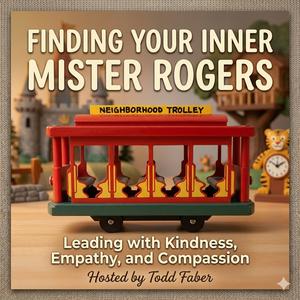
todd faber: Good afternoon, everyone. Welcome to Finding Your Inner Mr. Rogers. I'm Todd Faber. And I believe that in a world of noise and speed, the most radical thing we can be is kind. We often think of leadership as being in charge, but Fred Rogers taught us that true leadership is about being in service to the dignity of others. Today, we're joined by Dave Harmon. As the former Chief People Officer of a half a dozen Fortune 500 companies, including Time Warner AOL and USA Today and Gannett. Dave spent years leading human resources for one of the most dynamic and fast-paced media networks in the world. Navigating the constant evolution of print and digital journalism, Dave earned a reputation as an executive who rejected traditional corporate spin in favor of direct, honest, and deeply empathetic leadership. For Dave, human resources was never about rigid policies or protecting the institution. It was about the balancing of protecting and elevating the people within it. Now retired, Dave brings a wealth of insight into what it takes to cultivate psychological safety, navigate workplace anxiety, and maintain integrity under pressure. His approach to leadership mirrors the core philosophy of Mr. Rogers that the most valuable thing an institution can do is look its people in the eye, tell them the truth, and make them feel safe, heard and valued exactly as they are. Welcome to the neighborhood, Dave.
Dave: Thanks, thanks Todd. Great to be here.
todd faber: ⁓ I'm thrilled that you're here. I mean, you know, we go back a very, very, very long time. Makes me feel old, but obviously it should make you feel old too, so we're in the same boat. ⁓ but you know, it's it's it's great to have somebody like you as part of this podcast because you bring this wholly different perspective around what it truly means to be in a leadership capacity, but to really value the people. that you hire, that you work with, and that you're responsible for. And your approach in terms of sort of the human resources capacity and being a chief people officer is very unique. ⁓ you know, having seen a lot of folks over the years in in business, ⁓ most people I think sort of take that very rigid approach and and sort of policy around how to handle employees, how to handle what they have to do. And and you treated them like people, like a true chief people officer. not a sort of chief human resources officer. And that's wonderful and and I'm thrilled to be able to talk to you today about all the things that you've done over the years. So ⁓ without further ado, let's ⁓ let's jump into it.
Dave: Thanks, thanks. Hey, w you know, one thing before you start, I just want to s you know, when you talk about that, the thing that really engages me is is yes, that that I I have a reputation for that. But also, you know, I went through all the corporate stuff that everybody else goes through and and did pretty well for myself. But you know what? I didn't miss my kids' games, I didn't miss their practices, I was able to coach. So you can do both, right? You can be nice, you can have a family, and you can also, you know, move up the corporate ladder. So
todd faber: Well, and you clearly did a great job of it just based on exactly what you're saying. And I think that is important for people to know that there's a work-life balance to everything. And, you know, if you've got children, being able to actually have a relationship with them that's similar in the sense that you're having a relationship with your employees by treating them kindly, by treating them with compassion, is really what the podcast is all about. So I appreciate you interjecting that. ⁓ so we think about corporate HR.
Dave: Great. Thank you.
todd faber: And you know, you know better than I do, but it it can have a bad reputation for sort of prioritizing bureaucracy, focusing on liability over the people that you're working with. Now, I sort of tamed your archetype as the truth teller. So how did you manage to hold on to this radical honesty in an executive suite and protect the notion of the human in human resources when navigating this high pressure world of these global media giants?
Dave: You know, that's that's a great question, Todd, and I'll tell you it's actually gotten easier over the last decade and a half. When I first started early on, companies never wanted to say anything about layoffs and downsizing, et cetera. They were they were trying to sugarcoat things and and you know, I think thankfully it's gotten better, but You know, I think it was Mark Twain, right? He said, if you tell the truth, you don't have to remember anything. And, you know, I that just stuck with me for years. It's like, you know, that's how we need to live. It's like, listen, let's just tell them what's going on. we're working with adults, we're not working with kids. They can see right through the sugar coating and the stories, so why not tell them the truth? and we'll all handle this together, we're all in this together. So I think when you look at the organizations that really treat their people well, those are the companies that and the the studies have shown, right? They're they're greater product. Productivity, significantly higher profitability, etc. So there's it's not just a nice thing to do, there's a business reason to do it as well. So promoting that culture, I think for me there's two stories that really stick out. When I was at AOL Time Warner, we had a COO who was ⁓ very straightforward, very honest with all the employees. And ⁓ she was not ⁓ a rah-rah leader. She would just get up and say what it was. And here's the business, here's our challenges, let's all we're all in this together. And she had the lowest attrition rates of any of the functions within AWL Time Warner. And she also had the highest engagement scores from her employees. So it's not all about, you know, every day getting out there and being the cheerleader. It's about, hey, let's be honest and
Load full transcript
transparent about. What the challenges we're facing? She was also very good at ⁓ recognizing people when they did a great job. and she didn't do it in a rah-rah way, she just kind of matter-of factly did it. But people respected that and and it showed in the numbers. So that's the first story. And I think the second story as we ⁓ we talk about and you mentioned it, treating people as adults. you know, for years, companies tried to, you know, we'll we'll get to buzzwords later, but companies tried to talk about ⁓ ways around kind of sugarcoating bad news. And guess what? You know, not every company is is doing great. And we have bad quarters. Sometimes we have bad years. Sometimes we have a bad couple of years. And the employees feel this, right? They can see it in the action. So why not just be transparent about it and go, hey, look, we're challenged with this next quarter. ⁓ if anybody has any ideas, send them to me. Let's talk about them and let's let's get into this together and solve these problems together. So I think, you know We used to joke in HR about putting the H back in HR because sometimes companies lose sight of, hey, we have, to your point, and I love how you said it, the chief people officer, not the human resources. ⁓ we have people that work for us and people have good days and bad days, and you gotta manage that ebb and flow with with people as as they ⁓ come into work every day. So I don't it's not about ping pong tables and and ice cream socials. It's about, you know, it's about transparency, it's about development, it's about including everybody. So you see somebody at the table that doesn't have a voice, how do you bring them in to that conversation? It's about honesty. It's evolving every involving everybody in the the success and failure of the company.
todd faber: No, I I think that's great and it's a great message. And and quite frankly, what I really get out of that is the fact that honesty and kindness are not mutually exclusive. Right? That you you know, we talk we th sometimes we think about kindness as the idea of sugarcoating and being like, Okay, everything's all right, you'll be okay. But kindness is actually being honest with people and showing them that you truly care because you're saying to them, It's okay, but here's what's going on, and when you can be honest with people, they I guess they they really sort of are more accepting of that. And it and it and again it's they're just not mutually exclusive and I and I think we need to see that more because more often than not in the past people saw those as not as even parallel tracks, but completely different tracks. So ⁓ you know, when you talk about obviously your workplace and you've you've been at these two huge media giants, which obviously the a lot of the employees there are journalists. And journalism Certainly today, but even in the past, it's stressful. It the news is heavy, often it's tragic. ⁓ the industry itself now is faced with massive structural
shifts. ⁓ and so, you know, when I think about Fred Rogers, he often focused on ⁓ on helping children process scary and anxious parts of the world by sitting down with them. You know, as a CPO, how did you go about building that sense of psychological safety or I guess for lack of a better term, maybe a safe neighborhood for employees who are constantly operating under this stress, ⁓ both external and internal and and uncertainty in their in their work lives.
Dave: Great question, Todd. That's a challenge in every every workforce place today. I I think the numbers are like one in five adults now is living with mental illness, right? So that's twenty percent of your workforce. ⁓ I think there's over a hundred thousand deaths every year associated with workplace stress. So the numbers prove it. It's a it's a real part of work. ⁓ about two thirds of at least employees in the companies that I've worked at reported that workplace stress affects their life at work and their life at home. So if you don't address it as a company, right, we're failing. We're failing our people. And for us Whether it was the journalists and the media folks I worked with there or the doctors that I most recently worked with, they're facing real-time stress every day. I mean, you think about these journalists and some of the areas that we ask them to go into, or the the stuff that you see at night, the things they write about, whether it's things that may happen with kids or abuse partners or violence. I mean, they see this stuff and they have to have a channel. So it's not, and as you you know, and you have kids, ⁓ every kid's different. Every employee is different, right? So you can't just offer, hey, here's one thing to handle stress and we're good. It's how do I offer different avenues around mental health? So ⁓ in most of the companies I worked with, we partnered with outside companies ⁓ that people could go to ⁓ anonymously and work directly with those companies ⁓ without us even knowing about it. We would just get a bill that said, you know, twenty-three employees used your service this month. ⁓ and then we also did things within the organization around wellness, whether it's mental wellness, physical wellness, financial wellness, the things that cause people stress. ⁓ and whether it was workshops, whether it was trying to give them tools to handle things. But most of all, it was also teaching our leaders to be aware of when your people are seeing or feeling stress. Right? So how do you how do you stop what you're doing and just say, hey Todd, you know what, let's grab a cup of coffee after this meeting. And then it's, Todd, what's going on? You doing all right? Like you seem a little different today. Right? And you may or may not want to talk about it, but at least you're, as a leader, you're opening your ears to say, hey, I'm here if you need me. Let's talk about it. And I think thankfully, in the last probably really five, six years, the stigma of talking about mental illness, especially in the workplace, is getting better and better.
todd faber: Yes.
Dave: know, twenty years ago nobody ever wanted to talk about it, right? And I think it's it's reality. And it's and it's a reality hits close to home. ⁓ one of my good friends his brother committed suicide last Thursday. Like this is a fifty eight year old man. And it's it is all around us. So the way that we can teach our leaders to recognize signs and to kind of be open to it. And I'll I'll tell you a a good story. When I was at AOL, one of the women that was on my team, she had this idea about, hey, let's create this little placard that says I'm a safe space for al I'm an ally or a safe space. And what it did was whether you're a Vietnam veteran, whether you're LGBTQ, whether you're African American, whatever it may be, They had a little pla you could put a little placard up at your workspace that said, I'm a safe space. So people come in and talk to you. So, you know, I don't know, we probably had 600 people in that corporate office and 300 of them had that plaque up so people could go talk to them. And it was a simple little idea, but it really was a great thing for everybody. So not just ⁓ the people who need to talk to somebody, but the people who said, Hey, I'm here to help. It makes you feel better too. So it's all these little levers that are gonna help that. There's not one kind of single answer, but You know, that's some of the stuff I think we can do with companies.
todd faber: No, I I that that's wonderful. I mean, the reality is that mental health is a huge problem. Stress in the workplace is a huge problem. One of the other individuals I talked to, we talked a lot about the physiological impact that stress has on your nervous system within the workplace and how it truly does you can measure the lowering of productivity. So I think it's wonderful that you guys recognize that that there's that elevated aspect of mental health that truly needs to be addressed. And the fact that your colleague ⁓ came up with the idea to say, hey, we're gonna create a space for everybody that truly feels comfortable because they know they've got somebody to go to who's not gonna be judgmental, who's just there, you know, we got two ears just to listen. So I think that's absolutely fan fantastic. And you know, it's sort of a it's a it's a nice lead in to my next question for you because you talked a little bit about how, you know, 10, 20 years ago We didn't talk about these things, right? And, you know, Fred Rogers for, you know, sixty plus years, ⁓ one of his most famous tenets was the fact that anything that's human is mentionable. Anything that's mentionable can be manageable. So when you talk about in corporate culture, and you addressed this a little bit in in one of your earlier answers, that executives often hide behind you know, they hide these difficult truths behind jargon and buzzwords. ⁓ In your experiences, was there any particular time where you
actually had to deliver tough news to your workplace and you chose the path of I'm gonna tell them the truth, I'm not gonna sugarcoat it, I'm not gonna try to spin this. And if that ever happened with you, had the workforce or the people that were sort of on the receiving end of that respond.
Dave: Couple great questions in there. ⁓ you know what stuck with me before before we get to the main question is you know your comment around jargon, right? So as I think about that, I just I think about the last five years and then all the business meetings you sit in. You're gonna laugh when I say this, but let me see if I can rattle off some ones and see if they strike a chord with you, right? So ⁓ circle back, synergy, take this offline, bandwidth, touch base, leverage, low-hanging fruit, lean-in, right sizing, unpack this, ⁓ deep dive.
todd faber: You could have a whole coffee table of those things. You can book.
Dave: Right? Paradigm shift. ⁓ and of course, my my favorite, I'll give you some time back. Right? Meeting and stems, I'll give you some time back. No, we're at work. You already took my time, right? We're we're here. But ⁓ it is it is it is ⁓ it is tough. And and I'll here's the a story. This is not a good number, probably the the worst stat of my career, but it sticks with me. When I said AOL time warrant in my time as the head of HR there.
todd faber: Where am I gonna get it back? What would I have to stay late?
Dave: we laid off over 36,000 people. 36,000 people, Todd. This was this is now 15 years in the review mirror. It still still bugs me, right? It's like I take each one personally. That's a horrible number. And it was it was every year in October. I remember the first couple of years I was there. It was every October, the business would realize we're not hitting our numbers. We gotta let people go. And then what really killed me, Todd. was in first quarter we'd hire back three thousand of those six thousand or whatever. Every year we'd lay off three to five thousand in October, then hire back a couple thousand beginning of the next year to hit our numbers. Right. And it's like these are people's lives that we're dealing with. Now the the good side of that was we were very generous with our packages, with helping people find new jobs, ⁓ all of that. So ⁓ we didn't get a lot of pushback on that time, but you're affecting people's lives and it's you know it's always it's like right before the holidays and it's all these things I think about. It's like and so the first couple years, they wouldn't really address it. And then ⁓ I think it was probably the third year I was there, one of our presidents, I said to Joe, I said, Joe, they all know it's coming. There's all the chatter now, because the chatter starts in August, right? It's August, September, like you think there's gonna be layoffs, gonna be layoffs. And you can hear it, right? And it's I said, Joe, why do we pretend like and then we surprise people and give ⁓ like a week and say
this is gonna happen. I said, why don't we just openly talk about it and say, We're not hitting our numbers, look. It's looking like it's gonna be 2,200 people, and these areas are gonna be affected. And we'll give you more details in October, and we'll have things finalized before Thanksgiving. And so I think it was the third year I was there. We changed the way we addressed it. And everybody, the executive team was so nervous about getting in front of this thing. And ⁓ my gosh, what if the media find out the media's gonna hear it anyway, right? What if the media finds out, et cetera? So we did this. They were nervous about it. We did this. And the amount of emails, Todd, that we got from people thanking them for telling them early that we are gonna lay you off, it was it was kind of counterintuitive for a lot of
todd faber: Right.
Dave: people because you're like, ⁓ my gosh, this is gonna blow up. And it totally went the other way. And they're like, thanks for treating us like adults. We knew this was coming. Thank you for and you know that was a huge lesson learned for me. And that was, you know, mid-career for me. So it was a big lesson that kind of stuck with me. It's like, listen, people know what's going on. Like it's almost like when something's stressful between you and your spouse at home and your kids know what's going on. It's like you can't hide from it's like hey guys, you know, something's going on, blah blah blah. You got to tell them because they know they can feel it. They can see it.
todd faber: That's fascinating. I I wouldn't think that would happen.
Dave: So Yeah, gotta be honest.
todd faber: Yeah, y you know, it is interesting. We we don't I don't think we give people enough credit to be resilient. And and again, this goes back to what we're talking about before in terms of honesty. I in that it it does help people better prepare so they're not surprised 'cause we don't like surprises. Nobody likes surprises. You know, we spend so much of our life trying to not take risks. So clearly surprises are even worse than that in terms of how ⁓ how we react to it and our nervous system shuts down. So the fact that you guys did that and actually were able to prove it out is fascinating because I honestly I'm one of those people. Maybe I don't give people enough credit. I would think that if you tell people early, they're just start slacking and they won't do their work.
Dave: Well, you're gonna get but you're gonna get that anyway, right? So if you don't tell ⁓ there's all the office chatter of are we gonna get laid off, are we gonna get laid off? And it it it slows them down anyway. But I'll tell we told them their packages, ⁓ we told them, you what kind of outplacement services we're gonna get ⁓ We told we told them how much help we're gonna get them with resumes. We we've got career fairs, we bring in like fifty companies to come help them get another job. And it it just, yeah, it was it was counterintuitive. We we were really pleasantly surprised when we the first year we did that.
todd faber: Well, th that goes to sort of the idea of being compassionate, right? And you're and you're bringing in and you're helping them with the transition to the next opportunity as opposed to saying, you know, here's your pink slip, you got two weeks, you got a month, ⁓ you got two month severance. See ya. So the fact that you guys really put your money literally where your mouth is, right? You're trying to you're making these layoffs, you're trying to cut costs, but at the same time you're still investing in those employees who you've invested in for so long to ensure that they land on their feet. And that's a great corporate culture and it's a great mindset to have. So I'm I'm I think that's pretty cool, especially again when you're managing people at a scale like you were at an AOL or or USA Today. And when you are doing that, ⁓ you know, I guess for some it's probably pretty easy to look at every employee as kind of a ticker on a spreadsheet or boxes on an org chart. ⁓ Mr. Rogers had a much different approach, right? He spent his life trying to ensure That every ching single child that he was in contact with, either directly or even just through the television, always felt uniquely valued. And so my question to you is Did you have any practices or mindsets that you used to ensure that you and your team saw all these people who literally could just be a number on a spreadsheet or on an org shot as being real, being unique, being an individual, so that you would then in turn treat them that way?
Dave: I think you ni hit the nail on the head with that one. It's you know, don't ever put down numbers, right? It's not, hey, seven people are getting laid off from finance. No, it's Todd, Mary, Raj, Jean, et cetera. And when you put names to it, it makes it different. When you talk about things that happen with employees, if I go talk to the CEO or the CFO about something that happened with an employee, it wasn't, hey, we had an employee who blah blah blah. It's no. It's hey, remember Mary Smith who works in finance, she sits in the last cube, she's got red hair, blah, blah, blah. You know, she got in a car accident last night. And I think that was kinda my approach. throughout my career and it starts with knowing your people. And yes, some of those organizations I was at, you know, it was scale. I could never know everybody. But my gosh, I tried my best to to get around I I used to call it walking the floor back when everybody, you know, came into the office. I would walk the floor every day. Try to do it once in the morning, once in the afternoon, and try to stop in a different section and just have conversations. And get to know folks, you know, understand, you know, who's going through divorce, who just had a baby, who's getting a new puppy, whose dog may have passed away. ⁓ What are their hobbies? Did they go fishing over the weekend? Maybe they're NASCAR friends, whatever it may be.
And you know, when you circle back two weeks later on your rounds and you're you see them and you're like, hey, you went to that NASCAR race two weeks ago. How was it? You know, and it's like it's just like you you know, that little smile, right? It's like It it just makes people understand that hey, you're not just walking by and and I remembered you went to a NASCAR race and seriously want to know how was the NASCAR race. And making those connections with people, I think that's what can get you ahead as a leader. And and I always joke that you know, these leaders that are like, You wanna take vacation, I go, No Todd, you can't have vacation. For whatever reason. It's like especially when you're you're leading at scale. There's Not very many companies, maybe even in the in the medical world, yes, you're a brain surgeon and you got brain surgery scheduled. Yeah, you probably can't have that day. Most other companies, we can afford to give a person a day off, there's enough other people to cover. And what I found throughout the my years was they wanted a day off, they needed to leave early, whatever. I almost never said no. And guess what happens is when you do that, yeah, I'm gonna give you eight hours today and not give you any heck about it. And for the next three, four, five weeks, you may give me another hour a day of work, right? Because my ⁓ manager cares about me, so gonna give that manager a little extra effort. So yes, you like to think it's all altruistic it truistic, but it also makes sense. It's like look, I'm gonna help you out and when I need help, hopefully, you know, you'll pay it back to me. So I think there's a couple of things ⁓ That are important for me as a leader and how do you make those connections, which was somebody sends me an email, I would try my best, especially, and and this is gonna sound kind of funny, but if an exec send me an email, it's one thing. But if an employee send me an email, because I'm the head of HR, I tried to respond back within 24 hours. And if I could respond back that day, I did. And I tried to your earlier question, I tried not to give them corporate speak. They'd be like, hey, we just saw you talk about this. You know, ⁓ you're raising benefit costs for next year. ⁓ why are you doing this? And I would tell them, I'd be look, benefits costs went up nine percent last year. As a company, we raised it seven percent. We're spending eighty-two million dollars a year on benefits, employees are spending 17 million, the the pro the share is 80% the company pays for, etc. And I try to give them the facts and not kind of it and I'd be look, we we had to raise it. You know, we the biggest expense line on our company profit loss seat was our benefits. So You know, try to be direct with them. ⁓ another thing I tried to do when I was an exec, I always try to sit with my team and not sit in an exec row. And sometimes I got a little pushback from execs on that, but it's like, look, I'm gonna make a lot more progress sitting with my team, so I'm right there to problem solve with them day in and day out. So I think that that helped ⁓ my connection with folks. I got involved in activities with sports, with team building. I got involved in the embarrassing things. I did the dunk tanks, I did the the wear of the costumes. ⁓ and here's an interesting thing, it's not a costume. I was ⁓ I used to go back and forth to India ⁓ with one of the companies I worked at and ⁓ I had gone there probably half dozen times and really got to know the folks over there and they were having a big meeting and they said, Hey, this is a big deal for us. Will you wear this traditional Indian garb for this meeting? And we were doing this around the globe, town hall. So it was like ten o'clock at night, I think, in in Bangalore. And I'm like, sure. So I put it on and I do the meeting. And my gosh, people in India were like thankful that I wore this and I was very respectful. And my CEO at the time is like, why are you wearing that costume? And I'm like, dude, you just you just don't you just don't get it, right? So so I think it's that. I think ⁓ the other thing to your point about not being a number is
todd faber: Cheese.
Dave: Helping especially the executives understand the personal struggles that people have and putting names to that. So whether somebody had a car accident, ⁓ hurricanes hit, we sent generators to people's houses if we knew they weren't gonna have power for a while. Fires hit, we would quietly write checks ⁓ to help them get back on their feet, not expecting them to pay us back. And we didn't put this in the paper, we didn't get an advertisement for them. It's that's what good companies do. We're not in it for the press. It's like how do we connect? Somebody has a car accident, you say, Look, send me the bills for your Ubers for the next three weeks. I don't want you to worry about That. You got all these other things to worry about. And that for a big company, that is that is like pennies on the dollar. But for that employee, that's a huge thing. I remember one of the earlier companies I worked for, every year they did a 25-year retirement dinner. So anybody who hit their 25th year, they'd come to retirement. And our CEO was so connected to the employees. And he would make those folks, whether they're introverts or extroverts, get up and talk about why they stayed for the company for 25 years. ⁓ And this one gentleman got up, ⁓ he had worked there obviously 25 years and he talked about five years ago he had lost everything. He had lost his house, he had lost his car, the hurricane came and just took out swept everything away. And he goes, No, none of you know this, I never told any of you. He goes, but Jeff and Dave, Jeff was the CEO at the time, quietly wrote me a check for $100,000 to rebuild my house. And we never told everybody. We didn't tell anybody. But this guy was such a great employee. He's been there, whatever, twenty one years at that time. And we
didn't do it for the fanfare. We didn't do it but it was the right thing to do, right? And you know, so those are the stories that now that I'm retired, I look fondly back on I'm like, that's where you make a difference in people's lives and and it was it was a person we helped, it wasn't a number.
todd faber: Yeah.
Dave: Right, to your point. So those are the things I think it's keeping it personal. Every time I'd share a story, ⁓ you know, generally when something happened in the workforce, whether you know, somebody got in a car accident, somebody got promoted, whatever, I would share it with the executive team. I'd send an email and be like, Look, hey, Todd Favor just got promoted and also had a baby a week ago. So if you send him a note, don't forget to talk about the baby he had as well. It's those little things and I you know it's nothing earth-shattering, but that's what I think keeps you connected.
todd faber: Yeah. Well, you know, it's it's to to me what I sort of get out of what you were just talking about the last couple of minutes is it's goodwill and shared humanity. Right? The idea that you know, goodwill, while there are some intrinsic benefits, like, you know, somebody might work a little bit longer if you give them that day off, the intention of it is goodwill. Right? The hope is that, hey, they'll be more wed to the mission, wed to the company, like, you know, your the the gentleman who sadly lost his house. Or alternatively ⁓ the idea that when you get to know everybody and you you're walking the floor like you did, there's this that shared humanity. I'm listening to you, I'm hearing you. ⁓ hey, we actually have these things in common too. And then that takes the workplace from simply being a workplace, but a family away from home. And that's what you really want. Any good workplaces, that's what it feels like because that's where we spend most of our time as adults. ⁓ you know, getting out of school and like you retiring, that other time, the vast majority of our time is spent with our family away from home. And if they don't feel that way, then it is a struggle. So the fact that you guys were able to accomplish that is huge.
Dave: And I you know, think about it. You work with ten ten people, Todd, and you learn that one gentleman that you work with is a Red Sox fan. Then another person has three daughters, and another so there's all these connection points during the day that make the day go by better, because it's not just about the work. It's that guy may come by for seven seconds and say, Hey, did you see the game last night? Right? But that's the stuff that makes you feel ⁓ included at work, right?
todd faber: Yes. A hundred percent. And I think it's brilliant just to be able to take that simple approach. And I love the idea that you spend all that time just walking the floor every day because you got to know people and then they felt seen and heard and cared for. ⁓ so yeah.
Dave: I'll give one more, if I could interrupt, sorry, one more funny anecdote while I was at USA Today, Gennett. this is back when everybody was at the office. We had big kind of corporate office in Virginia. And ⁓ you know what hoverboards are, right? ⁓ so I would jump on the hoverboard and I would hoverboard around the office.
todd faber: ⁓ yeah. Did you have like a little red vest and a pair of ⁓ leather cortez sneakers?
Dave: No, no, no. I I'm sure the safety guys didn't didn't like me doing that and my my team when I first started doing it, because I've been doing it at home with my boys for probably two years. And they're like, You're gonna break a leg, you're no. And that became that became a thing.
todd faber: ⁓ I I was referencing Marty McFly in the red vest. Sorry. Yeah, exactly. ⁓ well, listen, so obviously you're retired. ⁓ you know, and and Fred Rogers a lot of programs he really focused and was very intentional about endings and transitions, believing that when you say goodbye properly, it's a vital part of actually caring for people, not just, you know, scooting out the door in the in the in the dead of night.
Dave: That shows how old we are, Martin McFly.
todd faber: So how were you approaching your transition out of corporate leadership? And was it difficult for you to separate yourself as the executive, right, Dave Harmon the executive, from Dave Harmon the human being? And when you think about that transition, do you have any advice for leaders who are also trying to find their identity outside of the workplace?
Dave: That's it. That's to that's that's a really good question. ⁓ I I want to start first by saying, you know, Fred Rogers, if people who haven't like studied him and not he was an amazing gentleman. So if people have time to to kind of do research on him, they really should. So ⁓ here's the first thing I would tell you. I would tell you that ⁓ I and hopefully my family and my work friends would say that Dave the executive and Dave the dad, the husband, the friend, we're pretty close to the same person. I tried not to change when I went to work. I saw too many.
todd faber: Yes, I agree.
Dave: People who were like, I'm like, who is this person? I'd see them out of work and in work, and they were almost two different personalities. So, ⁓ so I think for retirement, ⁓ there's twofold, right? So, how do you close that chapter of work, but then how do you also open the chapter of what are you gonna do next in retirement? And so, on the first part about closing out your career, I think there's a couple things that are really important as you close out career. ⁓ One is to be thankful, right? That you've worked that long and had that much success and to understand that, hey, it wasn't just, ⁓ Dave did this thing that no, it was I was just thankful and ⁓ lucky enough to lead some great people who did some great things. So for me it's I I took some time to stop and thank people along the way that had helped me. So probably that last month I was sending notes out to
old bosses, old friends. there was some junior employees that worked on my team two, three times at different companies that I thanked for just helping my career. And, you know, I had brought them with me. And so I think it's making sure that ⁓ you're thankful about it. I think secondarily making sure I didn't leave any fires or anything burning for my successor and I tried to kind of map out hey here's all the open issues here's what's been closed that may come up again because somebody wasn't happy with the decision here's stuff that's I think is coming down the road in the next year that you just need to be aware of. And you know you can always call me. I'm retired. You can call me you know 247 if you need an answer on something. and then that y everybody has a different view on this, but I had a brief note to say goodbye to folks. It was like a paragraph. You don't need to write three pages to everybody, because they're not going to read more than the first paragraph anyway. but I think it's fair to let them know, you know, hey I'm leaving and here's what I'm going to do. ⁓ to again make that connection because I sent that out and said, Hey I want to ride my Harley more. I want to go to Dave Matthews concerts and then all of a sudden I didn't even were like Dave Matthews fans like, ⁓ are you going to go to the show? Go to that show. ⁓ so I think that's important and ⁓ what I really love about that part, the first part of retirement is I still have folks that are reaching out to me and saying, Hey, do you have time for a quick mentor call next week? Can I can I bar borrow your ear for 20 minutes next week? I want to talk about this or that and next thing. And that's probably the probably one of the coolest things about My career is the people that still call me and want my advice for whatever reason. ⁓ just makes me feel good. And then all of the folks that I've worked with, that I've watched their careers just take off and grow. And I sit back and go, I hope I had a little, maybe one percent of you know helping them get to where they want to get to. So so I think don't Don't rush into retirement. Enjoy the last whatever it is, month, six months, whenever you make that decision before you go, and just reflect back on all the the things you were able to do and the people you impacted along the way. And ⁓ everybody that sent me notes on email, I printed out every one and I got them in a book. I have a notebook. You know, I go back and read it every once a while. ⁓ those days where you're like, ⁓ am I really worth it? You go back and read that and you're like, okay. ⁓ so I think that's that's that. And for me, I still stay active on LinkedIn and some other things to keep my kind of business brain current. So that's on on that side. And I think on the second part, moving into retirement, ⁓ you have to have a purpose. Right. I you hear a lot of these stories of people that retire, they sit in their lazy boy and you know, they don't last very long.
⁓ you gotta purpose, gotta stay active. So for me, it's the two two things for me are focus on my family and focus on my health. That's the number one things that I'm I've been doing since I've retired in February. ⁓ then it's okay, what are my hobbies? Mickey Nicky, my wife and I like to travel, how do we give back? ⁓ those things. And then it's things I just didn't have time for. My my son has a nineteen forty five house. A lot of work to be done there, so you know. Dad comes over and and does projects for free. So ⁓ that kind of stuff. ⁓ my wife and I have always been a big fan of giving back. ⁓ I think proudly our three boys are the same way. You and I have talked about that earlier. ⁓ a little proud dad moment, a little habit that my son has that I just want to share because I think it's outstanding is
todd faber: Yes.
Dave: Whenever he goes out to eat, whether it's lunch or dinner, he generally only eats half his meal. He boxes up the second half. And on his way home, he lived in Houston, he just moved to Nashville. On his way home, he hands that box to somebody who's homeless. Almost every meal he does that. And you know, he's he's twenty seven, right? So he's off to a to a good start. So that's a little little proud plug for for dad on that one. So ⁓ I think you gotta find your identity, you gotta figure out what your passions are, you gotta align with you know, if you can align what your passions are with what your goals are in retirement, I think that's gonna lead to a
todd faber: Yeah. Amazing. Nothing nothing wrong with that.
Dave: a healthy retirement, whether that's, you know, you're focused on feeding children or or helping abused women or education for those in need, whatever that is, but you gotta find it and do it. And I think the importance of having ⁓ kind of purpose is in is in no the headlines. It's on the podcast. It's like it's the theme of sermons and self help books, right? It's like if you don't have purpose, you know, why are you doing this stuff? So, ⁓ I think the people that have purpose, they live longer, they sleep better. ⁓ They get sick less often. So you gotta find something that really gets your gets your motor running. I think that's that's gonna be key.
todd faber: Well, you know, it's interesting. You know, you talked about travel, you talked about ⁓ focusing on your family, you talked about focusing on your health. And the reality is those are three things that you clearly did in your career. Your family, your work family, you focused on them, the mental health of your work family, you focused on them. And travel, you know, you traveled the floors of all of the places that you worked. And so That seems like it was a natural progression for you out from as you retire into this because you're still doing those things, just a different environment, so to speak. ⁓ You're welcome. I just thought about that as you were saying it. Sometimes I can think on my feet. I don't need questions. It's pretty good. ⁓ you know, lastly the one thing and I and I and I really always love this about Fred Rogers, and you I watched him religiously as a kid and
Dave: Yeah. I didn't think about it that way, so thank you.
todd faber: started watching him again, you know, about ten years ago. ⁓ When you have a guest on, he would often ask each guest to take ten seconds to think about people who helped you become who you are. as a chief people officer and HR leader for years, you were the decade I have to give you decades, you spent decades being the helper for thousands of other people. And as the truth teller that you've become, is there anybody that you could think of in your life who gave you that courage? Because it does take courage to be honest. Did you know it's not an easy thing, but it takes courage. Is there anybody that you had sort of in your life that you could look back on and say, that person gave me the courage to be authentically honest?
Dave: Y you know, Todd, I think it starts it maybe cliche, right? But I it for it starts with my mom and dad, right? And for people that knew my mom and she passed away early, ⁓ But people who knew my mom, she was the nicest woman on the planet, and she spent her whole life living to please others and to support others. I mean, that's just what she did. ⁓ so that that's where I think that kindness kind of gene came from. And on the other side, my dad is the most brutally honest. We'll give you the shirt off his back, if it's his last shirt, kind of guy. so I think it started there. Those two kind of set the stage or the foundation, so to speak. ⁓ for where I'm going. ⁓ we can learn from everyone. I've had junior employees that I've learned just as much from that I did from bosses. And you know, I'm I'm also a fan of of kind of leaders that have done that, been there, done that and and Right, wrong or different my teams would tell you I love quotes. So I have all these quotes like in my brain and I'm a whether it's Gandhi or Maya Angelou or Lincoln or Plato or whatever, I have all these quotes and some of the ones that stick with me, like ASOP said, ⁓ no act of kindness, no matter how small, ⁓ does not go or is not ever wasted. And, you know, that that sticks with me. And then ⁓ I posted about this one last week with John John Wooden in in that ⁓ it's what you learn after you know it all that counts. And for those of us in our, I'll call it the second half of your leadership career, that's really an important quote to ⁓ reflect back on. Because I think sometimes in our 40s we think, ⁓ I made it, I've done it, but the journey's really just beginning. Because that first half of your career, you are you're building your career and you're focused on you. For the people that are really good, that second half of the career, they flip that switch and their focus is on how do I now Help everybody else. How do I have my team succeed? How do I help them get promoted? And that's where the the payback is. and then I I have a little
story. My wife doesn't really my wife and I are not really into tattoos, but she has ⁓ she has a tattoo for her mom and dad, and then she's got one that she has ⁓ that's very personal and it's it's a semicolon. And I don't know if folks know about the semicolon, but it's really it's about hope and resiliency and solidarity for people struggling with mental illness. And the thing that That I really take away from that is, and I she's probably had it 10 years, but it was really a lesson for me. She spent a lot of time helping kids who didn't have parents, who didn't have food, who were sleeping in cars, and whatever. And ⁓ you know, sometimes these kids would fall asleep in class and the teachers would send them to the principal's office, et cetera, et cetera. And that semicolon is a reminder to all of us that we never know the other side of the story. Right? We never know what's going on in their life. When they're like, hey, this kid's living by himself as fifteen years old. He's sleeping in a car. He works two jobs after school. He's trying to get straight A's, but he does fall asleep in class every once in a while. And you're like, ⁓ when you know the other side of the story. Right? It takes a different perspective. So to me, that was a big lesson of don't always assume, right? There's always something else going on that we probably don't know. And you know, so that and she inspires me every day the way that she she does that stuff. So mostly for me, I guess my answer is my family gave me courage. There's really spent some smart leaders, some coworkers and friends. But I feel like if I call out one leader that I may slight another leader. And I think for all of us, if you kind of approach every day that, hey, I'm gonna learn something from somebody every day. then your life is rich and it keeps getting richer. So so that would that would be my answer. I you know, together we're all in this we win this thing together, so
todd faber: No, I I listen, that's a great sentiment. ⁓ I love the fact that it's clear to me that you always had your ears open, right? And every great leader has their ears open. Everybody who's if you're gonna be compassionate, if you're gonna be kind, if you're gonna be empathetic, you have your ears open. ⁓ anecdotally, ⁓ the the semicolon imagery is magnificent. ⁓ because whether it is a child who's in distress or an employee who's in distress or not even there, just understanding that somebody's coming at you with something, just sort of looking at them head on as opposed to sort of trying to look around them to understand w the why they're coming that way helps solve problems. And if we could do more of that and understand where that person's coming from, what their motivation is, we're better off at at being able to solve problems and solve them effectively. So I think that it's wonderful that, you know, you've got that imagery and you've now given it to me so I can now that'll serve as a reminder for me on those days where I'm like, ⁓ my God, what's going on today? What's their problem today? As opposed to, okay, I can help solve this problem if I can understand the why. Like what's going on behind the scenes. So I think that's great. ⁓ but more importantly, this was awesome. I appreciate it. Your insight is fantastic. The lessons that you've given me as a leader and to hopefully all the listeners around how you approached situations. with honesty, is fantastic. We need to do that. And like I said, honesty and kindness are not mutually exclusive. They are ⁓ a pathway forward to solutions that we all need. And if more of us can do that, I think more people truly do appreciate when you're honest with them. So the fact that you've had such a successful career is is in large part due to the fact that you understand that. ⁓ so I appreciate it. I appreciate you. Thank you for joining the neighborhood. And ⁓ we'll ⁓ we'll stay in touch and any other additional lessons and and anecdotally for those of you listening, ⁓ eventually Dave's gonna have his fun little coffee book, your coffee table book with your artwork, which I can't wait to see. I told Jen about it. She goes, ⁓ my god, I love him. I need to see this. So did it. All right. You're gonna have to start posting some of those.
Dave: Dude, it it arrived yesterday. Yeah. Hey, I just want to I just want to say thank you for having me. I think, ⁓ Todd, what you're doing is great. I think getting all these different perspectives from these different leaders ⁓ for all of us to learn from. And I think most of the good leaders will tell you that, you know, I I wouldn't be sitting here today talking about this if I didn't work with great people over my career. And I've been blessed to have some really truly great people on my team, great people as peers. And ⁓ so a lot of thanks goes to them too. So
todd faber: I'm sure they all feel the same way about you. So it's I'm ⁓ it is it is definitely reciprocated based on what you've ⁓ done and accomplished. So with that, have a great rest of your day, and we'll see the rest of you ⁓ on our next episode. Take care. Bye-bye.
Dave: Sounds great. Thanks, Todd. Bye bye.