
► Tell us about you and your podcast
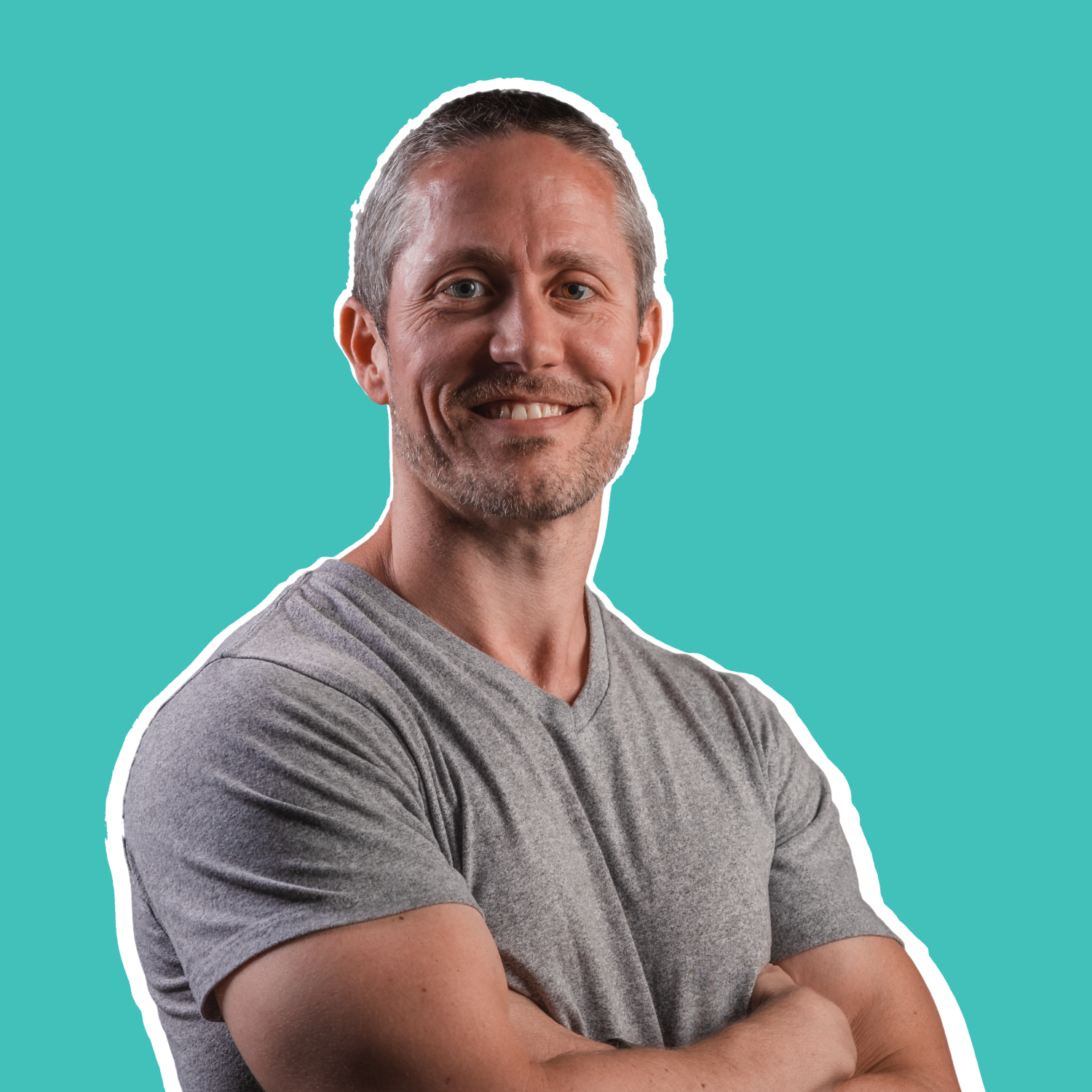
I'm Philip Pape, a certified nutrition coach and the host of Wits & Weights. My background is in software engineering and evidence-based fitness, which shapes how I approach behavior change for building muscle and losing fat. I treat the body like a system with measurable inputs, feedback loops, and constraints you can identify and fix... something I call "Physique Engineering."
Wits & Weights is a strength and nutrition podcast where in every episode I put a popular piece of fitness advice under the microscope, find the hidden reason it doesn't work, and give you the deceptively simple fix that does. We are now at over 500 episodes and more than a million downloads, so I'm proud to reach listeners across the word, most of whom are over 40, many of them women navigating perimenopause and menopause (one of the most challenging due to hormonal changes and the fitness industry's diet culture and body image pressures).
Our listeners have been going to the gym, maybe counting calories, and doing "all the right things" but still not seeing the body composition changes they expected. They are busy, life is stressful, and they just want more energy, strength, and longevity. They're skeptical of the fitness industry, tired of conflicting advice, and looking for someone who'll cut through the noise with evidence and specificity rather than hype. They want to build muscle, lose fat, and stop overcomplicating it.
► Why & how did you start this podcast?
I started Wits & Weights in 2021 because I kept having the same conversation. Friends, coworkers, and people at the gym would ask me about nutrition or training, and I'd discover they (like me for years) were following popular advice like cutting carbs, doing more cardio, going to group classes (like bootcamps and CrossFit), trying extreme approaches like fasting or keto, and still not getting the result they wanted. I had personally gone through a transformation after switching from years of CrossFit and low-carb dieting to lifting heavy for strength, tracking my nutrition, using a more flexible approach to food, and doing LESS cardio. I was able to build 10 pounds of muscle and lose about 30 pounds of fat, and that inspired me to share what I learned with the world.
I'd been consuming podcasts for years across business, news, tech, comedy, and fitness, and I noticed a gap. Most fitness podcasts either repeated conventional but misguided advice, were too technical or advanced, or had too much banter. I wanted something in between: rigorous but practical, evidence-based but human (my nerdy, quirky, dad jokes), and built for those smart enough to handle the science but don't have time to read research papers.
I was also in Toastmasters, a non-profit public speaking organization, and they have a "Create a Podcast" speaking project. To fulfill that, I launched in a weekend using minimal equipment, in my closet with some blankets and a TV tray. I released every other week, then weekly, then added in interviews, then multiple episodes a week.
The show has grown to rank in the top nutrition podcasts on Apple and sits in the top 1% globally on Listen Notes with over 500 episodes and 1 million downloads. But the metric I care most about is when a listener emails me and says a specific episode changed their life. Stories about listeners improving their health, losing weight, getting strong, reversing prediabetes, being able to run around with grandkids, and feeling confident for the first time in years keep me going!
► How'd you find the time and funding to do this podcast?
I have a full-time career in engineering and run a coaching business, so time is the real constraint. I treat podcast production the same way I treat training: find the minimum effective dose and eliminate everything else!
I release 2 episodes per week (it was 3 for a while until recently), with a 3-to-1 solo-to-interview ratio. Solo episodes take me about 2 hours from outline to final edit. Guest episodes take longer because of guest research, episode length, and the marketing/release flow. I batch my work, use templates and checklists, use macros in my audio software, get power-assists from AI, and pay a production team specifically for the guest interview episodes (those also have video that goes on YouTube plus clips for social media). After years of speaking and learning to avoid filler words, I do very minimal editing of my solo episodes to save time.
For funding, I kept it lean from the start. I use Buzzsprout for hosting, record on a decent mic (Shure MV7+) in my home office, and handle most of the production workflow myself with help from a team for interview episodes. This year I started accepting sponsors to cover some operating costs, and I promote my business offerings including nutrition/fitness coaching programs (Physique University and Eat More Lift Heavy) and my AI-powered adaptive coaching app (Fitness Lab).
My advice to anyone thinking about starting: don't let budget stop you! A $50 mic, free hosting tier, and free recording software like Audacity or even Zoom are enough to get your first 50 episodes out (that's a full year). You can optimize later. The most expensive thing is your time, so figure out a sustainable production rhythm before worrying about gear or marketing spend.
► What do you gain from podcasting?
Yes, I accept sponsorships. This year I started working with sponsors like Cozy Earth (bedding/sleepwear), Calocurb (appetite management), and Trifecta (meal delivery). I also have affiliations with MacroFactor, which is the nutrition tracking app I personally use and recommend to clients, Boostcamp (workout app), and other podcasters I've collaborated with. I got my first sponsorship by building relationships, not pitching cold. Companies in the evidence-based fitness space found me through the podcast or mutual connections because my audience aligns with their products. By that point I had 400+ episodes and was averaging over 2,000 downloads per episode. Most sponsorships are custom packages (host-read ads, newsletter mentions, sponsored interviews, etc.) so my revenue is about $60-70 CPM.
But sponsorship revenue is a small piece of the business. The biggest thing podcasting gives me is trust. Listeners get to know me, my personality, and how I can solve their problems. I offer tons of free resources (guides, Facebook community, newsletter articles, etc.) to complement this. When someone joins my coaching programs (Physique University or Eat More Lift Heavy) or downloads my Fitness Lab app, they've often listened to dozens of episodes first. They show up already understanding my philosophy, already bought into the approach, and ready to learn, take action, and transform. I know this based on listener and post-purchase surveys. That changes the coaching relationship completely.
Beyond business, podcasting has connected me with researchers, coaches, and practitioners I never would have met otherwise. I've had conversations with people like Greg Nuckols, Eric Helms, Holly Baxter, and Bill Campbell that made me a better coach. And it forces me to keep learning. When you have to explain something clearly to thousands of listeners twice a week, you can't fake your understanding. That accountability has sharpened my thinking more than any certification.
► How does your podcasting process look like?
For solo episodes, I start with a topic (often pulled from listener questions, industry trends I'm seeing, or solving client problems), then build an outline with a clear arc: what's the popular advice, what's the hidden flaw, and what's the fix. I script my solos fairly tightly, not word-for-word, but structured enough that I'm not rambling. I record in my home office using a Shure MV7+ microphone into Audacity, then do minimal editing since years of Toastmasters trained me to avoid filler words and keep things tight.
For guest episodes, the process is more involved. I research their work, identify the specific premise I want to challenge or explore, and build a question sequence designed to guide the conversation toward a clear payoff for the listener. I'm very selective about guests. I say no to most pitches. The test is whether this person will teach my audience something I couldn't deliver solo, in a way that fits the show's "popular advice, hidden flaw, simple fix" framework. I find guests through my network, mutual connections, and occasionally through cold outreach when I discover someone doing interesting work. My advice is to always ask (no matter how "big" the guest is), and you'll be surprised how many big names love to go on podcasts and share their expertise with new audiences!
Interviews are recorded using Restream (video and audio), and my production team handles editing, YouTube upload, and social media clips for those episodes. I interview remotely, as my guests are located all over the world.
For tools: Buzzsprout for hosting, Audacity for solo recording and editing, Restream for interviews, Canva for graphic design, and AI (I prefer Claude) as a power-assist for episode outlines, show notes, and content strategy. I also work with Next Level University for the interview episodes and PodLaunch for podcast SEO optimization.
► How do you market your show?
Most listeners find me through Apple Podcasts and Spotify search, which is why I invest heavily in podcast SEO. I am always optimizing episode titles, descriptions, and keywords so the show ranks for terms like "strength training over 40," "body recomp," "build muscle," and "lose fat." Organic search within podcast apps is my biggest discovery channel.
Beyond that, I do a lot of podcast guests. I appear on other shows in fitness, health, wellness, and entrepreneurship, and those cross-promotions introduce me to new audiences who are already podcast listeners. I also do episode swaps where I replay my appearance on another host's show as a bonus episode on my feed, and vice versa. My guest intake form has checkboxes for collaboration opportunities like live Q&As in my private community and newsletter swaps.
Email is another key channel. I nurture subscribers with extra content, remind them of new episodes, and those subscribers often convert into regular listeners. Instagram is where I post reels and clips from episodes, though it's more of a relationship-building tool than a primary discovery channel. I also have a growing YouTube channel with full video episodes.
While consistency is mandatory, it's not enough without a very focused show concept, and that's been one of my best marketing strategies. I worked with Jeremy Enns of Podcast Marketing Academy a few years ago on this, and ever since I've refined the show's promise, format, length, and calls to action to give my listener's the maximum payoff in minimal time. Publishing multiple episodes per week for over 3 years builds a catalog that compounds too. Every episode is a permanent piece of searchable, evergreen content that can bring in new listeners months or years later. There's no single viral moment that built this show. It's been steady, compounding growth from showing up and delivering value every week.
► What advice would you share with aspiring (new) podcasters?
The biggest thing I didn't understand early on is that your podcast is a relationship, not just "pushing" out content. I was obsessed with downloads and rankings early on (as many podcasters are!). Now I think about whether the person listening feels like I'm talking to them specifically, whether they engage, whether they take action. That shift changed everything, from how I write episodes to how I say things.
A few specific lessons:
- Publish before you're ready! My early episodes were recorded in a closet with blankets on the walls and a TV tray for a desk. They were rough! But they taught me things I never would have learned by reading about podcasting. Refine by doing.
- Pick a niche and plant your flag. The more specific your audience, the easier everything else becomes: episode ideas, marketing, sponsorships, community building. Have a worldview, stand by your beliefs, and call out the "boogeymen" to defend your ideas. This will attract more ardent followers.
- Solo episodes are underrated. Most new podcasters default to interviews because it feels easier or what you're "supposed" to do. But solo episodes build the deepest trust with your audience, they retain listeners better, and they establish you as the authority rather than just a conduit for other people's expertise.
- Invest in learning to speak well. Toastmasters or any structured speaking practice will do more for your podcast quality than any microphone. Eliminating filler words, learning to pause, and developing a natural cadence saves you hours of editing and makes your content more listenable.
For resources, follow shows in your category and learn something new every day (from a podcast, book, video, or conversation). Pay attention to how shows you love open episodes, structure questions, and transition between segments. Be a "student" of the podcast industry (marketing, tech, industry trends) and YOUR industry. Reverse-engineer what works but do it your own way!
► Where can we learn more about you & your podcasts?
Website:
https://witsandweights.com
Free Downloads:
14-Day Rapid Start Fat Loss: https://www.witsandweights.com/fatloss
Nutrition 101 for Body Composition (Fat Loss Macros): https://witsandweights.com/macros
Muscle-Building Nutrition Blueprint: https://witsandweights.com/muscle
Podcast:
Listen Notes (https://www.listennotes.com/podcasts/wits-weights-evidence-based-fitness-G_mhDFi6Lsc)
Search "Wits & Weights" on Apple Podcasts, Spotify, or any podcast app
Social:
YouTube: https://youtube.com/@witsandweights
Instagram: https://instagram.com/witsandweights
My paid offerings if you're looking for direct, personalized help to build muscle and lose fat over 40:
Physique University (group nutrition/fitness coaching): https://physique.witsandweights.com
Fitness Lab (#1 adaptive coaching app that learns from you and your data):
https://witsandweights.com/app