

► Tell us about you and your podcast
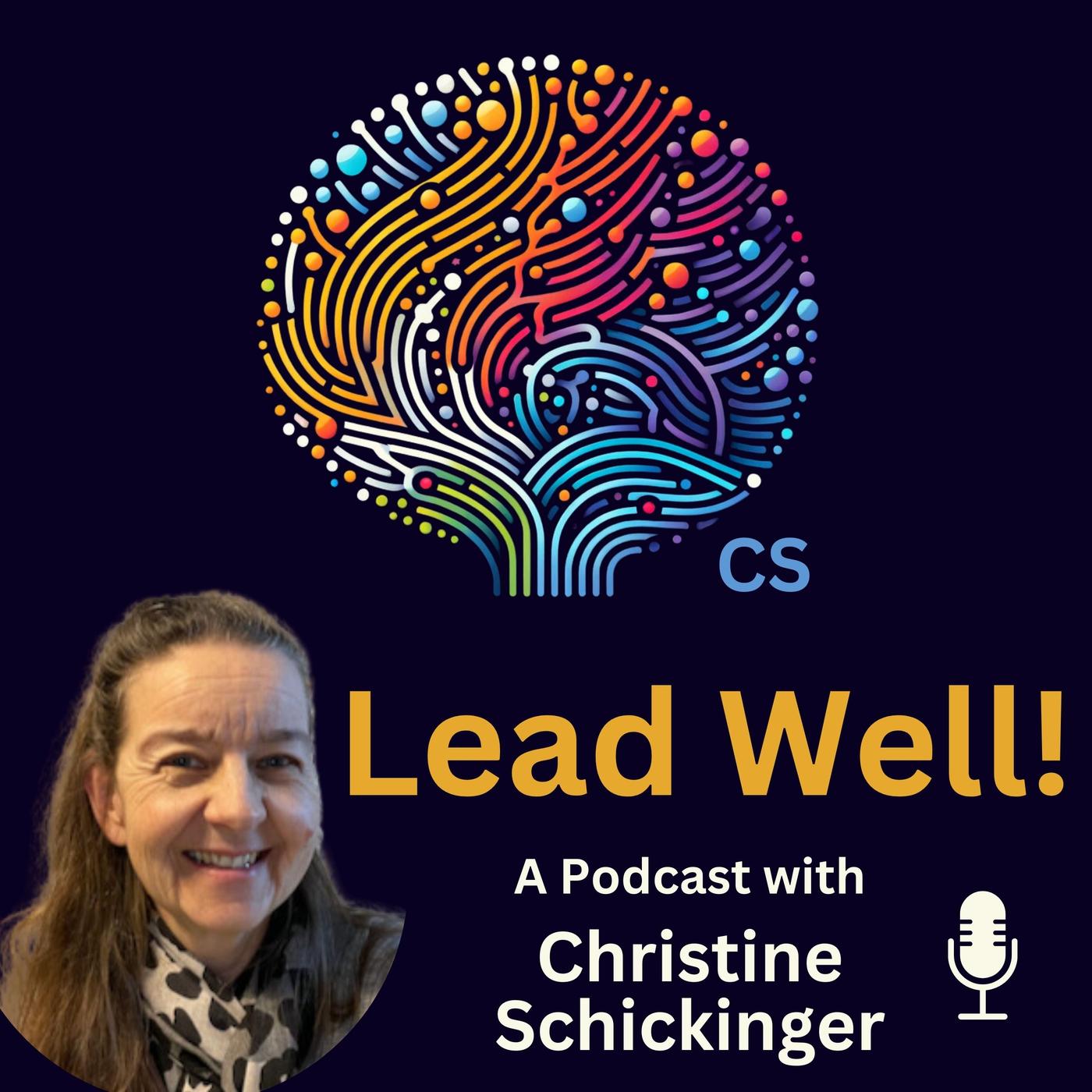
I’m Christine Schickinger, a leadership and mental fitness coach working at the intersection of neuroscience, psychology, and somatic intelligence. I help leaders and high-performing professionals navigate overload, build resilience, and lead with clarity.
My podcast Lead Well! explores healthy, human-centric leadership. I combine research, practical tools, and conversations with experts in mental health, behavior change, culture, and personal development.
Listeners include managers, executives, coaches, and professionals who want to lead without burning out. Many come from corporate roles where expectations are high and time is scarce, so the show gives them science-based insights they can apply immediately.
► Why & how did you start this podcast?
I started Lead Well! because I saw an urgent need. In my coaching work, leaders were overwhelmed, emotionally exhausted, and often undertrained for the human side of leadership. Good people were burning out.
Podcasting felt like the right medium. I’ve always loved teaching, speaking, and translating complexity into clarity. And yes, I’m a heavy podcast consumer myself, so creating my own felt natural.
The initial goal was simple: bring evidence-based leadership and mental-health literacy to a wider audience in a relatable way.
I launched the show in 2024. Once I committed, my first episode went live within a few weeks.
► How'd you find the time and funding to do this podcast?
I run my own coaching business, so podcasting is part of my work, not an add-on. I like to record my sessions in a timely manner and keep my workflow lean with Zoom, Riverside, Descript, and simple studio equipment.
I release weekly episodes and my goal is to keep them rather short, so that they can be easily consumed in one go. A solo episode takes about 1-2 hours to produce. Interviews take a bit longer because I prepare deeply for my guests.
I self-fund the entire podcast: hosting, recording tools, editing, marketing. It’s intentional. Staying independent lets me maintain the tone, integrity, and depth that listeners appreciate.
► What do you gain from podcasting?
I have not been working with sponsors so far. The podcast strengthens my credibility, brings in coaching clients, and deepens relationships with thought leaders I interview.
The biggest gain is the learning. Every conversation sharpens my thinking and improves the tools I use with clients.
It also fosters real connection: many listeners write to me saying an episode helped them make an important decision, set boundaries, or rethink their leadership style.
► How does your podcasting process look like?
Tools: Zoom or Riverside for recording, Descript for editing, Audible for audio and iMovie for video assembly, and Canva for visuals.
Guests: I source guests from my professional network, previous collaborations, conferences, and authors whose work aligns with neuroscience, leadership, or well-being. I also work with two agencies who suggest guests to me.
Preparation: I read the guest’s work, map the conversation as a clear arc, prepare personal and research-based questions, and always tie the topic back to practical leadership relevance.
Interviews are usually remote. In-person episodes happen rarely, when the guest is local or visiting.
► How do you market your show?
Most listeners find the podcast through YouTube, Apple Podcasts, Spotify, and LinkedIn.
LinkedIn is by far the strongest acquisition channel because many of my listeners are leaders or experts active on the platform.
For each episode, I publish:
• a newsletter
• a LinkedIn post and newsletter
• a short clip or quote
• a YouTube version of the episode
• a website blog entry
Consistency, strong positioning, and the quality of the guests do most of the marketing.
► What advice would you share with aspiring (new) podcasters?
• Know why your podcast exists. If the purpose is vague, the show will be vague.
• Don’t copy bigger podcasts. Build something that reflects your voice, not a formula.
• Prepare well. Deep preparation leads to deeper conversations.
• Don’t obsess over downloads at the start. Obsess over quality and consistency.
• Learn to say no. Not every potential guest fits your mission.
Useful resources: Descript tutorials, Podcast Meisterschule, collaboration with lovely podcasters who turned into friends, and any podcast you personally admire for its craft.
► Where can we learn more about you & your podcasts?
Website: https://www.christine-schickinger.com
E-Mail: christine@christine-schickinger.com
Podcast: Lead Well! on all major platforms
YouTube: Lead Well! with Christine Schickinger: https://www.youtube.com/playlist?list=PLhUE3cJ5R-r-ICsH-VQERu02zdJpEg2pA
LinkedIn: https://www.linkedin.com/in/christine-schickinger