

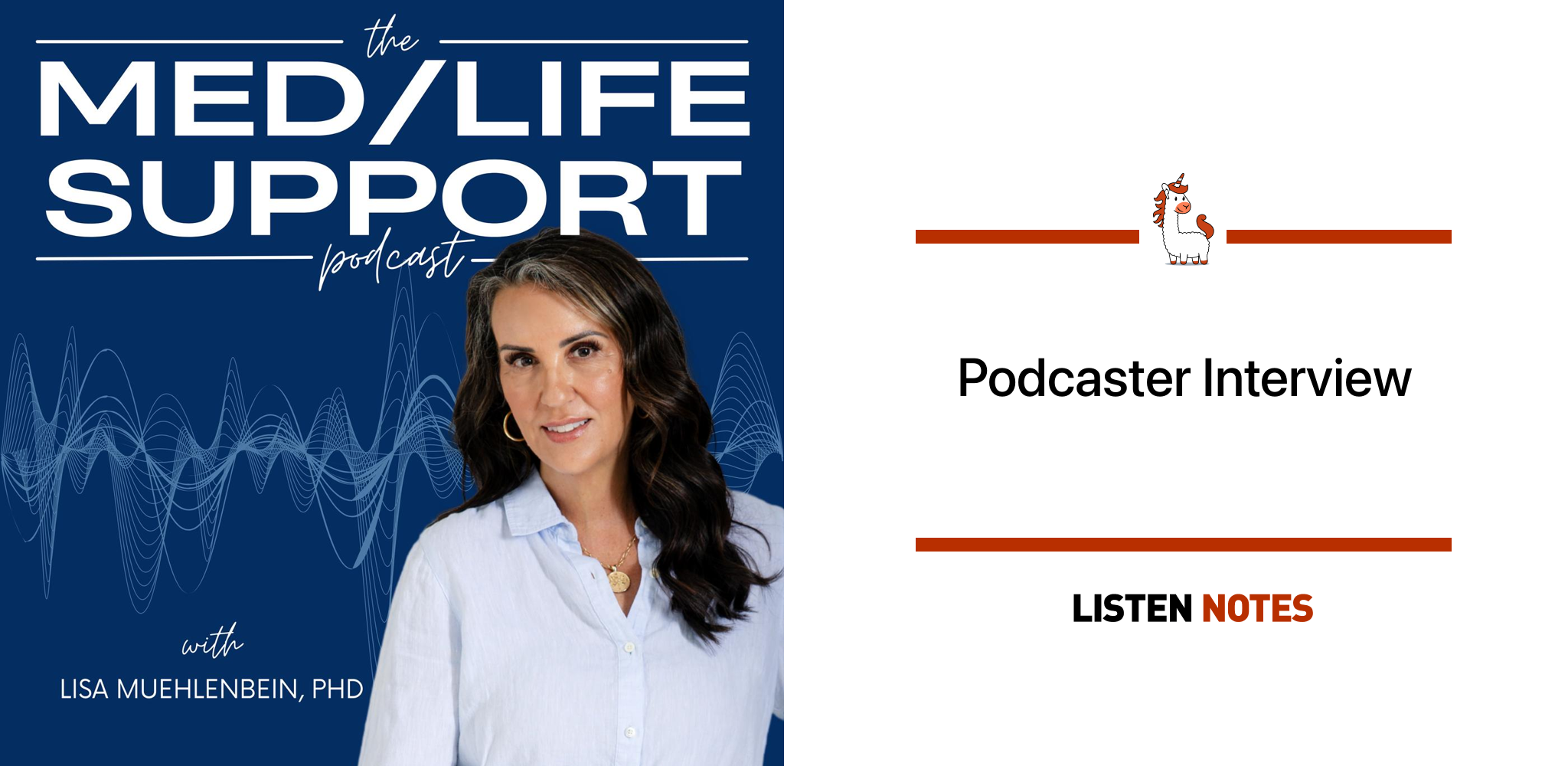
► Tell us about you and your podcast
I’m Dr. Lisa Muehlenbein, PhD—a health psychologist, Nationally Board-Certified Health & Wellness Coach (NBC-HWC), and a physician spouse for nearly 3 decades. My work focuses on physician burnout and its ripple effects on relationships, families, and overall well-being in medical life. With over 30 years in the health and wellness field and nearly three decades living inside the realities of medicine, I bring both professional expertise and lived experience to this conversation.
I’ve partnered with organizations such as the American Medical Association Alliance, the Florida Medical Association Alliance, and the Collier County Medical Society and Alliance, and I’ve presented my research at the American Conference on Physician Health. I’m also the author of several resources on physician burnout, including Physician Burnout and the Marital Relationship: Spouse Perspective and Wellness Beyond the White Coat.
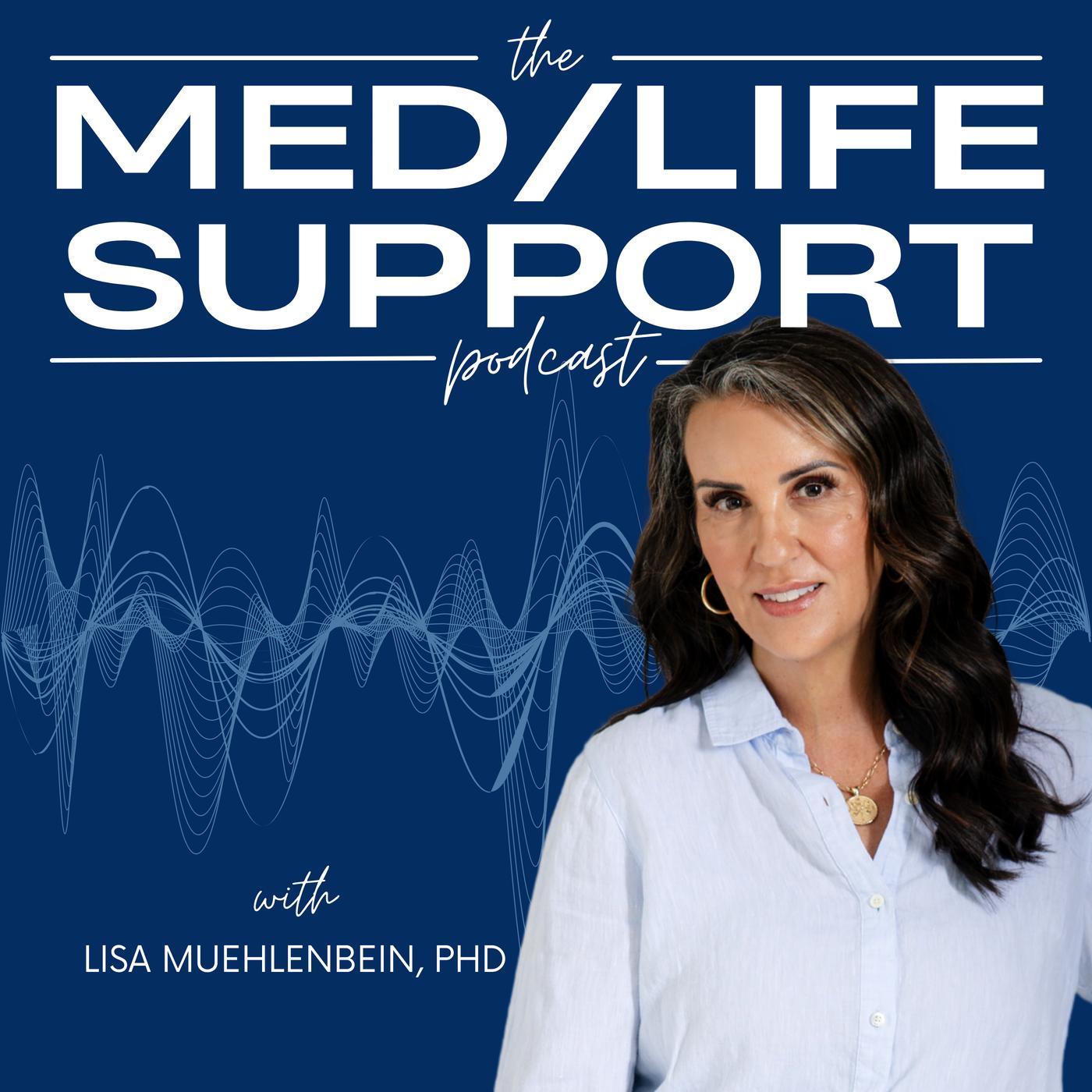
The MedLife Support Podcast was created to fill a gap I saw again and again—support that speaks not only to physicians, but also to the partners and families who quietly carry the weight of medicine alongside them. This is a story-driven, real-talk podcast about life in medicine, relationships, identity, and wellness beyond the white coat. We go deeper than surface-level burnout conversations, exploring what sustainable support, connection, and balance actually look like at home and in real life.
My listeners are physicians and their partners who are tired of running on empty and are looking for thoughtful insight, practical strategies, and a sense of being understood. Whether they’re navigating long hours, emotional fatigue, relationship strain, or the challenge of not losing themselves in the process, this podcast offers perspective, validation, and tools that last.
► Why & how did you start this podcast?
I started The MedLife Support Podcast because I saw a gap that wasn’t being addressed—both professionally and personally. As a health psychologist and nationally board-certified health & wellness coach, my work has long focused on stress, identity, and well-being. But as a physician spouse for nearly three decades, I’ve also lived the quieter, often invisible side of medicine: the missed milestones, the emotional labor, the loneliness, and the slow erosion of connection that can happen when burnout enters a household.
Through my doctoral research on physician burnout from the spouse perspective, I heard the same stories again and again. Partners felt they had to stay strong, minimize their own needs, and quietly adapt—often believing they were the only ones struggling. That research made one thing clear: burnout doesn’t stay at work. It crosses over into relationships, families, and daily life. Yet those voices were largely missing from the conversation.
Podcasting felt like the most humane way to bring this work to life. I’ve been an avid podcast listener since 2015, and I’ve always appreciated the intimacy of the medium—the feeling that someone is speaking directly to you during a commute, a walk, or a quiet moment when you finally have space to breathe. I wanted to create that same sense of connection and validation for physician families.
I began recording interviews with guests in October 2025 so I could build a sustainable content queue and honor the depth of these conversations without rushing them. The trailer for the show was released on January 6, 2026, followed by a full launch with 12 episodes on January 13, 2026. This intentional runway allowed me to launch with substance, consistency, and care—values that mirror the kind of support I want this podcast to represent.
Ultimately, this podcast exists to normalize the lived experiences of physicians and their partners, to offer language for what’s often felt but unspoken, and to provide research-informed, relationship-centered support that actually lasts.
► How'd you find the time and funding to do this podcast?
This podcast is a direct extension of my professional work and calling. After completing my PhD focused on physician burnout from the spouse and family perspective, I made a clear decision to dedicate my business to serving physician families.
Podcasting is now one of the primary ways I do that—through education, storytelling, and connection—so recording, producing, and marketing the show is built into my work week rather than something I’m trying to squeeze in on the side.
Because the podcast aligns so closely with my mission and business model, finding the time came from prioritization rather than expansion. I approached the show intentionally, beginning guest interviews in October 2025 to build a sustainable content queue and ensure I could consistently deliver high-quality, thoughtful episodes without burnout—something I’m very mindful of given the subject matter.
I’ve kept my production streamlined and self-funded. My current expenses include:
- $15/month for podcast hosting on Libsyn
- $120/year for Riverside as my recording platform
- $120/year for Canva, which I use to create simple promotional graphics
- $100/yr for Calendly scheduling
- $120/yr for Zoom
- $249/mo for Kajabi (website/blog host)
I do not have external funding or sponsorships at this stage. Yes. I fully self-fund the podcast. Because it’s integrated into my business and long-term vision for serving physician families, I view it as an investment in meaningful, sustainable impact rather than a standalone project.
► What do you gain from podcasting?
What I gain most from podcasting is knowing that I’m providing meaningful, accessible support to a demographic that is often overlooked—physician families. I know from both my research and lived experience that physicians’ partners and families are deeply impacted by burnout, yet they’re rarely included in the broader conversation. Podcasting allows me to meet people where they are and offer validation, language, and evidence-informed perspective in a way that feels human and approachable.
Beyond that, the podcast allows me to shine a consistent spotlight on why supporting physician families matters—not just for the family system, but for physicians themselves, healthcare organizations, and ultimately patient care. When physician families are supported, physicians are better supported, which contributes to healthier workplace cultures and better patient experiences and outcomes.
On a personal level, podcasting has allowed me to connect with new people, learn from guests and listeners, and help connect others with resources that can genuinely improve their lives. It has become a powerful extension of my work and values.
I do not currently have any sponsorships or run ads, and the podcast is not generating revenue at this time; however, I am open to sponsorships and ads.
I don't have sponsorships yet. The podcast just launched four weeks ago, and my current focus is on serving my audience well, building trust, and establishing a strong foundation before exploring monetization. As a result, I don’t yet have sponsorships or download benchmarks tied to sponsorship acquisition, but I am open to sponsorship opportunities.
The podcast is still in its early stages, having launched just four weeks ago, so download numbers are still developing as the show grows organically.
► How does your podcasting process look like?
My podcasting process is intentional and relationship-driven. I typically find guests through personal introductions from trusted connections or through direct outreach via social media or LinkedIn. When a potential guest expresses interest, we often begin with a brief Zoom call to explore alignment and ensure the conversation will serve physician families well.
Once we confirm a good fit, I send a scheduling link through Calendly. After the guest books, I schedule the recording session in Riverside and send a calendar invite. About a week before recording, I share a customized list of questions based on our initial conversation, the guest’s website, bio, and—when applicable—their own podcast or prior work. This allows for conversations that are both prepared and natural.
All interviews are recorded online using Riverside. After recording, I edit the episode myself within Riverside to maintain the tone and integrity of the conversation. I then create social media graphics and promotional assets in Canva, upload the episode to Libsyn for hosting, and write a companion blog post on my website using Kajabi.
When an episode goes live, I send the guest the episode link and tag them in social media posts. I actively promote each episode during its release window to extend reach and encourage ongoing engagement.
Tools I use:
I use Zoom for connection calls, Calendly for scheduling, Riverside for recording and editing, Libsyn for hosting, Canva for graphics and social media assets, and Kajabi for blog posts on my website.
Primarily through personal introductions, as well as direct outreach via social media and LinkedIn.
All interviews are conducted online through the Riverside platform.
► How do you market your show?
I market The MedLife Support Podcast through a combination of podcast platforms and organic promotion. The show is distributed on Apple Podcasts (iTunes), Spotify, and Google Podcasts, making it easily accessible across major listening platforms. I also actively promote each episode on social media, sharing episode highlights, key themes, and direct listening links to reach physician families where they already spend time online.
Most listeners currently find the show through social media and word of mouth. Personal sharing—both from listeners and podcast guests—has played an important role in helping the podcast reach new audiences, especially within the medical and healthcare community.
At this stage, I do not have a detailed breakdown of listener acquisition sources. As a newer podcast, my focus has been on consistent content creation, meaningful engagement, and building trust with my audience as the show grows organically.
For marketing, my primary method is social media (Facebook, Instagram, and LinkedIn) as well as word of mouth. I have found LinkedIn to be the best for meeting people who make great guests, and Instagram the best for reaching my audience.
► What advice would you share with aspiring (new) podcasters?
One of the biggest lessons I learned is just how much time goes into producing a single episode from start to finish. Between preparation, recording, editing, writing, and promotion, the process is far more involved than it appears from the outside.
Knowing this upfront helps set realistic expectations and prevents early burnout.
My strongest piece of advice is to build sustainability into your process as early as possible. If and when you’re able, hiring a podcast editor is one of the best investments you can make. I’m not there yet, but it’s the first role I plan to outsource so I can focus more fully on content, conversations, and serving my audience.
I’d also encourage new podcasters to prioritize consistency over perfection and to give themselves more lead time than they think they’ll need. Creating a content queue before launch made a meaningful difference for me.
In terms of resources, Riverside has been especially helpful. Their tutorials and educational videos have been a valuable guide in learning how to record, edit, and produce quality podcast content efficiently.
► Where can we learn more about you & your podcasts?
You can learn more about The MedLife Support Podcast and my work by visiting my website at https://www.themedlifematrix.com, where I share podcast episodes, blog posts, and resources focused on supporting physician families and addressing burnout beyond the white coat.
The podcast is available on all major listening platforms, including Apple Podcasts, Spotify, and Google Podcasts.
Apple: https://podcasts.apple.com/us/podcast/the-medlife-support-podcast/id1867028871?i=1000744036887
You can also find me on social media, where I share episode updates, insights, and ongoing conversations related to life in medicine, relationships, and wellness.
Instagram: @themedlifematrix and @themedlifesupportpodcast
LinkedIn: https://www.linkedin.com/in/lisa-muehlenbein-phd-3088b73a/
Facebook: https://www.facebook.com/themedlifematrix