

► Tell us about you and your podcast
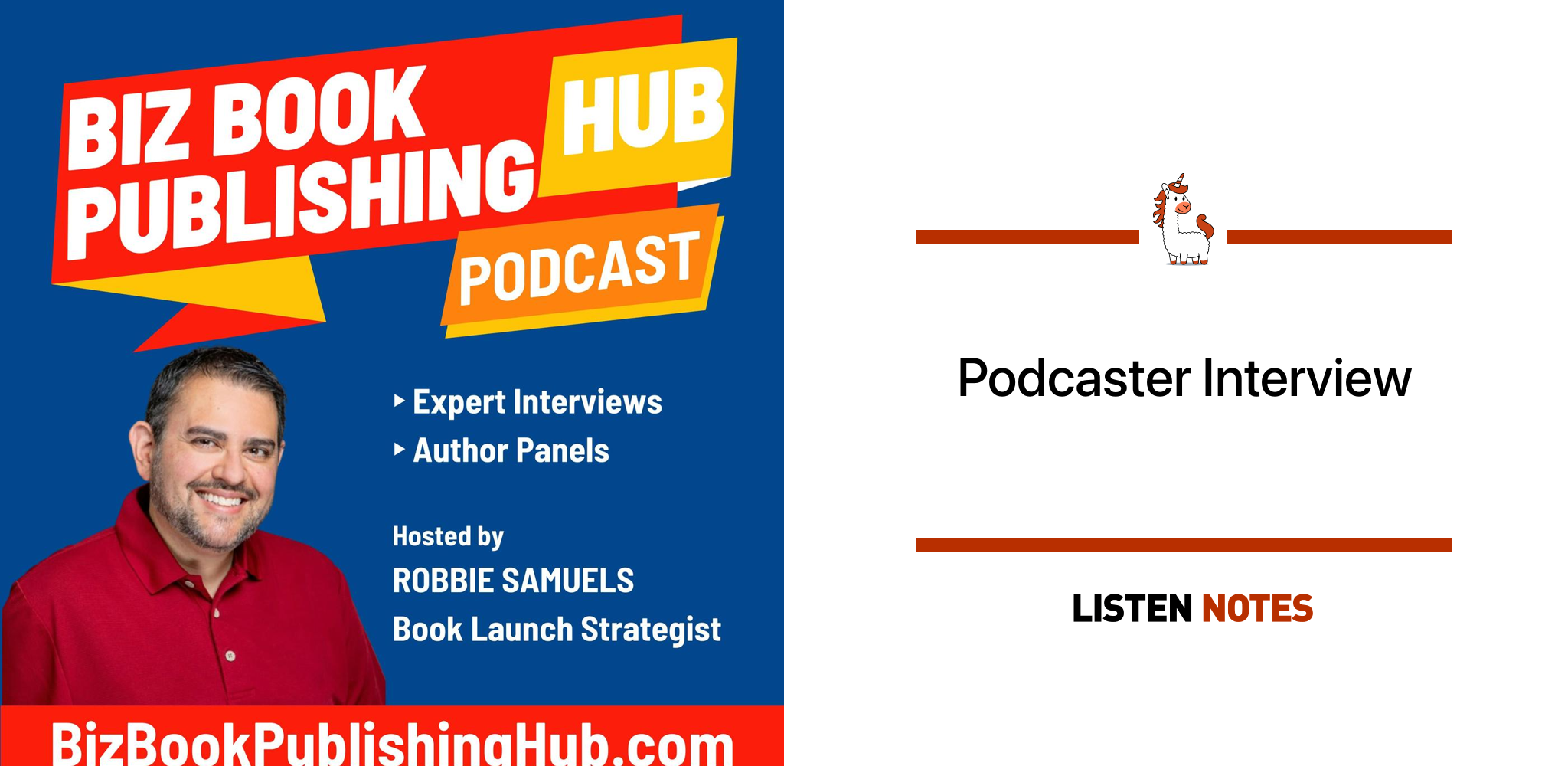
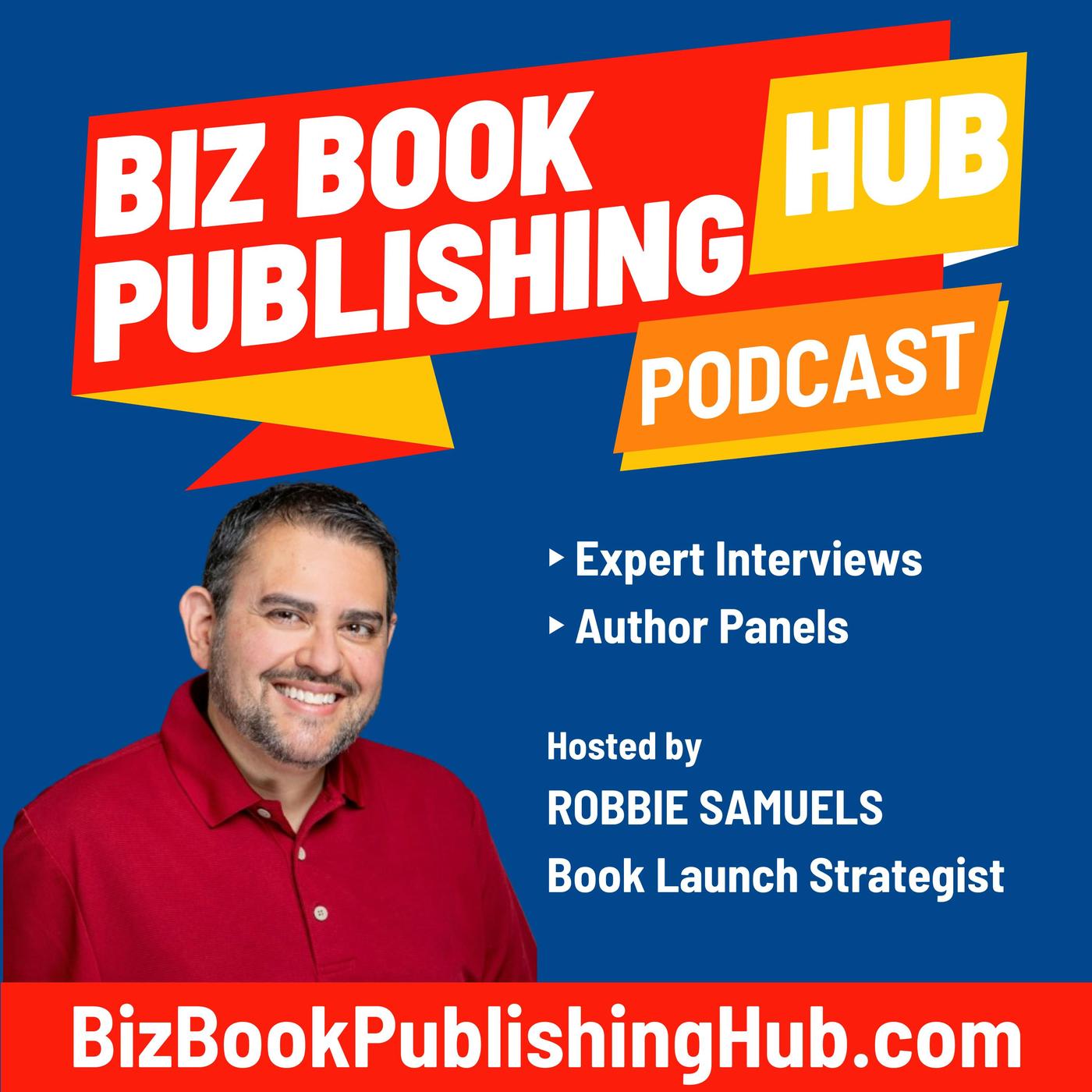
I'm Robbie Samuels, an award-winning author of four books, book launch strategist, business development coach, and host of the Biz Book Pub Hub podcast.
Biz Book Pub Hub is for entrepreneurial authors who want their books to do more than sell copies. We explore the author journey and, especially, how authors use their books to grow their businesses, build credibility, attract clients, and open doors to new opportunities.
I've been podcasting since 2016 and have published more than 500 episodes. My current show is ranked in the top 2% of podcasts globally by Listen Notes.
At least two out of every three episodes are author panels with two or three guests. These authors participated in one of my Kindle Flash Sale campaigns, a coordinated cross-promotion where dozens of authors temporarily lower their Kindle book to 99 cents to generate book sales, visibility, and Amazon reviews. Panelists are matched into panels entirely based on availability, not because they write about the same topic or have similar expertise.
That's actually become one of my favorite parts of hosting the show. I listen for the common threads between authors who may initially seem to have little in common and use follow-up questions to turn their individual experiences into one cohesive conversation.
I also interviewed Biz Book Pub Hub Partners one-on-one. They're experts who support entrepreneurial authors and are part of our curated directory. A handful of times each year, I handpick an author for a one-on-one interview because they've successfully used their book to grow their business.
The podcast gives me a platform to elevate entrepreneurial authors and the experts who support them, while educating listeners on how to create real ROI from a book.
► Why & how did you start this podcast?
My podcasting journey actually started in the fall of 2015 when I began recording interviews for On the Schmooze, which launched in 2016. I didn't rush the launch. In fact, I held off on publishing until I found a podcast editor I wanted to work with; that took a few months, and more than a decade later, we're still working together.
It was a one-on-one interview show about leadership and networking. At the time, I was building a reputation as a networking expert through speaking, my book, a TEDx talk, and writing for Harvard Business Review. The podcast gave me another way to build relationships with interesting entrepreneurs while creating valuable content.
I hosted On the Schmooze for about eight years. It was valuable, but it wasn't directly connected to my business.
Eventually, I realized I wanted my podcast to support the community and business I was building around entrepreneurial authors more intentionally.
I renamed and repositioned the show as Biz Book Pub Hub while keeping the same RSS feed because the audiences overlapped significantly. The entrepreneurs I had been interviewing were also the people I wanted to reach with the new show.
The format changed significantly, though.
I began livestreaming the recordings, something I hadn't done with On the Schmooze, and I introduced author panel discussions.
The panels gave additional visibility to authors participating in my Kindle Flash Sales while sparking useful conversations about what happens before, during, and especially after publishing a book.
I also created one-on-one interviews with Biz Book Pub Hub Partners to highlight experts who support entrepreneurial authors.
The result is a podcast that's much more integrated into the community and business I'm building.
► How'd you find the time and funding to do this podcast?
I stalled the launch of my first podcast until I found a podcast editor I wanted to work with. Editing episodes is not my forte, and I knew doing it myself would make podcasting unsustainable. More than a decade later, we're still working together.
Over time, I've continued looking for ways to streamline the parts of podcasting that don't need to be done by me.
For the first year, I listened to every finished episode before writing the show notes myself. I eventually hired a virtual assistant to listen and create them. Today, AI has made that process even more efficient: I create a transcript and use AI to help turn it into show notes. Identifying the key concepts from an hour-long conversation is no longer a time-consuming task.
I've streamlined guest preparation, too. Guests provide the information I need before they can book. For one-on-one interviews, the intake form is embedded in my scheduling process. Panelists come through a Kindle Flash Sale campaign where I've already collected their information.
Biz Book Pub Hub is generally a weekly show, although I sometimes publish twice a week when I have a larger backlog. I try to keep no more than about two months between recording and publication.
I also batch recordings rather than assuming I need to record every week. I might record one or two episodes a week for a stretch and then none for several weeks.
After recording, I send the hour-long video to a company that creates six video clips. I review the clips, use transcripts and AI to draft social posts, decide which clips to feature, and a team member posts the content.
The lesson I've learned is that hosting is where I add the most value. Outsourcing, batching, systems, and now AI let me spend my time on conversations rather than every production task.
I receive a fee from each author who participates in the Kindle Flash Sale and a monthly fee from each Hub Partner listed in our directory. I consider podcast production costs a part of my business expenses.
► What do you gain from podcasting?
I don't measure my podcast's ROI primarily through sponsorships or downloads. I measure it through relationships, credibility, education, and business opportunities.
Biz Book Pub Hub is intentionally connected to my business.
The author panels feature people who have participated in my Kindle Flash Sale campaigns. My one-on-one expert interviews feature Biz Book Pub Hub Partners from my curated directory of experts supporting entrepreneurial authors. I also handpick a few authors each year from my network who have successfully used their books to grow their businesses.
That creates an interesting ecosystem.
I'm giving authors visibility. I'm giving Hub Partners another platform to demonstrate their expertise. I'm educating entrepreneurial authors about what's possible when they think strategically about their books.
At the same time, I'm demonstrating my expertise as a book launch strategist through the questions I ask, the stories I share, and how I facilitate these conversations.
Sometimes guests even talk about what they've learned from me or their experience working with me. That becomes authentic social proof without me having to turn the podcast into a sales pitch.
I'm particularly interested in connecting with professional speakers, coaches, and consultants who already have a book and want their next launch to accomplish more than their first.
The podcast allows me to build trust with potential clients and referral partners long before we ever have a sales conversation.
My show is part of the Marketing Podcast Network, and they line up sponsors for my episodes. All the shows split the ad revenue, and the network covers the cost of hosting my show on Megaphone.
► How does your podcasting process look like?
One unusual part of Biz Book Pub Hub is that most episodes are panels of two or three authors.
Here's the secret: the panels aren't carefully curated around a topic.
Every panelist comes from one of my Kindle Flash Sale campaigns, and I match them entirely based on availability. They may write about completely different subjects and serve completely different audiences.
My job as moderator is to make the conversation feel intentional.
Guests receive potential questions beforehand, but I don't want scripted answers, and I never ask every question. Instead, I listen for interesting connections and ask follow-ups.
Before we begin, I establish some ground rules because most people will ultimately listen via the RSS feed rather than watch through the StreamYard livestream. I tell panelists I'll call on them individually to reduce cross-talk. If they have something to add, they can give me a hand signal, and I'll bring them in next.
Most importantly, I don't ask every guest to answer every question.
If one person has a relevant story, I'll start there. I might invite another author with a contrasting experience to respond. If the third person doesn't have something new to contribute, we move on to a new question.
I also listen for the common thread. Sometimes I'll realize halfway through that all three authors experienced a similar challenge in completely different ways. I'll name that connection and explore it.
The prepared questions give me structure, but I'm not following a script. I'm directing traffic, listening to stories, and creating the conversation in real time.
► How do you market your show?
I don't have a precise breakdown of which platforms drive podcast discovery; my marketing strategy is less about driving everyone to one podcast link and more about letting each episode become content people can discover across multiple platforms.
Every episode is live streamed through StreamYard, which gives us an audience before the podcast episode is even published.
The livestream goes to YouTube, LinkedIn, and Facebook. I also encourage guests to stream the conversation to their own LinkedIn audience and walk them through how to set that up.
After recording, I have six short video clips created from each episode.
The episode is released on Tuesdays, and if it's a panel, I'll typically share a highlights reel featuring all of the panelists.
I have different content cadences for different platforms.
I'm more selective on LinkedIn, where I generally post no more than four times per week and usually devote at least two of those posts to podcast-related content. Another regular post highlights an appearance I've made as a guest on someone else's podcast.
On Facebook and Instagram, I'm much more willing to share the best clips from an episode. If all six clips are strong, I'll use all six.
That means one hour-long conversation can give me multiple opportunities to highlight my guests, share useful ideas, and keep the episode visible after publication.
The livestream is also permanently available on YouTube, so people who discover the audio podcast can go back and watch the actual panel conversation.
► What advice would you share with aspiring (new) podcasters?
Know why you're asking your opening question.
On my original podcast, On the Schmooze, guests often arrived with polished talking points. I wanted to get them away from those talking points quickly.
So I opened with: "How do you define leadership, and when did you realize you had the skills to lead?"
It was intentionally a two-part question. Their answer immediately gave me something to follow up on.
If someone said they discovered leadership in graduate school or at age 30, I might ask, "What were you like as a kid?"
Suddenly we weren't hearing a rehearsed bio. They were telling me about their childhood, someone who believed in them, or an experience that shaped them. That's where trust develops, and interesting stories emerge.
I'd also recommend thinking in beats rather than a rigid list of questions.
Know the segments or themes you'd ideally like to cover, then watch the clock and listen to your guests. Not every segment deserves equal time in every episode.
That's particularly important with panels.
Don't ask a question and automatically go around the virtual room collecting three answers. Let the conversation determine who should speak next. Invite contrasting experiences. Ask people to build on what someone else said rather than repeat it.
Your prepared questions are there to give you confidence.
The best part of the interview is often what happens when you stop looking at them.
► Where can we learn more about you & your podcasts?
Visit http://www.BizBookPubHub.com to learn more about the Biz Book Pub Hub podcast and find resources for entrepreneurial authors.
You can also find the Biz Book Pub Hub podcast on your favorite podcast platform and watch our live streamed author panels and interviews on YouTube.
Connect with me, Robbie Samuels, on LinkedIn - http://www.linkedin.com/in/robbiesamuels, where I regularly share podcast clips, insights for entrepreneurial authors, and ideas about turning books into business development tools.
Entrepreneurial authors and writers can schedule a complimentary 30-minute Book Launch Brainstorming session at http://www.BookLaunchBrainstorm.com. That's also where you'll find my fourth book, "LAUNCH Your Book! An Entrepreneur's Guide to Reviews That Drive Revenue" and its bonus content.