

ကူးယူချက် 🔗
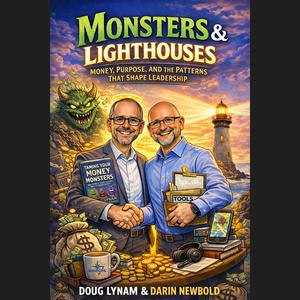
Darin Newbold: All right, well, good day and welcome to Monsters and Lighthouses, Enneagram Money and the Patterns that Shape Decisions. My name is Darren Neubold and I'm so excited to be here with my awesome, wonderful co-host, Doug Linum. Doug, how are you doing today?
DOUGLAS LYNAM: I'm doing great. It's been a crazy week, but the world is blowing up around us and it's tax time, so it's been a bit of a push, but we're here and glad to have a conversation with you.
Darin Newbold: Wow, you really had to bring up taxes? Man, I still haven't got mine done. haven't even, well, that's not part of this episode. So let's move right along. So coming from last episode. We, for those that listened to episode six, we talked about the five step process of of making that transformation to Money Master, from Money Monster to Money Master. And so that was a really happy show. mean, it a happy ending. We kind of brought it all in. And so just tiny spoiler alert here. It's important, listen to all of this one, but remember, listen to episode eight as well, because this one's gonna end, it's gonna end with a cliffhanger. giving you a heads up. with that, we're going to talk the shadow structure and really what you and I'm going to let you tell us what you mean by shadow structure. from my part, this is basically how we as people, as humans, go through kind of this process with that the Enneagram shows us of starting to see the patterns that don't serve us. And then we start living those patterns too much or relying too much on what we think is good for us or that's easy for us and quick to grab onto. And yet all it does is in some many ways dig us deeper and deeper. Now you have a much better way of explaining all that, but that's the simplistic side of the shadow structure. But Doug, kind of walk us through the shadow structure. And again, welcome today.
DOUGLAS LYNAM: Yeah, well, thanks. Yeah. So we've talked about in the last episode, there was, there's these five steps to becoming a money master. And the first step really is contemplation is really going deep into sort of acknowledging the pain from your childhood, from the wounds that created your enneagram type. And so what happens in the shadow structure, acknowledging that shadow structure is that first step that we really need to see. So what your shadow structure is, basically it was the defense mechanisms that you adopted in childhood to survive. biggest stressors in that environment? What were the things that shaped the way that you protected your ego and allowed you to develop and become an independent human being? But the problem is that these coping mechanisms, they're somewhat maladaptive because we're kids, because we're infants even, we do the best we can with it, but the things that got us through our childhood aren't necessarily the best coping mechanisms for adulthood. And the shadow structure is really how, as we talked about in other episodes, there was this psychological umbilical cord that we have from infancy that connects us to our caregivers and lets them do the driving of our ego in the early years of our lives. And that gets cut by one of these three core negative emotions of anger, grief, or fear. And so your shadow is the byproduct of it. It's the thing that your ego does to protect you from the pain of that wound. It's trying to avoid that pain and keep it from becoming a reality. But the problem is it's a bit like a Black Mirror episode because the coping mechanisms that we adopt to protect us from that pain, to prevent it from becoming a reality, inevitably create that very same pain when we overuse that coping mechanism and kind of drive our lives in the ditches. It's this unconscious behavior that goes over and over. And it's sort of the... the source of most of our self-created suffering throughout life, and it's unique for each of our neuro-gamm types.
Darin Newbold: I get that. I get that. Well, you may have to at some point offline explain the Black Mirror episode for those that don't understand, especially for me. But that sounds...
DOUGLAS LYNAM: Well, it's just like a Twilight Zone episode. It's not a specific Black Mirror episode, but it's something like the Twilight Zone where it's ironic, right? You think this thing is gonna make your life better and it actually makes your life worse, and that's the problem.
Darin Newbold: Exactly. And so one of the things that maybe even to really create a simplistic view of this, it's kind of like that tennis player that. plays tennis, plays tons and tons and overuses their right arm if they're right handed. And so all the muscles start to pull from the left side to support the right side. They get all these problems and have these challenges and they need a lot of help to do that. What you're saying is this sacred wound, know, which are the shadow structure. We have this sacred wound and with that we overuse it because it's been protecting us since we were just we lads and lasses. and yet it starts to become a hindrance to how we need to move forward.
DOUGLAS LYNAM: Well, it's like we, well, so what happens is so we have that sacred wound of anger. or fear. And then that creates, as we talked about in other episodes, an unconscious greatest fear. have this basic fear, great fear that scares us the most unconsciously. And then the shadow builds up from that to try to keep that fear from becoming a reality. And then we each adopt what I call your greatest vice. You could call it, know, one of the, you know, in the old school we call, you know, your sin or your passion is often used. But I think grace vices. is just the simplest way of looking at it without putting too much theology on it. You have this coping mechanism. For me as a type three, the greatest vice for a three is always going to be deceit. We are always trying to prevent. So to recap, the sacred wound for a type three is we have this sadness or grief that we've both internalized and externalized. For me,
Load full transcript
what it does is it creates the greatest unconscious fear is that I'm fundamentally worthless. So I feel ashamed about how I perceive myself, but then I'm also feeling ashamed about how I think other people perceive me. And so to prevent that, I'm always putting on a mask of deceit to like, look at me, look at me, look how good, how polished the image is, or putting up this mask that will try to impress the people around me. because I don't want to feel worthless. I want to feel valuable. I want to feel successful. I want to feel like I'm on top of the world all the time. And that's not true, right? That's a kind of deceiving of yourself first and foremost, but then deceiving the people around you about how amazing you really are. And then the problem with that greatest vice, whatever it is for us, I think for you, it's going to be gluttony as a seven. But for the type three, we overuse this vice of deceit And then essentially what it does is it creates the very problem we were trying to avoid. And we can get into the ego addictions in a minute. But that's the basic, the very, very, very basic of it.
Darin Newbold: So kind of recapping what you're saying and helping everyone understand this, the mental umbilical cord or emotional umbilical cord you talk about in the breaking of that, it's broken with the one of three sacred wounds, if you will, the fear, the grief, grief or shame, or the anger. Sorry, I have to make the picture of the enneagram to help me with that. So anger, grief or shame, and then fear. And it's either internalized, externalized, or the combination platter of the internal and external. And those are the pseudo kind of prime numbers, if you will, the nine, three, and six have both the internal and externalized, whatever that sacred wound is.
DOUGLAS LYNAM: Me too.
Darin Newbold: But that then creates this basic fear. we use you as the example, the three, type three is an example, that greatest fear of being worthless and having no value. So that's the greatest fear. then from that, you have this greatest vice or passion that you use to... cover up or protect yourself from this greatest fear.
DOUGLAS LYNAM: Yep.
Darin Newbold: which is deceit in the case of the three. For the sevens, we can walk through this exact same three. For me, as a type seven, the sacred wound is externalized fear. So mine's only externalized, I fear. And I fear being trapped or in pain or in privation, as it's called. I love that word. It's a cool word. You never use it, privation. So being trapped or in pain or in privation. And what that creates is this almost, and I'm going to use my word here, manic at times, a manicness towards gluttony. And gluttony is not the typical definition of, wow, I eat a lot, which I mean, I do eat more than I ought to, but that's another thing. But it's getting into things and you suddenly, hey, it's always want more. And that's like, wow.
DOUGLAS LYNAM: Yeah.
Darin Newbold: I like something, so I want more of it, whatever
that something is. And we can get very fixated on it. Did that, I'm just trying to one, A, help Mike make sure I understand it, Doug, and then maybe explain it with just some other words that help our listeners.
DOUGLAS LYNAM: Yep, that's it. And I wish it was just that simple too. Right. Because the shadow, so the thing is, it's got about all these layers to it, it's like that onion that we were talking about, or fractal as I like to use, but a layer of the onion. So we're just at the surface layer of the onion here, we're just gonna pull back those layers. And so you have this greatest vice, right, which is trying to...
Darin Newbold: Amen. Yeah.
DOUGLAS LYNAM: prevent your greatest fear from becoming a reality. But then the problem is that that greatest vice is sort of negative, right? So the deceit for the three or the gluttony for the seven or the cowardice for type six, whatever that greatest vice is for you, your ego doesn't want to see that as negative. So then we have a primary ego addiction that we each adopt to try to hide that voracious vice from ourselves to sort of make the vice look like a virtue or feel good when we. engage with it. And that's why it's sort of weird. It's like, it feels good when I'm doing it. But actually, you're actually harming yourself or the people around you in some subtle and maybe not so subtle ways. So the primary ego addiction for the type three for me is vanity, which is like, look at me, look at me, look at me, right? I'm always trying to make the world see how, how successful I am or how what my greater achievements are to overcome that fear of being worthless. But then that's where things get that's where it becomes a twidzone episode because or black mirror episode because that from from my case, that vanity inevitably causes me to overextend myself and present myself in a way that isn't exactly honest, right? It's not an accurate portrayal of my abilities. It's the It's the idealized image of myself that I'm putting out there. And then inevitably that idealized image gets shattered because it meets reality and it's not quite true. And then you kind of fall on your face and you look like an idiot. And then that triggers the fear of being worthless for a type, for a type three. So we get stuck in this loop of like, like then, and then, and then there's another step after that, of course, but that's the, the next step.
Darin Newbold: Yeah, yeah, no, no, no, I get that. So talking about type seven and to give that example, so having this greatest vice, this passion of gluttony and feeling like there's always a hole that needs to be filled. And so what is that more to satiate that desire? I go to and hey, this is a great word, honestly, I don't know why it's a problem, you know, in the real, you know, in the grand scheme of things. But my type seven's primary ego addiction is planning. Hey, what could possibly go wrong with that? It's planning. But we get fixated on planning and are so future oriented that we are often not aware of what's happening in the moment or where we're at. And we can bulldoze away ways around other people or other things because we're so fixated on what's that next thing? How can I get to that next thing? Where is that next thing? And in my life, one of the crazy things and I felt it was crazy. I fortunately I've had a coach and other counselors that have confirmed that, yeah, you might be a little bit of a bully at times because I've been called a bully. Well, I consider myself a teddy bear. I'm nicest guy you'll ever meet, however, comma.
DOUGLAS LYNAM: You
Darin Newbold: I have been called a bully. Well, what happens is, is in that planning, I'm so focused on planning and getting, know, filling the hole, getting that hole that as a euphemism from living in Western Kansas, know, Katie bar the door, I'm going to get it. And bulldozing other people and coming across as a bully.
DOUGLAS LYNAM: And then and then what happens when it happens? What's then what happens to you in that bullying behavior? What's the negative reaction you get from the people around you?
Darin Newbold: they're irritated as all get out. then, and then I look at them. And while they're irritated, and they're, you know, they're, you know, as the, as the, know, I would go into my ultimate stress point or that secondary, if that's where you're kind of leading me down the path here, that secondary ego addition, addic, addiction comes on is I become resentful because I'm pissed off. Why are you getting mad at me? I'm just, I'm just doing what I'm trying to do. I'm being forthright. I'm going after it. What? Where's the problem? And so then I create a situation where now I'm irritated at everyone else and they're looking at me like, why are you being such a bulldozer? And I'm looking at myself saying, I'm not a bulldozer, I'm a nice guy. I'm saying nice things, I'm just being very forceful about how I'm going about getting it.
DOUGLAS LYNAM: And then the irony is that you're creating pain for yourself, right? Then you're getting trapped in privation because you're not getting what you want and you're resentful and frustrated because reality isn't bending to your will. And now you're kind of trapped in the very pain you're trying to avoid.
Darin Newbold: Yes, yes. And then it becomes like shampoo, rinse and repeat. And it's breaking those cycles. What I might ask you, and we'll switch gears just a little bit and kind of to the, we were talking about this prior to the show, but a... a client that I was talking to and she happens to be a type six and getting into that, that, you know, worry is the, you know, their, their, their primary ego addiction is, you know, fear itself. They, you know, fear and fear itself. So Doug, talk us through from a type six's perspective that they have both an internal and externalized fear of fear and their basic fear is all about, or their greatest fear is about being without protection and guidance. But walk us through how
that looks from their kind of shadow structure and what that looks like.
DOUGLAS LYNAM: Yeah, well, the internalized fear is like the of fear that they don't have the inner resources to navigate reality. They don't trust themselves. But then also the fear that the external world is a scary place and they don't really trust the people around them that much either. They weren't really able to protect themselves as children from whatever crazy things life threw at them and their caregivers for whatever reason. maybe through no fault of their own, were able to protect them either. they're on this hyper threat detection system is always a hyper alert. But they what they really are craving is they're sort of stuck like they're, they're craving protection and guidance. And yet they're also simultaneously distrustful of the world around them. So they're kind of stuck in this, like, which way do I turn? But when they do find, you know, people they can trust, they're very, very loyal, they, They love the, when they find that guidance and system, they tend to stick with it because it gives them that sense of protection they're looking for. But their greatest vice then of course is just cowardice. It's not that they aren't physically brave. They might jump into a bar fight to help a friend out, but it's that trying to make those big decisions on their own and trusting their inner resources to make good decisions all on their own without those external support systems around them. And so then they get stuck in this Their ego addiction is as you put out is fear itself.
Darin Newbold: But then as they're doing that and the rinse and repeat begins, they now come over and visit you, visit the type three as that secondary ego addiction and where they go in stress is that vanity. And what this client was sharing with me is the challenge in...
DOUGLAS LYNAM: Right.
Darin Newbold: that stress point in a way feels good because it solves that fear, that fear of being without protection and guidance because suddenly in stress, they're going in, hey, they're checking stuff off the checklist. They're awesome. They're kind of like, hey, don't worry about it. I'm going to do it. You don't even worry about it because I'm going to do it. I don't trust you to do it the way I want you to do it anyway. So I'm just going to do it. And yet... What happens after that level? We're continuing into this shadow structure because we've got kind of just quick review. We've got that sacred wound that internal or externalized, whether it's fear, grief, or anger, then our greatest fear, our greatest vice, because this is kind of just slowly building up. Our primary ego addiction comes in to try and save us, and then we overuse it. And then, hey, our secondary. ego addiction comes in and says, hey, maybe I can save the day.
DOUGLAS LYNAM: Right. It's like a it's like it's like you think of your primary ego addiction, just like substances, like someone who's drank too much alcohol, and then they take a bunch of caffeine or something to try to counteract the effects. It's like these are both maladaptive strategies, but they're kind of one's depressant, and one's a stimulant, or vice versa, depending on you know, how you want to look at it. And so you're trying to un your secondary ego addiction is trying to undo the damage that your primary ego addiction is doing. And it can work in the short term, but if you overuse it and get stuck there, then it really can, it's going to cause a lot of pain and a lot of problems. So for me, like as a three, my secondary ego addiction is evasion. I look like a type nine, meaning so I start to elude or evade my problems. I go to that sloth of the nine and sort of wallow in inertia. If my go to response is my primary ego addiction is vanity, which is like, look at me, look at me, look at me, then my secondary ego addiction, my backup response is like, don't look at me, like, don't see me in my shame. I don't want to see myself in my shame. So I'll park myself in front of the TV and binge watch Game of Thrones for days or, you know, you know, sit there with a tub of ice cream. It's just it's this it's this trying to back you are, but it's, it's, it's helpful in some ways, right? It's like, it, it's, if the vanity is what's getting me in trouble, if that self promotion and self importance is the problem. Now I'm kind of going in the opposite direction of that, of, of this narcissistic grandiosity and this of nihilistic self despair, but at least I'm not creating more problems with my vanity. it kind of gets me off the racetrack. If I'm, I'm the race car running around at a million miles an hour, suddenly I'm I'm parked in the pit stop and trying to wait until my engine cools down.
Darin Newbold: Is there a real life example of when that's happened? You're kind of like, wow, Darren, you weren't supposed to ask those kind of questions,
DOUGLAS LYNAM: Yeah, well, it's like all the time, right? Sure. just me like last week, for example, you know, it was just was weekend. was just I was really stressing about some things and it was just really hard to get motivated. You know, it was really hard. So basically, I watched I binge watched Chernobyl with with some ice cream with my brother was exactly what I did. Like, I just can't deal right now. I can't face all the things that are on my to do list instead of being hyperproductive. Always do do do go go go. Now suddenly I'm in park on the couch and can't get out of neutral.
Darin Newbold: Gotcha, And flip side of that, talking the type seven, as I go into that ego fixation of planning and planning and planning and even bulldozing, and then that creates this resentment and all of those things, that resentment and that stress response for me is taking from type one. becoming very black and white, whereas, you know, sevens, typically we live in the all the shades of gray, even more than 50, just for those curious. anyway, but we become very black and white and we
become very judgmental, not only about ourselves, about others. And in fact,
DOUGLAS LYNAM: You
Darin Newbold: This is something maybe just to share with you, Doug, to have a little more insight on Sevens is what's interesting is we then become, or at least I have, take that judgmentalness and that becomes even planning over and over because now I'm making plans of, wow, that person's really bad. And I call it the Four Horsemen of the Apocalypse because they come riding over the hill and man, they pile on like nobody's business. You know what I mean?
DOUGLAS LYNAM: Yeah, yep, I sure do. Yep, absolutely. And then, yeah, it's tricky. It's a hard, when you see these patterns though, but the helpful part is that we all have it, you and me, right? Everybody, even, but being aware of it and seeing when it's happening and be like, this is what's happening and being able to take that pause and take that breath and understand it and. maybe not be so hypercritical of yourself when it happens, but then moving out of it. Okay, now what can I do to shift this? So can I go for a run? Can I do some meditation? Can I go, know, phone a friend or talk to my therapist or take a long hike in the woods? What can I do to sort of when I'm falling into my ego stress response or I'm really overdoing my ego addictions, like how can I, they're gonna happen, but. Can you move to have that pause and take that breath and be able to acknowledge it and then maybe move forward through it with a little bit more grace and dignity?
Darin Newbold: Exactly. And one of the things we want to say here, and you alluded to it early on, the response here of as you're walking through this kind of shadow structure that we all go through and we've all been through, is it's a natural way of protecting ourselves. It's not like this is, we're not telling you, wow, you're bad because you go through this. This is life and this is what we do. Part of the journey for all of us is taking the opportunity to understand and learn this and then recognize what each of them are for. just because my greatest vice is planning doesn't mean that that's a bad thing. In fact, it can be very helpful because it can cause me to think about and focus on some things that I wouldn't normally because otherwise I might leap before I even look. And so that can be very good. And then also even that resentment and the stress that may come from that, It can slow down some of the planning. It can get me out of that. And if, with a little bit of work, we can... we can use a little bit, can, know, a seven can use a little bit of the better things on the one, which gives them more clarity, more focus, and not being so hyper desiring of trying to fill a hole, you know, trying to fill that gluttony. And I know I'm kind of teasing a little bit of the other side of this, so didn't want this whole episode to be all about, you know, wow, this is... This is the dark side of the moon here that we're working with, you know?
DOUGLAS LYNAM: Right. Well, yeah, we are in the dark side. We are talking about the shadow structure and there's the enlightenment structure. We all have a higher side to ourselves, which we're trying to get to. then, you know, and then for a seven, it's like, correct me if I'm wrong, but it's almost like that. What happens is that resentment kicks in and that frustration comes about. But then in a weird way, it's it's sort of forcing you into the present moment. It's taking you out of that future goal. that you're looking for. And now I got to be here. I'm gonna be here and deal with this problem that's in front of me. And I don't this is not where I want to be. But at least I'm in the present moment, even though it's not exactly in a pleasant way.
Darin Newbold: Wow, yes, yes. I probably wouldn't have... It's funny, I don't think of it that way until you said it. And I'm like, oh yeah, definitely. All of sudden, it's dang, now this crap is all right in my face. And yeah.
DOUGLAS LYNAM: So instead of being future oriented all the time, now you're present oriented, right?
Darin Newbold: Exactly. Exactly. Well, we've got ourselves up to that secondary ego addiction addiction. Well, I'm having trouble with saying that word, but you know, from sacred wound, greatest fear, greatest vice, primary ego addiction, secondary ego addiction. Then what happens kind of that? We're now starting to enter what you greatly characterize as the dark night of the soul. That's where I need to bring in my radio voice, the dark night of the soul. Exactly. Where's James Earl Jones to say that? That's what we need.
DOUGLAS LYNAM: Yes. Dark night of the soul. Uh huh. Uh huh. Well, yeah, because what happens is we we overuse when we overuse these ego addictions, right? Then what happens is essentially our, our, we're fortifying our sense of separation from the world from everyone else, and even our sense of connection to the divine, whatever that is for you, that sense that we're sort of being feeling connected and integrated and part of a part of something greater than ourselves. Now, we're the the walls of our ego now get so strong that we feel completely separated from everyone and everything, including our connection to the divine. And then we're that delay drives us into this really dark, dark space is going to be unique for each of us according to our enneagram type. But now it's really where our worst fear is made a reality. So for me, it's that fear of really being worthless is now feeling feels very, very present and unavoidable. And then for the seven, it's that you're really trapped in that pain or privation and see no way out. And now you're just in it and you're really struggling and it's really hard and everything feels difficult. It's like, you you feel kind of abandoned by the world, including including God or whatever word you want to use for the sacred. And then that complete isolation, a complete sense of your sense of separation is so strong. And your emotional
isolation feels so intense and your pain becomes so real. You're facing your worst fear in a very painful way. Now you're trapped. And now what do do? and this is where we gotta figure out how we're gonna move forward, including with our money. we wanna get to the money piece here as well and our finances, but like, ugh, what's the step forward? What's that gonna be for me and for you and for everybody else?
Darin Newbold: Absolutely. Yeah, we've kind of talked over the money side of it, which is okay because this is your journey, whether it's money or otherwise, leadership, I mean, all of it. And it's one of those where it's interesting having lived through that and that ego response and...
DOUGLAS LYNAM: or leadership or family or business. Yeah.
Darin Newbold: being in that as for the seven, how do we characterize that? It's frustration, it's really even a deeper, frustration is almost not even a harsh enough word. I often call it, hey, I'm in the pit of despair because it's like I'm throwing up my hands. It's like, okay, obviously I'm no longer able to do what I need to do. You know, I suck, everybody's pissed at me. I'm pissed at them. The world isn't working. What do I do? And I reached this point, I lived through it. And it was scary. And I'm blessed to have a couple of great people that kinda had an intervention with me to help me through that and basically say, hey, no, Darren, you don't suck. No, you're all right. And... and walk me out of that, and at least put me on the path. And what was interesting is, in that point is for a seven, it's that feeling like the walls are closing in and you are, I mean, you're trapped. There's no options. You sit there and you can plan and you run scenarios and you run scenarios. And it's like, every time the numbers come up blank, I mean, it's like over and over.
DOUGLAS LYNAM: Yep. Yep. That's hard. It's a hard place to be. Yeah. And for me, it's just like I'm in it's like a voice. It's like this is this black hole in my solar plexus of just this pit of despair as part of it. But also that sensitive beam of being a worthless, you know, no good blob, you know, putting your put your expletives in here that you choose, right? And that self talk becomes so negative. And it's so nihilistic. And it's so dark.
Darin Newbold: Mm-hmm.
DOUGLAS LYNAM: and it's so painful to feel that. Like you're really...
Darin Newbold: You use an interesting word that I actually just had the dictionary look up for me. It's called illusion. E-lusion or A-lusion. It's an E-l-u-s-i-o-n. Tell me what that looks like.
DOUGLAS LYNAM: Illusion. Yeah, well, that's the that's the ego stress response for the three. so that so what happens is when we have a primary addiction for the three, right, which we talked about, which is vanity. And then when when we overdose on that, we switch to the our secondary ego addiction is the primary ego addiction for type nine. So which is evasion, we want to evade the problem in front of us, we're trying to get around it somehow and not look at it and not deal with it. But but it doesn't it's I don't become a nine. And this is I think a really key and technically important but challenging point to understand about the enneagram is when we adopt that secondary ego addiction of another type, we don't become that type, because it mixes with our greatest fear. So our greatest fear never goes away. We just get this new combination of your secondary ego addiction, plus your greatest fear. creates your ego stress response. for a type three, it's going to be that that deceit, right, which is our worst vice. And that mixes with evasion of the nine that not wanting to deal with stuff. And that creates what I call illusion. So there's an illusionary nature to it, like we're, we're not playing with reality exactly. We're denying the reality in front of us. And we're evading it at the same time, we just say, I don't want to look at it. like it's a kind of disassociation even. So you're, you're eluding those problems and you're, you're not, we just want to look at yourself and look at the mistakes you've made because so it just, you're in this shame, basically you go into a shame spiral, essentially, the shame gets so intense. And, and that's where you don't want to have to feel. So you're going to elude yourself and elude reality by
Darin Newbold: Mm-hmm.
DOUGLAS LYNAM: substances can be a really big problem. Binge, you know, checking out on the TV is maybe a less problematic but lighter way of doing it. You're going to or, you know, for money, it's like, well, it depends on your, whether you're anxiously attached to money or you're avoidant around money. But basically, for me, is you want to bury your head in the sand, like I become the barrier. I want to I want to just not look at
Darin Newbold: How's it look for money?
DOUGLAS LYNAM: problem, I don't want to do my taxes, I don't want to pay my bills, I don't want to balance my budget. I'm going to elude those problems in some way because they're just too, it just feels too awful to have to confront them. And so, or you know, you can binge on it, you can become the blinger for the three, want to, now, now I'm going to try to try to avoid the shame by, by splurging on all kinds of stuff, all kinds of status symbols. Give me the fancy car, give me the fancy watch, give me the, you know, what are the, what are the toys that are going to make me feel, boost my self-esteem artificially? My, my, my shame spiral is, is going, I'm in that shame spiral, I'm spiraling out. So what can I grab, right, at that will make me look better in front of other people. And that is often through conspicuous consumption.
Darin Newbold: and give yourself that momentary feeling of possible relief when in fact it's, yeah, it's only exacerbating the overall situation.
DOUGLAS LYNAM: Yeah. Exactly.
Darin Newbold: So if you're thinking of the money side and looking at either the gorger, the anxious money monster of the seven, or
the grabber, the avoidant money monster of the seven, how would that look from the money side of things?
DOUGLAS LYNAM: you tell me you're the seven. probably you got, know, from the ends, I'll tell you from theory, but you can tell me from practice.
Darin Newbold: Well... It's one of those, you and I talked offline about this a while back. for me, it's that, for me, it almost comes in as a bit of the jumbled side of anxious and avoidant. Meaning, I want the money, so I'm the grabber. Hey, whatever I can do to create and make money. But then it's like, I've created this wake. behind me of bills and either credit card debt or other crap that is insurmountable. And so it's kind of like a dollar in, a dollar out. And usually it's a dollar in, two dollars out kind of thing and that kind of situation. So that's in a lot of ways, at least for me, how it's manifested at times.
DOUGLAS LYNAM: So yeah, and that's where we get ourselves into all kinds of, we're just making the whole worse, Whatever problems we have, now we're just compounding them.
Darin Newbold: Gotcha. Gotcha. Well, this leads to that dark night of the soul. If you were to kind of describe that and to share with with everyone is as we kind of do get to the end here and kind of close out what we've been talking about. But as we get to talk about that dark night of soul. briefly, what if you give maybe a little summary of what that looks like and maybe just quickly we'll walk through all the numbers if that would work Doug and and We're not going to go into all every detail of the ego response and all of the pieces that's that's part of as we go through episodes bring on guests and and have other people will talk through those and and and also encourage you to reach out to Either both of us or one of us and we're happy to dig into more depth with you
DOUGLAS LYNAM: Yeah.
Darin Newbold: on your particular type. But yeah, Doug, why you walk us through, kind of as an overview of what that Dark Knight of the Soul looks like, starting with a, well, we'll start as typical Enneagram style. We'll start with an eight.
DOUGLAS LYNAM: Yeah, so for an eight, right, they're really gonna be, so if eights are the humvee, right, they're the challenger, they're always going out attacking the world essentially, they go into their ego stress responses, they're kind of rigid withdrawal, they pull into themselves, they up armor and they become so tight inside themselves that they just are trying to, their armor becomes super intense. Instead, they're still, instead of the hum, they become this sort of tank, but the tortoise are going into their shell would be a better metaphor. And they just completely withdraw into themselves and have a hard time connecting that they start to look, you know, a lot more like five is what we would say. And but they're, they're, they're now trapped in a space where they're feel like the world is out to get them and they're feeling very controlled.
Darin Newbold: Mm-hmm.
DOUGLAS
LYNAM: They don't know how to control, they're being controlled by their external circumstances and don't know how to get back into a place of security.
Darin Newbold: Gotcha. Gotcha. How would that look like for the nine?
DOUGLAS LYNAM: Yeah, nine, right? So then they are going to start to look a lot more like a six. So their their ego stress response for the six is a kind of self importance. It's the vanity of the of the of the of the three, it combines with fear. So they're sort of, or the cowardice. So that it's cowardice and vanity. It's like, going to their to do list, like, I'm going to get it all done. I'm going to take it all on. It's all on me. And, and I'm going to solve all these problems. It's a but it's good. It's in the sense that it gets them out of that paralyzed space they can often be in it gets them into action, right, rather than being into, you know, a paralyzed or indecisive looking for other people to help solve the problems for them. But it's a but they but they now really are feel like they've got there really there's no one protecting them there. They're without protection. They don't have guidance. They try to do it all themselves. But they're really from a place of great fear and anxiety. So they're really there's no there's no there's there's no protection. There's no guidance. So it's all on me.
Darin Newbold: Gotcha. think that sounds a little... I'm just going to pause you there. Right. That sounds a bit more like a six though.
DOUGLAS LYNAM: Right. did I get that wrong? I'm sorry. Right.
Darin Newbold: You did the six. I asked about the nine. I was just going around the horn. It's OK.
DOUGLAS LYNAM: Sorry, forgive me. think I think I brain glitch. I said I shifted to the six there for a minute. Sorry. But well, well, but what I meant to say is what they're okay, sorry, maybe we can edit that or just go with it. Sorry, law in that sleepless night. So they're going to security seeking, basically, they're looking like a six. So they want security. They're looking for someone else to solve their problems for them. So they're, they're basically they feel like they're fragmenting.
Darin Newbold: No worries. So we just did the six. We'll skip that on the way around. huh.
DOUGLAS LYNAM: the world is pulling them apart because there's so much tension and there's so many problems and they've, their problems have piled up. they're basically going to go to the six, excuse me, and they're going to sort of look a lot more like a six, but they want security and they're basically trying to find some external way to, someone else to solve their problems for them rather than doing it themselves.
Darin Newbold: Gotcha. it also with that sloth side of the nine is really combines with that fear and security seeking. So moving around to the one, as we look at that one, the one is going to be characterized as sorrow and their primary, their greatest vice is this anger that they carry.
DOUGLAS LYNAM: Right. Yeah.
Darin Newbold: But yet
then they tie into the stress side of four with this awesome melancholy which kind of gets stirred together and they're just in this sorrow. What does that kind of look like, Doug?
DOUGLAS LYNAM: well, they're sort of like this, they feel like the world is fundamentally, you know, broken and they're fundamentally broken. And instead of trying to fix it and perfect it, they were sort of sitting in the imperfection of themselves and the imperfection of the world. And that leads them to this place of deep melancholy and sorrow that they're stuck in. And so their, their dark night of the soul is like that real despair, like Why can't I get my act together? Why can't the people around me get their act together? And they just don't have any hope that there's a way forward.
Darin Newbold: Gotcha. And the two?
DOUGLAS LYNAM: So the two, you know, they're the helper. So they're usually out there going out there and giving. And now they're sort of like angry that nobody is reciprocating that help. They're not getting back the help they wanted, the support they're looking for from the world around them. They feel unloved. They feel unappreciated for all the work that they do and all the gifts that they give. So then they kind of go to let's to look like an ape. They they which is revenge. They tend to lash out now in some
Darin Newbold: Mm-hmm.
DOUGLAS LYNAM: overt or covert way they can send the people around them into a guilt guilt trip the people around them. They might create a crisis to force everyone to sort of take care of them or pay attention to them. It could be a psychosomatic illness like well if you're not going to meet my needs now something to fall apart and you're gonna have to take care of me. But they really are trapped in that sense that they're not loved and no one loves them and they're and they're going to try to get that attention through that kind of make you suffer until you appreciate me.
Darin Newbold: Absolutely. And all the score keeping that they may have been doing all of sudden comes screaming out. So yeah, let's skip the three. We've talked ad nauseum on the three. Let's go straight to the four.
DOUGLAS LYNAM: Yeah, so they get their ego stress response is typically a kind of co dependence where they were their primary ego addiction, right is to have is is that melancholy they sort of sink into envy about the unique place they see everyone else has in the world and they can't see it in themselves. And they really get trapped in the sense of they don't have an identity. And so what they get to do is they they then take on the flattery of the two and combine it with that envy to sort of create a kind of they seek that idealized person or someone else that they can either rescue or will rescue them. They become the white knight or look to be white knighted. And so they think that there's this there's another person who's magically going to solve all of their finally see them finally validate them finally recognize them for their for how amazing they are. but they're still really still trapped in that because they don't feel like they have an identity. They don't feel like they have a place in the world and they're really sort of missing out.
Darin Newbold: Okay. And the last one, since we've already done the, the, the six and the seven are type five, having that, having that greatest vice of avarice. But then for them, that secondary ego addiction, they, they come over and hang out with me, but that's all in that planning side of things. So how does that look avarice and planning indulgence is, as I think you describe it. Yeah.
DOUGLAS LYNAM: Right. Well, basically, yeah, and all kind of, and it can be weird, it can be indulging in their inner dialogue fantasy, go to a dark place. It can be actually go out and partying and some, you know, drugs or substances, or they they finally they just really are stuck in that. The dark night of the soul for them is being trapped and feel like they're really helpless and incompetent. But they've been it's like a black hole in reverse that if they're if their average is always taking in
Darin Newbold: huh.
DOUGLAS LYNAM: suddenly they're kind of letting themselves go, they're letting it all out, but in a maybe Bacchanalian way, in a, we can be all kinds of weird ways, it just depends on your subtype and all these things, but essentially they're gonna fall into a kind of self-indulgence of some sort, to kind of let the pressure valve out. they're, they can do that small ways and big ways every day, but the dark night of the soul is where they really feel that they are.
Darin Newbold: letting it.
DOUGLAS LYNAM: fundamentally incompetent and can't manage life.
Darin Newbold: Gotcha, gotcha. Well, guys, we've gone through the whole shadow structure of all of the numbers. We talked at length about type three and seven, kind of went through our stuff, brought in a few examples of some people and things we've had. If you were to kind of put your bow on this one, Doug, what would you kind of close it out with?
DOUGLAS LYNAM: Well, just I think again, you know, as we're trying to understand that this dark night of the soul, it's inevitable for all of us. Like life is going either our ego addictions are very real and we're going eventually we just overuse them to the point where we get trapped in that very pain that we've always been trying to avoid. So then we need to find a way out of that, which we can talk about in the next episode. But but to really when you find yourself in that dark night when you find yourself trapped in your greatest fear is that's the time where you need to break open your ego and try to find a way out and reach out and we can talk about all kinds of practices that are possible but it's hard. You got to sit with it. There's no easy way out of the dark night of the soul. There's only through. If you try to back down out of it you're just going to delay the pain or just keep yourself stuck in there longer than you have to be.
Darin Newbold: And this is something, and this is why in our, subtitle of our show Monsters and Lighthouses, we talk about the patterns that shape our decisions. That's the pattern, because we try to back down our way. And it's it then this whole bigger cycle becomes a rinse and repeat. Now, it happens over possibly months and definitely years, where, like I've shared with you, hey, having bits of success, things go well, things go well, then all of a they go backwards. And, and yeah, and you do this. So Gosh, this has been really, really fun. I think we've a heck of a lot, heck of a lot today. Want to remind everybody that in our show notes, you can definitely grab Doug's book, Taming Your Money Monsters. The Amazon link is right there. We've also got links to connect with him if you want to book him for speaking or other Enneagram coaching otherwise, and as well as investment advisory services as well, Doug.
DOUGLAS LYNAM: Mm-hmm.
Darin Newbold: In there in those same same show notes are things for my bold GPS the bold guided purpose system Which brings in purpose as your lighthouse through this whole whole process includes Enneagram typing as well as your purpose as well as links to for a discovery call to do Enneagram as well as Alt leadership and executive coaching so as always we appreciate you all being here We we would love for you to like and definitely send us any comments and and notes and thoughts because we want to hear from you. until until next time, hang with us. Come back. We are going to pull ourselves through through the dark night of the soul. So we'll see you next time, Doug.
DOUGLAS LYNAM: Thanks, Darren. Appreciate it much.