

전사 🔗
Speaker:
00:00:05
Ryan Murphy is a lifelong resident of Brisbane, Australia, and he was
Speaker:
00:00:08
the youngest councillor ever elected to the City Council back in 2012.
Speaker:
00:00:13
And now, he's the Chair of the Brisbane City Council Transport Committee, which
Speaker:
00:00:18
Which plans for integrated public and active transport services across Brisbane,
Speaker:
00:00:22
and I'm excited that he's a guest on our Transit Unplugged podcast today.
Speaker:
00:00:27
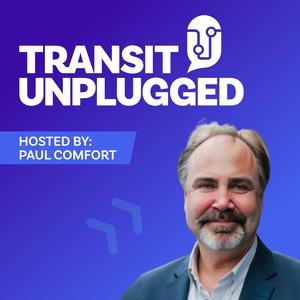
I'm Paul Comfort, and I recently went to Australia for a 10 day visit and recorded
Speaker:
00:00:31
a number of podcasts and a couple of our TV shows, and this is the last of
Speaker:
00:00:36
four podcasts that came out of that.
Speaker:
00:00:38
Ryan and I met, uh, actually, uh, at the docks, uh, and the,
Speaker:
00:00:42
where the ferry system takes off.
Speaker:
00:00:43
They've got an amazing ferry system.
Speaker:
00:00:45
We recorded this podcast while on board several ferries and on
Speaker:
00:00:48
the docks there, uh, at Brisbane.
Speaker:
00:00:51
And, uh, he talks about the CityCat system and how they're growing ferry systems.
Speaker:
00:00:56
To become not just a way to get from A to B, but actually
Speaker:
00:00:59
be a destination on their own.
Speaker:
00:01:01
He also talks about their cross river rail project going underneath
Speaker:
00:01:04
the river that we visited.
Speaker:
00:01:06
And you can see on this month's episode of Transit Unplugged TV.
Speaker:
00:01:10
And he talks about the new Brisbane BRT system, Metro.
Speaker:
00:01:14
Which is these amazing buses that look like you're on a rail system.
Speaker:
00:01:17
We also showcase them on this month's episode two on YouTube.
Speaker:
00:01:21
So we have a television show, Transit Unplugged TV, that kind
Speaker:
00:01:24
of goes along with this podcast.
Speaker:
00:01:26
So the things he's talking about you can see if you go over to our
Speaker:
00:01:29
YouTube channel, Transit Unplugged TV.
Speaker:
00:01:31
This though is an amazing podcast interview.
Speaker:
00:01:34
With a bright leader for not only Australia, but I
Speaker:
00:01:36
would suggest for the world.
Speaker:
00:01:38
A global transport leader.
Speaker:
00:01:39
I think you'll really enjoy this conversation and feel his passion
Speaker:
00:01:43
for public transportation like mine, a fellow transit evangelist.
Speaker:
00:01:47
All on this episode of Transit Unplugged.
Speaker:
00:01:53
Excited to be in Brisbane on the Big River here with the chair of the City Council's
Speaker:
00:01:58
Transportation Committee, Ryan Murphy.
Speaker:
00:02:00
Ryan, thanks so much for hosting us today.
Speaker:
00:02:02
Good afternoon, Paul.
Speaker:
00:02:03
Thanks for having me on the show.
Speaker:
00:02:04
Tell us about where we're at right now.
Speaker:
00:02:06
We're riding inside one of your awesome tell us.
Speaker:
00:02:08
We're sitting on a CityCat, which is a catamaran.
Speaker:
00:02:11
It carries about 170 people, and they go up and down the Brisbane River to 22
Speaker:
00:02:15
stations and stops throughout our river.
Speaker:
00:02:18
And we carry about 5 million passengers a year on this system, and in Brisbane,
Speaker:
00:02:22
for a long time, I think it's been number 3 on TripAdvisor, in terms of the things
Speaker:
00:02:26
that people do when they come to the city.
Speaker:
00:02:27
Really?
Speaker:
00:02:28
Yeah, so, I mean, a lot of cities, their public transport doesn't really feature.
Speaker:
00:02:31
There is an attraction in it's own right, but I think people
Speaker:
00:02:34
really love the CityCats and Brisbane residents love them too.
Speaker:
00:02:37
Yeah, I was just in Halifax, and went on their ferries, and then also in,
Speaker:
00:02:41
my buddy Kevin Quinn runs TransLink in Vancouver, Canada, and they've got
Speaker:
00:02:45
them too, and the same kind of thing.
Speaker:
00:02:46
People just ride them just to ride them, but this is a fantastic, service, you
Speaker:
00:02:50
offer how many vehicles and all that kind of stuff and then fit it into
Speaker:
00:02:53
the context of your overall network.
Speaker:
00:02:55
Yeah, we've got about 22, CityCats.
Speaker:
00:02:56
We've got five KittyCats, too.
Speaker:
00:02:58
They're little, little cross river versions.
Speaker:
00:03:00
Oh, okay.
Speaker:
00:03:00
CityCats and KittyCats.
Speaker:
00:03:02
That's great, man.
Speaker:
00:03:02
Yeah, that's right.
Speaker:
00:03:03
A little bit of a Brisbane sense of humor.
Speaker:
00:03:05
We try to put in everything.
Speaker:
00:03:06
But, it provides effectively a 15 to 30 minute service, a 15 minutes
Speaker:
00:03:12
during the peak at 30 minutes off peak, up and down the river.
Speaker:
00:03:15
the peak lasts throughout the day though, so there's that
Speaker:
00:03:17
constant supply of, people.
Speaker:
00:03:19
And we know our busiest days on Saturday when, when Brisbane
Speaker:
00:03:22
residents like to get out and they don't need to be at work on time.
Speaker:
00:03:25
So, you know, they could take a little bit longer to get where they want to go.
Speaker:
00:03:28
And we know that the mix of, tourists and leisure users and commuters
Speaker:
00:03:32
is about 50 50 on this service.
Speaker:
00:03:33
So it does perform an important commuter function, but as I said, it's part
Speaker:
00:03:37
of the tourism offering in our city.
Speaker:
00:03:39
And you can go anywhere, all the way up river, it's about a 90 minute journey
Speaker:
00:03:42
from the start of the mouth of the river all the way up to the last stop.
Speaker:
00:03:46
So you can
Speaker:
00:03:46
What river is this?
Speaker:
00:03:47
It's the Brisbane River.
Speaker:
00:03:48
That's what I thought.
Speaker:
00:03:48
Yeah.
Load full transcript
Speaker:
00:03:49
Brisbane River.
Speaker:
00:03:49
Yeah.
Speaker:
00:03:49
I don't mention the name because it's the name of the city, but
Speaker:
00:03:51
yeah, we're on the Brisbane River.
Speaker:
00:03:53
You know, this is unique.
Speaker:
00:03:54
People in America don't think, realize this is really a river city and like, it
Speaker:
00:03:57
like runs its way through the city and like the whole city is built around it.
Speaker:
00:04:01
Yeah, the whole city is built around the river And so bridges are really important
Speaker:
00:04:04
in Brisbane for getting around and they're big bottlenecks in our transport system,
Speaker:
00:04:08
so the river is a great way to avoid those windy roads that snake through
Speaker:
00:04:13
Brisbane and just get out there and see.
Speaker:
00:04:15
And it used to be a port city, there was a lot of maritime, agricultural traffic
Speaker:
00:04:21
that would come up here and load hay and copper and minerals and then as that's
Speaker:
00:04:26
all moved to dedicated port facilities at the mouth of the river, Brisbane
Speaker:
00:04:30
residents all of a sudden felt comfortable to live on the river in the 50s and 60s
Speaker:
00:04:34
and, it was about 1996 that the Lord Mayor of Brisbane, then Jim Soorley,
Speaker:
00:04:38
decided to, start the CityCat system.
Speaker:
00:04:40
A limited number of terminals, a limited number of services and we're now in
Speaker:
00:04:43
our fourth generation of vessels.
Speaker:
00:04:44
We've got a double decker.
Speaker:
00:04:46
They keep getting bigger and bigger and bigger and more accessible, so, you know,
Speaker:
00:04:49
we've got quite a big fleet now and, operated by River City Ferries which
Speaker:
00:04:52
is, Sealink and so they're a listed company in Australia, they run maritime
Speaker:
00:04:55
services, all around the country for us.
Speaker:
00:04:57
I was just Just with Howard Collins, my friend down from Sydney, we were on
Speaker:
00:05:01
Tasmania and he was there inspecting seven new ferries that they're getting built
Speaker:
00:05:06
in Tasmania that they'll bring back to Sydney and run on their ferry service.
Speaker:
00:05:09
So, a lot of water, obviously, around the island and a lot of great ferry services.
Speaker:
00:05:14
Tell us about, Ryan, the overall transportation network in Brisbane.
Speaker:
00:05:17
Walk us through some of what you've got here.
Speaker:
00:05:19
Brisbane's a city really, built on the back of the bus.
Speaker:
00:05:23
It's a city that, the city council runs its own transport company.
Speaker:
00:05:27
Next year, 2025, will be our 100th year in operation, and we own, and operate,
Speaker:
00:05:32
all, the vast majority of the city's, public transport fleet, whether that's
Speaker:
00:05:35
buses or CityCats, A lot of other cities, like Sydney and Melbourne, very much,
Speaker:
00:05:40
cities built on the back of rail, and rail does the heavy lifting, but in Brisbane,
Speaker:
00:05:43
we've got 27 kilometers of busways, and buses, do the heavy lifting, so.
Speaker:
00:05:47
Dedicated busways.
Speaker:
00:05:48
Yeah, dedicated busways.
Speaker:
00:05:49
I saw them today.
Speaker:
00:05:50
Yeah.
Speaker:
00:05:50
Some are even grade separated, actually.
Speaker:
00:05:52
It's everything it looks like.
Speaker:
00:05:52
It's great.
Speaker:
00:05:53
Yeah.
Speaker:
00:05:53
Really high quality infrastructure.
Speaker:
00:05:55
and, it means we're a lot more similar to a city like, you know, Curitiba or Rio.
Speaker:
00:06:00
so a lot of Australians don't really understand that, that there are
Speaker:
00:06:04
bus rapid transit cities out there because they don't visit the places
Speaker:
00:06:07
where they are, but they are there.
Speaker:
00:06:08
You just have to look hard enough to find
Speaker:
00:06:10
them.
Speaker:
00:06:10
Yeah.
Speaker:
00:06:10
So you've got a lot of buses that you run yourself.
Speaker:
00:06:13
Yep.
Speaker:
00:06:14
Yep.
Speaker:
00:06:14
And then what else?
Speaker:
00:06:15
So the bus now it's about 80 million a year.
Speaker:
00:06:17
We have a city rail network which is quite expansive but only about a third
Speaker:
00:06:22
of the patronage of the bus network.
Speaker:
00:06:23
And historically the Council and the State Government built these
Speaker:
00:06:26
networks in parallel to each other.
Speaker:
00:06:28
So there's not been that really great multi modal opportunity that you get
Speaker:
00:06:32
in some cities between bus and rail.
Speaker:
00:06:34
We're in the process of fixing that now.
Speaker:
00:06:35
We signed a landmark agreement with the State Government earlier this year
Speaker:
00:06:38
to fix our bus to rail connections and really integrate all the modes
Speaker:
00:06:42
ahead of the Olympics in 2032.
Speaker:
00:06:43
So there's some big reforms happening in the city over the next few years.
Speaker:
00:06:48
Well Councilman, we were, we jumped off one ferry and we got on a new one.
Speaker:
00:06:51
Tell me about this new one.
Speaker:
00:06:52
this is the, the next generation, generation 4 CityCat, so, this,
Speaker:
00:06:57
I think there's about 6 or 7 of these in service at the moment.
Speaker:
00:07:00
they are our latest offering.
Speaker:
00:07:02
They feature these wide panoramic windows, space for people in wheelchairs,
Speaker:
00:07:07
previously couldn't see out the windows because the windows were too high.
Speaker:
00:07:10
Okay.
Speaker:
00:07:10
But now they've got the best seat in the house right here.
Speaker:
00:07:12
you've got USB charging throughout, better, more comfortable
Speaker:
00:07:15
seating and, wider, spaces.
Speaker:
00:07:18
We even put a bar in this one as well.
Speaker:
00:07:19
Oh, nice.
Speaker:
00:07:20
So we
hire them out for functions and parties oh yeah.
Speaker:
00:07:22
Occasionally.
Speaker:
00:07:23
and it's got a, a double deck as well, so you can go up on the top
Speaker:
00:07:26
and there's a, a, a sun shade.
Speaker:
00:07:28
'cause we are unfortunately, get quite a lot of, UV light up here in Queensland.
Speaker:
00:07:32
so you can sit up there on the top deck and watch the river go
Speaker:
00:07:35
by and the wind in your hair.
Speaker:
00:07:36
It's a really great.
Speaker:
00:07:37
way to spend the weekend.
Speaker:
00:07:42
We'll get right back to my interview with Ryan Murphy, but
Speaker:
00:07:44
first I have a favor to ask of you.
Speaker:
00:07:46
Please take a moment to participate in our listener survey.
Speaker:
00:07:50
It'll only take a few minutes of your time, and your input is invaluable to
Speaker:
00:07:54
me for planning future episodes, and I want to get your feedback on the show.
Speaker:
00:07:59
So just go to transitunplugged.
Speaker:
00:08:01
com forward slash survey to fill it out online.
Speaker:
00:08:06
The link will also be in this podcast's show notes.
Speaker:
00:08:09
Thank you for your help.
Speaker:
00:08:10
I really appreciate it.
Speaker:
00:08:15
All right, let's jump back into the conversation on buses.
Speaker:
00:08:17
You were telling me about that the bus network is the backbone of what
Speaker:
00:08:20
you've got going on here, but today I visited one of your amazing operations,
Speaker:
00:08:24
which you piloted, I think, for a month and soon when you get the
Speaker:
00:08:27
whole fleet in, you'll jump back in.
Speaker:
00:08:29
It's a BRT like service, but it's a Metro, and I'm telling you, Ryan, the vehicles
Speaker:
00:08:34
are some of the coolest things I've seen.
Speaker:
00:08:36
Yeah, it's a really cool vehicle, and what it is is part of Brisbane Metro, which
Speaker:
00:08:41
is It's a bus rapid transit project, to replace, several of our congested lines,
Speaker:
00:08:46
the triple one, the sixty six, with, a large double articulated electric bus.
Speaker:
00:08:51
So, this is the Hess Light Tram 25, it's in service in a number of cities in
Speaker:
00:08:56
France and Switzerland, but we've taken that bus that was existing, we've brought
Speaker:
00:09:01
it into Australian design rules, we've upgraded it, we've put, six residential
Speaker:
00:09:04
homes worth of air conditioners on the top because they don't need them
Speaker:
00:09:06
a lot in, France and Switzerland.
Speaker:
00:09:08
And we brought it here, to enable it to improve the capacity of our busway system.
Speaker:
00:09:13
And, what we do is we, we basically, the concept is we take the existing bus routes
Speaker:
00:09:18
that have buses that can carry about 76 people on them, we replace them with, a
Speaker:
00:09:22
bus that can carry 170 people, and then we also, truncate large parts of our
Speaker:
00:09:27
network where the bus would previously run half or a quarter full all the way into
Speaker:
00:09:31
the CBD, we then truncate that at busway stations to bring that resource back
Speaker:
00:09:35
into the network So, it's about Brisbane doing what other bigger cities have done,
Speaker:
00:09:40
getting used to the two seat journeys.
Speaker:
00:09:42
That's what Brisbane Metro is about in our city and we also deal with a big problem
Speaker:
00:09:47
that we have in the core of our city, which is bus congestion and we take about
Speaker:
00:09:50
a third of those buses clogging up the CBD and redirect them into the suburbs, so it
Speaker:
00:09:54
solves a number of busway problems that we
Speaker:
00:09:58
have.
Speaker:
00:10:00
I saw that today actually.
Speaker:
00:10:01
I saw bus after bus after bus this morning.
Speaker:
00:10:04
I was at Anzac Square and I was having coffee and I, when I used to run
Speaker:
00:10:08
Baltimore, I saw the same problem.
Speaker:
00:10:10
I'd have, you know, 11 buses go by in one minute and it was congested
Speaker:
00:10:14
and so that, I get what you're doing.
Speaker:
00:10:16
You're going, this is the feeder into the main network.
Speaker:
00:10:19
Yeah, I mean a lot of, a lot of cities do that.
Speaker:
00:10:21
I think it's a bit of a choice between, you know, what type of
Speaker:
00:10:24
light rail are they going to have.
Speaker:
00:10:26
Yeah.
Speaker:
00:10:26
In Brisbane, we did look at converting the busway to light rail, but we have such a
Speaker:
00:10:30
big out of catchment, that we would have to all terminate, I wouldn't be able to
Speaker:
00:10:35
use the busway at all, so there'd be so many thousands of introduced transfers.
Speaker:
00:10:40
This, this product sort of sits between, buses at the high level
Speaker:
00:10:44
and then trams at the low level.
Speaker:
00:10:46
It's a, it's a tram or a light rail light capacity.
Speaker:
00:10:48
Improvement, but without anywhere near the cost.
Speaker:
00:10:51
So if you think about something like, your iPhone has wireless charging, well
Speaker:
00:10:55
this is like a tram without the wires.
Speaker:
00:10:56
So we're effectively going back to the tram system that Brisbane had,
Speaker:
00:10:59
back in the, in the, in the forties.
Speaker:
00:11:01
and we're starting again with the, the latest and greatest wireless technology.
Speaker:
00:11:04
So these vehicles all use flash charging from panto graphs and, we
Speaker:
00:11:08
charge 'em at the end of every trip.
Speaker:
00:11:10
So they'll, they'll finish their route metro one or two, and they'll
Speaker:
00:11:13
flash charge for just six minutes.
Speaker:
00:11:15
Battery's fully topped up, and then off they'll go.
Speaker:
00:11:17
And you hope to open this service in your 100th anniversary year of 2025.
Speaker:
00:11:22
Is that right?
Speaker:
00:11:23
Yeah, we do.
Speaker:
00:11:23
It's it's exciting.
Speaker:
00:11:24
we, we've had a lot of interest from all around the world, about what we're
Speaker:
00:11:28
doing here to, to really take that bus rapid transit product forwards.
Speaker:
00:11:32
And, a lot of cities, you know, in, in particularly, you know, Vancouver has
Speaker:
00:11:36
been reaching out to us, Auckland, you know, big cities with, busways, but they
Speaker:
00:11:40
want to know how to get the next level of performance out of their busway.
Speaker:
00:11:43
Yeah.
Speaker:
00:11:43
And, we think this This product sits at a great point in between that full
Speaker:
00:11:48
conversion to light rail and just running buses at a rapid frequency
Speaker:
00:11:51
because you get both capacity and you get a really high quality passenger
Speaker:
00:11:55
offering and people are seeking that out more and more in public transport.
Speaker:
00:11:59
It's not just about where it goes, it's about whether you get there
Speaker:
00:12:02
in style and comfort and whether there's those amenities for you.
Speaker:
00:12:05
It feels and looks like you're on a brand new light rail vehicle on the inside.
Speaker:
00:12:10
It's got that vibe.
Speaker:
00:12:12
Speaking of rail Let's talk about rail.
Speaker:
00:12:13
Brisbane is the capital of Queensland, right?
Speaker:
00:12:15
You're That's right.
Speaker:
00:12:17
Yes.
Speaker:
00:12:17
And so, the State's heavily involved in the rail service here, is that right?
Speaker:
00:12:20
Yeah, the state government runs the, the rail network, Queensland Rail, City
Speaker:
00:12:24
Rail, it goes by those sort of names, it's, it's actually a, a reasonably
Speaker:
00:12:27
good network across Brisbane, has great coverage, around the historical rail
Speaker:
00:12:31
lines, the issue has always been the, you know, the cost to serve and, and,
Speaker:
00:12:35
the patronage has never been particularly impressive to warrant further investment.
Speaker:
00:12:38
The city's going through a very significant investment in rail at
Speaker:
00:12:42
the moment with Cross River Rail, which is the second crossing of the
Speaker:
00:12:44
Brisbane River of the rail network.
Speaker:
00:12:46
So it links the Gold Coast line, Beanlea line, with a new line that runs under the
Speaker:
00:12:53
river and creates some new underground stations in the heart of Brisbane City.
Speaker:
00:12:56
That's wrapping up at the moment, I don't think it'll commission probably
Speaker:
00:13:01
until 2026, but that'll add a lot more capacity into the railway.
Speaker:
00:13:06
network as well so we can ramp up that frequency and capacity
Speaker:
00:13:10
ahead of the Olympics in 2032.
Speaker:
00:13:11
Yeah, let's talk a little about that.
Speaker:
00:13:13
Tell us about the plans the city has and a little bit about the Olympics coming.
Speaker:
00:13:17
So we just did a show in LA.
Speaker:
00:13:19
Of course, they're the next one and then you're the one right after that.
Speaker:
00:13:21
Yeah, Paris, LA and then Brisbane.
Speaker:
00:13:24
City, city no
Speaker:
00:13:25
one's ever heard of.
Speaker:
00:13:26
They will after this.
Speaker:
00:13:27
Well, we, we, we.
Speaker:
00:13:28
We are so humbled and so honoured to be standing, you know, with Paris
Speaker:
00:13:33
and LA in those Olympic cities and we understand the task in front of
Speaker:
00:13:39
us to retrofit this city's, the small city's public transport system to a
Speaker:
00:13:44
system that has to host summer games.
Speaker:
00:13:46
I mean, that is a momentous undertaking and it really fills me with both,
Speaker:
00:13:51
you know, hope of what we can change and what we can do in the
Speaker:
00:13:54
next few years and also dread of, you know, what if we get it wrong?
Speaker:
00:13:56
We've put in place a range of initiatives, the Lord Mayor a few months ago
Speaker:
00:14:00
released a document called the Race to Gold, and it's all about these
Speaker:
00:14:04
transformative improvements we can make to our city's public transport network
Speaker:
00:14:08
in the eight year run up to the Games.
Speaker:
00:14:10
And we're very much looking to bus rapid transit as one of those things that
Speaker:
00:14:13
we know we can do that in eight years.
Speaker:
00:14:15
If we want to launch a light rail project in Australia today, it's eight years just
Speaker:
00:14:20
to get the permitting done basically, so you know, it's similar in America.
Speaker:
00:14:23
Of But bus rapid transit can give us some of those lighter touch solutions,
Speaker:
00:14:29
things like transitways and bus priority with these metro vehicles that we've
Speaker:
00:14:33
got now and we can deliver these step change improvements in capacity to
Speaker:
00:14:37
parts of the city where we, we know we actually need to increase the amount
Speaker:
00:14:40
of seats we have on public transport by 50 percent to meet the games demand.
Speaker:
00:14:44
So if you go to any city in the world and say, I need you to increase the public
Speaker:
00:14:46
transport system by 50%, most planners would tell you, you're crazy, right?
Speaker:
00:14:49
It's going to enable some really bold decision making.
Speaker:
00:14:52
We need to make decisions that might have been very difficult
Speaker:
00:14:55
with the politics of today.
Speaker:
00:14:58
There's an Olympics urgency and Brisbane residents really don't want to see the
Speaker:
00:15:02
city let itself down on the world stage.
Speaker:
00:15:04
So we're going to use that, we're going to harness that over the next few years.
Speaker:
00:15:06
Tell me some about your background and history and how you got
Speaker:
00:15:09
so interested and involved in transportation and in government.
Speaker:
00:15:12
I've
been in this role for coming up on five years.
Speaker:
00:15:15
And, prior to this I was in public relations for major infrastructure
Speaker:
00:15:19
and resource projects in Queensland.
Speaker:
00:15:20
things that people generally don't like in their backyard, like, copper mines
Speaker:
00:15:24
and, dams and, pipelines and things like that, so, I, I guess I got used
Speaker:
00:15:28
to having difficult conversations about things that, that are necessary for
Speaker:
00:15:32
the economy but, that people might not necessarily like in their backyard.
Speaker:
00:15:35
Now I get to do something that is, so exciting because I'm
Speaker:
00:15:40
serving as a civil servant.
Speaker:
00:15:41
CityCouncil.
Speaker:
00:15:41
CityCouncil.
Speaker:
00:15:41
I've been at Council for 12 years now.
Speaker:
00:15:42
Oh wow.
Speaker:
00:15:43
I love serving my community, but the transport role gives me the opportunity
Speaker:
00:15:46
to help our city kind of grow up and fix the problems that I experienced as a user,
Speaker:
00:15:51
as a consumer of our city's transport.
Speaker:
00:15:54
I don't like that, why can't I see a screen on this CityCat at
Speaker:
00:15:57
the moment telling me what my next destination is and how long it's
Speaker:
00:16:00
going to take me to get there.
Speaker:
00:16:01
These are the customer facing elements that so many transport systems are
Speaker:
00:16:05
getting right around the world.
Speaker:
00:16:06
I want to bring that here so that we can also get that right and we've got so
Speaker:
00:16:10
many great companies that are looking to make Brisbane home, looking to set up a
Speaker:
00:16:13
presence in the city since we were awarded the Games, that I actually think this
Speaker:
00:16:18
is not going to be as hard as it looks.
Speaker:
00:16:19
It just takes will.
Speaker:
00:16:20
That's wonderful.
Speaker:
00:16:21
Let's talk about the nation of Australia.
Speaker:
00:16:24
Where does public transportation sit in the list of priorities for this country
Speaker:
00:16:28
and where do you think it's going?
Speaker:
00:16:29
I don't think transport has been a particular priority for Australian
Speaker:
00:16:34
politicians until recently.
Speaker:
00:16:36
I think successes like the Sydney Metro really, I think, shown politicians of
Speaker:
00:16:41
both sides in Australia the potential for these game changing projects to
Speaker:
00:16:46
actually make a lasting difference I mean, the amount of money that we
Speaker:
00:16:51
spend in this country, particularly on highway and road transport, is
Speaker:
00:16:57
astronomical compared to what we would spend on urban public transport.
Speaker:
00:17:00
and, there are real benefits to ESG and the sustainability of cities that
Speaker:
00:17:05
you can drive when you get public transport systems functioning well.
Speaker:
00:17:09
I always make the argument, around the need for public transport,
Speaker:
00:17:12
around the avoided cost of road widening and road infrastructure.
Speaker:
00:17:15
I mean, you look at L.
Speaker:
00:17:16
A. You know, they try to build their way out of traffic congestion by adding
Speaker:
00:17:20
more lanes and it's, it's not worked.
Speaker:
00:17:22
But you improve the public transport product, you can
Speaker:
00:17:25
avoid billions in road work.
Speaker:
00:17:27
So if you try and make that, I think, financial argument, because Australians
Speaker:
00:17:30
are very practical in that way, all of a sudden you start to see people go,
Speaker:
00:17:33
Oh, actually, maybe we should have an additional bus, or maybe the span of
Speaker:
00:17:36
hours should be a little bit longer.
Speaker:
00:17:38
but you have to reach that threshold of quality that people will, will use it.
Speaker:
00:17:42
And, you know, I think we're very close.
Speaker:
00:17:44
That's great.
Speaker:
00:17:45
Ryan we wish you the very best as you continue to help lead this
Speaker:
00:17:47
city's transportation future.
Speaker:
00:17:49
No, thanks for doing what you're doing, Paul.
Speaker:
00:17:50
It's very important and very much appreciated for all of us
Speaker:
00:17:52
out there that are trying to make a difference in this field.
Speaker:
00:17:55
Thank you.
Speaker:
00:17:59
Thank you for listening to this week's episode of Transit Unplugged
Speaker:
00:18:02
with our special guest, Ryan Murphy.
Speaker:
00:18:05
Hi, I'm Tris Hussey, editor of the podcast, and coming up next week on
Speaker:
00:18:08
the show, we have Tom Drozt CEO of Ben Franklin Transit in Washington State.
Speaker:
00:18:14
As Paul mentioned in the episode, we'd really appreciate your
Speaker:
00:18:17
help with our listener survey.
Speaker:
00:18:18
Just go to transitunplugged.com/survey, and just take a few minutes to
Speaker:
00:18:23
fill it out, it'll really help us plan episodes and keep making
Speaker:
00:18:27
Transit Unplugged better and better.
Speaker:
00:18:29
You'll also find a link to the survey in the show notes.
Speaker:
00:18:32
Transit Unplugged is brought to you by Modaxo.
Speaker:
00:18:35
At Modaxo, we're passionate about moving the world's people, and at
Speaker:
00:18:38
Transit Unplugged, we're passionate about telling those stories.
Speaker:
00:18:42
So until next week, ride safe and ride happy.