
301: Why IMAGE ’26 Is Built Around Connection

"It helps to see the bigger picture, to get out of your own sphere of interest. So it can be a good way to see different angles of your own industry.”
Applied geoscience is becoming more connected as carbon management, geothermal, digital technology, near surface work, and traditional energy incre…
302: Why Integration Defines the IMAGE ’26 Technical Program
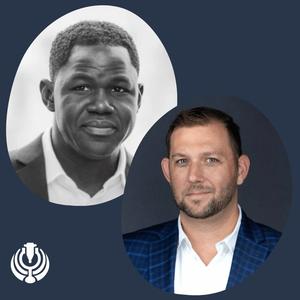
“We’re moving from isolated geoscience disciplines to integrated subsurface solutions. You’re seeing AI becoming an enabling technology rather than the story itself.”
Adam R. Goss and Bunmi Elebiju explain why IMAGE ’26 is designed to reward people who look beyond their usual discipline. AI, uncer…
303: Can Your Subsurface Model Explain All the Data?

"We have to absorb and analyze more data than ever in shorter amounts of time. Spending a day thinking about these workflows can bring you insights into practical ways to integrate the model and data across disciplines."
Subsurface teams have more data than ever, but that does not guarantee better…
304: What Energy Security Means for Geophysics in the Middle East

"I wish people understood that the pace of change across this region is not gradual anymore. It's moving very quickly and in many cases faster than traditional global markets expect."
Conflicts and disrupted energy flows have put energy security back at the center of the conversation, and Yogaani …
305: Building Trust in Elastic FWI

“We always aim for 60 percent. The other 40 percent, we are ready to make mistakes, learn from those mistakes, and then move forward.”
A 600-meter carbonate platform forced Dr. Ahmad Riza Ghazali and his PETRONAS team to reconsider a basic assumption in their seismic workflow.
Acoustic FWI and re…
306: How Geophysics Builds Trust in CO2 Storage

“We really need to be able to explain in clear language and with vivid examples just what geophysics can do here.”
Michael B. Helgerud and Manika Prasad approach CCUS monitoring from two useful angles: Mike as an operator and Manika as an academic. Using their The Leading Edge special section on g…
307: How QI Connects Science and Business Impact

“Machine learning over the last few years has become revolutionary. But we still need, and maybe even more so, the constraint and knowledge of rock physics and QI as an integral part of those workflows.”
Stephan Gelinsky describes quantitative interpretation as the place “where science meets busin…
308: Low Cost Monitoring Without Low Value

“The goal is not cheaper data. The goal is to spend less on everything that does not add value to the decision one is trying to make.”
Low-cost monitoring is becoming less about cheaper sensors and more about designing geophysics around the decision that needs to be made.
Guest editors Erkan Ay a…
309: What AI Changes About Seismic Interpretation

“If you keep training on what people have already discovered and what’s already been identified, then you’re gonna be limited in what you can actually come up with.”
AI is very good at finding patterns in seismic data. The harder question is whether those patterns make geological sense.
Nancy Hou…
310: Why SEG EVOLVE Is Worth the Hard Work

"In your academic work, you just have to do your work and you get your grade for your work. Now we're leading a team where when any other member of the team fails, the whole team has failed."
SEG EVOLVE asks students to take on challenges that go well beyond graduate coursework. Tobechukwu “Toby” …
موتور جستجوی پادکست
می توانید از وب سایت ما برای جستجوی پادکست های3,825,883و قسمت های195,955,146بر اساس افراد، مکان ها یا موضوعات استفاده کنید.

سرمایهگذاری روی دانش بیشترین بازده را دارد؛ پس پادکست گوش میدهم.
‐ Benjamin "Llamacorn" Franklin
ویرایش
از کمک شما برای بروز نگهداشتن پایگاهدادههای پادکست سپاسگزاریم
