
# Kevin Carney
Principales episodios de podcast
Actualizado:
Top podcast episodes featuring kevin carney.
EP23 - The Future Looks Regional, AI-Driven, and More Expensive to Insure

The next few years may be shaped less by one dominant global power and more by regional influence, local resilience, and technologies that give smaller players new leverage. Kevin and Emanuel examine how geopolitics, AI, and climate-related insurance pressure could reshape trade, housing, work, and…
EP24 - Money Matters: Central Banks Get Blamed for Money Commercial Banks Create

Most money used in modern monetary economies exists as demand deposits rather than physical cash. That distinction challenges the familiar claim that central banks control the money supply.
Kevin explains the difference between deposits and central bank reserves, how payments are settled between c…
EP25 - Money Matters: Central Banks Began as Crisis Tools and Became Financial System Managers
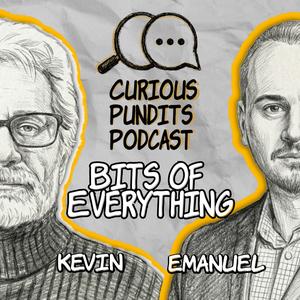
Central banks were created to solve different problems. The Bank of England helped finance war, while the Federal Reserve emerged from repeated banking panics and the need for a lender of last resort.
The conversation traces the development of central banking from early private bank networks and c…
EP26 - Money Matters: Canadian and Scottish Banks Shows Stability Can Come From Different Rules
Banking stability does not always come from the same regulatory model. Nineteenth-century Scotland operated with private note issuance and limited formal supervision, while modern Canada relies on central banking, federal regulation, deposit insurance, and systemic-risk controls.
Despite those dif…
EP27 - The Jones Act Was Built to Protect U.S. Shipping. U.S. Shipbuilding Still Collapsed
The Merchant Marine Act of 1920, commonly known as the Jones Act, requires goods moved between U.S. ports to travel on vessels that are U.S. owned, crewed, built, and flagged. Professor Rockford “Rocky” Weitz of The Fletcher School at Tufts University joins Kevin Carney and Emanuel Petrescu to expl…
EP28 - Can Democracy Survive When Billionaires Hold So Much Political Power?

Scott Leckie joins Emanuel Petrescu and Kevin Carney for a wide-ranging discussion about extreme concentrations of wealth and their effect on democratic institutions. The conversation examines how billionaires can influence politics through campaign funding, access to decision-makers, tax structure…
EP29 - Safe Harbor Financial Bridges the Gap Between Cannabis Companies and U.S. Banks
Cannabis businesses operate in an unusual financial environment: marijuana remains illegal at the U.S. federal level while many states and territories permit medical or recreational use. Safe Harbor Financial CEO Terry Mendez joins Emanuel Petrescu and Kevin Carney to explain how financial institut…
EP30 - UFO Conspiracy Theories Grow Where Evidence Is Weak and Secrecy Is Strong
Dr. Barna Donovan joins Emanuel Petrescu and Kevin Carney for a discussion of the psychology, sociology, history, and popular culture surrounding UFO conspiracy theories. The conversation traces unexplained aerial phenomena from nineteenth-century airship reports through Kenneth Arnold, Roswell, Pr…
EP31 - Coffee becoming an everyday drink is a story of strange bedfellows

Christian Robles-Baez, an environmental and economic historian completing his doctoral dissertation at Stanford University, joins Kevin Carney and Emanuel Petrescu to examine how coffee became a global commodity. The discussion traces coffee from its origins in Ethiopia and the Arabic world to its …
EP32: Community Markets Keeps Wealth Local Through Local Ownership, Cooperation, and Fair Market Rules
Mike Callicrate, founder of Ranch Foods Direct, joins Kevin Carney and Emanuel Petrescu to discuss community economics and the struggle to keep locally created wealth within the communities that produce it. Callicrate recounts how being shut out by dominant meatpackers led him to sell meat directly…
MOTOR DE BÚSQUEDA DE PODCAST
Puede utilizar nuestro sitio web para buscar podcasts de3,830,477y episodios de196,620,338por personas, lugares o temas.

Invertir en conocimiento ofrece el mejor rendimiento, por eso escucho podcasts.
‐ Benjamin "Llamacorn" Franklin
EDITAR
Gracias por ayudar a mantener actualizada la base de datos de podcasts.
