
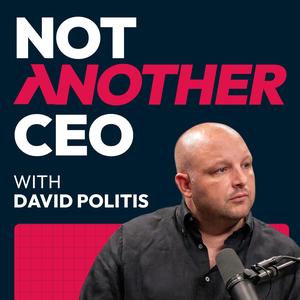

David Politis: This is my first time I'm a guest on my own podcast. It's probably the last time. Hello everyone, I'm Sammy Politis. And I'm Noah Politis. We are David's kids. I'm 10. Noah's 12. Today we will be the host of this podcast. We know when you were our age, you always wanted to be a CEO. What? Or who inspired that? What are a few of the hardest or scariest days at any of the companies you've ran? What is something that you're still bad at? All the CEO stuff seems like therapy basically to talk to other CEOs. How do you define success? The way that I define success is being able to meaningfully impact other people's lives while significantly benefiting your own life. This was awesome. I've been wanting to do this for a long time. Hello everyone, I'm Sammy Politis. And I'm Noah Politis. We are David's kids. I'm 10, Noah's 12. Today we'll we we will be the hosts of this podcast. Today's guest has been building companies for over 20 years. He has founded a company called BetterCloud, which he ran for more than a decade and grew to almost $100 million in sales, helping thousands of IT people at companies all over the world. He sold that company for $750 million in 2022. Before that, he helped build Cloud Sherpas, which was bought by Accenture, and Vocalocity, which was bought by Vonage. He now invests and advises in dozens of companies. Two years ago, he started none not another CEO podcast in the corner of my room. People told him he'd quit after 10 episodes. Now, he's made more than 100 episodes. He's talked to founders who've built multi-billion dollar companies. Investors who've invested hundreds of millions of dollars and CEOs who've almost lost everything. He wakes up at four in the morning to send emails. He says he has no hobbies. He claims he's an introvert and we love him. He has also never once been a guest on his own show. He's our dad, David Politis. Welcome to not another CEO podcast. ⁓ that was great. I hope you do that every morning for me. Please. The first question question, you are the one who always ask everyone. What is what's the one thing you did at BetterCloud, big or small, that had the biggest impact that you'd do absolutely do again if you start another company? So the number one thing I ask obviously I ask every guest this and I always think about what would my answer be? And my answer would definitely be choosing a really, really narrow ideal customer profile. I I say ICP, ideal customer profile. And the idea is like really choosing who you're gonna go after as a customer and building the entire company, the team, the product, the marketing, everything to go after that very particular type of customer. So like for BetterCloud, we were trying to sell to IT, then we tried to sell to security, small companies, big companies in the US, international. And what I learned is that actually when we got very focused about who we were selling to. It was much more successful. We built a better product. We sold more at a higher price. But you guys know about ICP stuff yourself. Because you guys have a business, right? You have a what's your business? We sell c basketball cards. Okay. And who's your ideal customer? We like to go to bigger card stores. Yeah. Look for the best card stores who would give us the like the best price on our cards. Right. We also started at the beginning, we sold to like smaller kids our age so that we could look for kids in the area to sell to, but it didn't work so well because they only traded, but we wanted to sell our cards instead of trade our cards. Exact literally that's exactly this that is exactly the ICP conversation. 'Cause now I see you guys. You never really want to do the trade nights or anything. You just want to go to the big stores. And you've gotten to know the people, you've gotten you've built relationships, right? I mean we went the other day. You called before, you made sure that the guy that you know was there. You went there, you know what kind of cards he likes. You only brought those cards. I mean, that that's literally the same thing. Like when I was building BetterCloud, we thought we're gonna build a product that does this, we're gonna build a product that does this, we're gonna send people to London to sell, we're gonna send people to Australia. And then we realized it just it doesn't make sense. You know, ⁓ getting very focused makes And and I think it's a mistake that most people make with their businesses because they think that if we try to sell to everyone, we're gonna be more successful, but it's not true. We know when you were our age, you always wanted to be a CEO. What? Or who inspired that? That was definitely inspired by Saba, who what you call Saba, your grandfather, my father. ⁓ you know, growing up, you know, I I watched him always like building his companies. He was an entrepreneur, he had a bunch of companies. And he would take me with him to work from a very young age. Basically your age, maybe even younger. He would take me to all his like the different construction sites he had in the early days. Then he took me all over the world with him for different business meetings. And and for me, I just wanted to be like that when I when I grew up. And so even like from as young as I can remember, I I remember actually at school writing ⁓ my first, I think, essay at at at Road F where I wrote an essay about wanting to be an entrepreneur. And I that was I was probably nine years old. I don't know, 10 years old. So basically that's that was it. I mean, even when I got to college, I always tell people this, but he w Saba would have send me every email that he sent to people. He would put me on the BCC. So like I would literally get every single email that he sent to to the people he worked with. So I could read it and I could learn about it. So that was really what what ⁓ you know, I mean that that from a it was just in my head like that's what I wanna do when I when I grow up. ⁓ so Yeah, that also was like work before your work, you kind of w took notes at his meetings. Yeah, yeah, exactly. Exactly. Like I would go to the meetings and he would give me the notepad and say, take notes. I didn't know what I was taking notes about, but I took notes and then you learn just by sitting in those meetings. You know, I feel like when I came out of college I was already ready to work 'cause I had already been in these meetings for You know, and you guys have done that. Yeah, we've done that with yours. Yeah. At Revivin, right? Well, you at Better Cloud. We did. And then you did it again when you came to Revivin in Brooklyn, right? Yeah, I remember that. That was fun. Yeah, I remember. And you hear different terms. Right. You remember? And you you come into the you come into the office and you see how people interact, you see what people how they're presenting the slides, you see all that stuff. So that that to me is ⁓ you know, once once I had that exposure really So young, I I that's what I wanted to do forever. What was your first job? My first job, it's a good question. My first job was as a mover for Big John's Moving Company, which is a New York moving company. And it was my first job that I had as a teenager. I I worked for the moving company and it was during the summer. And I had to go in the moving truck and then we would go around New York City. You can you know how hot it is, like right now. Yeah. And we would go around and have to go. There was most of the buildings had no elevators. They had no it we had to do walk ups, four story walk-ups, and and and I did that for the summer. That was a very that was the hardest job. Didn't really have that much to do with like business. Not at nothing at all, actually, nothing at all. The reason that I got that job is because It was the summer and I needed a job. Saba told me you need to go make money. And I said, Okay. So I asked some friends of mine, what are you doing? And they said, I work at Big John's Moving. I can get you a job there. I said, Okay. So I went there for the interview, you know, and it was a very fun because I came with my resume and everything. And the guy told me, If you can carry heavy boxes, you can do this job. What did you learn from doing that that you still use? I well, first of all, I was so the you know, you know, I always talk about work ethic and and really working hard. There was no one who worked that I've worked with that worked harder than the people, the movers that I worked with. I mean, they were working, we would start in the morning like 7 a.m. in the South Bronx, get on the truck, go do a moving thing, finish the job. At 3 p.m., we'd get on the truck, go to a different job, do that job, get on the truck and do another job until 10 p.m. And these guys were hustling because they wanted to get as many jobs as they could, to make as much money as they could. And I remember that at the end of the the ⁓ the summer, one of the guys that I worked with for the whole summer, he said, he asked me, Are you in college? I said, Yeah. And he said, Well, why are you doing this job? Why don't you go get a job like an internship in business or something? I said, needed to work. I needed to make money. So I came here and he said, Well, just try to make sure that this is the last job that you do, that you use your body to make money, that you use your muscles to make money. Instead, you know, go find something that use your brain to make money. And I I'll I'll always remember that conversation was the last day. And ⁓ and so, but on top of that, I also learned how to carry a couch on my back, a refrigerator. The last day they made me carry a refrigerator down two flights of stairs on my back. By myself. They made me strap it to my back to show them that I I learned, you know, how to do that. Because in the beginning I was carrying one box at a time, like up and down the stairs. And they said, just wait, just wait. We're going to teach you how to be a donkey. And by the end, they they showed me how to literally put the stuff on my back and carry it down the stairs. Sounds fun. Pretend we're potential investors. Explain better, Cloud, to me and why we should invest. So The way I would explain BetterCloud, kind of at the peak of BetterCloud, which of course is not today. This is years ago. ⁓ the way I would describe it is hey, you're there are companies all over the world that are using not two applications like Gmail and Dropbox and Salesforce and stuff like not two, three, four, but hundreds of applications across the entire company. And they have no idea which applications they're using, their users are using, they have no idea how much they're spending. On those applications, it's millions of dollars or tens of millions of dollars. They don't know which users they have that are accessing which applications, how they're accessing it, how they're sharing Google Docs, sensitive information, confidential information. All of that was the IT teams of these companies had no way to do those things. So BetterCloud solved all of those problems for them. So, so the IT teams would use BetterCloud to make sure that all the applications their employees used, they knew what they were. They had control over how much they were spending. They controlled the users. They they secured the data. So that was what BetterCloud did. It seems like a very useful company. Well, I think it was, you know, a lot of we had thousands you said in the introduction, I don't know where you got that introduction from. Maybe maybe ⁓ lot AI. ⁓ but you know, that was ⁓ that was, you know, we had thousands of customers all over the world and some of the biggest companies in the world were I mean, literally some of the biggest companies were using it to manage these environments. ⁓ and so it's not, you know, the the most ⁓ they I would say it's not the most sexy business, but it was it was something that people really needed. You said that you made like a second generation or a second product. Yeah. What was the difference between that second product and the first one? So the first, the first product was only w Only worked with Google apps or Google Workspace. You know what you use for school, like Gmail and Drive and all. It only worked for that. The second product worked for any application, anything that they were using. Microsoft, Slack, like I said, Dropbox, Canva, you know, Zoom, anything. And that was that was really the difference is being built for one application or being built for any application. And the one application was how we started, because that was my experience. That was That was Cloud Sherpa's. That's what we focused on. But to build a big company, we had to go across all the applications. Yeah. And it seemed like it did it work? The second one? It worked. ⁓ it did not work in the beginning. so when we first launched it, I thought we're gonna launch this new product, everyone's gonna use it, it's gonna be this huge success. And then we launched it and nobody bought it. And it was, you guys were much younger. I mean, this was 2000. 17, 2018. So you guys were much younger. You were three. Yeah. And you were two. That was that was a really ⁓ that was a tough that was a tough time because we launched the product. No one used it. And we we ended up having to really refocus the whole company about how to how to sell it, how to market it, how to price it, all of that. But when we finally did that successfully, it It changed the company history. We would never have gotten to where we got to if we didn't build a second product. But it was not e in the beginning, it didn't do as well. Did you miss running BetterCloud? I miss it a lot. Mostly what I miss, mostly, is the people, the team, the better clouders. I miss that a lot. I mean, you you guys used to come to the office all the time. You used to you, I mean, you know so many of the the people on the team and y you guys also you play sports, you play basketball, you know what it's like to be on a team and to work with a team on something. And I I miss having that because I I enjoyed that. I enjoyed having a group of people that It was hard work, you know, like again, like any of the sports that you do, it's hard. But when you go and achieve something together, it's it feels great. And and I just I miss that. But on the other side, you know now, I mean, I'm I'm working with so many companies and so many different types of companies that it's interesting for me because I get to see all these different companies and I get to see different industries. I see big companies, small companies. You know, I work with that company in Germany, you know, a company that's bootstrapped versus a company that raised a lot of money. early company, a late, all these different things. For me, that part is really interesting. When you're just running one company, you don't, you don't get that exposure because you have to be every day focused on one company. So I miss the people, I miss the team. I miss building something with people. But I I love the diversity. I love being able to see so many different things, so many different CEOs, so many different industries. I I do enjoy that. Kind because of the like the diversity, what are a few the big things that you've learned from having so many interviews with different people, working with so many companies. The thing I think I've learned is that eighty percent, maybe ninety percent of the job of building a company, eighty to ninety percent of building a company, it's timeless. The the the strategies, the way you do it, the tactics, they're timeless. Meaning the same way you built a company twenty years ago is the way that you build a company today. The same way you build a company that's in the hardware business is the same as you build a company that's in the software business. The same that you build a company in the US is the way you build a company in Germany. I really believe that that's the case, but there's 10% that is not timeless. It's really timely. And that 10%, obviously, in today's world is AI. Yeah. But other than that, like if you are a great CEO, you can be a great CEO of really Pretty much. And you don't have to know the industry. You don't have to know the market. You don't have to know the product. Leading people, leading teams, focusing everyone, having an operating rhythm, motivating people, talking to customers, building product. These are things, raising money, selling the company. All of these things, they're timeless. They're timeless. They and that's been the most interesting thing. I mean, I've had people on the show that that have built, I mean, literally billionaires who built these huge companies. And when they talk about the way that they build their companies, it's the same that. The startup guy who's got a small company of 10 people, like the the tactics that they that they think about and talk about, that person, when they're go from 10 people to thousands of people, they're gonna use the same tactics, even if it's a completely different business. That's a good question. Thank you. ⁓ are you excited or scared about AI? I would say I'm both excited and scared about AI. I I'm excited because you can do stuff with AI that I could just never even dream of before. I mean, in my life, I I, for example, when you were born, I told mama, I really hope that you guys learn how to be engineers, learn how to code. I told her that. I said, I hope that they learn how to code because for me, I always had this problem where I couldn't build my own company because I needed an engineer. I needed someone to code the product. Yeah, but that's that's a hard job. That is a hard job. But now Yeah. You AI. What d you guys built that product, right? Yeah. We use Lovable. Yeah. Then we made basically this app that you just Yeah. You could like put in like your mood, your age, how many people, and it would just like give you places to go. Right. And like How long did it take you to build that? An hour. You know how long it would take someone to build that 10 years ago? A year. A year. Actually. A year. And you did it in an hour and you didn't even all you did was talk to lovable and it built that product. Yeah. How about that one that we built the NBA 2K ⁓ spinner thing? Yeah, yeah. That took 35 minutes, 45 minutes. I mean, those things would have taken days, months, years before. So that's really that's why I'm excited about AI. I'm nervous about AI because I think and and scared a little bit because I think that I don't know how much I worry so much about it's going to replace every single job. I I I'm less worried. I think there's going to be new jobs that are created. What I worry about is it makes our brains like we become more and more reliant on AI. You know, some people they can't even write their own emails anymore because they just ask chat or Claude to write the email. You know, they they ask it to do. all of their work. They're kind of losing the ability to to think. If you read a lot of stu I mean, a lot of the videos now you watch on YouTube, all that garbage, all that stuff is like mostly AI generated. It's all and that to me, that sucks. Like that that I I'm a little scared of that. But overall, I do think it's gonna change the world on a whole over a long period of time. I I I hope it changes it for the better. What do you think? I think AI is gonna take even when me and Sammy are adults, I think it's gonna take a lot of jobs. But you'll just I think we'll be able to I think if you find the right jobs and if you're good at your job, think you'll be okay and I think that AI will help you be better. But it I don't think it's gonna take over the world, but I think it it's gonna gonna help a lot of people and it's gonna make a lot of people use it too much in their daily life and they're gonna be like AI is part of their family. I think that's probably right. ⁓ what do you think the skills are that you're gonna need, like kind of now because of AI? Do you think that there's a different set of skills you guys are gonna need when you're adults? ⁓ yeah. Like you said that you can be a CEO if you you don't have to know the market, you don't have to know the business if you understand like how to like make like give people like a r like help people do better mm and make a team then like those skills will be things that like A I won't like replace and you will still need those skills. Couldn't agree more. I think that's gonna I think those are gonna be the most important skills. I think I think that being able to communicate, motivate a team, put a team together, come up with goals. I I think no matter how good AI gets, it can't do that. I'm pretty sure it's not gonna be doing that. I hope it doesn't do that. AI won't be able to lead a team. Who's gonna like be motivated by a robot saying like Yeah, you're doing well. Keep exact trying. Exact some people I don't know if most people listen to a robot telling them. I hope not. I hope not. I think that AI because AI is getting bigger, I think that the like the older that like in like twenty thirty, there's gonna I feel like there's gonna be a lot less physical labor and then with AI it's gonna be a lot of just a lot of people are not gonna work. They're just gonna like putting code into AI and then just gonna help they're gonna ask it to work for you. You think so? You think in four years there are gonna be that many robots? No, probably twenty fifty. Maybe twenty fifty. Then But are people gonna use that many robots? Like AI is a different thing that you can just like access on your computer. A robot? No, but like how many people are gonna get it would go like I got an ad while I was playing video games on my phone and it was like just buy this AI app and it'll just buy Bitcoin for you and then it'll just Just do your work. It'll just triple your money. And if you just tr buy the app. There's no way that's true, but but if it if it is true. Yeah. Well I mean you guys have in invested in some some AI. I mean Yeah. Nanogram is is Yeah, nanogram which like the TikTok of games helps. Mm. It's not really AI, but AI helps the people make the games. That's true. Right. That's true. That that's true. It's more really helping to make the games. Yeah. What are a few of the hardest or scariest days at the cup at any of the companies you've ran? Mm. probably hardest. Well, there's a there's a lot. ⁓ there's a lot of hard days and scary days. I mean, there there was one week, you again, you guys were too young to remember, but in 2019, there was one week where on the Monday we lost our biggest customer at Better Cloud. On the Tuesday, there was someone that I was hiring to be the CRO. The chief revenue officer of the company. And he was supposed to start on Wednesday. And on Tuesday, he told me he's not joining the company, even though he had already agreed. And I had planned for that. On Wednesday, I had was supposed to, I was up for the award of Entrepreneur of the Year. And I don't really care for any of these awards, but Saba won that award when I was a kid. And I sat in the audience when he won it. So I really wanted to win it and bring you guys to that thing. And that day I found out I wasn't gonna win that award. And on Thursday of that week, I tore my Achilles. Do you remember? Yeah. And then on Friday of that week, we were supposed to fly to Israel to see everyone. And I couldn't go. And it was like the worst week of like I every single day of that week, I remember being like, It can't get worse. And then it was like and when I tore my Achilles, I Okay, I think I should probably not move for like I should I had no choice, you remember? ⁓ That was pretty bad. I think I think other than that, the really, really bad days was one time when COVID in March of 2020, March, April of 2020, ⁓ we had to do a big layoff. You know, to lay off like you have to let a lot of people go at the company. And and we had to let go like sixty-five people, something like that, in one day. In one day. And that was very that was that was pretty painful because that that was it it's business. We had to do it because everyone thought the world was gonna end and everyone thought that no one was gonna be like who's gonna pay for anything, everyone's gonna stop buying stuff. Everyone like everyone thought no one knew it was gonna happen and we were running out of money and we we we had to make a decision to save the company basically and and that was the decision. But that day, that day was preparing for that and then getting on the call with everyone and having to tell them that that's what was happening. That was that was That was a terrible any anything like that is just really even if you do it many times, which unfortunately I've done it probably four times in my in my career, every time that's really, really, really bad. ⁓ and and it's there there's so many moments, but those ones where like you're impacting other people like that, ⁓ you know, that's that's tough. All all that COVID, the early days of COVID, you you know, that was a weird That was a really weird time because people no one knew it was happening. People we were scared of our for our employees, their health. We were like that that whole period was a really ⁓ that was a tough time. On that firing day, you ha must have had to fire someone that you really liked. How did you do that? So I've fired, unfortunately, probably I mean, I'm not hundreds and hundreds of people over the course of twenty years. And in that course of 20 years, I fired a lot of people that I liked. Actually, in some cases, people who were like literally good friends of mine. I mean, you know some of these people. And that's a really hard thing to do. The way I approach that is the the way I try to approach that is I try to treat it a little bit differently, where I have conversations with those people way ahead of having to fire them. As soon as I really see that they're not being successful at the company anymore. As soon as I see that they can't take us to the next level, I try to have a conversation with them and tell them, hey, this isn't gonna be where you're successful. I'm I'm sorry, but it's just not where you're gonna be successful long term. And I want you to be successful. And I think because of that, you need to go somewhere else. And let me help you make that transition easy. I'm not gonna just fire you one day and make you leave the next day. Let's work on a plan, let's find someone to replace you, let you get another job. So try to ease that that that kind of pain. But I really believe this. I've told you guys this before. I really believe this that people, great people, want to be successful in life, obviously. They want to do well. And so if they're not doing well at a job, it's better for them to leave the job. It's better for them to go find something else. It really is. Yeah. But that's a hard still a hard conversation to have. But but I'm still friends with those people. And actually, most of those people Have gone on to do even better things than they were doing at the time because they just found a better place, better company, better. For example, there was a period of time when BetterCloud, as you know, was all always in the office. And I that was really important to me. There were people who lived, you know, far away. And it took them a long time to get to the office, a long time to get home every single day. They had to commute an hour and a half every day, good friend, someone that, you know, you you you care about, but it was getting very hard for them. And then they left and they went and found a job where they never had to travel. in and out of work for three hours every day. So maybe that's better. I remember ⁓ we saw one of the people that you fired and I would think that if you fired them they'd never want to talk to you again. But they actually they actually said hi and gave you a hug. Yeah, yeah, exactly. Exactly. And I I've seen that actually a lot and and I'm I'm still close with many of those people. In the moment it's very awkward but but over time it usually turns out better. Yeah. What is something that you're still bad at? I am still bad. At having that that is a really good question. I still, even with this is true, even with Claude and all the AI tools, I'm still not, I wouldn't say I'm good at building a product. I've tried, I've played, like I enjoy it. Like I enjoy now with all the tools. I enjoy playing with Lovable and Claude and all that stuff, but it's I would still say that's not my my real strong suit. Like an en being an engineer, that's not I don't know why. That's just not how my brain works. You're good at doing the leading and not really the building. I would say yes. Yeah. Have you ever been jealous of another CEO? Many times. many times. I think you know that ⁓ if you look at you guys know obviously Instagram, LinkedIn, you've guys have seen LinkedIn. When you look at LinkedIn for specifically because it's a business social media application, when you look at LinkedIn and you scroll on LinkedIn and you see other CEOs. And they're announcing that they their company is worth 20 billion dollars and they just sold the biggest customer in the world. And they all of this stuff, they raised a round of money at a this valuation. When you read that as you're scrolling, you're like, How is that? I thought I was as good as that person. I thought my company is as good, my product is as good. And you can get very jealous if you're looking from the outside. Everyone else, everyone else looks like they're having. A much easier time. Like everyone else seems like they're crushing it. Everyone else seems it's the same problem with Instagram. You scroll through Instagram and you're like, wow, look, everyone's on vacation all the time. Everyone's always having such a good time. Everyone's no problem. No problems. No, no hard work. No, but in reality, that's not true. And and actually, while at BetterCloud, I would say I was more jealous of other CEOs because again, I was like I said before, I was so in the weeds on BetterCloud that I could only see my own. World. And as soon as now I start spending time with all these other companies, and these are great companies, and I see all the challenge that they have inside the company, but they don't post on social media. Like, I had a really hard time today. I had to fire this person on my team. This customer left us. Who's going to post that? Nobody. So you only see the good. You only post the good stuff and you only see the good stuff. So yes, definitely, definitely for I have been. jealous of many CEOs. And then a lot of times when I meet them, actually, by the way, the podcast has allowed me to meet some of the people that I looked up to. And when you meet them, they had the same problems, the same issues. You know? Yeah. All the CEO stuff, it's seems like therapy basically to talk to other CEOs. Exactly. I mean that's what it is because you You talk to other CEOs, they start telling you about their problems. ⁓ my problems are not so bad, you know? And and ⁓ and and I think that that's one of the reasons I do the ⁓ honestly, that's one of the why I started the podcast is let other people hear the real stories, not only the great things that are posted on social media, but let people hear the the the real stories. Yeah. How do you define success? I love this question. Sammy asked this question at the live podcast that we did with Cass and Mike Lazzaro. ⁓ it was the last question after an hour and a half in that boiling hot theater. And Sammy asked that question, and you really stumped Cass and Mike. So being able to meaningfully impact other people's lives while simultaneously benefiting your own life. So to me, that's how I think about it is if I can help other people be successful. For example, we're not going to name the name. Please don't say the name, but you know the name. There's the CEO that I'm that I'm working with that's about to sell his company for a lot of money. And he has been you you know, he's been hustling for a long time and he's had a lot of drama in the in the sales process. You've been in the car when I'm talking to him and all of that. And but when he sells the company. It's gonna change his life, his family's life, his employees' lives, his customers' lives, because I actually think the combined company is gonna be better on the other side. All of that. For me, that's amazing. Yes, we'll make we'll make money, we'll we'll make money out of it, all of that. I'll get another success on my advisor kind of list of companies that I work with. So it's great. You're also helping companies do much better when you had better cloud. Exactly. I felt that way. I would go and when we would sell to a customer, I really believed I'm making their company better. And the IT person, the actual person I sold to, we helped some people because they bought BetterCloud, they got promoted. They got raises. They became, they went from being like a junior person to being an executive. That for me, it feels really good. When we when there are people that work for me at Vocalocity who I gave them their first job ever, I was also 20. Two, twenty-three. I gave them their first job out of school. They started. They were like your age. They were my age. Yeah. Because I was 22 when I took over Vocalosity. And then I had to hire people. And so I hired these people. I had a friend of mine from Emory, Brian. I f I hired a bunch of people like from the local schools, Georgia Tech and Emory and all that stuff. And when they would come, To work, they had no job experience. And I gave them that opportunity. And some of those people you helped them get off the floor. Off the floor. And you know what? Some of those people have become so successful. And it helped me too because it built vocalosity. We were successful because of those people, but they were successful. And so for me, I look at that and I say, that's success. You know, there's some people that I know very well that have make so much money and they make so But in the meantime, as they're doing that, they step on everyone else around them to do that. And they they they're they don't help the other people. They don't help the other people because the number one priority for them is for them to be successful. So that's why I say the way that I define success is to meaningfully impact others' lives while simultaneously benefiting my own. And if you think about it, even Like ever even this podcast, everything like I I learn from this. I mean, for me, I learn from this. I I learn every episode that I do, I learn every conversation. But I think that all the people who are listening, I hope at least. I mean, the text messages I get and the emails, people say, ⁓ my God, that was so helpful. That episode, this. So for me, that is what success means to me. But that's been an evolution over a long period of time. I that's not necessarily how I felt. when I was twenty two, you know, but but as time has gone on I realize that I enjoy that more. I I enjoy the seeing other people, you know, be be successful. And that's why this period of time is so so interesting for me. To work with so many companies, to send out my newsletter every week to thirty five thousand people with the articles that I send out. All that stuff for me is is success. Yeah. That's a very good meaning of success. Yeah, thank you. In your user manual on Substack, you wrote that you have no hobbies and that all your energy goes to work in family. I believe that. But would you tell us to live that way when we're adults? I think you should do I when a lot of people read that in my user manual, they read it and they say, That's a bad thing. I have no hobbies. I everything is about family and work. They read it. And I don't write it in a bad way, but they read it in a bad way. And for me, I enjoy that. Like I I'm not upset about it. I like work. I love love spending time with the family. I love all of that. So for me, it it's there's nothing more that that that I that I would like. Now, that doesn't mean you should do it. You should do whatever it is that your makes you happy. You should do whatever it is that that you like. If you have hobbies, you should I think you should probably have some hobbies. It's probably not good to have zero hobbies. ⁓ but you don't have zero hobbies. Yeah, what do I have? ⁓ you go to the gym. Yeah, true. You help us with cards. True. That's that's true. That's true. You read. Sometimes. Not so much. But yeah, I think that ⁓ so anyway, my answer that's a good question. And my answer is I wouldn't say everyone has to do whatever it is that makes sense to them. but for me I This is not a bad thing for me. I like it. Is there anything you hope that we don't copy from you? Let's say what I hope you do, I hope, is I hope that I hope that one I hope that you if you want to start a company, which you don't have to start a company, but if you decide you want to start a company, I hope you start it when you're younger than I was when I started BetterCloud at 29. That's I guess what I would say. Because What I learned is that so many of the skills that you need to build a company, you learn while building the company. And so there's nothing that can re so some people you I have a lot of friends who say, no, when I'm 45 and I've done this and this and this and this and this and this, then I'll start a company. But I think that there's something about doing it earlier. You know, I've we've talked about I had the ⁓ guest Ronin Harari, the one who invented ⁓ Paw Patrol. You know, and he wa I had him as a guest on the podcast. I don't I don't know if I've published it yet, but I had him as a guest and he wrote a book all about how you should start, you should do stuff like starting companies in your 20s. You should take bets on yourself in your 20s and your early 20s. So I hope you do that. The other one, which is maybe the biggest mistake I've made, is what Saba told me when I started at Vocalocity. Not when I started, when I became CEO at 22, he said, keep a diary of everything that happens. And all the decisions you make and how you feel. And at the time I said, I'm gonna remember. Why would I need a diary to write it all down? And he was right that now I wish that I could remember how I felt at this moment, how this meeting with this customer, how did I get around that problem? So I'd say that's what I would say to you is I think that if you want to start a company, do it early and also try to document. It doesn't necessarily need to be a diary. Maybe with AI it'll just document it for you. But try to document, you know, kind of the the the experiences that you have. That's good. On the episode with Renan Cohen that you had on this podcast, you told him that when I turned twelve on my birthday, you were looking at old baby photos and you noticed that you weren't in most of them because you were building better cloud. You said that you were missing when we started walking, that you left the hof that you left the hospital. Right after Sammy was born for a VC meeting and you came to the VC meeting with hospital bands. Yeah. And that in the photos that you were there for, you looked so tired. Then you said that you thought hard and that if you could have built it differently, you wouldn't have. Do you still believe that? ⁓ yeah. I I think that The sacrifice you have to make sacrifices in life. You you cannot be build something great. You cannot be great at something. I mean, you guys know have you right? All the Jordan ⁓ you know videos and the Kobe videos and all the stuff where they're talking about what they did or when other people are talking about them, right? Like Kobe was in the in the gym at four AM at the Olympics, you know, and he was working out before anyone even came back from the party that they had the night before, you know, and you hear about all and that stuff is real. It takes it takes a lot of sacrifice. And ⁓ I would have done it the same way because I'm not sure I could have done it any other way. Now that now the only way I was able to do that is because mama, your mother, would ⁓ not was was so supportive because most people when giving birth, if their husband walked out like 10 seconds later, would be quite angry. But she said, Go, go, go, go to the meeting, get raise the money. You know, like when when when you know, she when you took your first steps and I wasn't there and she sent me the video, she didn't say, Where were you? She said, Here's the video of Noah taking his first steps. And when I had to travel, you know, a hundred times in a year, she she was very supportive. So my point is you need that support somehow. Somehow you need that support because otherwise it's very hard to do family and business. And this and it's it's very hard to do all of that at the same time. But I'm not sure. Look, all the people have cr in a crazy way, the most successful people I've had on the podcast so far, at least successful in terms of the size of their businesses, and the most successful made the most sacrifices. It's crazy. And I'm not and that doesn't necessarily mean it has to correlate. But what I've noticed is that the most successful people have probably made some of the biggest sacrifices to their personal lives. So I am I am not saying that I am happy that I missed all of those moments, but I'm saying that I would have done it again because because of all of that, now I'm able to spend more time with you guys. And do you remember those years when I Sammy, do you remember when I left after you were born? Do you remember me leaving the No? No. And do you remember me missing your first steps? No. Do you remember any? So all of that. Being born. Exactly. So I think that that's that now, if I was doing all of those things today, today when you're this age, that would be very different. That that would be those kinds of sacrifices would be harder to make. And and ⁓ because you obviously remember. Yeah. And and so at that time it really wasn't you I still felt bad, but it wasn't, I don't think it impacted you guys as much. Yeah. What do you want us to learn from watching you work this hard? that if you put your mind to something, you can do pretty much anything. ⁓ and I I think that to be successful before AI, with AI, doesn't matter. Like to be successful in life, if you if you want to be great at something, you have to work hard at it. I I think that's that's the lesson. Again, like I said before, you don't have to follow everything that I do. You don't have to work hard if you don't want to. But if you want to be really successful at something, you have to work hard. That's just I mean, you guys know, Sammy, what you you ha do you have a moment in your life already at ten years old where you had to work really hard at something? ⁓ when I was working Noah also had this was both we had to work together a black belt in Taekwondo. Mm. How did that feel? We it was hard, but it was also fun. We liked Taekwondo. We came like almost every day, but it was hard. And we also liked it though. Mm-hmm. And how'd it feel no, how'd it feel when you got your black belt? It was so it was so nice and it after nine years of working it just felt like relieving and it felt like all that work was Very, very worth it. Mm-hmm. So that's that's exactly that's exactly it. That that I I mean, the amount you were working for that test was great. I mean, that was that was the most I've seen. That was the most I've seen anyone work in a while, both of you. And and every morning waking up and recording the videos to send a master on and all of that stuff that you were doing. And then the test itself was ridiculous. You know, we were I think Mama wanted Master on to stop the test. She was so nervous about you you you guys cause it was such ⁓ what was it, four hours, something like that? Three and a half hours. Like that was crazy. But then you feel amazing on the other side because you achieved something that very few people at your age or just in general in the world achieve. So that's what I hope you take away from that. Last question that you always ask everyone. What is one piece of advice that you would go back and give yourself before you started your first job ever? My one piece of advice for myself, if I go back, and I actually did a compilation episode of this where I pulled everyone's one piece of advice and then I put my one piece of advice, and it would be trust my gut more. It was early in my career, especially in those vocalosity days when I was 22, 23, 24, I was sitting in meetings and I felt like I couldn't contribute to the meetings because I didn't know the answers. And I felt something in my gut, an answer that I wanted to say. And I felt like I knew the right thing to do, but I felt I didn't deserve I I didn't know the right st answer. I didn't know, you know, and that has happened for for a lot most of my career actually, where it took me a long time to listen to my gut and say, okay. I should trust it. Is it right every time? Definitely not. But is it right 90% of the time? Yes. And it's much faster to trust your gut than to take a long time questioning yourself. And and so learning to trust my gut on stuff, it's still I'm still working on that, but learning to trust my gut was a really big ⁓ something that I wish I had told myself early in my career. And now do you trust your gut? I trust my gut so much more. Like I'll be in a meeting and someone will say something and immediately I'll have this reaction. I I don't even know where the reaction it's like a gut reaction just comes to me. And I used to sit on that, think about it. Should I say it? Should I not? And now much faster to say that thing because I I do trust again, not always right, but I trust it. And and I I find that that's for a lot of people, especially younger people. You know, you you feel like you you want to be careful about that. So that's one. If I had to choose a second one. It would be to get much better at public speaking much earlier. You you know that you're good at now. I'm good. I was terrible. I was terrible. So that's a that's one as a kid or like at the beginning of your business career? At the beginning of my business career. I was really bad. I I mean really bad. I was a bad storyteller. I was a bad public speaker. And I think that that ⁓ that's something that I didn't invest in until much later. I I waited until probably thirty something years old. And I should have probably started doing that in my twenties because actually now back to this whole point of AI and everything, it's a big part of the skill set that that that being able to lead people, they want to hear from you. They wanna, you know Yeah, you've taught us to be good at public speakers. Yeah, you guys you guys are great. I mean you guys are like you're as good as I am now as an adult, you are as kids. Like when I come to your school and you do anything, ⁓ I'm always surprised with how With how good you guys are. ⁓ so those are the two things I would say g trust my gut and and work harder on that piece of my skill set earlier. Is that it? I yeah. Thanks for being on the show. Even though it's kinda your own show, but just how did you guys come up with all these questions? ⁓ Us? Yeah. Mama. And Claude. Well, Claude really helped you a lot with these qu these were good questions. You came up with Claude. ⁓ Then we kind of edited it. But Yeah. Yeah. Well, this was awesome. I've been wanting to do this for a long time and I'm happy that you guys were back from camp, back. Don't have school yet. We had the time to do this, and I'm excited to get this ⁓ out out in the world. So thank you. This is my first time I'm a guest on my own podcast, and probably the last time. So thank you. I love you guys.
ABOUT THIS EPISODE

I've interviewed over 100 founders and CEOs on Not Another CEO. I've asked them about their hardest days, their biggest regrets, and the sacrifices they made to build what they built. I never thought I'd be the one in that seat.
This week, my own kids flipped the mic on me. Sammy and Noah wrote their own questions and interviewed me for the show, and I had no idea what was coming. We covered the worst week of my career, firing people I actually liked, the sacrifices I made that I'd still make again, and the moment my son stumped two successful CEOs on a live stage with a single question.
Here's what we got into:
Where it started: My father, their grandfather, built companies my whole life, and he put me on the BCC of every email he ever sent so I could learn the business before I had a job in it. My actual first paycheck came from a summer carrying furniture up four story walk ups for a moving company in New York.
The worst week of my career: one week in 2019 where we lost our biggest customer, our incoming CRO backed out the day before he was supposed to start, I found out I wasn't winning an award I really wanted, I tore my Achilles, and I missed a family trip to Israel, all in the span of five days.
Firing people I liked: I've fired hundreds of people over 20 years, including good friends. My kids asked how I could do that, and we talked about why it's actually the kinder move when it's done right.
The sacrifice question: I missed my son's first steps building BetterCloud, and I left the hospital right after my younger son was born to go straight to a VC meeting. My kids wanted to know if I'd still make that call today.
Comparing myself to other CEOs: yes, I still get jealous scrolling LinkedIn. It was worse when I was actually running BetterCloud and too deep in the weeds to see anything but my own world.
How I define success: the same answer my son got out of me at our first ever live show, the one that stumped Kass and Mike Lazarow in front of a packed room.
This is a different kind of episode for the show, and it might be one of my favorites. Thanks for listening, and thanks to Sammy and Noah for the toughest interview I've ever done.
Quote of the Show:
"The way that I define success is being able to meaningfully impact other people's lives while significantly benefiting your own life." — David Politis, Host, Not Another CEO Podcast
Chapters:
00:00:00 - Trailer
00:02:22 - BetterCloud's Biggest Lesson
00:04:52 - What Inspired Me to Want to Be a CEO
00:07:12 - My First Job
00:10:14 - Pitching BetterCloud to My Own Kids
00:15:21 - What 100+ Interviews Taught Me About Building a Company 00:20:31 - AI and the Skills That Won't Get Replaced
00:23:37 - The Hardest Days
00:29:35 - Still Bad At It, Jealous of Other CEOs
00:33:13 - How I Define Success
00:41:29 - The Sacrifice Question
00:46:47 - Trust Your Gut
English
United States
TRANSCRIPT 🔗
SEARCH PAST EPISODES
Search past episodes of Not Another CEO Podcast.
Disclaimer: The podcast and artwork embedded on this page are from Not Another CEO, which is the property of its owner and not affiliated with or endorsed by Listen Notes, Inc.
EDIT
Thank you for helping to keep the podcast database up to date.
