

ABOUT THIS EPISODE

In this episode of the Dental Boardroom Podcast, host Wes Read, CPA and financial advisor at Practice CFO continues his series on common financial mistakes dentists make, this time focusing on tax planning gaps. Wes explains why many dental practice owners unknowingly overpay taxes and how poor tax planning often results from weak cash flow management, rather than bad intentions.
This episode breaks down complex tax concepts into practical insights, helping dentists understand how smarter planning throughout the year, not just at tax time, can lead to tens of thousands of dollars in savings annually and faster financial independence.
Key Notes: 1. Tax Planning Is Not a Once-a-Year Activity- Many dentists believe tax planning is handled solely by their CPA at year-end.
- Real tax planning happens throughout the year, tied directly to business decisions.
- Waiting until December often means it’s already too late to reduce taxes effectively.
2. Tax Planning Is a Subset of Cash Flow Planning
- Taxes cannot be optimized in isolation.
- Every dollar flowing through the practice revenue, expenses, payroll, debt, and savings affects tax outcomes.
- Smart tax strategies must consider current and future cash flow, not just immediate deductions.
3. Common Tax Planning Gaps Dentists Make
- Missing legitimate deductions (leaving money on the table).
- Buying equipment just for a tax write-off without considering long-term loan payments.
- Poor timing of depreciation and capital purchases.
- Not coordinating payroll, distributions, and retirement planning.
4. Understanding S Corporations vs. Sole Proprietorships
- Being an S Corp does not automatically mean you’re saving taxes.
- S Corps come with higher administrative costs, so the tax benefits must outweigh them.
In general:
- Under ~$150k income → Sole proprietor may make more sense.
- $180k–$200k+ profit → S Corp usually becomes beneficial.
5. Reasonable Compensation: The Biggest Tax Lever
- As an S Corp owner, you pay yourself in two ways:
- W-2 wages (subject to payroll/FICA taxes)
- Distributions (not subject to FICA)
- Paying too little W-2 can trigger IRS penalties.
- Paying too much W-2 can unnecessarily increase payroll taxes.
- Finding the right balance is critical to staying compliant and tax-efficient.
6. Payroll Taxes vs. Income Taxes
- FICA taxes apply only to W-2 wages.
- Distributions avoid FICA but are still considered taxable income.
- Higher W-2 wages allow for:
- Larger retirement plan contributions
- Bigger income tax deductions
- Strategy depends on whether you’re prioritizing tax savings now or retirement funding for the future.
7. Retirement Plans Must Match Cash Flow
- Cookie-cutter 401(k) plans often fail dentists.
- Retirement plans should be designed based on:
- Practice profitability
- Owner age vs. staff age
- Ability to consistently fund contributions
- Poorly planned retirement strategies can increase complexity without meaningful tax benefits.
8. Financial Independence Requires Discipline
- Overspending today steals from your future self.
- Automating savings and planning intentionally creates long-term freedom.
- Proper tax planning can realistically save:
- $30,000–$50,000 per year for well-run dental practices
- Even more for higher earners with strong cash flow
English
United States
TRANSCRIPT 🔗
Are you the producer of this podcast?
Add a podcast transcript
Need Audio-to-Text?
Transcribe with Listen411 in Just 60 Seconds
SEARCH PAST EPISODES
Search past episodes of The Dental Boardroom.
OTHER EPISODES IN THIS PODCAST
In this episode, Wes Read continues his deep-dive review of The Five Types of Wealth by Sahil Bloom, a book that profoundly influenced his thinking as a financial planner who has spent his career helping dentists build meaningful lives through their practices.
Wes covers the book’s preface and Chap…

Most dentists are brilliant clinicians, but somewhere between $1M and $3M in collections, growth stalls. Not because of skill, not because of ambition, but because every decision still runs through the doctor. In this Executive Session, Wes sits down with practice management consultant Megan Shelto…
Most dentists are hitting their financial goals and still feel like something is missing. In this episode, Wes Read (CPA, CFP, and founder of Practice CFO) steps back from the balance sheet to ask a bigger question: what does wealth actually mean? Kicking off a new multi-episode series, Wes introdu…
In this episode, host Wes Read uses an AI-generated summary of the American Dental Association Health Policy Institute's Q1 2026 State of the US Dental Economy report to unpack what's really happening inside your local dental clinic and why it's a surprisingly accurate lens for the entire American …
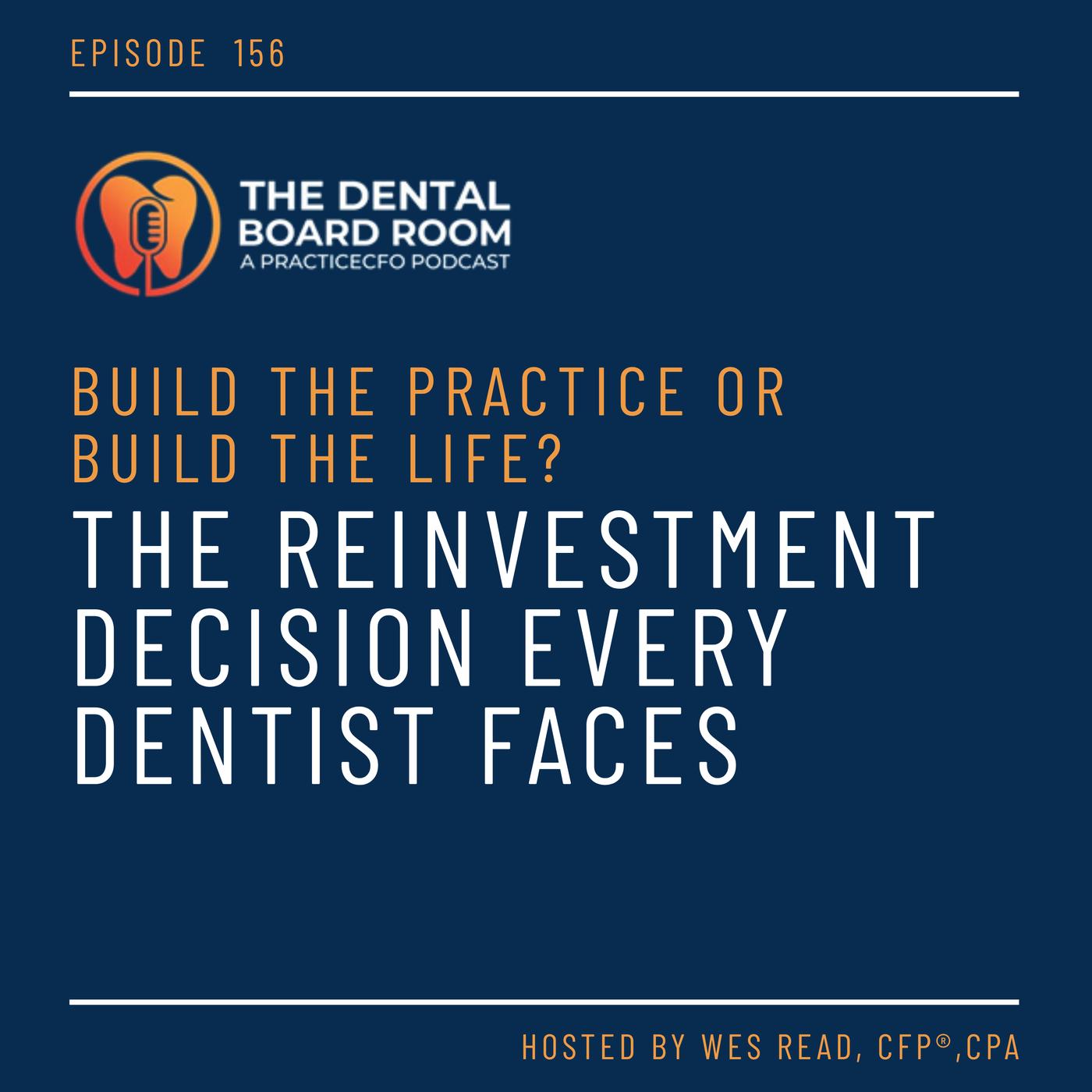
One of the most persistent tensions in dental practice ownership is deceptively simple: should you reinvest surplus cash back into the practice, or distribute it to yourself? In this executive roundtable, Wes, Michael, and Megan break down the capital allocation framework every dentist-owner needs,…
Disclaimer: The podcast and artwork embedded on this page are from PracticeCFO, which is the property of its owner and not affiliated with or endorsed by Listen Notes, Inc.
EDIT
Thank you for helping to keep the podcast database up to date.
