

David Politis: Blew up a deal that would have been very lucrative for the entire team. It was a $40 million offer, I said $200 million as a as a counter. Mike Grossman is a six-time CEO who spent 30 years leading venture-funded startups in Silicon Valley. He's been through all the ups and downs. He's raised money from 12 different venture firms, three public corporations. He's had CEO journeys end in nine-figure exits and one that ended in a fire safe. These days, he sits on four boards and spends a good chunk of his time. Mentor and first time CEOs. I'm curious because you've been part of so many companies and maybe even more so, you've also spent time with so many CEOs. Like, how do you think about luck and how that, you know, what role that plays in this journey? I actually think it accounts for probably closer to 80 to 90 percent. You can control your input, how hard you work, you know, how hard the team works, how good the team is, but I don't think you can control the outcome, but recognize that luck plays an enormous role. And I think a lot of the Headlines about the big companies and the billionaires and so on. I have a feeling that if we deconstructed their stories, we would find that in almost every case they just got lucky. Today's guest is a six time CEO who spent 30 years leading venture funded startups in Silicon Valley. He's been through all the ups and downs. He's raised money from 12 different venture firms, three public corporations. He's had CEO journeys end in nine figure exits and one that ended in a fire sale. These days, he sits on four boards and spends a good chunk of his time mentoring first time CEOs. He just published a book called Failure is an Option. Reflections of a Silicon Valley CEO. 44 candid essays on what leadership actually looks like. I love the format. It's honest. It's easy to read. And the lessons are truly timeless. Mike Grossman, welcome to Not Another CEO Podcast. Thank you very much, David. It's great to be here. I'm I'm excited for this. I ⁓ I have the book literally right here. I was reading it in preparation for this. ⁓ so first question, Mike, what is the one thing that you've done at all your companies, big or small, that's had the biggest impact and you would do again if you're CEO of another company in the future. I strongly believe in actively managing culture. I mean every company has a culture, but what ⁓ my view is that you want to be intentional about that. So what does that mean? It means articulating a set of values ⁓ that are aspirational, things like integrity and relentless velocity and analytical rigor, things of that sort. And then Getting it i in into the DNA of the company and and and affecting every aspect of how the company is operated. So for example, when you hire somebody, the value should be a key piece of whether or not the person gets the offer or not. When you're evaluating somebody's job performance, the how well they exemplify or don't exemplify the value should be a key part of that performance review. ⁓ and an ongoing basis, I believe, in regularly surveying the company. And trying to understand how well people in the company feel that that we are exemplifying or not exemplifying those values. And when the answer is not exemplifying the values, have an action plan to try to fix it. So everything with intention, ⁓ try to achieve the culture you want. It doesn't happen by itself. It's something I've done at every company, and I strongly advise ⁓ the first time CEOs I deal with to do something similar. So When you talk about surveying the company, how often were you doing that? I've for ⁓ much of thirty years every quarter. And every quarter. Every quarter. And whatever the results are, the good, the bad, and the ugly, I would show the whole company. ⁓ not I'm not a believer in spin. I'm a believer in authenticity. When the company isn't exemplifying the values from the perspective of the workforce, I think it's better to shine a light on that, make that visible and try to figure out what to do about it. And were those surveys anonymous or were they anonymous surveys? Anonymous surveys and ⁓ and you can slice and dice it so you could figure out whether certain departments were happier than other departments, whether certain geographies are happier than other geographies and so on. I I I used to do something similar annually. ⁓ I love the quarterly and I I've had this debate actually with a number of people on the show before about anonymous versus not. I am a believer in anonymous. I don't think you're gonna get the honest answers. Unless you you would hope, you would hope that that people are going to give you the honest answer if you don't do it anonymously, but I do not believe I don't believe it's po I personally I don't believe it's possible. I I would even go further and say that what I've seen is that a lot of times people are inclined to not give the honest answers, even if it is anonymous, because they worry that it in fact is not anonymous. So you're right. You're right. ⁓ so no, I'm a big believer in making it anonymous and Speaking to the company very directly about things, saying, look, this is important. If we this is our company. If we want this company to have the values that we say are important, it requires people to be honest in the feedback they give. And in order to help in that effort, you know, we're going to make sure that this truly is anonymous. In terms of the interview process, how would you actually assess if someone is going to live up to those values because it's kind of hard. It's not really a skill per se. You know, so I'm saying from the the the candidate that you're interviewing. So like how would you do that in the interview process? So some of the questions are based on what the values are. So it depends on the values of the company. But let's say for example that analytical rigor is something that is one of the values that's written on the wall then in the questions that a candidate is asked, you would explore how analytically rigorous are you? And can you give specific examples of that? And then when evaluating the candidate, typically with some form where you say, you know, they're good at this or they're less good at that, one of the things on the form would be how analytically rigorous are they? And the values piece ends up representing fifty percent of the evaluation. ⁓ so if, for example, somebody's substantively really strong but culturally doesn't seem all that well aligned, they don't get the job. And ⁓ and I've been really rigorous about that ⁓ through the course of my career. And and the consequence has been that each of the companies, although the business models have been entirely different, each of the companies has had a consistently really good culture that actually reflects the values that we've written down. S you've been the CEO of these six different companies. Were the values the same at the six different companies? No. ⁓ in some cases I was recruited in as CEO and so I was inheriting a set of values And I might tweak the values or suggest new values or take a few of them out, but everything was always done in collaboration with the group. But there are some similarities. There are some that are close to my heart. I mentioned a couple of them earlier. So integrity without compromise, which is something that I first saw when I worked at Intuit. I really like that value. Another one is this idea of relentless velocity. I think that's important in the early stages. Relentless Velocity. You have to keep moving. But it has to be real velocity. But but but I think it's important to move fast. And at the same time, I think it's important to be analytical and thoughtful about where you're going. And so there's this tension, intentional tension between velocity on the one hand, analytical rigor on the other hand. That's something that's been captured in I think all of the values of of of the various companies. But there are some others that vary depending on what the history of the company is, whether I founded the company or whether I was ⁓ so I I really ⁓ I was telling you before we got started. Like I I've been reading the book and I really truly I I mean I really like the format. I think it's it's fast, it's easy to read. You have stories tied to everything. I I love it. So I have a couple chapters that I want to kind of call out as as we go through. And today we're talking about this like anonymous survey and getting the real feedback and all of that. So I I read one of the chapters this morning, What the Hell Is Going On? ⁓ And can you maybe talk a little bit about that that particular chapter? Because I think that that ties a little bit to to this idea of how do you go get this information from from the employee base? One of the things I didn't realize when I first became the CEO was that it would be very difficult to actually figure out what was actually happening. And and it gets to be a bigger problem the more that companies grow because then you're not directly involved in everything and you're not managing through I mean you're managing through multiple layers. And the problem is that people just won't disclose what's happening, either because they're afraid to disclose it, or because they might be politically inclined and they they want to hide something, or in some cases they're just not good at communicating and they forget to c to actually talk about it. There's there's a lot of reasons why getting visibility into what's happening is a real challenge for CEOs. Again, especially as companies scale. And my mentor for many years, a guy named Bill Campbell, really was helpful to me in in understanding how to deal with this issue. He said, Listen, you cannot rely on your direct reports to tell you what's going on, because either they don't know or they may not tell you. So what you have to do is cut through people, ⁓ cut through the management chain basically. Figure out who it is that you can trust on the team. And they can be in any role in any part of the company, but Figure out who the people are who will tell you the truth and invest in their careers. I mean, it's it's a two-way street. You're trying to help them both in your company and then in a longer term sense, but spend time with folks like you know, regularly, every week or every month to really get a pulse on what is happening, who's happy, who's not happening, where is a process breaking down in a very big way, ⁓ where is their frustration, where are their opportunities to improve. Where there problems that aren't being addressed. ⁓ and so I I took that on. I it's I I I think of it as one of the key responsibilities of the CEO is to actually be speaking to people all over the company at all times. ⁓ and not thinkless. And how do you do that? I mean, I used to do that, and then I might someone would be like, You're undercutting me because you're going around me and talking to, you know, this person on my team. Like, how did you how did you get your leaders comfortable with that? How did you get the employees comfortable telling you something that maybe they didn't tell their leader or their leader, you know, how did you do that? I, you know, first of all, since the culture was very much about collaboration and being open and being authentic, it was an easier discussion to have with people who reported to me because they understood that that was the spirit of what we're you know, what we're trying to do. ⁓ but I wouldn't tell people what to do ⁓ if we reported to somebody else, but I would ask how they're doing. And I was very open with people on my team. I would say, you know, this is something that I do. I'm gonna talk to people all over the company and I'm gonna try to get a sense for how do they think things are going. And I'll let you know what they say. I'll I'm gonna be very open with you about when I get feedback that I think is gonna be helpful to you. And and I encourage the people who reported to me to do the same thing. It should be open to feedback, open to talking to people. Sometimes people can be sensitive to it. There's no question. ⁓ but generally speaking, I found that if you don't hide what you learn, excuse me, if you don't hide what you learn and you're open about it, ⁓ it can be really helpful to to everybody. I actually found that the people who didn't want me to talk to the people who were who were under them are the ones that usually there was something going on. Absolutely. Absolutely right. And I will say that, you know, when I talk about this type of value survey. To some extent, you're really trying to identify what you're doing well, what you're not doing as well as a company, but it also is an early warning system. It highlights when there's a problem somewhere in the organization. And coming back to this question of what the hell is going on, when you when you have these data based indicators that say, Hey, you got a problem here, it's a lot easier to then, you know, fix it or to do something about it. Otherwise, what ends up happening is things fester in different parts of the company and you may not even know about it as a CEO for a period of time. And a lot of damage can be done. You can sometimes lose great people without knowing that there's even an issue. And so I think it's That's the worst one. That's the worst. I think that's the worst. And I think you have to be enormously vigilant about this. And a lot of my methodology, if you will, relates to being as vigilant as possible because Otherwise, when adversity strikes, which it always does in every in every company, you're at great risk of losing great people. But if you really build relationships and you have a really open environment that people enjoy and where people trust each other and they've regarded as a great place to work, you're much more likely when adversity strikes to have people stick. ⁓ this is kind of a side note, but I actually just got off with a CEO that I've been talking to for a while and This is a crazy story, but he joined a CEO. He's not he he's not the founder. And I told him, you should really go and talk to literally every employee at the company. He's like, every employee? I said, I if I were you, I would do that. So at least you'll kind of gauge, you know, what's happened. Everything you just said and kind of get a sense for which departments there may be smoke. There may be so he did that and halfway through, he's like, Dave, it's been great, but this is a lot of Like there's a lot of meetings. And I I said and he told me some stuff that he found. I was like, You should keep going. Anyway, this is unrelated a little, but he he told me he just finished all the employees and he found two North Korean operatives that had like come in through a fake like, you know, because it's a remote company. Yeah. And this is like a big problem, actually. Like big s you know, and they got a job. They had been working there for the last like four months before he got there. Wow. And He came in, figured this out, and actually they fired these two people and got, you know, locked everything down. And anyway, but it was it was this is a very extreme example. But it was from going and meeting with every single person at the company and and he learned a bunch of other stuff. But it's just I think that there's I I could when I read that, you know, like the bad news is just not gonna get no one's coming to you. You know, even if we don't think of ourselves as CEOs and anything important, like the employees are scared shitless to come be like Hey, I'm gonna tell you, Mr. and Mrs. CEO, I'm gonna tell you the my manager sucks. We're doing this wrong with our cut like they're not gonna do that. ⁓ maybe one in a thousand will do that, but most will not. Yeah, I completely I I've never had anything quite as as dramatic as North Korean operatives, at least none that I've discovered. But I completely agree with the idea of trying to talk to as many people in the company as possible. And ⁓ in fact the company that I ran most recently when I joined, ⁓ I I don't remember the exact number, but there were hundreds of people in the company. And it took a while, but I did get to everybody and for exactly the reason that you recommended. Yeah. you you seem to be big kind of on operating rhythm and communicate, obviously I mean, even this thing you're talking about with values. And can you talk a little bit about the operating rhythm Like I I'm a big believer in it. It's something I didn't do in the early days of my career or BetterCloud until I had an advisor come in and be like, Dave's this is the breathing apparatus of the business. Like we we gotta get can you talk about how you think about that? Yeah, I had a similar evolution. So when I first ⁓ I started my first company, I had a fairly significantly negative view of bureaucracy and process and I thought we're not gonna do that. We're gonna we're just gonna be nimble and we're gonna move fast. And What I very quickly came to realize is that if you don't put a structure and a framework in place, chaos ensues. And if you don't define specific objectives and and really what success is at a in a in a detailed, rigorous way, then people start moving in different directions and nobody really understands what success is. And it ends up being a tremendous problem if you really hope to scale the company in a in a meaningful way. So I've ended up in a you know very process oriented say when it comes to entrepreneurial business. And from an early stage, I believe in defining a rigorous set of typically quarterly goals. And for each of the goals, I try to deconstruct it. So each goal has a set of supporting strategies, each of which has a set of supporting tactics, all of which have specific success metrics. And then on a basically monthly basis, The whole company again looks at how we're doing. Are we yellow, green, red? And and I'm most interested, frankly, where we're yellow and red. Yes, because then it's something you can do about ⁓ you know, you can try to solve the issue. ⁓ and again, ⁓ showing that to the whole company. So I yeah, I'm a believer that these types of consistent, rigorous frameworks have an enormously positive impact. They make sure that everybody in the company is on the same page. They make clear what we're trying to accomplish as a group as well as individually. Should be possible to go to anybody in the company, I think, and have them say, This is what I'm working on, this is what the goal is, and this is why it's important to the entire companies. ⁓ and I think that if you do that consistently, you end up with a more motivated workforce, a more predictable set of outcomes, ⁓ greater likelihood of success. It it is f you know, I I was talking to a ⁓ CEO the other day and he said to me, Dave, ⁓ what I think I'm learning over time is that that most of the things about building a company, ninety percent of the things are the same across any company. And and he he you know, he he kept saying to me, like, No, I'm I'm gonna do it differently and we're doing this and we're doing that and then as I've been coaching him and we've been talking, this has been the convers literally what you're saying. Yeah. And you feel like, why do we have to put all this process and these systems and the you know, all of this and with AI, everyone just gonna do their job, nothing's gonna you know. And in reality, that there's timeless things like the lessons in your book, like there are just timeless things that I don't think they were the same fifty years ago and probably gonna be the same in fifty years, and having communication, alignment, you know, ⁓ transparency, ⁓ focus, all the things you literally just said, like Yeah, it seems like extra work, but it's it's necessary. Yeah, I I agree. And I also think that on some level it it's sort of extra work, but what it really does is enables you to move much faster as a company. So it has this it it has this feeling that you you're you're s you're taking so much time, you're moving less fast, but the reality is over the long term you're able to move much faster because everybody's aligned. And I think it's ⁓ it's really important. So so let's so this this chapter or this story that I liked was plans are useless. Planning is indispensable. Love this one. This this one for me, when I was reading, I was like, Yep, I have been through that. Can you talk a little bit about that one? Yeah, it's a one of my favorite quotes. It's a Dwight Eisenhower quote that he talked and his context was the battlefield, literally. ⁓ I mean the moment you Create a plan in an entrepreneurial business, the plan is obsolete in some way because things change so fast. And so that's the the first part of it. Plans are useless because whatever plan you make is immediately out of date and you have to make adjustments to it. But if you don't make any plan and you just do it on a seat of the pants basis, everything is kind of ad hoc. What are we going to do today? ⁓ I've got this idea th this morning and ⁓ this afternoon I have a different idea. You end up, you know. basically jerking the company around and people don't know what they're working on and they get frustrated and you don't focus on the right things because there's no explicit effort to prioritize in the correct way. and so I think it is important to always have a planning mindset, even though the plans will very frequently change and it as new information ⁓ you know becomes available. ⁓ and that's part of this idea of having a process and setting objectives and being very consistent about it. But inevitably when you do that, let's say you do it on a quarterly basis, at the end of the quarter, some of the goals are are obsolete. I I mentioned yellow, yeah, red, y ⁓ yellow and the other color I I have is purple. And what purple means is the goal doesn't make sense anymore for some reason. Do you do you think that with founders Not CEO specifically, but founder specifically, this is extra hard because they're founders and like everything they see, they they see opportunity kind of everywhere, you know, and they see because I feel like that. I feel like that's kind of one of the challenges is as a really like a a great founder, yeah, arguably is pretty bad at like this kind of planning and this and that, because what made them a good founder was Figuring it out and doing this and changing this and you know, going from zero to one. Yeah. They probably didn't have a lot of plans, you know. I think you're right. I think a lot of the best entrepreneurs that I've met are people who pivot quickly. They they they're always listening, they're always looking for opportunity, something new emerges, and they quickly adjust and then they adjust again and they pivot and they adjust and they're bobbing and weaving and trying to figure out where the opportunity is. But the problem is that as a company grows, If you do that as the head of the company every day, the rest of the company has tremendous difficulty understanding why you're doing what you're doing, and it can lead to a ⁓ significant dissatisfaction. So I've I've learned to be more patient than is my natural personality in a lot of ways. So for example, if somebody is working on something because for good reason we've said that's one of the top priorities. If I impulsively the next day have an instinct that maybe we should make something else the top priority, in the old days, I would have immediately said, Okay, we've got to start working on the new things. These days I would say, let's try to let's do a little bit more research. Let's let's talk to the person. Let's try to explain, you know, why we might need to pivot in a different direction. And you might take an extra week or two weeks or, you know, even a month. But in the end, you'll have better alignment with the person who's doing the work or the people who are doing the work. So I've had to learn that. I mean, I started out as a founder entrepreneur. I became a CEO because somebody had to run the company. And then it turns out that I actually liked being a CEO. And in some respects, I think I was a very good fit. I've been a very good fit for that. But it wasn't my intention, but I have to do things differently than if I'm just wearing an entrepreneur founder hat. I think those are they're very different roles. And that's something that I didn't understand or appreciate when I started in this game. Yeah. The o the only negative feedback, I don't want to say only, but biggest negative feedback I got from my board at one point was Dave, we love that you have all these ideas. We love it. You know, we love that you're coming with this and this, and let's take this channel, this product. They're like focus. Focus and and and it was only when we got to you know two, three million of ARRs, something like that, when they said that to me. And I had to go through that transition to your point of becoming an a CEO, you know, and and ⁓ that was hard, but I I kind of I'm with you. I n as later on I kind of was like, Wow, how did I do all this you know whipsawing everyone around and changing the priorities every day. And and to me it felt good because I felt like that's what's going to make, you know, to your point about velocity, I was like, this is velocity. Yeah. But it's not it may be velocity for you the founder, but that's it. It's not the velocity for the 200 people that work for you. Yeah, that's exactly it. And I I think I didn't think enough about the impact of what I was doing on those people when I was early in my career. And when I started to think more from their perspective I I modified how I I would do things. I also had a sort of similar experience to you. You know, I I I mentioned it in the book. There was one specific situation where I realized we needed to pivot and I tried to pre-sell that with the board. And I thought everybody was on aligned with that. But when I went into the board meeting, they all rejected ⁓ what I was recommending. And the reason to a significant extent is because there had been a history of me pivoting and pivoting and pivoting. And so they thought that I was too inclined to pivot. And as a result, they wanted me to be patient and focus. And I realized ⁓ focused and I realized we needed to pivot. It was an interesting moment. And I think that had I been more methodical about pivoting previously, when I went to them and said we needed to pivot, they would have supported it much more quickly. And instead I had to take a few months to get them on board. And I had created that situation, I think, too immediately start. ⁓ do you today you're working with a number of first time CEOs, coaching them, advising them. What do you think is the number one challenge that that they are facing that that is like timely to now? You know, not not obviously there's all the things that we've talked about, but like what in this moment in time in the market that we're in today, what what is the what is the number one challenge you're seeing across these The number one challenge I see is not really specific to the time period we're in. It's that I think that all of them to a lesser or greater extent struggle with their mental health, that they feel an enormous amount of anxiety, that there is lots of ups and downs and they tie their identity to a great extent to whether the company is doing well or doing less well and they have nobody to talk to. It's a very isolating experience. And for those of us who have done it, we know exactly what it feels like. But for those who haven't done it before, ⁓ you know, they don't have that context. And who do they talk to? Very often they can't talk to investors because they feel if they show weakness or vulnerability that that's uncomfortable and they might get penalized for it in some sense. And the role I play often in in helping and coach these guys is to make them understand that this is normal. This is what everybody feels. It's not an easy path. Every there's ups and downs and it's emotionally challenging at times and you're constantly dealing with adversity and you are not your situation. So when things are going well that's great, but it'll probably go worse in the future. And if things are going poorly, yeah, if you stick to it, it'll probably go better in the future. So I would say that's a common theme, even though the business models and the personalities are totally different from one to the next. Yeah. I we did a dinner with a bunch of founders ⁓ months ago and it it was one of these dinners that for me was it was all about this actually. And it was it was specific on one topic and it was CEO support system and all this stuff and and The conversation was about this and people talking about like I can't talk to my spouse about it because they don't want to hear me talk about it anymore. And I can't talk to my employees about it. I can't even talk to my co-founder because my co-founder is not the CEO. And I can't talk to my investors because I'm scared that they're gonna think I'm weak. And I can't speak to my friends because they think I'm I'm a billionaire because I have a startup. You know, like and they were going through this and I'm like, it's a it's it's val it's valid. And it's and it's And it's the most lonely it's a terrible you know, when people tell me like, ⁓ I want to be a CEO on day, I'm like, Do you? Do because I don't know, you know, like it sounds cool. It sounds cool until you have to do it. There's a mythology around, you know, some technology companies and Silicon Valley and entrepreneurship and being a CEO and the reality is not the same as the myth. And ⁓ it's not for everybody. I mean, I I personally actually like it. I don't know, maybe that makes me a masochist in some ways, but Or maybe I learned to like it to some extent, but there's no question that it's hard. And it's and it's not glamorous. There may be moments that are, but but day ⁓ you know, day to day it's not. It's a grind. It's difficult and it's difficult logistically, it's difficult, you know, practically, but it's mainly difficult emotionally because all of these companies have a kind of marathon quality to them or ⁓ triathlon quality to them. And and ⁓ with lots of roller coaster like experiences. So let let's actually talk about the roller coaster experiences. ⁓ it's a nice transition to the Hey Kool-Aid chapter. ⁓ so maybe can you talk a little bit about that chapter? I actually I really like that because I think that that is a chapter that a lot of people today need to read. Because I think there's a lot of people today who are drinking the Kool-Aid. and and ⁓ anyway, can you maybe share a little bit of Yeah, it was my first company and you know, we had spent a few years in the wilderness and finding our way and but then we started to get really good traction. And all of a sudden we had an acquisition offer that was ⁓ pretty significant. And ⁓ I was overconfident about what would happen if we didn't do the deal, basically. I s I kind of ⁓ you know, I I sort of thought, well, we don't need to do this deal and if we're gonna do the deal it should you know, the the value should be extremely high and and I didn't take enough time to really think about what the strengths and weaknesses are and and what the the challenges were in front of us. I kind of got swept up in in the situation. maybe my own rhetoric to some extent. I ended up overplaying ⁓ my hand in the negotiation. I I blew up a deal that would have been very lucrative for the entire team, ⁓ including my best friend and co-founder. ⁓ and the other co-founder is my father. So it had would have had a very big impact on my family. And I overplayed it. And it was it was because I sort of have come to believe that how much attention we were getting and how much value seemed to be ascribed to the business was something that was gonna be a perpetual opportunity. And of course it didn't play out that way. I regret that to this day. It's it's the it's the one thing in my career that happened that more than twenty five years ago now and I sometimes wake up at two or three in the morning and then I think, ⁓ God, that was such a dumb decision on my part to to take that approach. So And that was basically if I read it correct if I remember correctly, it was some I'm trying to remember it like a sixty million dollar offer and you came back with like a two hundred million dollar. Yeah, it was something like that. It was a forty million dollar offer, but it's pretty clear we could have gotten them up to something like sixty. Right, right, right, right. And just speaking personally, and and both you know, my father and I controlled a huge percentage of the company at that point in time. I think it was about half of the company. So in effect, we were being offered thirty million dollars. For something that wasn't really all that far along. And yeah, I c I said 200 million as a as a counter. And and I had a rationale for it. You know, the company that was making the bid had gone public recently and they had an inflated value. And I said, well, if you're worth that, we're we've got to be worth this. But the truth was that I I I rushed the response, and the response reflected a certain level of I don't know, ego, I guess, to some extent, ⁓ lack of self awareness, ⁓ over optimism, maybe that's it. And I talk about, you know, drinking the Kool-Aid, it's kinda hey, Kool-Aid is I just had come to believe we were going to be enormously valuable, that this company that we had built was going to be transformative. It was gonna be huge. And yeah, that was my goal, but just because it was my goal and just because we were getting a lot of attention didn't mean that that was the reality. So it's it's very easy to get overly excited about the progress that a company is making at an early stage. And very often it doesn't play out that way. ⁓ and I I learned a lesson, the hard lesson from that. We sold that six years. We sold that company six years later, but for meaningfully less money. And ⁓ but more significantly, by that point the cap table had been had been changed a lot and I had much less ownership and and so on. So ⁓ you know, it cost me That this lesson right now, this lesson right now is I really believe this right in this moment in time is something people need to hear. Because I I talk to founders, AI founder companies doing a million of revenue. Someone offers them, you know, a two hundred million dollar valuation, and they literally believe they're worth two hundred million dollars. Like they're like, Yeah, I'm doing a million of revenue and I'm worth two hundred million. And it's like, Well, that's I've seen the story too many times. You're not worth two hundred. billion. Then someone offers them two hundred million to buy the company, they're like, why would I sell it for two hundred million? You know, I'm gonna be worth two billion in two years, you know? And I've had this conversation with people and I'm like, I promise you could, you could be. There are examples of that. Yes. But they're not like one in a hundred or one in a thousand. They're more like one in ten thousand, but we read them online as if they're one in ten. Amen. Absolutely. And that was again I w learned that the hard way. What I should have done is I should have said yes to the deal. We would have made a lot of money and then a couple of years later started a new company from a position of much from a much stronger financial position. ⁓ and that's that was the lesson. And ⁓ when somebody is interested in in buying your company, I think the one of the the key learnings is don't assume that you're gonna get another credible offer anytime soon. Those things often are far and few between. So you you get an offer from somebody that's got deep pockets, take it seriously because when the smoke clears, you might not get another one like it or it might happen five years or seven years or ten years later. I those liquidity windows are very when you're when you actually go through it, you're like, yeah, and I'll do this. And you know, you're telling your investors like, and we'll sell to this company. They already told me they want to buy me, you know, and and you have no control. I I say this a lot, like you don't have control. You don't even know the macro dyn who knew that COVID was gonna hit? Like who knew the war is gonna start? Who's n you you have no control and that may impact the acquirer, the macro markets, the interest rates, and even if you're doing amazing. I I I talk to people on this show who I'm very close with, who've gone from a hundred million of revenue to three hundred million of revenue, fifty million to two hundred, whatever, these kinds of numbers and they're worth less today than they were when they were a quarter of the size. You know, and that that to me, like when those things are happening, you're kind of like, you know, that that's that's painful to you know, especially the twenty twenty one batch, like of that peak valuations, you know, those companies are four X bigger and worth less than they were. And public companies, you can look at the comps, that's that's the dynamic. But we feel when we're in it, when it's our company, no, no, our my company, I'm gonna I'm gonna do it. I'll I'm gonna be worth more. Someone else is gonna offer me more money tomorrow. I think part of the problem is that when you're running a company, you're constantly presenting about the company and you're meeting with investors and you're explaining why the company is going to be so successful. It's very easy to start believing the rhetoric because you know you're saying it all the time. Yeah, exactly. ⁓ so ⁓ in terms of you know, I want to talk about this actually because it kinda goes it ties to this. Like I I wrote an article recently on the Substack a lot about like about luck. And how my view of of you know kind of the this job and and really about the the ultimate outcomes, you know, ⁓ of these companies, fifty percent of it is luck, in my opinion. You know, you can make your own luck, but can you I mean you get lucky sometimes on this customer. I wrote this thing, I found this great LinkedIn post about Twilio and how they got Uber early on in Twilio's days when they were a very small company. And Uber was a small company and then Uber became massive and it became, I don't know, twenty percent of Tulio's revenue. Like that was that was luck. I mean, that's not skill, that's luck. No one knew that that was gonna be the case. Like, you know, some of these things you hire that person and that one person is the game changer. Like, yeah, you could say you were good at hiring, but you're probably lucky. Like, I'm curious because you've been part of so many companies and maybe even more so, you've also now spent time with so many CEOs. Like, how do you think about luck and how that You know, what what role that plays in this journey? I I you said you think that luck accounts for fifty percent of the result. I actually think it accounts for probably closer to eighty to ninety percent. I and and I'm basing that on my own experience in terms of how things have worked out. I mean, there's been a constant theme, I think, through all six of the companies that I've run. I think we've had very good teams, I mean some a little better than others, but very good teams. I think the teams have worked hard, have met a lot of smart people, have been addressing things that are actually real needs. ⁓ I think, you know, I think I've done a good job. ⁓ but some have been much more successful than others. And what has the difference been? A lot of times it's been random. I I had one company that pivoted several times and then started succeeding significantly. We went from nothing to a thirty million dollar run rate in less than a year. We were growing very fast. And then We came into work the next day and Congress had approved an amendment to the Durban ⁓ to the to the Doc Frank Act that legislated our business model out of existence. So that was very bad luck. And it was nothing we could have done about it. But I've had the opposite experience too. I had a company that was on the verge of going public, COVID hit, all of a sudden we couldn't go public. We looked at other liquidity options. Nothing was breaking our way. We actually made five separate efforts. either to sell the company or to go public or or to raise growth capital and so on. And for one reason or another, over a period of years, each of them failed, even though the business was doing pretty well. And then the smoke cleared and a big acquirer came along and paid us a lot of money to buy the company more than we would have made had we gone public in the first place. So I I just think you can control your input, how hard you worked, you know, how hard the team works, how good the team is. your effort. But I don't think you can control the outcome. And I think there's all sorts of things that that intrude, macroeconomics or government or just sort of, you know, strange things. And and and I think that that often determines the outcome. I mean in my case, I think of my career really let me say this better. Venture capitalists have the benefit of having a portfolio. Yeah. And if you have ten or twenty companies or thirty companies A lot of them are going to fail. Some of them will do okay. And a few of them will do very well. It's it's a great business model. But if you're an entrepreneur CEO, you have an N equals one. And that means that the risk is much higher. You you might succeed significantly, you might succeed decently, or you might fail, but you have one that you you know, one ⁓ possibility at any moment in time. Over the course of thirty years, like in my case, I've had an N equals six. And so it it ends up looking like a more normal distribution where some of them have done very well, some of them have done less well, most of them are somewhere in the middle. And I think the main difference has been luck. That really is my my assessment of it. ⁓ and I and I and as a result, my view, and I say this to the CEOs that I, you know, mentor, is try to just focus on what you can control. Try not to worry too much about. the outcome. It's not that results don't matter. It's just that don't get too anxious about what's happening at any moment in time because you y you all you can control is what you try to do about it. And but recognize that luck plays an enormous role. And I think a lot of the headlines about the big companies and the billionaires and so on, I have the feeling that if we deconstructed their stories, we would find that in almost every case They just got lucky. So not to say they're not good, they're not smart, and so on, but they also were extremely lucky. I when I interview people and we have this conversation, I love when when the most successful people I've interviewed who tell me, Yeah, I got lucky. And I've also had conversations with people who ⁓ they're they're not good at actually, and they're not they're not that skilled and they got lucky and almost can't They won't say that they got you know, like they they believe that they they're good. And and ⁓ I I think that the the multi time founders the the the w the founders that I find the hardest to talk to, work with, invest in, whatever, are the ones that got super lucky in their first go around. And it's almost like a debilitating win. It's like they did so well. the first go around. They a company doing two million of revenue. They sold it for four hundred million dollars. Just whatever, because of whatever luck. And now they present themselves as like, well, that I was good. I'm just gonna go do that again. And now it's like five years later they're two million. They can't raise around at twenty million. And like, I don't understand. I you know, last time I was at two and sold for that that dynamic is the one, you know, I almost would prefer the person who's done it had the bad luck, but really great at at execution. Yeah. And and then is doing it again. Like I d I don't know, but ⁓ I don't know if that makes sense. But that's that's kind of how I it does. My my my fifth company, one of the co-founders, had a great track record and he had ⁓ been initially one of the key people at Netscape when browsers were first bringing being introduced. Which at least for a period of time was you know enormously successful. Yeah. And then he had co founded a company that also did very well, at least for a period of time. And this was now his next venture, the the one that I was being recruited into as CEO. And and the issue with this company is that it it hadn't gotten traction. And he was mystified by it. He really just couldn't understand. He said, I I did all the same things as the first two times. Exactly. I don't understand why it isn't working. And and and it was more than that. He didn't want to deal with it anymore. I mean, he he was he was done with it because it was just too distressing to him to be in a context where it just wasn't working. as easily as what he was accustomed to. ⁓ and I I remember sort of I can't remember what I said, but I know what I thought, which is, well, you you know, you're very talented, but you got lucky. And this is actually normal what you're experiencing. Exactly. It's not always easy. It's usually not easy. ⁓ why did you stop operating as a CEO? I sold my last company four years ago and decided to take a break and then during that break, among other things, I wrote the book that we talked about and but I I actually don't think of myself as having stopped operating. I've run six companies. I'll probably run a seventh at some point. I l I ⁓ I it's still in my blood, I guess I would say. So I guess I've been impersonating a retired person as opposed to actually being a retired person. What ⁓ I missed I'm curious about the I actually missed yeah. ⁓ I'm curious about the book because I at one point I'd like to write a book, you know. and this this reading this ⁓ inspired me a lot. Like how what was that process like? How long did that take you? It it could do it. How long did it take you? Yeah. It's funny. It was very organic the way it came about. I never actually thought I would write a book. It came about by accident to a great extent. And a lot of the best things in my life have emerged spontaneously and by accident, and this was one of them. I was speaking to a former colleague and I was telling some story or pontificating about something or other. And and he said, you know, Mike, you should consider writing a book. And my initial response was, I don't think so. And that just so happened at lunch the same day, I was meeting with another former colleague. I mentioned what the first colleague had said, and he reinforced the idea that it would be a good idea. And then I more or less spontaneously decided, you know something? I'm to try to do it. So that was where it got started. It ended up taking about a year to write, but really Ninety days was the was the time where about eighty-five percent of it got written. And it was a real effort and I didn't actually enjoy writing it all that much. I I I would say that I enjoy having written it as opposed to ⁓ you know, enjoying the actual writing process. Because every day I would wake up early, I would in the sit in this room, and that was my one of my cats next to me on the on the desk, and I would try to write for the next six hours. And I did this ninety days in a row. And some days I would write, you know, a couple of pages and some days I would write a a sentence and and I I I'd read about authors like Stephen King who were unbelievably prolific. Like I guess every day for fifty years he sat down and wrote five pages. Well, that's not me, I can tell you that. and so it was very challenging, ⁓ but ⁓ in the end I would say very rewarding. ⁓ as as for the approach I took, what is once I decided to write a book. I wasn't sure how to actually go about doing it. But I did have a writing experience over a period of twenty-five years that helped inform the approach I ultimately took. So I started writing an annual holiday letter. You know, people a lot of people do this. You know, here's what we did last year. And this is at a time when these types of letters were less common. And I wrote a couple of them, you know, one year, the next year. And the third year I realized that what I was writing wasn't very interesting. It was just kind of saying, we did this and this and this. And I thought, I'm not interested in writing it. I don't think people would be interested in reading it. What if I turned this into more of a creative writing exercise? And what then evolved was this idea that these holiday letters were kind of like a patchwork quilt that I was creating over a period of years, telling the story of our family's life. And s and each year was very different from every previous year in terms of the approach I took. ⁓ it featured one person in the family or maybe a certain writing style. But what ended up happening over the course of those twenty five years is I taught myself to tell stories in two or three or four pages. And so when I was thinking about how to write the book, I initially thought, I don't know how to write to write a book. And I thought, but I do know how to write holiday letters. I know how to write these two or three or four page stories that just are pretty tight and engaging and and have a theme and and I thought that's what I'm gonna do. I'm gonna write a lot of holiday letters, ⁓ more or less. ⁓ and and that's what the book is. Which is these little chapters, yeah. The the it makes sense. ⁓ you mentioned your family, like you CEO six companies, hard job, we talked about that already. How did you balance family and work and and did you bal is there a balance? ⁓ you know, what did you what sacrifices were you making along the way? ⁓ did you change how that oper you know from the early CEO days to later CEO days as your family, your kids were getting older? Like how how did you deal with that? I would say that these types of entrepreneurial experiences put a lot of strain on families and relationships, at least in my experience. Having said that, I always have prioritized family extremely highly. So ⁓ I made time for everything. I mean I wouldn't miss events and ⁓ you know, I would avoid traveling at certain times or or schedule meetings around so I could go to you know, one of the kids' soccer games or basketball games or things of that sort. I will say that I wasn't able to do anything else. In other words, you know, between the job and between family activities, I didn't have time for anything. ⁓ including anything creative like writing a book. ⁓ there was there was no chance of that. ⁓ so it was a challenge. ⁓ I I think ⁓ you have to be very time efficient and I'm I I think I'm pretty good at that, which has been helpful. But the hardest part is that you bring you bring it with you. You bring I mean you you you're you're always thinking about the business or you're always anxious about something. And then when you're with your family, you're kind of half with them, but you're half in your own head. still thinking about the business. And I have to say I don't think I ever got very good at that. ⁓ Through the years. But, you know, I ⁓ have a great relationship with my wife and kids. And I think it's worked out pretty well in the end. But there was certainly a price to be paid for ⁓ being so immersed in these types of crazy companies. Yeah, I think I think that the ⁓ not being present is a very common thing that I that I hear. And I I of course I I had the entire time my entire career of just always having there's a part of your brain that's just you can't turn it off actually. And ⁓ and I've had those conversations where my wife is like, you are not here. You are definitely somewhere else thinking about, you know, and she would sometimes be like, why don't you just go and get whatever that is out of your like go write whatever email you need to write or whatever. And and I think that Back to your point before you were talking about like the mental health of founders and the people you talk to. And I think ⁓ this is an example of one of those things that people need to know is the case for everyone. And you're not unique if you're dealing with that. And and even more so what you said, like, yeah, maybe you can do work and family, maybe. ⁓ but you can't do work family friends. You can't do work family some hobby. You can't do work like you you really can only do, I forgot who it was. I think it was someone there there's some like speech one of like the the ⁓ commencement speakers or s I forgot who it was who said like you can only do two things great you know at any given time or or something like that and or anyway so I I think ⁓ I just think it's important for people to hear that because I talk to people and sometimes like yeah I'm gonna have like the work life balance. I'm like I I don't think it's possible. I I don't I don't I have yet to interview someone literally a hundred interviews. I've yet to interview someone who said yeah yeah I had work left balance, definitely. Like I I I think if you're building so I think if you're really trying to build something significant and transformative i I think there's no chance of that. You know, I I you know, some people are better at compartmentalizing than others. And I see this in the CEOs that I coach. You know, some are relatively good at that, some are relatively poor at it. The ones who are relatively good at it still struggle to balance. Yeah, there is no balance in some sense. I guess what what they lose is sleep. And ⁓ Yeah, yeah, yeah, exactly. But the ones who can't compartmentalize, forget it. I mean, if you're if you're really bad at compartmentalizing, work will end up consuming you. And and that can be very unhealthy actually. And and and I think actually it can have a very adverse effect on the on the work results. ⁓ in talk about maybe Bill Campbell, because you mentioned him now a couple of times and ⁓ seems like a very important person in your career and life. ⁓ maybe share a little bit about about him for people who don't know who he was. Yeah, Bill ⁓ was a remarkable guy. He he started out his career as a college football coach. And then when he was about forty years old he decided that he was going to go into business instead. And he had a meteoric rise or within about five years he was the head of sales and marketing for Apple. And then in subsequent years he ended up becoming the CEO of Intuit. And then eventually ⁓ came to be known in Silicon Valley as the coach of Silicon Valley. He was on the board of Apple. He was Steve Jobs' most trusted right-hand guy. He he played a very critical role in helping Google and the senior people at Google, ⁓ a lot of the most prominent Silicon Valley folks, but he also, more quietly, helped a lot of people who were less well known and folks like myself who were trying to build a an early stage company. and He would provide an enormous amount of time. I mean, I I met with him once or twice a week for about ten years. He was always accessible at any moment in time. He would he would just you needed to get him, he would take the call. ⁓ he had no agenda beyond trying to be helpful. I think that's the most profound thing. I mean, on one level, he was incredibly talented. He was you would you give him a small number of facts and he would immediately see the entire picture. He was very savvy, very smart, and enormously empathetic. ⁓ but he also, as I said, had no agenda. He wasn't doing it for money. He was doing it because he wanted to just be helpful to people who needed the help. He was a coach still, you know, the college football coach. He was still that coach. And he had a very big impact on how I learned to do the job of CEO. ⁓ my first company, I mean, the the house I'm sitting in right now, I own this house because of the advice that Bill gave me at a very critical moment in time. So that's a very tangible ⁓ b benefit that came from that. ⁓ and frankly, the book that I wrote to a very significant extent and the the help I provide to to CEOs is a reflection of what I learned from Bill. I ⁓ I basically decided I want to pay it forward. I'd I'd like to in a very similar spirit try to be helpful. ⁓ With no real agenda beyond that. And that's due to Bill. Yeah, he's remarkable. There was a book that's pretty well known called Trillion Dollar Coach that was written about Bill Campbell. ⁓ and I don't know. I've never met anybody like him in ⁓ in my career. He was remarkable. yeah, Vert, a number of people mentioned him. ⁓ and I I I need to read that book actually. ⁓ it's amazing. ⁓ last question for you. Knowing everything you know today and all the experiences that you've had in your life and your career, what is the one piece of advice that you would go back and give yourself before you f started your first job ever? I think it would be two things. The first is that you're on the right track, Mike, in terms of what you're interested in doing. So I mean I I I'm glad that I did the you know, pursued the career that I that I've pursued. But the piece of advice would be focus on the input, don't focus on the outcome. It's because you don't control the outcome. Just try to be in the moment and do as good of a job as you can do in all the different dimensions that are associated with that. But try not to get wrapped up in whether things are going well or going poorly. Just try to be more level. It's something that I taught myself over time, but it's not something I knew at the beginning. And you said this before, which I want to call out, which I I really liked when you said before of, you know, if you're on a high, it's probably going to come down. And if you're a low, it's probably going to come up. Like that that's just it's like a sign curve or something. It's like you're gonna you're gonna go through that and ⁓ and all you can do is focus on the inputs because you're you're not ⁓ you're not controlling those outputs. I taught myself to be level. And ⁓ the expression I heard once is be like sand. And ⁓ and so yeah, when things get h get up and they're great, I expect them to get worse. I don't get too excited when things are not going so well. I assume they're going to get better because I've seen that many times. So I don't get too upset about it. And and in a company context, you know, dealing with a team of people, I try to, you know, preach that to some extent. It's like it's fine. We're okay. Just sort of let's work the problem. We're trying, think in terms of the long term. Don't get too upset. Don't get too excited either. I mean, it's just let's try to enjoy what we're doing, try to do it as best we can. And if we do that. the odds are that in the end we'll have some level of success. I don't know exactly what that's gonna look like, but ⁓ let's try to do it well. Let's be proud of that. And do do as good of a job as we can for customers, create a best environment we can for employees. Just try to do a great job. Focus on that. Mike, thank you so much for doing this. I really I really have enjoyed reading this book and I love the format. I I think any anyone who's a founder should be reading this and and it's it's easy and it's also just you'll read it and go, ⁓ shit. Yep, I'm going through that. ⁓ yeah. Like so thank you for writing it. Thank you for doing this with me. I I really enjoyed. Yeah. Thanks for having me on, David. I really enjoyed the conversation. Thank you very much. Awesome. Awesome. For those of you listening, I hope you enjoyed also. If you did, please share this out with your networks and we'll see you for the next episode of Not Another CO podcast.
ABOUT THIS EPISODE
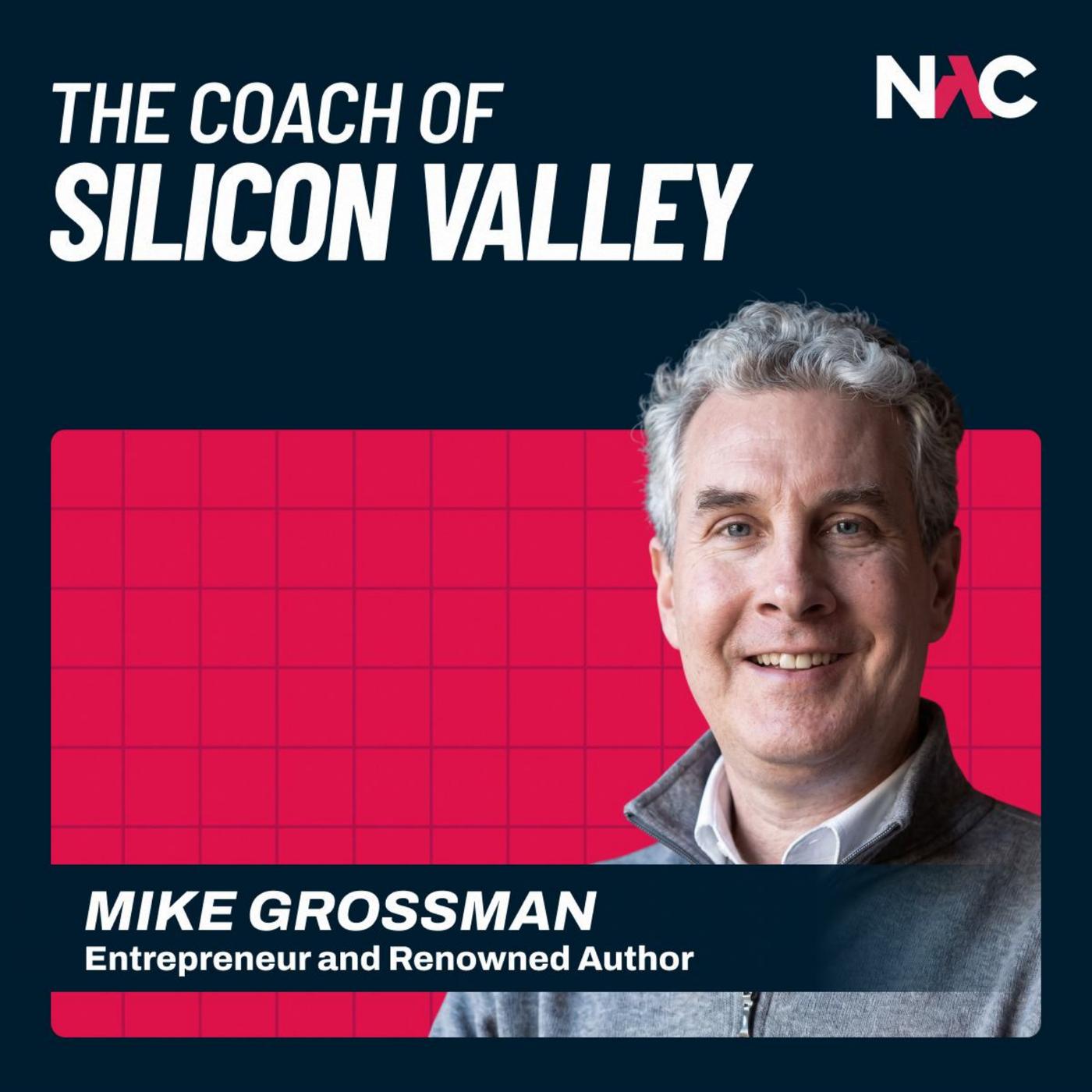
Everything you think you know about why startups succeed might be wrong
In this episode, Mike Grossman, six-time CEO and mentor to first-time founders across Silicon Valley, breaks down what thirty years of running companies actually taught him.
From the $200 million counteroffer that blew up his first company, to why he believes luck accounts for 80 to 90 percent of every outcome, Mike pulls back the curtain on what nobody tells you before you take the job.
If you think success is mostly about hard work and good decisions, this conversation will make you rethink how you handle risk, pivots, and your own sense of control.
Key Takeaways:
Build a System to Find the Truth: Your direct reports won't always tell you what's really happening, whether they're afraid to or simply don't know themselves. Cut through the management chain and find the people who will tell you the truth.
Hold Your Plans Loosely: A plan is obsolete the moment you make it. The goal isn't a perfect plan, it's a planning mindset flexible enough to adjust without losing the team.
Stop Whiplashing Your Team: What feels like velocity to a founder can feel like chaos to everyone else. Pivot too often and even your own board will stop trusting your judgment.
Beware Your Own Kool-Aid: Believing your company is destined for outsized value can cost you the deal in front of you. Mike turned down a $40 million offer and countered at $200 million. He got neither.
Luck Runs the Table: Mike believes 80 to 90 percent of a company's outcome comes down to luck, not execution. Focus on what you can control and let go of the rest.
Watch Out for the Debilitating Win: Founders who succeed once often can't understand why the second company isn't working the same way. It usually wasn't the formula. It was luck.
Nobody Talks About the Loneliness: Nearly every first-time CEO Mike coaches struggles with anxiety and isolation, and most feel they can't show it to their own investors.
Quote of the Show: Plans are useless because whatever plan you make is immediately out of date and you have to make adjustments to it. But if you don't make any plan and you just do it on a seat of the pants basis, everything is kind of ad hoc, you end up jerking the company around and people get frustrated.- Mike Grossman, Entrepreneur and Author
Connect with Mike:
LinkedIn: https://www.linkedin.com/in/migrossman/
Book Failure is an Option: https://share.google/9DUEHB6596Eb1uXAa
Chapters:
00:00 — Intro
02:21 — The One Thing Mike Would Do Again At Every Company
08:39 — Bill Campbell's Rule
20:13 — Plans Are Useless, Planning Is Indispensable
25:19 — The Pivot His Board Rejected
26:58 — All Of Them Struggle With Their Mental Health
30:47 — The $200 Million Deal He Blew Up
38:58 — Luck Accounts For 80 To 90 Percent
44:17 — The Debilitating Win
54:16 — Remembering The Coach Of Silicon Valley
English
United States
TRANSCRIPT 🔗
SEARCH PAST EPISODES
Search past episodes of Not Another CEO Podcast.
Disclaimer: The podcast and artwork embedded on this page are from Not Another CEO, which is the property of its owner and not affiliated with or endorsed by Listen Notes, Inc.
EDIT
Thank you for helping to keep the podcast database up to date.
