

David Politis: This may be the hardest professional category in the business world. Building something from nothing. This is gonna be the hardest 10 years of your life. And if you want that, it's the difference between being happy and being great. Do you wanna be great or do you wanna be happy? Because you're not gonna be happy for the next 10 years. Today's guest is Nick Moran, founder and general partner of NewStack Ventures. Nick founded New Stack in 2015 in Chicago with a mission to invest in the outsiders. The founders building category-defining companies outside the Bay Area, outside the obvious networks, in the places most VCs aren't looking. NewStack now manages close to $100 million and leads pre-seed and seed rounds and has invested in over 60 companies. What do you think founders don't understand about your side of the table? I mean, we face a lot of rejection. People think VCs in some cases are overreaching or steal equity. They have this very pernicious sort of predatory nature to them. We're in business too. We're all in the big game. The founders and the VCs. Today's guest is Nick Moran, founder and general partner of Newstack Ventures. Nick founded Newstack in 2015 in Chicago with a mission to invest in the outsiders. The founders building category-defining companies outside the Bay Area, outside the obvious networks, in the places most VCs aren't looking. NewStack now manages close to $100 million and leads pre-seed and seed rounds and has invested in over 60 companies. Nick also hosts the Full Ratchet podcast. He launched it in 2014 and it is was one of the first venture capital focused podcasts. He's now published almost a thousand episodes with some amazing guests. And ⁓ I I've said this to Nick, I know how hard it is to stay consistent with a podcast. So let alone doing that for over a decade, it's truly impressive. Nick, welcome to Not Another CEO podcast. Amazing. Thank you for having me, David. Congrats on all your success with the show. And of course, prior to that with BetterCloud and Thank you. Thank you. ⁓ first question right out of the gates, what is the one thing that you look for in founders or companies that that you invest in? Desire. Can't teach desire, right? Just like you can't teach height. Someone either has it or they don't. And so I don't know, are you a sports guy, David? Yeah. Yeah. Are you a sports guy? Like I I think most of the Valley folks are trying to draft Peyton Manning. With the number one overall pick. And they're gonna pay that price, right? That's an expensive pick. You could trade down the number one overall pick for, you know, a whole handful of late first rounders and a bunch of second rounders and third rounders. That's an expensive pick, right? We're looking for Brady, right? There's talent there. It doesn't jump off the page for whatever reason, right? But there's talent there, but even more than talent. There's this insatiable ambition, desire, self-belief, people that are gonna overcome the odds, overperform, and ⁓ and drive real results, right? And so if you find Brady, you end up with the goat. And maybe you miss Manning, but you don't overpay. So desire is the one thing we look for. How do you look for how how are you assessing that in someone that you meet? If you're really looking It's obvious, right? People that want it that will climb over bodies to get it, you can tell, right? Like you you host a podcast, you've founded a company, you've done a lot of hiring. I know that like you're kind of an expert in talent. Right. And actually hiring is an interesting proxy for investing. There's some distinct differences. But when you're hiring talent, if you put people through some paces. If you see how they come back and come after you and sell themselves and want to understand your business and your motivations, you know, it it becomes apparent. And so we know the characteristics we're looking for that map to desire. And we know the behaviors that exhibit. They're very observable. They're very obvious. When you go through two months of diligence, you either see behaviors or you don't. And our goal is to take our our The mouth of our funnel, which is 10,000 deals a year, we invest a pre-seed, pre-revenue companies. Get that 10,000 down to the hundred that we should be spending time on. And then get that 100 down to the five that we want to invest in. So the way you do that is you, you know, mercilessly and rigorously screen out the people that have behaviors that don't map to what we're looking for. And maybe they are Peyton Manning, which is awesome, but we're never going to invest in that. You know, we're always looking for Tom Brady. I think the desire thing, it goes to the resilience piece, right? Because if there's one commonality across a hundred episodes, it's hard. You know, I ask every CEO guest what's the biggest challenge you've ever faced? And some of the challenges are I mean, just they're terrible. I mean, most people would would actually give up. Some some probably do give up. And I think to your point, if there's one attribute, it's that. desire, you know, I would say chip on the shoulder, you know, something where they're just it kind of doesn't matter. Like it doesn't matter what they run into. They're gonna run through that wall and they're gonna make it through to the other side. I I I love that. I actually think that that is probably no one's put it as simply as that in in one of these conversations. I think because it it does translate to so many other things. To everything. Whether you're raising capital, hiring talent, Closing customers, securing key partnerships. If you can do more than the other person and show the other side of the table how committed you are, it makes all the difference. Right. I just had Steve Blank on the show again. I I host the podcast and first VC podcast. And we were talking about this motto in Silicon Valley. You know what the model motto in the valley is for founders? Fail fast. Right? And it's part of the reason the Bay Area has been successful. The motto of our founders is failure is not an option. And it's a completely different mindset. Completely different mindset. And so I have a lot of respect for the Bay Area. We need the Bay Area for a lot of reasons. Our companies raise money, you know, when they have to raise fifty, a hundred, two hundred and fifty million bucks. They're going to the Bay. But ⁓ completely different mindset, right? A lot of tech guys in the Bay Area that think they can start a company, probably not entrepreneurs. Right? The only person we invest in outside of the Bay Area is an entrepreneur, right? And many of them acquire the tech skills that are necessary to take companies where they need to go. You could almost make an argument that in today's world you can acquire you can acquire those tech skills even faster than you could ever before, right? I mean, if you think about it, I mean when I started my career, we literally were racking actual surfers like in a data center to start the company. And you had to understand how to do that. And then you had to understand how to build the product. And then you had to understand today I I I I don't know. I'm more and more of the opinion that the the like the desire the ability to fundraise sell this it's starting to Not for every kind of not for the deep tech stuff, but for most technology companies, that's actually more important and more unique than the technical skills. I tend to agree. I think if there's this concept called tractability, so Andreessen's talked about it for many years, and it's the ability to give a non-skilled professional the capability of a highly skilled professional, right? And this is what we're seeing with AI. We've seen this with many products over time. Anytime you can unlock creativity, curiosity, you know, broad thinking about new spaces by not having a gate or a barrier to building, you know, any domain where there's this big barrier to expressing your creativity is gonna limit the amount of innovation. in development in the space. And so anytime you can make something tractable, you can give a layperson skills of a highly trained, you know, tactician or strategist, ⁓ you see that this is an explosion of growth and value creation. And that's what we're seeing with AI. So I agree 100%. When you meet a founder for the first time, ⁓ I I ask every VC this on the show. If you when you meet a founder for the first time, how long is it But it's kinda like you said about interviewing, by the way. It's like how how long between that meet that first word that's spoken and you knowing or at least believing that you want to invest in that founder? It's usually three to six minutes. I used to say six. It's probably less. ⁓ but you know pretty quickly if it's somebody you're excited about, somebody that you believe you can partner with. Somebody that can articulate something simply, directly, and in a compelling magnetic way. And that usually happens in the first three minutes, if not six. ⁓ now from there, you know, you have to peel back layers of the onion. And so you could go from you start at no and within three minutes, that could get you to maybe yes, very excited, but then maybe you learn more about it and you get less interested. Like before I was talking about observing behaviors. Sometimes you don't see behaviors in an interview, right? You have to see somebody on the field, playing the sport, taking the ball, working with teammates, communicating, right? All these little things that we take for granted, they don't all come out on the first call. So you definitely know the ones you want to spend time on. ⁓ but you're not necessarily gonna invest in all those. Do you I I don't think I've ever ever asked someone this. So do If you have that feeling, how long are those first meetings? Like, do you you do a 30-minute hour-long meetings or are your meetings like I I had a VC actually when I was pitching for BetterCloud, who he told me he said, I'll I'll do a five-minute call with you. That literally said, And he said, If I like you after the five minute call, then I'll fly to meet you. And I was like, Five minutes? I d I told our CFO, I'm like, This this I better really nail these five minutes, you know? And ⁓ like, do you do you have something like that where you have upfront meetings because you must do hundreds of meetings. I don't can't even imagine how many if the top of the funnel is ten thousand, you know, it must be crazy. Like how do you handle that? Well let me ask you this. Are are you married, David? Yes. You are married? Okay. Yep. So when you met your wife for the first time were you or you when you went out on the first day. Right? In the first five minutes were you interested? Yes. And so Did that make you get down on one knee and and propose? No. What did that say that what did that interest make you do? Right. Go on more dates. Go on more dates. Dig deeper. Learn more about her. See if it's a long term partner or a short term partner. Right? Like the more you're interested in somebody, the more curious you get. You wanna know every detail. What sports did you play growing up? Did you have siblings? You know? What were your parents like? Like You just really want to know somebody at their core. And it's the same way. I think you've done some hiring lessons around like the five whys or asking why and getting deeper and deeper. Like if you're a naturally curious person and somebody across the table is very compelling, it's hard to get off the call. Cause you just want to keep going deeper and deeper. So true. It's so true. You get the vibe, you get the energy. You know, my wife gives me a really hard time because every time we go to a barbecue in the neighborhood. I end up in the corner talking to some entrepreneur the whole time. You know, I'm not socializing with everybody else, all the sales guys and attorneys and whatever else. I'm like jamming with some entrepreneur about some BS, you know, AI, you know, whatever. And so, yeah, that's only the beginning. Like, if I'm really interested, we're going so deep and the nuances of these businesses are fascinating. Right. Every vertical is different. Every ICP customer set's different. The mechanics of workflow are different, the nuances of partnerships and the way things get done in industries and trust how trust is earned, how relationships are built. And so the best of the best founders are just so obsessed with customers and so obsessed with finding the right technology tools to solve problems that you know we could jam for hours if we had it. So the first five minutes is only the beginning. Do you think that when the founder walks out of the first meeting with you, they know if you're interested or not? I do. I think there's a whole group that probably doesn't because they're like, you know, it feels a little more transactional. But the ones where there's fit, right? It's not this entrepreneur is better than the other one. It's a fit thing. It's like I know what I'm looking for. There are certain types of people I really vibe with, you know, people that find a wedge, figure out an ICP. I have no revenue, but I've met with 50 customers. Twenty of those customers have offered me money for this thing because they're so passionate about what I'm building. Like you start to hear these stories, you start vibing on like all the nuances of the market. And there's just that fit and that vibe. So most of those founders have a good feeling after the first call. And then you roll right into diligence so naturally. It's like you're working on a project together. And that's where you get to start observing behaviors and do they say shitty things to their ⁓ team? Right. Do they take a week to get back to you on some financials? ⁓ do they forget a bunch of stuff? Right. Like if if I had asked them to share their cap table because they raise some angel funding and then they share their pitch deck, right? Like all these little details, you know, the best of the best don't screw that stuff up. They're good to work with, they're collaborative, they want to find a path forward, they want to build a a really good connected team that's engaged. ⁓ they don't miss the details, they're good on the details, and they're just obsessively, you know, trying to get to that that goal line of raising money so that they can build what they need to build. When you say that, actually tying it back to getting married, it it is, it is, it's that fit thing, right? Where I I talk to some founders sometimes, they're going out to fundraise and they're getting a bunch of no's and I'm like, actually, by the way, most people get a bunch of no's, especially up front. It's not about it it's about finding the your person, which in this case is kind of your VC that that gets what you're doing, vibes with that. So the when you use the marriage kind of analogy, it I think it's a very similar thing. Plus you're gonna be with this person, I mean theoretically for a decade plus, you know, so so it is kind of like getting married, you know. And I I think I I actually the biggest mistake first time founders make, especially younger ones I think they're ⁓ they they tr tend to look for the biggest valuation. They tend to look for the biggest name firm. And I tell people, I'm like, the valuation, it's not, it's gonna be binary at the end of the day. And really the firm also kind of doesn't matter. It it's the person at the that, I mean, you're gonna be dealing with that person. They could have a great name, but the other partners aren't gonna be working with you. But I don't think you understand, you know, you're like, ⁓ this this amazing, you know, firm and this brand. You're like, okay, but who's the person? You know, and and I don't blame because I've been through that. So I don't blame founders, but I think that that's the dynamic. And it is, it's it's back to the kind of the idea of getting married. You know, it's it's about finding that fit. 100%. I I mean, I love founders that are deliberate, very thoughtful with their investment partner, with how much they're raising and with Product and growth. Like you really don't want to turn up the dial on product and growth before you know the plan, before you see the metrics are working, right? Because capital will accelerate whatever you throw it at, the bad or the good. So if you have crappy customer acquisition cost, you know, you're just shoveling your money into a furnace. It's not effective. And so to your point. Like optimizing around valuation, what happens when you get a higher valuation? Right? You raise more money. What happens when you raise more money? You have pressure to spend that money so that you can grow and catch up to the valuation. And then you hire more. And maybe you hire too fast. And maybe you overspend on product and end up in the wrong direction. AI changes under your feet, and then you have to do a hard pivot right. So spending too much and going too fast, it it really works when the formula is working and you know if I put capital in this side of the formula, you know, great, beautiful widgets come out the other side. but if you haven't figured stuff out, being very methodical, deliberate, smart, cautious with your spending, with your hiring, ⁓ and your partner, partner fit is important. This this this concept, this this idea of looking for the outsiders, ⁓ where did that come from? Was that something from your background? Was that just a hole in the market that you saw? Like where where did that what's the origin of that? I mean, this is a good question. Like when I grew up, I was kind of obsessed with these business heroes like the Rockefellers of the World and later Steve Jobs and Jeff Bezos. And I'd read all these biographies and these books and ⁓ I've got a whole shelf of them. But I noticed a lot of these people did not Come from pedigree and from provenance, right? A lot of these people came out of left field and they were uniquely driven, ambitious people that over all else desired to have success, desired to accomplish their life's greatest professional goal. And that drove everything. It was their number one priority. So if you, you know, if you study enough of these folks, you'll see. There are common threads. They're all different people, you know. Estee Water is very different than ⁓ than Jeff Bezos. But guess what? Those two people have so much in common. It's ridiculous if you're looking for the com commonalities. And I grew up as somebody who went to, you know, I was a big swimmer, so I was obsessive about athletics growing up. It's all I really cared about. I got by fine in school, but I was just obsessed and threw everything into swimming. And then I got to college and had a this wake up call that there's a lot of people out there. I went to Indiana to swim. I'm like, ⁓ gosh, there's a lot of people out there that are better than me. Which was like kind of shocking. And I'm like, I gotta find something else to do. And ⁓ I quickly realized I'm I'm a state school guy. You know, I'm not gonna get the best job on Wall Street or the best job in Silicon Valley. I'm kind of this outsider. And and then over time, you know, as I built career and ended up starting a venture firm, I realized there's so much arbitrage available if you know how to find talent where other people aren't looking. If you know how to find special, special humans that are relentless and committed to a goal, there's tremendous arbitrage. So, you know, it's not like we're we're trying to get unfair deals, but for people that can't get deals, They cannot get a lead investor. They cannot raise a million and a half bucks because they're based in Charlotte and they're building in a space that's not hot. You know, ⁓ those people can't raise money. And often that precludes them from pursuing their dream. And so we can fill that gap and help them get there. And then all these folks, of course, that I've interviewed on the podcast over the years, they become an important part of our follow-on network. ⁓ so 33 guests on the show have backed up. our companies at later stages. Yeah. Cool. So it they become a part of the Rolodex and then these people from Charlotte or Nashville or Dallas or Chicago that don't know anyone in the valley, you know, I can send them to the founding partner. And that that helps. What in terms of finding the like in terms of people knowing that you exist. I I feel as I've gotten to understand venture more, it feels like That's like one of the biggest challenges is there's so many venture firms and you know, how do you build that top of funnel? How do companies, how do founders obviously now you've been doing this a long time, but how do how do how do you how are you existing in these markets like Nashville and Dallas and Chicago? I mean that that's you know, it's all over the place. Like how how do you handle that? Is that through having a big team? Is that through the podcast? Is that through like how do you show up? It all started with the show, right? Being first. was really critical. Because if you if you're not first, you gotta be the best, right? ⁓ and so just by being the first effectively audio blogger for VC, like there were some writing bloggers like Fred Wilson, Brad Feld, if you know those names, nobody was doing audio, right? Some people were doing it on startups like Calicanus back in the day, the show This Week in Startup. So he was doing all founders. Nobody was doing VC stuff. So by being first, I mean we've built We're top like zero point zero five percent podcast. You know, now it's a its own media organization with revenue and sponsors and ⁓ you know, million I mean, I think we hit six million listeners or something. And so that creates awareness. And when people know you're doing deals, it's not always directly the founder listening, but maybe angels or VCs in a certain region that want to invest at series A. Let's say they're in Nashville and they want to invest at Series A and do deals that have three million of revenue. They're still gonna meet great, great talent that's earlier, but they want a place to send them. Right? Like, ⁓ you got zero revenue, but you're the top engineer from healthcare, you know, breakout success in Nashville. ⁓ you should talk to Nick over at New Stack because he does pre revenue deals. And so all these, it's kind of like a hub and smoke system. Where you end up with evangelists in every major and minor city in the US that think of you because they can't write a high conviction lead check for a company that has no revenue. Like very few people do that. I host a breakfast in Chicago of 55 founding partners of VC firms. There's two people at the table that will write a lead check for a company that's pre-revenue. There's two of us out of 55. So You know, if you're playing in a lane where other people don't play, then people will think of you and try and help founders out. When you get involved with a company, pre revenue, early, pre seed, seed, how are you adding value into that relationship? Like specifically you, new stack, like where what what what is that thing that that founders are coming to you for? Other than the fact that you're willing to write a check to a founder that maybe other people are not, which is already a big thing. But post deal, like what what does that look like? I mean, this is this is a really good question. I'm gonna give you a kind of a qualitative answer. So any founder in any place in the country can build incredible talent. There's great talent everywhere if you can find it. Any founder anywhere can build an incredible set of customers, right? They can be customer obsessed, they can be close to the customer, depending on region, you know, you can be really close to your customer. The thing that most of our founders are missing. Is experience on the venture scale pass path, right? Experience in the valley, raising from VCs. What does it look like to go from a zero revenue company to one million to ten million to a hundred million in ARR? Right? Many have not walked that path. Some have, but a lot of domain experts have not. So I think probably the single most valuable thing that we can provide. Is a window into the the echo chamber, which is the valley. Right. If you're building a company there, you're in that mix. You're talking to people constantly that are, you know, talking about AI and venture and dynamics and positioning and how to narrative your startup in a way that will get, you know, Menlo and Excel and Lightspeed excited. ⁓ but if you're outside the valley, you you're not in those discussions every Right. You're not in that room. You're not having those coffee chats at Blue Bottle. And so giving them a window into what VCs care about, what they expect, what they're gonna be looking for, the expectations at Series A, not just from a metric standpoint, but a talent standpoint. What does your team need to look like? You know, what are your your structure and your your your measurements? ⁓ how how they need to be set up. And then ultimately creating that Rolodex. And that introduction path for series A. So we call that the NRP, the next round plan, but we're very intentional and methodical about here's what we can do for you if you do your job. Like what you have to do is go build a product and sell it. What we have to do is map out who are the best VCs for you to connect with, who's the best intro point at that firm. And if we don't have that relationship, I gotta get them on the podcast now so that in 18 months, when you're raising. I'll have that relationship with them. You know, I've I've now hosted them on the show. I've met with them for coffee in the valley. We've traded notes on thesis. Now they're in the Rolodex. And so then I can make that referral at the right time. So this is all kind of an intentional platform that we've done very early to fill the the glaring gap that founders outside of the valley have. Next round plan. I I like that. Can you talk to me a little bit more about that? I I I is that like an actual p written down thing with each company? Yeah, a hundred percent. So it starts, I'll try and make it basic so I don't go on and on, but it starts with a alignment on the business you're trying to build. Right. There are different types of businesses. There are SaaS businesses, marketplace, deep tech, ⁓ AI outcome based businesses. You've probably heard a lot about these now. And so the business models are different for each of those, and the expectations at Series A are different. So a series A investor in a deep tech business has much different expectations about where the company needs to be from a revenue standpoint, from a margin standpoint, et cetera, than like a SaaS business or even a marketplace business. And so first it's just about alignment on here's the business we're trying to build, here's the business model around that, and here's what series A is going to expect from your business performance, from your team, et cetera. So we get alignment around that. The next step. is to set up a series of North Star metrics. So we've got objectives for where we want to see the business. And you have to be really careful not to index on lagging indicators. So I think of revenue as a lagging indicator of success, whereas a leading indicator s of success might be, you know, total phone calls done or total demos performed with prospects in your ICP as an example. ⁓ so we really focus on leading in indicators of success. And then as we get further with the NRP process, we get close to a fundraise. It's really about defining the unique characteristics of your business. So let's say you're a woman founder that's in Raleigh Durham. You went to Emery and you're building a healthcare company that's focused on adolescent mental health, right? Those are some interesting flags there. Right. We can go to the valley and we can build a very customized list of who are all the people that are blogging, writing, tweeting, investing in women-led businesses, or businesses focused on wellness, or businesses focused on mental health, ⁓ businesses focused on adolescents, right? And children. And so there's all these different ways that we can find a perfect target list of potential series A investors. build that Rolodex and then we share that with other VCs. Maybe there's three VCs in a deal. And we're all gonna write down like, I am very strongly connected with Naveen Chata at Mayfield, Nick Moran. So maybe I'll do that intro. Whereas somebody else might be have a stronger connection with somebody at Sequoia than I do. And so you create this whole list and then and then we help with the blurb, we help with the deck You know, these tools that are used to create excitement, you're never gonna raise capital on a blurb, you're never gonna raise capital on the deck, but you do use it to create intrigue, to create excitement, to get somebody to lean in. And so it's all like this thoughtful referral strategy. You know, what are the tools and materials we need? How do we set this up for success? And then how do we get you in the right rooms at the right time to create enough momentum and excitement? that you're gonna end up with eight term she I mean I just had two companies raise a series B. Both of them had eight term sheets. One had four from tier ones, one had three from tier ones. And that allows them to your earlier point to optimize the partner. Right? Pick the VC that's that's the best fit. Optimize for dilution. You know, maybe one is trying to trying to invest way more money for twenty five percent. There's another one that's willing to do fifteen to seventeen. So ⁓ you know, if you only have one offer, you really have no decision. You need a bat enough. Yeah. So that's our goal. Let's try and get you five plus offers. I like the this next round plan thing, is it's something I talked to fo it's it sucks actually to have to say it out loud because when you say it out loud, you realize like it it is the outcome that you're you're building. It would all be great if we're doing, you know, bootstrap this, whatever. But in reality, if you take venture, this is what I tell people. If you're gonna take venture, you're on that hamster. You're on the wheel at that point. You're on the wheel. And I like this of like, let's just be let's just acknowledge. Like you've taken this money, you will have to raise again, almost by definition. Yeah. So let's just work back from there and just be acknowledged. Like that's that's what we have to work back from. That's where our North Star metrics. I I think that's a I I ⁓ I tell some people. on the day that they raise their round to create the deck that they're going to use for the next round so that they almost manifest like that's the story I want to tell, you know, right away. Like let's let's play that out. And and it takes t it takes time, it takes work. It even building the relationships with all those VCs. But I I I think doing that ⁓ probably people don't do that enough early enough and are not getting that advice from their investors. early enough so they end up in a place where they have to fundraise right now. And now they're out with the deck and they're blurb but and they're just trying to close a deal versus they've built those relationships, they've built that trust, they understand who they're speaking to. So anyway, I like this next round plan. ⁓ I may steal that. ⁓ I may steal your idea. Build the deck for the next round. I love it. Yeah. That's so good. ⁓ in terms of how you like to be communicated with, you know, as it it seems to me like you are an important person on the cap table, obviously in those early stages with these people. How do you like the founders to communicate with you? When you when you think about the best founders, is it written, is it Slack? Is it calls every week? Is it like wha how do you like to be communicated with? I think there's standard cadence based communication. You know, monthly updates are great. Monthly updates are great. And then there's ad hoc stuff. So if there's an issue that rises to a certain level that they need help with, it's great if they give me a call or shoot me a text. You know, bad news should travel fast. You know, you shouldn't have to wait a quarter or, you know, half a year to find out that one of the co founders quit and we have a big issue, you know, because they've already vested all the s the stock and we pushed back on the vesting schedule when you did the deal and now we realize, ⁓ that was in our favor. That wasn't for you. ⁓ so vesting is his own other topic. But ⁓ this just happened, which is why I bring it up. But ⁓ yeah, you know, sometimes there are major issues and so you get a text, and sometimes there's major wins, right? And so you get you get an update on that. Other times they need your help. Right? Maybe they, you know, they're closing Walmart Walmart, right, as a customer. And Walmart has asked for their financials and they realize that it's a team of three, right? And they they have five months of runway, and now they're like freaking out as a customer that we're gonna be insolvent and they want to talk to you, you're right, the board member or the leader. So I think for you know, Texas great, some async ad hoc stuff is great, but most of the time, you know, well performing companies, you know, you get that quarterly update. We'll have a quarterly check in. You know, I'm always chatting with founders, ⁓ at least on a quarterly basis, on a cadence. And ⁓ it seems to work really well for the ones that are forthright, communicate, have a standard structure for communication. ⁓ it works really well. It's the founders that kind of go dark on you for six to eight to twelve months. You start to worry about that behavior expressing itself in other forms, right? ⁓ maybe they're not proactively communicating with customers, or maybe they're not proactively communicating with their team in different ways. And so again, it goes back to these behaviors. There there are some common behaviors of the best of the best. And communication is one of those. Yeah. The the bad news piece, that was a lesson it took me a long time to learn because I was always scared to give bad news to to my investors. And then I would show up at the board meeting and the board meeting would not go go well. And they'd be like, When did this happen? It was The day after the last board meeting, like, well, why did you wait a whole quarter to tell us that we lost our biggest customer? I'm like, Well, 'cause I was trying to save them and this and that. And then I learned actually, it was from an advisor of mine who said, Just Dave, just just tell them in the news. As soon as as soon as you know it, tell them because they can maybe help, or at least they're not going to their partner meetings, you know, for the bigger funds and telling their partners how great everything's going and this and that, and then showing up, you know, and and and Anyway, so it it's but I think it can be scary. I I think it could especially when it's like really bad news. I I think that ⁓ but but actually the the people I've had on the podcast that I've talked to about challenges and then specifically fundraising challenges, multiple of them have said because I was giving the updates to my board members, because I was communicating like good, bad, ugly, when I got in a pickle and I had like a real problem, I actually ended up having the support of my investors. Yeah. Because I'd built that relationship. And I have I have a founder going through this right now and I said, please, please just spend the time with your investors. Like s so that if something happens, which it appears like it may in a bad way, it's not like one day you just called them out of the blue and like, can you bridge me because I need money? Versus you've seen me, you've seen that I've told you how things are going. You know, anyway, so when you say that, I I I think it's important for people to hear that point. It helps with everything, right? It level sets expectations. You know, people don't get their hopes up, they're gonna hedge their hopes a little bit. It in some cases they can help you. You would never think they can help you. And then one of your investor po investors pops up and says, Actually, the CEO of that company was my college roommate. Right. You know? Yeah Do you want to get on a call together? And then boom, you save it. Based on relationship. Now you still gotta perform, of course, but all sorts of things can happen if if you use that tribe of advocates in the right way. Yeah. What do you think founders don't understand about your side of the table, your job? I mean, we face a lot of rejection, right? People think VCs in some cases are overreaching or They steal equity or you know, they have this very pernicious sort of predatory nature to them. We're in business too, right? It's really hard to top to be to be top quartile. Like we have a top quartile fund, ⁓ top decile fund. And ⁓ it's hard to do that, like, and keep it there and be super disciplined with your strategy and stay focused. And get deals at at good prices. And and really, if you're an LP investing adventure, you only want to be in the top quartile because there's such dispersion. Like if you're not in the top quartile, it's not really a good opportunity cost of investment. You should have put your money elsewhere. And so it's hard to be a great VC. It's hard to stay in business for us. It's hard to fundraise. You know, one of my good friends, I don't want to name him because I don't want to out him, but one of my good friends closed a ninety million dollar fund like five months ago. And he's a killer. Like he is just an rock solid, amazing guy. He'd be a good guest on the podcast. Yeah. I've had him on mine. But ⁓ he took six thousand meetings with LPs to close sixty five. And so he got a lot of no's. He got, you know, fi over fifty, nine hundred no's. Now I've probably met a thousand and I've closed like a hundred and thirty five. And so a thousand? Yeah, I've probably met a thousand LPs in my t I mean, I've been doing this for like ten years. And so you you get you have to get comfortable with a lot of rejection, you know, a lot of no's. Like startups get rejection too, but they may pitch fifty VCs. Right, right. You know, and then get a couple offers. ⁓ you know, like my buddy that I mentioned before, he pitched six thousand to close his font. And that that's a testament to him and his work eth. work ethnic is belief. ⁓ so yeah, it's not I mean, it's a great place to be. I love my job, but it's not like it's easy. To be great at anything, you really gotta you gotta work hard. Much harder than Well actually founding a fund is I mean you're founding you're a founder also, right? I mean you're you're going through the same thing with the same not the same, but s similar sacrifices and To your point, you have to go from zero to something. I mean, it it's it's ⁓ no one knew who you were before you started the fund, and then you have to build that reputation. So I I I I have a lot more respect for VCs in the last couple of years as I've been spending more time with them. I I like you s their side of the equation is actually hard too. Like it's it's it's hard on both sides. And and I think ⁓ it sometimes feels us against them. I think for for founders and it's ⁓ in reality they need you to be successful j just as much as you want to be successful, right? I mean at the end of the day, you really are in it together. We're all in the big game, right? Yeah. The founders and the VCs. This is not for the faint of heart, right? This may be the hardest professional category in the business world, right? Building something from nothing. Yeah. And making sure that it's financed appropriately along the way when you know, because you've done it, there's a lot of ebbs and flows, there's a lot of ups and downs. Right? How do you go out and raise another two million bucks when you've had a terrible couple of quarters, you lost your chief revenue officer, this and that. Like I'm not gonna pretend to know all your stories, but I'm sure you got Right. And so this is the big game. So I tell that to founders we're backing. Like, you better be ready, you know, for the big game here, 'cause this is not This is not the easy path. This is not straightforward. This is going to be the hardest ten years of your life. And if you want that, right? It's the difference between being happy and being great. Do you want to be great or do you want to be happy? Because we're not going to be happy for the next 10 years. Right. Understatement. Last question. What what do you what are you most excited about right now? Like when it comes to investing? Like what what what is the area? Obviously AI ⁓ I assume AI is an element of it, but like specifically, what are you most excited about? What what do you think is where are you spending your time? I mean, I'm really excited because the balance of power and smart capital is finally tipped. ⁓ so in AI, you've got a barbell. You've got infrastructure on one side, you got applications on the other. For the past seven to ten years, all the money has been plowed into infrastructure. All the smart money. Even like the big VCs, benchmarks, Sequoia, Andreessen, data centers, models, chips, et cetera, all the infrastructure stuff has been being laid over the past, you know, however many years, and that's been sucking up all the capital in the room. If you look at the data over the past quarter, it shifted. So the majority of money is still going into infra, but it's all the sovereign wealth and the crossover funds. Guess what happened to all the smart money VCs? They've moved to the other side of the barbell. So even then Dreesen is is deploying much more money in into the application layer now. And I think that's because the constraint has finally shifted. So the key constraint in AI used to be compute and then it became the model in the algorithms. And now it's finally the data. So AI is really only as powerful as its constraint, whether that be energy, compute, you know, the algorithms. And the algorithms are good. The compute is there, the data centers are there. ⁓ we have sufficient air energy at the moment, and I think we'll be okay on that. Some people disagree, but data is the biggest constraint and the most valuable data is buried behind firewalls within industry, within enterprises, right? Financial transaction level data, customer level data, healthcare, patient data. It's all, you know, not accessible for generalized models that can just scrape, you know, anything on the internet. And that's where the real value's at. So we're really excited about the domain experts that really know a sector, that are deep in an industry, they've built trust and relationships, they understand workflows, key problems, they understand the stakeholders, and they can get into these companies and leverage the power of that data to build a product that compounds in value over over time. The more data you have, the better the product gets. And the broader your moat becomes, right? The better your product gets, the more data you have. If you have ten thousand customers and a new entrant with a better model, a better LLM comes about, but they only have two customers, they just can't compete because your data advantage is so broad. Like you can make much better ⁓ predictions and build the product, you know, in a much better customized way. So Very excited that the application layer is right on the cusp of breaking out because that's where we invest. I agree with all that. I actually think that when you when we talk about like the SaaS pocalypse and everything, the way for the SaaS companies out of the SAS pocalypse is leveraging the data that they ha, you know, especially the big scaled ones. They're just it's so hard to to change, you know, an established scaled company now. But that's the that's creating the new opportunity, you know, ⁓ for the for the next generation. 'Cause actually that that would be the way out for the SaaS companies, but it's it's it from what I'm seeing, it's it's n they're ⁓ they're not leveraging what their actual moat and competitive advantage is. They're just trying to raise the prices, trying to do you know, it's like I mean the best ones, the intercoms and the you know, like r are reinventing them like truly refounding the companies, but ⁓ most will not. I couldn't agree with you more. ⁓ So Benioff was talking about this recently. And you know the biggest issue Salesforce has with this conversion to AI? They're existing revenue based. I don't know, you know. That's right. Their business model. Yeah. Ultimately it's the business model. Because when you convert from seat based to something that makes everyone much more efficient, right? You're you're fundamentally reducing your seats. You're you're killing your own business model. This is the definition of ⁓ the innovators' dilemma. which is, you know, you drop the price so much for a a good solution that you've expanded the market. And so they will have a lot of potential, I think, to expand their market and leverage their data in new and unique ways. But they're gonna have to cannibalize the cash cow business model, you know, the seat based license model, in order to transition to more of an outcome model or a usage based model. And so yeah, like I think it's fascinating to see what will happen with Salesforce because that's the other end of the spectrum from startups, but he's facing something a lot of the SaaS founders are, which is how do we make this leap cross that chasm from software based and seat based ⁓ pricing to AI based and outcome based or usage based pricing. Awesome. Nick, ⁓ thank you so much. for doing this with me. I I really I enjoyed this and ⁓ I'm I'm I I I hope that everyone learned a lot listening to this. I think for founders, especially those early stage founders, there was a lot of lot of gold in this. So thank you very much. Well David, David, you're a stud and congrats on all your success. If you're out there and you're ambitious and you've got that desire, reach out to New Stack. I'm Nick at Newstack.com and we'd love to chat. Awesome. Thank you so much. And for those listening, I hope you enjoyed it. If you did, please share this out with your networks. And we'll see you for the next episode of Not Another CEO podcast.
ABOUT THIS EPISODE
Majority founders only start thinking seriously about their next round when they’re already running low on cash. By then, you’re not really raising; you’re begging.
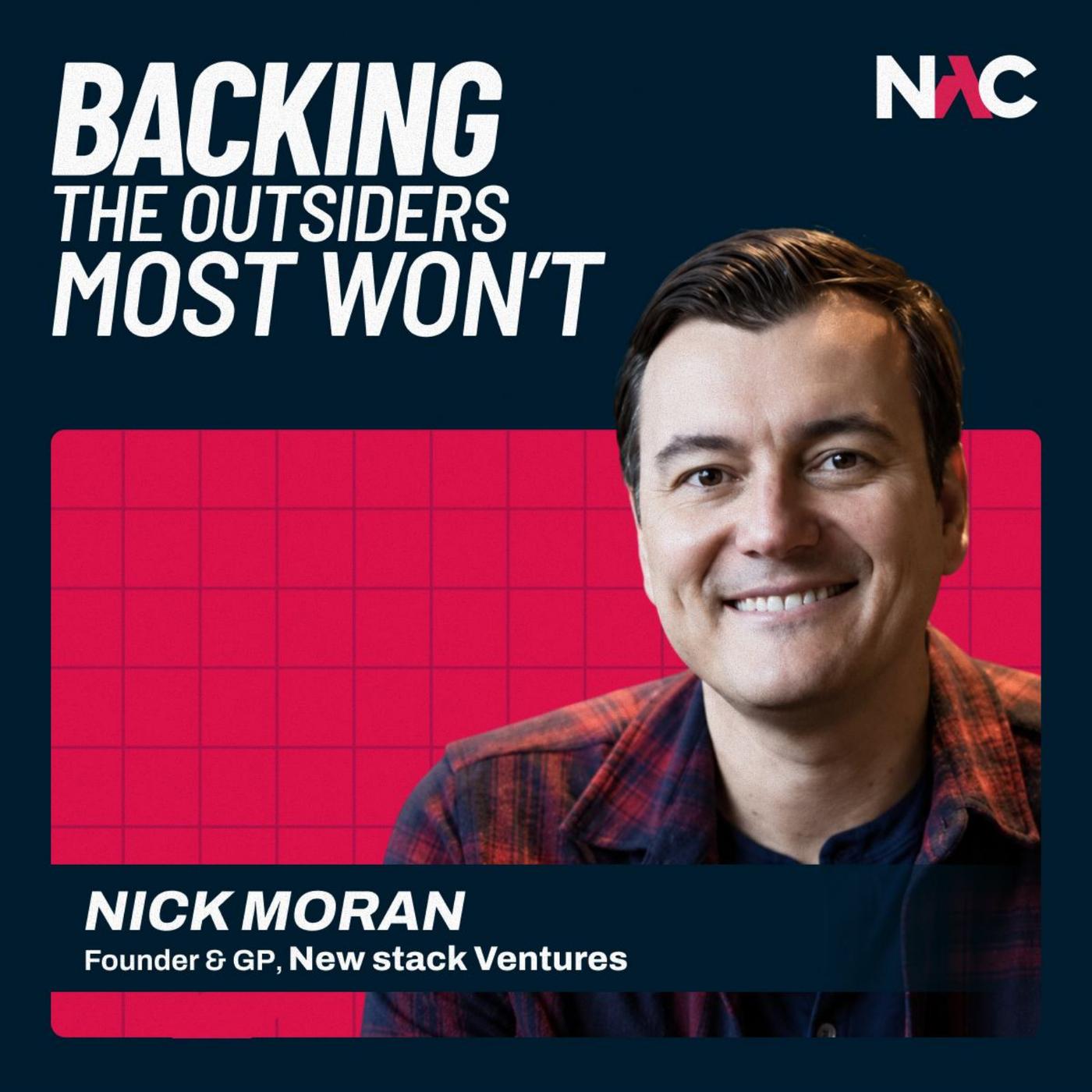
On this week’s episode of Not Another CEO, we sit down with Nick Moran, Co-Founder and General Partner at New Stack Ventures. Founded in 2015, New Stack manages close to $100 million and leads pre-seed and seed rounds with a unique mission: backing "The Outsiders," who are ambitious founders building category-defining companies outside the Bay Area and outside the obvious networks. Nick also hosts Full Ratchet, one of the first venture capital podcasts ever made, now closing in on 1,000 episodes. I know how hard it is to stay consistent with a podcast. Doing it for over a decade is a different level.
Nick shares his brutal honesty on what it actually takes to build a venture-backed business, why he tells founders to build their next pitch deck the day they close their current round, and how he evaluates the intangibles that traditional VCs completely miss.
Key Takeaways:- The Next Round Plan (NRP): Why fundraising is a continuous narrative, not a sporadic event. Nick breaks down how to align on business models, track leading indicators over lagging revenue, and build a highly targeted investor list early.
- Desire Beats Talent: Most VCs look for the "Peyton Mannings" of tech, meaning those who are obvious, expensive, and pedigreed. Nick hunts for the "Tom Bradys," founders with a chip on their shoulder, undeniable ambition, and the drive to beat long odds.
- Bad News Travels Fast: The ultimate trust-builder between a founder and a VC. Going dark creates anxiety; transparency during a brutal quarter is exactly what inspires an investor to throw you a lifeline.
- The Power of Being an "Outsider": Building in cities like Charlotte, Nashville, Dallas, or Chicago isn't a disadvantage. When the herd concentrates in the Bay Area, the best, most capital-efficient opportunities are often found where others aren't looking.
- Where the Smart Money is in AI: The shift from infrastructure to proprietary data. Nick explains why the next massive wave of AI value belongs to domain experts who control the data locked behind enterprise firewalls.
Quote of the Show:
“Do you want to be great or do you want to be happy?… You better be ready for the big game here because this is not an easy path. We're not going to be happy for the next ten years.” — Nick Moran
Connect with Nick:
- LinkedIn: https://www.linkedin.com/in/nick-moran-a738503/
- New Stack Ventures: https://www.newstack.com/
- The Full Ratchet: https://www.youtube.com/@nicholasmoran3095/featured
Chapters :
00:00 Trailer
01:30 Welcome Nick Moran, New Stack Ventures
03:54 Why desire is the ultimate founder trait
10:02 First impressions and the dating phase of investing
15:34 Founder-VC fit is like marriage
20:56 The Outsiders thesis and building a national network
27:48 Inside the Next Round Plan (NRP)
32:20 Communication, bad news should travel fast
39:00 What founders misunderstand about the VC side of the table
42:10 Where the smart money is moving in AI & Closing thoughts
English
United States
TRANSCRIPT 🔗
SEARCH PAST EPISODES
Search past episodes of Not Another CEO Podcast.
Disclaimer: The podcast and artwork embedded on this page are from Not Another CEO, which is the property of its owner and not affiliated with or endorsed by Listen Notes, Inc.
EDIT
Thank you for helping to keep the podcast database up to date.
