

David Politis: When I was in high school, I wanted to start this company and I went and pitched this angel investor and I wanted him to sign an NDA. He was so offended by this that he walks out of the meeting and drives away. And I just remember thinking like, F this guy. Like who is this guy? I I was like, what? How is that? How is it that this person gets to decide the future of the world? You know, it just felt like such a like a disservice or like, you know, something that was unfair. My guest today is Jeff Becker, general partner at Antler, where he leads the New York office. He invests at inception stage before the pitch deck, before traction. He's there on day one with the founders. He's made over 200 investments. Before becoming an investor, Jeff spent the early part of his career at LinkedIn and then founded a company called Earhooks. My brand is backing maniacs at Inception. What I mean by maniacs is really people that have a deep relationship with the problem and they are front-loading their time. They are working insanely hard. They have sort of like a understanding and appreciation for the nuance that's required to build the thing that they're going after. And it's just infectious. Like you're indoctrinated by that. My guest today is Jeff Becker, general partner at Antler, where he leads the New York office. He invests at inception stage before the pitch deck, before traction. He's there on day one with the founders. He's made over 200 investments. I've gotten to see Jeff's world up close. He invited me to attend and present at Antler's cohort kickoffs, and the energy in those rooms is infectious. A whole group of founders starting their journeys on the same day, all in it together. Before becoming an investor, Jeff spent the early part of his career at LinkedIn and then founded a company called Earhooks. Jeff also writes the Monday morning meeting Substack and co-hosts Antler's further faster podcast. Jeff Becker, welcome to not another CEO podcast. Let's go. I feel like I'm gonna run out of the tunnel right now. Pumped out. first question right out of the gate. What is the one thing that you look for in founders that you invest in? Yeah, I mean, my my brand is backing maniacs at Inception. What I mean by maniacs is really people that have a deep Relationship with the problem, and they are front-loading their time, they are working insanely hard, they have sort of like a understanding and appreciation for the nuance that's required to build the thing that they're going after. And it's just infectious. Like you're indoctrinated by that. And so the maniac is just a kind of all-encompassing word for where they really spiky. And that can be different things for different people across, you know, whether you're a 10x engineer or a 10x salesperson, but you just get that sense when you're with them in the room. before there's maybe a team or a product or something else. How do you get that? Like what do you do you ask them a specific question? It's literally just how they present. Like how do you Yeah, I'm gonna give up my edge here. Yeah, yeah. But ⁓ there's kind of three levels to it. The first one is the psychology. I want to understand like what makes them tick, why are they who they are, what were they like growing up? I just want to know about them and how their friends or family might describe them. What are the hardest things they've done in their lives? Are they built for this? ⁓ if I can make it through that psych test, I'll go to the obsession. Which is more of an interrogation. Tell me what you're building. Why are you building it? Tell me about that thing. And you go sequentially down this line of questioning to see how deep you can take them. And then the last is the execution. When did you start? What have you done? Tell me how fast you're moving. And if I can get the mentality, the relationship to the problem and the speed, that's enough to come into the office and spend time together. The you said something about going to their like their childhood, their background. Yeah. You're actually I think the first person who said that and f as from an investor perspective and it's one of the things that I do on the show when I interview CEOs, every single one I ask them about their childhood because for me, I really believe what I'm what I've noticed in terms of a pattern is the childhood makes a massive like the upbringing, the parents, the situations that they dealt with. It's it's I I actually don't think either investors or founders spend enough time on that. Yeah, I think it does two purposes for me. The first is every great CEO I've ever spoken to talks about resilience. Right? They talk about this is a requirement. You have to survive. You have to be able to like withstand pain and make it through really hard problems. And so one, I want to find out if they're resilient. The other one is I want to ask one or two questions the same every single time over thousands of meetings with founders so that I can understand who sounds and acts and is different than other people. And so one is just for me pattern recognition. The second is like, is there legible proof of resilience? And so that might show up in for me, you know, you know my older brother. Like I f I feel like my identity is little brother, I'm super competitive. I want to win, like failure's not an option. And that is just sort of a reflection on my own psyche growing up, you know. And so the way I've shown up as a baseball player or a salesperson or founder, you know, it's just sort of like relentless, you know, unwillingness to quit. ⁓ but that's true in different ways for other people. Maybe you're like a top gamer, maybe you're, you know, someone who's an ultra marathon, or maybe you're, you know, someone who's done something amazing. I want to tease out those stories and find out why you did it. What was driving you? Why didn't you give up? What drove you to do that thing? And so that's where I I spend some time just to understand both like how are they different than others and then what is unique about them and how their mind works. I love I love this because I I'm going to clip this area and give this to founders because literally when I talk to founders, I tell when I say Pitch me as if you're gonna pitch an investor. Yeah. They immediately start with my company does blah, blah, blah, blah. Here's and you know, by slide three, four, maybe the last slide, and this is my team. And we worked at this company and this company. And and that's literally how I would say 90% of founders when I ask them pitch, that's how they pitch me. Yeah. I'm like, just don't even get to the company. Yeah. Just start. Yeah, you gotta convince me of you before we get into anything. And at every stage, people, yeah, that's only early stage. No, I I don't think it matters. I think if you're a series D investor, late stage investor, you still wanna know the person can operate, has that drive, ha right? Yeah, if you're flying the plane, I wanna know we're not gonna crash. Right, right. Yeah. I I love that. ⁓ how long from meeting actually before I go to this, because I want can you just explain the antler model just 'cause I think To have context to the rest these questions. Like maybe just explain how that works. Yeah, so Antler's essentially a collection of venture firms around the world. We operate in twenty-seven cities. We have ⁓ basically a hundred and fifty thousand founders who apply every year to build companies with us. And the reason they apply to build with us is because we are working with founders before there's a co-founder, before there's an idea, essentially before they're even incorporated. We give them physical space to come work and to meet each other and be around other people that are, you know, as qualified, as crazy, you know, as ambitious, as hardworking. And that is electric. I mean, we t we'll talk about culture, but I think culture at day zero is essentially non-existent for the majority of founders. So if you can create a room where you know the top three percent of people who are all exceptional in some spiky way are coming together to build stuff, you create this sort of engineered serendipity, this opportunity for people to bump into each other, find co-founders, find customers, test their ideas, raise their level of ambition, raise their level of work ethic. So we do that simultaneously in 27 cities around the world. We bring them into the office. We spend time with them, we get to know them, we try to understand what's true about them, the things that are going to be true forever. Like, are you a good salesperson? Do you work hard? You know, do you understand the problem you're going after? Can you attract people to work with you? And and not just people, but great people to work with you. And when you start to see all those things, regardless of the company or the progress or the revenue, you can get enough conviction to write a friends and family check. And so the thing that we do differently is work with them first in person before we write the check. And we reason we do that is because we're gonna try to come in before every firm you've ever heard of. You know, we're gonna try to come in when the founder is still like, should I, shouldn't I? You know, like do I have a co-founder? Am I gonna find that person? We're gonna be there, give them the money, and then catalyze all those next steps because we've already seen that they have what it takes to get that done. And so people are coming in. I mean, I've been there, like I mentioned, I've been at the kickoffs, which are which are awesome actually. Yeah. When I come in, you feel this energy because people It's right at the beginning. So everyone only ha some nervousness, but mostly excitement. You know? And it's amazing. Like you know this. I mean, they talk about you for months and months. Years afterwards, like that was amazing. They kick off I'm sure they hit you up on this. Yeah, yeah, yeah. I l ⁓ but I love it. I really enjoy it. That energy is crazy. Like it's really it is ⁓ But everyone has this. What I notice in your groups is like everyone obviously because you go through the application process and everything, like they've already hit some bar, obviously. From that bar of being in that pr program before you write the check, how quickly when you meet someone in that group and talk to, like how quickly do you know I want to invest. I I know you don't invest right away, but I'm saying like how quickly do you feel that you want to invest? So there's two levers. One is I'm trying to create a really interesting room. So in this first interview, when you're going from 20,000 applications in the US down to about 600 people that will work with Antler over the course of a year, that is a different criteria than will I invest. So the first bit is how do I manufacture a room that is insanely interesting? These are people that may or may not be, you know, CEOs of billion-dollar companies in the future. But they're gonna add enormous value to the room. Maybe they're an expert in something like, I don't know, they're ro they're a rocket scientist, or you know, they went to Harvard, or they are a two-time world champion, NBA 2K player. Yeah, there's something. There's something insanely interesting and spiky about them. Or maybe they have domain expertise on longevity or quantum computing or something. And the collection of those people is what makes the room really valuable. Once they're in the room and we spend time with them and we meet with them week over week, within the first, you know, Five or ten minutes, you can get a vibe of the best ones. What's interesting is there's also people who, over those, you know, three to five weeks just surprise you. I mean, they are just not people you would expect and they turn on the jets and they are someone that you know this process uncovers. And so part of why we do this is both to create this interesting atmosphere where people can meet each other and come up with new and novel ideas. Of course, we're gonna back the obvious ones, the full conviction, everyone agrees within five minutes. But we also want uncover the outliers, the people that people other people wouldn't see. And that's much more rare, but we do see those kinds of people and you do get conviction on things that you just wouldn't expect in the first five minutes. And the, you know, obviously the game adventure, you don't want to miss, right? Like the idea is not to miss the outlier. And so, yes, we'll write those checks in week one or two on the obvious ones. In week four or five, there might be one or two stragglers that, you know, turned the jets on, did something unique and interesting, added a co-founder. Did something that wasn't legible when we saw the pitch deck and the, you know, the LinkedIn profile. Yeah, it's I think the challenge I see in the stage that you're at, not just from you, from any pre-seed, really early stage investors, you don't ⁓ in your case it's different, but you don't usually have enough time to see that evolution. Because at least the companies I see, they're going out to fundraise and within a couple of Days, weeks, I don't know. They've got term sheets. They're and so you don't even if if even for me as a angel investor, I don't feel comfortable because I I only get like one dot on the curve. Right. Whereas you actually are seeing Yeah. There's certainly a a group of people that are raising like that. You know, they're ex-founders, they're people they're spinning out of anthropic or open AI, there's something hot going on. Yeah. And for sure they're going straight to a seed round. There is another group of people that are completely overlooked. People that are like working insanely hard, that are built for more, that have done something that is unrelated but equally impressive. And that's a group of people where we're trying to figure out like how should the world look in 15 years, not in three years. I think the hottest rounds I'm seeing right now, this is like AI services, cost control for AI, like things that are very legible. And for that, you need to be insanely well funded and you need to go buy market share and you need to do it with a team that knows what they're doing. It's done it before. If you're thinking on a 15-year time horizon, There's space and time to do something that no one's thinking about. And so in some ways, yeah, will we be priced out of those rounds? Probably. But especially in frothy markets, when everyone's like, you know, going for the stuff that is very consensus, there's this opportunity to systematically find the people that are being overlooked. So, you know, four years ago in Crypto Winter, I did two crypto deals that are now like our best performing companies. No one would fund them. You're right. We're working with them. It's very obvious these people are substantially better than everybody else. And you know, sure enough, like tier one firms led those seed rounds. They're doing series A's. I mean, these are potentially fund returners for us. And I think that's a function of focusing whether people are not. And you read about that all the time, but it's just so hard to do as an investor. how did you even become an investor? Like, I mean because you were you were at LinkedIn for a while, I think almost a decade. Yeah. Started your own company. Yeah. I don't think I've ever had like a right to do anything I've done, honestly. So like I do have some imposter syndrome, but ⁓ when I was in high school, I wanted to start this company and I went and pitched this angel investor. And this guy drives up to the coffee shop. I've never done this before in my life. I don't know what I'm doing. And I want him to sign an NDA. I thought like all I was like, ⁓ I this is what I think you're supposed to do. I don't know. I'm like I don't know, 16 years old probably. And ⁓ he was so offended by this that he walks out of the meeting. He's like, This is ridiculous. Obviously, you're an amateur. No thank you. And gets in his little, you know. Chrysler C bring convertible or whatever and and drives away or his little Mazda Miat. I don't know what it was. But in my recollection, I was like, this is this silly little car. And I just remember thinking, like, F this guy. Like, who is this guy? He could have just get taken the opportunity to coach a 16-year-old, tell him this wasn't commonplace. And I remember after we're just like kind of, I don't know, talking to my family about this. And I I was like, What is an angel investor anyway? It's like, ⁓ it's someone that's, you know, made some money, that wants to invest in companies or Sometimes they raise money from other people and then they decide who gets to build companies. I was like, what? How is that? How is it that this person gets to decide the future of the world? You know, it just felt like such a like like a disservice or like, you know, something that was unfair. And so in the back of my head, I was always like, I would love to do that. Like I want to be the guy that decides. And I never wanted to be in finance. I didn't want to do i banking. I didn't want to do the crazy hours. ⁓ I wanted kind of my destiny to be in my own hands. Sales was a very obvious thing for me. Like Growing up a baseball player, being competitive. Let me go get a a job that doesn't, you know, ⁓ require me to do all the case studies and compete for the big banking jobs. And I'll just carry it back and be number one. And that's what I did. So I went and I worked, actually worked at Xerox in the city. I sold copiers. I walked up and down the streets. I snuck into freight elevators. I just kind of like baseball, but like as a salesperson, the job is basically to look at the field, find the things that are unique about what it is that you can do differently, find the elements of the job that everyone's doing the same and change them. And when you can do that really effectively, you can develop, you know, opportunities to be better than them. It's sort of like to be better than average, you gotta be different. And I just did that year after year in sales. And that very first year after college, I started a company, EarHooks. We scaled that to a quarter million customers. And then I took a job at LinkedIn that same year. So like, you know, LinkedIn would give us breakfast and lunch. I'd be there from nine to five. And then at 5 p.m. I'd switch over to Earhooks, stay there from five to eleven, work on that. And both of those things just balanced each other. And as I like had this founder experience, which you know it's it's subscale compared to what you and I are working on in venture, but it was, you know, gave me business acumen, allowed me to, you know, pitch investors. We raised a little bit of capital, got Damon John to invest. There's just little moments of like getting a taste of being a founder, seeing the revenue click up, shooting out a holiday email where like, you know, you're doing 200k revenue or something really exciting. You're like, this is awesome. I like love building. And then having the LinkedIn experience, the front row seats to some of these amazing leaders and watching them build. I just wanted to start angel investing. And so I just started doing the job. I was like, you know, I'm not qualified. I don't While you were at LinkedIn. While I'm at LinkedIn, while I've got Ear Hooks, I've got some free cash flow. You know, basically Earhooks is like paying my New York City rent. I'm getting, you know, I'm getting manager MVP of the year at LinkedIn. I'm on like my ninth job in nine years. There's there's some cash. So I start trying to find deals. And I did 36 deals over three or four years, really small checks, like a thousand to five thousand dollar checks. And I backed some awesome companies. I backed Headspace, Loyal.com, ⁓ Miss FitzMarket, Public Goods, Auto Pharmacy, a bunch of stuff that was awesome. And the whole theory was health, wealth, and happiness. Like humans want these three things. Let's just find the craziest founders. Let's figure out who's backing them. Let's also get some allocation. And so over time I had this like kind of founder. You know, quasi founder background, this tech startup hypergrowth, learn focus, learn culture, like kinda learn what greatness is. And then I had this like kind of Excel spreadsheet resume of being an angel investor. And I was like, I just gonna turn all three of things into one job. Even though no one like gave me the license to do it, I'm just gonna go take it. And now I'm trying to prove that I'm right about that. So we'll see. I mean, ask me in fifteen years, but I'm having fun right now. How did you get in those allocation like for those companies? How did you you just cold called them? Like how combination of network and angelist. Honestly. So I started on Angelist. I followed all these syndicates. And anytime I'd see a deal I'd like, I'd call the the person syndicating it. Hey, you know, I'm Jeff. Here's what I'm trying to do. I'm trying to learn about venture. Why are you doing this deal? How'd you get in it? You know, tell me about the founder. Yeah, because they're trying to raise money. I mean, the way the syndicate works. Right, right, right. Hey, you're gonna put even a thousand dollars here. Maybe you'll put fifty, maybe a hundred. They don't know how much I'm gonna invest. Let me try to get them in here because they're trying to fill up their allocation and prove to the founder they can fill it up. Yeah. So that was my first venture network. Those are the first GPs and people that I knew that were actually writing checks and just networking with them and building out my network, emailing them deals, asking them for opinions, kind of learning when they would and wouldn't do deals. And I built out this spreadsheet that was just the deal I looked at, the current round, the terms, the people investing, the reason I would or wouldn't do it. And then just like, you know, three, four years of this, I ended up with a spreadsheet of like. How am I doing? Where was I right? Where am I wrong? Which deals did I actually do? You know, I'm teaching myself about like ⁓ O I C and T V P. I and D P. I and like just trying to learn the game of venture capital. ⁓ and that became sort of my resume for moving in full time. Yeah. I've I've done the angel investments and chosen that I cannot be an investor 'cause I'm so bad at the Yeah. I can't imagine that's true. I I it it is hard it is hard. Yeah. It is it is a hard ⁓ You know, I think I don't know. It's at the stage that you're investing, it's really some of my best the companies I thought would do best did worst. And the companies I thought would go out of business. Yeah. Sold for hundreds of millions, all cash. It is you know, it it isn't that crazy that everyone says that. Like why what do you as an operator yourself, what do you boil that down to? Why is it so illegible even though, you know, the founders are great or the business seems great? I think sometimes I I wrote this I actually wrote an article on my substack a couple weeks ago about luck luck being such a big part of it. And it sucks to say it really do actually writing the article was very painful for me because when you write it and you're like, Wow, is like fifty percent of our success luck, sixty set? I don't I don't know, but it's it's I think it's at least fifty percent. And I look at it and I'm like, you know, one of my companies, Israeli company, no revenue, no real customers, pretty bad operators to be honest. I like the guys, but they were And they they were in the right place at the r with literally no customers, no revenue, but an Israeli engineering team that was amazing. Yeah. In a cyber specific space that in that exact moment was hot and one of the big companies needed something before their earnings call to buy so they could go tell the market that they were going into vo so they bought it for two hundred fifty million cash, shut it down not too much long later. But It was the right time, right place. There by the way, there was fifty other of Israeli cyber companies doing the same thing. They just happened to be in the right place at the right time. Then you have the operators who are just I had one guy was amazing, built a company this like twelve years ago, fifteen years ago. I mean, growing like today's kind of growth, you know, crazy growth and all this stuff. And then he got an offer to sell the company and was crushing it and was like, I'm not selling this company and said no. He would have made him and his wife owned fifty percent of the company. They would have made hundreds of millions combined. And he ended up continuing to go and then the markets kind of came down for what he was doing and everything. Sold for five million dollars, you know, five years later. Wow. And just he didn't do anything wrong. I mean, he was building this company, it was going great, just the market dynamics switched. And the media glamorizes the like, ⁓ he said no. Su Zuckerberg said no. Spiel was you know. That's right. It's like at the end of the day, you gotta take care of yourself. I th the l I I've had a couple of founders on that have talked about liquidity windows. ⁓ And that when liquidity windows show up, you take them. Yeah. Because all the glamorized stuff, there's a graveyard of other companies that didn't take that that kind of moment, that window. And ⁓ I think that that's the ⁓ but it's yeah, so it's it's weird. Sometimes you invest, you're like, this is a good thing, this is a good company, good product, good founders, maniacs, like you're like, This is I I know the space. Yeah. And then it goes to shit, you know, and and and it's ⁓ it sucks. It I talked to someone else, they were telling me they were in this business, fintech business, su something, and then there was just a government regulation that came around, changed and instantaneously the whole business went out. Yeah, just went to zero. Yeah. It's it's like I tell founders all the time, when there's when when capital's easy, you should take it. You never know what's gonna happen. You don't know about the rainy day, you don't know about COVID, you can't predict the regulation changing. Right. But so many people some people are very dilution sensitive, can kill the company. You know, some people don't take the opportunity for that secondary when the liquidity windows open, like we just talked about. But you gotta keep, you know, protecting the house and like building the base so that you can keep operating from a position of strength. Yes. And I think a lot of people miss that because they're swinging for the fences or they think they're better than they think they're better they think a lot of people I think especially right now, you meet a founder, first time founder, twenty something years old, good, good founder, good company, crushing it because the market is crushing it. They're raising it a billion dollars, but they're doing two million of ARR and they're like, This isn't this is great. They equate their valuation to their like to their abilities. Exactly. Totally. And then I tell them, I'm like, right now the sun is shining. Yeah. Take advantage of that. Yeah. Don't spend all the money that you just raised. Yeah. Don't think that you're actually worth a billion because you're probably more worth like a hundred million, maybe less. So but but it's hard if you're in it for the first time. It is really hard. If investors are chasing you and telling you you're the best, please let me give you money. Please, you know. You're like, well, I must be amazing. You know, like I it's ⁓ I I really it It's it's tough actually, you know, when you when you see it anyway. But that that is the that's That's tempting, right? You're like starved for a little bit of recognition, a little bit of capital and like someone's like handing it to you. How do you mean remain disciplined and that sort of thing? I mean I don't think you c I think you have to be you k a first time founder. Yeah. It's very hard because you don't know what's coming down the road. Yeah. You know? It's like that Silicon Valley episode when Monica tells ⁓ The main guy to you know take a lower valuation. Yeah, yeah, yeah. Nobody told me I could have taken less. Right, right. Nobody told me. ⁓ I I mean I think that the the dilution stuff. I tell people you're building a venture back company, yeah, it's a binary result. Right. The dilution's not gonna the extra one percent really won't mat. It's either gonna be worth zero or it's gonna be worth life changing amount of money. There's not really an in between. Yeah. So who cares? Finding the right partner, getting the right terms, yeah, getting and not getting buried under a valuation. Yeah. That you can never get out from underneath. Yeah. I think all that stuff compounds. I don't have a lot of very successful CEOs that are completely, you know, egotistical and selfish. The I the ones that seem to do better are the ones that are building an amazing team, sharing the cab table, surrounding themselves with the best investors at whatever cost that is, because they're after, you know, the success of the company, not like their personal net worth. You have to be. I mean, you have to be. ⁓ I do want to talk about something that I read on your substack. ⁓ it was about I I don't know how to say the name of the company, Po Polesia what Polsha. Polsha, whatever. And it's this one person company supposedly it's AI slop spelled backwards. Right. Not even a real word. So I really like this. I of I've read a bunch of your articles and and this one it just really can you just talk about just give the background a little bit. Okay, so for those that don't know, there's ⁓ a headline that came out that this guy raised thirty million dollars at a two hundred and fifty million dollar valuation. one employee six months in, like just, you know, seven, eight thousand customers just ripping it. And, you know, it kind of follows that narrative of like the one man unicorn. And what the company does is you basically log in with your Gmail. It understands who you are and what your, you know, relevant expertise is, your network, the people, what your skills are, and then it suggests businesses that fit for you and for your distribution. And then you basically say yes and then it has a team of agents that go and build the business. And it ships a feature every day. And you can pay for additional credits and additional features and all kinds of stuff. But essentially the payments are basically out of the box with Stripe. It has, you know, agents doing all kinds of things. ⁓ so for example, I signed up. The idea that it gave me reading my email and understanding my network was founders was to build a pitch deck evaluation tool that you could charge you know 20, 50 bucks for. And it would tell the founder: is this venture backable? Is the TAM big enough? You know, is the team good enough? Is the idea novel enough? And then After you get that all kind of squared away, if you want to build an investor database for a hundred dollar add-on, you know, you just click a button and get your investor database built. And so every day I get an update from Polsha that's like, you know, we shipped the founder evaluation score, we shipped the investor database, we shipped the sharing feature. but it caught a lot of flack in the headlines because some people were like, There's no way this is just one person and or there's no way the tech actually works. Yeah. And then the other people are like, the future is coming, you know, like companies are building themselves now. ⁓ and he's not the only one. There's a company called Thomas and the YC Batch. There's others that are building kind of in the same vein. So it's interesting to just see sort of like the evolution of the vibe code websites where even that was magical. You type a sentence, get a website. Now we're like another step in where it's like you don't even type the sentence. It just tells you what you should build. The payments are already integrated. You don't have to do a whole lot. You just have to distribute. I so I I I told you before, like I hate these stories because I feel like they're Making it sound like the it is not there's no way that this is one person. I mean yeah but by definition it's not. I mean he has marketing people, I'm sure he has contractors, I'm sure he has a whole army of people doing a bunch of things. Yeah, who's filming the miniseries, who's doing the marketing, you know? I'm sure there are contractors at minimum. Somebody you know, somebody is helping. But of course it's presented to the world as it's a one he could have 200 contractors and still say with a straight face, I'm a one person company, you know. And and I hate it because I do think it makes people think like, yeah, this is how it is yeah, of course. This is I'm gonna build a huge company this way. Yeah. On the flip side, you look at it and you're like, well, he's good at telling a story. Right. And that story seems to be working. He's raised money. Yeah. Now he's got all this PR. Now and and it's this, it's this ⁓ and I don't know where it's actually gonna go, you know, and and you made a point in the article of like, 'cause cause I look at that and I say, I would never trust. This to build a company for me with my name associated. Like I I don't know what the hell it's gonna do. Right. At least my experience using Claude and it does some weird stuff sometimes. And I don't want that to be kind of out there. Now, again, that's not for everyone, but I don't know. But but you made the point, maybe share the Shopify point. Cause I think that was for me, that was the point of that whole article where I was like, Yeah, okay, is whatever my opinions, yeah. So I think for us in venture or the I mean you've built a massive company, right? Like it's a bit disrespectful to the craft of venture building. Yeah. Right? Because there are things like like focus and novelty and unique insights and team building, right? There's like there are things that are required to build something generational. I think if you kind of shift the focus to a different kind of business, you think about Shopify, how many people stood up a a drop shipping t-shirt business or stood up a you know a nutraceutical business or stood up something ⁓ like an Etsy shop, right? And so there are an insane number of permutations of kinds of companies you can build that are not venture scale. And the way I look at Shopify, for example, is or or even, you know, ⁓ some of the vibe coding sites, there might be thousands or hundreds of thousands or millions of people who wanna try their hand at being an entrepreneur, who wanna, you know, put up a Shopify store. But most of those things are gonna go nowhere. Most of those people are not gonna, you know. get the brand right, they're not gonna get the distribution right, they're not gonna spend money on advertising, they're not gonna figure out the drop shipping or the supply chain to get the product. They're not gonna figure out all the nuance to actually making the company go. However, inside that group, there are gonna be two percent, five percent, some number of people that do take it the distance. You know, I think about earhooks, in my own, you know, experience building a company, at the time we had to do WordPress, we had to create a theme, we had to call You know, people in Serbia to do CAD designs. We had to call China to create, you know, ⁓ injection moldings. Like we had to do a lot of stuff. I think there is a version where there are there are people that will go do all of that with the leg up of payments are integrated, the shop, the store is built, the ads are running autonomously, the Twitter posts are built for me, all the things that Polsha does. And because they're so motivated and and taking it, there will be some power law within that thing where five percent will create 80 or 100% of the value. And there'll be a bunch of waste too. And ⁓ I think that's probably true of like Windsurf, some of the vibe coders. I imagine, you know, I know that I've started ten vibe coding projects and zero of MR revenue generated. Right. Right. So like Lovable being worth twelve billion dollars. I that I am sure there are companies building real companies on Lovable that were more dedicated to finishing their project than I was to starting it. Right. And so I do think there's an audience for this. ⁓ he just did a like a first episode in his miniseries and he interviewed a woman who had I think twenty-nine companies running on Polsha, spending our whole day just optimizing these companies and sharing content and trying to build them. I didn't watch the video. I and I know you mentioned it, but ⁓ yeah, I I mean look, I I see my kids, I I put them in front of Lovable and I said, build something. Yeah. And they went and they built an app, they figured out how to get the Yelp API, they built this whole Kind of like, you know, it tells you what you should what activities you should do, what restaurant based on your mood, based on who you're with. Anyway, so they built it on Lovable, but again, we published it. Yeah. And that's it. You know, and I published six, seven, you know, but I don't know if these are, you know, is this I don't know. Like, but the Shopify example is every time I see these things, I'm like, there's no way. There's no way. But then you think about it and you're like, what do they need? Yeah. By the way. I I d I I was writing this article about luck on the s ⁓ you know, yeah, it was about sub on the substack that I mentioned before. And one of the things that I f I found was this post from the AE who sold ⁓ Twilio to Uber when Uber was like a seed stage series A company. Wow. And Uber ended up being the anchor customer for Twilio and they used it when you wanted to call the driver and text and whatever. It was all going through Twilio. And so actually when you look at the Twilio kind of growth, Uber was a huge, huge portion of that growth. Right. And so if I was playing with Twilio back then, I we were playing with Twilio, trying this, doing this tech. You can send text messages like that. Like but then you have one Uber. Right. I called it in the article, I called it a Pareto extreme, 'cause it's not really like twenty percent create eighty percent of the value. I think it's like one to five percent create a hundred and I agree. I agree with that. I agree with that. And I think the same is true in venture. I mean Look, my portfolio of 200 companies, they're not all gonna survive. We're gonna hopefully have twenty percent of them create all the value. Maybe ten percent of them will create ninety-nine percent of the value. Right. And ⁓ you know, in some ways we're taking similar bets, you know, ⁓ to what a Pulsha or Shopify might be doing. ⁓ that's different than a software business that knows their ICP and wants every single customer to be successful. Right. So it's ⁓ it's a bit different. ⁓ in terms of Once you start working with a founder, and I'm saying now you've made the investment, you've put that check in. Yeah. How do you like the founder to ⁓ this is a completely different subject. How do you like the founder to communicate with you? How do you Yeah? How do you 'cause you you like to see that that kind like you mentioned the trend line of how they work? Like how do you how do you do that? Email, Slack, WhatsApp, in person, monthly, weekly? I so I have a bit of imposter syndrome. Having never built a unicorn myself, like I don't feel like I have a right to tell someone how to run their business or scale it to a billion dollars. What I do say every time I onboard a founder, we have a meeting and I say, now that I'm an investor, I work for you. Like whatever you need, I'm gonna clear roadblocks, make introductions. Like if I'm not working as hard as you, I don't deserve to be on the cap table, especially at the terms that we're coming in at. Because it's early and it's expensive, but I'm also gonna get diluted as shit. So What I say to them is like, I work for you, text me, call me any hour of the night, whatever you need, let's do it. I will tell you what I think. I have pattern recognition across all these companies. I've seen what's worked and what doesn't work. I've met with amazing people like you. I I've learned the lessons. I will tell you what I think. If you take my advice and I'm wrong, you're more wrong than I was for taking it, you know? At the end of the day, you have to be the one to make the decision. You're the CEO, you're in control, dial my credibility on different topics. I'm never gonna give you advice about how to write a line of code. The only thing I know is HTML. You know what I mean? Right? And that's not my space. I sold for 10 years. If it's enterprise sales, my credibility is gonna be dialed up. And let's actually consider what the advice is here. And I just I'm very honest with them. If I don't know the answer, I'll tell them I don't know. I usually have someone in my network, I'll dial up. But it's really an I work for you scenario, not the other way around. ⁓ at any other how how much do they use that? ⁓ I mean it's kind of a distribution. Some people are texting me at two in the morning, you know. every day of the week. ⁓ yeah. I mean, hey, I'm working on this thing and late at night. Can you look over this term sheet? What you think about this thing? Hey, can I come by the office tomorrow and jam on this idea? And I try my best to respond to everyone like instantly. I just feel like I love when people are instant responders. I try to be the same. ⁓ that's obviously a a privileged place to be in. Like I have the space in my life to do that. But most people don't take me up on that. I think either they feel like ⁓ That's unreasonable to ask or it's just like they're focused elsewhere. But there's a subset of people that like they want all the help they can get. They'll lean on me and I will give them everything I can and so long as that they're doing an amazing job building their company. Right. This isn't a this isn't a like, I'm gonna help you if you can't even like get out of the bed in the morning and and make some calls to your customers. I'm not gonna do the job for you. But if you are putting up amazing numbers and creating incredible leverage and someone that the Anler portfolio should be really proud of, yeah, I'm gonna I'm gonna double triple down. I think that ⁓ founders and I put myself in this bucket don't leverage their investors enough. That is a general belief that I have. Why is that? What's the psyche on that? I think one is sometimes you don't want your investors d again, I'm gonna say myself earlier in my career, you don't want them in the business because you're scared. I this is how I felt of like, well, if they see this and I ask them for an intro to this person and that person doesn't buy. Yeah. Now is that gonna look bad on me? Yeah. Because I start you know, you have this like are they gonna exact exactly. You start thinking like, did I expose them to too much? What if it doesn't go well? What if and then when they tell you, hey, I work for you know, I want to help you, you're like, Do they actually wanna help you? And in some cases, I think investors don't tell you, I had an investor, I won't name the name, but very well known fund, and they said, Just tell us you want intros to any of our portfolio companies, let us know. We'll make the intros. I said, okay, great. Actually I would like intros to like eighty percent of your more. Here's the list. I gave him the list. Yeah. No intros. Nothing. Zero. Wow. And I said, Okay, so then I a s another CEO I I talked to, he said, you have to hold them accountable. He said, I put in the first slide of my board decks, I put a s a leaderboard for which investors I love it made the most intro generated the most revenue from introductions. I love it. So that's kind of ballsy. Yeah. I didn't feel completely comfortable doing that. It's just the power dynamic and it's this is this is honest. It's not I'm not coming for you. Exactly. It's just the honesty. Which actually, and he said, you have to do that. And I said, okay, well, I'm not gonna do that, but I'm gonna go and I'm gonna have this conversation. So I went back and I said, Hey, what you know, and he said, ⁓ well, Dave, it would be helpful if you like wrote an email for every single one of the introductions, personalized, and then told me the person. And he was correct, actually the investor was correct. Like I had just said, Make introductions. Now he didn't come back and say, Cool, Dave, I can. Yeah. But I need this from you. So six months goes by. I'm kinda like, Well, where are the introductions? Then I did all that and then I had another situation which was he made call it fifteen introductions. Yeah. But it was all the companies that he was either a board member or investor on. And the other ones, he's like, Yeah, but that's a different partner. And I said Yeah, I know, but ask your partner. It's as the partner, you And and I've learned I've seen this with some of the companies I work with now where with the bigger funds, if they have different partner, it's it's actually like nine different funds in one umbrella. Yeah. You know, where each person's kind of like, well, I'm not gonna use that th th you know, the the the the political capital to go and make anyway, my point is in all that is to say like it's it's sometimes hard to get that help or it's scary because you're like ⁓ well, should I tell them that I'm thinking about replacing my CRO? Because if I tell them that now, now they're gonna think that I'm you know, and and so it's but but I think the best investors are the ones that legitimately like actually want to help and then do help because sometimes one of these investors, one of them, helped us close one of our largest deals ever. Right. And he called the buyer who he knew, yeah, and was like, This is Like this is it. This is it, you know, and and vouched for us and everything and and got us over the line. You're like, Okay, that was worth the entire investment. Yeah, that can be Uber. That can be the that can be the thing that catalyzed everyone else. Or got us a really good candidate. You know, I mean that I think and again, as founders, you don't really even appreciate, like, yeah, I talk to this candidate, the candidate's gonna come work for me. But when you put the candidate on the phone with an investor, yeah, doesn't matter who the investor is. Yeah, it makes the candidate feel like, ⁓ yeah, man I'm really important to this company. Yeah. You know, and like this and and they have its investors excited about them. Anyway, so I I love that you do that. I think ⁓ I I just think people don't don't take advantage of that. Well, I think th the founders should be working to make it obvious that my political capital is worth it. Right? Like if they're doing the job and they're someone I'm so proud of, I'm gonna spend political capital as freely as possible. Right. Because I'm so proud of this company or this person or whatever. ⁓ so That is the job to be done, right? And it's like if someone isn't doing that or isn't, you know, if they're asking me to help them do something that they could do themselves, I'm like, You gotta have taken it all the way. Right, that's proving to me that you can do it. That's actually that's a good point. And then I feel like I can take it, you know, the last mile from it. That's good point. ⁓ you want them to show you. It it it makes you if they're like, Hey, I wanna be proud to make the introduction. Right. Right? Right. And and for the people where I'm like, This is a fund returner, I mean, I'll email President of the United States. Like I don't whatever it just takes, you know, like there's nobody out of reach for us. You know, it's especially, I mean, at Antler, it's interesting, but 250 employees, you know, 10,000 founders in the network, you know, two, three thousand advisors, like there is almost nobody out of reach. Like, if we really want to get in front of someone, there's someone somewhere that knows somebody that knows somebody. Right. And so if you know who your target is, and there is a good reason, and I as a salesperson, I would tell this to my team, you know, my sellers, why you, why you now? Like, why is this important to you? Why is it important now? If it's at the right altitude and it creates the right amount of value, I have no problem approaching someone and saying, here's something that would create a lot of value for you. Like I am doing you a favor by bringing this opportunity to you. And most people, if it's at the right altitude with the right sign of sign of urgency, I think most people want that call. You know, if ⁓ it's a good example, like if ⁓ you know, there's a deal that's that's in flight and I know someone's thesis at a fund. is to back, you know, energy, for example. Hey, look, I've never spoken to you before, but I've watched your podcast. I know this is the number one thing you care about. I have a deal that you're going to absolutely love. I'm sharing it with you because I think you're really going to appreciate it and it could return your fund. I'm doing that person a huge favor, you know, by by giving them a deal that's going to return the fund. Right. But it's got to be relevant at the right altitude, a good reason. And so if a founder comes to me and says, Hey, this is the person I want to meet, I'll shoot that shot. It's so dialed in, the forwardable message is so easy to send. It's like it's like I'm caring about the other person. It's not really asking for a favor in that way. And I think that's the thing you learn in sales, is like there's always a reframe on what is good for the customer. And if you lead with that, if you lead with what is good for them, I mean, why would I hold that back from them? You know, be doing ⁓ a disservice. Yeah. I I I like that framing of it. And I think ⁓ Like if you asked me to introduce you to somebody, I would be doing them such a big favor. The podcast's amazing, what you built is amazing, like everything you touch is turned to gold. Like that's the kind of thing where I'm like, yeah, if David asked me for something, like you you wouldn't even have to give me context. Like 100%. Yeah. And there's a group of people that are in that in that bucket. Right. You know. ⁓ what do you think the your founders or founders in general do not understand about your side of the table? The big thing is the bar to return the fund. So, you know, if you are managing a ten million dollar fund and you're writing, you know, 100K, 200k checks, any one of those things can return the fund. You could write angel checks, you could do CPG, you could do anything. There's like almost no deal they can't return a ten million dollar fund if it's if it's, you know, in the five hundred million dollar range plus. When you have a $160 million fund or $250 million fund, or the bigger it goes, the bigger the bar is to return that fund. And so you either need to have Greater concentration, like a Thrive Capital. You know, Josh famously put like 80% of that fund at Instagram and it returned Thrives fund, but the Andreason fund that had Instagram was like a 0.5x DPI because it was so low concentration. And so it's this amazing deal. But like the person who managed a fund and concentrated it had a much better DPI. And the founders don't understand the dynamics between fund size and concentration. And so when you are looking for investor founder fit. You wanna understand like i is your deal, is the thing that you're selling them a product that can do the job they need to do. And so in my case, you know, if you start a billion dollar company and I own ten percent of it, I get diluted to five, I only make fifty million bucks. I don't I'm not gonna return a hundred and sixty million dollars. And so it's not interesting to me. At minimum you've got to be shooting for three to five billion just for me to get a one X, just for me to make one dollar. Right? And so the founders I think don't really appreciate the ambition and the scale and the novelty and really what's required for me to be any good at my job. They think, ⁓ if I turn this from a five million dollar company into a five hundred million dollar company, that's gonna get it done. It's like I'm not even gonna be like in consideration for the, you know, Midas brinkless. You know what I mean? I'm not even gonna be anywhere in the on the radar. So I've gotta I've gotta swing bigger and and and and more ambitiously. That is I do not think people understand that. Yeah. I I don't even think multi time founder, to be honest, I'm not sure. Unless you get in the weeds on like looking at a portfolio and understanding the true outcomes. Cause I think we all believe we're gonna start this company and you know, it's gonna be successful. Obviously we all go into that. You don't realize how many fail. Like actually f there's stats that are out there. Yeah. But I don't think people comprehend how truly like ninety percent of the companies, ninety five percent of the companies, especially at this stage, at least, yeah. Are gonna be are gonna be zero. Yeah. And and that to your point, you can't return. I thought when I sold the company, I'm like, wow, I really feel good. My my investors are probably happy. I don't think they gave a shit. I mean in reality, ⁓ it didn't to your point, I know it didn't in Now I know. Yeah. It didn't move the needle for those funds. I'm sure there were angel investors though that were. No, the angel investors were very happy. It's because their fund size is that one check. Exactly. And that's amazing. And so yeah, I don't think they appreciate that. I think the other one actually is dilution, right? I mean, it's just so complicated round after round, whether it's liquidation preferences or pay to plays or cram downs or crazy markets, whatever it is. All kinds of stuff. And so like the level of risk that we're taking to be that first investor, it has to go perfect. Like it literally has to go perfect. I mean It was a lesson over eight years of writing these checks, is it's a lesson in like the complexity in later stage that I wasn't aware of when I first got into the game. And it was another layer of risk that I wasn't, you know, privy to. So now understanding how lick preps work and some of these other and you make So I completely out of my control. Right. I'm just the guy like please sir. Well, I was telling you, I I've I talked to his investor who their whole strategy now at this pre seed stage, their whole strategy is invest In the best storytellers, because they know that the best storytellers, at least in the frothy market that we're in, will be able to raise the subsequent rounds at massive step ups. And they tell the founders when they invest at seed, they say, I'm just letting you know I will sell at A and B. I would like to sell at A and B. Yeah. And for the for the best storytellers, they go out, they raise, they raise again, sell secondary, raise again. They've already returned. that money. If you can identify that fundraiser two or three X every two or three years. I mean really good. And it's a crazy strat 'cause 'cause I think the sad part is that the storytelling, it it's not sad, but back to the craft. It's part of the craft of building a company. But sometimes the best storytellers are not the best operators. Yeah. But the market we're in in venture, the best storytellers are the ones that get rewarded. Yeah. And these markets where you know the platform is shifting, the future is changing. People can ⁓ they do this they do this thing where they compare like what is and what could be. Yes, and they just the gap between that is my company and I'm gonna change the world. And you're like, wow, I wanna join this thing. And the best are really good. Yeah. I mean I've I've I've seen some of these pitches where I'm like, Yeah, you're real like, I kinda wanna give you all my money, you know, but then I'm I I you start digging deeper, like they I don't know if they know how to operate the company. Yeah. But at least for the fundraising game, yeah, doesn't matter. Right. And these guys at Series A are taking ten million dollars off the table, fifteen million dollars off the table. They don't even have businesses yet. Yeah. And they're making life changing money. Right. I mean the investors have to still appreciate the, you know, what is durable here? You know, does this person appreciate the things that what you've had a what, a hundred ninety, a hundred CEOs on the podcast? And I listen and they talk about focus and culture and talent and like all the things that are, you know, I think obvious if you're writing a book. But when you when you're investing at that stage, you're like, is this person going to build the number one, like top world class team, have a bar for it, keep the focus, not get diluted. And I don't know if they do that level of diligence. You they may talk about it, but it's really like they're investing on a story or on a momentum. Right. ⁓ I think the other thing we talked about ⁓ like the fund size and the dilution. Something that's very different in Antler is the level of diversification. Right. Like most seed funds, you know, maybe they'll take twenty bets. We're gonna take two hundred in a fund. And in one fund. In one fund. And the reason for that is because one, because of how early we're going. But really what we're trying to do is have ⁓ enough diversification to maximize our surface area on on it on finding that company that does make it through, given how risky this is. And because we're coming in so early, we can afford to come in at low valuations. And so this is a very different strategy to most venture firms. Most venture firms are investing at in their first round, 10 to 20 mil valuations, 10 to 30 mil valuations in this market. And they're doing 20 of those and they're concentrating. What we say is there's a lot to be figured out by this group of people that don't have a co-founder, don't have a product, not really sure. But there is some legibility on their work ethic, on their founder market fit, on what they've done in their life. And if we can do that 200 times, what you do is you create this ⁓ essentially insurance policy on the fund, right? Because you have so much diversification. If you look at the Monte Carlo on that, if you look at Any firms that have done this from Y Combinator to Techstars to SV Angel, which is not talked about enough, but is amazing, right? Ron Conway. ⁓ the Monte Carlo on that is is a three to five X. It is enough diversification to basically index innovation against inflation. You're wide enough that you know the DPI is gonna come over time. However, it's also a lottery ticket. Because the thing about venture is you can only lose one times your money, but you can make infinite. Like you can make a thousand or ten thousand times your money. And so You're basically playing the entire roulette board and the odds are roughly the same, like two, three percent of finding a unicorn, except instead of paying, you know, thirty, thirty-six to one, whatever roulette is, it pays ten thousand to one. And so that's a really interesting paradigm and it's why the fun math works at this level. This risk we're talking about, the risk of dilution, the risk of people, you know, giving up too early or selling too early, it's like fundamentally underwritten by having more companies early. And so that's why we do it the way we do it. Earlier for the audience that needs it at evaluation commensurate with the risk, at a diversification that keeps the insurance policy and the lottery ticket balanced really well. ⁓ when is the next cohort like starting? Yeah. So depends where you are in the world. Twenty seven cities. Yeah, most of them are running two times a year. In New York, we're starting to bring people in every month. So bringing ten, twenty people a month and sort of stacking the room as we go. And I you know, I think in this market, founders want us to look faster. Like yeah, rolling admission. We're testing that out this year. ⁓ cool. ⁓ so every, you know, 30 days, there's like 10, 20 new people and we're densifying the room. We're trying to make decisions in two or three weeks. So you you still maintain this density in the office of, you know, forty to a hundred people at all times that are helping each other, but it's changing over. And so you're kind of refreshing it and getting new relationships and new customers. So we're always like founders, we're always iterating and testing and trying to figure out what the right mix of this is. And because we have twenty seven cities, we can try things in different cities every year. You know, we can get different shots on goal to figure out Yeah. You know, does New York doing it better than Stockholm, than South Korea, than India, then than Africa? And we're learning from each other and trying to make it better. So this is our our our test this year to make it rolling. Cool. I like that. what what keeps you Go like what drives you at this point? Yeah. Now you've been doing this for a while. Yeah. It is har I think people don't give enough credit for how much investors hustle. Like at least w again, as founders you're kinda like, Yeah, they have an easy job. But you're hustling. I mean I know you When I got into it, I thought it was gonna be easier. Honestly, I was like, Man, I've been grinding. I've I gotta I gotta sit back and just make some decisions, you know, write some checks. ⁓ and then very quickly I was like, If I'm not working as hard as the founders, none of them are gonna want me on their cap table. So I went, you know. I love LinkedIn. It was a great place to live a great life. Wasn't the most amazing place to move my life forward. And so I left to go do this thing. I didn't appreciate that like how my metal was gonna get tested. You know, like I'm talking 15, 18 hour days, like crazy, crazy stuff, like what founders are doing. Whereas, you know, LinkedIn, maybe I was putting in six, get a coffee, go to the barista, get some free lunch, ⁓ hit the gym in the basement. Like that's not the case. This is Like I said, like I'm texting founders at two in the morning. No, I know. You are the maniac that you're looking for, actually. I I just in order for them to take my advice, and because I think you say this too, like there are great investors who have been founders who like deserve the ability to write checks and deserve the board seat and deserve to give the advice. If I'm not out like raising our own fund, if I'm not out, you know, ⁓ innovating on our product, building stuff behind the scenes, trying to make, you know, the product for founders better, if I'm not like trying my best to build my own thing and build my own firm. I just don't think I have the right to ask someone for, you know, seven or ten percent of their company. Yeah. And then sit there and advise them. So, you know, we're out ⁓ you know, raising funds and and trying to do that side of fundraising, getting that firsthand experience doing that. We closed on 225 million last year for the US fund, which is awesome. It gives us, you know, tons of ability to go back, incredible people. ⁓ And then on s on the top of that, you I'm just in the office and I'm spending some of my time like writing and some of my time building, a lot of my time working with founders and just trying to do all the jobs of a founder and and sort of cut my own teeth. Awesome. Yeah. Jeff, thank you very much for doing this with me. I I I really enjoyed this and I enjoyed being on your podcast and and I'm happy that we were able to do this and I I love It's like gives me energy to come to to to see what you guys are doing. And Anler, I love it, you know. So ⁓ I hope I get to keep coming. I appreciate that. No, we are we are lucky to have you there. I feel humbled to be on this podcast and follow some of the guests you've had. It's been amazing. So I appreciate all the support for our founders and just doing this. It's been it's been great to work together. ⁓
ABOUT THIS EPISODE
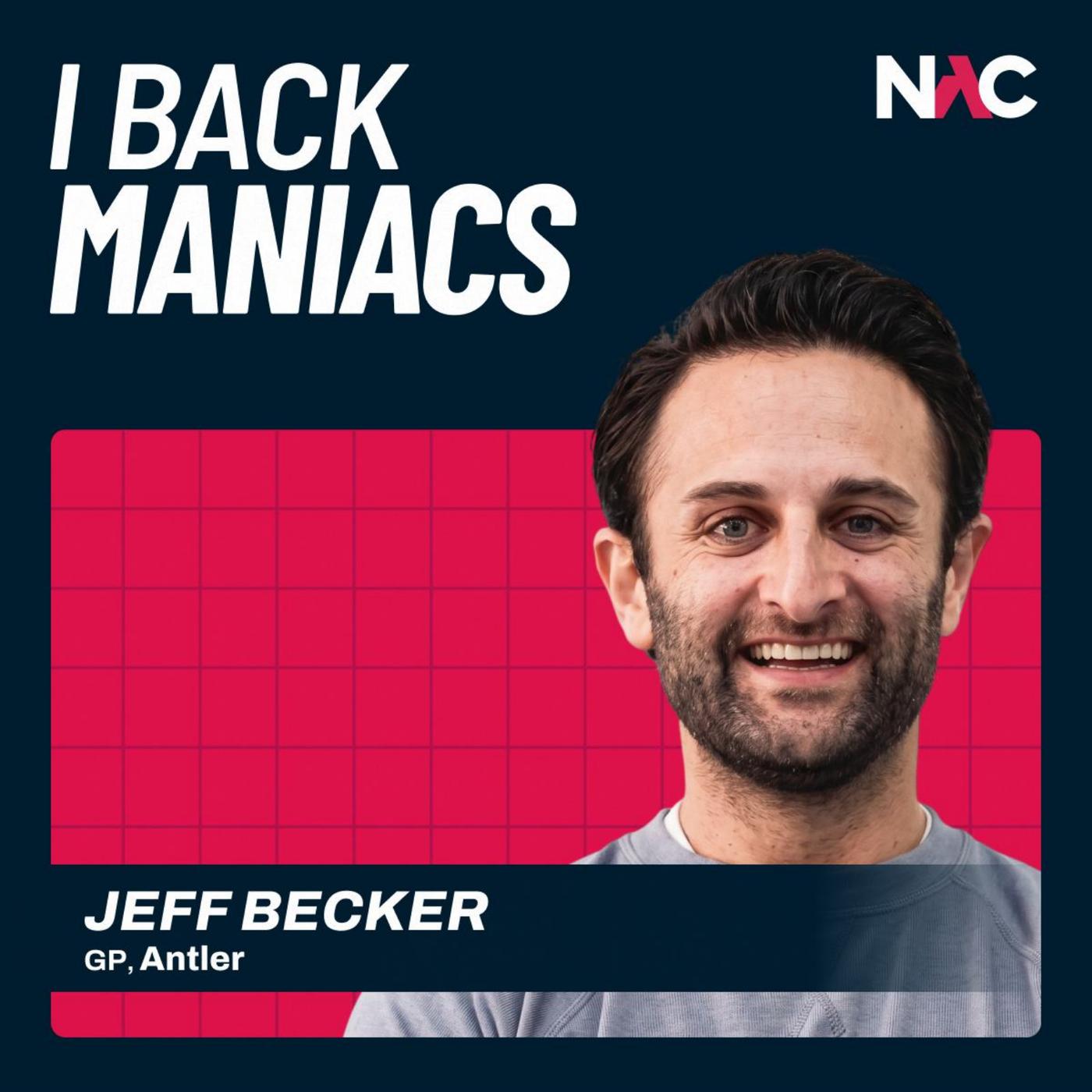
Everything you think you know about venture capital might be wrong.
In this episode, Jeff Becker, General Partner at Antler New York, breaks down the brutal, hidden realities of the startup world.
From why investors care more about your childhood psychology than your pitch deck, to why a $500 million exit can actually be a massive disappointment to a fund, Jeff pulls back the curtain on how venture capitalists actually math out risk.
If you are operating with a broken mental model of how fundraising works, this conversation will completely reshape how you build, pitch, and scale your business.
Key Takeaways:
Pitch Yourself, Not the Product: Early-stage investors bet on the person first. Master your personal story of resilience before you even open your slide deck.
Understand Fund Math: A $500 million exit does not return a large fund. You must build toward a multi-billion-dollar scale to make your investor's job a success.
Expect the Volume Game: Firms like Antler build "engineered serendipity" by backing 200 early-stage founders at once, relying on massive diversification to find a breakout winner.
Take Money Off the Table: Luck and market shifts rule the startup graveyard. When liquidity windows open, secure your personal financial safety.
Storytellers Win the Cash: Being a great operator is not enough. You must be able to compress the gap between reality and future potential to get funded.
Give Investors Specific Homework: Investors want to work for you, but vague asks get vague results. Give them transparent, direct tasks so they can help you win.
Quote of the Show:
"If I'm not working as hard as the founders, none of them are going to want me on their cap table." - Jeff Becker, General Partner, Antler
Guest Featured in This Episode:
Jeff Becker, General Partner, Antler (New York)
LinkedIn: https://www.linkedin.com/in/jeffreylbecker/
Antler: https://www.antler.co/
We also break this episode down into a full write-up on Substack, with the exact playbook Scott used to fix the culture and rebuild the strategy from scratch, we're building out a full library of playbooks and lessons from every episode on Substack.
Chapters
00:00 — Intro
02:00 — The Maniac Framework
09:00 — Why Childhood Matters
15:00 — Jeff's Origin Story
20:00 — Angel Investing Days
26:00 — The Role of Luck
33:00 — AI & One-Person Companies
41:00 — Fund Math & Dilution
46:00 — Storytellers vs. Operators
51:00 — "I Work For You"
English
United States
TRANSCRIPT 🔗
SEARCH PAST EPISODES
Search past episodes of Not Another CEO Podcast.
Disclaimer: The podcast and artwork embedded on this page are from Not Another CEO, which is the property of its owner and not affiliated with or endorsed by Listen Notes, Inc.
EDIT
Thank you for helping to keep the podcast database up to date.
