


ABOUT THIS EPISODE

We’ve been checking in on the economic conditions in Venezuela for about a decade now. In response to the U.S. strike and the capture of Venezuelan president Nicolás Maduro this weekend, we’re re-surfacing this episode with an update.
The original version ran in 2016, with an update in 2024.
Back in 2016, things were pretty bad in Venezuela. Grocery stores didn’t have enough food. Hospitals didn’t have basic supplies, like gauze. Child mortality was spiking. Businesses were shuttering. It was one of the epic economic collapses of our time. And it was totally avoidable.
Venezuela used to be a relatively rich country. It has just about all the economic advantages a country could ask for: Beautiful beaches and mountains ready for tourism, fertile land good for farming, an educated population, and oil, lots and lots of oil.
But during the boom years, the Venezuelan government made some choices that add up to an economic time bomb.
Today on the show, we run through the decisions that foreshadowed the collapse, and we hear from people in Venezuela in 2016 at a particularly low point for the economy, then again and in 2024 after a bounce back and a stabilization, in part due to the unlikely impact of the U.S. dollar.
Pre-order the Planet Money book and get a free gift. / Subscribe to Planet Money+
Listen free: Apple Podcasts, Spotify, the NPR app or anywhere you get podcasts.
Facebook / Instagram / TikTok / Our weekly Newsletter.
This original episode was hosted by Robert Smith and Noel King. It was produced by Nick Fountain and Sally Helm. Our update in 2024 was hosted by Amanda Aronczyk, produced by Sean Saldana, fact checked by Sierra Juarez, and engineered by Neal Rauch. Today's episode was hosted by Kenny Malone and produced by James Sneed. Alex Goldmark is our Executive Producer.
For sponsor-free episodes of The Indicator and Planet Money, subscribe to Planet Money+ via Apple Podcasts or at plus.npr.org.
See pcm.adswizz.com for information about our collection and use of personal data for sponsorship and to manage your podcast sponsorship preferences.
NPR Privacy Policy
English
United States
IN THIS EPISODE
TRANSCRIPT 🔗
Are you the producer of this podcast?
Add a podcast transcript
Need Audio-to-Text?
Transcribe with Listen411 in Just 60 Seconds
OTHER EPISODES IN THIS PODCAST

It's getting pretty wild in the beverage aisle these days — from the rainbow wall of seltzers, to the increasingly strange flavors of Pepsi, to the new "functional" sodas with added fiber or supplements that supposedly offer health benefits. Where are all these new drinks coming from? And why does …

Charles Ponzi was down on his luck. In 1919, the Italian immigrant had spent a decade and a half in the U.S. He was looking for a way to get rich and tried his hand at everything — including bookkeeping, sign painting, grocery clerk, dishwasher, and librarian.He caught a lucky break in August, when…
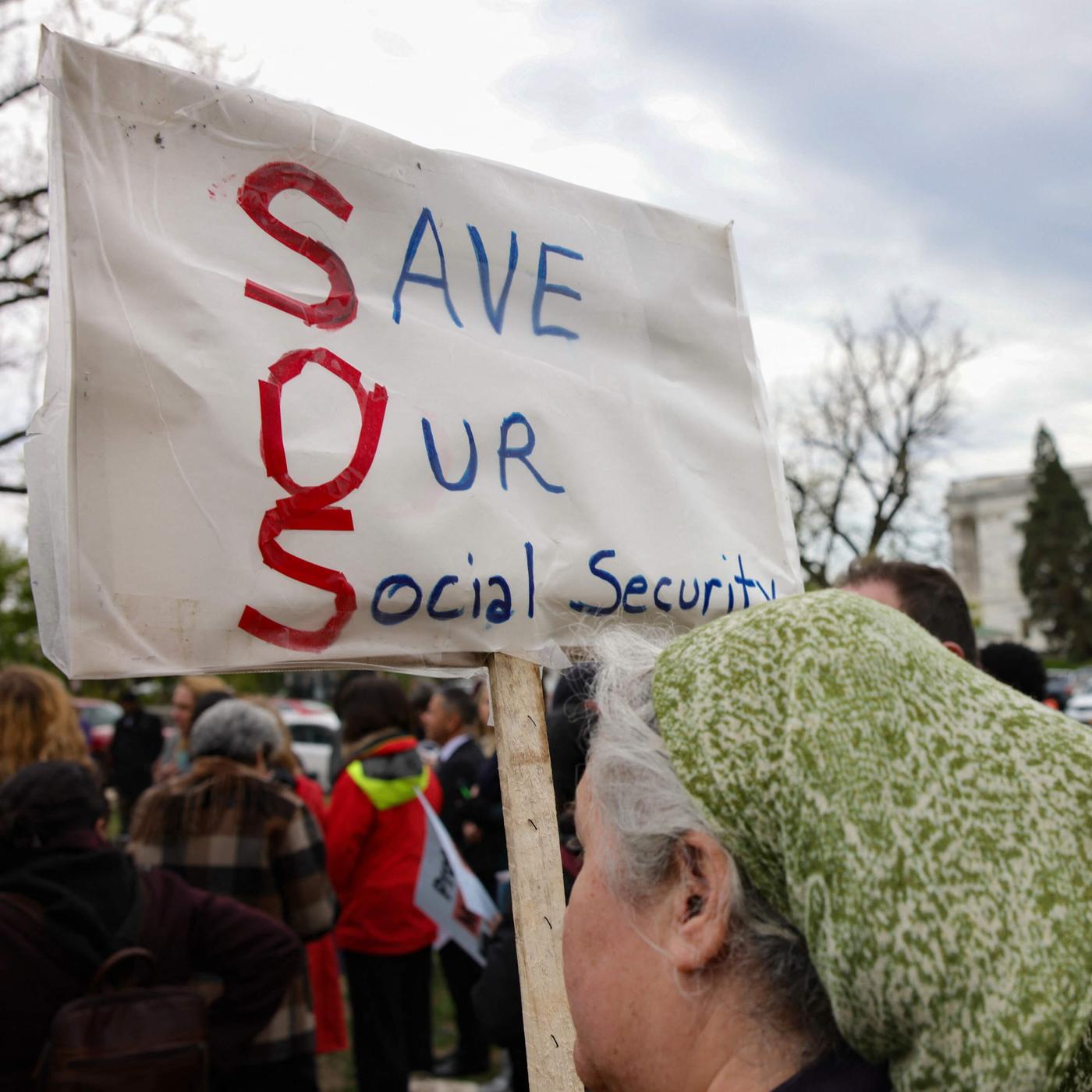
Very soon, Social Security may not have enough money to make full payments to retirees. Very soon. Like by 2032, just six years from now. So what are we gonna do about it? Today on the show, we look at some of the most talked about possible solutions; and exactly whose wallets we’ll have to rifle t…

Fifty years ago, scientists pioneering a terrifying gene-splicing technology figured out a way to collectively hit pause. Can we do it again with AI? We ask because some top AI industry leaders are saying the technology they’re pushing forward is moving too quickly … and might kill us all. They’re …

Companies are getting billions of dollars back. How about us? It seems simple, right? We paid higher prices for imported goods because of tariffs. Then the tariffs were ruled illegal. Courts said the money paid to the U.S. government had to be refunded. Companies are getting that money now. It woul…
Disclaimer: The podcast and artwork embedded on this page are from NPR, which is the property of its owner and not affiliated with or endorsed by Listen Notes, Inc.
EDIT
Thank you for helping to keep the podcast database up to date.
